San Diego Marine Layer Tennis: La Jolla to Carlsbad Guide
 Tommy
Tommy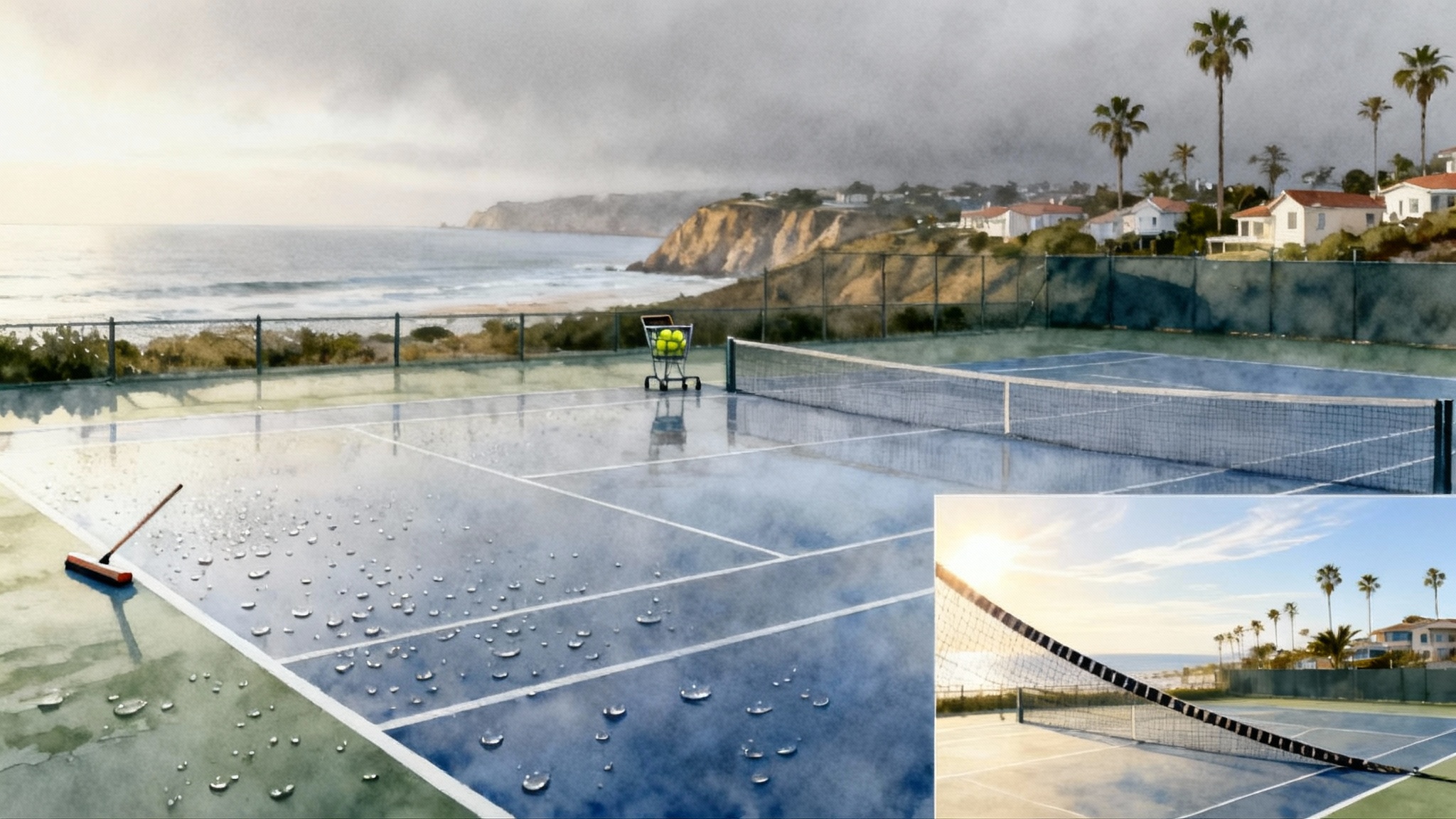
Why the marine layer makes tennis easier on the body
If you play in San Diego from La Jolla to Carlsbad, you meet a quiet teammate almost every morning. Locals call it the marine layer. It is a cool, shallow blanket of ocean air that slides onshore overnight, keeps early temperatures mild, and often lingers as a light gray sky before lifting late morning. That single feature is the secret to repeatable, low‑stress tennis throughout the year. Between the cushioning humidity of the morning, the gentle sun angles, and modest winds, the coast creates a forgiving practice lab where your mechanics can improve before heat or gusts start chipping away at focus.
The physics are simple. Cold water offshore chills the air above it; that dense air moves inland overnight, capping daytime heating along the immediate coast. The result is a stable environment with fewer temperature spikes and calmer mornings. Historical climate summaries for coastal San Diego show mild highs and cool nights nearly every month, with a pronounced May and June gray pattern that softens the sun and wind. For a quick primer, read the NWS San Diego climate overview.
What that means on court:
- Fewer extremes. You can schedule two focused sessions in one day without battling midcontinent heat.
- Friendlier joints and grip. Mild temperatures and moderate humidity reduce the sweaty slippage of mid summer and the sting of winter stringbed shock.
- More consistent ball response. Slightly denser morning air and minimal wind make timing drills feel the same, day after day.
Coastal vs. inland: the temperature split that shapes your plan
On the same day, a player serving in La Jolla Shores might be in a quarter zip while a friend in Rancho Bernardo is wiping sweat off the grip. The spread is real and it matters for training quality.
Typical patterns you can plan around:
- Coastal strip from La Jolla through Del Mar, Solana Beach, Encinitas, and Carlsbad: daytime highs often live in the mid 60s to low 70s Fahrenheit through most of the year. Mornings are cool and steady; winds tend to be light before noon and a touch breezier mid to late afternoon.
- Just 8 to 15 miles inland, temperatures can run 8 to 20 degrees warmer in summer and a few degrees cooler on clear winter mornings. Inland courts also see larger day to day swings.
If you want maximum comfort and repetition with minimal gear changes, choose courts within a mile or two of the water. If you want heat training or livelier ball conditions, go inland for midday sessions, then cool down back on the coast. For a contrasting dry heat block within a day’s drive, see our Phoenix and Scottsdale winter playbook.
Month by month game plan
Use this calendar to choose goals, session times, and neighborhoods. Times assume typical marine layer mornings and light afternoon sea breezes along the coast from La Jolla to Carlsbad.
January
- Feel: Cool mornings, crisp afternoons. Occasional winter fronts add showers, then blue skies.
- Plan: Morning footwork and serve targets from 8:30 to 10:30. Strength and mobility after lunch. If a front passes, use the day after for high visibility technique filming.
- Where: Balboa Tennis Club for a big club vibe; Carlsbad Village courts for quiet reps.
February
- Feel: Similar to January with slightly longer light. Rain windows still possible.
- Plan: Add return drills in the later morning when the air warms. Begin match play blocks on dry days to set a baseline for spring.
- Where: Barnes Tennis Center in Point Loma for live ball clinics and quality sparring.
March
- Feel: Prime tennis weather most days. Cool mornings, mild afternoons, and low wind.
- Plan: Build volume. Two a day is reasonable: technique morning, patterns and points late afternoon.
- Bonus: Pair coastal training with a day or two of spectating at Indian Wells during the early rounds for practice court access.
April
- Feel: Slight warmup inland; coast stays gentle. Flowers and pollen can tick up for sensitive players.
- Plan: Emphasize serve and first ball patterns. Film overheads in the clear afternoon light. Consider light heat exposure by booking inland midafternoon hits once a week.
May
- Feel: May Gray appears. Skies start muted in the morning, brightening mid to late morning.
- Plan: Morning control blocks are money. Low glare helps you groove high heavy balls and backhand returns.
- Tip: Bring a small towel for light dew and wipe shoes before change of direction drills.
June
- Feel: June Gloom is the nickname for the extended morning marine layer. Cooler and cloudier than you expect for early summer.
- Plan: Long rally tolerance sets. Put in a 90 minute rally challenge with disciplined patterns, then break for strength and recovery.
- Where: La Jolla Shores or Solana Beach for reliably cool mornings; head inland if you want a livelier bounce.
July
- Feel: Warm but rarely hot on the coast. Inland is distinctly hotter.
- Plan: Start earlier, finish by late morning if you are on inland courts. On the coast, you can safely run noon doubles and tactical points.
- Gear: Lighter string tensions can bring back bite in the slightly heavier morning air.
August
- Feel: Warmest coastal month, yet still moderate by national standards.
- Plan: Test hydration and match routines. Book a morning technique session and a sunset match on coastal courts with breeze cooled sidelines.
- Where: Encinitas Community Park courts for evening play, Carlsbad for mixed doubles.
September
- Feel: Many locals say this is the best. Warm water, reliable mornings, long evenings.
- Plan: High intensity point play, match simulations, and late afternoon serve plus one patterns.
- Note: First Santa Ana wind episodes can occur, which are dry offshore winds. When they blow, shift to earliest morning sessions when winds are often still manageable near the water.
October
- Feel: Similar to September with a gradual cool down.
- Plan: Tournament prep. Schedule three match play blocks weekly and sharpen specialty shots.
- Where: Del Mar and Solana Beach for easy access to food and recovery walks between sessions.
November
- Feel: Calm and clear with the occasional early rain system.
- Plan: Technique tune ups and doubles patterns. Block 60 minutes for serves and returns twice a week.
- Where: Carlsbad Village for a cozy base; Balboa Park if you want a large hitting pool.
December
- Feel: Cool, often bright, and wonderfully playable. A few winter storms mixed in.
- Plan: Use shorter, high quality practices with clear objectives. Film serve progress on crystal days, then celebrate with a sunset walk on the beach.
Hard courts rule; clay is limited but findable
Greater San Diego is a hard court town. Public facilities like Balboa Tennis Club, Barnes Tennis Center, and numerous city parks offer well maintained acrylic courts that play medium to medium fast, with truer bounces after the morning layer burns off. This makes the region ideal for grooving aggressive baselines and first strike patterns.
Clay exists, but access is limited. A handful of private clubs maintain red or green clay. A few resorts also keep small clusters of clay for lessons and member play. If clay footwork or recovery training is a priority, plan ahead and book:
- La Jolla Beach and Tennis Club for a classic stay with lessons in a seaside setting.
- Omni La Costa Resort and Spa in Carlsbad for clinics and the occasional clay session when available.
For most players, a smart plan is to do the bulk of footwork and pattern work on hard courts, then sprinkle in clay sessions when you want to emphasize point construction, recovery steps, and depth control. If you want a dedicated Har Tru block in winter, consider the Gomez Tennis Academy in Naples.
Scheduling around dew, fog, and breezes
Morning is your friend, with one caveat. Dew can make the first half hour slick enough to change braking distances. Use these habits:
- Shoe test before sprinting. Walk a few sideline zigzags and try one controlled slide. If the heel feels skittish, delay hard lateral pushes until the court dries.
- Squeegee and towel. Many coastal parks keep squeegees by the gates. Gently push off standing moisture near the baseline and service boxes.
- Ball choice. In very damp minutes, a heavier felt will pick up moisture and slow. Rotate in a second can once the court is dry to return to normal speed.
- Start with vertical hitting. Begin with cooperative crosscourt rallies and serves from the ad side rather than sudden change of direction drills.
As the marine layer lifts, wind usually stays light along the coast. Mornings are often under ten miles per hour, which is why they are gold for technical work. A light afternoon sea breeze can add a half step to overhead tracking and lob defense. Embrace it by adding wind aware patterns: serve wide into the breeze, attack behind your best forehand with margin, and defend crosscourt upwind to gain court.
Pair March training with Indian Wells
March is peak season for a San Diego plus Indian Wells combo. The drive from La Jolla or Carlsbad to Indian Wells typically runs two and a half to three hours depending on traffic. Here is a simple rhythm that works:
- Train on the coast in the cool morning.
- Early lunch, then drive to the desert for a late afternoon stadium session.
- Choose early rounds for practice court access where you can study top players’ warm ups and patterns at close range. Check the BNP Paribas Open schedule for day and evening sessions.
Bring layers. Desert evenings cool quickly compared with the coast. Pack a light puffer, a hat, and a reusable bottle you can refill on site.
Stay and play neighborhoods from south to north
- La Jolla Shores and Bird Rock: Walkable to beach sunrises and close to La Jolla Beach and Tennis Club. Great for mixed itineraries with families.
- Del Mar and Solana Beach: Easy access to coastal parks, food, and the Coaster rail if you want a no car day to San Diego. Courts are close to coffee and recovery food.
- Encinitas and Cardiff: Surf town feel with friendly public courts and evening light that makes video analysis easy. Great midweek doubles scene.
- Carlsbad Village and Poinsettia corridor: Family friendly, plentiful public courts, and quick access to resort clinics at Omni La Costa.
If you want more destination ideas that pair well with San Diego, browse our Orlando Spring 2026 tennis guide or the Phoenix and Scottsdale winter playbook.
Camps and coaching for adults and juniors
San Diego’s coastal strip is set up for structured progression. Use a three layer approach: a weekly anchor clinic, one private lesson that reinforces the weekly theme, and one or two peer match plays.
- Adults: Try a weekend mini camp at a resort or a Friday skills clinic plus a Sunday doubles tactics session at a large public center. To build a roster of local sparring partners, ask your coach to introduce you to compatible players.
- Juniors: Barnes Tennis Center is a regional hub with strong junior programming and frequent tournaments under the International Tennis Federation and United States Tennis Association umbrellas. In North County, Carlsbad and Encinitas parks offer consistent junior clinics, with private coaches who build schedules around school hours.
For both adults and juniors, the coastal climate allows more volume with less burnout. That makes San Diego a smart place to install new patterns: second serve reliability, crosscourt to down the line transitions, and forehand plus inside in finishing plays.
Sample itineraries
Here are three plug and play schedules that take full advantage of the microclimate.
- Technique first, then compete
- Morning at the coast: 90 minutes of serves and first ball drills beginning at 8:30. Use the softer light for video from a baseline tripod.
- Late afternoon inland: 90 minutes of match play at an inland park where the slightly warmer air adds bounce and speed.
- Evening: Light mobility and forearm strength work. Hydrate with electrolytes if you split time between zones.
- Family weekend in Carlsbad
- Saturday: Adult clinic at Omni La Costa while the kids join a junior clinic. Lunch in the Village, then beach recovery walk.
- Sunday: Doubles round robin in the morning, aquarium visit in La Jolla in the afternoon, sunset rally at a park court.
- March training with Indian Wells
- Friday: Morning patterns session in Solana Beach. Early lunch, drive east for the afternoon session at Indian Wells.
- Saturday: Recovery hit on the coast at 10:00, then desert night session.
- Sunday: Off day with a coastal hike and light shadow swings.
What to pack and how to prep
- Layers and light colors: Start cool, shed layers as the sky brightens.
- Two pairs of shoes: Keep one pair dry for match play in case of morning dew.
- Two string setups: Standard tension for afternoons, two pounds looser for heavy morning air or for doubles touch work.
- Hydration plan: Even with mild temperatures, the ocean air can lull you into under drinking. Bring a bottle you enjoy using and set a sip timer between drills.
- Filming kit: Small tripod, phone clamp, and a spare battery bank. Coastal light is ideal for honest feedback.
The bottom line
If you are hunting for the most forgiving year round tennis lab in the United States, the La Jolla to Carlsbad coast is it. The marine layer gifts you cool mornings, mild afternoons, and low wind that keeps ball flights honest. Hard courts dominate and clay is a special occasion treat. Train by the tide for control and move inland for pace when you want it. Schedule around dew in the first half hour, then settle into a weekly rhythm of clinics, privates, and match play. In March, add the desert’s biggest tennis party to your plan and come home smarter than you left. This coast does not shout. It quietly gives you the consistency that progress needs.