Serve Power Without Pain: 2026 Arm Care Speed Progression
Build a faster, healthier serve with a clear 2026 plan. Quick mobility screens, a scap and cuff band series, eccentric forearm work, med ball and jump progressions, smart constraints, and age-specific micro-doses you can start today.
 Tommy
Tommy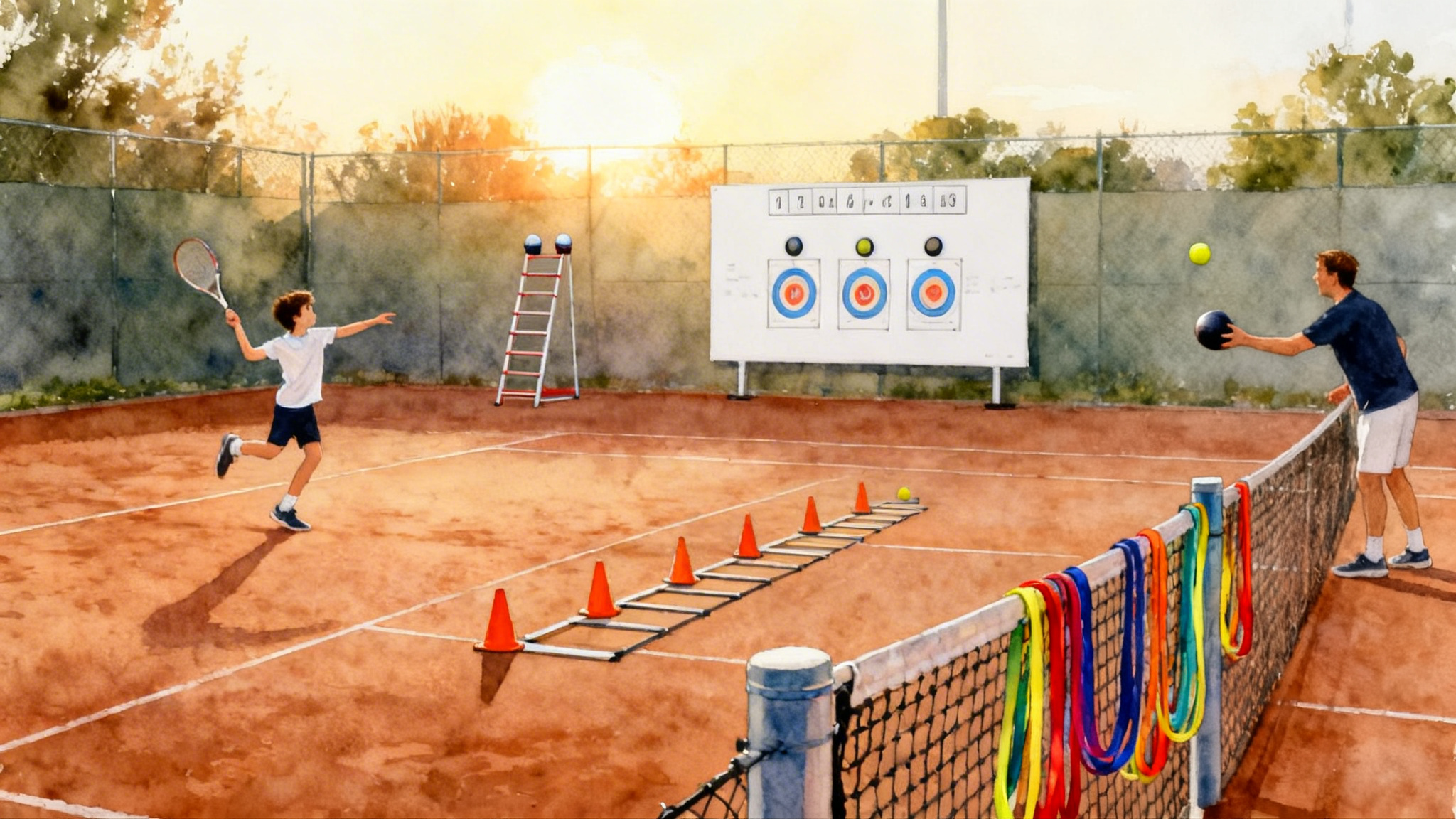
Why power and health point to the same serve goal in 2026
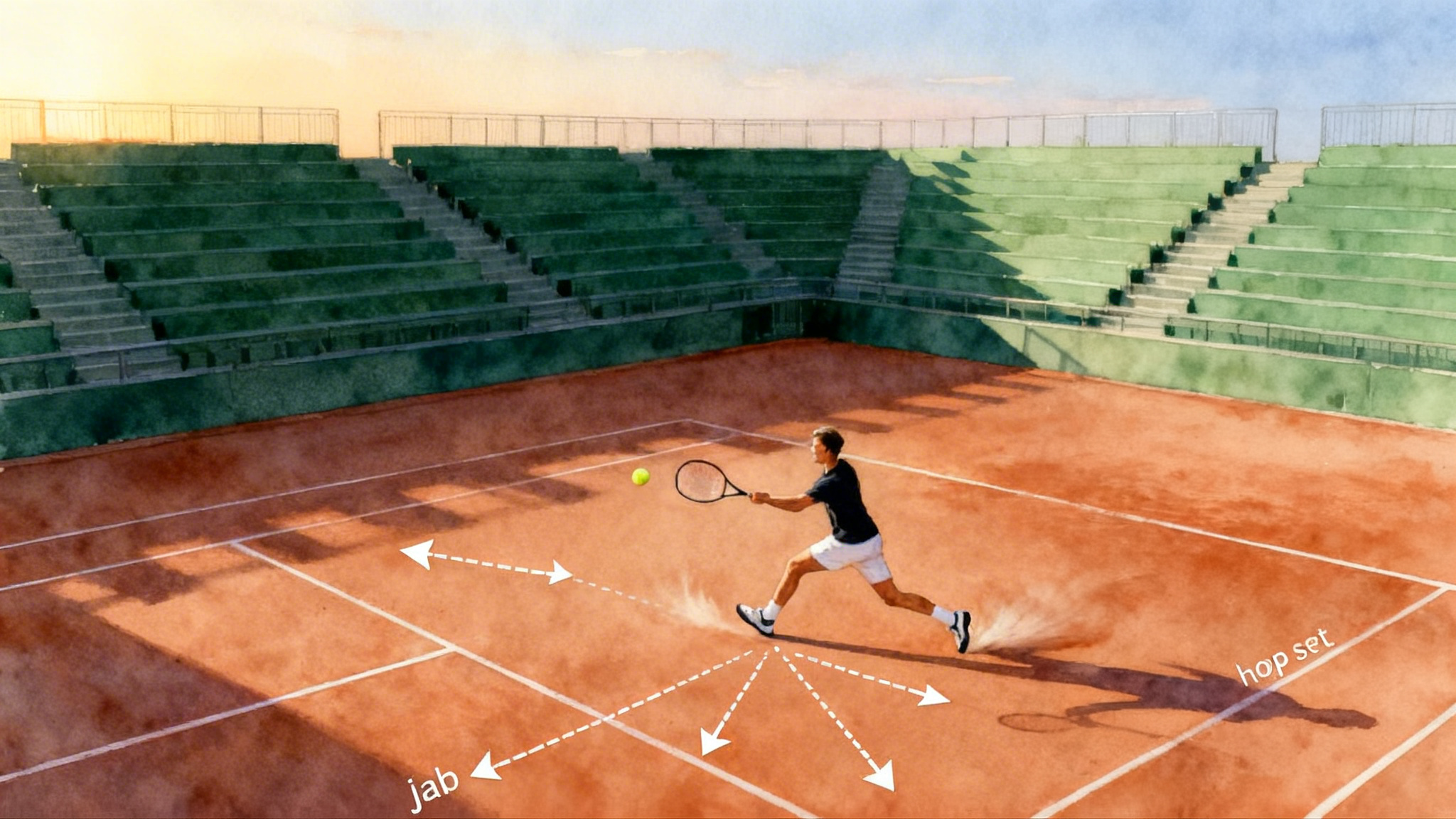
A faster serve is not just about swinging harder. It is about turning the whole body into a smooth energy chain that loads, stores, and releases force without asking the elbow or shoulder to do extra work. Power rises when the legs and trunk do more, the shoulder blade guides the arm on time, the rotator cuff stabilizes, and the forearm tissues are strong enough to handle deceleration. In other words, the safest path is the fastest path.
This article gives you an age-specific blueprint to build that path. You get quick at-home screens, a simple band routine, eccentric forearm loading that protects elbows, med ball and jump-to-serve progressions, on-court constraints that grow speed without chaos, twelve-minute micro-doses, weekly readiness checklists, racquet and string tweaks to lower joint stress, a two-week return-to-serve ramp after layoffs, and printable trackers so you can see safe gains in real numbers.
If you are a coach, use this as a plug-in module. If you are a parent, treat it like a recipe you can run in a small space. If you are an adult player, you will learn how to add speed without waking up sore the next morning.
First, 30-second mobility and control screens
You cannot fix what you do not see. These screens flag what to address before you chase speed.
- Shoulder 90-90 check: Lie on your back with the arm out to the side at shoulder height and elbow bent 90 degrees. Rotate the forearm back toward the floor. You want the back of the hand to reach the floor or within a fist width without your rib cage popping up. If it does not, you need more external rotation mobility and soft tissue work for lats and pecs.
- Sleeper stretch check: Side lying on the tested shoulder, elbow bent 90 degrees, gently rotate the forearm toward the floor. You should reach the floor or a fist width short without pain. Pinch or pain means you clear mobility first and avoid heavy serve days until it normalizes.
- Thoracic rotation sit test: Sit tall, arms crossed, rotate as far as you can each way without your hips moving. You should easily rotate 45 degrees. If not, add thoracic openers before you serve.
- Scap control wall slide: Back against a wall, elbows and wrists on the wall, slide up without losing contact. If the wrists peel off or the low back arches, add serratus work and lower trap band drills.
- Ankle dorsiflexion knee-to-wall: Barefoot lunge so your knee touches the wall without the heel lifting. A hand width or more is ideal. Limited dorsiflexion often shifts load up the chain.
- Forearm pronation-supination with a hammer: Hold a light hammer or screwdriver at the end. Rotate palm up then down for 10 smooth reps each. If you cannot control end ranges or feel pain, you will benefit from eccentric forearm loading.
Run these in under two minutes. The result guides your warm-up focus for that day.
The band series that builds the engine around the shoulder blade
Do this three to five days per week. It takes six to eight minutes. Light bands win here. The goal is burn and control, not max tension.
- Band external rotation at 90 degrees: Elbow at shoulder height, rotate the forearm back. 2 sets of 12 each side. Cue keep the shoulder blade down and back, not shrugged.
- Band W pull: Elbows at sides, squeeze shoulder blades down and back, pull into a W. 2 sets of 15. Feel mid-back, not neck.
- Serratus punches: Band anchored, arm straight, punch forward and reach, then return. 2 sets of 15. Your scapula should glide around the rib cage.
- Face pulls to overhead reach: Pull band to eyebrows, rotate and reach up. 2 sets of 12. Slow and smooth.
- Standing Y lift: Thumbs up, raise arms diagonally into a Y without shrugging. 2 sets of 12. Think long neck.
- Band diagonal pattern pull: High-to-low chop and low-to-high lift. 1 set of 10 each way. Integrates the core with shoulder blade control.
Progress by adding a few reps first, then very slightly more tension. If form slips or your neck works harder than your mid-back, regress.
Eccentric forearm loading that armor-plates the elbow
Most tennis elbow issues appear when the tissues that slow the racket head are asked to do too much too soon. Eccentric loading teaches tendons to tolerate force. Two to four days per week is plenty.
- Eccentric wrist extension: Support your forearm on a table, palm down, dumbbell in hand. Lift the weight with the other hand, then slowly lower for three to four seconds. 3 sets of 8 to 10. Choose a weight that feels like a 7 out of 10 effort on the last two reps, never sharp pain.
- Tyler twist for the extensor tendon: Using a flexible bar or towel, twist into tension with both hands, then control the untwist with the affected side for three to four seconds. 2 sets of 10 to 12.
- Pronation-supination with a hammer: Elbow at your side, hand hangs off the table holding a hammer at the end. Use the other hand to help rotate into end range, then lower back under control for three seconds. 2 sets of 8 each direction.
- Radial deviation lowers: Thumb up, small dumbbell or heavy ball in hand, raise with help from the other hand, lower slowly for three seconds. 2 sets of 10.
Finish with long forearm tissue massage using your opposite thumb for one to two minutes. Tendons like consistency. Keep pain under a 3 out of 10 and respect the 24-hour rule. Soreness should not spike the next day.
Med ball and jump-to-serve power progressions
Power starts from the ground and ends at the strings. These drills scale from juniors to adults. Two to three sessions per week, 12 to 15 minutes total.
- Medicine ball scoop toss, step-behind: 3 sets of 5 per side. Juniors use 2 to 3 kilograms, teens 3 to 4, adults 4 to 6. Focus on hips turning first, rib cage next, arm last.
- Medicine ball overhead back toss: 3 sets of 4. Keep the rib cage down on the load, then drive tall. This links the lower body to the overhead motion.
- Shot put throw from half kneel: 2 sets of 5 per side. Teaches trunk rotation without overusing the shoulder.
- Pogo hops in place: 3 sets of 10 seconds. Think stiff ankles and fast rhythm. This primes elastic energy.
- Countermovement jump to stick: 3 sets of 3. Land soft and stable. Do not chase height. Own the landing first.
- Approach jump to overhead reach with a towel: 2 sets of 4. Hold a small towel like a racket. Load, jump, reach to a tall contact. The towel removes ball fear and teaches arm timing.
The big idea is simple. Landings are brakes. Good brakes protect the engine. Pair these with our tennis deceleration training to build durable speed.
On-court serve constraints that groove speed safely
Constraints remove guesswork while keeping the session competitive.
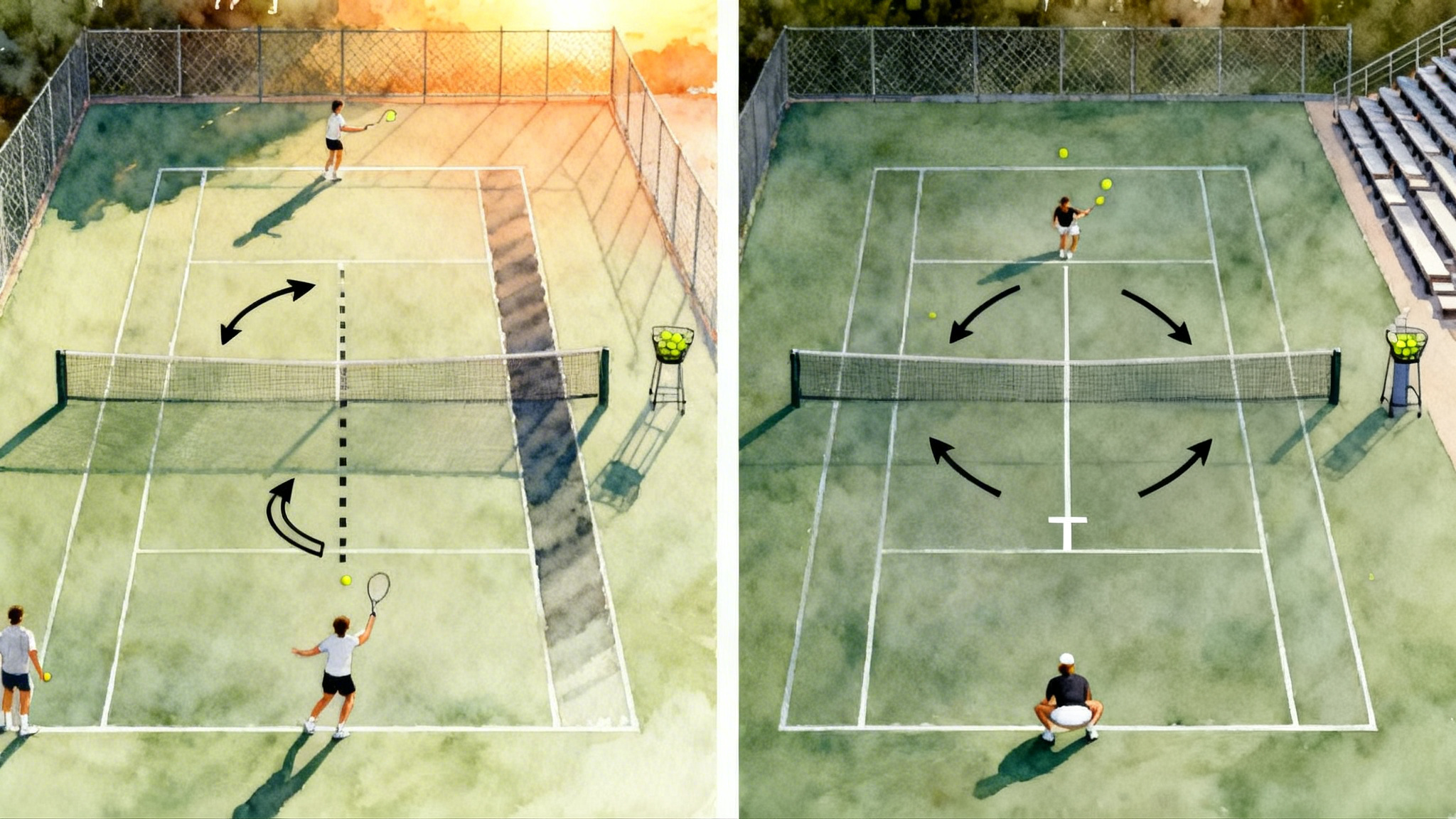
- One-step serve: Start with feet together, take one step then serve. This simplifies rhythm and promotes leg drive. 2 rounds of 10 balls, rest 60 seconds between rounds.
- Tall toss cap: Keep the toss no more than one racket length above contact for one round. Lower tosses reduce shoulder elevation time and fatigue. 2 rounds of 8.
- Three-target ladder: Wide, body, T. You must hit 2 in a row before moving on. This adds aim without over-serving. Cap at 24 balls per ladder.
- 80 percent velocity block: Hit at a controlled 8 out of 10 effort with a focus on clean contact and height over the net tape. 3 sets of 6, 60 seconds between. If accuracy drops under 60 percent, stop the block.
- Shadow swing to ball pairing: 3 shadow reps, 1 ball. Repeat 6 times. The shadow locks mechanics without load, then you test it once.
Between rounds, do three band serratus punches and one slow deep breath through the nose to reset rib cage position. You will feel fresher longer.
Age-specific blueprints
Ages refer to training age as much as calendar age. If in doubt, choose the simpler track.
Juniors 9 to 12
- Warm-up: 2-minute mobility screens, 4-minute band series with very light tension, 2 sets of 10 pogo hops, 4 overhead reaches with a towel.
- Skill blocks: One-step serve ladders with red or orange balls, 3 rounds of 8. Shadow swings between rounds.
- Strength snacks: Eccentric wrist extension 2 sets of 8 with a very light dumbbell or water bottle, hammer rotations 1 set of 8 each way.
- Med ball: 2 kilogram scoop toss 2 sets of 4 per side.
- Volume cap: 40 total serves including drills. Cut to 30 during a growth spurt or after a layoff.
Teens 13 to 17
- Warm-up: All screens, full band series, pogo hops and countermovement jumps to stick.
- Skill blocks: One-step serve and 80 percent velocity blocks. Green dot or regular balls based on size and strength.
- Strength: Eccentric forearm series 2 to 3 days per week. Add side planks and split squats 2 sets of 8.
- Med ball: 3 to 4 kilograms, scoop toss, shot put half kneel, overhead back toss.
- Volume cap: 60 to 80 total serves including second serves on hard days; 30 to 40 on easy days.
Adults 18 to 39
- Warm-up: Same as teens, plus one to two thoracic spine openers.
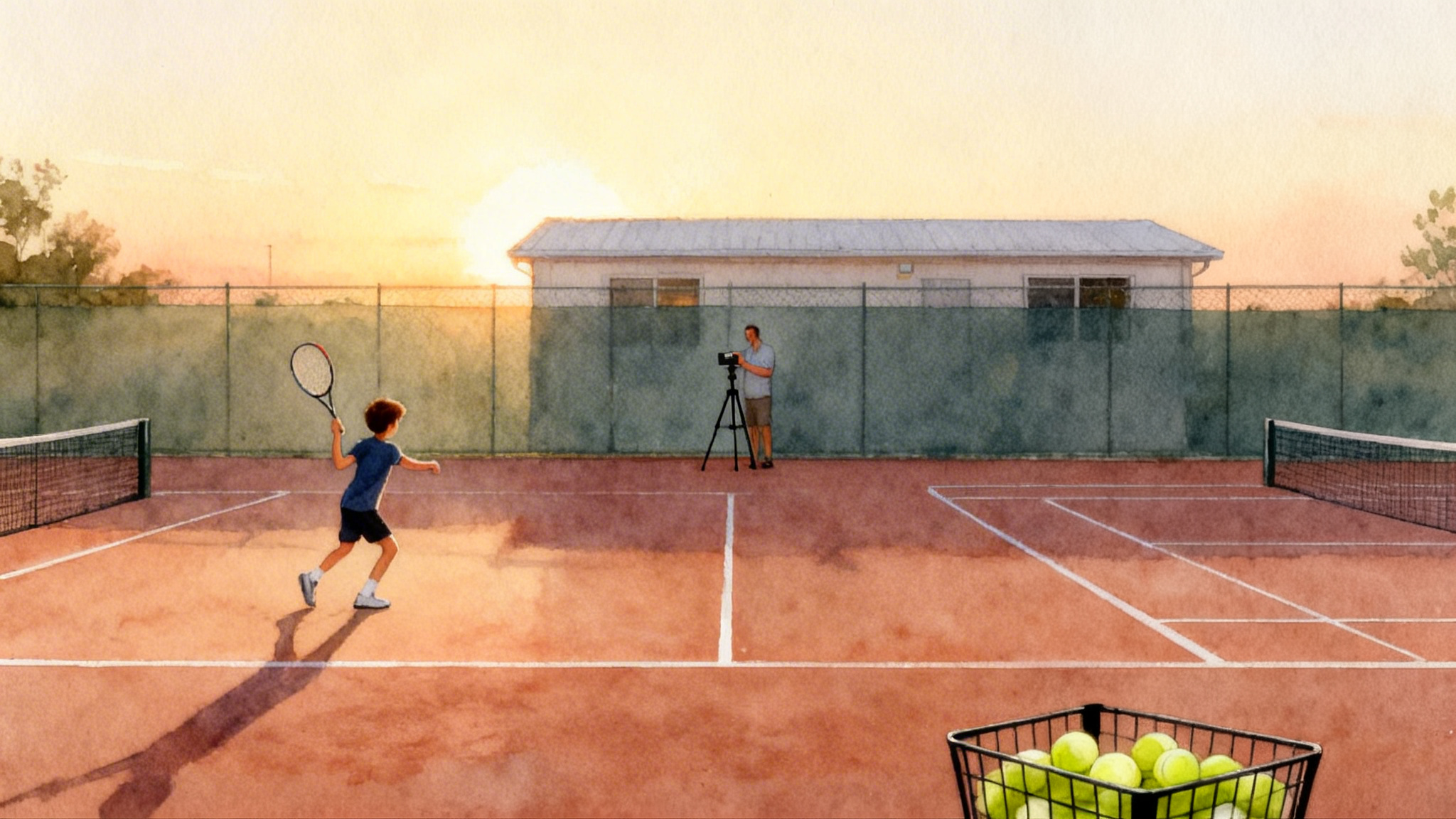
- Skill blocks: 80 percent velocity blocks and three-target ladders. Add a radar or phone app monthly for benchmarks; see our smartphone tennis video guide for easy capture and review.
- Strength: Forearm eccentrics 3 times per week during ramp phases, twice per week in season. Add rear-foot elevated split squats, glute bridges, and side plank reach to build the kinetic chain.
- Med ball: 4 to 6 kilograms based on control. Emphasize quality over load.
- Volume cap: 60 to 90 on hard days, 30 to 45 on easy days. Never two hard serve days in a row.
Masters 40 plus
- Warm-up: Spend extra time on thoracic rotation and ankle dorsiflexion. Extend the band series by one set at lower tension.
- Skill blocks: More one-step serve, fewer max-intent reps. Aim for 70 to 80 percent effort most days.
- Strength: Eccentric forearm work is non-negotiable. Add single-leg balance reaches and gentle calf raises for tendon health.
- Med ball: 3 to 4 kilograms. Match quality to how your back feels on that day.
- Volume cap: 40 to 60 total serves. Use a two-days-on, one-day-off rhythm for the shoulder.
Twelve-minute at-home micro-doses parents can supervise
This is your quick recipe. Set a timer.
Minute 0 to 2: Mobility screens. Note any pain or big differences left to right.
Minute 2 to 6: Band series circuit
- External rotation at 90 x 12
- Face pull to overhead reach x 12
- Serratus punches x 15
- Y lift x 12
Repeat once.
Minute 6 to 9: Eccentric forearm block
- Wrist extension lowers x 8 each
- Tyler twist x 10 each
Minute 9 to 12: Jump-to-serve primer
- Pogo hops 2 x 10 seconds
- Towel reach 2 x 4
Parents can check these boxes off a printable card with spaces for sets and pain ratings. Grab our printable arm care cards and keep them by the shoe rack.
Weekly readiness checklist and red flags
Check these on Sunday night or before your first hard session.
Readiness checklist
- 7 hours average sleep for teens and adults, 8 to 9 hours for younger athletes
- No shoulder or elbow pain above 2 out of 10 at rest
- Forearm squeeze test feels equal both sides for 10 seconds
- You can perform 10 pain-free towel reaches and 10 band external rotations
- Last hard serve day was at least 48 hours ago
Red flags that say modify or skip serving
- Night pain that wakes you
- Pain above 3 out of 10 that lingers beyond 24 hours after a session
- Tingling or numbness below the elbow
- Grip strength drop compared to your normal sensation
- Shoulder feels unstable or you hear catching and cannot reproduce a smooth arc on a shadow swing
If any red flag appears, swap serves for med ball patterns and the band circuit. Re-test in 48 hours.
Racquet, string, and ball tweaks that cut joint stress
Small gear changes can reduce load without changing your stroke.
- Grip size: You should be able to fit your non-hitting index finger between fingertips and palm when holding the racquet. Too small a grip increases forearm strain.
- Weight and balance: Very light and head-heavy racquets can spike vibration at impact. A moderate static weight with a slightly head-light balance often feels smoother. If contact feels harsh, add a little handle weight or consider a softer frame.
- String type and tension: Full polyester at high tension is tough on elbows. Use a hybrid with a softer multifilament or natural gut in the mains, or lower tension by 3 to 5 pounds to increase dwell time and comfort.
- String gauge: A slightly thicker, softer string can spread load over a bigger area of the string bed.
- Dampeners: They reduce sound, not shock. Do not count on them for pain relief. Prioritize softer strings and lower tension first.
- Balls: For juniors or during a ramp up, low-compression balls reduce impact forces and help keep volume without overloading tissues.
Test one change at a time for a week so you know what helped.
A two-week return-to-serve ramp after layoffs
Use this after illness, vacation, a growth spurt, or any gap longer than 10 days. Every day includes the mobility screens, the band series, and the eccentric forearm block. Only progress if pain stays under 3 out of 10 and normal soreness clears within 24 hours.
- Day 1: 30 shadow swings, 20 towel reaches, 20 one-step serves at 60 percent intent.
- Day 2: Rest from serving. Do med ball scoop toss 2 x 4 per side and pogo hops 2 x 10 seconds.
- Day 3: 30 shadow swings, 24 one-step serves at 70 percent, 12 second serves at 60 percent.
- Day 4: Rest from serving. Walk, band series, and forearm eccentrics.
- Day 5: 36 serves total at 70 to 75 percent, mix of wide and body only.
- Day 6: Rest or easy rally only.
- Day 7: 40 serves at 75 percent. Add three-target ladder. Stop if accuracy falls below 60 percent.
- Day 8: Rest from serving. Med ball overhead back toss 2 x 4 and shot put half kneel 2 x 4 each side.
- Day 9: 45 serves at 75 to 80 percent. Add 6 second serves with more spin.
- Day 10: Rest. Forearm eccentrics and gentle cardio.
- Day 11: 50 serves. First 30 at 80 percent, last 20 at 85 percent if accuracy holds.
- Day 12: Rest or light practice only.
- Day 13: 55 serves. Keep effort at 85 percent. No more than two in a row at max intent.
- Day 14: Test day. 24 quality first serves and 18 second serves. If pain-free and crisp, you are clear to resume normal serve volumes.
If you fail a day due to pain or accuracy drop, repeat the previous successful day before moving on.
Academy Spotlight: how Legend Tennis Academy integrates arm care
Legend Tennis Academy treats arm care as a standing station, not a separate workout. Here is their weekly template you can copy.
- Before practice, 8-minute band and mobility station: Players cycle through external rotations, face pulls to overhead reach, serratus punches, and Y lifts. Coaches check rib cage position and relaxed necks.
- Med ball lane during the warm-up: Two lanes by the fence with 3 kilogram balls for scoop toss and overhead back toss. Players earn targets by hitting a quiet landing and tall reach.
- Serve constraints inside live hitting: After pattern drills, players do one-step serve ladders and 80 percent velocity blocks. A small whiteboard shows the day’s accuracy standard and ball cap.
- Micro-dose cards: Every player carries a pocket card with the twelve-minute at-home plan. Parents sign off for juniors.
- Red flag board: If a player checks a red flag, the coach shifts them to med ball and shadow swing work for that session.
- Monthly benchmark: On the first Tuesday, players run a 12-ball radar test at 80 percent intent and record the mean speed. The focus is on a clean average, not one max spike.
This structure keeps the team moving, protects elbows and shoulders, and still grows speed month over month.
Benchmarks and printable trackers
Measuring removes guesswork and keeps progress safe. Download our serve speed benchmark tracker and use it once per month, not every session.
- The 60–40 accuracy rule: In an 80 percent block of 60 serves, aim for at least 40 makes to spots. If accuracy dips, reduce intensity or stop the block.
- Safe speed gain: Cap gains to 1 to 2 miles per hour per month on average. Chasing weekly jumps tempts you to overserve.
- Radar or phone app: Record the average of 8 to 12 serves at 80 percent intent.
- Forearm load log: Write down eccentric work and perceived soreness the next day. If soreness climbs week to week, trim serve volume by 20 percent for seven days.
Put it together: a week at a glance
Here is a sample week for a teen or adult in season.
- Monday hard: Full warm-up, med ball lane, one-step ladder, 80 percent block, band finisher. Volume cap 70 to 80 serves.
- Tuesday light: Rally and point play, no serve focus. Do the twelve-minute micro-dose at home.
- Wednesday moderate: Warm-up, target ladder, second serve spin work, 40 to 50 total serves. Finish with forearm eccentrics.
- Thursday off from serving: Med ball patterns and band series.
- Friday hard: Repeat Monday or test a small speed bump if accuracy is strong. Cap at 70 to 80 serves.
- Saturday match: Standard dynamic warm-up, five-minute band primer, 12 to 16 practice serves. Post match, 2 sets of eccentric wrist extension.
- Sunday reset: Readiness checklist, short walk or light bike, mobility, and band series.
Conclusion: fast is earned by smart, small decisions
Serve speed grows when the system is balanced. Mobility unlocks clean positions. The band series teaches the shoulder blade to steer. Eccentric forearm work builds the brakes. Med ball and jump drills organize the engine from the ground up. Constraints turn power into repeatable targets. The micro-doses and checklists keep you consistent without stealing time.
Start with the screens. Commit to twelve minutes a day. Add two power sessions a week. Log accuracy and average speed once a month. Make one gear change at a time. If a red flag pops, adjust and protect your future self. That is how you add miles per hour without adding pain, and how your serve becomes a weapon you can trust in any season.
Resources mentioned: our printable arm care cards. The return-to-serve ramp is included above and also summarized in our resources section without a separate link here.