Altitude Summer Tennis 2026: Colorado, Utah, Arizona, Tahoe
A climate-first guide to June through September training between 5,000 and 8,000 feet. Learn how altitude changes ball flight and fitness, when storms usually pop, where to base in Colorado Springs, Park City, Flagstaff, and Tahoe Truckee, and how to build smart weekly blocks.
 Tommy
Tommy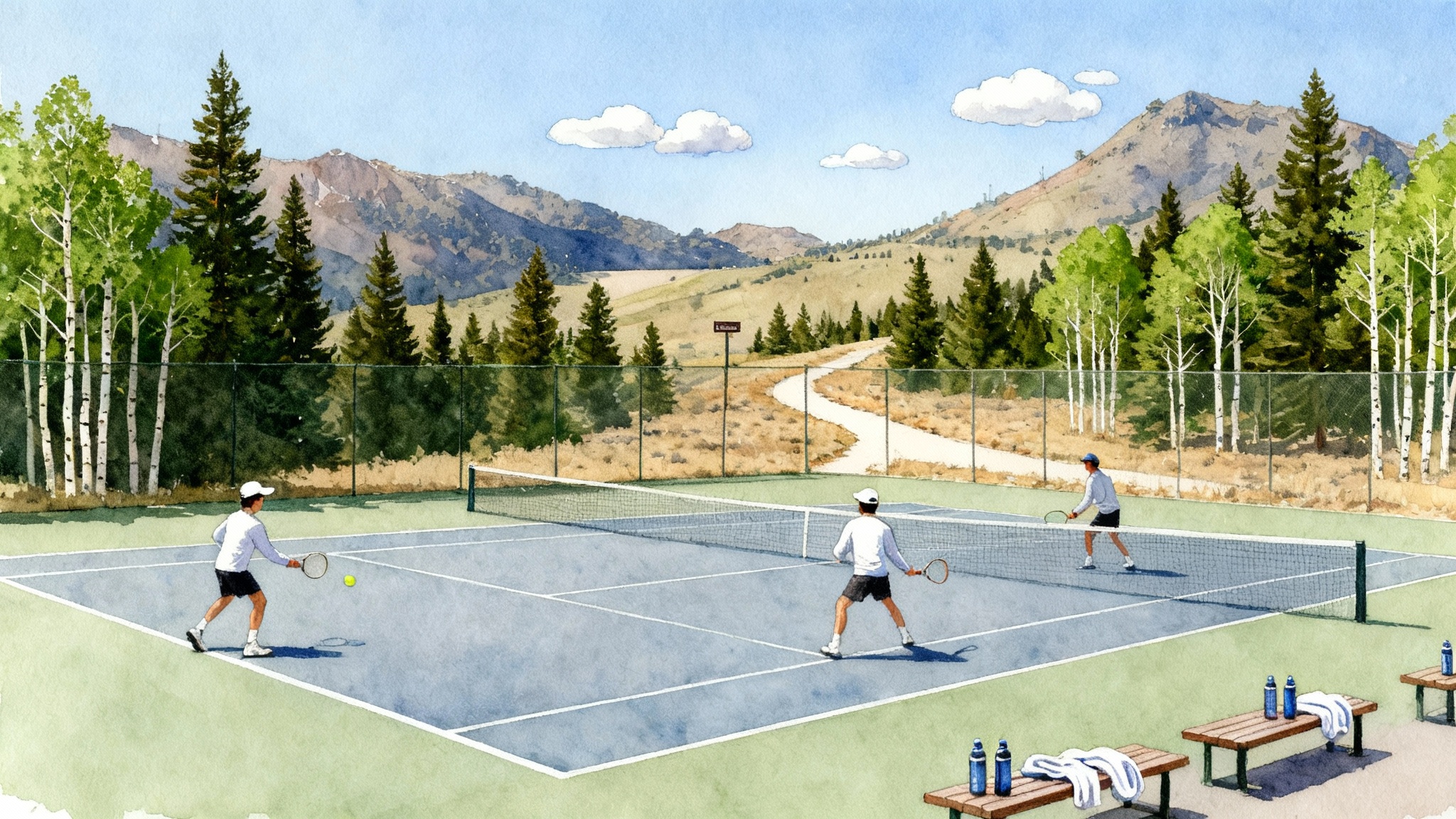
Why altitude is your summer advantage
When much of the country bakes, courts at elevation stay playable, crisp, and fast. Between 5,000 and 8,000 feet the air is cooler and drier, mornings are calm, and you can plan around predictable afternoon storm windows. There is work to do, though. Altitude changes how the ball flies and how your body responds. If you understand both, you can turn a midsummer escape into a performance bump that carries through the fall.
Ball flight and gear, explained simply
Think of a tennis ball moving through soup versus through air. At sea level the air is a thick soup. At 6,500 feet the soup thins out, so the ball meets less resistance. Two things happen:
- The ball flies farther for the same swing speed. Your heavy forehand that usually dips late might now sail long if you keep your sea level targets.
- Spin bites a bit less. With thinner air, topspin and slice create less lift and curve. You still need spin, but you must supply more of it.
Three practical adjustments:
-
Use balls designed for altitude. The International Tennis Federation specifies high altitude balls for play above 4,000 feet. These balls help control rebound and depth at elevation. Review the official language on ball types and the 1,219 meter threshold in Appendix I ball specifications.
-
Tweak string tension and setup. If you are a polyester player, add 2 to 4 pounds of tension to rein in launch. If you are a multifilament or natural gut player, consider moving one step firmer or hybridizing with a smooth polyester in the mains. The goal is a familiar trajectory and a strike window that still rewards full swings.
-
Reset your targets. Aim two to three feet inside your usual sidelines and hit through a deeper crosscourt window in the first session. As you find range, widen your shot tolerance. Think bowling with bumpers on your first few frames.
Fitness load at 5,000 to 8,000 feet
At altitude the percentage of oxygen in the air is the same, but the pressure is lower, so each breath delivers fewer molecules of oxygen. The effect shows up as a higher heart rate for the same work and a greater sense of effort on long rallies. Plan for:
- A 5 to 10 percent higher heart rate on steady hitting the first two to three days.
- Slightly slower recovery between points until your body adapts.
- Lighter sleep the first night for some athletes.
Adaptation tips you can actually use:
- Arrive 48 to 72 hours before your heaviest training if possible. If not, keep day one controlled and technique heavy.
- Use Rate of Perceived Effort in place of sea level heart rate targets on days one to three. Cap hard intervals at seven out of ten effort.
- Extend warm ups. Add ten unreturned serves and five minutes of jump rope before live points to wake up footwork and coordination.
- Hydrate with intent. A simple rule is half a liter of fluids per hour on court, plus electrolytes for sessions over ninety minutes.
Know the warning signs of acute mountain sickness, including headache, nausea, and unusual fatigue. If symptoms persist, reduce intensity, hydrate, and stop climbing to higher elevations.
The climate clock, June through September
Afternoon thunderstorms are a feature, not a bug, across the Rocky Mountains and the Colorado Plateau. The pattern often shows dry mornings, then rising clouds after lunch, with storms popping in the mid afternoon and fading by dinner. The National Oceanic and Atmospheric Administration explains the North American Monsoon pattern and its daily rhythm of mostly dry mornings followed by afternoon and evening storms in this overview: How the monsoon drives summer storms. For tactics during monsoon seasons abroad, see our monsoon-smart tennis guide.
What that means for tennis:
- Block your main practice from 7:00 to 10:30 a.m. or earlier. You get cool air, calmer winds, and safer conditions.
- Keep the 2:00 to 6:00 p.m. window flexible in July and August, especially in Flagstaff and along the Front Range in Colorado.
- Use the evening reset, 5:30 to 7:30 p.m., for serve targets, pattern rehearsal, and set play if radar is quiet and courts have dried.
Lightning safety is non negotiable. At the first sound of thunder, clear the courts and shelter in an enclosed building or a vehicle with a metal roof. Resume play thirty minutes after the last thunder.
Where to base your camp
Below are four proven summer bases with reliable morning conditions and access to courts, trails, and food that supports training.
Colorado Springs, Colorado, about 6,000 feet
- Climate in season: June mornings in the mid 50s to low 60s Fahrenheit, afternoons mid 70s rising to mid 80s in July; drier and breezier than Denver. Storm chances rise from early July through mid August, most often mid afternoon.
- Courts: A strong public network makes booking straightforward, with large multi court complexes and park courts across town. Resort courts add variety and some shade. Weekday mornings are best for availability.
- Indoor backup: Plan primarily for outdoor play in summer. On rare washouts, look north to the Denver metro for temporary indoor bookings, or move to evening after storms pass.
- Cross training: Garden of the Gods for easy recovery walks, the Pikes Peak Greenway for spins, Manitou Springs Incline only for well prepared athletes on a light day.
Why it works: The mix of altitude, dry air, and court inventory allows big groups to run efficient pods. Match play is often wind tested, which rewards clean technique and height over the net.
Park City, Utah, about 7,000 feet
- Climate in season: Crisp mornings, often in the 40s and 50s in June, highs around the upper 70s to mid 80s in July and August. Storm timing varies by pattern; the driest mornings are usually the rule.
- Courts: Municipal complexes and the Park City recreation system offer both public and programmed courts. Many hotels and homeowner associations have guest access courts; call ahead.
- Indoor backup: Seasonal indoor bubbles typically run in the cold months, not summer. If you need hard indoor time, plan for a drive to Salt Lake City, about forty five minutes down canyon, and book in advance.
- Cross training: The Rail Trail for easy spins, gentle climbs on Round Valley singletrack, and cool water recovery at the reservoir.
Why it works: Mornings are reliably crisp, the sun angle is kinder than the valley below, and the town has food and logistics dialed for traveling teams.
Flagstaff, Arizona, about 7,000 feet
- Climate in season: Warm, dry June with highs in the upper 70s to low 80s, then classic July and August monsoon afternoons with frequent storms. Mornings remain wonderful, typically in the 50s.
- Courts: A healthy mix of city courts and school complexes. The Northern Arizona University Tennis Center includes six indoor courts and additional lighted outdoor courts and offers community access through reservation systems.
- Indoor backup: Because the university center runs year round, this is the best true indoor hedge at elevation in the Southwest. Call ahead for availability during collegiate use.
- Cross training: Aspen Corner and Walnut Canyon for easy hikes, urban trails for soft surface runs.
Why it works: Flagstaff is a proven altitude town for endurance sports. Tennis benefits from the same pattern: crisp mornings, a compact downtown for team meals, and a dependable indoor option if storms park overhead all day.
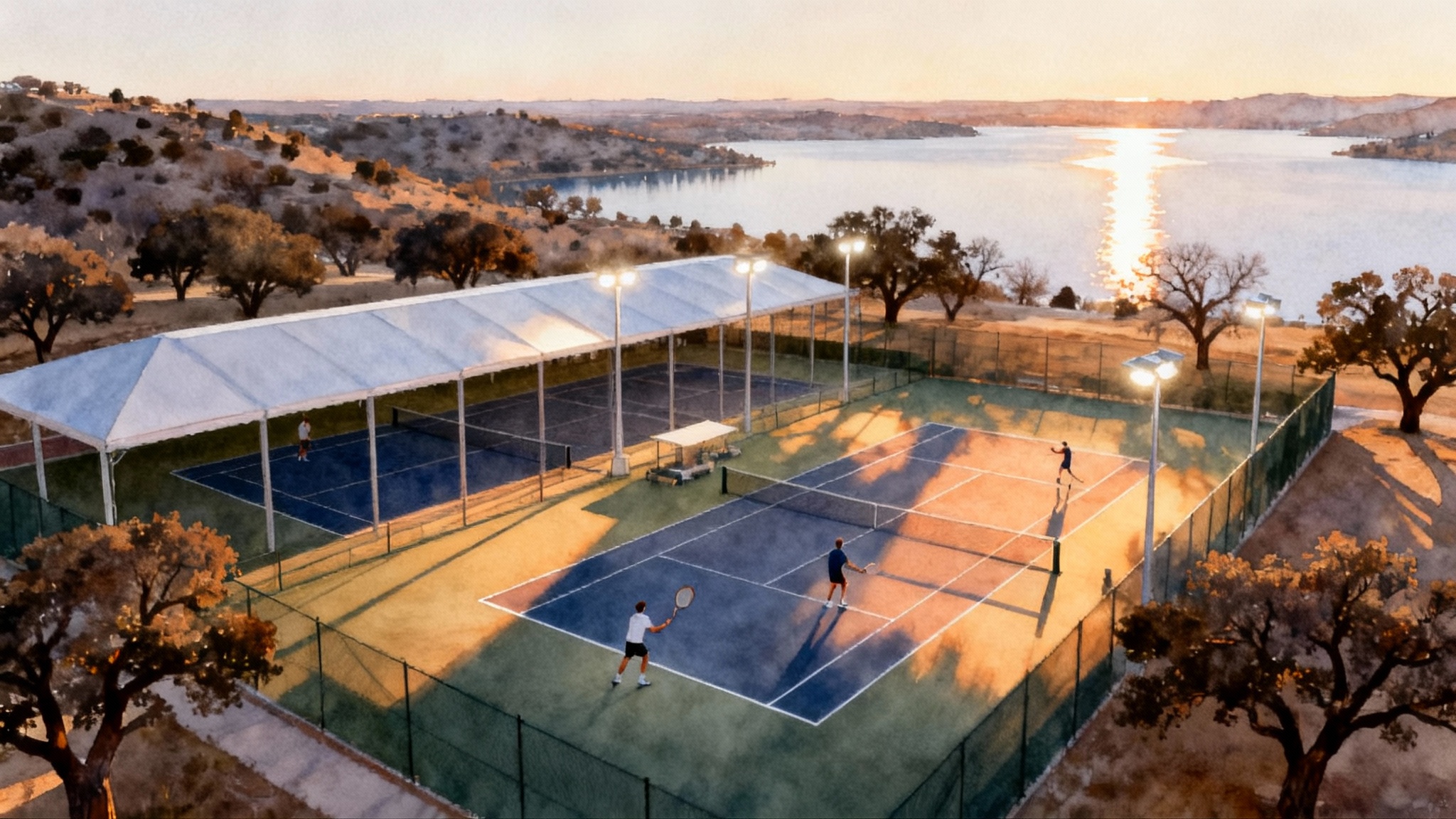
Tahoe Truckee corridor, 5,800 to 6,500 feet
- Climate in season: High Sierra mornings in the 40s and 50s, afternoons in the mid 70s to mid 80s, often with a lake breeze. Thunderstorms are less clocklike than in Arizona, but can still build in late afternoon. Late August can bring regional wildfire smoke, so build air quality checks into your plan.
- Courts: Truckee and Tahoe neighborhoods maintain well kept public courts, with resort complexes in Tahoe Donner, Northstar, and other communities. Book early for weekend mornings.
- Indoor backup: True indoor courts are limited at elevation. Reno and Carson Valley, about thirty to ninety minutes away depending on your base, have year round clubs. Keep an evening slot on hold there if you need guaranteed volume.
- Cross training: Lakeside mobility sessions, easy spins on the Legacy Trail, and short granite scrambles on rest afternoons.
Why it works: It is the coolest serious tennis base within driving range of the Bay Area and Northern Nevada, with a good balance of courts, shade, and evening options along the lake.
Court access and how to avoid scheduling snags
- Reserve city courts the moment summer windows open. Municipal reservation portals usually release summer slots in spring. Set calendar reminders.
- Build redundancy. For a group of twelve, book two sites within ten minutes of each other. If a park fills or a storm cell stalls, you can pivot.
- Know school calendars. High school tryouts and summer programs can take blocks of time. Email the athletic department or check posted calendars before you build a camp schedule.
- Pack a drying kit. Old towels, a soft broom, and a handheld squeegee can turn a 90 minute rain delay into a 30 minute pause if showers are brief.
- If your program depends on covered courts, scan our 2026 indoor tennis dome guide for contingency locations.
Sample weekly block for juniors, ages 12 to 18
Goal: blend skill acquisition, movement quality, and competitive volume while respecting the altitude learning curve.
-
Sunday arrival
- Afternoon: easy 30 minute shakeout on a shaded path, light mobility, dinner with extra hydration. Early lights out.
-
Monday, day 1
- 7:00 to 7:30: dynamic warm up, jump rope, band activation.
- 7:30 to 9:30: technical practice, swing shape and height windows, serves and first ball.
- 9:30 to 10:00: cool down, recovery snack.
- 2:00 to 3:00: video review and tactics classroom, indoors if storms are likely.
- 5:30 to 7:00: low density drills, patterns to targets, no more than six on two courts.
-
Tuesday, day 2
- 7:00 to 10:00: live ball transitions, approach and finish, overheads with footwork ladders.
- 10:30: strength session, forty minutes, basics only: squats, hinge, push, pull, midline.
- 5:30 to 7:30: match sets with constraints, for example, second serves to the backhand, plus bonus points for finishing at net.
-
Wednesday, day 3
- 7:00 to 9:30: serve plus one, return plus one, tie break progressions.
- 10:30: easy spin on bikes or trail jog thirty minutes.
- 2:00: mental skills, routines between points, breath work, pre serve countdown.
- Evening off, early sleep.
-
Thursday, day 4
- 7:00 to 9:30: tournament rehearsal, two short format matches, coaching between sets only.
- 10:30: strength, medicine ball throws, landing mechanics, mobility.
- 5:30 to 7:00: optional doubles games if weather and energy are good.
-
Friday, day 5
- 7:00 to 9:30: themed team competition, cross court boxes, targets at 60 percent of singles depth and width to sharpen margins at altitude.
- Midday: group lunch and recovery, calf flush in cold stream or pool, fifteen minutes.
- Evening: short film room on pattern recognition, highlight clips of break point plays.
-
Saturday, day 6
- 7:00 to 10:00: camp championship, abbreviated scoring, medals for sportsmanship and physical effort.
- Afternoon: team hike, ice cream, pack up.
Controls for altitude:
- First three days cap redline work at seven out of ten effort.
- Use high altitude balls for all sessions.
- Keep hydration logs. Award a small prize for the best recovery routine.
Sample four day adult camp for 3.0 to 4.5 levels
-
Day 1, Thursday
- 7:30 to 10:00: assessment and clean contact, contact height, spacing on wide balls, serve rhythm.
- 4:30 to 6:30: pattern ladders, cross court building, change direction on short balls only.
-
Day 2, Friday
- 7:30 to 10:00: second shot plans, approach plus volley, lobs under pressure.
- Midday: strength circuit, thirty five minutes, bodyweight heavy, with long rest.
- 5:30 to 7:00: social doubles, new partners each set, focus on first volley depth.
-
Day 3, Saturday
- 7:30 to 10:00: serve targets and return depth, four box serve game adjusted for altitude depth.
- Afternoon: free time or guided recovery hike.
- 5:30 to 7:30: coached match play, themed games to highlight patterns learned.
-
Day 4, Sunday
- 7:30 to 9:30: confidence session, hit your favorite patterns for score, video capture for take home notes.
- 10:00: coffee and debrief, gear recommendations and a month long follow up plan.
Controls for altitude:
- Day one strings two pounds tighter than home, or bring a second frame pre strung.
- One liter of fluids for every ninety minutes on court, include electrolytes at least once per day.
- Sunscreen, hat, and light long sleeves, since ultraviolet intensity is higher at elevation.
Build around the weather, town by town
- Colorado Springs: hold the 2:00 to 6:00 p.m. block open in July and early August. The majority of thunder cells form over the mountains to the west and roll toward town mid to late afternoon. Many fade by early evening, which makes 6:00 p.m. serve and return sessions a reliable bet.
- Park City: mornings are your home base. On pattern days, cumulus growth starts early, but the strongest updrafts tend to be south and east of the town. If radar is noisy by 2:00 p.m., switch to strength and film indoors and use the 5:30 p.m. window if it clears.
- Flagstaff: assume daily lightning potential from early July through late August. Schedule indoor plan B at the university center for at least one afternoon of your week to guarantee continuity.
- Tahoe Truckee: build a smoke and wind contingency. Check air quality each morning and be willing to flip a bike spin with a court session if the lake breeze picks up. On storm days, courts dry quickly in the evening sun.
A simple packing and prep list
- Two frames, one strung tighter for altitude.
- High altitude tennis balls if you run your own sessions.
- Electrolyte packets and soft flasks or bottles.
- Sunscreen rated for sweat, hat, and light sleeves.
- A light squeegee and towels for quick dries after short showers.
- Trail shoes for off court flush runs and hikes.
- A printed lightning plan, including the closest enclosed shelter for each venue.
How to pick your week
- Juniors chasing competition: aim for late June in Colorado Springs or Park City for drier patterns and slightly cooler afternoons before storm chances peak.
- Families seeking the coolest air: Tahoe Truckee in July or early August balances morning tennis with lake afternoons.
- Players who want a guaranteed indoor hedge: Flagstaff any week, with a standing reservation indoors for one afternoon.
What improvements last when you go home
Players often report two pleasant surprises back at sea level. First, serves jump. Training at altitude rewards hitting up and through the ball with a full motion, and that carries over. Second, footwork cleans up. With a ball that flies farther, you learn to set margins and play higher over the net. Both gains stick, and your confidence grows because you survived decision making in shifting afternoon skies.
The bottom line
A great altitude tennis week is about matching your schedule to the sky and matching your gear to the air. Build mornings around cool, calm windows. Treat afternoon storms as a chance to lift, learn, or review film. Use high altitude balls, tighten strings a bit, and reset your targets. If you do that in Colorado Springs, Park City, Flagstaff, or along the Tahoe Truckee corridor, you will earn more high quality reps than the heat could ever allow at sea level, and you will take home patterns and fitness that make your fall season feel easier. When temperatures drop, pivot to a desert winter tennis plan to extend your gains.