French Riviera Spring Clay: March to May at All In Academy
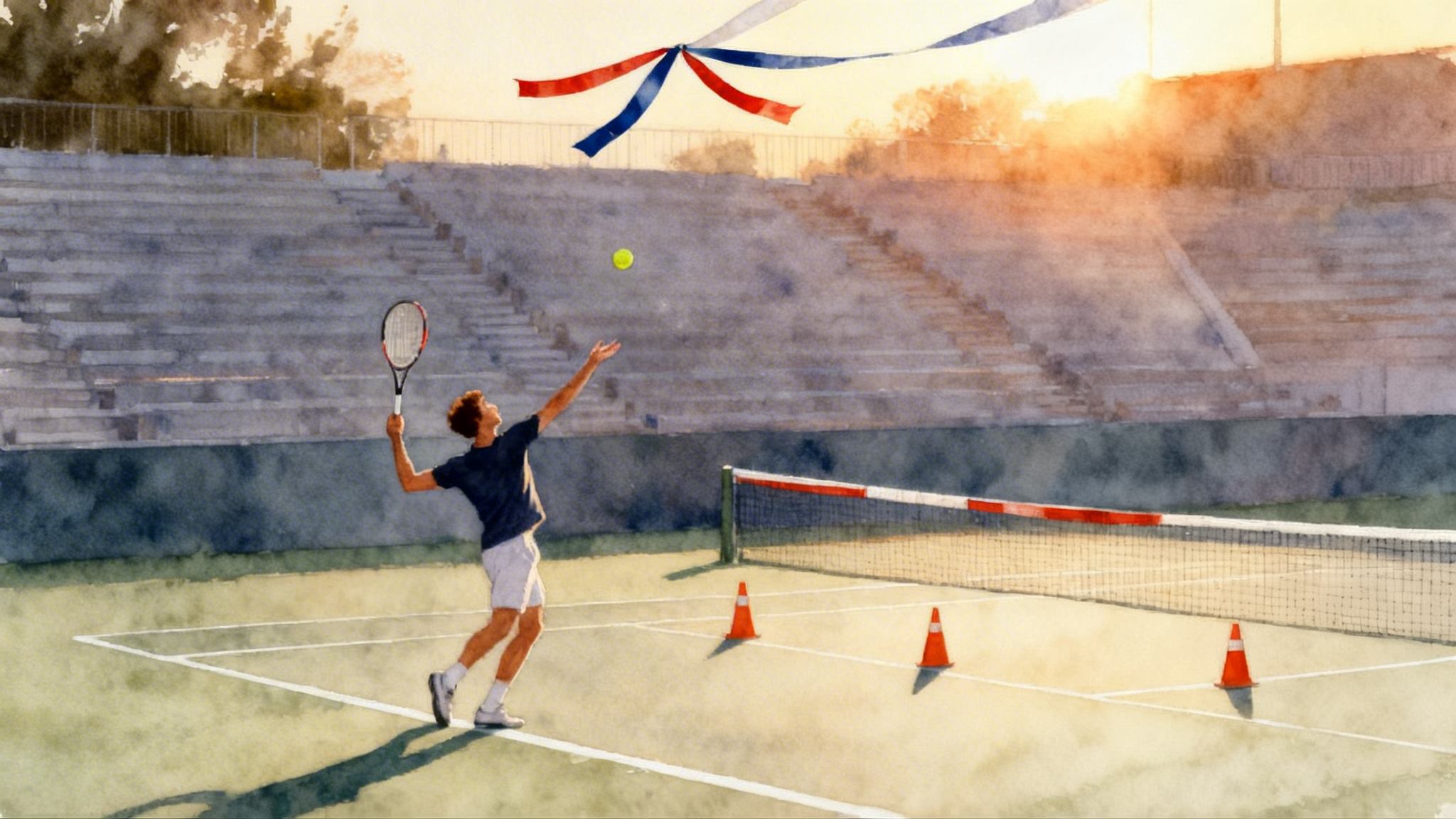
Use the Cote d’Azur’s mild spring to run a focused red clay block from March to May. Base yourself at All In Academy in Villeneuve-Loubet, pair training with the Monte-Carlo Masters, and plan logistics, lodging, and a Lyon backup.
 Tommy
Tommy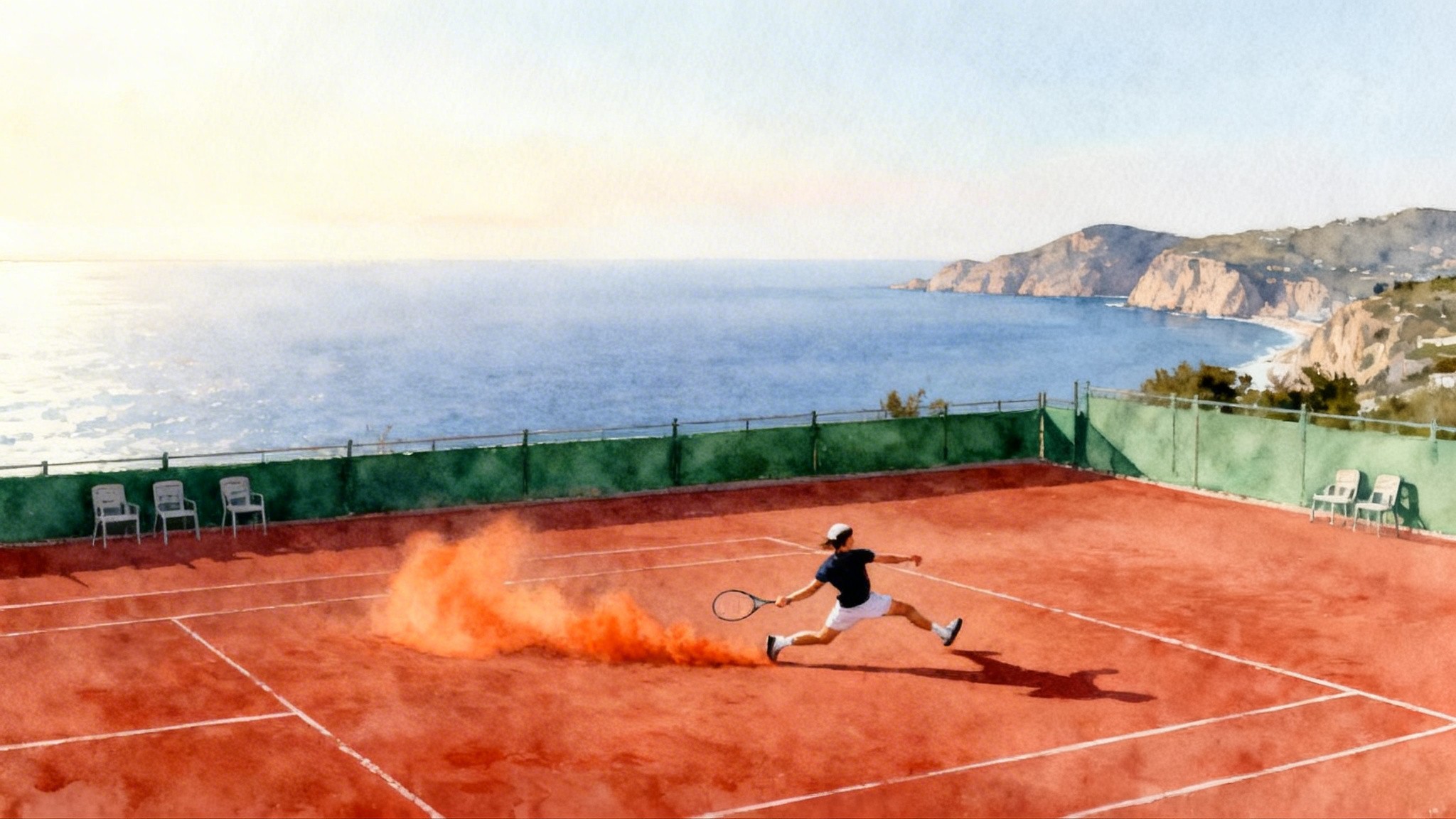
Why the French Riviera is the smartest spring clay base
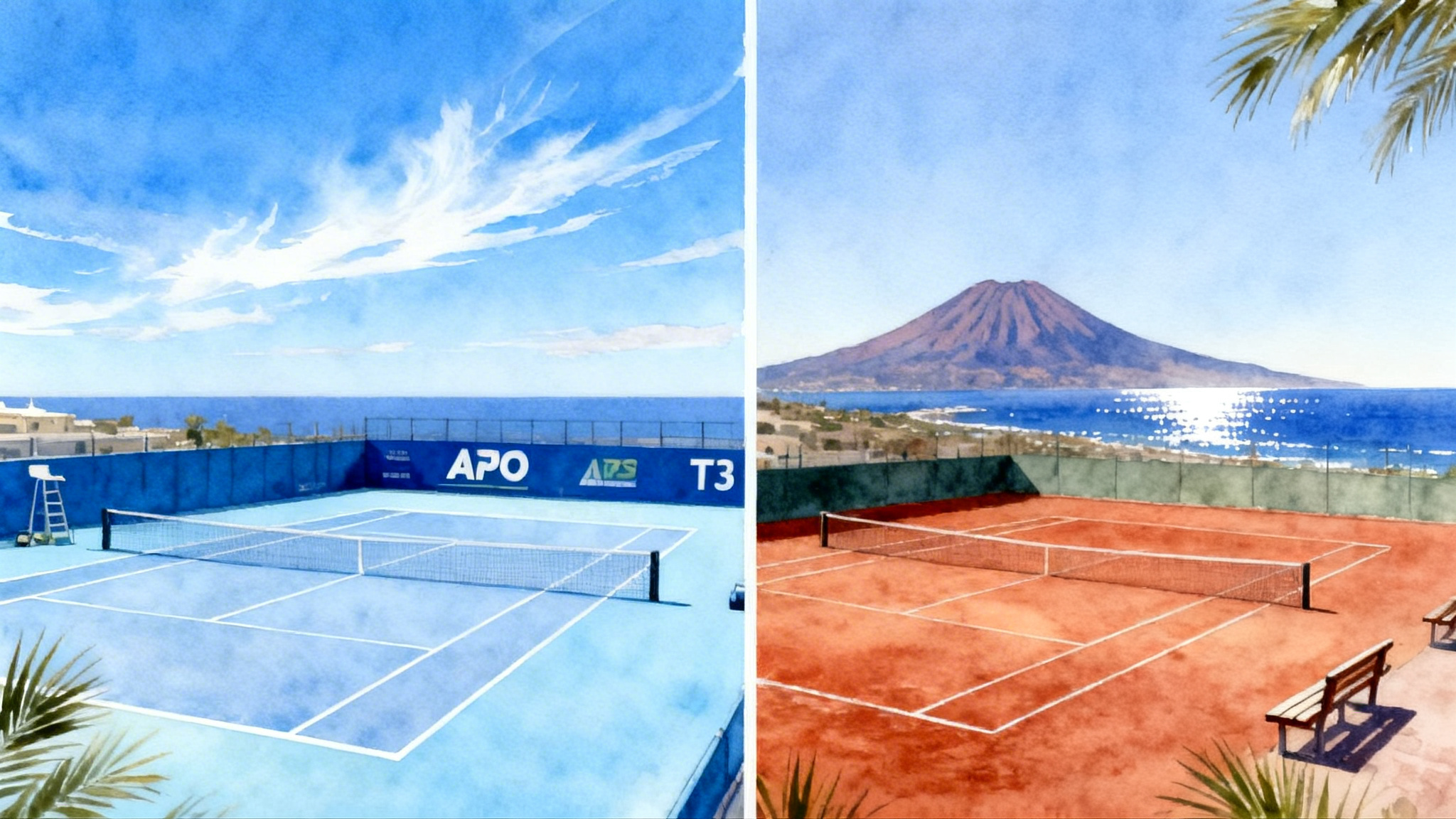
Early spring in Europe can be a weather gamble. In Paris, Munich, or Prague you may find chilly mornings and persistent showers that break rhythm. On the Cote d’Azur between Nice and Cannes, you are far more likely to get playable windows from March to May. The sea moderates temperatures, the Alpes-Maritimes deflect some harsher winds, and daylight stretches quickly after winter. That cocktail means balls fluff a bit less than in damp northern air, the top layer of clay dries faster after a passing shower, and you get more consecutive quality sessions.
If you are planning a serious pre-summer clay block, the Riviera’s microclimate offers a simple edge. Fewer cancellations. More sessions that start on time. And an outdoor setting that helps you relearn the footwork and patience that red clay demands.
All In Academy, Villeneuve-Loubet: your red clay home base
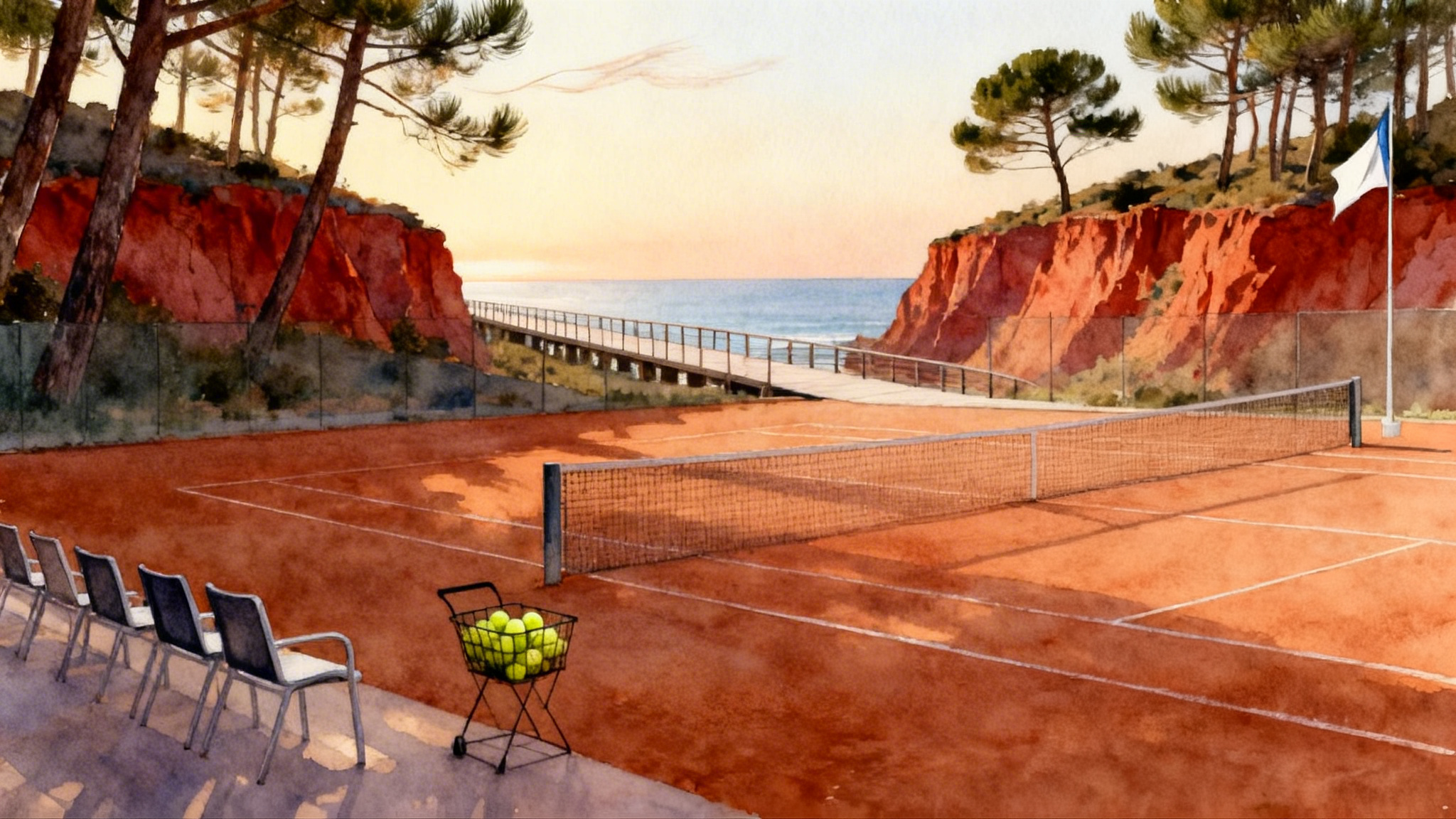
Villeneuve-Loubet sits between Nice and Antibes, five minutes inland from the Mediterranean. It is a sweet spot for training because you are close to transport, lodging, and the coastline, yet the courts are tucked away from the busiest waterfront traffic. All In Academy runs a dedicated campus here with red clay courts, a modern gym, and a coaching team used to preparing juniors, college hopefuls, and competitive adults. For dates, programs, and campus details, start with the All In Academy Riviera campus profile.
The appeal of this base is not only the surface. It is the workflow. Warm up on a short hill jog or beach promenade. Train on red clay with coaches who drill the small details that win on this surface. Recover nearby without cross-city commutes.
What the on-court work looks like in March to May:
- Ball height and shape: Build a heavier crosscourt trajectory off both wings, adding depth rather than pace as your first lever. The slower court rewards the extra meter of depth even more than in summer hard-court play.
- Movement patterns: Rehearse the split-step out of the corners, the drop-step crossover for recovery, and the slide-stop that sets the base for neutral balls. Expect sequencing of two or three ball patterns before a neutral reset.
- Serve and return: Second serves move up the priority list. Add kick, vary location, and shrink the target window to limit short returns that hand over initiative. For technique refreshers, study this kick serve biomechanics guide.
- Point construction: Work shape-change points. For example, a looping backhand to the ad corner, then a flatter forehand redirect down the line when the short crosscourt sits up.
Build your April watch-and-train around the Monte-Carlo Masters
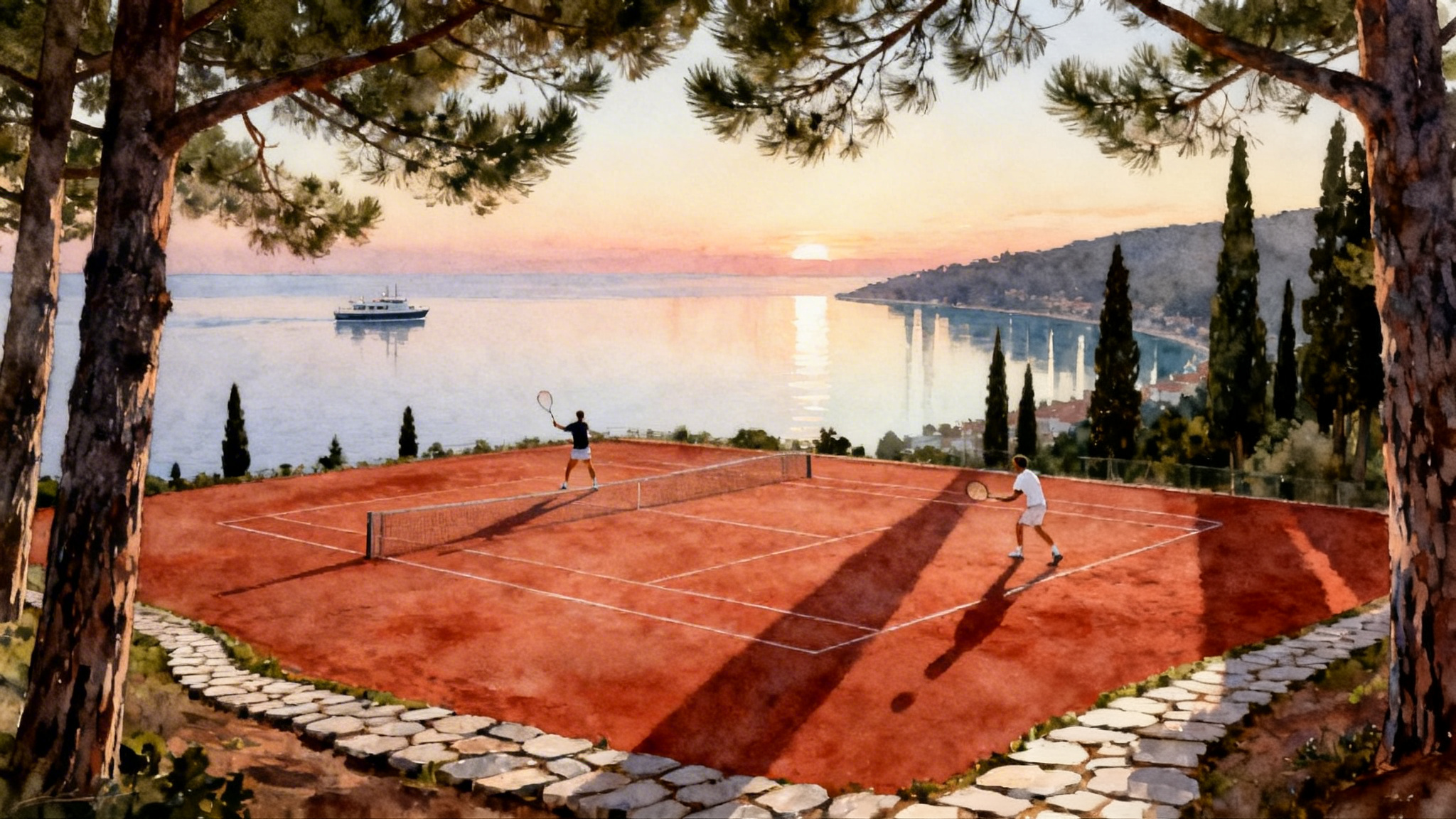
The April Monte-Carlo Masters turns the Riviera into tennis central for a week. Courts in Roquebrune-Cap-Martin perch above the sea, and the entire men’s tour seems to pass through. If you are based at Villeneuve-Loubet, you can craft a hybrid schedule that blends training with live scouting.
A practical seven-day watch-and-train plan:
- Saturday arrival: Land at Nice, settle in at your lodging, and hit for 60 to 90 minutes late afternoon to wake up the legs. Keep it short. Focus on timing and movement warmup, not on volume.
- Sunday acclimation: Two daytime sessions separated by a long lunch. Morning on fundamentals and serve rhythm. Afternoon on point building and returns.
- Monday and Tuesday at the tournament: Morning practice block at All In Academy, then train ride east to watch early rounds. Take notes on court position, height of rally balls, and second serve patterns. Aim for three to four hours in the stands.
- Wednesday training emphasis: Longer morning session, plus a shorter afternoon with matchplay sets. Use insights you collected from Monday and Tuesday.
- Thursday tournament day: Catch the round of 16. Target a top clay-courter’s match and a contrasting style. Pay attention to how they defend with height, then change direction safely.
- Friday integrate: Drill the two or three patterns you loved most. Finish with a high-intensity tiebreak set.
- Saturday tune and depart: Ninety minutes in the morning, recovery at the beach, and travel home or onward.
Watching live is not passive entertainment. Treat it like film study in motion. Log what you see in a small notebook or notes app: rally shot count, preferred height into the backhand corner, and what happens after the first short ball. Then translate two ideas into your next session. One change per day beats ten half-changes you will not keep.
Sample week plans that actually work
The Riviera invites long lunches and sea views, but your block is about work. Here are two simple week templates that deliver structure without overcomplicating it.
Junior performance week
Goal: build habits that stick through June tournaments.
- Monday
- AM: Movement ladders, serve rhythm, forehand shape to deep crosscourt targets. 120 minutes.
- PM: Pattern play. Two-ball crosscourt, one-ball line. Scored drill that rewards depth over outright winners. 90 minutes.
- Conditioning: Mobility and core, 30 minutes.
- Tuesday
- AM: Return plus first ball. Coach feeds a mix of high, slow serves to force you to create your own pace. 90 minutes.
- PM: Matchplay sets with constraints. For example, must rally five balls before a down-the-line attempt. 90 minutes.
- Classroom: Ten-minute clip review from phone video, focus on recovery steps.
- Wednesday
- AM: Footwork circuits, then heavy backhand crosscourt to lift height. 120 minutes.
- PM: Serve plus one combinations. Target body serve followed by inside-out forehand. 60 to 75 minutes.
- Conditioning: Hill sprints near the beach, short and crisp, 20 minutes.
- Thursday
- AM: Competitive games to 11, first to 7 must win by two. Emphasis on second serves under pressure. 120 minutes.
- PM: Doubles patterns for agility and hands, even if you are singles focused. 60 minutes.
- Friday
- AM: Matchplay with umpired scoring and changeovers timed. Practice the mental routine. 120 minutes.
- PM: Recovery hit, 45 minutes. Flexibility session, 20 minutes.
- Saturday
- AM: Team tiebreak ladder. 60 minutes.
- Travel or free afternoon.
Coach notes: Juniors benefit from steady constraints. Give every drill a clear scoring rule. That converts vague “work hard” instructions into a concrete win condition.
Adult performance week
Goal: upgrade clay instincts while keeping travel enjoyable.
- Monday
- AM: Warmup, serve foundations, neutral rally height and depth. 90 minutes.
- PM: Half-court open-stance defense, then full-court points with a two-shot build rule. 60 to 75 minutes.
- Tuesday
- AM: Return of second serve, plus transition to the forecourt on short balls. 90 minutes.
- PM: Light hit or tournament spectating.
- Wednesday
- AM: Pattern practice. Inside-out to the backhand corner, then forehand inside-in only if ball lands short. 90 minutes.
- PM: Gym for posterior chain strength and ankle mobility. 45 minutes.
- Thursday
- AM: Situational sets starting 30 all or with the server down ad. Simulate pressure. 75 minutes.
- PM: Ice bath or sea dip for recovery, easy jog.
- Friday
- AM: Full matchplay with tactical objective chosen at breakfast. 2 hours.
- PM: Stretching and soft tissue work.
- Saturday
- AM: Team tiebreaks and volley touch games. 60 minutes.
- Brunch and travel.
Adult notes: The goal is not exhaustion. It is consistency. Protect your Achilles by adding a five-minute ankle warmup before every session on clay.
Getting there and moving around
Nice Cote d’Azur Airport sits just west of the city and is the main gateway for the Riviera. Villeneuve-Loubet is a short drive from the terminals. If you prefer public transport, trains on the coastal line run between Nice Saint-Augustin station and Villeneuve-Loubet Plage, and buses cover the gaps. Rideshare options are abundant for the last mile.
- By car: The A8 autoroute runs parallel to the coast. Off-peak, the drive from the airport to Villeneuve-Loubet can be 15 to 25 minutes depending on your lodging zone. Parking is easier slightly inland than directly on the beach.
- By rail: The regional TER service links the coastal towns from Cannes to Monaco. If you plan tournament days, a morning train east toward Monaco followed by a short local bus to the venue keeps logistics simple.
- By bike or on foot: The coastline has long stretches of promenades. A short spin to the courts or the beach can double as a warmup.
Where to stay: five useful zones
You do not need a single perfect neighborhood. You need proximity and a base that matches your schedule.
- Villeneuve-Loubet Plage: Walkable to the beach and coastal train, with plenty of apartments. Ideal if you want a car-free week.
- Marina Baie des Anges: The iconic pyramid buildings offer apartments with sea views. Convenient for families who want kitchens and quick supermarket access.
- Biot village: A pretty hilltop old town just inland. Quieter at night, with cafes for post-session lunches.
- Antibes Old Town: A short train or car hop west, with a classic Provençal market and more restaurant choice. Slightly longer commute to the courts but great ambiance.
- Cagnes-sur-Mer and Saint-Laurent-du-Var: Close to the airport, practical hotels, and easy access to the A8 for day trips.
If you bring a car, look for lodging with a dedicated space. If you rely on rail, choose walking distance to a TER station to simplify tournament days.
Compare the microclimate to other European spring options
- Barcelona and the Costa Brava: A strong alternative for clay with comparable temperatures. The tradeoff is longer transfers if you want to add the Monaco tournament to your plan.
- Rome: Warmer by early May, but March and early April can be unsettled, and the big-city sprawl complicates quick commutes between training, lodging, and sightseeing.
- Mallorca and Marbella: Often sunny, with good club options. If you plan a tour that includes Monte Carlo spectating, the Riviera base wins on proximity and on rail convenience.
- Northern Europe: Excellent clubs but less predictable March weather, which can clip total outdoor hours.
For a nearby shoulder-season option that pairs well with a Europe circuit, see this Lošinj shoulder-season clay guide.
The Riviera does not guarantee blue skies, but the odds of stringing together five to six consecutive outdoor days improve meaningfully.
Contingency plan: pivot to Lyon-Décines if skies open
Even on the Cote d’Azur, a spring front can stall for a couple of days. Build a simple backup so your block stays intact.
- Step 1: Track a three to five day forecast. If a slow system looks set to park over the coast, consider a pivot.
- Step 2: Shift to All In Academy’s Lyon-Décines campus for three or four days. The interior often offers a different weather pattern than the coast.
- Step 3: Travel logistics are straightforward. From Nice, high-speed rail brings you to Lyon Part-Dieu. From there, local tram or rideshare gets you to Décines quickly. Flights are also frequent between Nice and Lyon.
- Step 4: Keep the same training goals. The surface is the same, and the coaching culture is aligned. You lose no time adapting.
- Step 5: Return to the Riviera to finish the block once the front passes.
This is not overplanning. It is the same principle athletes use on match day. You have a Plan A for sun and a Plan B for showers. Either way, the work gets done.
How to use the Monte-Carlo week like a pro
Live tennis is a masterclass. You get the angles and height that television flattens. Here is how to convert that into skill:
- Scout a specialist: Watch a top clay player handle a neutral rally ball. Note how rarely they change down the line without first lifting a heavy crosscourt. Copy that ratio in your next session.
- Chart two games: Write down serve location and return depth for two consecutive service games. Do the same for your own practice sets later that day. The contrast will show you the gap to close.
- Watch feet, not hands: In the stadium, focus on the first two steps after contact. When the pros defend, they load, slide, then plant to recover. Film your own equivalent movement in the afternoon and compare.
Recovery and off-court
Clay is elastic on the joints but unforgiving on laziness. Recovery on the Riviera is easy to set up:
- Sea dips: Short and cold is fine. Three minutes post-session speeds up legs without fuss.
- Walks instead of taxis: A fifteen-minute stroll to dinner keeps the ankles loose after sliding drills.
- Food: Lunch at a simple brasserie or grab produce from a market for an at-home recovery bowl. Keep hydration steady. The salt breeze fools some players into under-drinking.
What this block unlocks for summer
Players who invest four to six weeks on clay between March and May tend to arrive in June with two advantages. First, their second serve holds up. The daily reps against returners who stand farther back and spin the ball deeper harden a server’s resolve. Second, their patience muscle is bigger. Clay forces you to deliver shape before pace, and it rewards the decision to reset the point. Hard courts then feel like a bonus, not a crutch.
If your summer includes national events, European club matches, or college showcases, a Riviera block is a multiplier. You sharpen weapons that transfer to any surface.
Booking pointers and a simple checklist
- Pick your core week: If you want tournament spectating, choose an April week that overlaps with Monte Carlo. If not, target late March or early May for quieter beaches and easier tables at restaurants.
- Confirm training slots: Lock in morning sessions first, then add one or two afternoons once you see how your legs respond. If you are traveling with a junior, plan for a midday meal and a short nap window.
- Lodging: Decide if you want walkable access to the coast or a quieter inland base. Book parking if you rent a car.
- Transport: If you plan to mix training with spectating, consider rail day passes to keep costs predictable and avoid parking hassles.
- Contingency: Add Lyon-Décines as a note on your calendar, with a short list of trains you could take if a coastal front lingers.
- Equipment: Bring two pairs of clay shoes if you can. Wet mornings can add weight to the upper, and a dry backup pair keeps your footwork crisp in the afternoon.
- Surfaces and strings: Consider one kilogram or two pounds less tension to help generate height when the air is cool. Pack a spare reel if you plan a multiweek stay.
When you are ready to compare dates and structure, start with the All In Academy Riviera campus profile. You can layer in a day or two of Monte Carlo spectating and add a Lyon pivot as needed. The whole point is to make great sessions easy to repeat.
Final serve
Spring on the French Riviera rewards intent. Base at Villeneuve-Loubet, put in the hours on red clay, and use the Monte-Carlo week to learn from the best. Keep logistics simple and your plan flexible. By early June, you will feel the difference in your legs, in your second serve, and in the quiet confidence that comes from stacking quality work day after day.