2026 Doubles Playbook: Formations, Signals, 20-Minute Drills
A step-by-step doubles guide for juniors, parents, and adults. Learn three core formations, a simple hand-signal system, clear role cues, and four plug-and-play 20-minute practice blocks, plus printable cheat sheets.
 Tommy
Tommy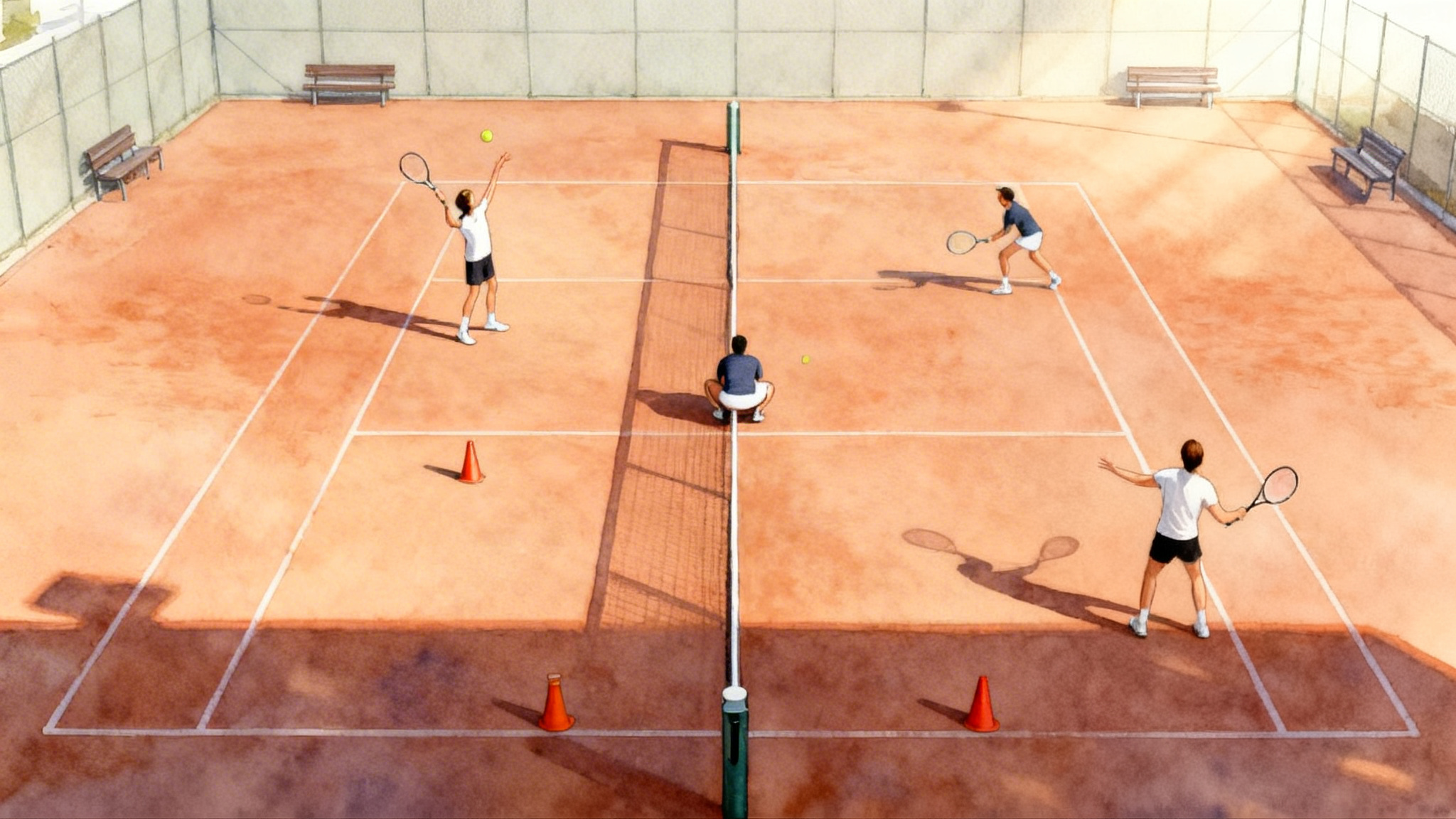
Why Doubles Wins Matches in 2026
Doubles rewards clear roles, proactive net play and repeatable patterns. This guide gives you three core formations, a simple hand-signal system and four 20-minute practice blocks you can run with any partner. Use it to turn scattered rallies into confident, high-percentage tennis.
The Three Core Formations
You only need three formations to cover most situations. Rotate through them based on score, opponent tendencies and confidence.
1) Standard Formation
- Setup: Server starts back, server’s partner at the net. Returner back, partner at the net.
- When to use: Neutral points, early games, second serves while building rhythm.
- Ball patterns to hunt:
- Serve to backhand, first volley or poach through the middle.
- Return crosscourt, front player pinches middle.
- Common errors: Net player watches the ball instead of the opponent. Fix it by reading the returner’s hips and striding to the seam.
2) Australian Formation
- Setup: Net player lines up on the same side as the server. Server stands a step closer to center to protect the T.
- When to use: Opponent has a strong crosscourt return or you want to force a backhand down the line.
- Ball patterns to hunt:
- Serve T, partner poaches to open court.
- On wide serves, server covers line first, then recovers middle.
- Common errors: Leaving the line open. Give the returner the hardest ball first, even if it looks predictable.
3) I-Formation
- Setup: Net player crouches near center line. Server signals the post-serve move. Forces the returner to guess.
- When to use: Protect second serves, hide patterns, break a hot returner’s rhythm.
- Ball patterns to hunt:
- Serve body, net player breaks to the seam for a first volley finish.
- Mix T and wide serves with a fake to hold the returner.
- Common errors: Late movement from the net player. Start your move as the ball crosses the net toward the returner, not after contact.
The Simple Hand-Signal System
Agree on one look and go. Server looks back between bounces. Net player shows two signals with the off hand behind the back.
- First signal = net player’s move:
- Fist: Poach after the serve.
- Open hand: Stay and guard the line.
- Wiggle fingers: Fake then recover middle.
- Second signal = serve location:
- One finger: T serve.
- Two fingers: Body serve.
- Three fingers: Wide serve.
- Optional I-formation add-on:
- Thumb right or left behind the back to show which lane the net player will take after the serve.
Keep it quiet, keep it quick and confirm with a head nod before the toss.
Role Cues You Can Say Out Loud
Short cues prevent confusion and free up reaction time.
- Server: Say target and first ball plan. Example: Body, cover line first.
- Server’s partner: Say move and seam. Example: Poach, own the middle.
- Returner: Say depth and direction. Example: Deep cross, recover middle.
- Returner’s partner: Say what you take away. Example: Watch line, pinch late.
Four 20-Minute Practice Blocks
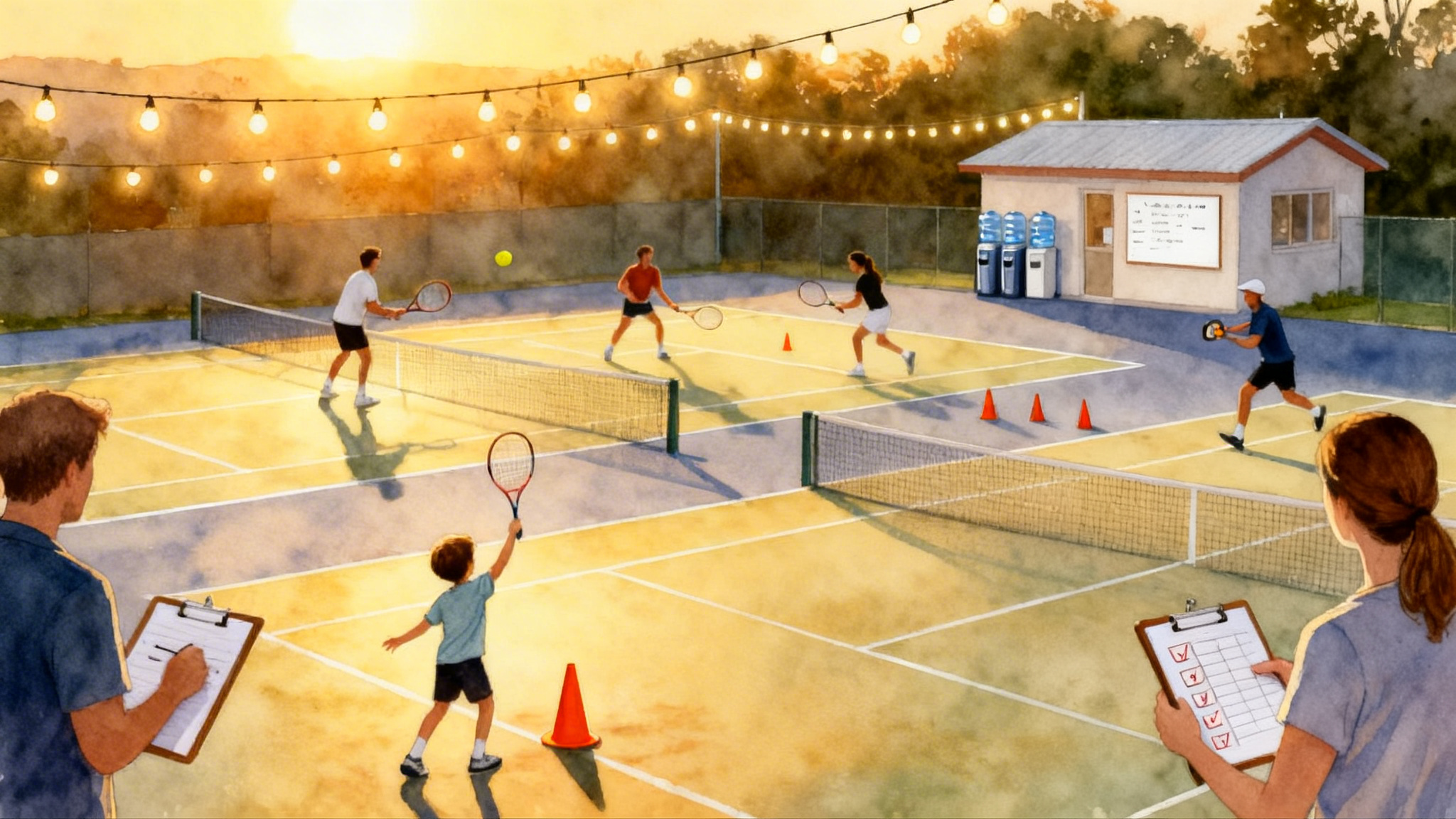
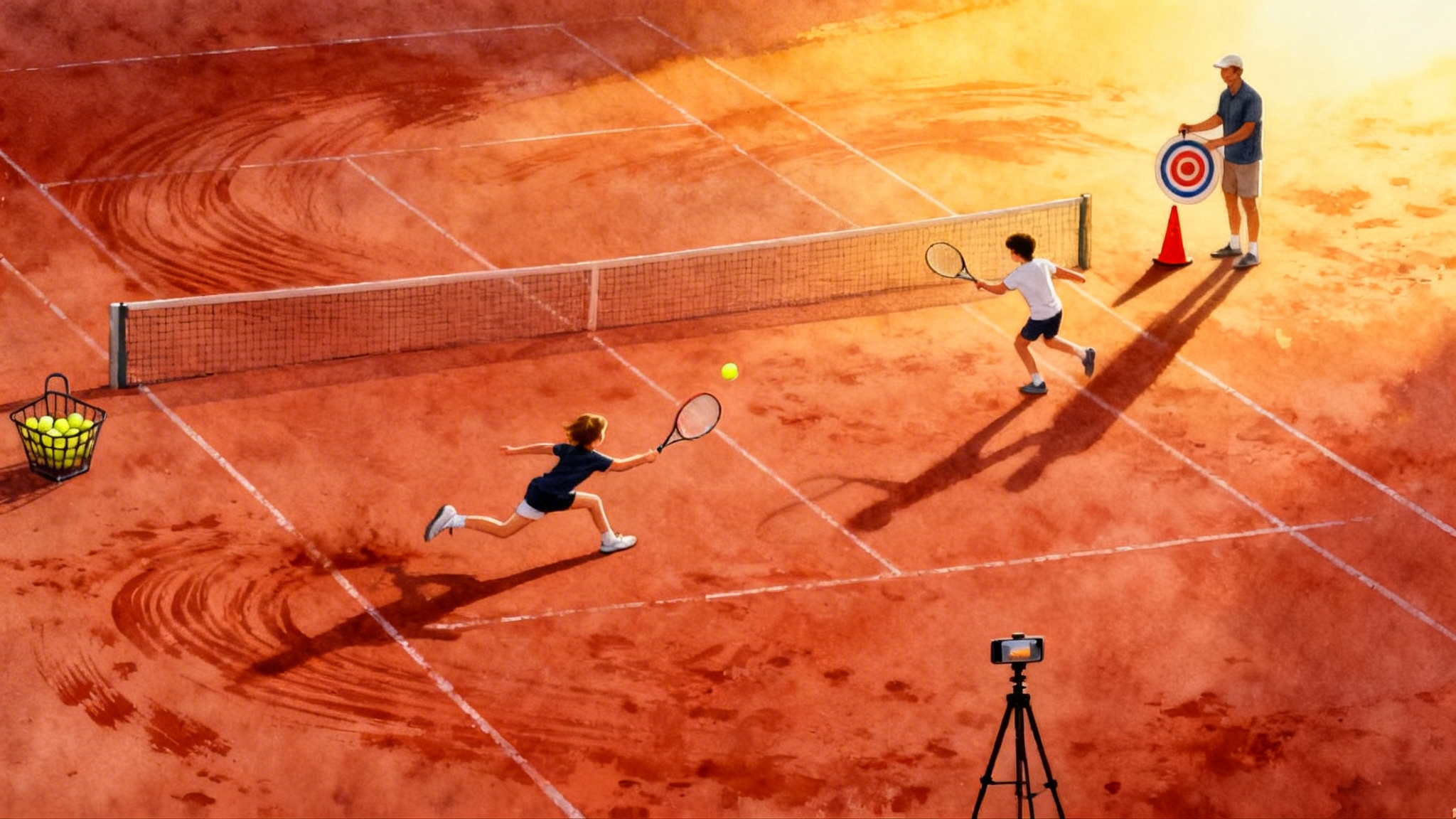
Each block fits a half court or full court, 2 or 4 players. Keep score to keep pressure.
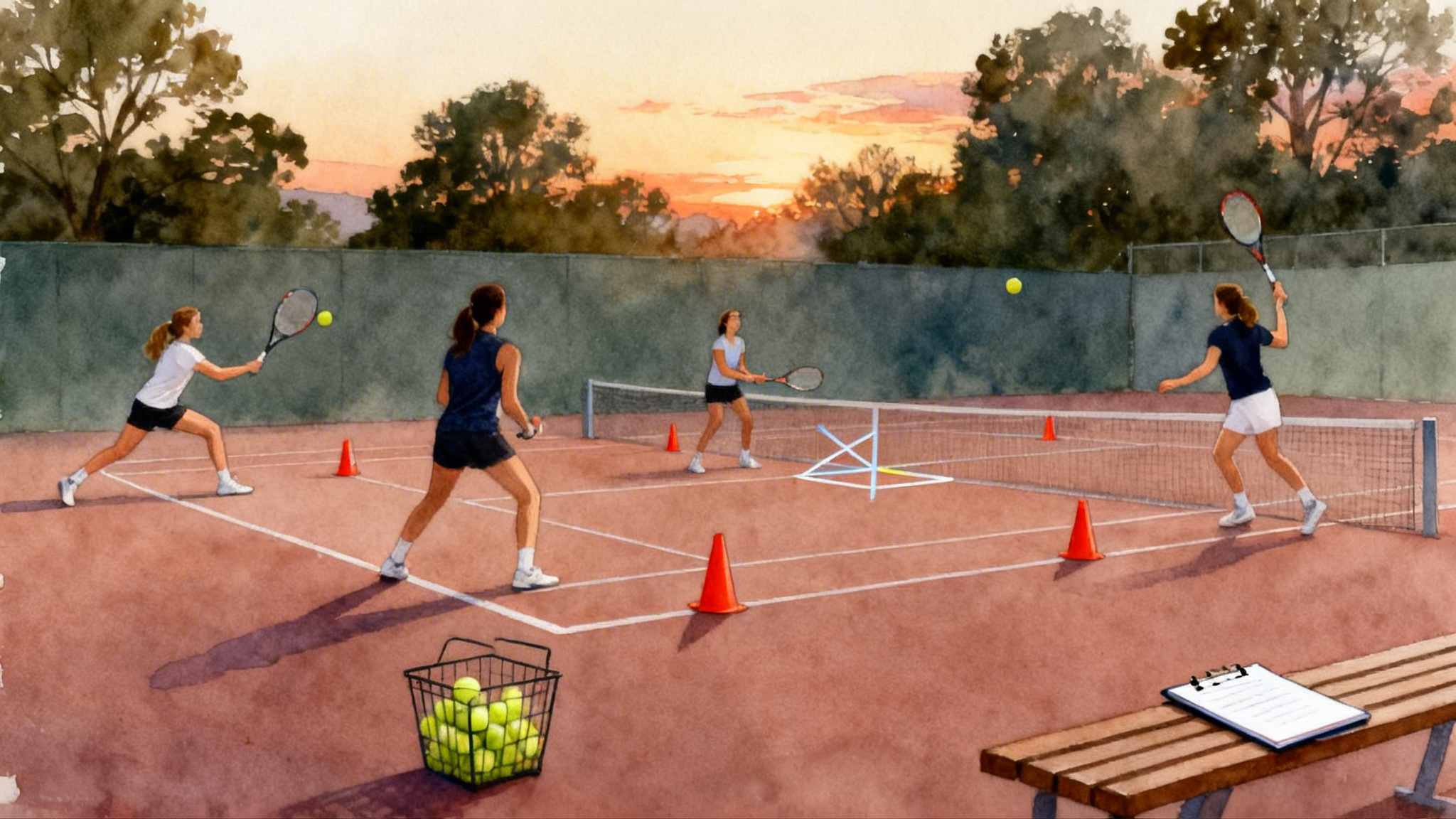
Block 1: Serve plus First Volley With Poach
- Setup: Standard formation. Server aims body or T. Net partner calls Fist or Open.
- Scoring: First team to 15 points. Server’s team scores 2 points for poach winners, 1 for any hold.
- Coaching cues: Toss forward, first volley to big middle, net player moves on the toss.
- Progression: Add Australian formation every third point.
Block 2: Return plus First Strike to the Middle
- Setup: Returner commits crosscourt, partner pinches late.
- Scoring: First to 15. Return team gets 2 points for middle-first winners or forced errors, 1 for holds.
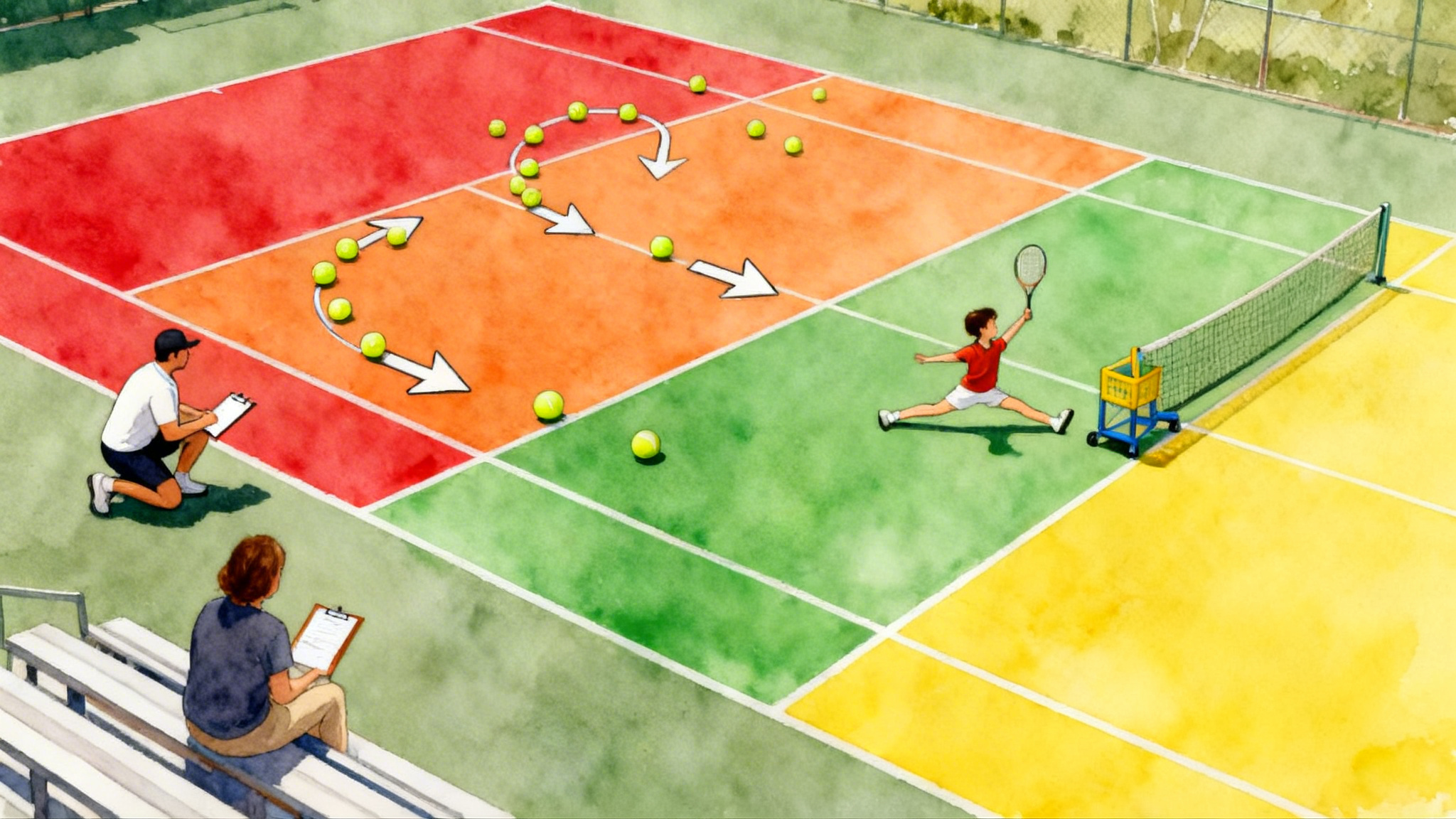
- Coaching cues: Short backswings, aim yellow-lane middle, front player reads shoulders not ball.
- Progression: Returner mixes lob off second serves every fourth point.
Block 3: I-Formation Guess and Go
- Setup: Server and net player signal. Returner must call guess out loud before the serve.
- Scoring: First to 12. Serving team gets 2 points on correct-guess poach finishes, 1 otherwise. Return team gets 2 on clean line passes.
- Coaching cues: Same toss, same routine, net player explodes across the seam.
- Progression: Add body serves only for three points to build confidence.
Block 4: Pressure Tiebreak Games
- Setup: Play 7-point tiebreakers using one formation per mini-set.
- Rotation: Mini-set 1 Standard, 2 Australian, 3 I-formation. Repeat.
- Coaching cues: Change only one variable at a time. Keep the middle crowded.
The Middle Is Gold
Most club and junior errors come from over-hitting the alleys. Own the seam between opponents to create confusion, then finish to the open court. If you struggle under pace, polish your movement patterns with the footwork progressions in the article seven proven footwork patterns.
Serve and Return Upgrades That Translate Fast
- Serve: Aim body to jam and protect your partner. Add a slice wide on deuce and T on ad to stretch the return.
- Return: Shorten the unit turn and drive deep cross into the hip. For a complete routine, see master the 2026 return system.
Video Feedback That Actually Helps
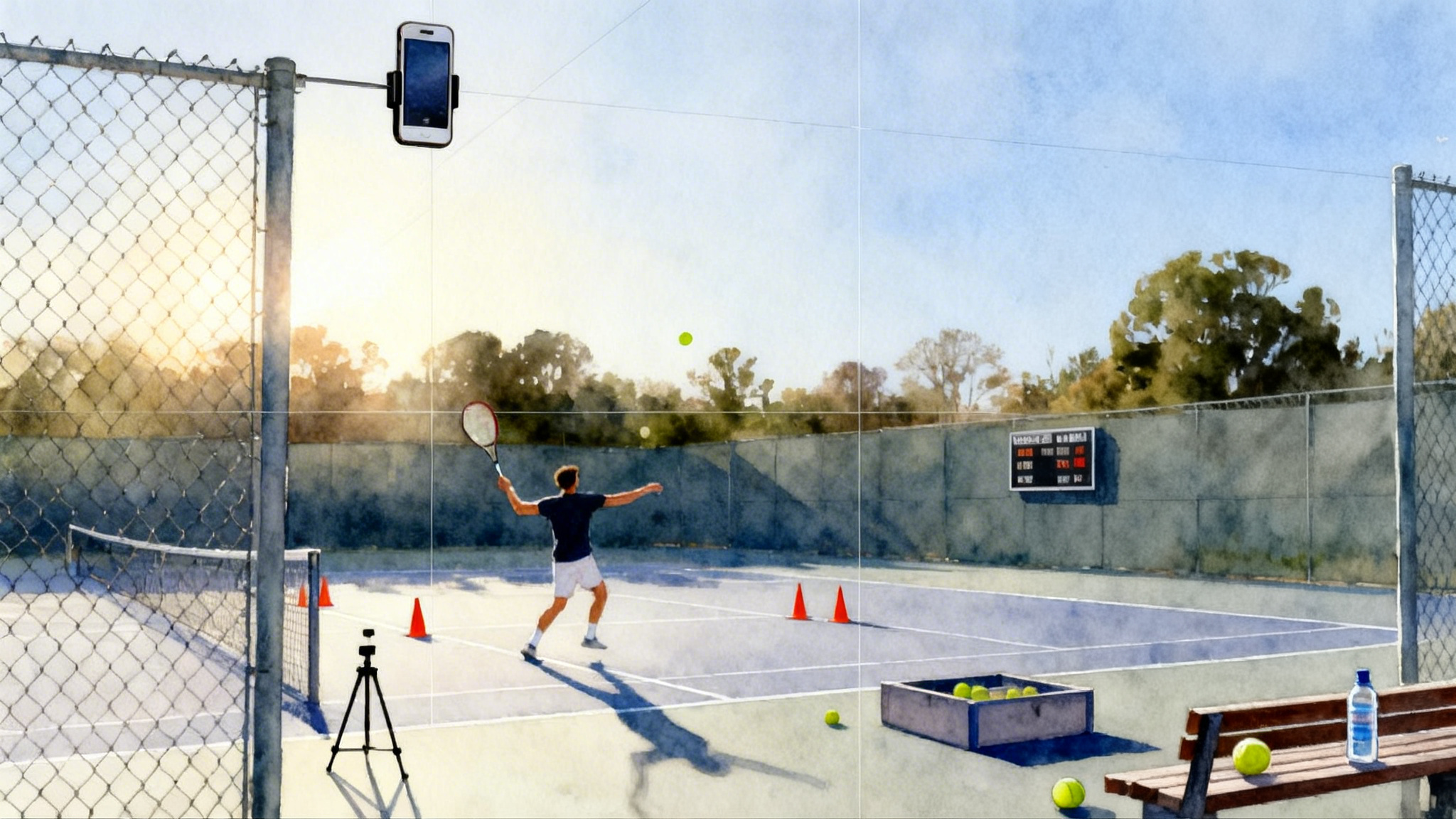
Film one return game and one service game from behind the baseline. Tag three moments: late split step, missed seam, or poor depth. Use those clips to pick your next drill block. For a step-by-step camera and tagging setup, use film to feedback tennis guide.
One-Page Match Plan You Can Print
Use or adapt this checklist before every match.
- Formation default: Standard on first serves, I-formation on second serves.
- First four balls:
- Server team: Body serve, partner poach to middle.
- Return team: Deep cross return, partner pinches late.
- Pressure switches:
- Missed two returns in a row: Australian to the backhand.
- Opponent lobs well: Net player starts one step deeper and fakes instead of full poach.
- Scoreboard rules:
- Up by 30-love: Poach on the next first serve.
- Down 30-40: Body serve or body return only.
Common Mistakes and Fast Fixes
- Drifting at net: Set your split step as the returner swings. Land forward into the seam.
- Floating first volleys: Aim lower over the middle net strap and swing less, block more.
- Telegraphing the poach: Start inside the service box, move on the toss, and sell the fake.
- Over-lobbing: Lob only off sitters or heavy pace, not as a bailout on neutral balls.
Rules and Court Awareness
Know the boundaries so you can play assertively and avoid avoidable let calls.
- Review the official language in the ITF Rules of Tennis overview.
- For U.S. play specifics and etiquette, see the USTA Friend at Court code.
Weekly Plug-and-Play Plan
- 60 minutes: Block 1 and Block 2, rotate servers every 8 points. Finish with 7-point breaker in your best formation.
- 90 minutes: Blocks 1 to 3, then two pressure tiebreakers from Block 4. Log three cues you executed and one you will improve next time.
Quick Glossary
- Seam: Space between opponents targeted by poaches and first volleys.
- Pinch: Net player steps toward middle to take time away without full poach.
- Fake: Early move toward middle, recover to guard the line before contact.
Your Next Step
Pick one formation for first serves, one for second serves and one drill block for the week. Keep score, track poach attempts and celebrate middle-first wins. Small, repeatable actions compound fast in doubles.