Master the Return in 2026: A System for Juniors, Parents, Adults
 Tommy
Tommy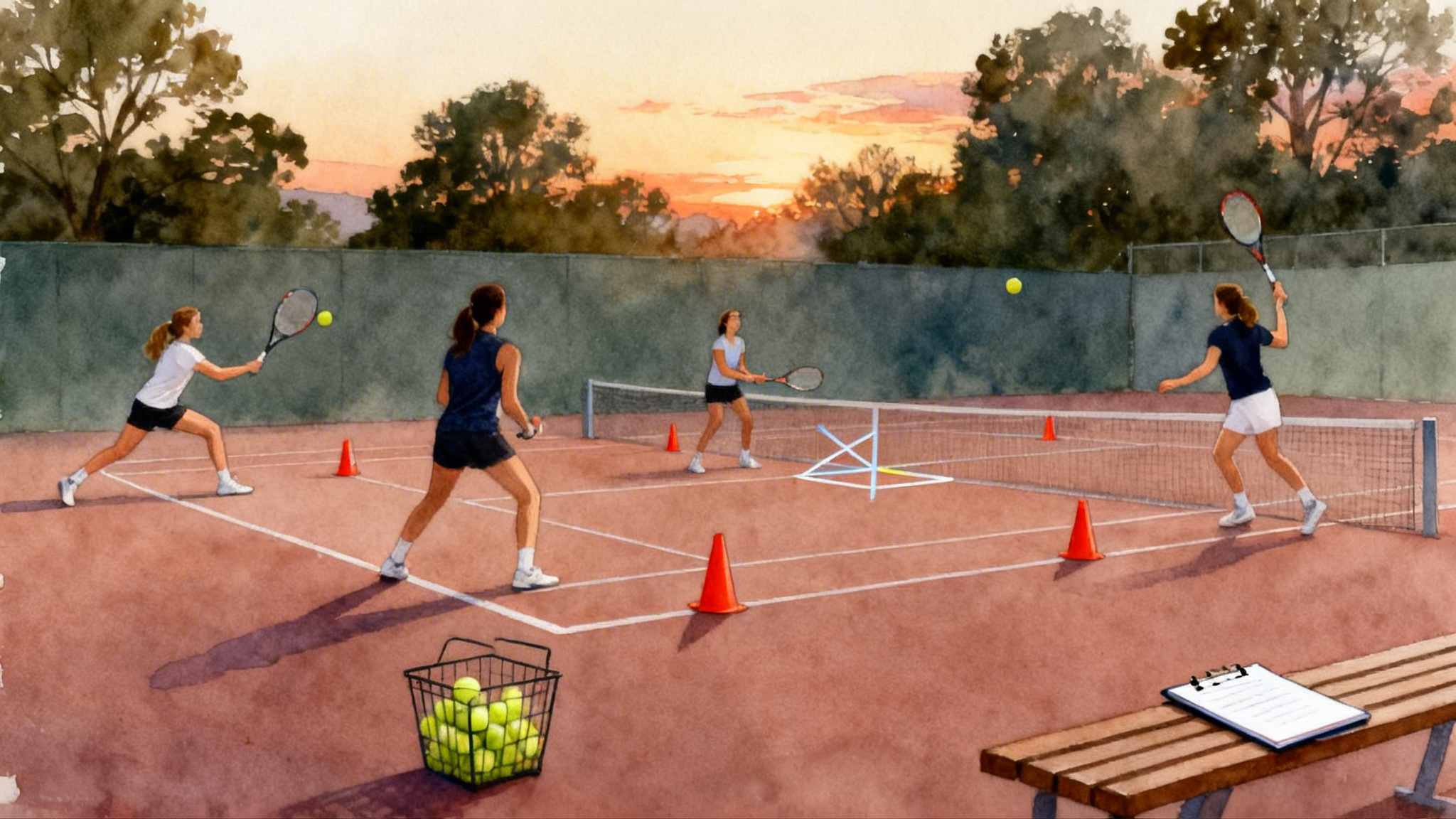
Why the return becomes a weapon in 2026
If you asked most club players which stroke changes matches, they would say the forehand or the serve. Yet the return quietly decides whether you start each point surviving or attacking. Every return is a chance to steal time from the server, neutralize their patterns, and tilt court position in your favor. The good news: building an effective return is less about talent and more about a trainable sequence you can groove in short, repeatable blocks.
This guide gives juniors, parents, and adult players a simple system you can run today. It teaches what to see before the ball crosses the net, how to move on time, which swing shape to trust under pace, and how to script your first ball after the return. You will also get color-ball progressions, ten-minute court blocks, at-home reaction games, checklists for parents, and coach-ready key performance indicators for college-bound players. For deeper drill ideas, see our ball-color progressions checklist.
The four-part return system
Think of a great return as a four-link chain. Missing any link weakens the entire shot.
1) Visual recognition: toss, sound, and spin cues
You cannot hit what you cannot read. Train your eyes and ears before you train your swing.
- Toss direction and height: Note the server’s shoulder line and where the ball peaks. A toss drifting right from a right-hander often signals slice or a flat body serve. A toss that stays over the head with a wristy action often telegraphs kick.
- Contact sound: A flat serve has a sharper pop and shorter acoustic tail. Slice has a longer swish and lower pitch. Listen during warm-up and say the type aloud as the server hits to wire the cue.
- Racket path and finish: A vertical, up-the-back brush usually precedes kick; a side sweep suggests slice. This is especially reliable on second serves.
- Ball rotation: If you can see the logo, note whether it climbs quickly off the bounce or skids. A climbing second-serve bounce means topspin or kick; a skid means slice or flat.
Drill cue: During return warm-ups, call “flat,” “slice,” or “kick” before the ball bounces. Keep score for accuracy. The act of naming sharpens attention.
2) Split timing and spacing
Split timing is the returner’s metronome. The rule of thumb: split as the server starts the upward acceleration to contact so your feet land just after the ball leaves the strings. That landing gives you a loaded spring for the first step. For movement detail that supports this timing, review footwork patterns and timing.
- Against a first serve: Start half a step behind your normal rally depth. Split a fraction earlier and soften your knees so you can absorb pace.
- Against a second serve: Step in. Split a fraction later to ride the bounce upward. Aim to contact the ball in front of your lead hip.
- Spacing checkpoints: If you feel jammed, your first move was inward too soon or your racquet prep was late. If you feel stretched, your split was late or you started too far back.
Drill cue: Have a partner clap at the server’s contact. Land your split on the clap. This removes the guesswork and builds a stable rhythm.
3) Compact swing shapes that survive pressure
Under real pace, compact beats pretty. Build two reliable shapes and use them by serve type.
- Block-bunt for heavy first serves: Short unit turn, firm wrist, strings slightly closed, contact in front, finish no higher than your chest. Think of catching a fast water balloon with a small push forward. Directional target is deep middle or body to reduce net clearance risk.
- Drive for second serves: Early shoulder turn, racquet tip up, a small loop, and a through-contact finish that points the strings to your target. Think of a short swing door, not a long whip. Prioritize body and backhand side targets.
Technical anchors:
- Keep the takeback no farther than your hitting shoulder for the block and just behind the shoulder for the drive.
- Prepare the racquet tip above the wrist so you can match the ball’s bounce quickly.
- Start balanced and end balanced. If your finish pulls you off the line, your swing was too big.
4) A first-ball neutralizing plan
A good return is not the end of the job. It is the start of your pattern.
- Default plan against big servers: Return deep middle to remove angles, then recover to cover the next ball crosscourt.
- Default plan against second serves: Return to the open court or the server’s weaker wing. Step through the return so your momentum carries you into the court.
- Pressure plan on break points: Aim body or deep middle to reduce risk. The goal is a playable next ball, not a highlight winner.
Write your default plans on a small index card and keep it in your bag. When matches get tight, you do not want to reinvent decisions.
Red, orange, green, yellow: progressions that work
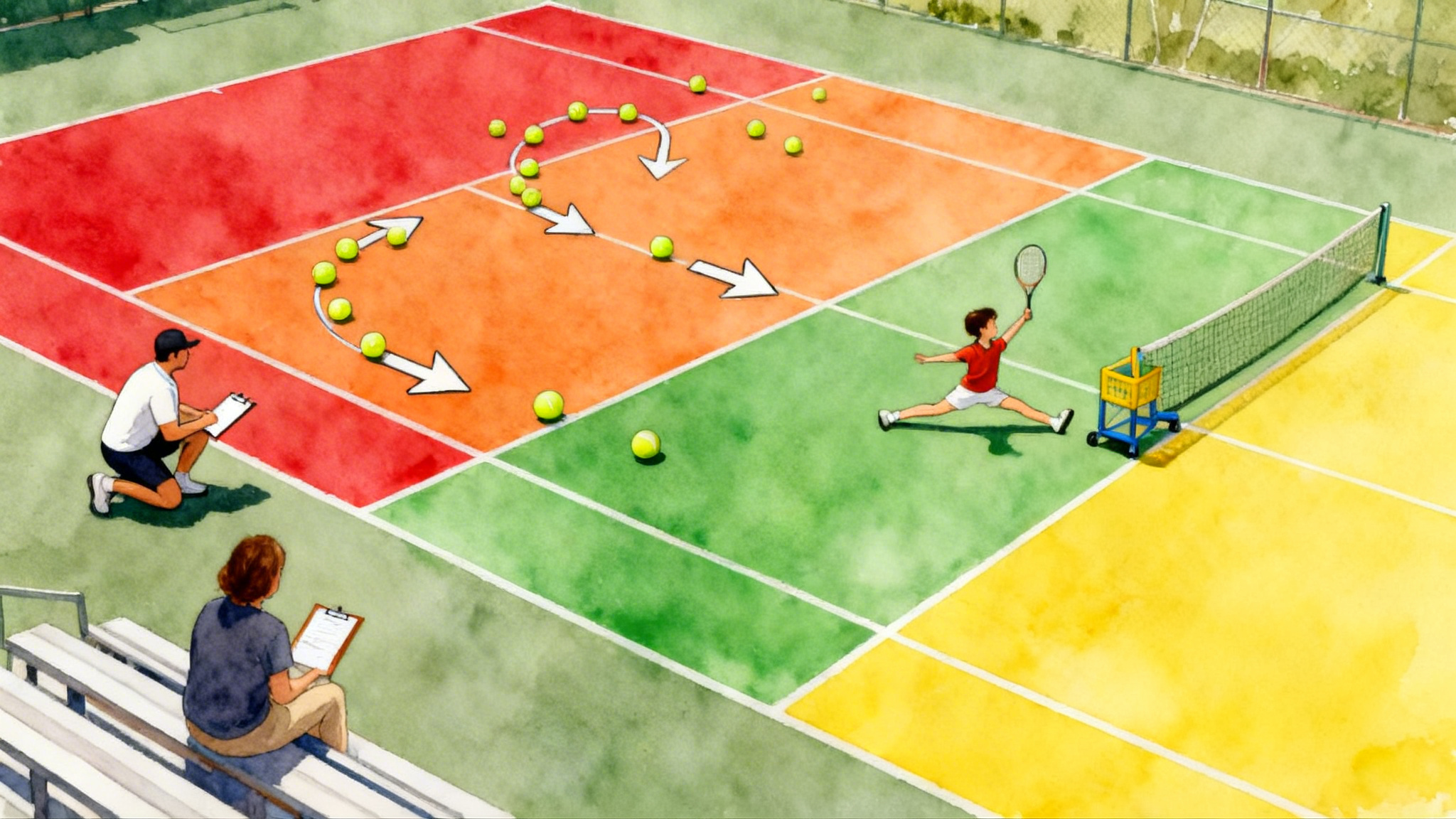
Color-ball progressions help every age group feel the right shape and timing without fear. Use the slowest ball that still rewards good form. For a printable overview, see the ball-color progressions checklist.
- Red ball baseline start: Stand two steps inside the baseline. Partner soft-serves underhand with clear spin. Focus on naming the spin before bounce and landing your split on time. Use the block shape to aim deep middle.
- Orange ball depth control: Move to normal return position. Partner serves from the service line with simple slice or flat. Alternate five block returns deep middle and five drive returns crosscourt.
- Green ball bounce read: Server moves to three-quarter court and adds kick. Returners step in on second-serve practice and call “up” or “skid” at the bounce. Drive through to backhand corner targets.
- Yellow ball real pace: Full court. Two first-serves each, then one second serve. Keep the rule: first-serve returns aim deep middle with a compact block, second-serve returns aim crosscourt with a short drive.
Progression checkpoint: Do not advance the ball color until the player hits 8 of 10 returns past the service line with balanced finishes.
Ten-minute add-on court blocks
Add these to the end of any session. They need one server, one returner, and a basket.
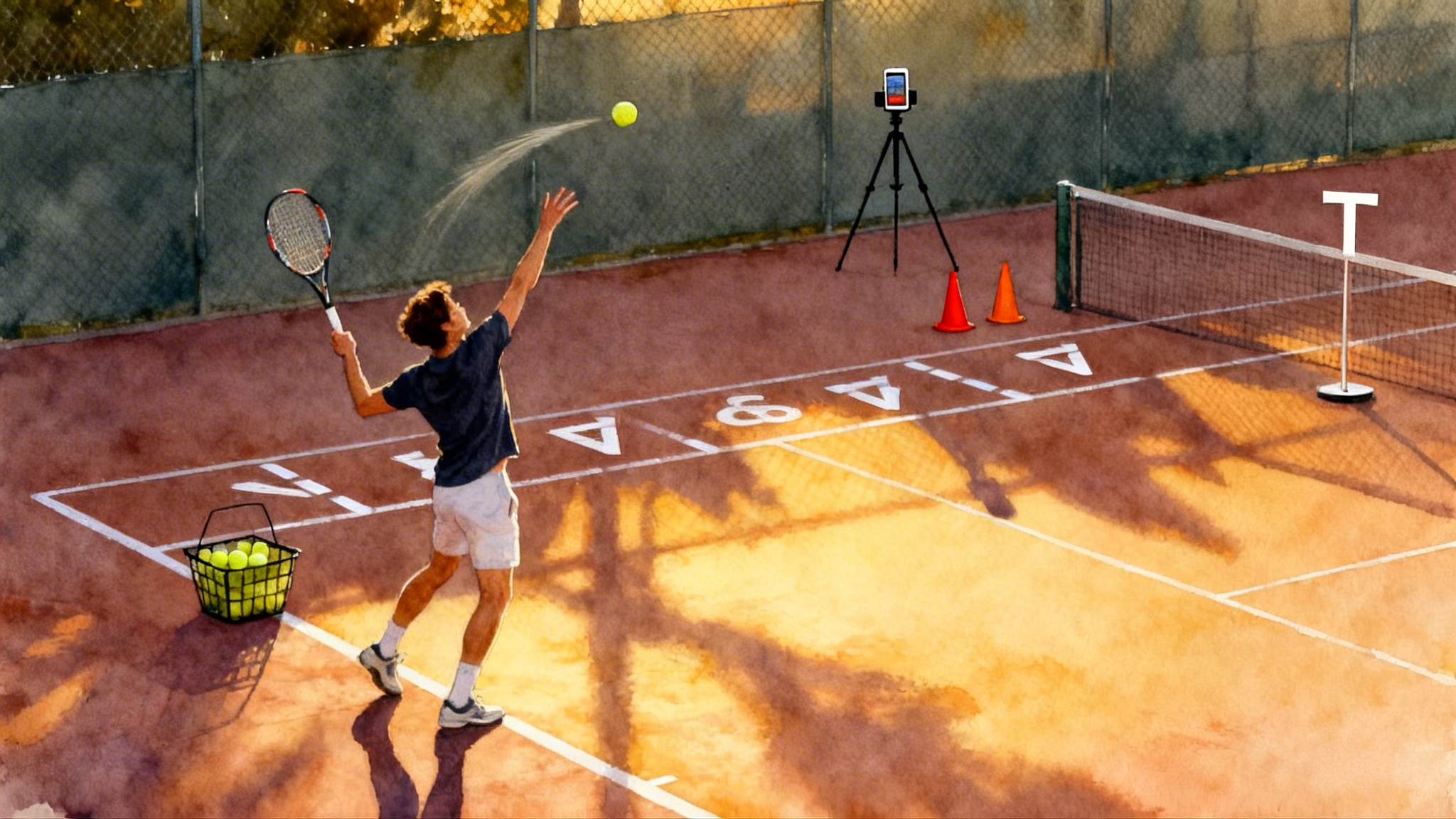
- Minute 0 to 2: Toss read only. Server rehearses full motion without hitting. Returner calls toss direction and predicted spin, lands splits on time.
- Minute 2 to 5: First-serve block. Twelve attempts to deep middle. Scoring: two points for deep middle past the service line, one point for any in play, zero for error. Target 14 points.
- Minute 5 to 8: Second-serve drive. Twelve attempts crosscourt. Same scoring. Target 16 points.
- Minute 8 to 10: First-ball script. Server feeds a neutral ball after your return. You must hit your planned second shot to space, then recover. Score one point for every clean two-ball sequence completed. Target six.
If you only have five minutes, run minutes 2 to 7 from this plan and finish with two minutes of first-ball script.
At-home reaction games for all ages
You can sharpen return skills without a court.
- Sound call game: Have a family member tap a hardcover book for flat, rub a towel for slice, or flick a rubber band for kick. You face away and call the sound type. This strengthens your audio categorization for serve sounds.
- Flash card split: A partner holds up a card with R, L, or M the moment you hop. Land and step right, left, or forward. This reinforces landing the split and taking the correct first step.
- Doorway short swing: Stand three feet from a doorway. Shadow compact block and drive swings that fit perfectly between the frame. The frame forces economy.
- Wall bounce read: Toss a ball with topspin or slice against a wall. As it returns, call up or skid before it bounces. Catch it with your strings.
Run two of these for five minutes each on non-court days.
Parent courtside checklist
Parents do not need to coach strokes. They can observe behaviors that predict success.
- Did the returner split before server contact on most points?
- Was the first step decisive in the correct direction?
- Did the racquet prepare early with the tip above the wrist?
- Were most first-serve returns aimed deep middle?
- Did second-serve returns move forward with a short drive, not a long swipe?
- After contact, did the player recover quickly to a ready position?
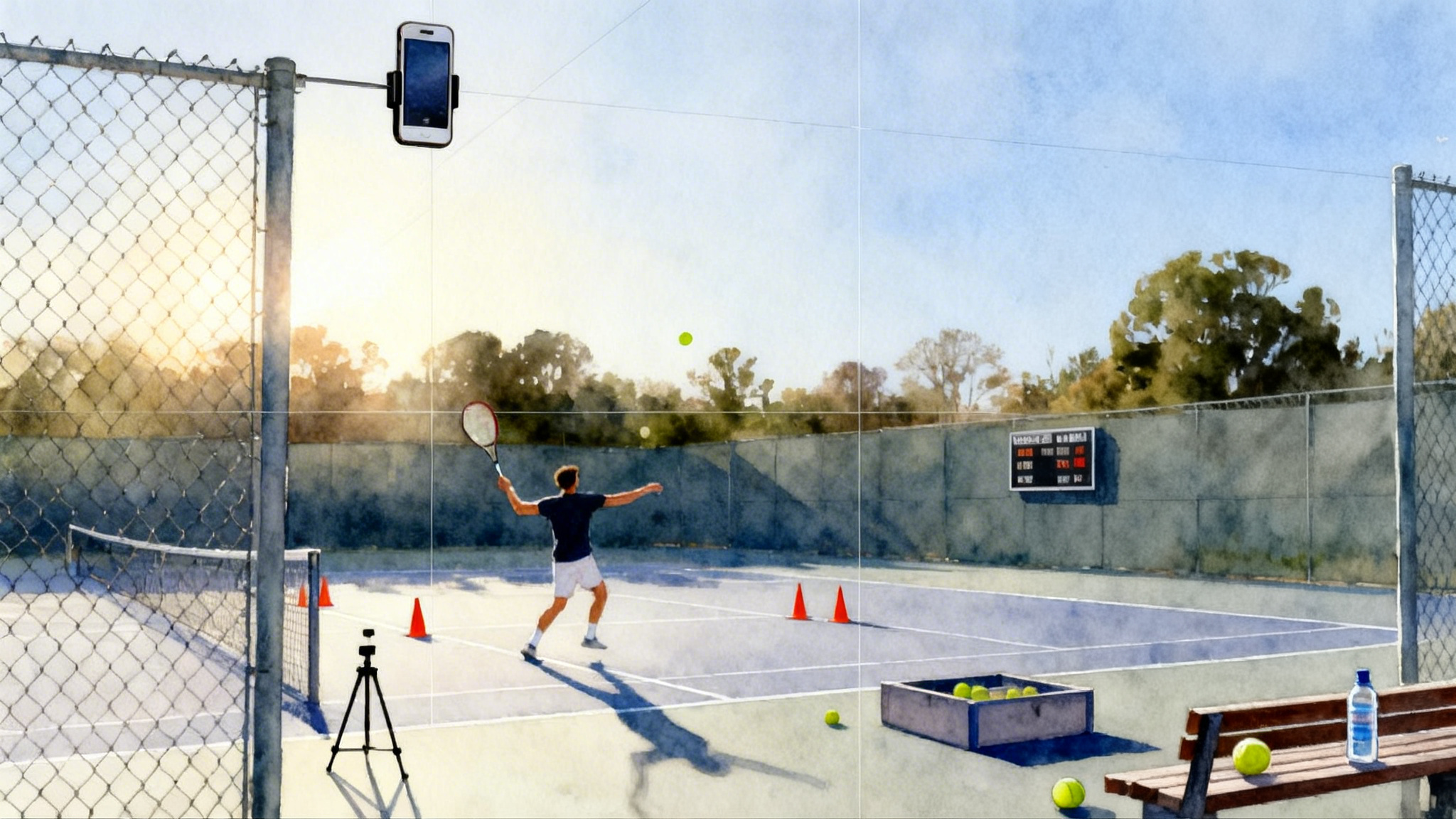
If the answer is no to two or more, capture one short clip in warm-up and share it with the coach. For smart next steps, see our film-to-feedback guide. The goal is pattern awareness, not technical lectures.
College-bound players: coach-ready KPIs and a match routine
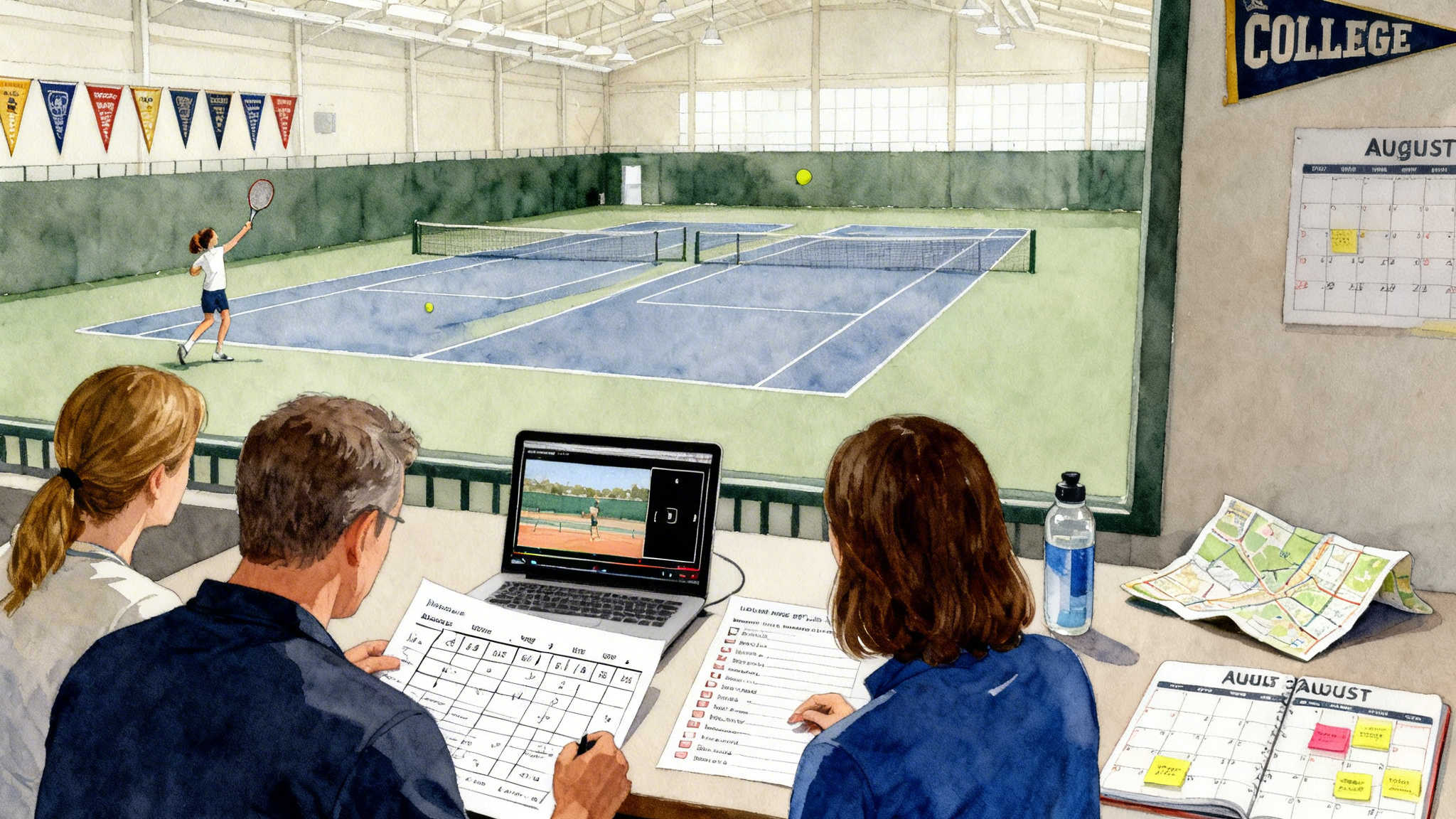
Ambitious juniors need clarity on what to measure. Start with simple, observable numbers that any coach can track by hand.
Key performance indicators (KPIs):
- First-serve return in-play rate: Target 65 to 75 percent in high school varsity and national-level juniors. Track by set.
- Second-serve return in-play rate: Target 80 to 90 percent. If you are below 80, prioritize the drive return block.
- Deep return rate: Percentage of returns landing past the service line. Target 60 percent on first serves, 70 percent on second serves.
- Neutralization success: Percentage of points where your return prevents an immediate server plus-one winner. Simple rule: if you get a neutral ball back on shot two, count it.
- Directional intent: Percentage of first-serve returns aimed middle and second-serve returns aimed crosscourt. Target 80 percent adherence to plan.
- Error types: Track jammed errors and stretched errors separately. If jammed dominates, start position and preparation are the culprits. If stretched dominates, split timing is late.
Template for a match-day return routine:
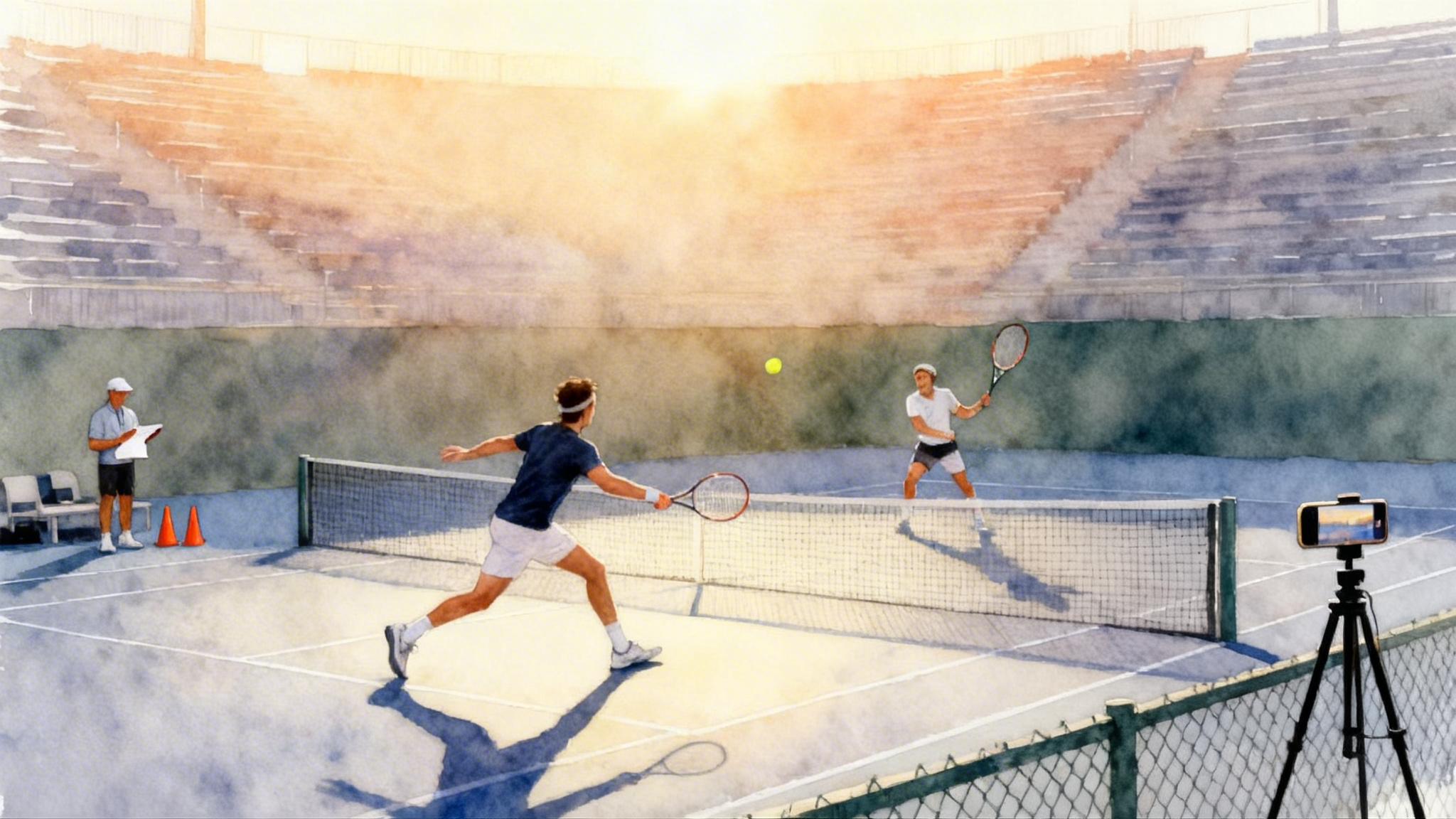
- Warm-up study, 5 minutes: Watch two minutes of the opponent serving. Call toss direction and predicted spin out loud. Decide your default positions for first and second serve.
- Pre-point checklist, 10 seconds: Pick a target before each return. First serve default is deep middle; second serve default is crosscourt to the weaker side. Say it to yourself.
- Between points, 10 seconds: Grade your last return with one word: shape, timing, or choice. If the return missed due to swing length, say shape. If you were late or early, say timing. If you aimed poorly, say choice. Fix only the word you named on the next point.
- Changeover, 60 seconds: Confirm your scouting. If the opponent loves body serves on the ad side, slide a half step to make space.
Keep a single-page summary of these targets and routines in your bag. The simpler the sheet, the more likely you will use it when the pressure climbs.
Case study: Gomez Tennis Academy 4:1 return block
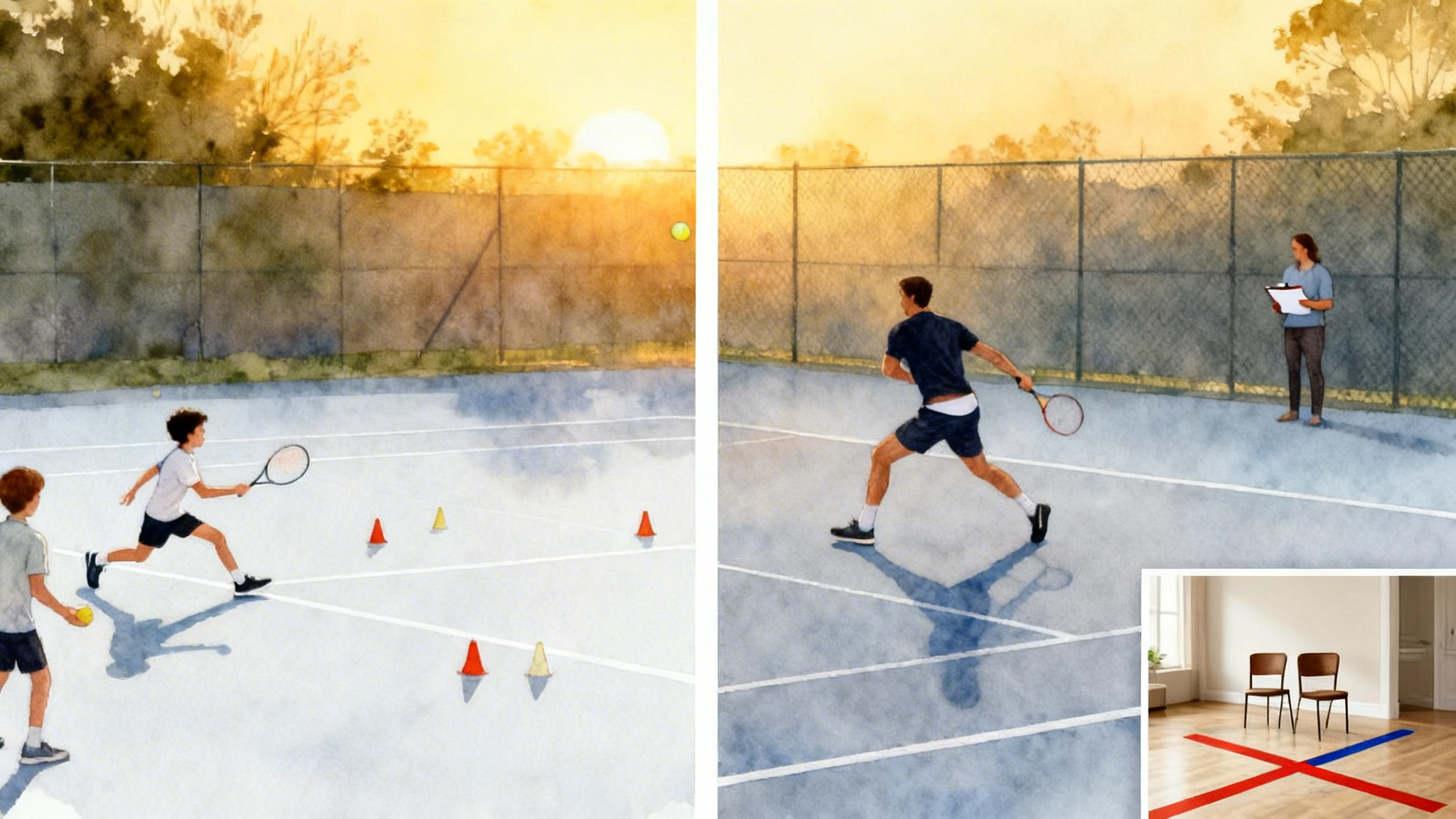
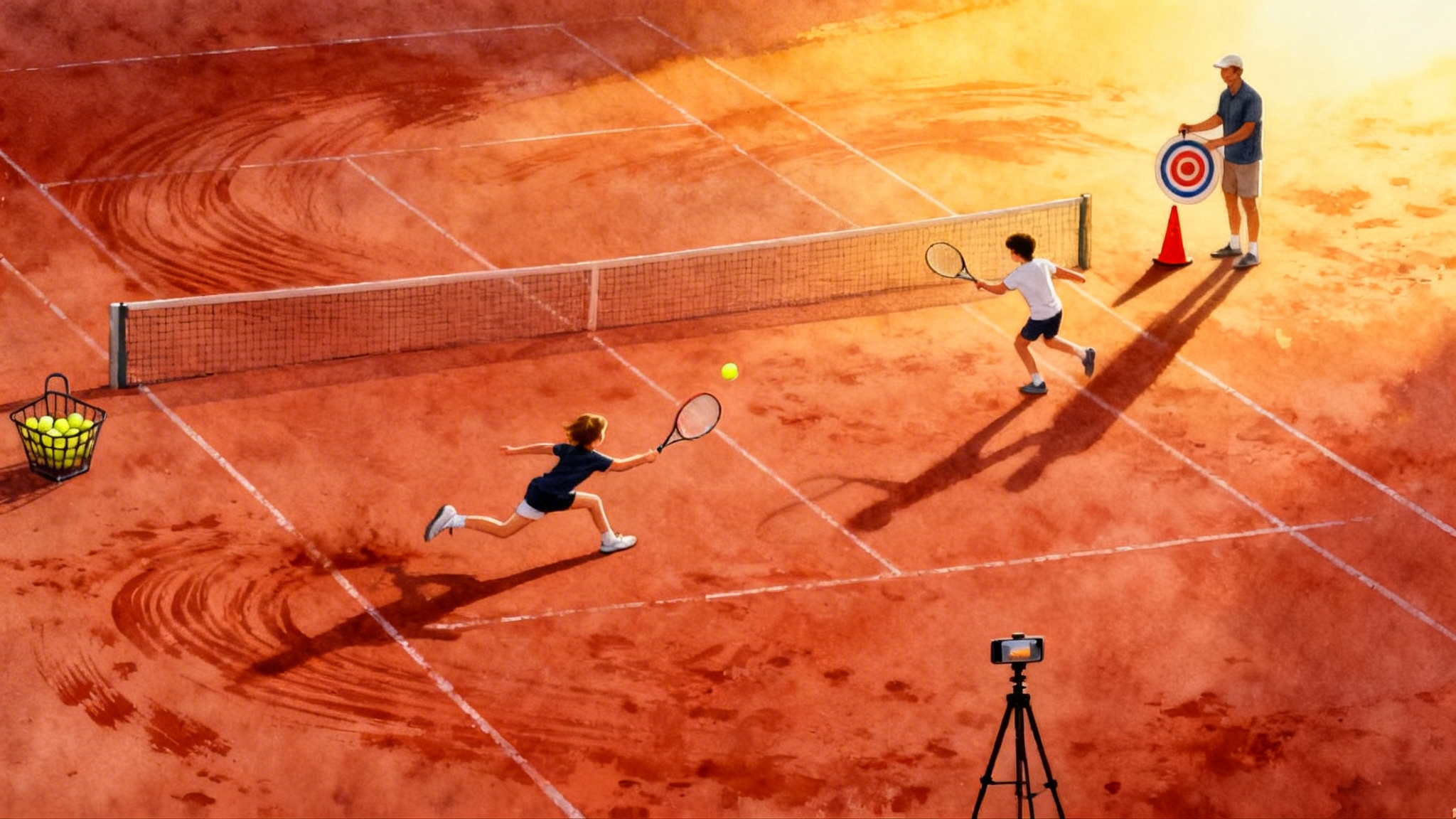
In a recent small-group session at Gomez Tennis Academy, four players shared one court with a single server and a coach. No tablets, no complex sensors, just smart constraints and quick rotations. The structure below shows how they accumulated high-quality reps and feedback in thirty minutes.
- Setup: One server on the baseline with a basket. Three returners rotate one by one on the deuce and ad sides. Targets are two dome cones deep middle and two cones crosscourt beyond the service line.
- Block 1, 8 minutes, first-serve block: Server hits a heavy first serve every 12 seconds. Returners use compact block shape to deep middle. Coaching cue is early racquet prep and balanced finish. Each player gets about 16 returns in the block.
- Transition, 2 minutes: Quick debrief. Players state one cue they will keep for the next block.
- Block 2, 8 minutes, second-serve drive: Server now mixes slice and kick. Returners step in and drive crosscourt. Coaching cue is small loop, contact in front, and shoulders staying level. Each player collects about 18 returns.
- Transition, 2 minutes: Tally deep return rate and adherence to target. Coach only calls out two numbers per player.
- Block 3, 8 minutes, script the first ball: After each return, the server feeds a neutral ball. Returner must execute the planned second shot and recover. The coaching cue is to call the target before the return. Each player gets 12 to 15 two-ball sequences.
By the end, each athlete has 46 to 50 meaningful returns and a dozen patterned points. The coach has a simple score sheet: in-play rates, deep return rate, and plan adherence. Players leave with one executable cue for first serves and one for second serves. The session is fast, specific, and does not rely on video.
Common faults and quick course-corrects
- Swing too big on first-serve returns: Shadow swings inside a doorway at home. On court, cap your finish at chest height. Aim deep middle.
- Late split: Use an audio clap during practice to set landing timing. If you still land late, begin your split as the server’s tossing arm starts to drop.
- Drifting backward on second serves: Start one step inside the baseline and commit to a forward step through contact. Use a counting cue: turn, bounce, step.
- Aiming too fine under pressure: Choose middle on big points. It reduces angle exposure and keeps your court position sane.
One-week layering plan
You do not need a camp to build a return that travels. Layer small pieces consistently.
- Monday: Ten-minute add-on block after practice focusing on first-serve blocks. Track in-play and deep rate.
- Tuesday: At-home reaction pair, ten minutes total. Sound call and doorway short swing.
- Wednesday: Color-ball progression on court for 20 minutes. Move from orange to green only if you hit 8 of 10 deep.
- Thursday: Ten-minute add-on block for second-serve drives plus two-ball script.
- Friday: Light at-home reaction and split timing with flash cards, five minutes.
- Weekend match: Use the match routine. Afterward, log your two rates and one cue that worked.
Repeat the cycle with small adjustments. Progress is the product of volume and clarity.
Printable parent mini-checklist for tournaments
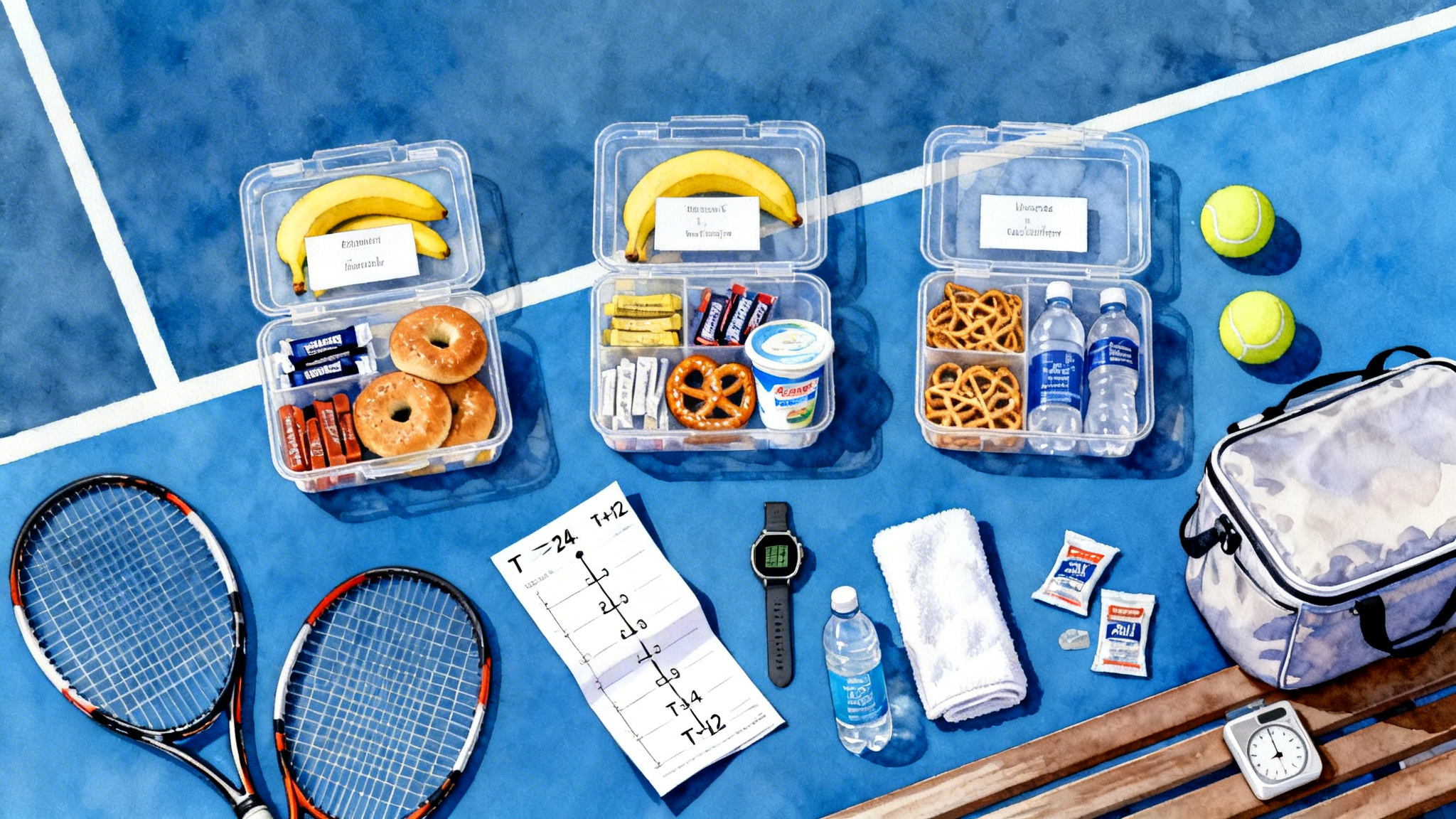
- Pack: two index cards, a pen, and a small cone for target practice in warm-up.
- Watch for: split timing, first step, compact swing, and a clear target.
- Ask after sets: What was your default target on first serve? On second serve? Which word fits the last miss: shape, timing, or choice?
- Celebrate: deep returns and plan adherence, not occasional winners.
Bring it all together
A reliable return is not a mystery. It is a short chain built from clear reading, on-time feet, compact shapes, and a plan for the next ball. Juniors thrive because the system removes guesswork. Parents support because they know what to watch without giving technical speeches. Adult players improve because they can add ten-minute blocks to any hitting session. College-bound athletes stay accountable because their key performance indicators are simple enough to track every weekend.
Choose one cue for reading, one cue for timing, and one cue for shape. Script a first-ball plan you can say out loud. Then stack short, frequent reps. By spring, your opponents will feel it on the scoreboard long before they can explain why.