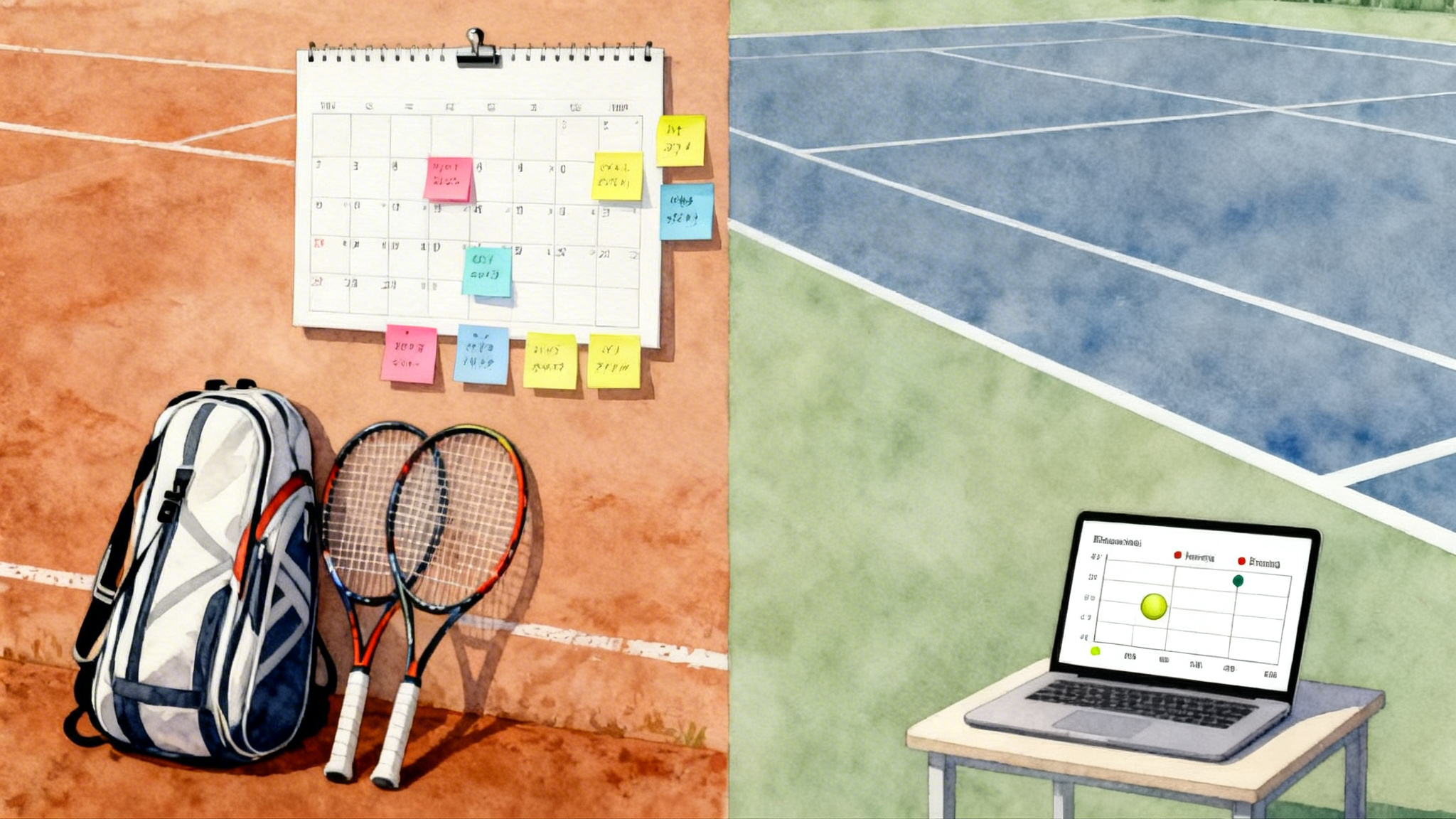
Clay Block Blueprint: 6 to 8 Weeks to Elevate Juniors and Adults
Plan a focused clay block between March and July. Learn weekly training priorities, age specific strength and conditioning add ons, parent led home drills, and how to choose a clay savvy academy. See how clay skills speed up hard court results and catch college coaches’ eyes.
 Tommy
Tommy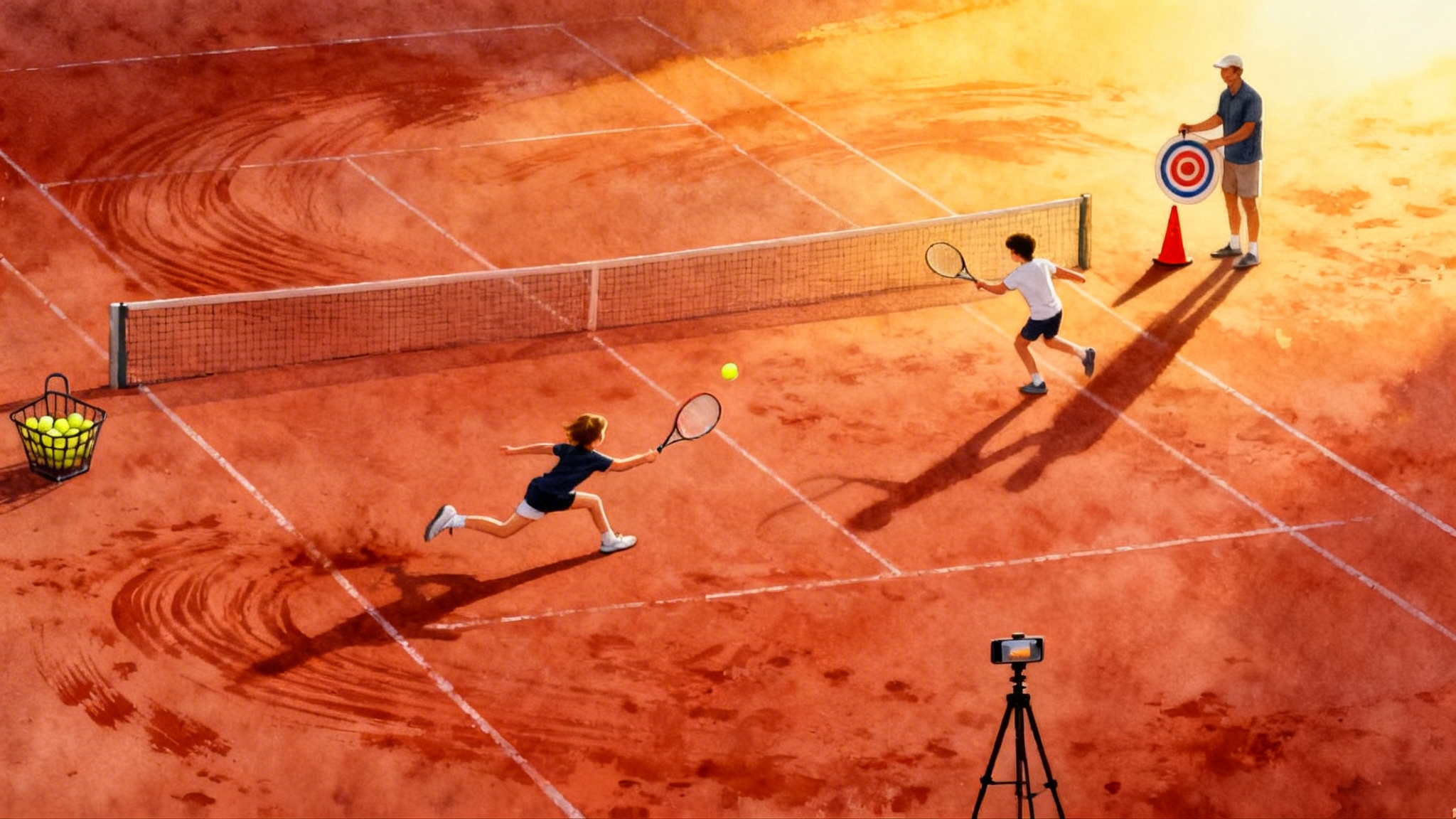
Why a clay block right before summer works
If you want fast improvement on hard courts, spend a short burst learning to move, build points, and problem solve on clay. Clay slows the ball, rewards clean footwork, and turns every rally into a lesson in spacing and shot selection. In six to eight weeks, players learn to slide into contact, defend with height and spin, and convert defense to offense with shape and depth. Those habits transfer directly to quicker hard court wins because you arrive earlier, choose better patterns, and make fewer rushed errors. College coaches notice the difference in long rallies, break point poise, and decision making. Professional pathways do too. The Association of Tennis Professionals and the Women’s Tennis Association tours are filled with players who built their base on clay, then carried those skills to all surfaces.
This guide shows you exactly how to schedule a pre‑summer clay block, what to train each week, the right strength and conditioning add‑ons by age, simple drills parents can run at home, and how to choose an academy that can coach clay well. You will also find a spotlight on three European hubs with daily clay access and proven systems.
When to schedule between March and July
Different school calendars and local weather create windows for a short block without derailing tournament schedules.
- Early spring option: March to mid April. Ideal for high school players before league matches. Choose a six week block that finishes just before local playoffs so legs feel fresh when you switch to hard courts.
- Late spring option: April to May. Great for juniors not in high school tennis and for adult league players ramping up for summer season. Seven weeks lands you on hard with better movement just as match volume spikes.
- Pre‑summer option: May to early July. Best for families planning a training trip to Europe. Eight weeks lets you stack two four week microcycles around a small tournament swing.
Weather tip: If your home club uses American green clay like Har‑Tru, it still builds the same movement and patterns. Moisture control matters. Ask the club when courts are watered or brushed so you can train just after maintenance for consistent sliding.
The weekly blueprint: four pillars
Across six to eight weeks, build your calendar around four pillars. Keep them constant, but change constraints so players are always challenged.
- Footwork and sliding progressions
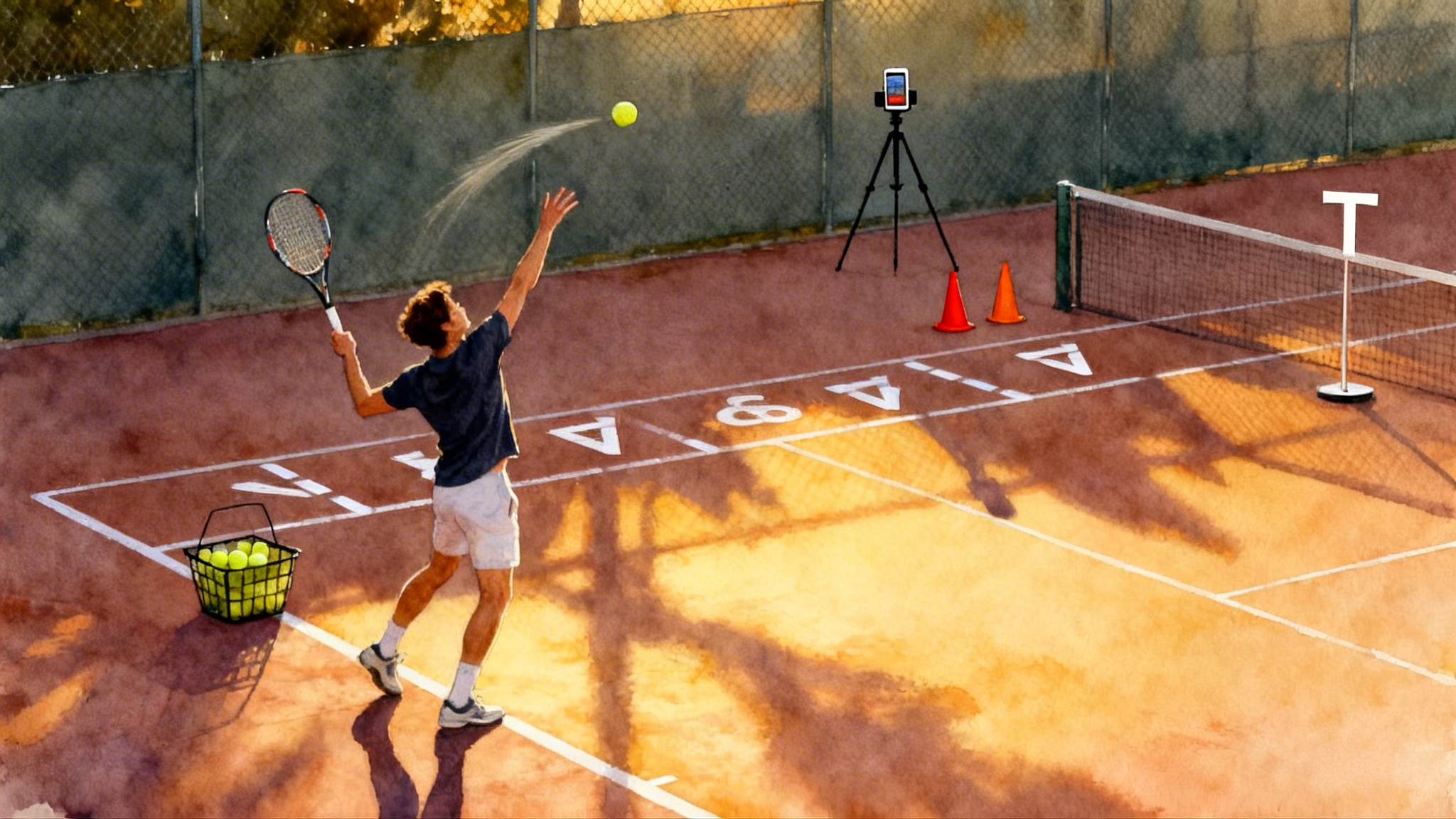
- Weeks 1 to 2: Learn to stop and to slide. Start with walk‑throughs. Righties practice forehand outside foot plant, inside foot release, then slide and stop facing the net. Lefties reverse. Use cones to mark the final two steps. Progress to mini sprints of 6 to 8 meters with medicine ball tosses for balance.
- Weeks 3 to 4: Add open stance and semi‑open stance on wide balls. Teach the drag leg to finish under control. Use rope lines or painter’s tape to mark the slide path and end point.
- Weeks 5 to 6: Introduce backhand side recovery steps and short backhand slides on crosscourt exchanges. Add short approach slides into a controlled volley finish.
- Weeks 7 to 8: Blend defensive slides with counterattack. Feed a high, heavy ball wide, require a controlled slide and a heavy crosscourt reply, then recover to take the next ball early down the line.
- Rally tolerance
- Early weeks: Set a non‑negotiable count. For example, every live rally starts with a goal of 8 neutral balls before anyone can change direction or attack. If the count is missed, replay the point.
- Middle weeks: Raise the neutral count to 10 to 12, then allow one attack window. Emphasize height, spin, and depth that lands past the service line.
- Final weeks: Reduce the count to 6 but add time pressure. Use a serve plus one or return plus one point builder with the same neutral quality rules.
- Defense to offense patterns
- High, heavy, then through: On wide defense, lift high crosscourt with shape, land deep, then on the next ball step inside the baseline to drive down the line.
- Two cross, one line: Trade two secure crosscourts, then change direction only when balanced or on a shorter ball.
- Inside forehand hold: After a deep neutral ball, recover into the court and hold position for an inside forehand to the opponent’s backhand corner.
- Situational scoring
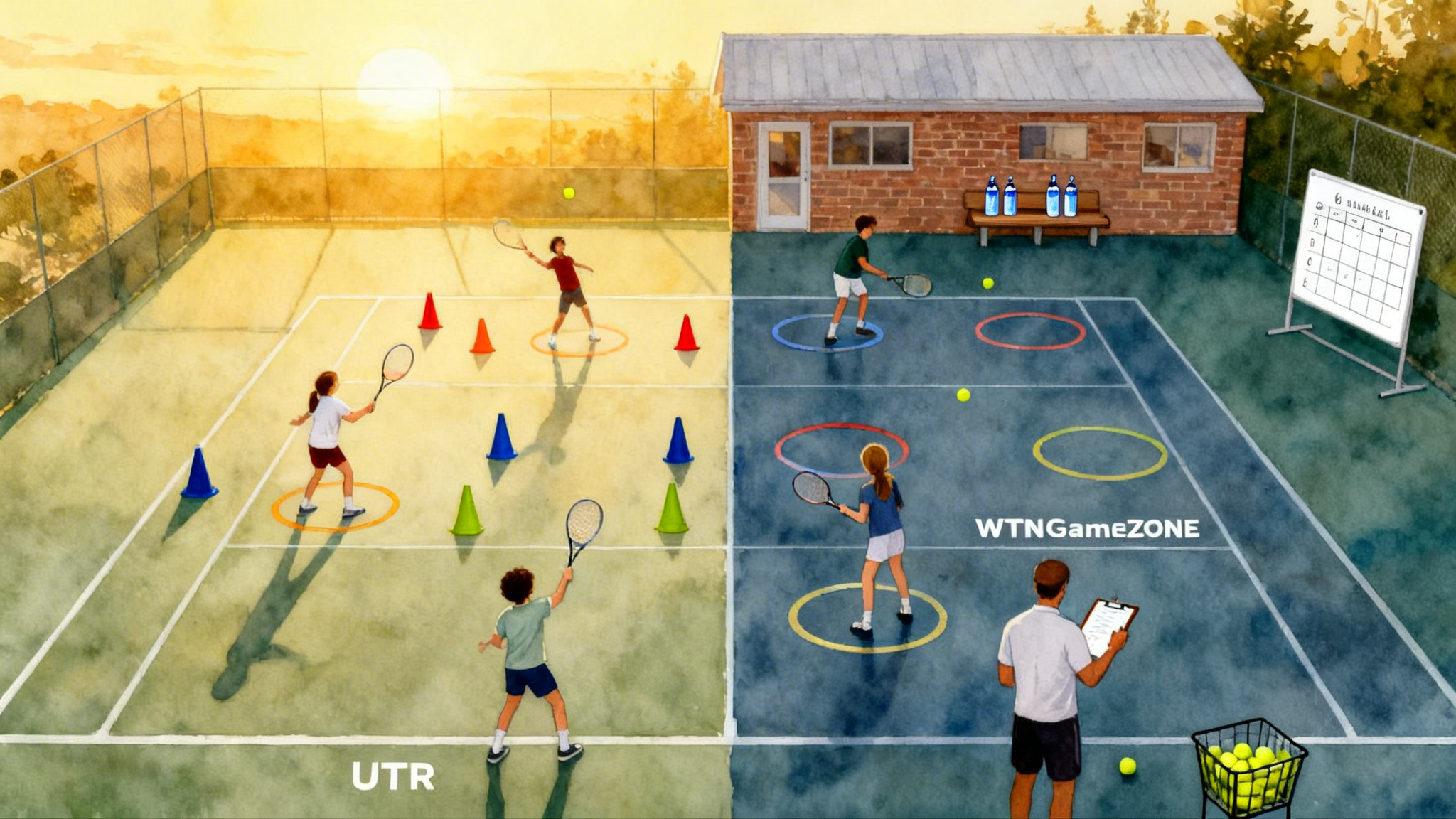
- Add a scoreboard constraint every day. Examples: start 30‑30 to force clutch decisions, or give the returner two serves to practice making first strikes on clay.
A sample 6 week calendar
Each week includes four on‑court sessions and two targeted strength and conditioning sessions. Sunday is full rest or an easy mobility day.
- Week 1: Movement and height. Footwork schools, static to short slides, neutral rally to 8 shots, serves only to the heavy crosscourt corner. Two short sets to 4 games starting 30‑30.
- Week 2: Recovering under control. Open stance slides, add approach slides. Neutral rally to 10, one change direction allowed. Return games starting at 0‑30 to practice holding shape when down.
- Week 3: Pattern windows. Two cross, one line live drills. Return plus one patterns that favor height and margin. Tiebreak sets with a rule that the first change of direction must land past the service line.
- Week 4: Counterpunch to counterattack. Defend with height, then drive a through ball on the next touch. Play one set where every winner must be preceded by a rally ball that clears the net by a full racket length.
- Week 5: Transition. Add drop shots and short angles only after heavy depth. Play approach plus volley patterns on short clay bounces. One practice match with video.
- Week 6: Conversion and confidence. Serve patterns that land deep middle first, then corner. Return patterns that lift crosscourt, then step inside on the next ball. Two practice matches, one with constraints, one free play.
To extend to eight weeks, repeat Weeks 3 to 6 with higher neutral counts, more return games under pressure, and one short tournament weekend in the middle.
Daily practice template
- Warmup 15 minutes: joint mobility, band activation, and four 15 meter buildups. Finish with 10 shadow split steps and two controlled slides per side.
- Technical block 25 minutes: progressions for sliding and spacing. Use markers to define the last two steps before contact.
- Pattern block 30 minutes: defense to offense patterns with targets. Coach calls the switch cue.
- Situational set 30 minutes: scoreboard constraints, return games, or tiebreakers.
- Finisher 10 minutes: medicine ball rotational throws or mini hurdle rhythm work.
Age specific strength and conditioning add‑ons
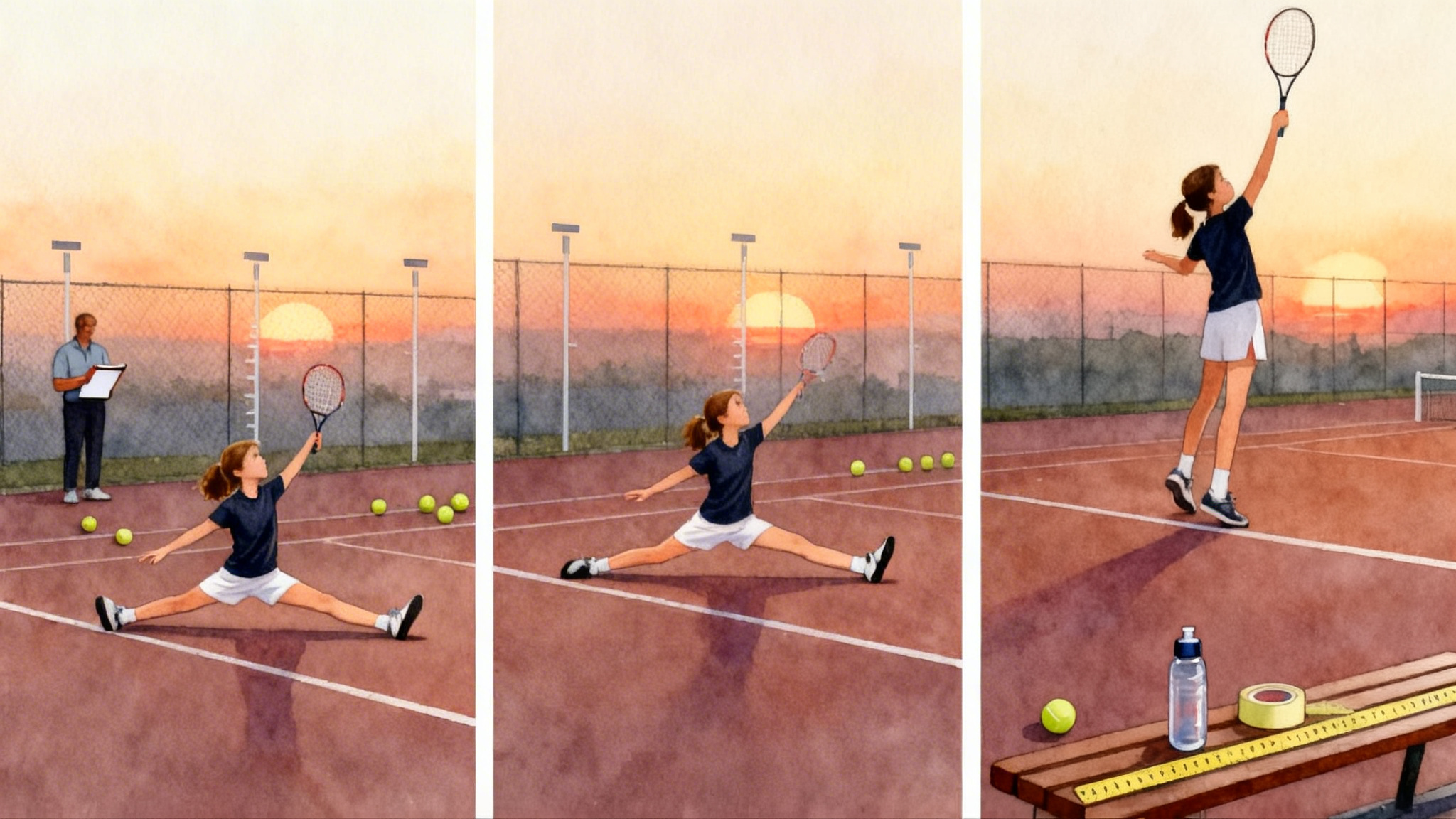
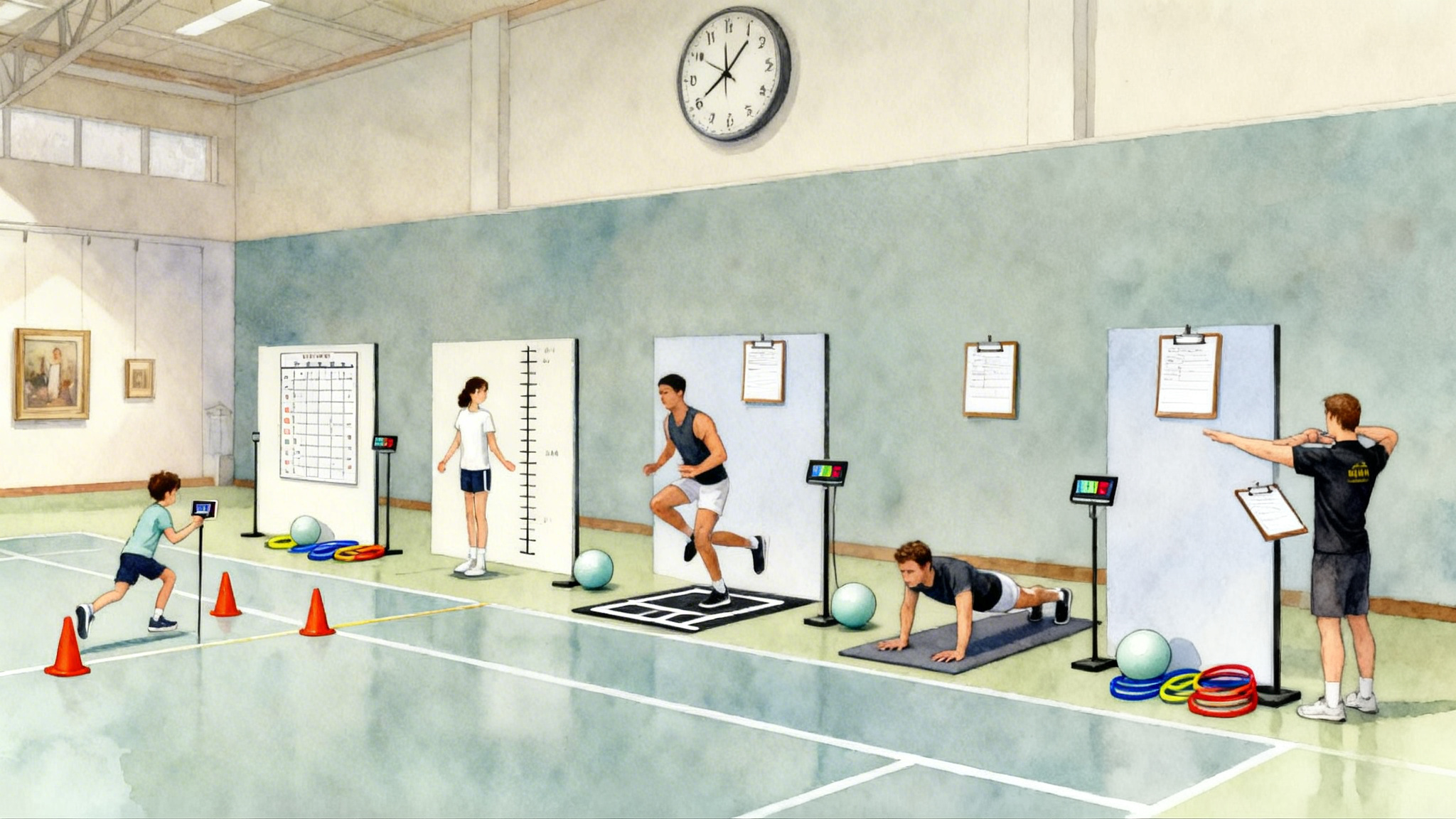
Strength and conditioning, often shortened to S&C, must be age appropriate and short. Clay already taxes the legs. Add two focused sessions per week that support sliding, posture, and injury resilience.
Ages 8 to 12: Coordination first
- Goal: balance, rhythm, and landing mechanics
- Session A: mini hurdle rhythm runs 3 by 15 seconds, single leg land and stick 2 by 6 per side, bear crawl 2 by 15 meters, medicine ball chest pass 2 by 10
- Session B: jump rope 3 by 45 seconds, lateral shuffle to split step 3 by 10 meters each way, farmer carry with light kettlebells 3 by 20 meters
Ages 13 to 15: Growth spurt management
- Goal: deceleration control and trunk strength
- Session A: split squat 3 by 6 per side, lateral bound to stick 3 by 5 per side, dead bug 3 by 8 per side, forearm plank 3 by 30 seconds
- Session B: hip hinge drill with dowel 3 by 8, Copenhagen side plank 2 by 20 seconds per side, sled push or band resisted march 3 by 15 meters
Ages 16 to 18: Strength to power
- Goal: produce and absorb force safely
- Session A: trap bar deadlift 4 by 4, lateral lunge 3 by 6 per side, rotational medicine ball throw 3 by 6 per side
- Session B: box jump 4 by 3, rear foot elevated split squat 3 by 6 per side, Pallof press 3 by 10 per side
Adults at 3.0 to 4.5 level in the National Tennis Rating Program
- Goal: stay healthy while adding movement skill
- Session A: goblet squat 3 by 6, step down to balance 3 by 6 per side, suitcase carry 3 by 20 meters per side
- Session B: hip airplane 2 by 5 per side, mini band lateral walks 3 by 10 steps per side, tempo rower 4 by 45 seconds at moderate effort
Post practice always include 5 minutes of foot and calf care. Use a lacrosse ball on the arches, slow calf raises 2 by 12, and ankle circles.
Parent led at home drills that work
Parents can install clay habits without leaving the driveway. You only need a few cones, painter’s tape, a jump rope, and a medicine ball.
- Slide track: On smooth pavement, mark a 2 meter lane with tape. In tennis shoes, practice a controlled two step entry, then a mini slide on socks worn over the shoes to reduce friction. Focus on posture and quiet arms. Ten reps per side.
- Heavy ball toss: Use a light medicine ball to rehearse high, heavy trajectories. Toss to a partner’s chest while finishing with a long follow through. Three sets of 8 per side.
- Rally tolerance ladder: On a wall, draw a 1 meter by 1 meter target box above the service line height. Rally to counts of 20, then 30, then 40 with the rule that the ball must clear the net tape mark.
- Recovery race: Place two cones 2 meters apart to simulate a split step zone. Sprint from a wide lunge back to the center, touch a cone, then reload. Six to eight reps with full rest.
How to choose a clay capable academy
A good clay block depends more on coaching design than passport stamps. Use these filters when screening programs.
- Surfaces: Daily access to real clay courts, either red clay or green clay. Ask how often courts are watered and brushed. Sliding requires consistent top dressing.
- Footwork curriculum: Look for a written sliding progression and film review. Ask for sample sessions that show stop mechanics, open stance entries, and recovery steps.
- Rally tolerance metrics: Do they track average rally length in drills and matches and report it to players each week.
- Pattern language: The staff should teach clear patterns like two cross one line, and high heavy then through, not vague generalities about patience.
- College and pro alignment: Ask how they help players cut match video for coaches, and whether they schedule clay events that fit school calendars.
- Coach to player ratio: Target one coach per four players for movement work.
- Medical and recovery: Basic on‑site first aid, ice, and clear return to play steps after minor slides and abrasions.
Three academies worth a close look
-
Tenerife Tennis Academy, Spain: A year‑round island climate means daily clay access with little rain. The program’s culture blends Spanish crosscourt heaviness with encouraging players to step inside the baseline as soon as depth forces short replies. We like their habit of running return games with two ball shape rules, which builds aggressive tolerance.
-
Ljubicic Tennis Academy, Croatia: Founded by coach Ivan Ljubicic, the academy leans into serve plus first shot geometry but spends the spring teaching deep crosscourt defense with clean slides before adding aggression. Expect a clear pattern language and frequent film sessions.
-
Tenis Kozerki academy, Poland: A modern complex with excellent red clay maintenance and strong tournament links across Central Europe. The staff is known for tight coach to player ratios and structured morning movement schools, ideal for six to eight week spring blocks.
How clay skills translate to hard courts
- Earlier contact and better spacing: Learning to slide into contact teaches you to control your center of mass. On hard courts you will not slide as often, but you will still brake earlier, arrive with balance, and strike cleaner. That improves depth without swinging harder.
- Margin and variety: High and heavy neutral balls on clay force opponents back. On hard they land deep and rush opponents, producing short replies you can attack down the line or into the open court.
- Return and break points: Clay teaches you to make more first returns by using height and shape. On hard courts that shows up as more games where you pressure second serves and convert break chances.
- Stamina that matters: Tolerance work on clay raises the floor of every point. You stop giving away cheap errors in four shot rallies because you trust your legs and your targets.
If you want to show college coaches readiness, share match clips where you survive a long rally with height and then step inside to finish. Coaches notice patterns more than raw power. For future professional play, even a brief clay base teaches the adaptability required for year‑long schedules with many surfaces.
Common pitfalls and how to avoid them
- Sliding before stopping skills: Teach the stop first. If a player cannot show a two step deceleration on a straight line, they are not ready to slide safely.
- Shoes without clay tread: Clay specific shoes from brands like Asics, Adidas, and Babolat have herringbone patterns that release clay and grab when needed. Normal hard court shoes cake up and reduce control.
- Overgrinding without constraints: Endless crosscourts do not create decision makers. Every rally drill should include a clear count, a pattern cue, or a direction change rule.
- Ignoring the backhand side: Many players only learn to slide on the forehand. Plan double the reps on the backhand for the first two weeks.
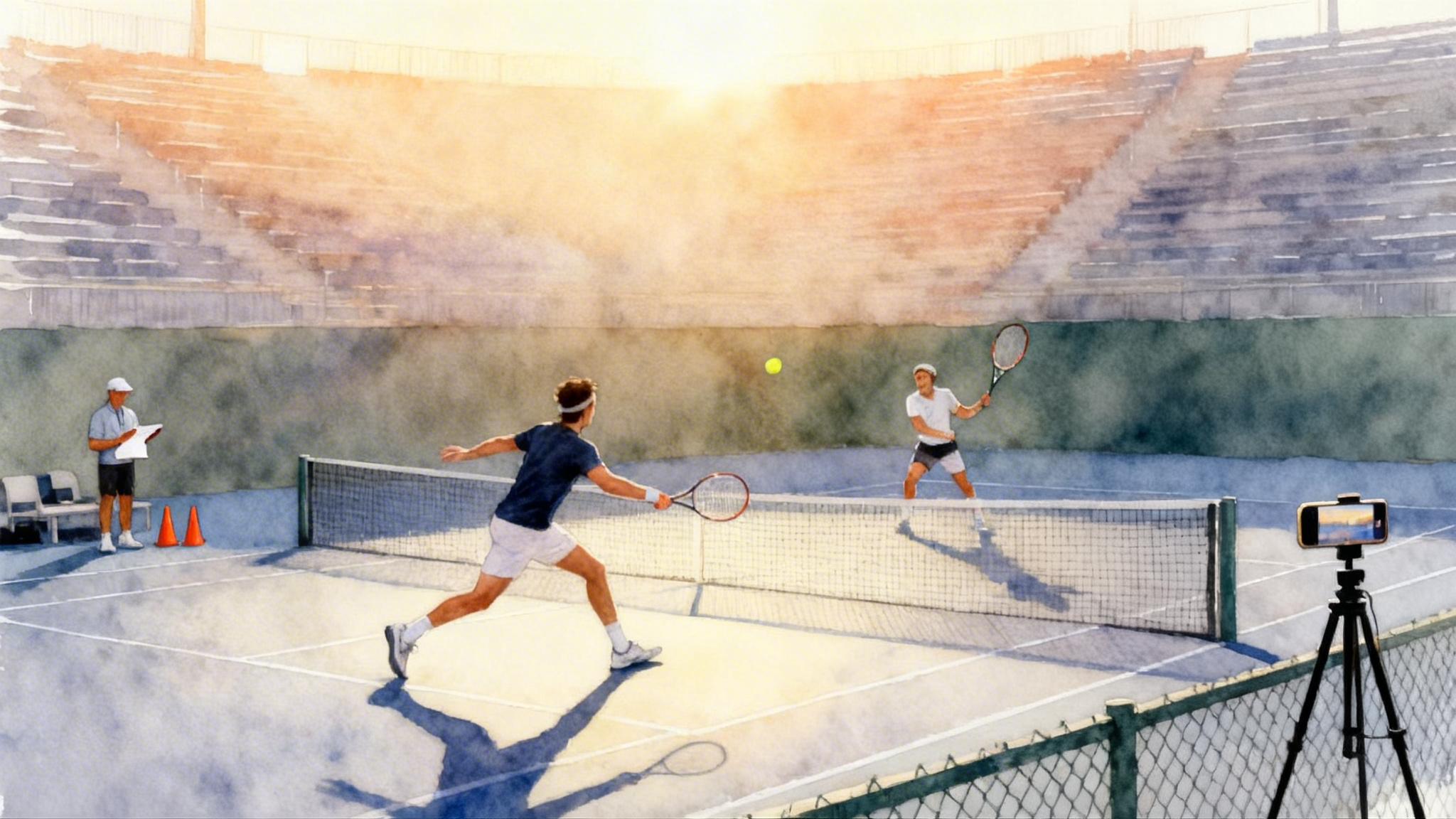
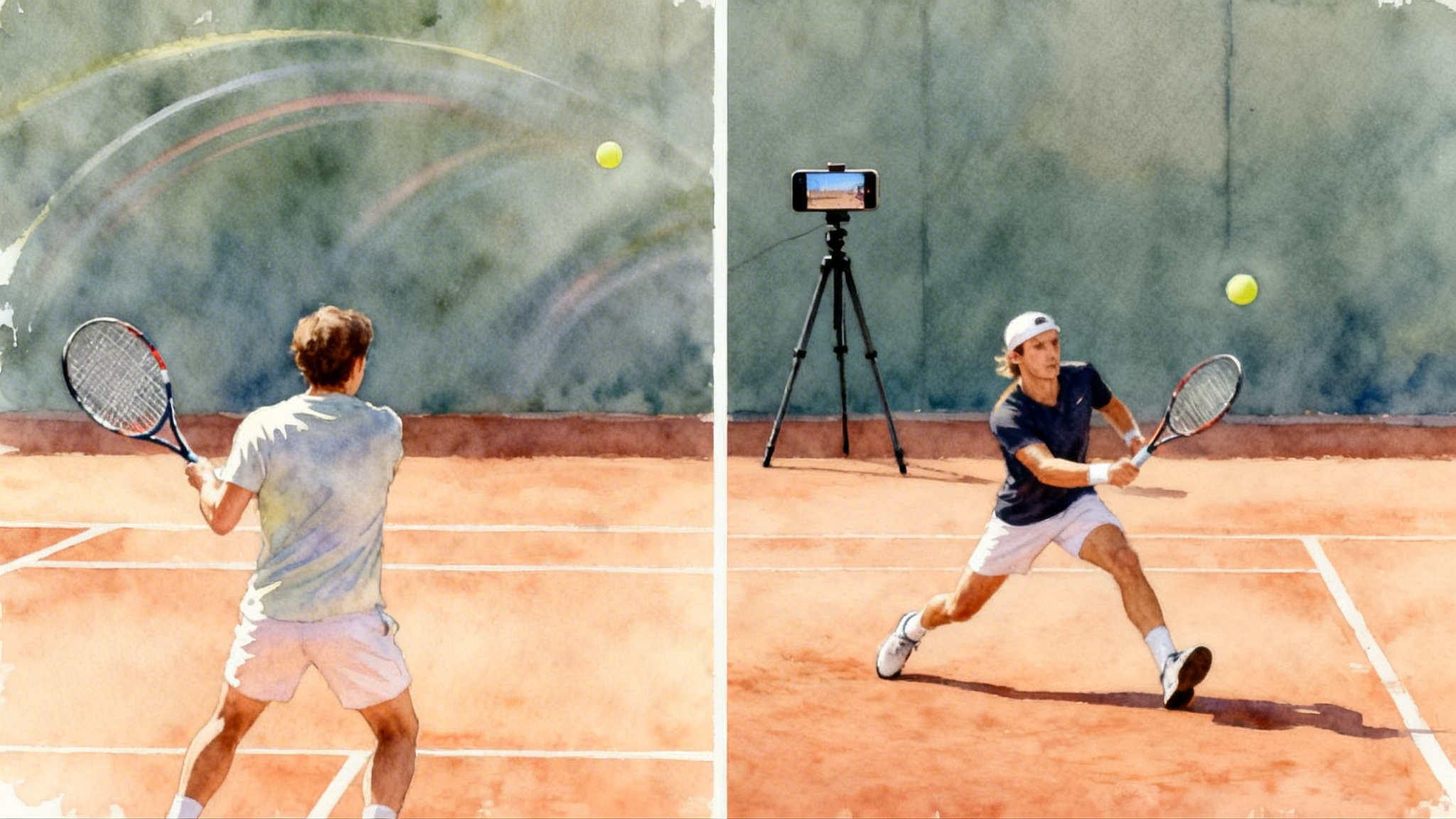
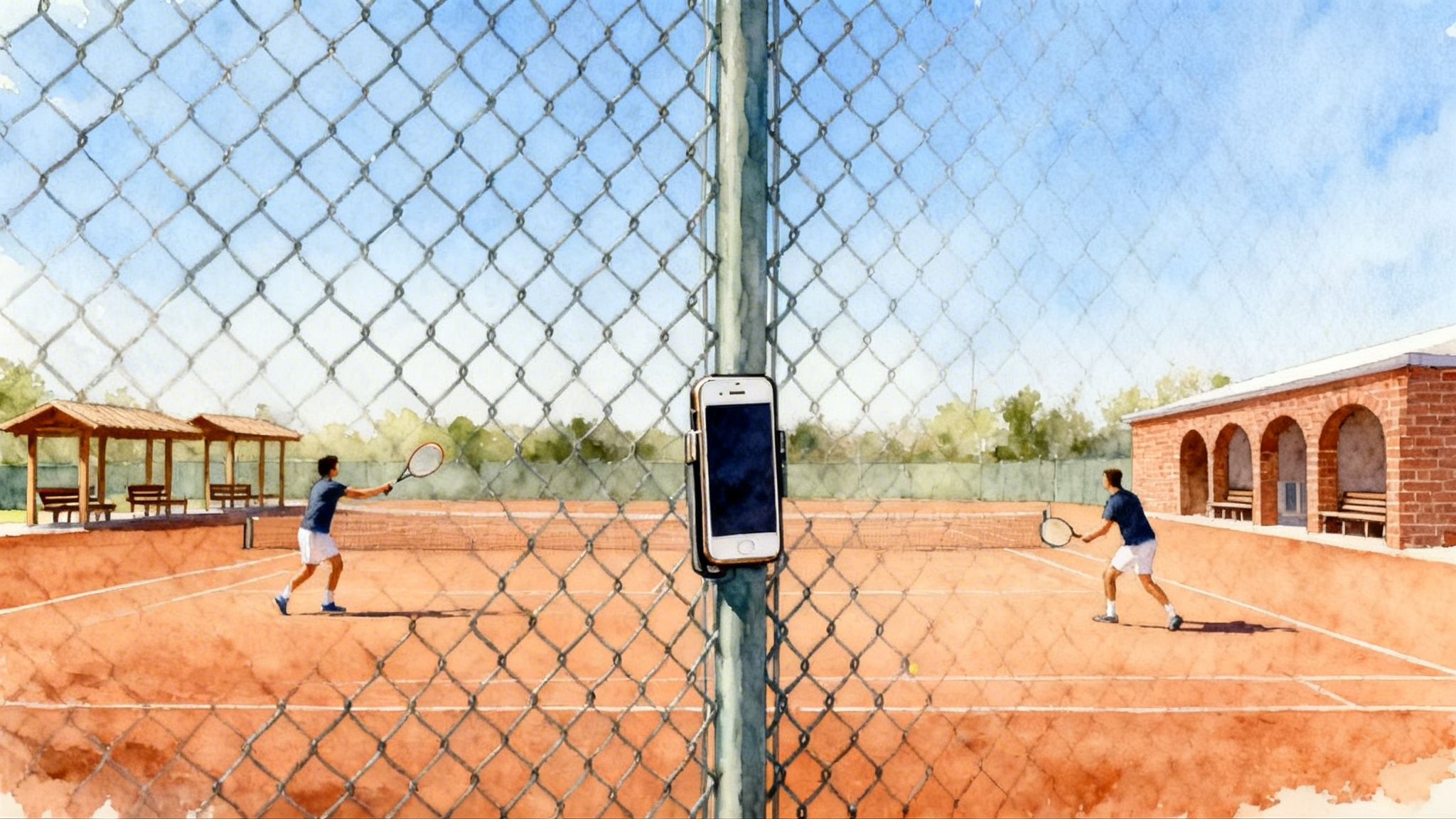
- No film: A smartphone from behind the baseline once a week is enough. You will spot posture, brake steps, and lazy recoveries quickly.
Two ready made microcycles
Use these if you need a simple plug and play week. Adjust volume by age and level.
Six day week for juniors
- Monday: Footwork schools and static to short slides. Neutral rally to 8 with height goals. S&C A.
- Tuesday: Return plus one with two cross one line patterns. Situational games starting 30‑30.
- Wednesday: Backhand slide focus and approach slides. Short set to 4 games. S&C B.
- Thursday: Defense to offense day. High heavy then through. One tiebreak.
- Friday: Transition and volleys with approach slides. Serve patterns to deep middle before corners.
- Saturday: Practice match with constraints first set, free play second set. Quick film review.
Four day week for adults
- Day 1: Movement primer, then neutral crosscourt rallies to 10. One set starting 15‑15 in every game.
- Day 2: Return patterns that lift crosscourt. Play return games with second serve starts.
- Day 3: Defense to offense with target cones. Add one drill of drop shot and lob only after a deep ball.
- Day 4: Practice set with a rule that the first attack must land past the service line.
Simple metrics to track
- Rally length: average and maximum each week. Aim to add two balls to your average by Week 4.
- Depth percentage: balls landing past the service line in neutral exchanges. Aim for 60 percent by Week 6.
- Break point conversion: track for two practice matches per week. Small gains here mean big results later.
- Movement errors: count loss of balance or sliding falls per session. The goal is to see this drop to near zero by Week 3.
Gear and court care basics
- Shoes: true clay models with full herringbone tread. Replace insoles if training daily.
- Socks: thin performance socks layered with a second pair for long slide sessions to reduce hot spots.
- Racket setup: a string bed with a touch more tension to control the extra spin window you will learn. If you play polyester strings, increase by one kilogram. If you play multifilament, increase slightly as well.
- Court etiquette: brush from the outside in, repair scrapes, and water if allowed. Dry courts reduce safe sliding.
The clay to hard transition week
When the block ends, take three days without matches. Keep footwork schools and neutral rally counts on the hard court for one week. Start with slower balls in the first session to keep the height and depth you learned. The goal is not to hit harder. It is to bring clay habits to a faster surface.
Final checklist before you book
- Does the calendar fit a six to eight week block between March and July without clashing with school exams or adult league playoffs.
- Can the academy show a written sliding progression and weekly rally metrics.
- Are there match filming options and a plan to cut short clips for college coaches.
- Will you track rally length, depth percentage, break point conversion, and movement errors every week.
- Do you have two short strength and conditioning sessions written for your age group.
- Are parent drills planned for off days.
Closing thought
Clay is a magnifying glass. It shows you the truth about your movement, your patterns, and your patience. Spend six to eight focused weeks learning to control your body and the ball on a surface that demands both. Then step back on hard courts with earlier contact, calmer choices, and an edge that coaches and opponents will notice right away. A short, smart clay block now turns into faster wins all summer.