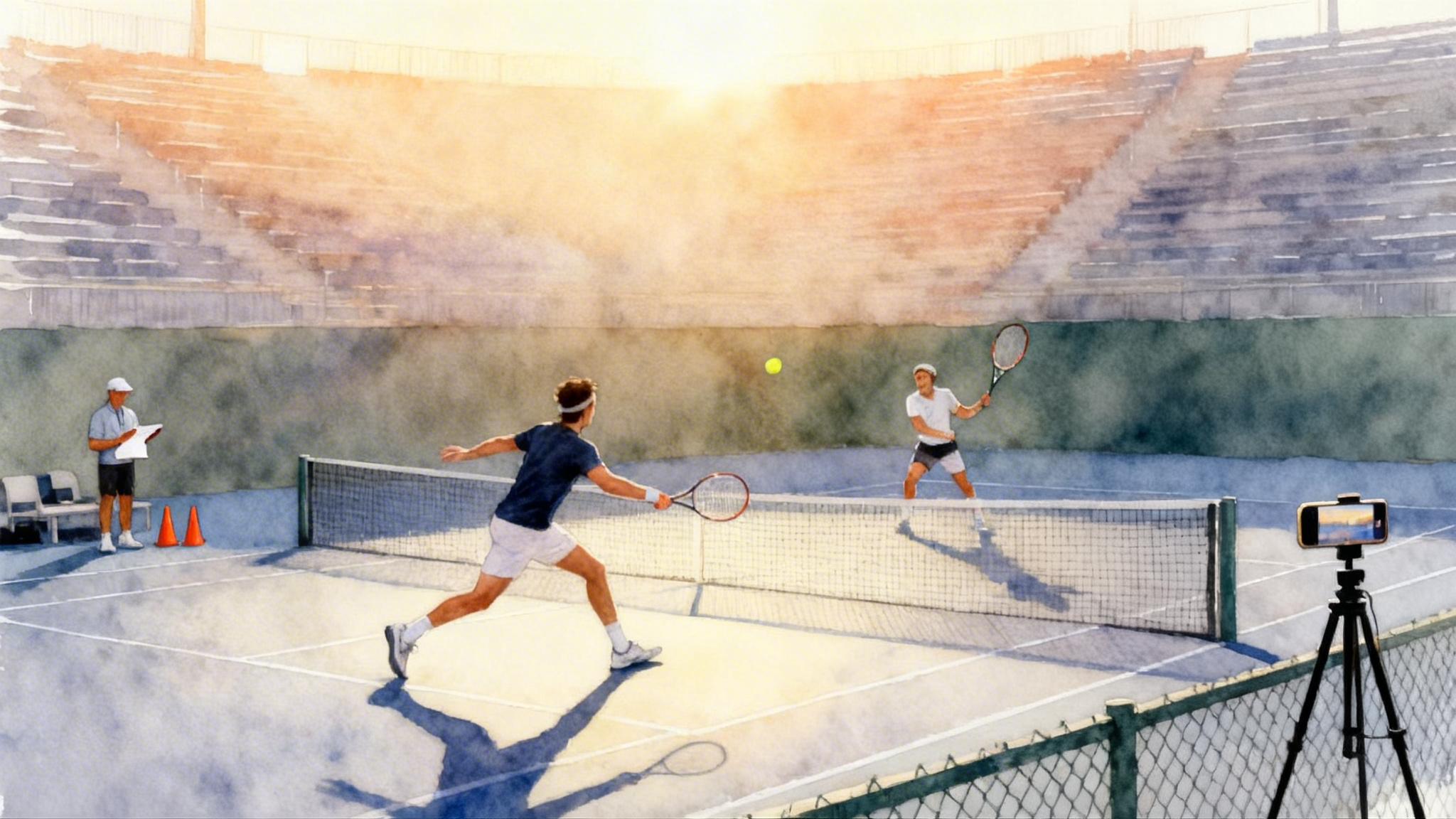
Age-Smart Tennis Injury Prevention 2026: Warm-Ups and Strength
A step-by-step 2026 guide for families and adult players. Five-minute pre-court warm-ups, 20-minute strength circuits by age, safe workload ramps around tournaments, shoulder and elbow care, and post-match recovery checklists.
 Tommy
Tommy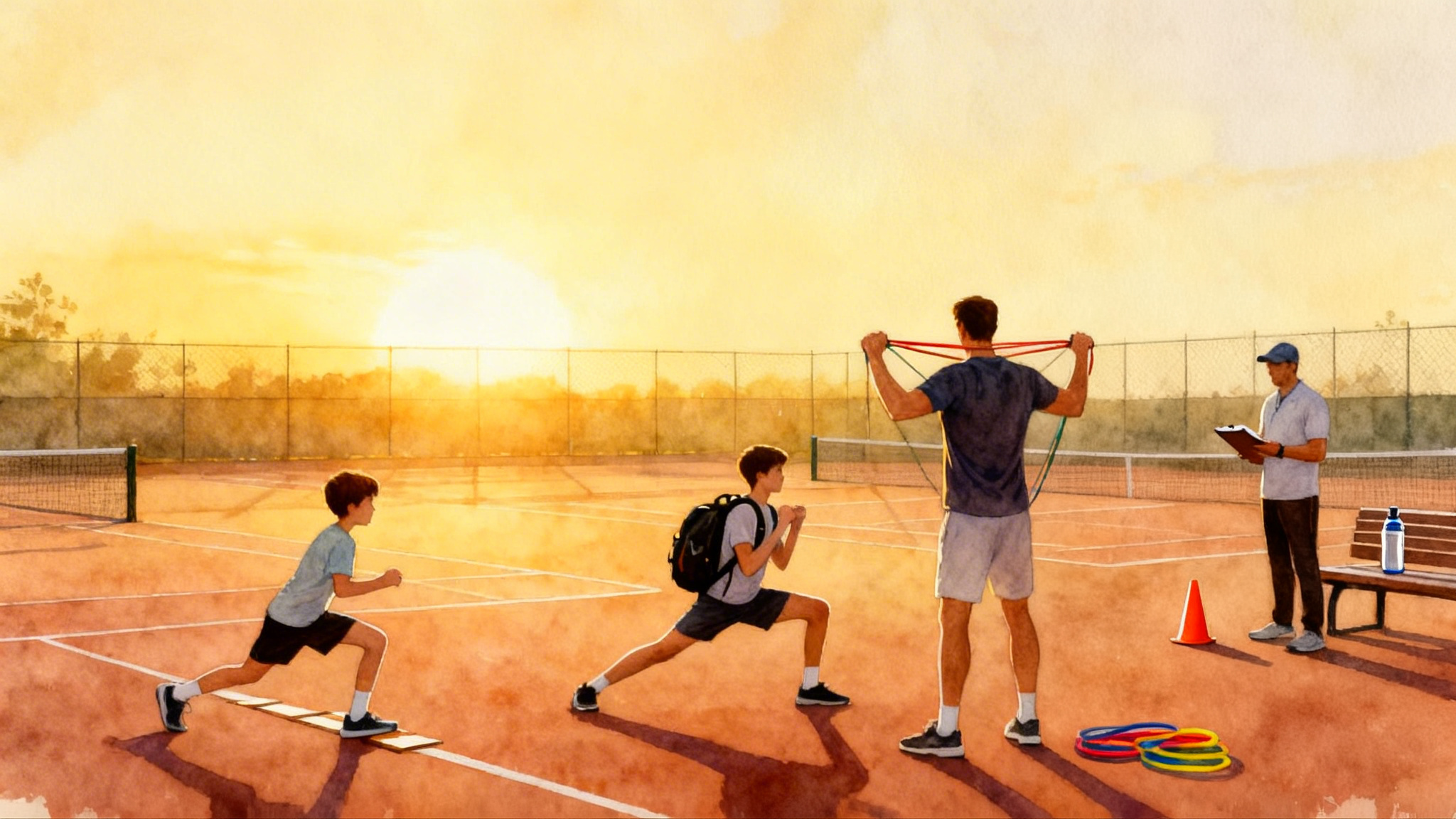
Why age-smart injury prevention matters in 2026
Tennis is a lifetime sport, but each stage of life puts different stress on the body. A nine-year-old learning to split step, a fifteen-year-old grinding through sectional qualifiers, and a forty-year-old returning to league play do not need the same plan. What they do need is the same framework: warm up with intent, get stronger in ways that match tennis, and recover with just enough precision to repeat performances without wearing down.
This guide gives you exactly that. It is short on fluff and long on actions you can use today. You will find five-minute warm-ups you can run in a parking lot, twenty-minute circuits for Under 12, Under 16, and adult players, workload caps and ramp rules that keep miles off joints during tournament blocks, shoulder and elbow care that respects tendon biology, and post-match recovery checklists you can follow without a trainer. College-bound players also get a sample week that balances travel, class, and match load.
The three pillars at a glance
- Warm up to prepare, not to prove. The goal is temperature, range of motion, and tennis-specific coordination, not fatigue.
- Strength to build a buffer. Stronger tissues handle speed changes and off-center hits, which means fewer overuse flare-ups.
- Recover with intent. Sleep, refuel, and light movement drive the repair work your body must do between hits.
Five-minute pre-court warm-ups you can do anywhere
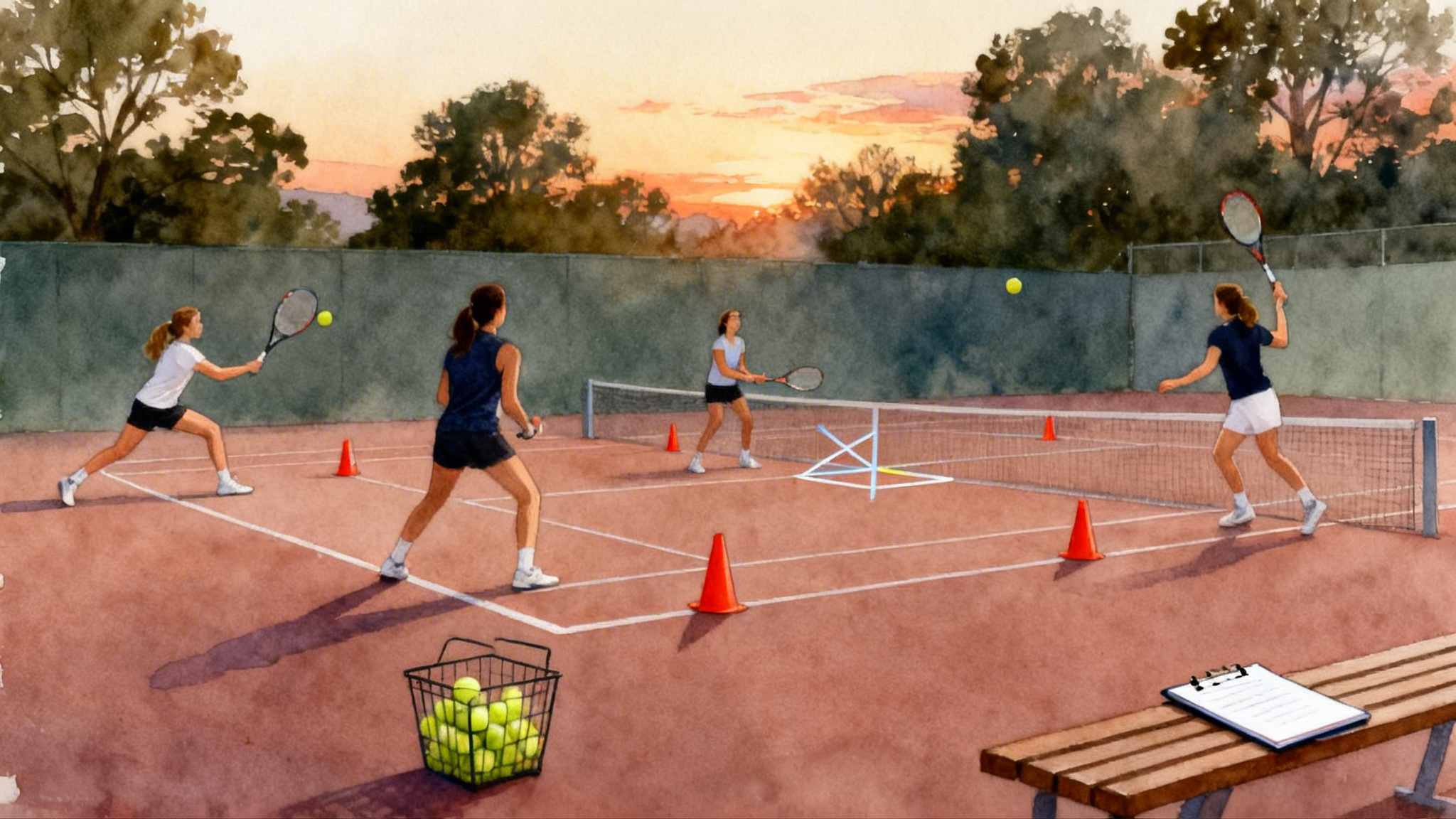
You need movements that raise temperature, wake up the feet and hips, and prime shoulders for serves and groundstrokes. Here are two five-minute tracks that fit on a sidewalk.
Juniors and teens
- Thirty seconds of bounce and skip
- Light jog into high skips. Think tall posture, soft feet.
- Thirty seconds of lateral steps and shuffles
- Two steps right, two steps left. Finish with three quick shuffles each side.
- One minute of hip and ankle prep
- Ten walking lunges with a reach overhead. Then ten ankle rolls each direction and ten calf pumps each leg off a curb or line.
- One minute of dynamic shoulders
- Ten arm swings across chest, ten circles each way, ten elbow-to-ear reaches for overhead range.
- One minute of mini footwork
- Ten split steps into shadow forehand, ten split steps into shadow backhand. Emphasize quiet landings.
- Thirty seconds of reactive bounce
- Partner clap or coach call. Clap equals quick step forward, whistle equals retreat two steps, then reset.
Total time: five minutes. You should feel warmer, springy, and coordinated, not tired.
Adults and parents
- One minute of brisk walk with arm swings
- Add two to three short jog pickups for five steps each.
- One minute of mobility flow
- Eight inchworms to plank, then step one foot outside hands and rotate that arm toward the sky. Switch sides.
- One minute of glute and calf activation
- Ten banded lateral walks each way if you have a mini band. If not, ten bodyweight good mornings and twenty calf raises.
- One minute of shoulder primer
- Ten scapular push-ups, ten band pull-aparts or towel pull-aparts, ten overhead reach-backs against a fence.
- One minute of tennis patterns
- Ten split-step to short shuffle and load on outside leg, shadow forehand. Repeat on backhand side. Two practice serves at fifty percent effort to finish.
If you only remember one idea, remember this: finish your warm-up with the same movement shapes you will use in the first rally. Your nervous system loves rehearsal. For more ideas, see our 7 footwork patterns guide.
Twenty-minute strength circuits by age band
Supervised strength training is safe and beneficial for children and adolescents when programs use proper technique and progressive loads. If you want a scientific overview to share with a school or club, start with the AAP strength training guidance.
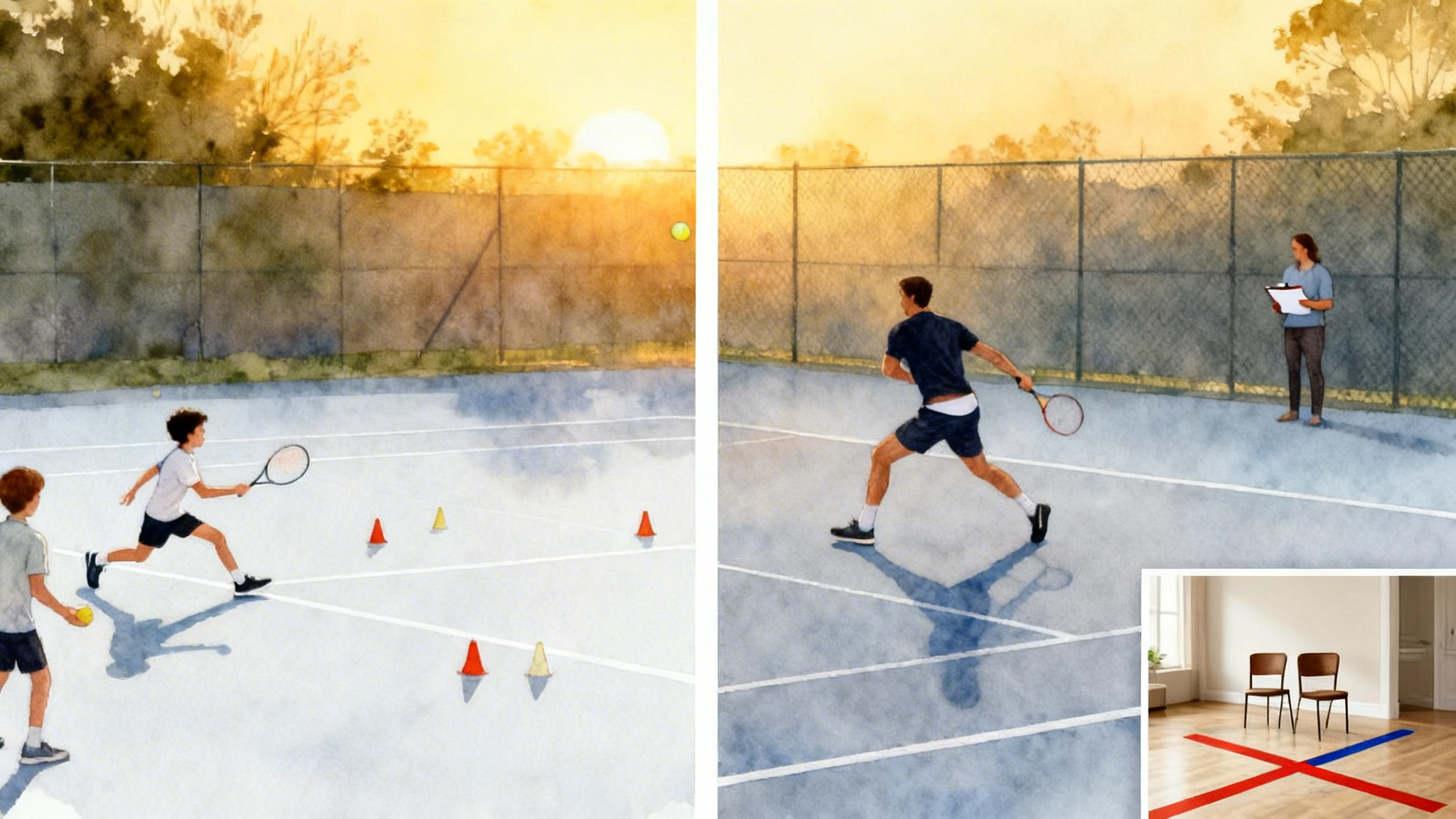
Below are plug-and-play circuits. Set a timer for twenty minutes. Move briskly between movements. Rest thirty to forty five seconds when form slips. Use a backpack with books, a kettlebell, dumbbells, or resistance bands as available.
Under 12: coordination strength
Goal: groove shapes, build tendon tolerance, and make strength fun without chasing load.
-
Round 1 and 2
- Split squat to balance: 8 reps each leg. Pause for two seconds at the bottom.
- Push-up from bench: 6 to 10 reps. Keep ribs tucked and neck long.
- Band row or towel row: 10 reps with two second squeeze.
- Lateral hop to stick: 6 hops each side. Land quietly and hold one second.
- Farmer carry: two trips of 15 meters with a backpack or light weights. Walk tall.
- Dead bug or hollow hold: 20 seconds.
-
Round 3 finisher
- Wall sit: 30 to 45 seconds.
- Forearm pronation and supination with a light hammer: 10 slow reps each direction.
Coaching cues: move like you are balancing a glass of water on your head. Quality beats speed.
Under 16: strength that supports speed
Goal: develop capacity for tournament load. Slightly heavier, slightly slower, still crisp.
-
Round 1 and 2
- Rear foot elevated split squat: 6 to 8 reps each leg with backpack or dumbbells.
- Half-kneeling single arm press: 6 to 8 reps each side. Press slightly forward and up to mimic serve path.
- One arm row with pause: 8 reps each side. Two second pause near ribs.
- Lateral bound and stick: 5 bounds each side. Hold one second.
- Romanian deadlift: 8 reps with slow three second lower.
- Pallof press anti-rotation: 8 reps each side with band.
-
Round 3 finisher
- Isometric mid-thigh pull against a strap or towel: 3 times 10 seconds, maximal intent.
- Wrist flexor and extensor eccentrics: 10 slow lowers each.
Progression: increase total work by adding a third standard round after two weeks, then increase load modestly after you can complete reps with clean form.
Adults: power conservation plan
Goal: maintain muscle, tendons, and power as weeks stack up.
Two day split. Alternate A and B. Each session takes twenty minutes.
-
Day A: legs and posture
- Goblet squat: 3 sets of 6 to 8 reps, two second lower.
- Step down or split squat: 2 sets of 8 each leg.
- Hip hinge with dumbbells: 2 sets of 8.
- Band pull-aparts or cable rows: 2 sets of 10 with two second squeeze.
- Calf raises: 2 sets of 12 with pause at top.
-
Day B: shoulders, core, and quickness
- Half-kneeling single arm press: 3 sets of 6 to 8.
- One arm row: 2 sets of 8 each.
- Medicine ball chest pass or slam: 2 sets of 6 throws, focus on speed.
- Side plank with top leg lift: 2 sets of 20 seconds each side.
- Skater hops: 2 sets of 8 per side.
Scaling for busy weeks: cut each list in half and keep the slow lowering tempo. Tendons love time under tension more than fancy equipment.
Weekly workload caps and safe ramp-up rules
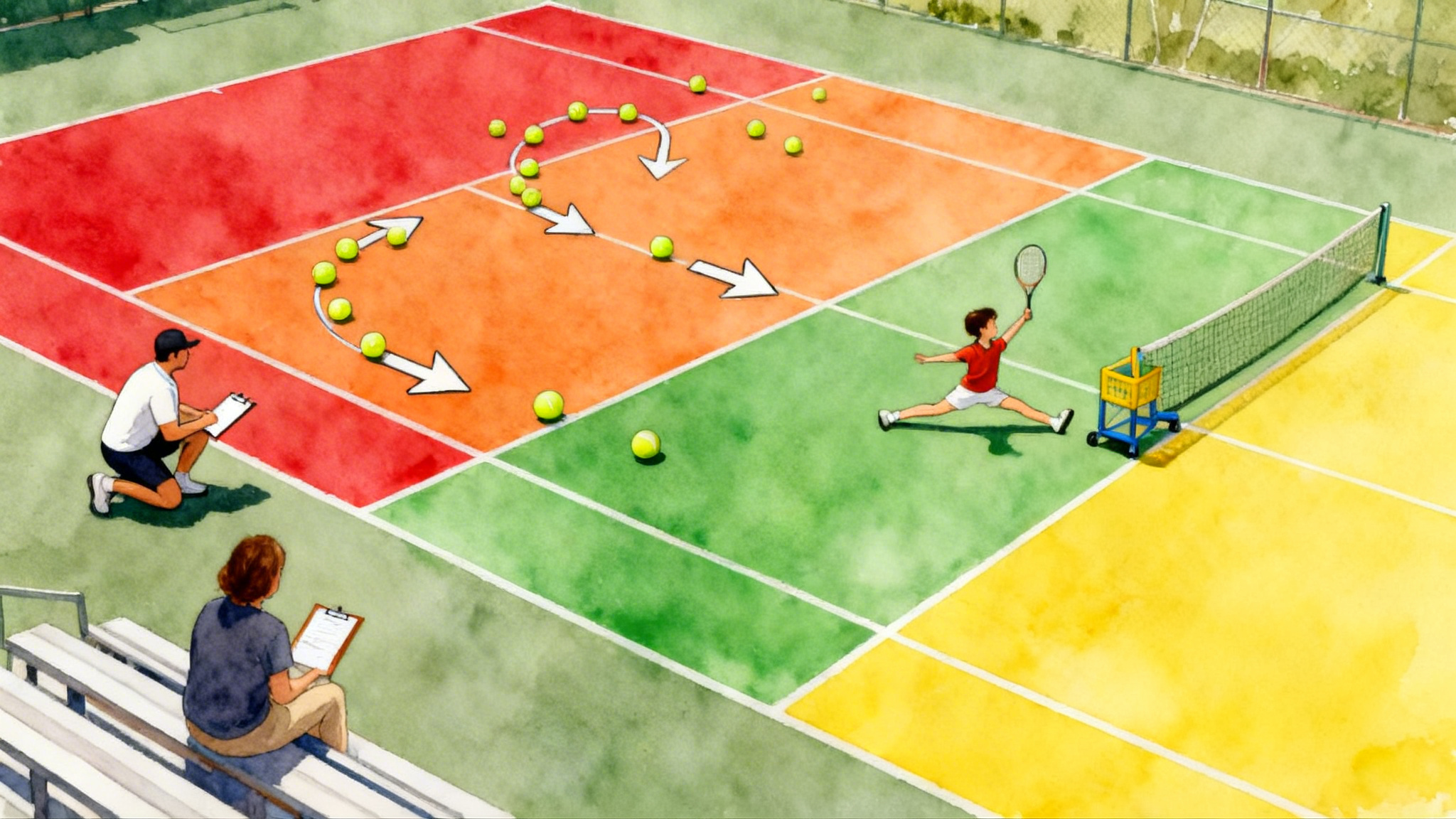
Think of training like building a road. If you pave too fast, cracks appear. If you never add lanes, traffic jams develop and matches feel heavy. Use these simple caps and ramps to balance both.
- U12 weekly on-court cap: 6 to 10 hours depending on experience and maturity. Aim for 1 to 2 strength sessions of twenty minutes.
- U16 weekly on-court cap: 8 to 14 hours in season. Plan 2 strength sessions of twenty minutes and one mobility micro-dose of 10 minutes after a light hit.
- Adults returning to play: 3 to 6 hours on court. Two strength sessions of twenty minutes. If over 35, prefer two short hits to one marathon.
Ramp rules for three-week tournament blocks
- Week 1: increase total tennis time by no more than 15 percent for juniors and 10 percent for adults. Keep strength volume steady, not higher.
- Week 2: hold the same on-court volume, sharpen with slightly faster footwork and three to five practice serves at match pace.
- Week 3: compete. Reduce extra hitting volume by 20 to 30 percent. Keep one short strength session focused on quality.
After the block, schedule a deload week where you cut volume by 30 to 40 percent and keep intensity moderate. This is when the body consolidates gains.
Tournament week planner
- Three to four days before: practice sets or heavy drills at 70 to 80 percent of match volume. Keep strength to 2 to 3 total sets only.
- Two days before: light hit with serve focus. Mobility and shoulder care. Early bedtime.
- Day before: brief hit, mostly patterns and serves. No new shoes, strings, or grips.
Shoulder and elbow tendon care that respects tennis
Tendons are like climbing ropes. They store and release energy, but they adapt slowly. Good programs meet them where they are with slow strength, steady progress, and smart symptom rules.
Core moves, 2 to 3 times per week
- Heavy slow resistance for shoulders
- Two to three sets of 6 to 8 reps of seated row or band row with two second squeeze.
- Two sets of 8 to 10 reps of landmine or dumbbell press with two second lower.
- External rotation and scapular control
- Sidelying external rotation with light dumbbell: 2 sets of 10 with slow lower.
- Y and T raises on bench or stability ball: 2 sets of 8 each.
- Elbow and forearm armor
- Wrist extensor eccentrics: 2 sets of 10 slow lowers with the other hand assisting the return.
- Forearm pronation and supination: 2 sets of 10 each with a hammer or racket choked up near the head.
If you prefer a ready-made shoulder routine, the ASMI Thrower's Ten program is a clear, practical template used by many overhead athletes. Choose 8 to 10 movements that match your equipment and perform them twice weekly.
String and grip sanity checks
- If elbow or shoulder gets irritated, try dropping string tension by 2 to 3 pounds and moving toward a slightly softer string. Stiff full polyester setups can be harsh for juniors and adults who do not swing full speed.
- Confirm grip size is not too small. Excessive forearm squeeze for control adds unnecessary load to the wrist and elbow.
Stoplight symptom rules
- Green light: pain 0 to 2 out of 10 that warms up and does not linger the next day. Continue and monitor.
- Yellow light: pain 3 to 4 out of 10 or next day soreness that is new. Reduce volume and intensity by 30 to 50 percent for a week and emphasize slow strength.
- Red light: pain 5 out of 10 or higher, or pain that spikes with specific strokes and lasts more than 24 hours. Stop, consult a qualified professional, and adjust equipment if needed.
Post-match recovery checklists you can run without a trainer
At the court, 15 minutes
- Two minutes of nose-breathing walk. Calm the system.
- Two minutes of calf and hip mobility. Ten calf pumps off a curb, ten hip airplanes each side.
- Three minutes of easy band routine. Ten pull-aparts, ten external rotations, ten scapular pushes.
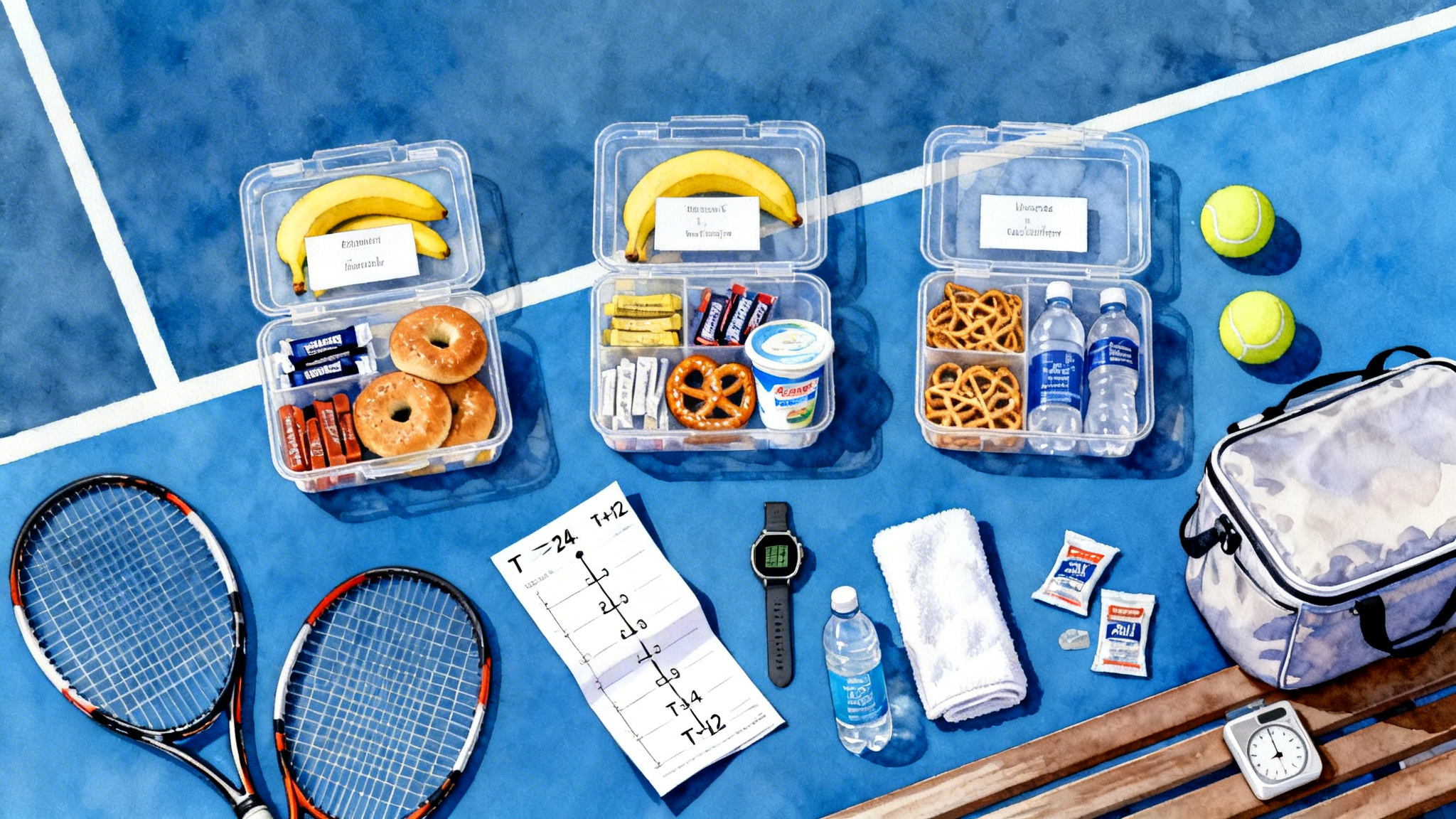
- Five minutes of refuel. Aim for a mix of fluid, sodium, and carbohydrate. A simple target is water plus a pinch of salt and a snack with 30 to 60 grams of carbohydrate. For more detail, use our tournament fueling plans.
- Three minutes of notes. Write down match length, how you felt, and any body part that needs attention. Patterns matter more than perfect recall.
Later that day, 30 minutes total
- Eat a real meal within two hours. Include a palm or two of protein, colorful vegetables, and a starch.
- Feet up for ten minutes. Simple venous return can help lower-leg heaviness after long matches.
- Ten minutes of easy walk or spin. Motion is medicine.
- Devices off one hour before bed. Protect sleep.
Next morning, five minute self-check
- Rate readiness 1 to 5. Ask: Do I feel stiff, okay, or light and ready.
- Check any hot spots with a two leg squat and a single leg calf raise. If pain rises above a yellow light, plan a lighter hit.
The college pathway: survive fall and spring with a sample week
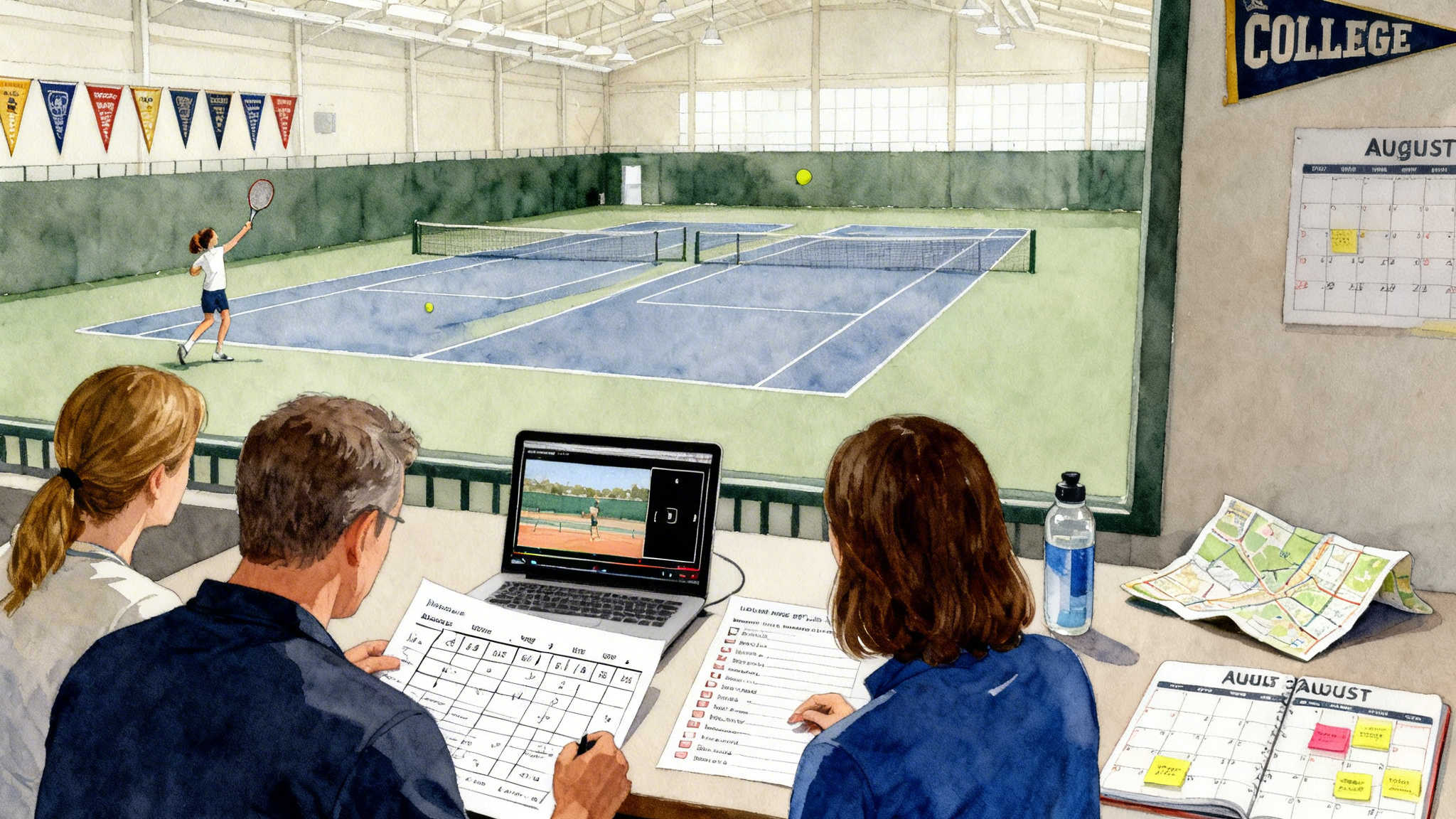
College tennis pairs dense travel with academics. Your body’s best friend is a predictable weekly rhythm. Here is a sample in-season structure that keeps strength, mobility, and match play in balance.
-
Monday
- Morning: mobility 10 minutes and light stretch after breakfast.
- Midday: team practice 90 minutes with patterns and serves.
- Afternoon: lift 25 minutes. Goblet squats, rows, presses, and calf raises. Keep one to two reps in reserve.
- Evening: study block. Light walk after dinner.
-
Tuesday
- Morning: class. Snack and hydration plan. Carry a bottle and small sodium source if travel is coming.
- Afternoon: match or heavy practice. Post-session recovery checklist.
-
Wednesday
- Morning: lift 20 minutes. Single leg work, side planks, shoulder care.
- Travel: pack a mini band. On bus or plane, do ankle pumps, seated marches, and two bouts of stand and move.
-
Thursday
- Light hit at venue. Ten minutes of mobility plus serves. Early bedtime.
-
Friday
- Match day. Same post-match routine.
-
Saturday
- Match or travel. If travel, add ten minute stroll in the evening and a simple upper body band circuit.
-
Sunday
- Day off or flush. Gentle bike or walk for twenty minutes and a full shoulder care set.
Travel bag essentials
- Mini band, light loop band, and a lacrosse ball.
- Two protein-rich snacks per travel day and a refillable bottle.
- Sleep kit: eye mask and earplugs. Travel noise costs recovery.
Metrics that matter
- Sleep duration and consistency. Late nights stack fatigue.
- Simple readiness score. Rate 1 to 5 each morning and look for trends.
- Practice time and match count. If a week spikes, the next week must dip.
Legend Tennis Academy: measurable checkpoints and easy booking
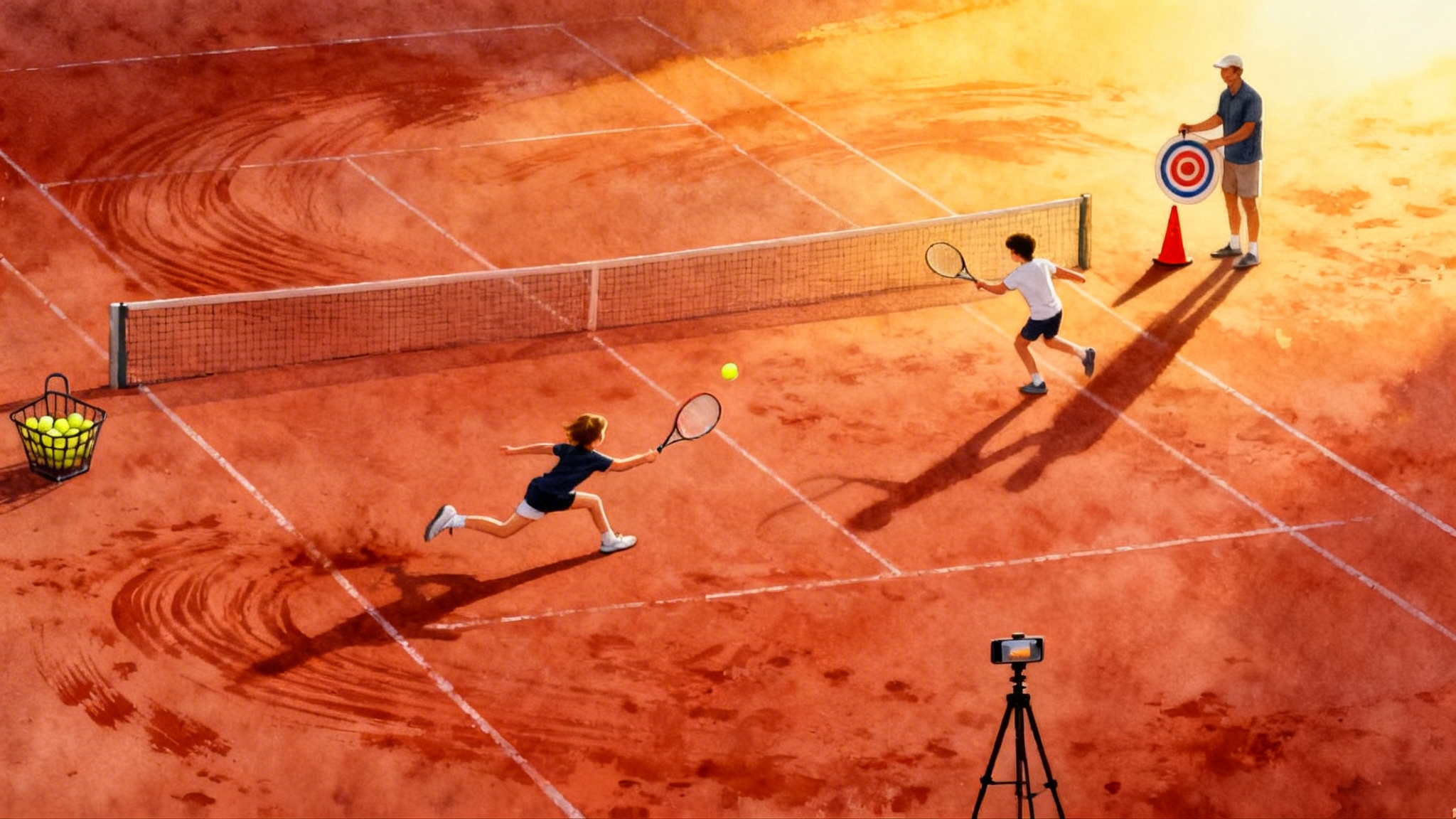
Legend Tennis Academy integrates strength and conditioning screens into the training calendar so that players and families can see progress and adjust early. Screens are quick, repeatable, and matched to age.
Quarterly checkpoints
- Lower body strength and control
- Single leg sit to stand for reps and quality.
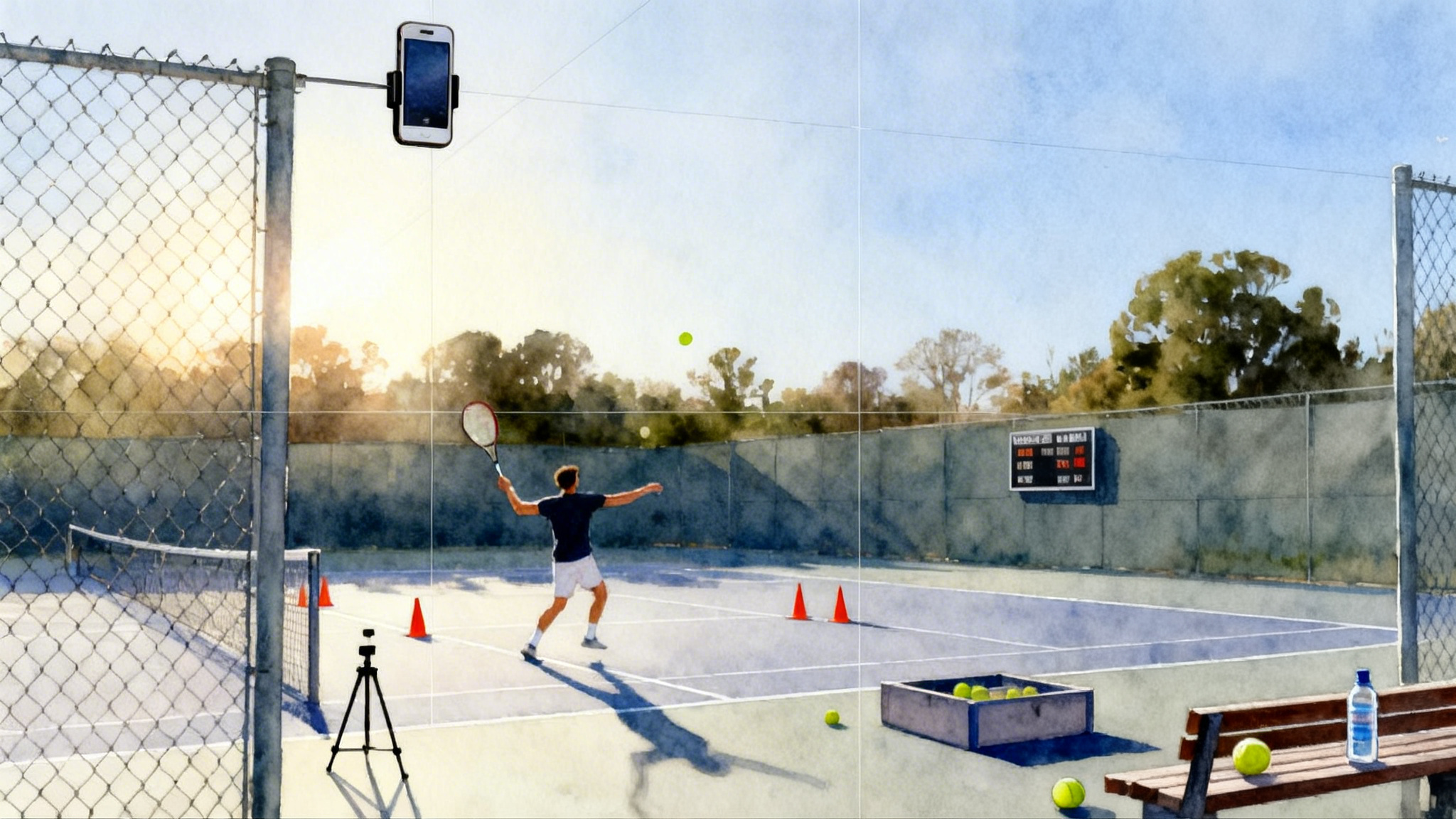
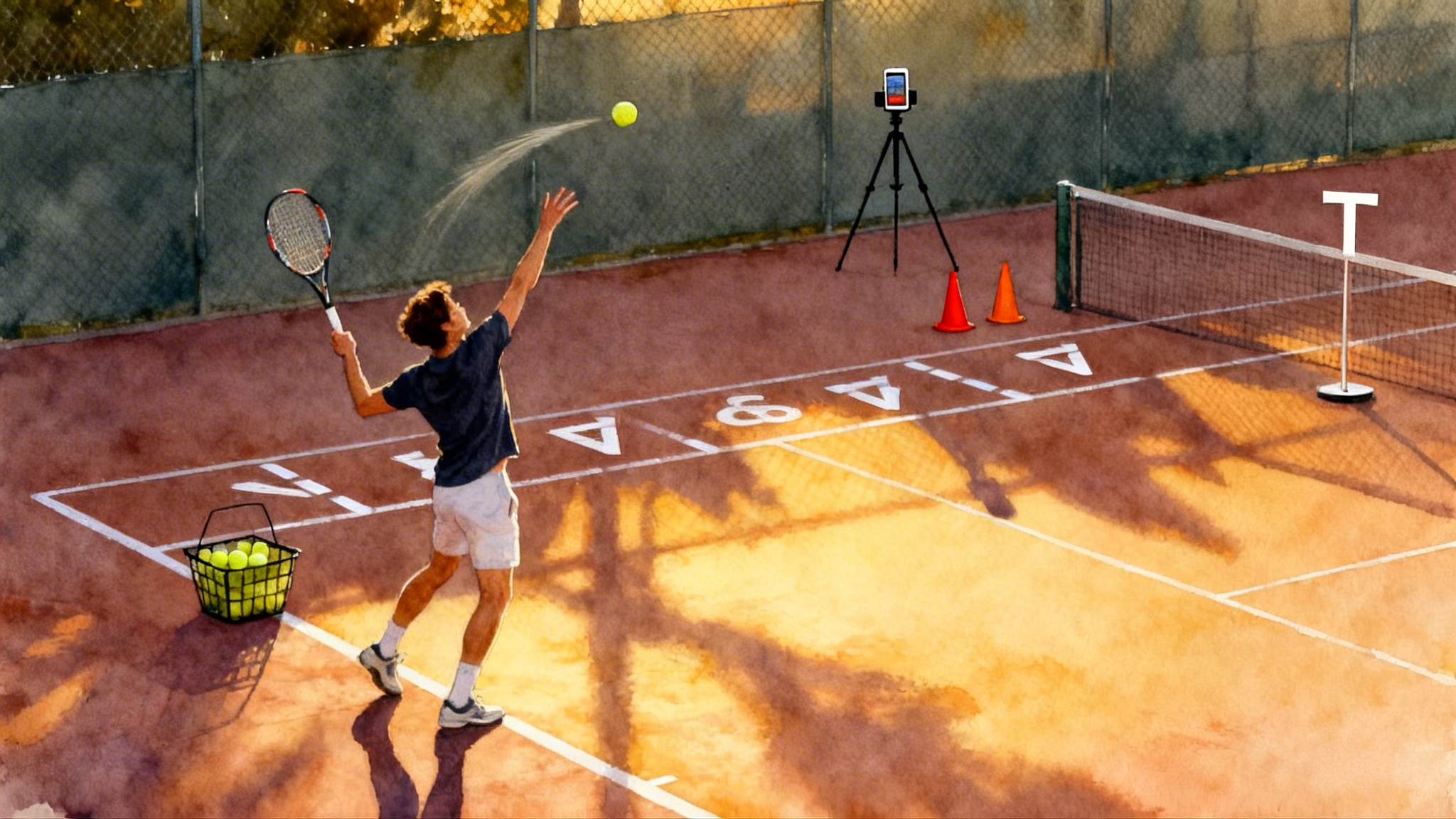
- Countermovement jump height and landing quality. If no jump mat is available, record video and compare knee and hip alignment over time.
- Upper body posture and strength
- One arm row for reps at a set load and a two second squeeze.
- Half-kneeling press for reps and shoulder path.
- Tendon capacity
- Calf raise endurance on a step to a set rhythm.
- Wrist extensor eccentric quality with a set tempo and load.
Legend coaches log results and set targets for the next eight weeks, then share a simple report with each family. If a player needs a deeper look, the academy can book a focused movement screen that includes serve video, shoulder range check, and a ten minute follow-up to update the plan. You can ask your coach about schedule openings or use Legend Tennis Academy strength checkpoints to request a session directly.
A 72-hour tournament weekend blueprint
Use this quick template for a Friday to Sunday event.
-
Thursday night
- Pack familiar snacks and a refillable bottle. Light mobility for ten minutes. Eight hours of sleep.
-
Friday
- Five-minute warm-up on arrival. Two practice serves at fifty percent, then two at seventy percent.
- Post-match: hydration, snack with 30 to 60 grams of carbohydrate, three minute band routine, notes.
-
Saturday
- Morning five-minute warm-up. If two matches are scheduled, split your warm-up into two shorter bouts rather than one long session.
- Between matches: legs up for five minutes, light walk for five minutes, one small meal. No new strings or shoes.
-
Sunday
- Warm-up as usual. After final match, recovery checklist and gentle walk in the evening.
Putting it together in six weeks
This is a family friendly block you can begin next Monday.
- Week 1 to 2
- Two twenty minute strength sessions. One five-minute warm-up before every hit. On-court time within the caps above.
- Week 3 to 4
- Add one ten minute mobility micro-dose after a light session. Maintain strength work and increase on-court load by 10 to 15 percent if readiness stays green.
- Week 5
- Tournament week. Cut extra hitting volume and keep one short strength session. Protect sleep.
- Week 6
- Deload. Reduce total tennis volume by 30 to 40 percent. Keep strength sessions but use lighter loads. Review notes, update targets, and book a screen if any body part kept speaking up.
Final thoughts
Injury prevention is not a separate sport. It is how you warm up, how you get stronger, and how you land the plane after matches. The plans above give you a clear, age-smart way to act on that idea. Start with five minutes before every court time. Layer in twenty minutes of strength twice a week. Hold the line on weekly caps and ramp slow during tournament blocks. Treat shoulders and elbows like climbing ropes that love slow, steady loading. Then keep score with a simple recovery checklist and occasional screens. Small, repeatable moves win long seasons.
If you want help measuring where you are and what to do next, Legend Tennis Academy has you covered. Ask a coach or visit our site to book a quick screen and get a clear plan for the next eight weeks. Your future rallies will thank you.