Tournament Fueling Made Simple: 2026 Tennis Nutrition Plans
A practical, science-based match-day playbook for juniors, parents, and adult league players. Learn T-24 to T+12 fueling timelines, portable snack kits, heat and hydration protocols, travel fixes, and smart caffeine notes.
 Tommy
Tommy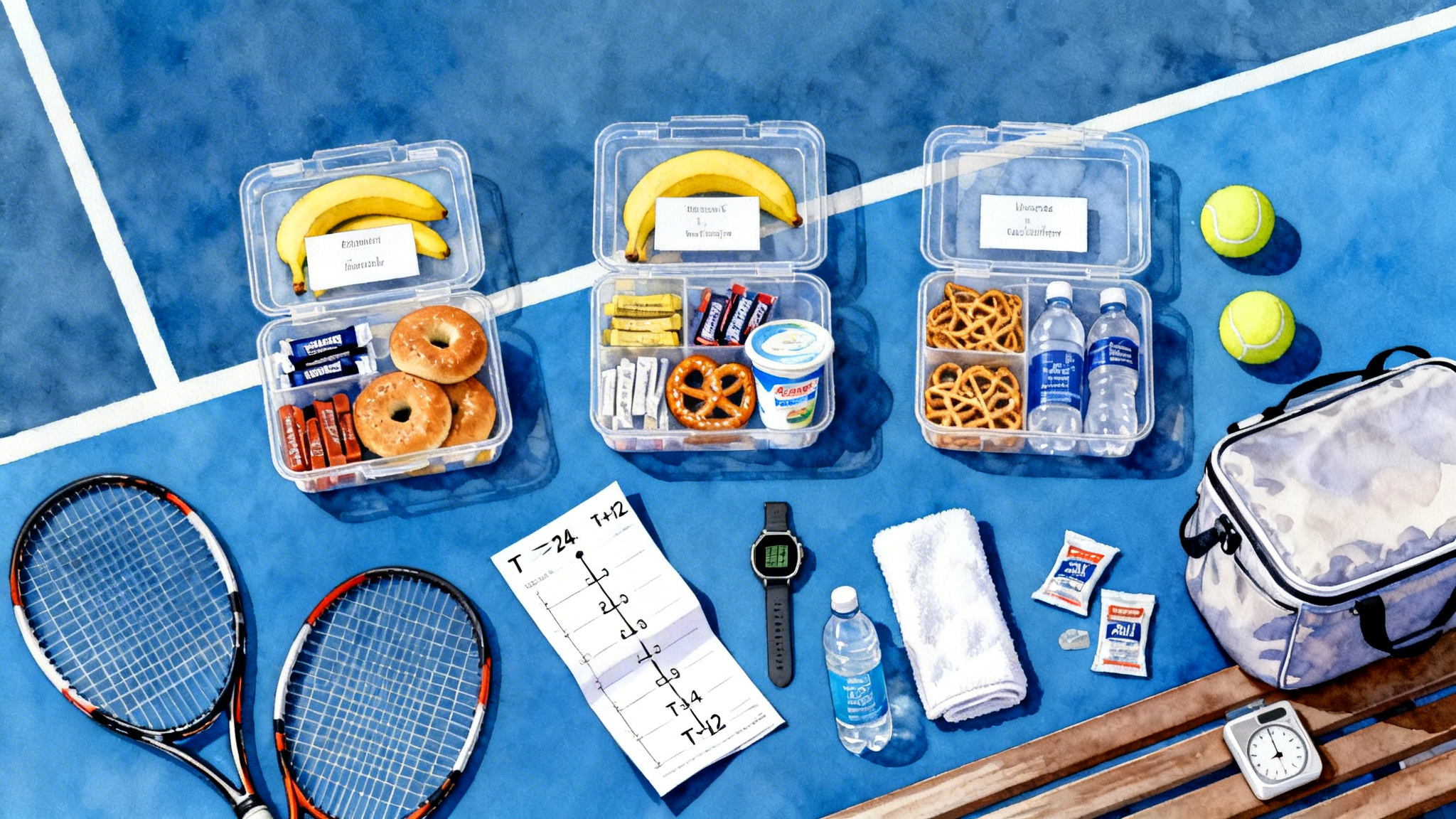
Why tournament fueling quietly wins matches
You can be the fittest player in the draw and still fade in a third set because your engine ran out of fuel or you overheated. Tournament nutrition is not about gourmet meals. It is about timing, portion size, sodium, and fluid so that your legs stay springy, your brain stays sharp, and your stomach stays calm when the tiebreak starts.
This guide gives you match-ready timelines from T minus 24 hours to T plus 12 hours for early starts, doubleheaders, and night leagues. You will also get portable snack kits, heat and hydration protocols, travel-day adjustments, and caffeine and anti-doping notes for college and professional aspirants. Every section includes age-appropriate tweaks for juniors, teens, and adults.
Age-specific baselines before you start
Nutrition is not one-size-fits-all. Use these baselines to size portions and expectations.
- Juniors 8 to 12: Stomachs are smaller and nerves are bigger. Keep foods simple, soft, and familiar. Think applesauce pouches, yogurt, bananas, and mini bagels with peanut butter. Aim for steady sips rather than big gulps.
- Teens 13 to 18: Calorie and fluid needs jump with growth and match volume. Many teens underfuel early, then binge late. Plan grazing every 60 to 90 minutes during long days. If height is spiking, skim our growth spurt training guide to align fueling with training. Practice all products in training before tournament day.
- Adults and league players: Recovery speed depends on sleep, protein, and sodium. Stomach comfort is often the limiting factor during night matches. Keep pre-match fat and fiber moderate to reduce gut distress.
The hydration and heat protocol that travels
Dehydration as small as two percent of body mass can reduce speed, shot selection, and fine motor control. The American College of Sports Medicine offers practical numbers for timing and amounts. See its summary on ACSM fluid replacement guidance.
Here is a simple field version. Explain units once, then post this on your fridge.
- Four hours before a match: Drink 5 to 7 milliliters per kilogram of body mass. That is about 350 to 500 milliliters for a 70 kilogram adult, or 175 to 250 milliliters for a 35 kilogram junior. If urine is still dark two hours before, add another 3 to 5 milliliters per kilogram.
- During a match: Start sipping within the first changeover. Most players do best with 400 to 800 milliliters per hour, adjusted for heat and body size. Include sodium when it is hot or when you are a salty sweater. Start with 300 to 600 milligrams of sodium per hour. If you are cramping in heat, you may need more sodium and more total fluid. Do not chug large volumes at once.
- Carbohydrates during play: For matches longer than 60 minutes, aim for 30 to 60 grams of carbohydrate each hour. Spread intake every changeover. Examples include sports drink, chews, a banana, or half a jam sandwich.
- After a match: For each kilogram of body mass lost, drink 1.25 to 1.5 liters of fluid over the next two to four hours, with sodium included. Eat 1 to 1.2 grams of carbohydrate per kilogram in the first 60 minutes plus 20 to 40 grams of protein to speed recovery.
Quick self-checks you can do anywhere:
- The pee test: Pale yellow is the goal on waking and two hours pre-match.
- The scale test: If safe and practical, weigh before and after a practice to estimate sweat rate. One kilogram lost equals roughly one liter of fluid.
- The salt test: White streaks on a dark shirt or stingy sweat in the eyes signal high sodium loss. Pack extra sodium.
Make-your-own drink when budgets or travel force it:
- 500 milliliters water, 1 heaping tablespoon sugar or honey, a small pinch of table salt, a squeeze of lemon or orange for taste. This gives roughly 6 percent carbohydrate with a bit of sodium. For long, hot matches add a second pinch of salt.
Portable snack kits you can build tonight
Tournaments rarely run exactly on time. Food courts close early. Lines are long. Your game plan should live in your bag.
-
Junior “Green Kit”
- 2 applesauce pouches
- 1 mini bagel with peanut or seed butter
- 1 banana
- 1 small box of raisins or fruit leather
- Pretzels in a snack bag
- 1 small yogurt or dairy-free pouch
- 1 diluted sports drink plus a water bottle
- 1 salt packet for hot days
-
Teen “Blue Kit”
- 1 turkey and cheese wrap, cut in halves
- 1 banana and 1 granola bar
- 1 bag of rice cakes or two fig bars
- 1 pack of sports chews or small homemade jam sandwich
- 1 electrolyte drink, 1 water bottle, 1 spare electrolyte packet
- 1 small bag of trail mix for between matches
-
Adult “Gold Kit”
- 1 rice bowl in a container: rice, rotisserie chicken, soy sauce packets
- 1 banana or apple
- 1 plain Greek yogurt cup with honey
- 1 sleeve of pretzels or a bagel
- 1 pack of chews or a homemade oat bar
- 2 bottles: one electrolyte drink, one water, plus a spare salt tab if you use them
Label each kit with a sticky note showing approximate carbohydrate per item so you can hit 30 to 60 grams per hour without math during changeovers.
Travel-day adjustments that save your stomach
- Flight day: Pack low-fiber, low-fat foods. Dry cereal, bananas, turkey sandwiches, rice bowls, yogurt, and plenty of water. Skip mystery sauces and very spicy meals.
- Time zones: Preserve the last pre-bed snack when you land to keep sleep stable. A yogurt with honey or a small rice bowl works.
- Hotels: Ask for a room with a fridge. Bring an electric kettle. Instant oatmeal with powdered milk or a protein packet solves early starts. Scope a supermarket near the venue on arrival.
- Car rides: Freeze water bottles the night before so your cooler stays cold. Do not forget a spoon for yogurt, napkins, and a foldable lunchbox in case the tournament site bans hard coolers.
The T-24 to T+12 playbooks
The clock is your ally. Use these plans as templates and adjust portions for age and body size. Juniors use smaller portions more often. Teens use moderate portions more often. Adults layer recovery protein and sodium more deliberately.
Early start day, 8:00 a.m. first ball
- T-24h, breakfast: Oatmeal with milk, banana, honey. Add two eggs or a Greek yogurt for protein. Adults add a pinch of salt to breakfast if the forecast is hot.
- T-20h, lunch: Rice bowl with grilled chicken, soy or teriyaki, vegetables on the side. Add water plus electrolyte.
- T-16h, snack: Applesauce pouch and pretzels for juniors; granola bar and fruit for teens; yogurt with honey for adults.
- T-12h, dinner: Pasta with marinara, bread, and a side salad. Keep fat modest. Drink water to pale yellow urine before bed.
- T-8h, lights out: Prioritize 8 to 9 hours of sleep for teens, at least 7 for adults, and as much as possible for juniors.
- T-3h, pre-breakfast: Small meal. Juniors: mini bagel with peanut butter and a banana. Teens: bagel with jam, yogurt. Adults: rice with egg and soy sauce or oatmeal with milk and fruit. Add 5 to 7 milliliters per kilogram of water or electrolyte.
- T-60m, top up: 200 to 300 milliliters of electrolyte drink and 15 to 25 grams of carbohydrate such as half a banana or a few chews.
- During match: 400 to 800 milliliters of fluid per hour, 30 to 60 grams of carbohydrate per hour. Use your kit.
- T+30m, recovery: Chocolate milk or yogurt with honey and a banana for juniors; smoothie with fruit and milk for teens; 20 to 40 grams of protein plus a fist of carbs for adults.
- T+2h, second meal: Rice bowl, sandwich on soft bread, or pasta with lean protein. Include sodium.
- T+12h, review: Check urine color, weigh if safe, and refill the kit for tomorrow.
Doubleheader day, two matches around 10:00 a.m. and 2:30 p.m.
- T-24h and T-12h mirror early start day but add an extra carbohydrate portion at dinner such as an extra slice of bread or fruit.
- T-3h, breakfast: Larger than normal. Teens and adults add an extra cup of rice or an extra slice of toast.
- Match 1 during play: Hit the 30 to 60 grams of carbohydrate per hour target and keep sodium steady.
- T+15m after match 1: Immediate 20 to 30 grams of protein plus 60 to 80 grams of carbohydrate. Examples: chocolate milk and a jam sandwich, or a smoothie and pretzels.
- T+60m before match 2: Top up with 250 milliliters of electrolyte and 20 to 30 grams of carbohydrate, such as chews or half a wrap. Keep fat low so it digests quickly.
- Match 2 during play: Same as match 1. In heat, consider one extra sodium source per hour.
- Evening dinner: Larger recovery meal with rice or pasta and lean protein, plus fruit and a salty side like pretzels. Adults add a second recovery snack before bed if legs feel flat.
Night league day, 8:00 p.m. start
- T-24h, dinner: Normal, not oversized. Sleep wins here.
- Workday lunch or school lunch: Rice bowl or sandwich, yogurt, fruit, and water. Avoid very spicy, greasy, or high-fiber meals.
- T-5h, steady snack: Aim for 40 to 60 grams of carbohydrate with some protein. Examples: Greek yogurt with granola, or a turkey wrap half.
- T-2h, light top up: Banana and a small sports drink or a few chews with water.
- T-30m, optional small snack: Only if hungry. A few crackers or a bit of applesauce.
- During play: Same hydration and carbohydrate goals. Night air can mask sweat loss, so do not underdrink.
- T+30m, recovery: Yogurt and honey or a small protein shake plus a bagel. Keep caffeine late in the day minimal to protect sleep. Teens protect at least 8 hours of sleep after night play when possible.
Caffeine and anti-doping notes for college and pro pathways
Caffeine can sharpen alertness and perceived effort for some adults. If you use it, start with 1 to 3 milligrams of caffeine per kilogram of body mass about 45 to 60 minutes before play. That is roughly 70 to 210 milligrams for a 70 kilogram adult. Many players feel best in this lower range, especially at night or in heat. Avoid first-time trials on match day.
Juniors: Skip caffeine. Teens: Use caution and parental guidance. Sensitivity varies widely, and sleep quality matters more than any stimulant.
Anti-doping: Professional tours and most collegiate bodies follow the World Anti-Doping Agency structure for what is prohibited. Caffeine is not currently on the Prohibited List, yet it remains monitored for patterns of misuse. Always confirm current policy and brand safety with your team. Read the WADA Prohibited List and Monitoring page for updates and remember that national or collegiate rules can be more restrictive. Choose third-party tested products when possible.
Budget grocery lists for a two-day tournament
You do not need boutique gels to fuel well. This cart fills three portable kits for under the cost of a team dinner out.
-
Carbohydrate bases
- White rice or microwave rice cups
- Bagels and soft sandwich bread
- Instant oatmeal packets
- Fig bars or granola bars
- Rice cakes and pretzels
- Applesauce pouches and bananas
-
Proteins
- Rotisserie chicken, canned chicken, or tuna packets
- Greek yogurt cups or dairy-free protein yogurt
- Eggs
- Peanut or seed butter
-
Fluids and electrolytes
- Store-brand sports drink powder, or small bottles to dilute
- Coconut water to mix with table salt for extra sodium
- Table salt, soy sauce packets, or store-brand electrolyte tablets
-
Extras for taste and speed
- Honey or jam squeeze bottle
- Trail mix or mixed nuts for between matches
- Fruit leather for quick carbs
- Disposable spoons and napkins
Brand examples that often price well: store brands at Aldi, Target Good and Gather, Walmart Great Value, and Costco Kirkland Signature. Look for unit price per serving under one dollar for bars and under fifty cents per 500 milliliters for sports drinks when bought as powders.
Printable checklists you can tape to your bag
Make match day automatic.
- Download our Printable match-day checklists for early starts, doubleheaders, and night leagues. Each includes a water and sodium tracker, a carbohydrate per hour tracker, and a travel-day packing list.
- Print our pocket hydration and heat protocol card with pre-match volumes, during-match targets, and post-match recovery steps.
How to practice your plan before the tournament
- Two weeks out: Run one full dress rehearsal during a hard practice. Eat the same breakfast, bring the same bottles, and use the same chews at the same changeovers you plan to use on tournament day. To slot this cleanly into training, use our 2026 year-round tennis plans.
- One week out: Rehearse a back-to-back day with two hitting sessions. Use the doubleheader refuel timing between sessions.
- Three days out: Switch to familiar foods. Nothing brand new. Reduce fiber if you struggle with gut issues during play.
- Day before travel: Freeze two water bottles and pack your kits. Check your scale and printed checklists.
Parent corner: what to do on site
- Coolers: Use soft coolers if hard coolers are restricted. Refill at drinking fountains and add a pinch of salt to plain water when it is hot.
- Cue cards: Write on a sticky note what your player should eat at each changeover. Example: two chews at 3 all, half banana at 5 all.
- Tone: Offer choices, not pressure. Nerves change appetites. Small repeated sips and bites beat lectures.
Adult league corner: workday fixes
- Schedule lunch earlier on match day by fifteen to thirty minutes to allow for digestion.
- Keep a work drawer kit: pretzels, fig bars, electrolyte packets, and a spoon. That drawer has saved more third sets than any string pattern.
- Win the commute: Sip 250 to 500 milliliters of electrolyte between leaving work and warmup. Top up with a light carb snack at the courts.
Common pitfalls and quick repairs
- You feel heavy in warmup: Your last meal was too large or too close. Next time move it back thirty to sixty minutes, or cut fat and fiber.
- You cramp late: Often a mix of underdrinking, low sodium, or underfueling. Add 300 milligrams sodium per hour, ensure 30 to 60 grams of carbohydrate per hour, and test a slightly larger pre-match drink.
- You fade in match two: Your between-match meal missed both carbohydrate and sodium. Fix with a drink plus easy carbs immediately, then a second light top up just before match two.
- You cannot sleep after night play: Cut caffeine, shift recovery to a small protein plus carb snack, and keep fluid cool but not icy.
Ready to personalize your plan
If you want a coach to tailor grams, timing, and product choices to your body and schedule, book a session with our team. Start with book a nutrition consult, then layer in strength and conditioning support to build the fitness that lets good fueling really pay off. For load calibration across the season, pair this with the 2026 strength standards guide.
A final word you can act on today
Pick your next competitive date. Build one portable kit tonight. Print the checklists. Run a rehearsal this week. When match day comes, you will not be guessing. You will be executing a plan that keeps your hands steady, your legs lively, and your decisions clear for every big point.