The 6-Week Serve Plan: Speed Gains With Simple Tracking
Turn your serve into a real weapon in six weeks. This step by step plan blends biomechanics, targeted drills, and easy at home tracking so you can add speed without losing accuracy or your shoulder.
 Tommy
Tommy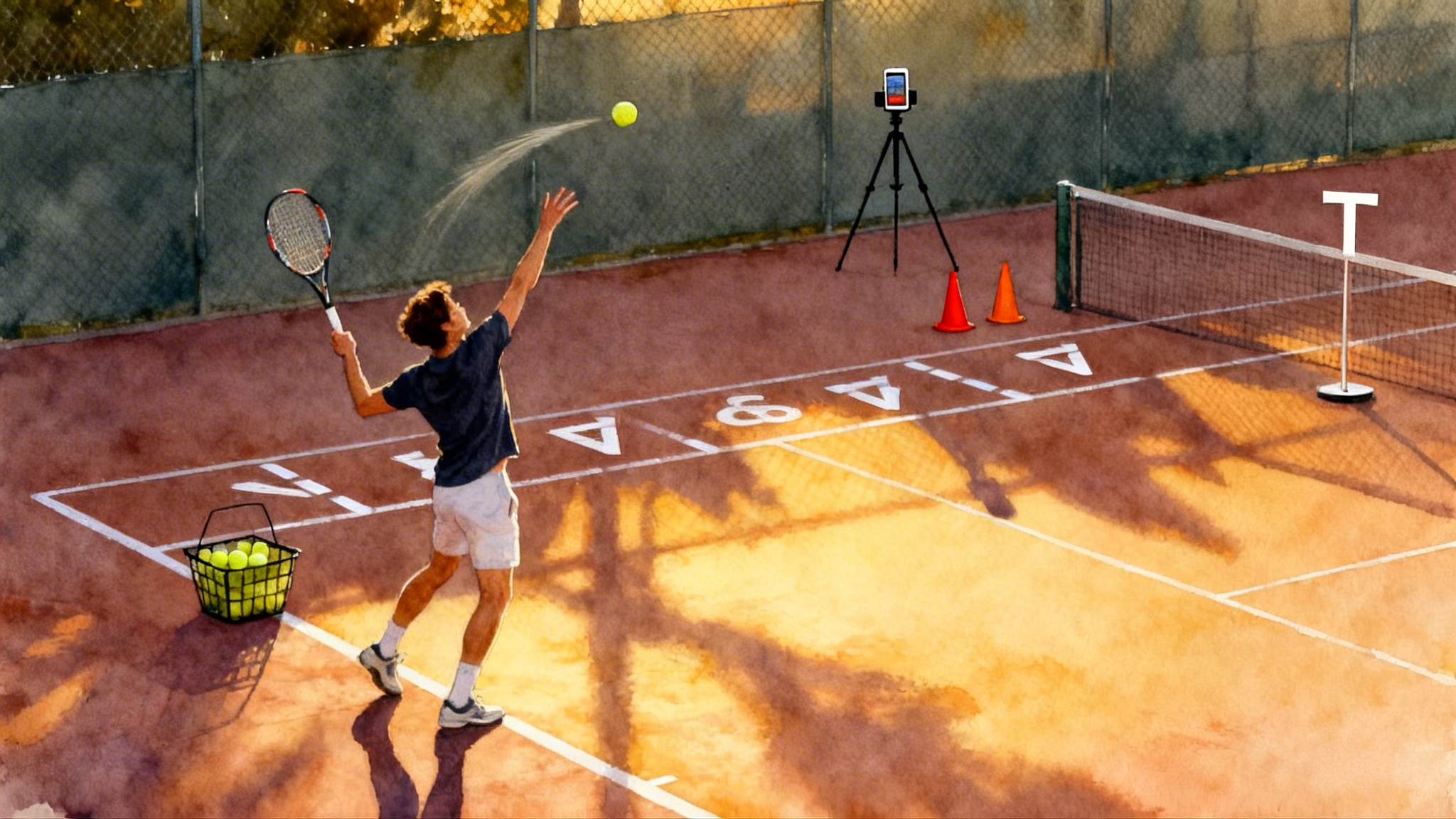
Why serve speed matters more than you think
If you win the serve, you tilt the entire match. A quicker first serve does not just produce more aces. It sets up a shorter ball for your next shot, makes opponents block returns, and buys you time to step forward. Even a modest increase of three to five miles per hour can move a returner from balanced to scrambling. Speed only matters if you can also put the ball in the court, so this six-week plan pairs speed with placement and a repeatable routine. The goal is practical: a measurable jump in pace, a second serve that holds up under pressure, and a warmup you can run on any public court.
The mechanics that actually move the needle
Power on the serve comes from a chain, not a single body part. Think of cracking a whip. Energy builds from the handle and runs through the length until the tip snaps. On your serve, the legs are the handle, the torso is the middle of the whip, and the racket is the tip.
- Legs and ground reaction: a patient knee bend and drive upward transfers force into your trunk. If you bend and immediately straighten with no pause, you leak energy. The cue is slow down the dip, then pop.
- Trunk rotation and side bend: your torso turns and tilts to create stretch. Imagine wringing a towel between your hands. That stored twist is free power.
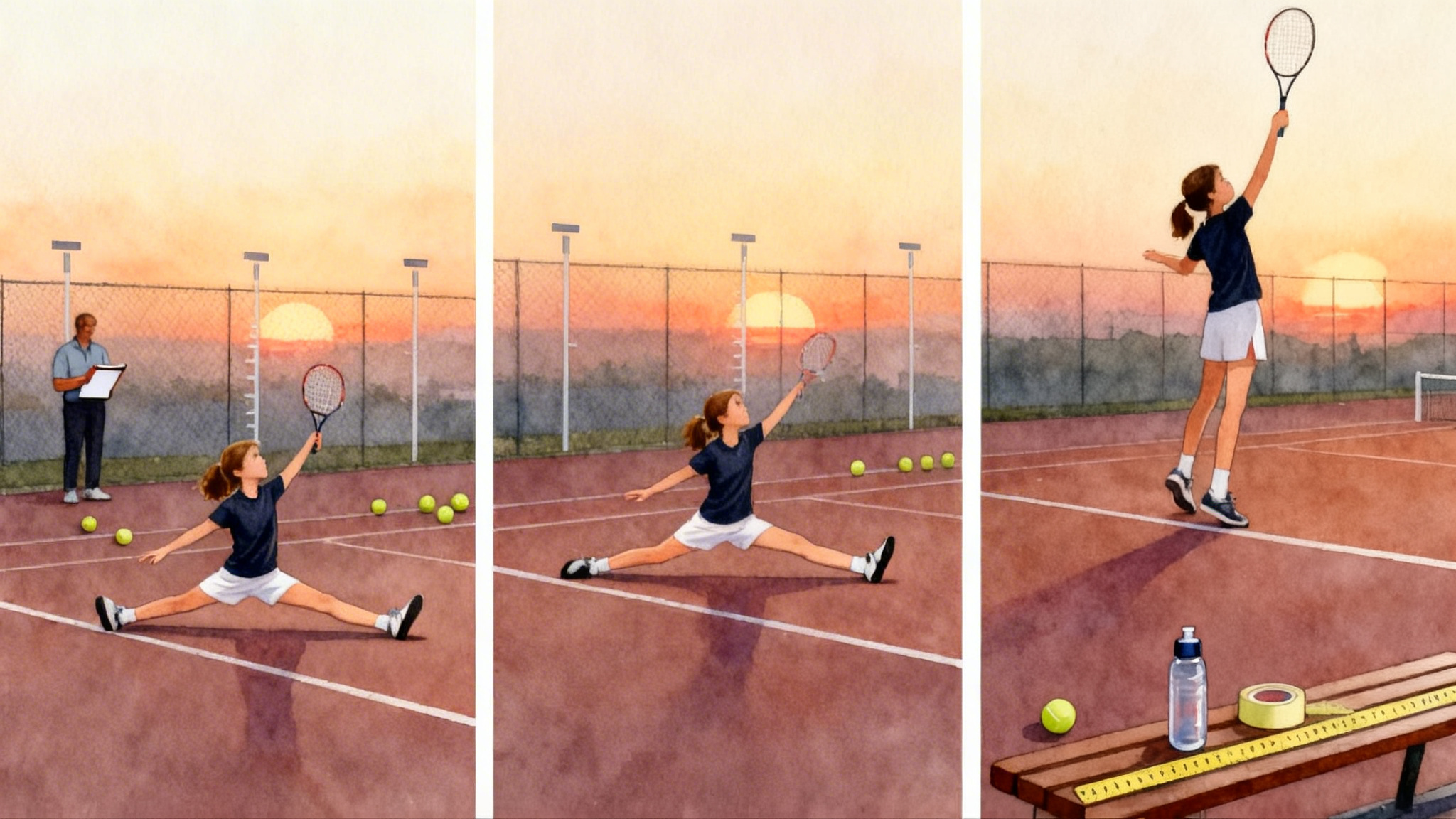
- Shoulder external rotation to internal rotation: the racket drops behind your back, then whips up as the shoulder internally rotates. You do not force this with the wrist. You allow it by staying loose.
- Pronation at contact: after the shoulder rotation accelerates the arm, the forearm turns so your strings face the target at impact, then turn downward. If you finish with your palm still facing forward, you are likely pushing the ball.
Two big mistakes slow the whip. First, muscling the ball with a stiff arm. Tension kills speed. Second, a toss that drifts over your head, which forces you to stall and steer. Your best toss for a flat or slice serve is slightly in front and just right of your hitting shoulder if you are right-handed.
Equipment checks that help or hurt
You do not need a new racket to serve harder, but the wrong setup makes improvement feel uphill.
- Racket weight and balance: a frame that is too heavy may steal racket head speed late in sets. Too light and you lose stability. Most adult players thrive between 10.5 and 11.5 ounces strung with a balance slightly head light.
- Swingweight: this is how heavy the racket feels in motion. If you love your frame on groundstrokes but it feels sluggish on the serve, consider a slightly lower swingweight version of the same model from brands like Wilson, Babolat, or Yonex.
- Strings and tension: lower tension adds power and comfort, higher tension adds control. If your second serve sprays long, raise tension two pounds. If your first serve feels dead, drop two pounds. Restring at least every three months if you play weekly.
- Grip size: if the handle is too big, you will death grip the racket. You should be able to slide your non-hitting index finger between your palm and fingers when holding a forehand grip. Undersize by one grip and add an overgrip if needed.
Quick test: serve ten balls and notice whether your arm aches or your hand tingles. Any pain is a sign to adjust weight, tension, or string type before you ramp volume.
Track progress without a full-time coach
You get what you measure. Tracking creates feedback and motivation. All you need is a smartphone and masking tape.
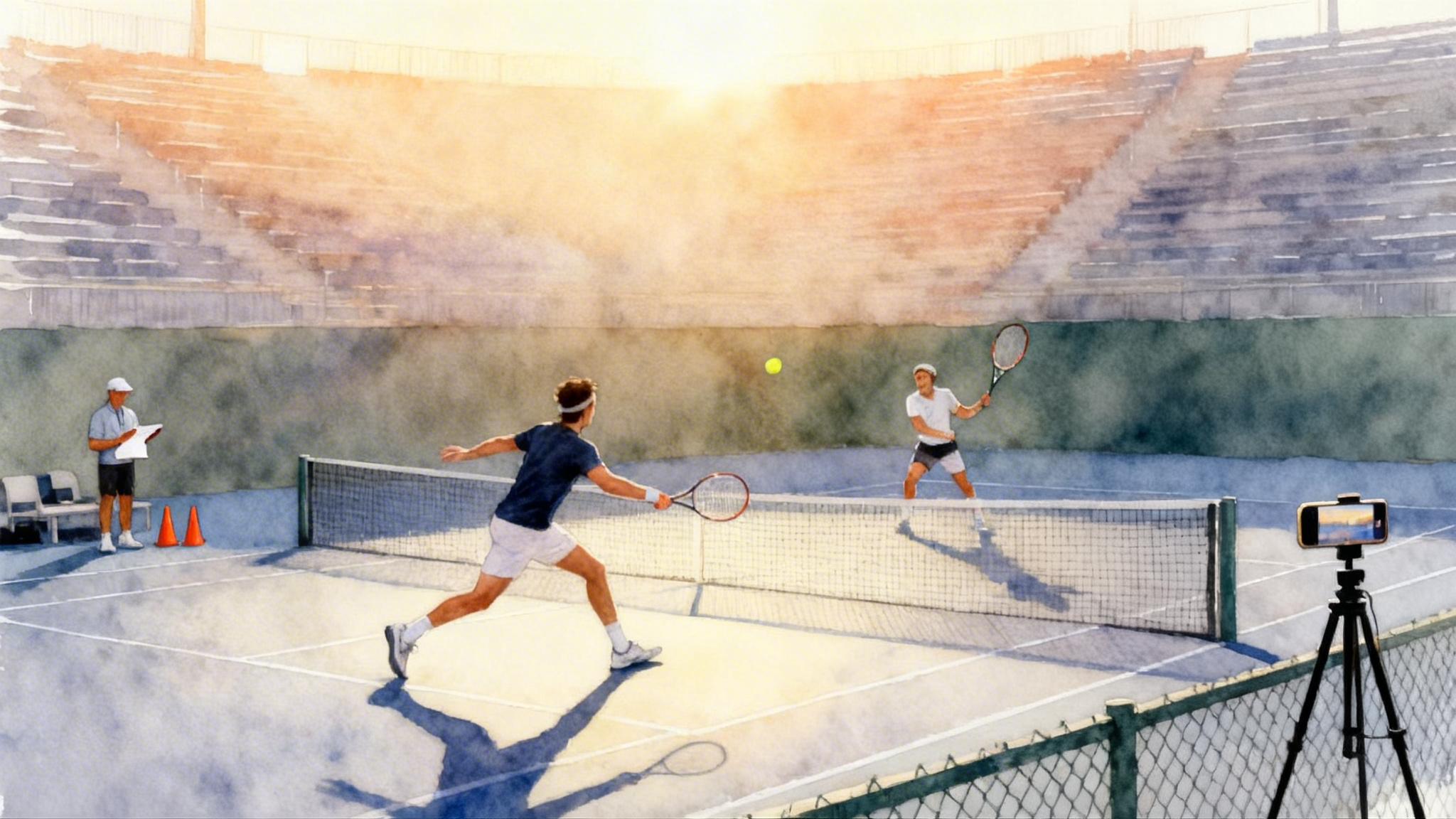
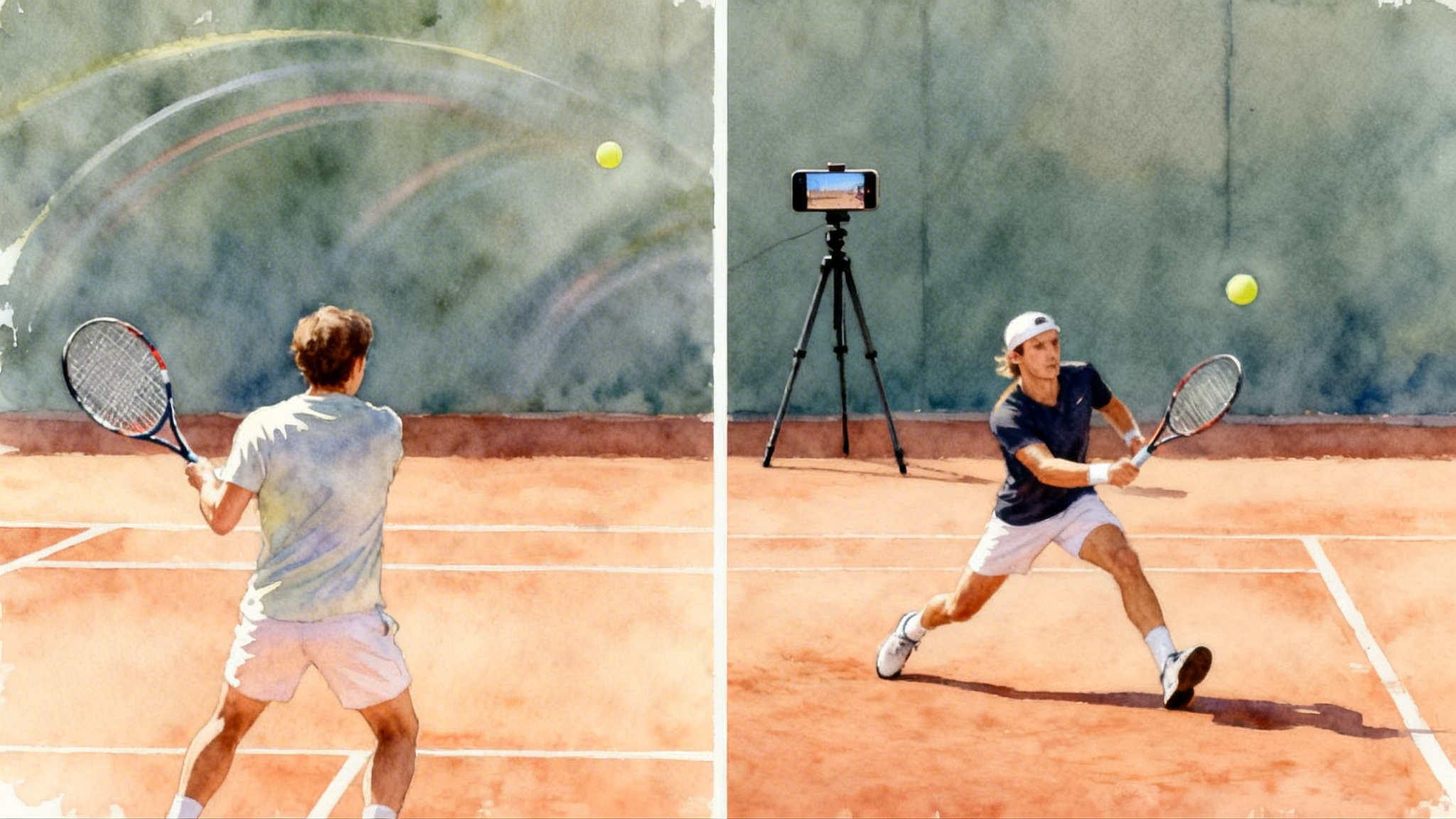
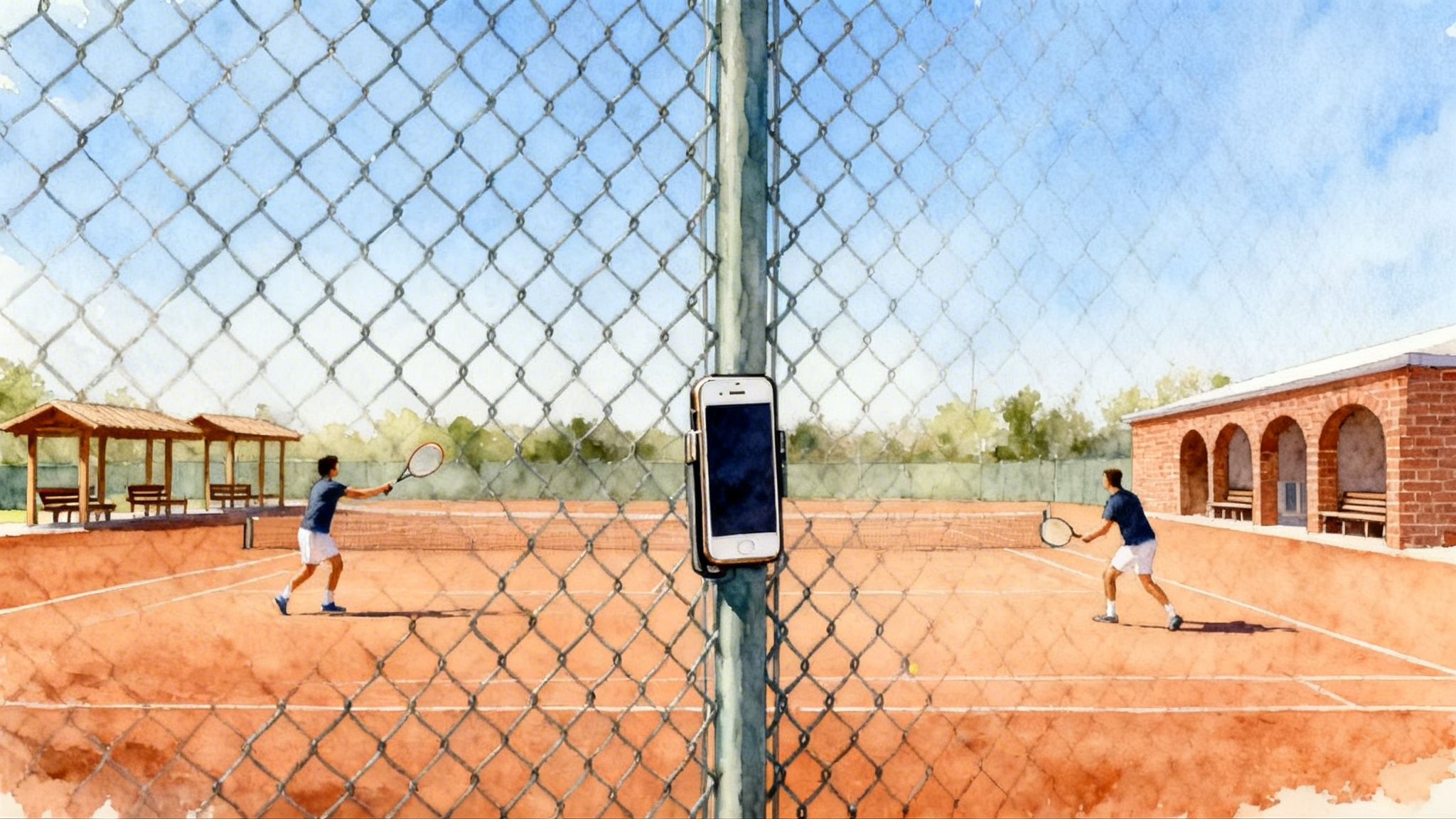
- High-speed video: most phones record at 120 to 240 frames per second. Place the phone at the back fence in line with the baseline. Film five serves at the start of each session. Look for three checkpoints: quiet toss arm as the racket drops, elbow leading up to contact, and relaxed pronation as you land. For setup tips, see the AI tennis video filming guide.
- Distance and bounce depth: mark a two-foot strip along the last two feet of the service box with tape. Any serve that lands in this strip earns two points. Anything deeper than halfway earns one point. This encourages a flat trajectory that tends to produce pace.
- Simple radar: if you have access to a pocket radar unit or a club that posts serve speeds, log your top five serves by date. If not, use ball time to fence. When a serve lands within the last two feet and hits the back fence faster than your best baseline time, you are gaining speed.
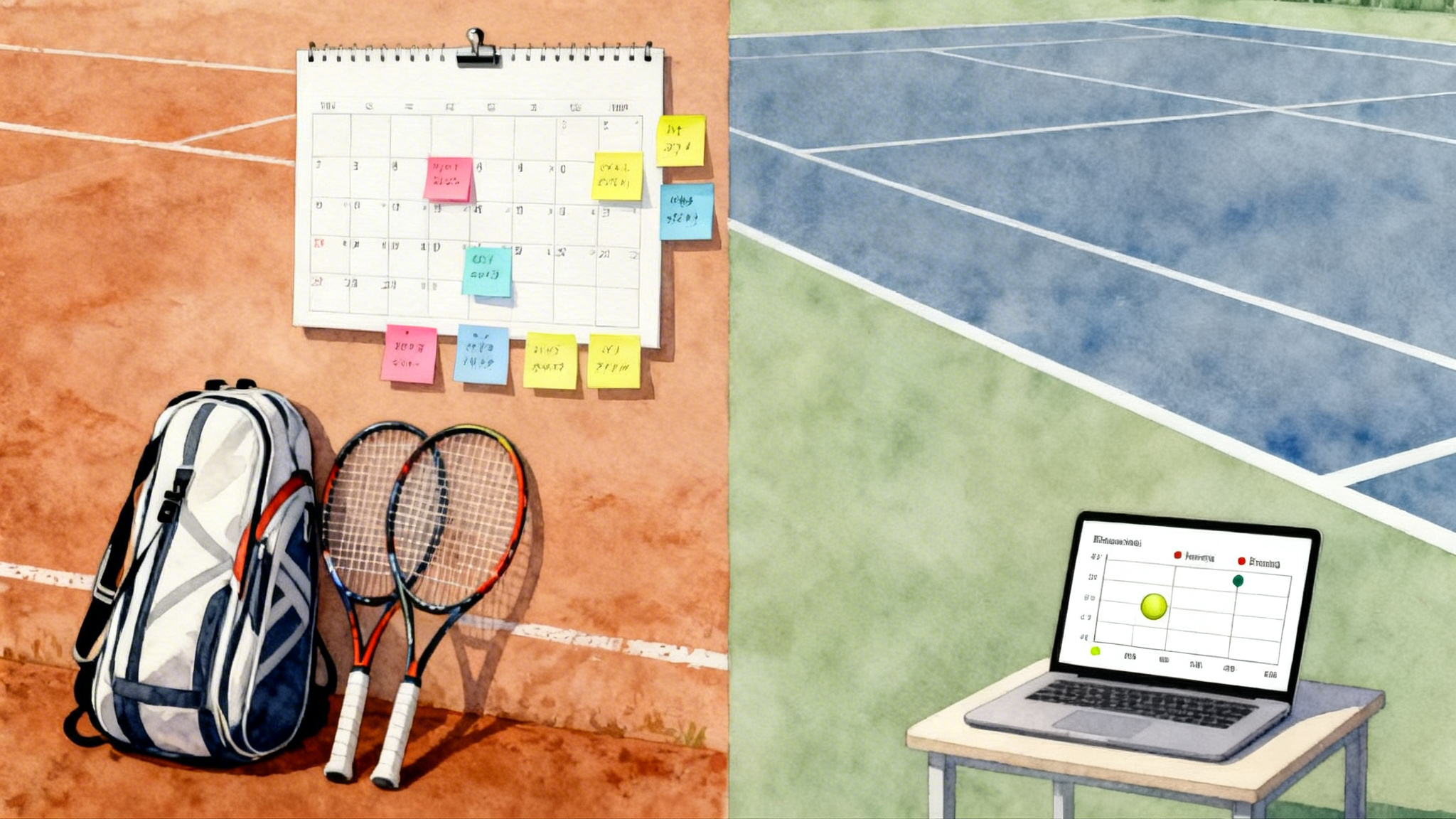
Log three numbers after each session: best speed or fastest fence time, deepest landing percentage, and double faults in the accuracy set. This pairing of depth and errors keeps you honest.
The six-week serve plan
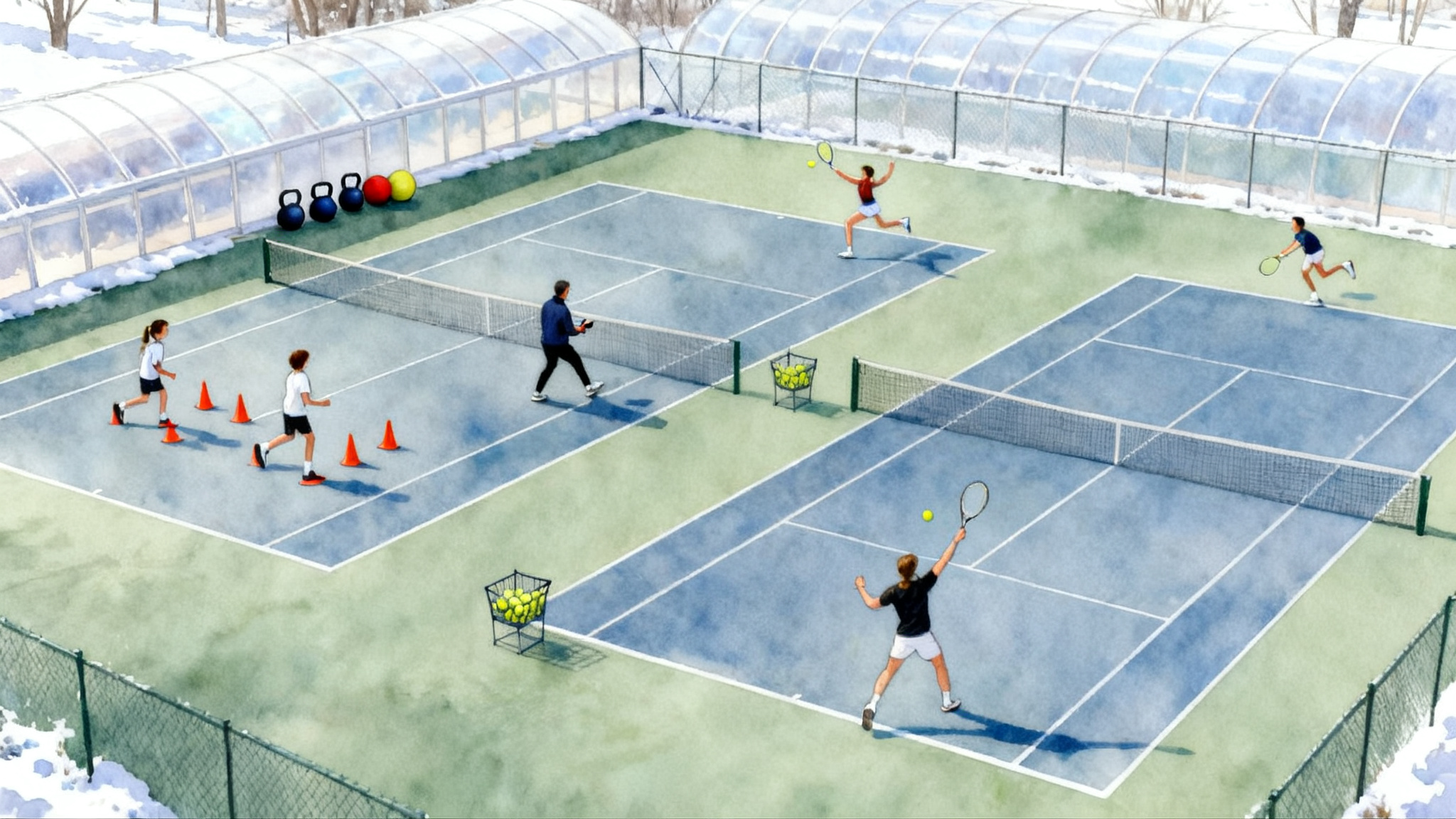
You will train three days per week for forty-five to sixty minutes. Rest at least one day between sessions. The plan alternates mechanics, power rhythm, and accuracy under fatigue.
- Week 1 and Week 2 focus: build looseness and a reliable toss.
- Week 3 and Week 4 focus: add leg drive and trunk stretch.
- Week 5 and Week 6 focus: convert speed to specific targets and hold form under pressure.
Session A: mechanics and feel
-
Warmup, 10 minutes
- Jump rope or light jog, 3 minutes.
- Shoulder activation: band external rotations, 2 sets of 12 each side. Scapular wall slides, 2 sets of 10.
- Shadow serve with towel, 2 sets of 10 reps. Cue: hear the towel snap after your contact point.
-
Toss and drop, 12 minutes
- Serve without hitting the ball. Toss, let it fall, and run through your motion. Ten reps. Look for a quiet non-hitting arm that rises and stays extended through the racket drop.
- Add half serves from the service line. Focus on smooth pronation. Two baskets.
-
Platform to pinpoint, 12 minutes
- Start with a platform stance. Hit ten flat serves wide on the deuce side, then ten up the T. Switch to pinpoint stance if that is your match style and repeat. Film one set.
-
Finish with a depth ladder, 8 minutes
- Serve to land in the back half of the box. Once you hit five in a row, try to land three in the last two feet. Record the best streak.
Session B: power and rhythm
-
Warmup, 8 minutes
- Medicine ball scoop toss, 2 sets of 8 each side. If you do not have a ball, mimic with a backpack. Focus on loading your back leg and driving up and forward.
-
Jump to throw, 10 minutes
- Basketball jump and slap the backboard or a high target on a wall, 3 sets of 6. This grooves the feel of pushing the ground and reaching high.
-
Serve tempo sets, 15 minutes
- Three sets of 12 serves with a metronome or count. Cue is smooth, smooth, pop. On numbers 1 to 2 flow into the trophy position. On 3 explode. Rest one minute between sets.
-
Bonus power, 8 minutes
- Three ball burst. Serve three first serves going for pace with full routine, then walk back for thirty seconds. Repeat for 5 rounds. Track your deepest landings.
Session C: accuracy under fatigue
-
Warmup, 6 minutes
- Light jog and dynamic shoulder circles. Shadow serves, one set of 12.
-
First serve windows, 12 minutes
- Place two cones three feet inside each sideline. Hit 10 serves aiming to pass just inside the cone. Deuce side wide, ad side up the T. Then switch. One point for any serve that would hit the fence within a racket head of the side you chose.
-
Second serve development, 15 minutes
- Service line kick or slice progressions. Start on the service line with a continental grip and serve up and across the ball. Cue is edge then palm. After 15 makes, move back three feet. Keep moving back until you are behind the baseline.
-
Pressure finisher, 10 minutes
- Race to 10. Alternate first and second serves. You must land six first serves deep and four second serves anywhere. If you miss two in a row, jog to the fence and back and restart your count.
Drills that build the chain
- Towel snap: tie a small towel to your racket throat and serve the air. You should hear a crisp snap out in front, not behind your head. This exaggerates relaxation and late acceleration.
- Racket on a string: imagine your forearm is a string and the racket is a weight. Loose, smooth swings without the ball. If you cannot feel the racket head lag behind and then catch up, you are too stiff.
- Elbow lead check: draw a dot with a marker on the inside of your elbow. Film from behind and make sure the dot rises toward the ball before your racket face turns to the target. If the racket face turns too soon, you will push or frame.
Placement, spin, and the toss
Speed without location is noise. You need a toss that you can repeat and two patterns you trust.
- Toss: practice ten toss and catch reps with your hitting hand under a basketball hoop or a tree branch. Your goal is to place the ball so you could catch it at full reach just in front of you. If your arm drifts sideways while you toss, tuck your tossing elbow lightly against your rib cage before you lift.
- Flat and slice: on the deuce side, slice wide opens the court. Up the T jams the elbow. On the ad side, flat up the T steals cheap points, slice wide pulls the returner off the court. Choose one from each side and build your routine around them.
- Kick: a higher toss over your head is fine for kick as long as you keep moving up to the ball. Think lift and brush, not hit and hold. If you finish falling backward, move the toss an inch forward.
A simple pattern chart helps. Draw a three by three grid in the service box. Track your makes for two targets per side. After six weeks, you should see deeper clusters and fewer low net misses.
Common faults and direct fixes
- Net tape magnet: if you keep clipping the tape, your contact point is low or late. Raise your toss by two inches and cue reach up, not out. Add the basketball slap drill to teach a higher reach.
- Sprayed long balls: you are de-lofting the racket face or overpowering your swing. Lift your left arm longer to maintain tilt, and raise string tension two pounds.
- Arm pain or forearm burn: reduce volume and check grip tension. Aim for a three out of ten squeeze pressure when you start the motion, rising to five at contact, then back to three.
- Toss chase: if you are running after your toss, practice three minutes of toss to target. Place a water bottle where your ideal toss should fall, and catch five in a row that land within a palm width of the bottle.
Recovery that keeps you training
Serving is the most stressful stroke for the shoulder and lower back. A little care multiplies your gains.
- Volume rules: during Weeks 1 and 2, cap yourself at 90 full serves per session. During Weeks 3 to 6, stay under 120. If you feel any sharp pain, stop immediately and switch to shadow work.
- Two day rhythm: do not serve hard on back-to-back days. Mix in footwork, groundstroke patterns, or match play on off days.
- Strength maintenance: twice per week complete 2 sets of 12 each of band external rotations, band pull aparts, and Y and T raises on a bench. Add farmer carries for grip and shoulder stability, 3 sets of 30 seconds. Compare your progress to the 2026 tennis strength standards to keep loads sensible.
- Hips and spine: five minutes of hip flexor stretch and thoracic spine rotations after serving protect your lower back during the leg drive.
Stay motivated with visible wins
Progress is not linear. One day you will smoke the back fence and the next your rhythm will feel off. Keep score anyway.
- The speed card: write down the fastest fence hit or the top radar reading each week. Circle your personal best. Small wins compound.
- Streaks: track longest run of deep serves and fewest double faults in the pressure finisher. Set a goal to beat each streak once per week.
- Micro goals: choose a single cue per session. For example, long left arm, snap the towel, or smooth, smooth, pop. You cannot fix five things at once.
If you train with a partner, run a serve ladder. Each of you gets two targets per side and a total of 40 balls. One point for a deep ball in the chosen target, two points for an ace or unreturnable winner that lands in your target. Swap targets each week to avoid ruts.
Bring it to match day
A serve that shines in practice must survive nerves and different returners. Use a short routine to transfer your gains into real points. To sharpen reads on returners, try the anticipation drills that win points.
- Pre-match warmup, 8 minutes: jog the sideline twice, band work for one minute, then two tempo sets of six serves. Hit four flat or slice serves to your primary target on each side.
- First game rule: choose your best pattern and live with it. If your top pattern is deuce wide slice and ad up the T, run it until the opponent shows a clear counter.
- Second serve insurance: if your kick is not landing under pressure, take a middle path. Serve a high percentage slice that lands deep in the body. It is safer than a flat ball and more offensive than a soft kicker that sits up.
- Between points reset: breathe in for four counts and out for six as you bounce the ball. Pick your target, feel your cue, and trust the chain. No tinkering once you start the motion.
What to expect after six weeks
Players who stick with the plan usually report three changes. First, a quieter setup that makes the toss feel automatic. Second, a higher contact point with a crisper snap, which becomes visible on video. Third, deeper average landings that push returners back. Speed increases vary, but the combination of better rhythm, improved toss, and a stronger leg drive is enough to pick up a few miles per hour without sacrificing control.
If your numbers flatline, consider two adjustments. One, check your stance. Some players unlock speed simply by switching from platform to pinpoint or vice versa. Two, move your toss forward by an inch and drive your back hip toward the net. Small geometric changes often produce big outcomes because they improve how you transfer force into the ball.
The bottom line
Your serve does not need a total overhaul. It needs a clear routine, a couple of high-yield drills, and proof that your work is moving the ball faster and deeper. Apply the chain idea from the ground up, be kind to your shoulder with smart volume and simple strength, and keep score. In six weeks you can build a serve that starts points on your terms and keeps getting better because you have a plan you can repeat.