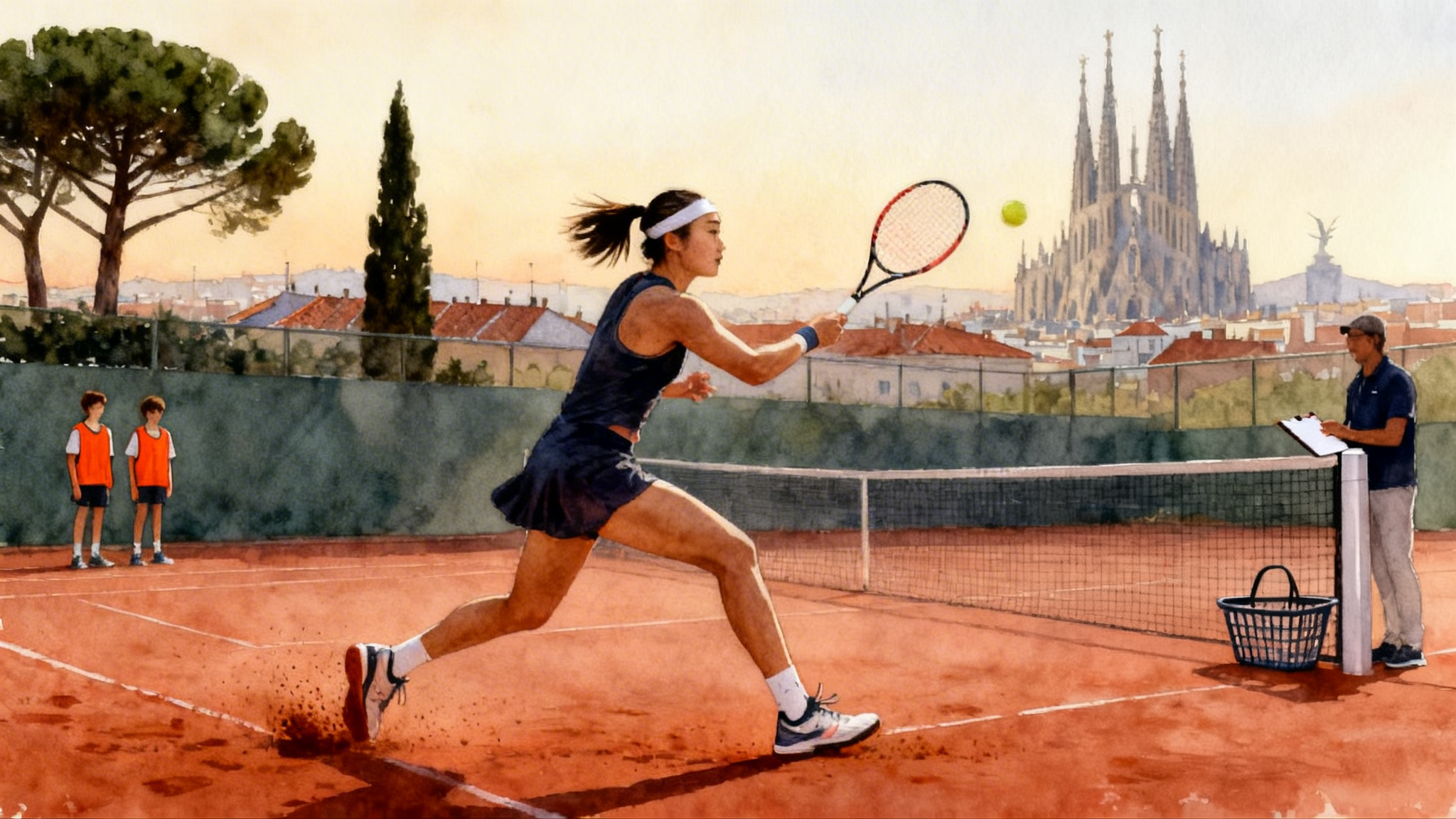
From Prostějov to Miami: TK Agrofert’s Making of Jakub Menšík
Jakub Menšík did not need to relocate to rise. This is the story of TK Agrofert Prostějov, coach Tomáš Josefus, and a Czech club‑academy blueprint that molded a tall teenager into a first‑strike force and a Miami Masters champion.
 Tommy
Tommy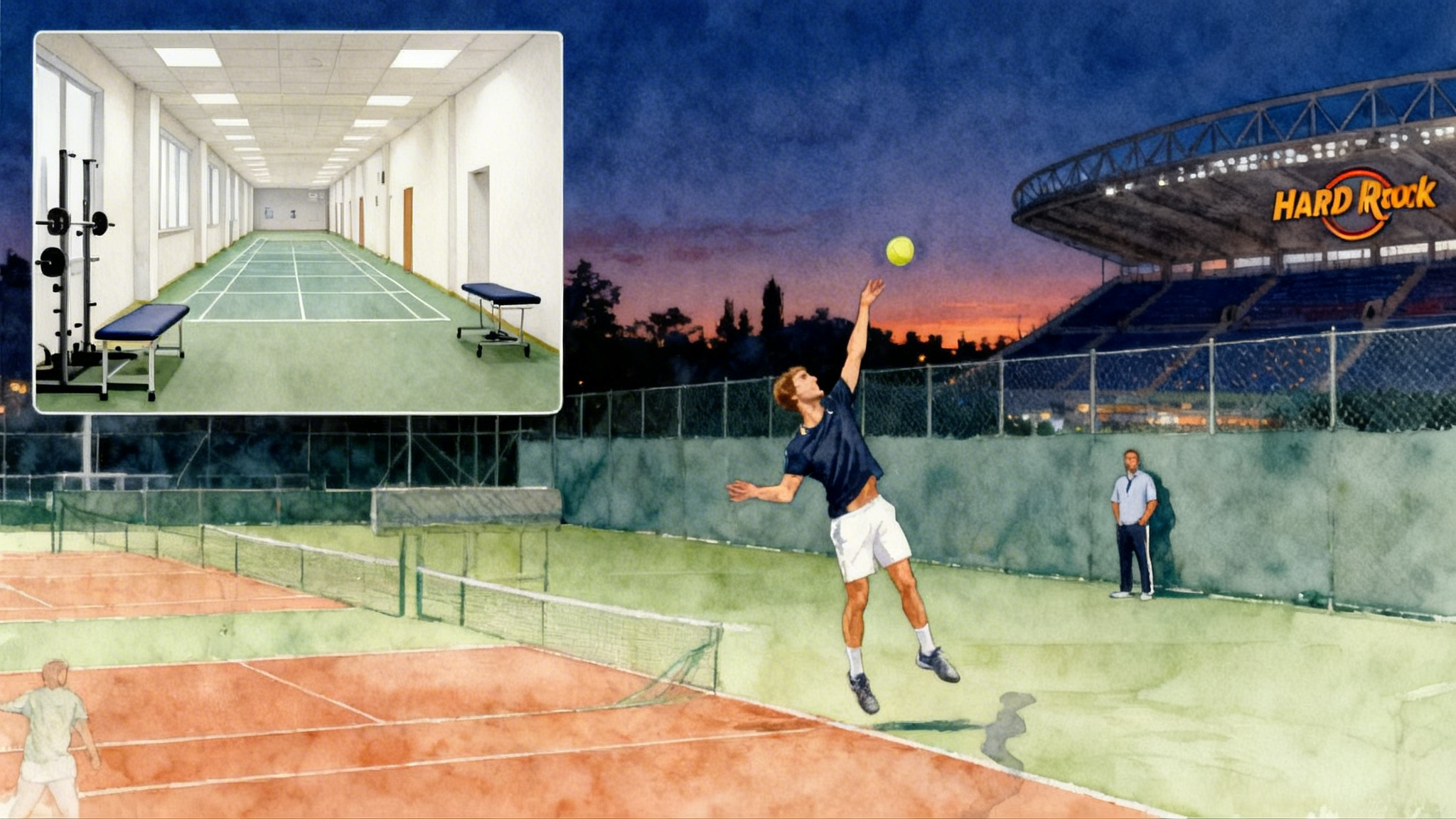
The night Miami met Prostějov
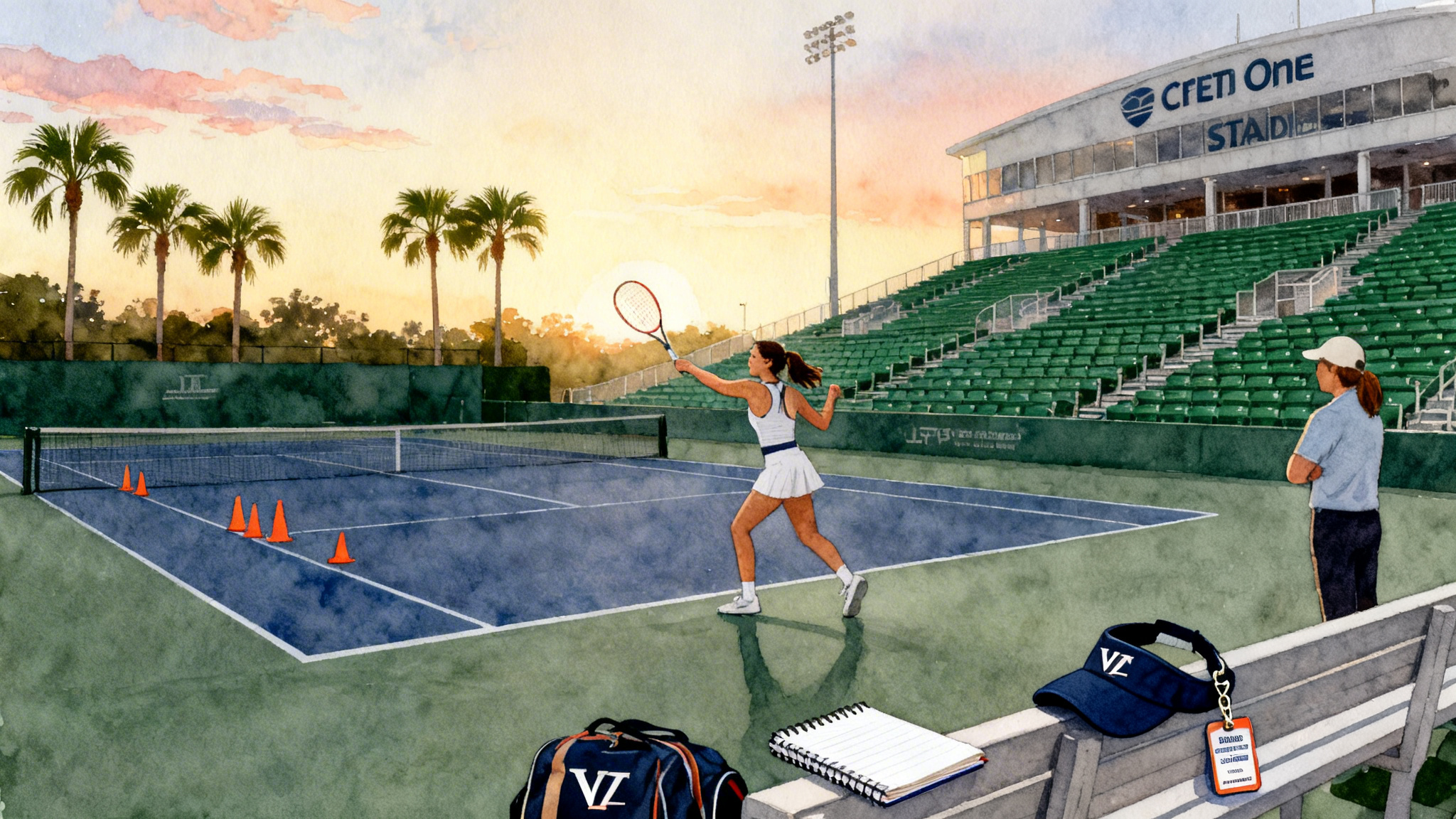
When a teenager lifts a Masters 1000 trophy, it is tempting to credit magic. Jakub Menšík’s Miami moment was not magic. It was the visible tip of a system built in Prostějov that prizes dense match play, integrated fitness, and coach continuity. In March 2025 he threaded high‑pressure tie‑breaks, struck with fearless pace, and beat Novak Djokovic to capture his first Masters 1000 title in Miami. As the ATP recap of his Miami breakthrough details, he then sprinted up the rankings after that title run.
What the Czech club‑academy does differently
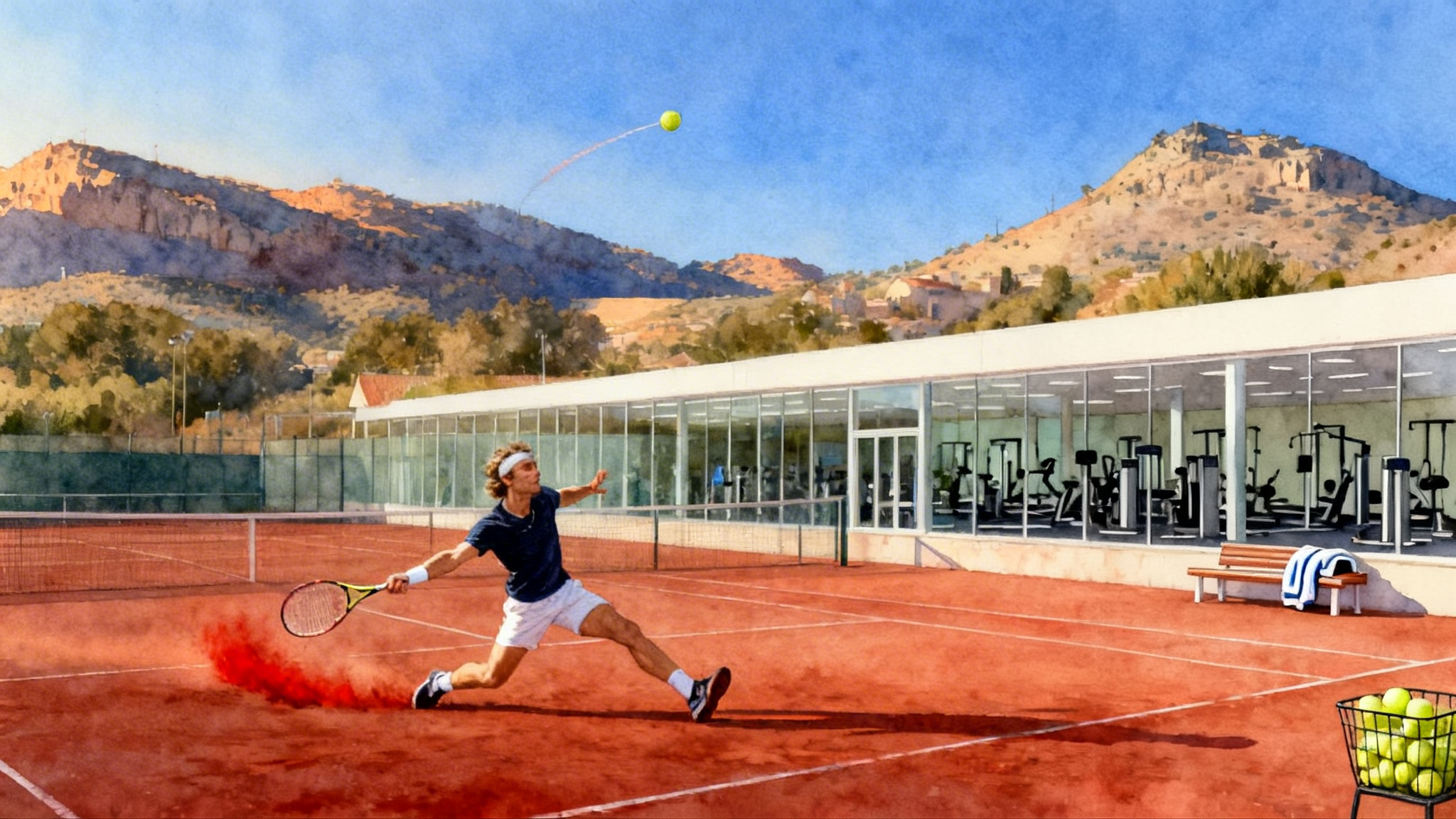
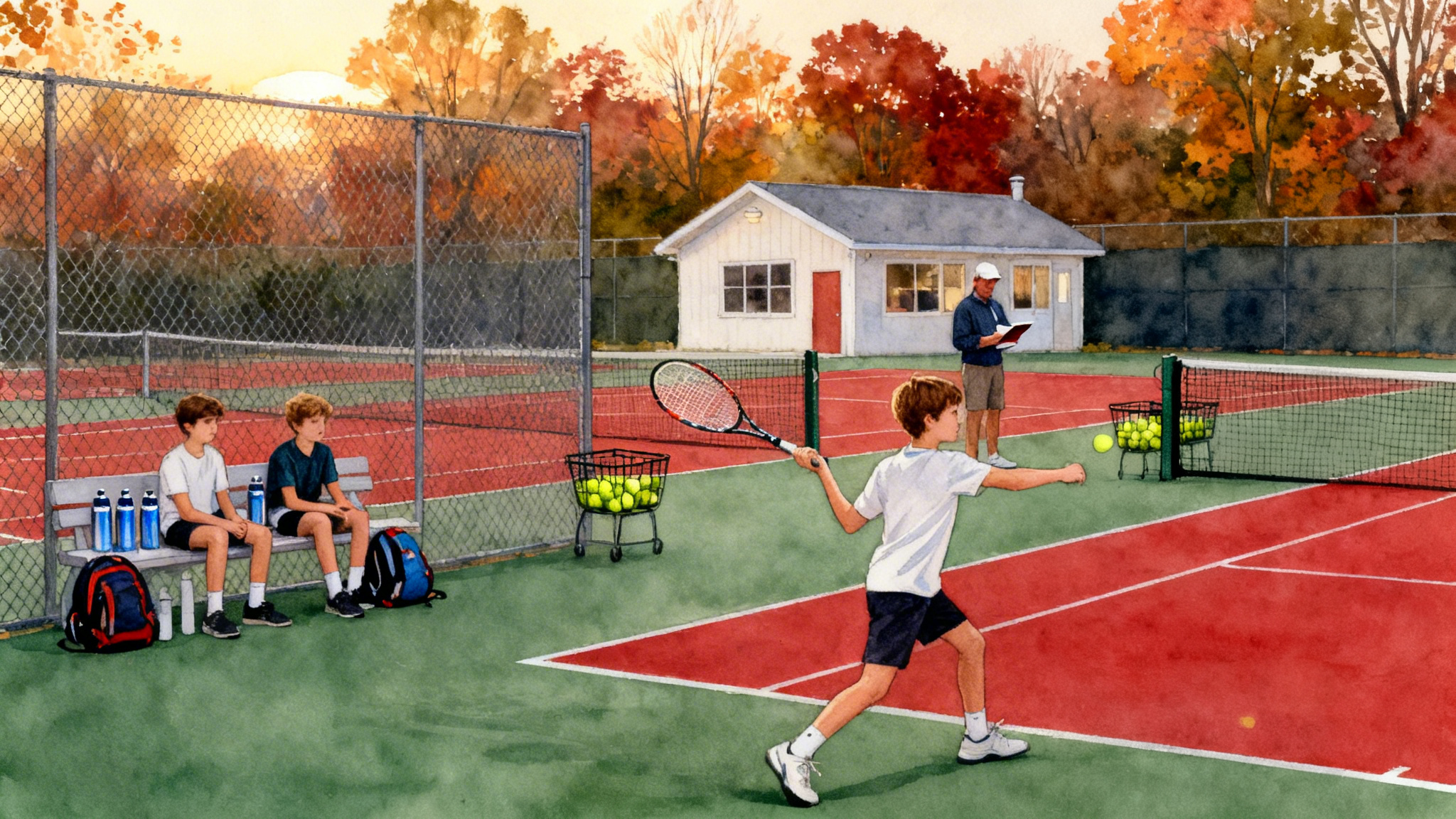
Prostějov is not a postcard academy by the sea. It is a working club town where the courts, the gym, the physio room, and the tournament office share a hallway. That proximity is the point. In this model:
- Coaches, fitness staff, and physios compare notes every day, not once a quarter.
- Sparring partners are always available, often coming from the same club ladder or from nearby teams.
- Video, stats, and simple session logs are used in small daily doses. The goal is to adjust next week’s drills, not to produce a glossy report.
Families sometimes imagine development as a long move to a famous academy. The Czech approach suggests something simpler. If your local club concentrates enough good players, good coaches, and good competition into one place, it can behave like a high‑output academy without the airfare.
The constant in Menšík’s rise: coach continuity
Long before the Miami trophy photos, Menšík chose to grow inside the environment he knew, alongside a coach who knew him. He has trained for years under Tomas Josefus at TK Agrofert Prostějov. That continuity mattered when late‑growth inches changed his balance, when match schedules tightened, and when the team decided to tilt his game toward aggressive, first‑strike patterns. Menšík’s official bio page lists his club and coaching team, underscoring how rooted his setup remained even after his breakout.
Continuity is not about comfort. It is about shared context. A coach who has watched a player at age 12, 14, and 17 can connect patterns that a new coach will need months to see. That saves time, but more importantly, it reduces noise. When the player feels stuck, the conversation can start from a deep file of what has already worked.
Data‑led, court‑first: how the style shifted to first‑strike
If you watch Menšík today, you see intent. The serve is not only a starting shot. It is a scripted trigger for the next ball. The backhand holds the line, the forehand finishes, and he is comfortable ending points at net.
Inside the club‑academy, the shift was not a leap of faith. It was a series of test‑and‑learn loops:
-
Define the point pattern to scale. The staff identified a three‑ball script that fit his size and timing. Serve wide, seize the open court with a forehand to the opposite corner, then close with a drive volley or a finishing forehand.
-
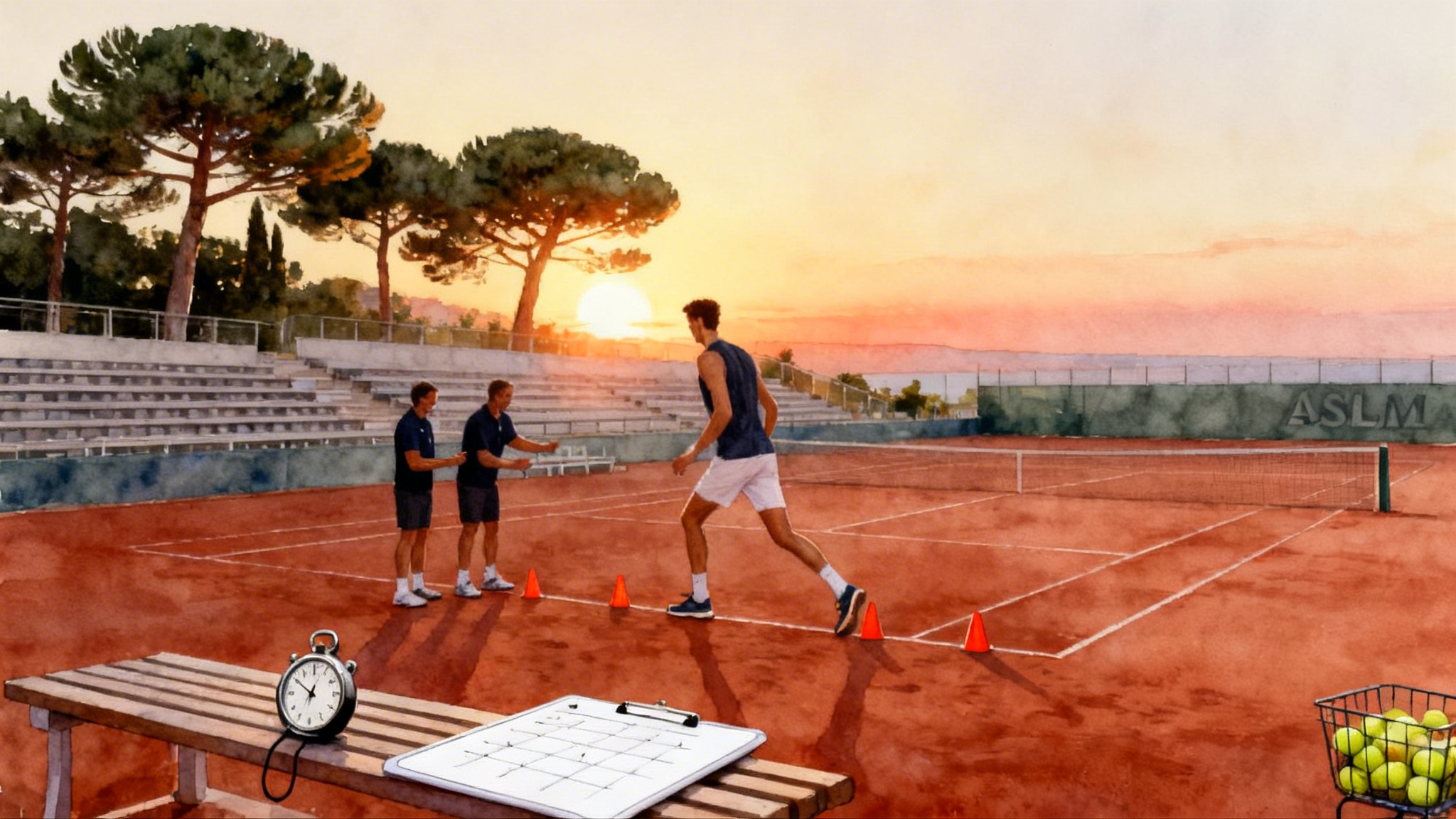
Build the body for the script. Strength and conditioning focused on acceleration, not just endurance. The emphasis moved to the first 3 steps after the serve and the last step into contact. Plyometric progressions were added with clean landing mechanics, then paired with live‑ball patterns on court.
-
Validate with simple stats. Instead of drowning in dashboards, the team tracked two or three markers per block. First‑serve percentage in the intended target, plus plus‑one forehand frequency and conversion. The target was not perfection. It was a week‑over‑week nudge.
-
Train habits at match speed. Matches, not practices, cement aggression. Prostějov’s calendar flooded his months with competitive reps. He faced club teammates, league opponents, and then a ladder of Challenger fields where the same patterns held up under noise.
This is data as a compass, not a cage. The team did not chase every number. They chose a small set, learned from it, and reset the drill menu every few weeks. Over a season, the cumulative effect was a player who knew exactly how to shorten points on command.
Dense match play: why volume plus variety beats a perfect plan
Players grow by confronting one unsolved problem after another. A dense competition calendar multiplies those problems. The Prostějov system supplied volume and variety:
- Volume: League fixtures, club events, and back‑to‑back tournament blocks filled the schedule. There were very few empty months.
- Variety: Surfaces, altitudes, and ball types churned. He learned to adapt patterns rather than to depend on one feel.
Because so many of these matches came through the club network, travel was efficient and costs stayed reasonable. That mattered for the long game. Most critically, it created a baseline: Menšík entered professional draws already used to the rhythm of match‑day stress and recovery.
Integrated fitness that serves the game
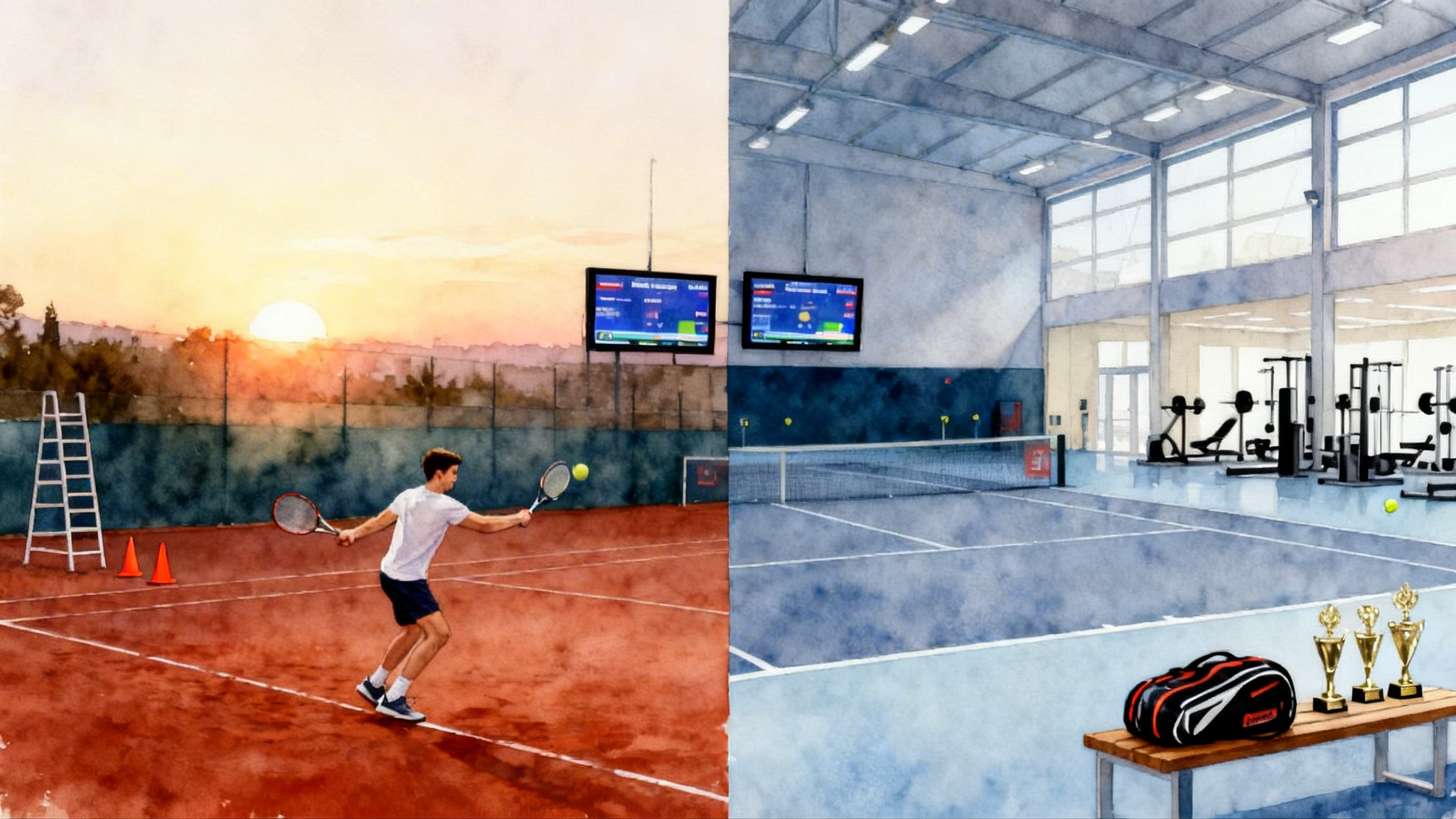
In some programs the gym and the court live in different worlds. In this one they sit ten meters apart. The benefits are practical:
- Quick feedback: If a landing mechanic looks off in the weight room, the coach can check the same footwork two minutes later on court.
- Seasonal flow: Fitness blocks expand in the slower months, then contract during travel phases. The priority is always the ability to execute the player’s point pattern.
- Growth adaptation: As Menšík got taller and heavier, strength work protected his back and hips while mobility kept his swing path free. Loading rose gradually so the serve could gain speed without losing accuracy.
The result shows up in tie‑breaks and in day‑seven legs. Big‑man tennis consumes energy at a brutal rate. A body built for short, intense bursts and quick resets makes first‑strike tennis sustainable over two weeks.
Smart scheduling: targeted steps instead of early relocation
The temptation after a junior breakthrough is to move abroad, change everything, and chase points everywhere. The Menšík path did the opposite.
- Stay anchored at a strong home base. The club handled daily quality so travel could focus on targeted tests.
- Build in layers. Junior travel gave way to domestic and regional Challengers, which gave way to selective ATP events where his weapons could already hurt seeds.
- Choose events that reward your style. Faster hard courts, then bigger arenas that amplify the serve and first ball. The goal was not to hide from weaknesses. It was to debut on stages where his A‑game could pay off while the B‑game matured.
The payoff came when those layers met a big opportunity. In Miami, with the court speed and conditions rewarding first‑strike tennis, he leaned into the identity the club had sharpened for years and closed elite matches by staying on script.
A family playbook you can copy without moving abroad
You do not need to live in Prostějov to borrow its best ideas. Here is a practical, copy‑and‑paste plan for families and local coaches.
- Build a club‑academy around you
- If your home club has three or more serious juniors in adjacent age groups, treat it like an academy. Ask the head coach to coordinate weekly joint sessions so players cross‑train and compete.
- Formalize a micro‑team. One lead coach, one fitness lead, and one physio or body‑care provider who talk weekly. A shared chat thread can work.
- Make match play the curriculum
- Schedule competitive play most weekends during in‑season periods. Use club ladders, regional leagues, and low‑cost events. If travel money is tight, invite nearby clubs for team duals.
- Track only what you will use next week. For example, record first‑serve percentage to wide targets and how often the server wins the next ball with a forehand. Review every Monday, then design Tuesday’s drills around gaps.
- Align fitness with the point pattern
- Decide what patterns you want to scale. If first‑strike is the goal, weight room time should bias acceleration, stiffness in the right places, and landing mechanics.
- Anchor two non‑negotiables year‑round: single‑leg strength and thoracic mobility. These protect the serve and allow aggressive spacing on groundstrokes.
- Protect coach continuity
- If the chemistry is good and progress is steady, keep the lead coach through growth spurts and ranking dips. Add specialist voices sparingly and make sure they feed into, not overrule, the main plan.
- Review fit twice a year. Use simple questions: Are we clearer about our identity than six months ago? Are match patterns becoming more automatic?
- Step into pro events with aim, not hope
- Target Challengers and ATP qualifying that fit the player’s style and calendar. When an opening appears in a draw that suits your weapons, take it. The aim is to stack confidence on courts that reward your strengths.
- After each block, name one habit that traveled under pressure. If none did, shorten the next block, fix one thing at home, then retest.
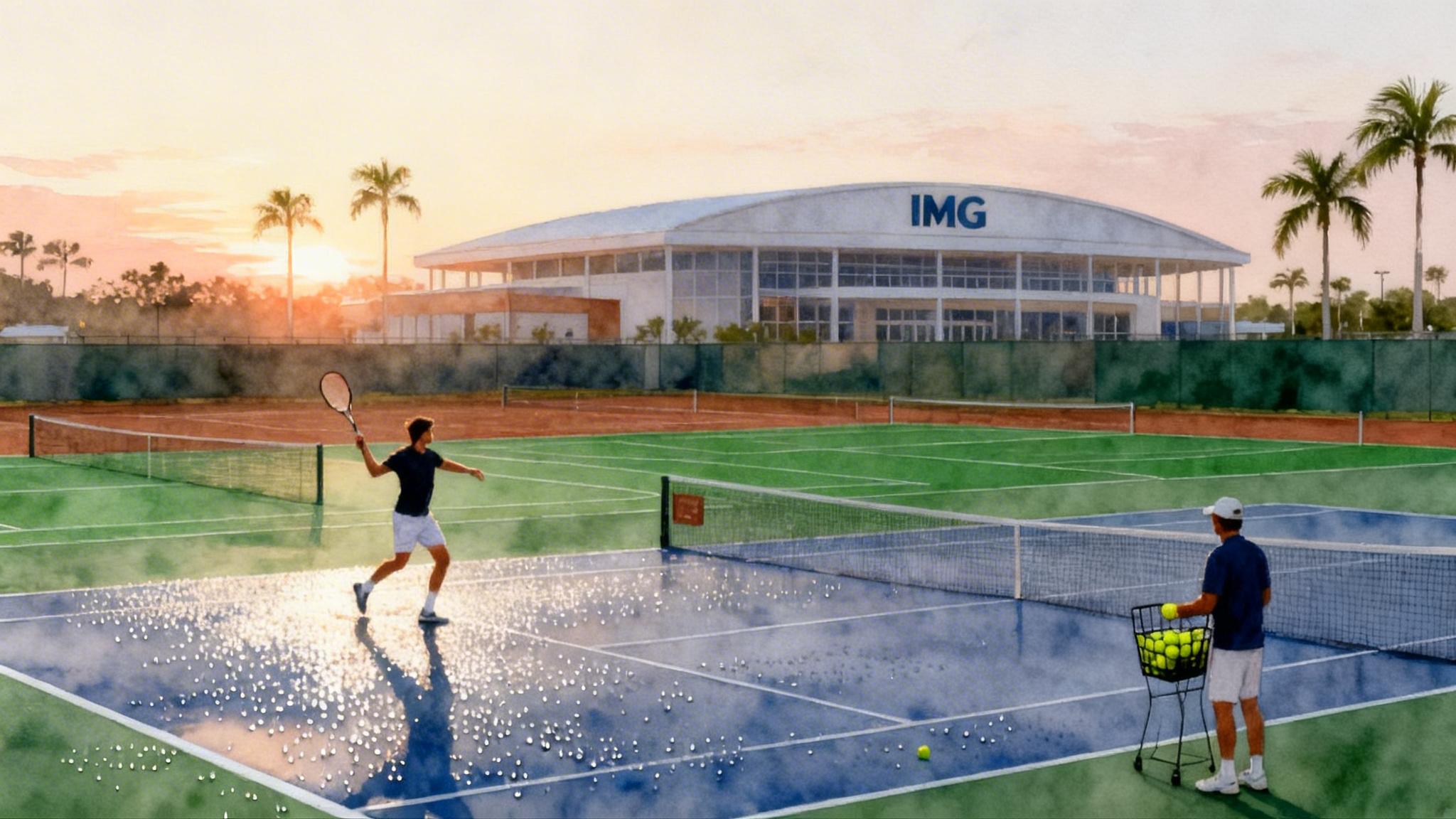
For comparison points on development models, explore how the Ferrero Academy built Alcaraz and how the Nadal Academy lifted Casper Ruud. Families in the United States can also consider a club‑embedded option like the Legend Tennis Academy in Austin.
How to coach big‑man, first‑strike tennis without becoming one‑dimensional
First‑strike tennis is not just serve plus forehand. It is ecosystem tennis where many small edges point to the same early finish. The coaching checklist below keeps the style explosive but reliable.
- Serve design beats serve speed. Map three dependable targets you can hit under nerves. Train the toss and trunk first, then add velocity.
- Plus‑one choreography. Script the first step after the serve. If you serve wide from the deuce court, practice the immediate hop into the court to take the forehand early to the open space.
- Backhand reliability tax. Dedicate every session to win a few ugly backhand exchanges. A first‑strike player who can survive neutral backhands earns the right to keep swinging big on the forehand.
- Transition confidence. End every hitting block with five minutes of approach plus first volley. Progress from cooperative feeds to live‑ball points. The goal is to make forward movement feel routine, not heroic.
- Tie‑break routines. Build a pre‑point sequence you can repeat. Big‑man tennis often lives or dies in breakers. Habits protect you when adrenaline spikes.
Why this blueprint travels
Menšík’s route is not a one‑off fairy tale. It is a test case in how a strong local system can produce a player ready for the biggest arenas, fast. The critical ingredients are reproducible in many countries:
- A club with enough good players to guarantee hard daily hitting.
- A lead coach with a long memory and a small ego, willing to build a game around the player’s body and temperament.
- Fitness staff that speak the language of the point pattern and accept the court as the final exam.
- A schedule that prefers match density and style‑friendly events over passport stamps.
The deeper lesson is cultural. In Prostějov the academy is not a distant brand. It is the club itself. Parents see the process, players feel surrounded, and coaches swap ideas in the same hallway that leads to the gym. That density of people and purpose turns months into momentum.
The bottom line for clubs and families
- If you run a club: make your place smaller and closer, not flashier. Put the gym next to Court 1. Give your best juniors overlapping sessions. Ask your coaches to meet every Friday for 20 minutes and write down the one training focus for the next week.
- If you are a parent: judge programs by daily quality and how well staff talk to each other. A strong local hub plus targeted trips can beat an expensive relocation.
- If you are a young player: pick an identity early, then train your body and your week around it. Keep the main coach close. Use stats to steer, not to steer your emotions.
A closing rally
From a club hallway in Prostějov to a packed stadium in Miami is a long way only on a map. On court it is a series of next balls, next weeks, and next choices that line up behind a clear identity. Jakub Menšík’s story shows that a dense, collaborative, and data‑literate club‑academy can grow a teenager into a champion without a change of address. Stay in a strong local system, keep your coach close, and pick events that let your A‑game breathe. Do those three things with the patience of a Czech winter and the conviction of a Miami night, and the world suddenly feels much closer.