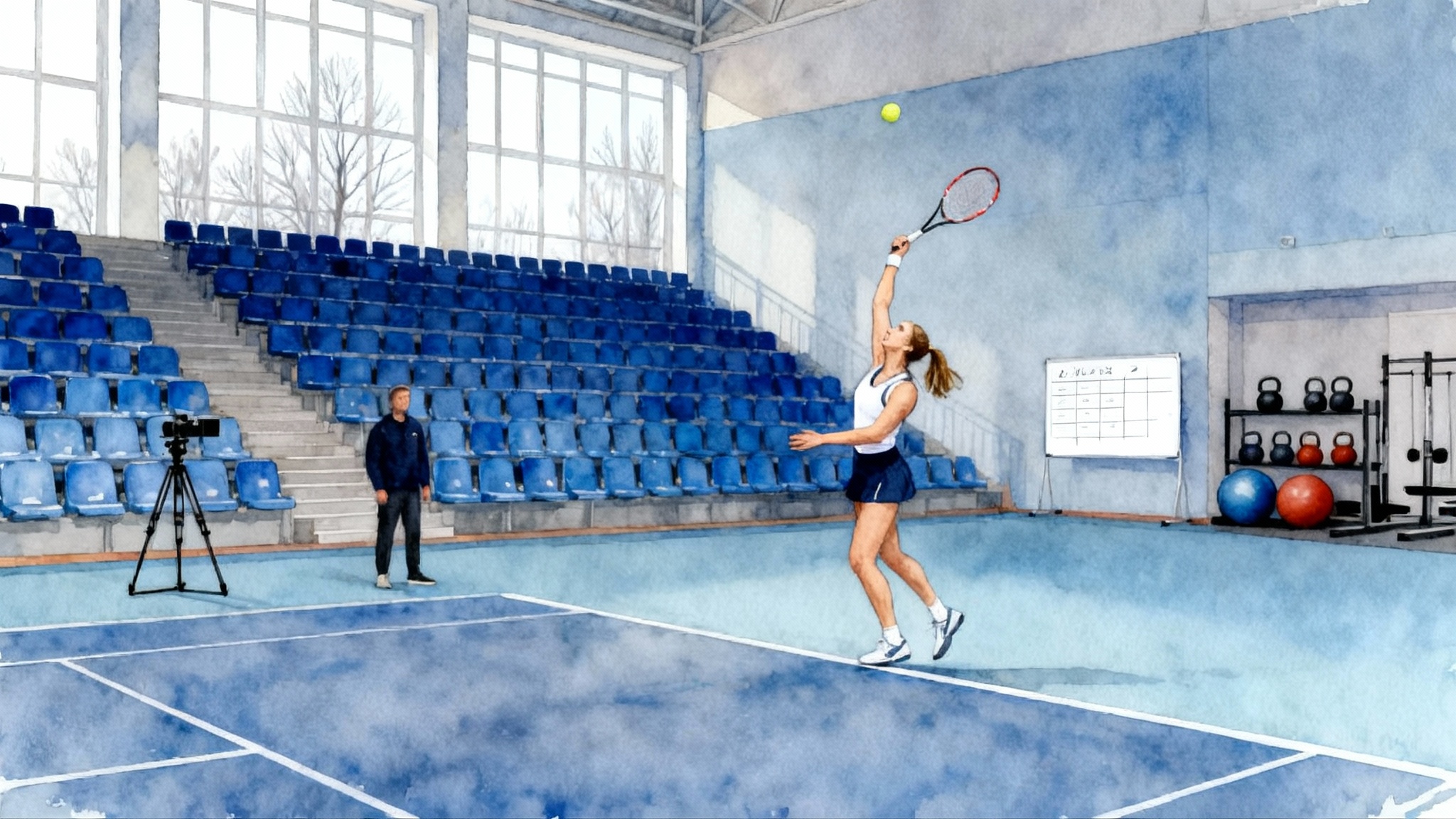
Coco Gauff: Champ'Seed to Roland Garros at Mouratoglou Academy
How a Champ’Seed scholarship and recurring clay blocks at the Mouratoglou Academy shaped Coco Gauff’s rise from junior prodigy to 2023 United States Open champion and 2025 Roland Garros winner, with clear lessons for parents.
 Tommy
Tommy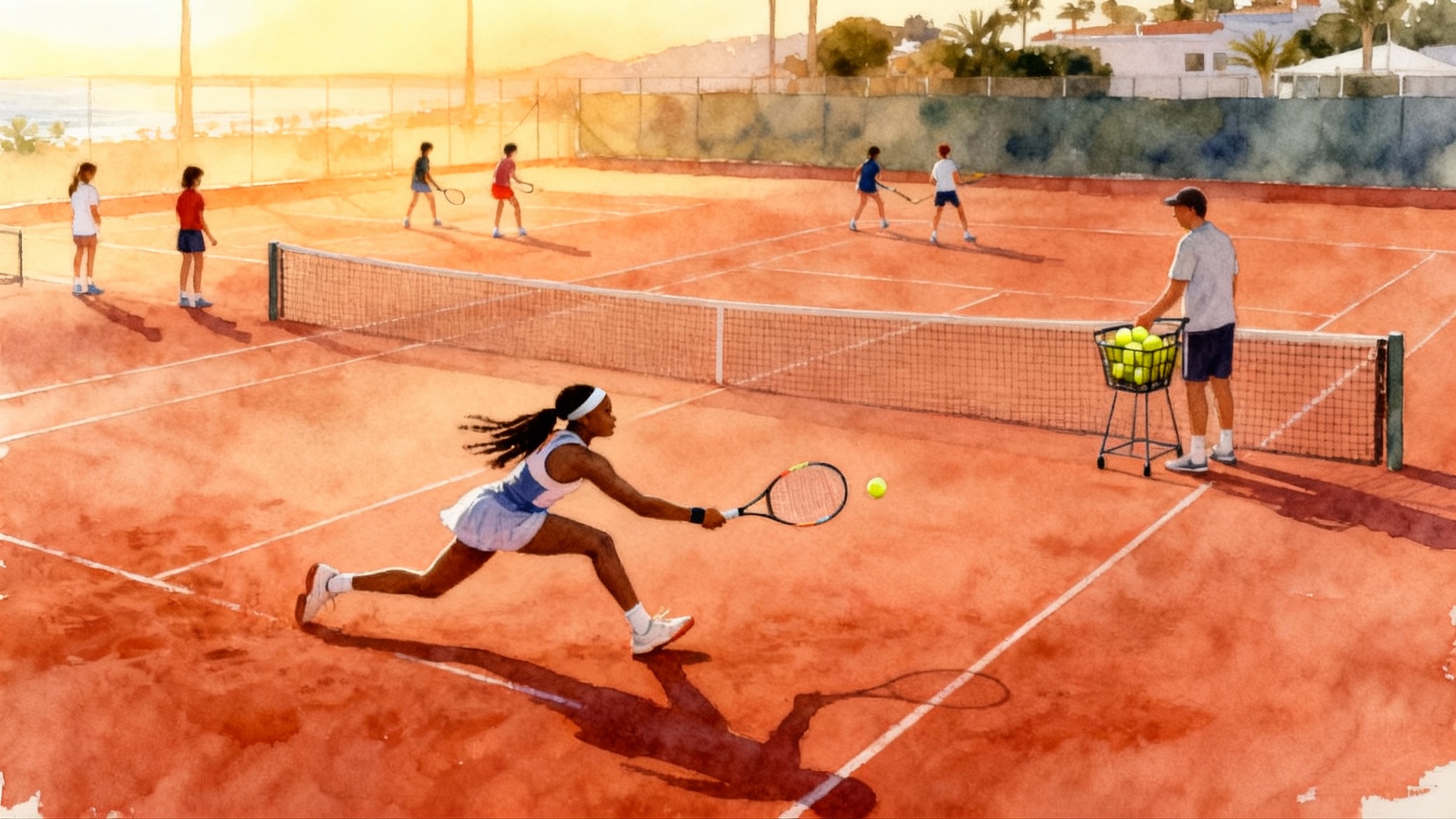
The thread that links a scholarship, a clay court, and a champion
Coco Gauff’s story reads like a case study a parent could actually copy. A foundation scholarship opened a door, an academy supplied the daily habits, and a few timely coaching pivots turned those habits into wins on the biggest stages. The line from a Champ'Seed scholarship to the Mouratoglou Academy to the US Open in 2023 and Roland Garros in 2025 is not a fairy tale. It is a sequence of practical decisions made at the right time.
This article unpacks those decisions. We trace the role of the Champ'Seed Foundation overview in her junior years, highlight what repeated training blocks in the south of France added to her game, then zoom in on the coaching pivots that pushed good patterns into great ones. Most important, we translate each stage into actions parents can take, from funding routes to when to upgrade or simplify a support team.
What Champ'Seed actually gave
Champ'Seed is not a magic wand. It is a set of levers that remove friction so talent can compound. For Gauff, that meant three things:
-
Access to a high-volume, high-quality practice environment. Scholarships buy court time, hitting partners, and tournament calendars that match the player’s level. Reps become reliable instead of occasional.
-
Travel and tournament scaffolding. Getting to the right events matters more than winning the wrong ones. Entry fees, flights, and a sensible schedule let a player stack the exact matches they need, not the ones that are cheap or close by.
-
Guardrails. Strong programs add guardrails around academics, wellness, and recovery. Guardrails reduce the number of streaks that die from preventable problems like burnout or small injuries that become big injuries.
Parents often imagine scholarships as lump sums. Think of them more like a monthly gym membership and a planner rolled into one. The budget, the schedule, and the practice density combine to make progress obvious and measurable.
The Mouratoglou Academy habits that stuck
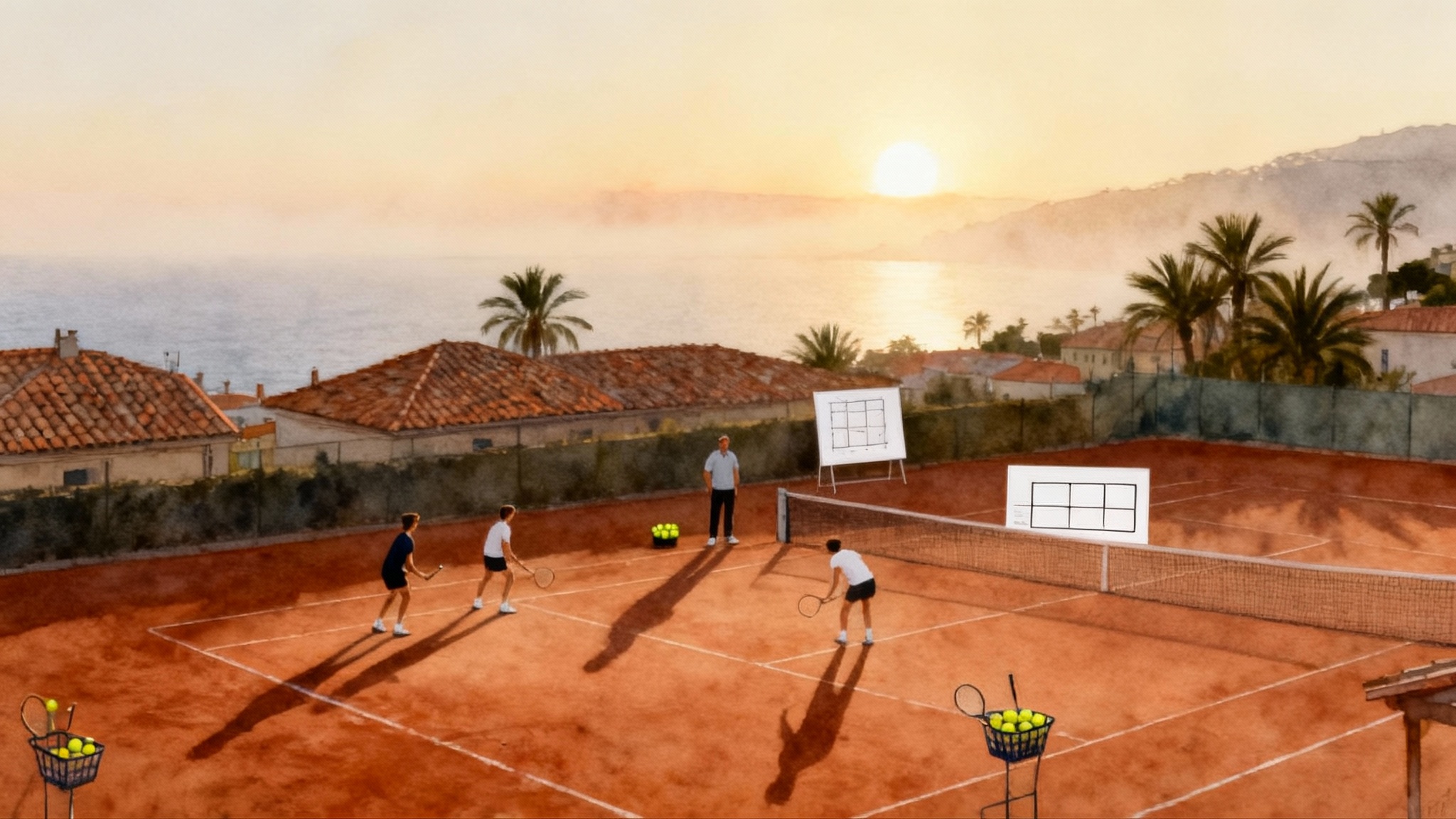
Gauff did recurring blocks at the academy in the south of France, and those blocks taught skills that do not wash off when the bags leave Nice. She has a documented connection with the academy, including dedicated coverage on the Mouratoglou Academy and Gauff profile. Three habits matter most for players and parents:
- Clay first, patience always. Red clay forces a player to build points. Instead of hunting winners, the player learns to stretch rallies, sustain a cadence, and make space before striking. That shows up later on hard courts as better shot selection and lighter feet.
- Serve plus one as a system. The first two shots are drilled until they feel like a packaged play. Use the serve to open a lane, then play into that lane with your best forehand or backhand. For a deeper framework, see our guide to serve technique, drills, and pressure.
- Defensive corners that turn into offense. Courts are full of drills that take a player from the outer thirds back into the center with purpose. The goal is to get out of the corner early and recover balance so the next ball is a chance to change direction, not a bailout.
A better model for parents is this: the academy supplies a template, then the home coach runs the template locally. When you return for the next block, the template is upgraded and the loop repeats.
The pivots that turned promise into titles
The story does not stop at good habits. It turns when those habits are pointed with precision.
Short stints with Patrick Mouratoglou
Gauff did not need a full-time overhaul. She needed tune ups at key moments. Short on-court stints with Patrick Mouratoglou, layered on top of the academy’s daily work, served two functions:
- Clarity of identity. Identify the A pattern under pressure. For Gauff, that often looked like heavy crosscourt to stretch the backhand, then an early change down the line when the defender’s outside foot lags.
- Tactical guardrails for specific surfaces. On clay, move the contact point slightly further out when the bounce rises. On faster courts, shorten the take back on reactive forehands, trust legs first, and keep targets bigger than you think. Short, direct sessions fixed the exact behaviors that travel under stress.
Parents can borrow the same approach. You do not need a permanent celebrity coach. You need the right specialist, at the right time, with a clear brief. Book a short block, arrive with match clips and three precise questions, then come home and repeat the drills for six weeks.
Adding Brad Gilbert in 2023
The mid 2023 pivot to Brad Gilbert matched philosophy and timing. Gilbert’s playbook is blunt and effective: reduce the number of low percentage decisions, stretch points that favor your movement, and weaponize the opponent’s discomfort. For Gauff, the change was visible within weeks. Targets were safer, patterns were clearer, and the forehand, often criticized in earlier years, came online in the right moments.
Three choices made the difference:
- Bigger margins to bigger parts of the court. Instead of flirting with the sideline early, the ball found the deep middle third until the window opened.
- Returns that start deeper, then move in on second serves. Depth first, aggression second, with a defined plan for second serve returns.
- Fitter legs between tournaments, not just during them. The team layered strength, spring, and repeatable first steps so she could play the right decision late in sets.
The outcome was the 2023 US Open title. The blueprint was not mystery. It was academy habits, simplified and enforced by a coach who prizes problem solving over pretty winners.
The 2024 to 2025 simplification and biomechanics phase
After the initial surge, the next gains came from small technical cleanups that scaled under pressure:
- Forehand organization. Reduce backswing variability to one repeatable loop and set a cleaner contact height. The goal was not a new stroke, it was fewer moving parts when the ball arrived hot.
- Serve reliability rather than sheer speed. A slightly higher toss, more consistent knee load, and a focus on hitting through a taller contact produced a first serve that landed more often in the outer quarter of the box.
- Footwork rules for clay. Slide only when balance and space allow a clean stop, and recover on the first step, not the second.
The net result was a player who wasted fewer points and squeezed more mistakes from opponents. That economy is perfect for Paris. The Roland Garros title in 2025 continued patterns that had been trained, tested, and simplified for years. For a cross-check on academy-led pathways that scale, compare how Equelite built Alcaraz and how Piatti’s blueprint for Sinner prioritized simple patterns under stress.
Lessons parents can steal with honesty
The point of a great pathway is not to admire it, it is to copy the parts that transfer. Here are the parts that travel well for any ambitious junior.
Funding routes that actually work
- Foundation scholarships. Look for merit-and-need programs that fund travel blocks, not just tuition. Ask whether match scheduling support and injury prevention are included, since those two items often produce the fastest gains.
- Federation and regional grants. National or state bodies sometimes cover international swing costs, especially for clay or grass seasons that do not exist locally.
- Brand support that pays in kind. Strings, shoes, and grips add up. Negotiate for a stringing credit and tournament vouchers, not just a bag and a shirt.
- School and academy hybrids. Some schools partner with academies for flexible schedules so your child can get mid morning courts, then classes later in the day.
- Community and family micro sponsors. Local businesses will often support a promising junior if they see the plan. Present a one page budget, a 12 month calendar, and three clear goals.
A realistic annual budget for an ambitious fifteen to seventeen year old who travels internationally will often range from fifty thousand to one hundred and fifty thousand dollars, with travel as the biggest variable.
Why clay blocks matter even for hard court kids
Clay is a laboratory. It lengthens the rally, magnifies footwork, and teaches patience without passivity. If you live outside Europe and red clay is hard to find, green clay works if you stick to the rules.
- Run a four week clay block each spring. Week one, build volume with two rally drills that reach fifty ball tolerance. Week two, add serve plus one patterns every day. Week three, add direction change on the third ball. Week four, scrimmage with constraints.
- Use simple tools. Two cones mark your depth window, one rope lays out a lane target, and a phone records at high frame rate.
- Measure what clay teaches best. Track average rally length, unforced errors on direction changes, and first step speed to the middle after wide defense. If those three improve, hard court results usually follow.
- If you cannot find clay, imitate it with rules. For example, every point must include one crosscourt before a change of direction, second serves must land deep middle third, and winners to lines do not count unless they follow the rule.
When to upgrade or simplify the support team
At some point, a promising junior and their family face a crowded bench. Use triggers and time boxes to decide.
Upgrade the team when one of these is true for three months in a row:
- Ranking stalls despite healthy training and a full match schedule.
- The same tactical error shows up in at least five matches.
- The player loses to a specific style repeatedly.
Simplify the team when any of these drain performance:
- The player cannot explain a game plan for the next match in two sentences.
- Warmups are rushed because the schedule is full of separate sessions that do not talk to each other.
- The player looks fresher on Monday than on Friday and fades late in tournaments.
How to run the change without chaos:
- Set a twelve week experiment. Name one lead coach who makes the week’s plan. Everyone else supports that plan.
- Identify a single measurable outcome. For example, raise first serve percentage by five points while keeping average serve speed within three percent of baseline.
- Review every two weeks using match clips, not memories. If progress stalls for a full month, adjust the plan, then finish the twelve weeks before judging the whole idea.
A month by month model you can actually follow
Every family needs a map. Here is a simple one year model inspired by the choices in Gauff’s pathway. Swap months for your region and school calendar.
- January to February, preseason base. Four days on court, two strength sessions, one injury prevention day. Serve plus one patterns three times a week. One practice match with constraints each weekend.
- March to April, first match block. Target regional events that feed into stronger draws. Keep two technical themes only, such as a cleaner forehand loop and deeper second serve returns.
- May to June, clay block. Four weeks if possible. If you can travel, do so. If not, book weekly scrimmages on the best clay available. Track average rally length and direction change errors.
- July to August, summer hard courts. Fit a mini block of speed and first step work between events. Set a rule that every match plan includes the first two shots written down and rehearsed for ten minutes in warmup.
- September, review and reset. Study ten match clips that represent the year. Identify one pattern that scored and one that leaked.
- October to December, build and test. Two technical themes plus one fitness theme. Enter events that stretch, not just events you can win. Finish with a short training block where a specialist can help, even if it is three days with a clear brief.
The bigger idea
Coco Gauff’s climb is a blueprint for how early structure, the right kind of clay work, and timely coaching choices can compound into major titles. A scholarship lowers friction, an academy builds repeatable patterns, and a few smart pivots keep the player’s identity sharp when the lights get bright. Parents do not need to copy the names to copy the method. Choose the levers you can pull, set honest measures, and make changes in defined blocks. Progress comes from stacking the right days.