From Krasnoyarsk to Cannes: Mirra Andreeva, Elite Tennis Center
How a move from Siberia to the French Riviera unlocked Mirra Andreeva’s next gear. Inside Jean-René Lisnard’s Elite Tennis Center model, the training ratios, surfaces, schooling, and schedule design that fast-tracked her jump to Women’s Tennis Association contention.
 Tommy
Tommy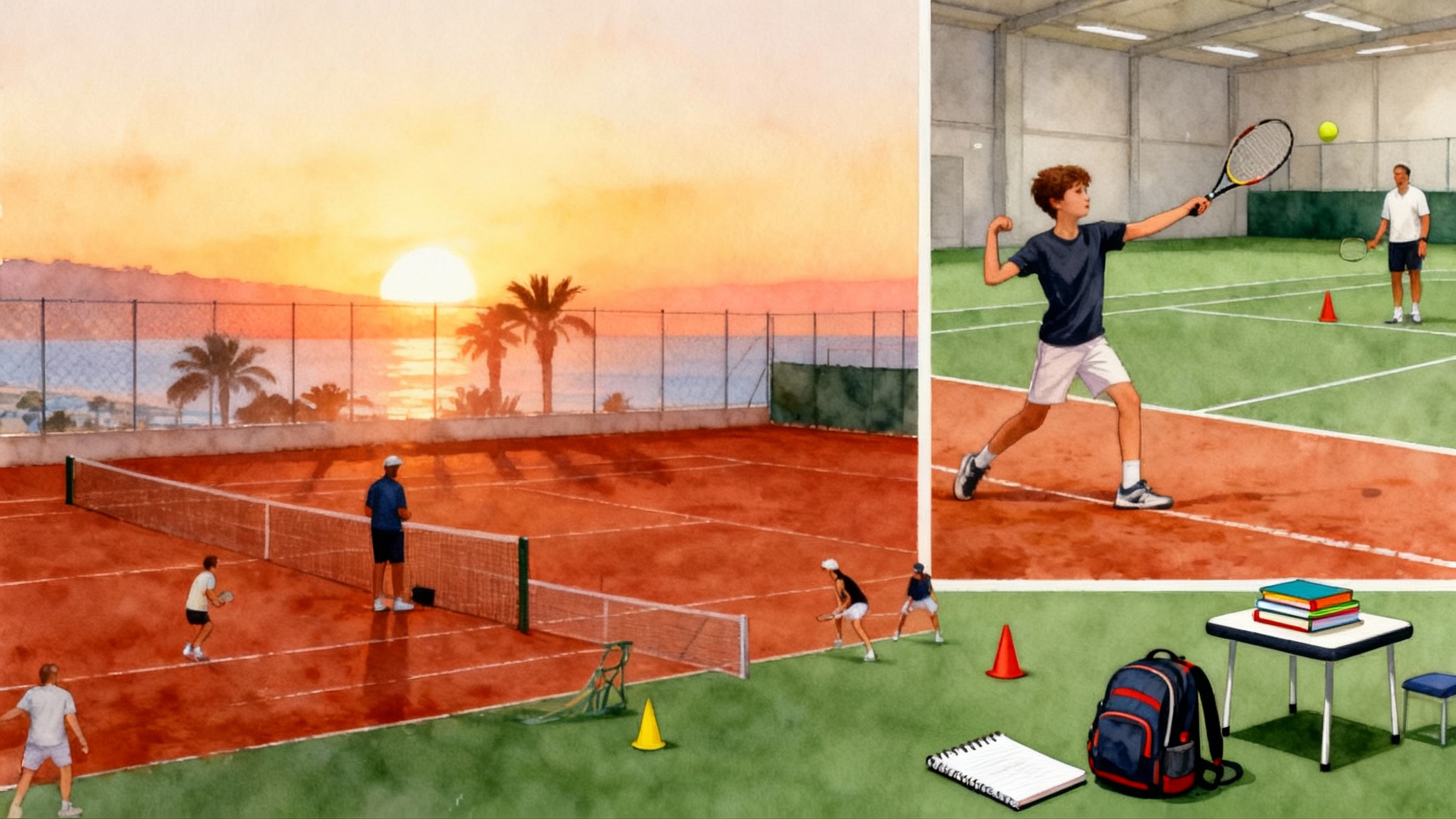
The move that changed the velocity of a career
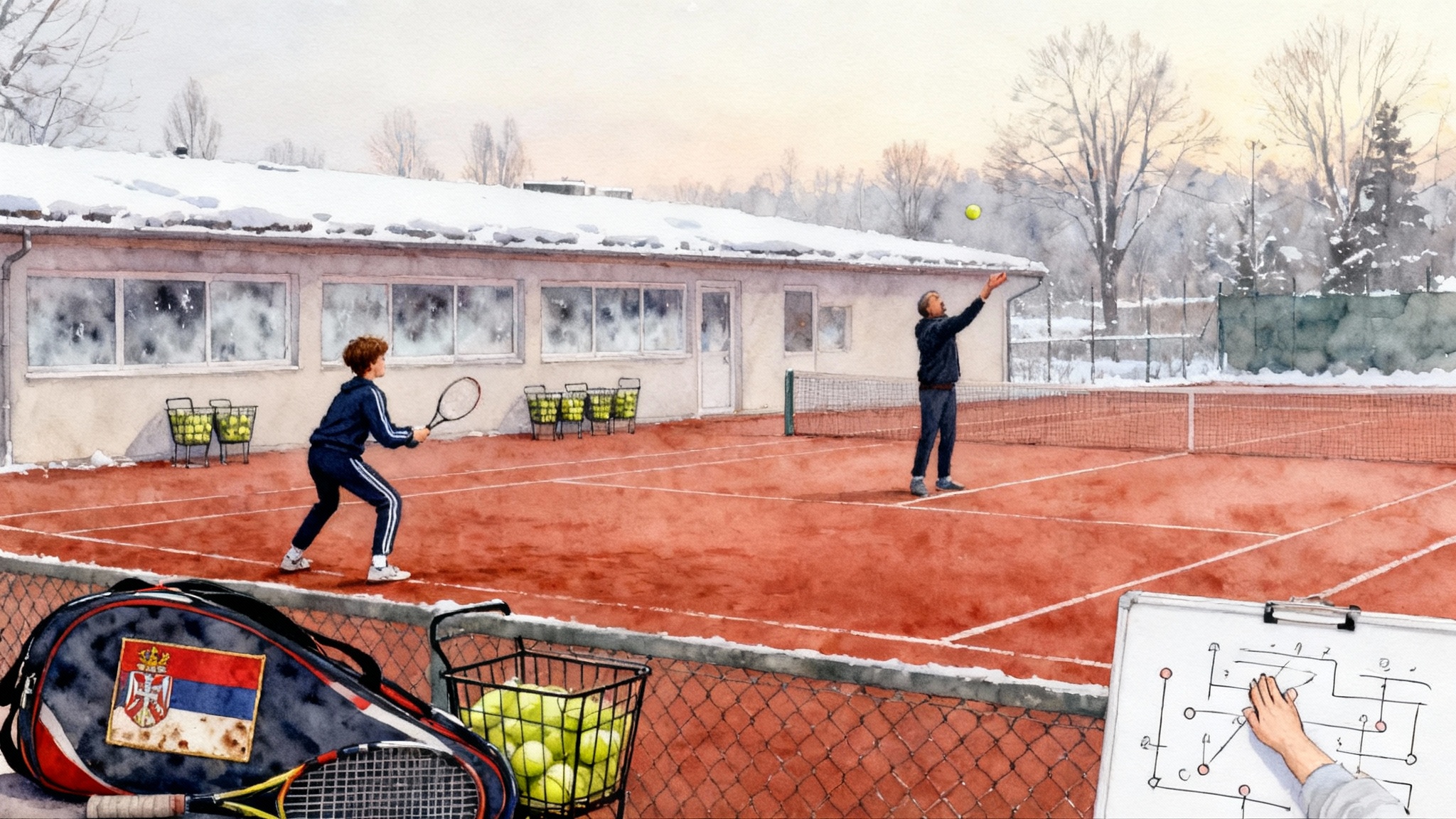
When you grow up in Krasnoyarsk, deep in Siberia, winter is not an interruption, it is an environment. Courts are scarce, travel is long, and the pool of peers is thin. Mirra Andreeva’s family did what many driven tennis families do. They chased better conditions, first to Sochi for milder weather, then to the French Riviera, where courts, coaches, and competition crowd into a small radius.
The key decision was to base in Cannes, where Mirra and her sister Erika trained at Jean-René Lisnard’s Elite Tennis Center. That choice changed the pace of her development. Mirra did not just find a coach. She entered a system that treats progress like an engineering problem, with inputs, measurable outputs, and tight feedback loops. The Women’s Tennis Association’s official profile notes the move to Cannes with Lisnard and Jean-Christophe Faurel WTA profile on her move. From there, Mirra stepped from junior promise into the professional slipstream.
What Cannes offered that Krasnoyarsk and Sochi could not
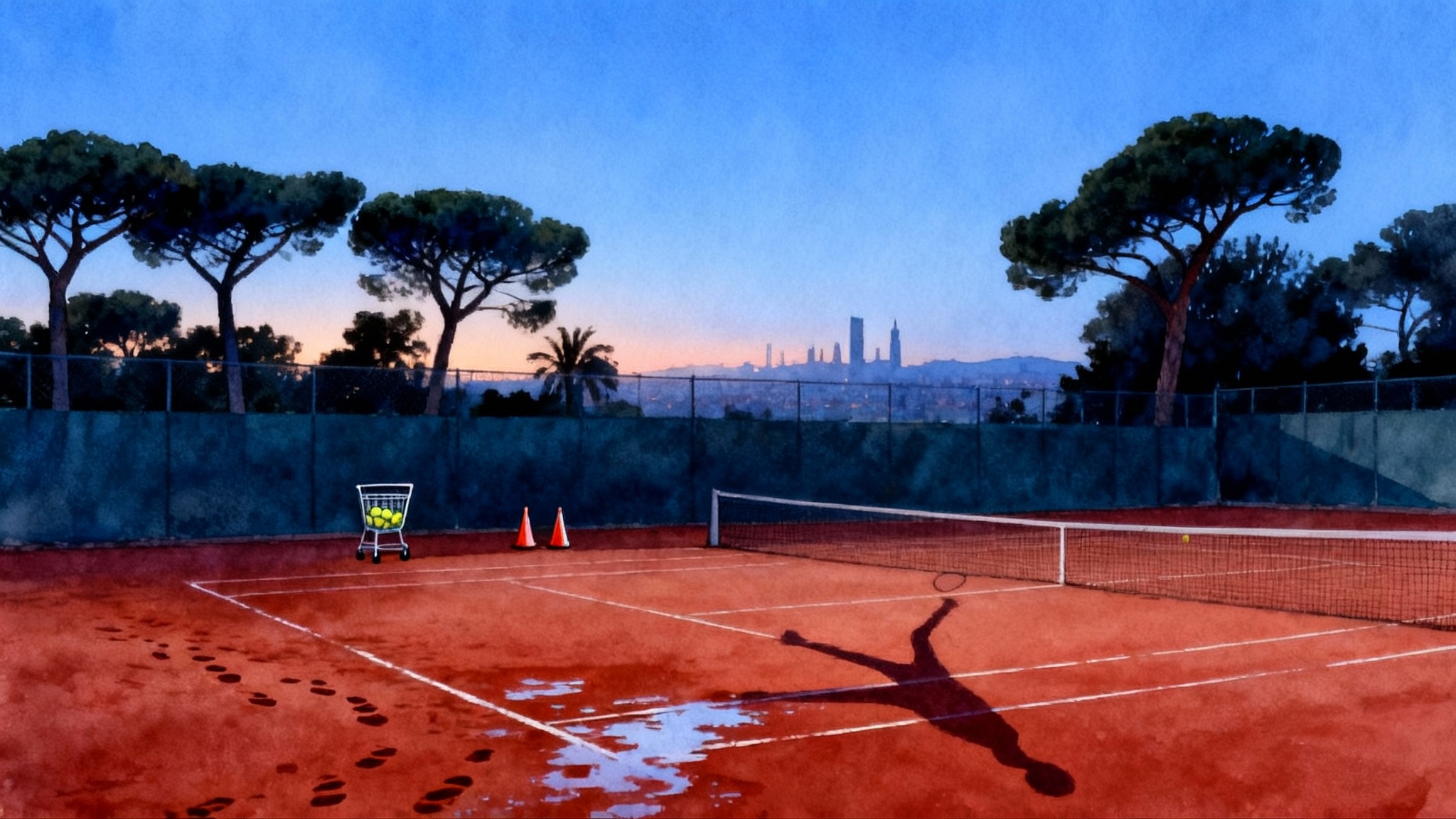
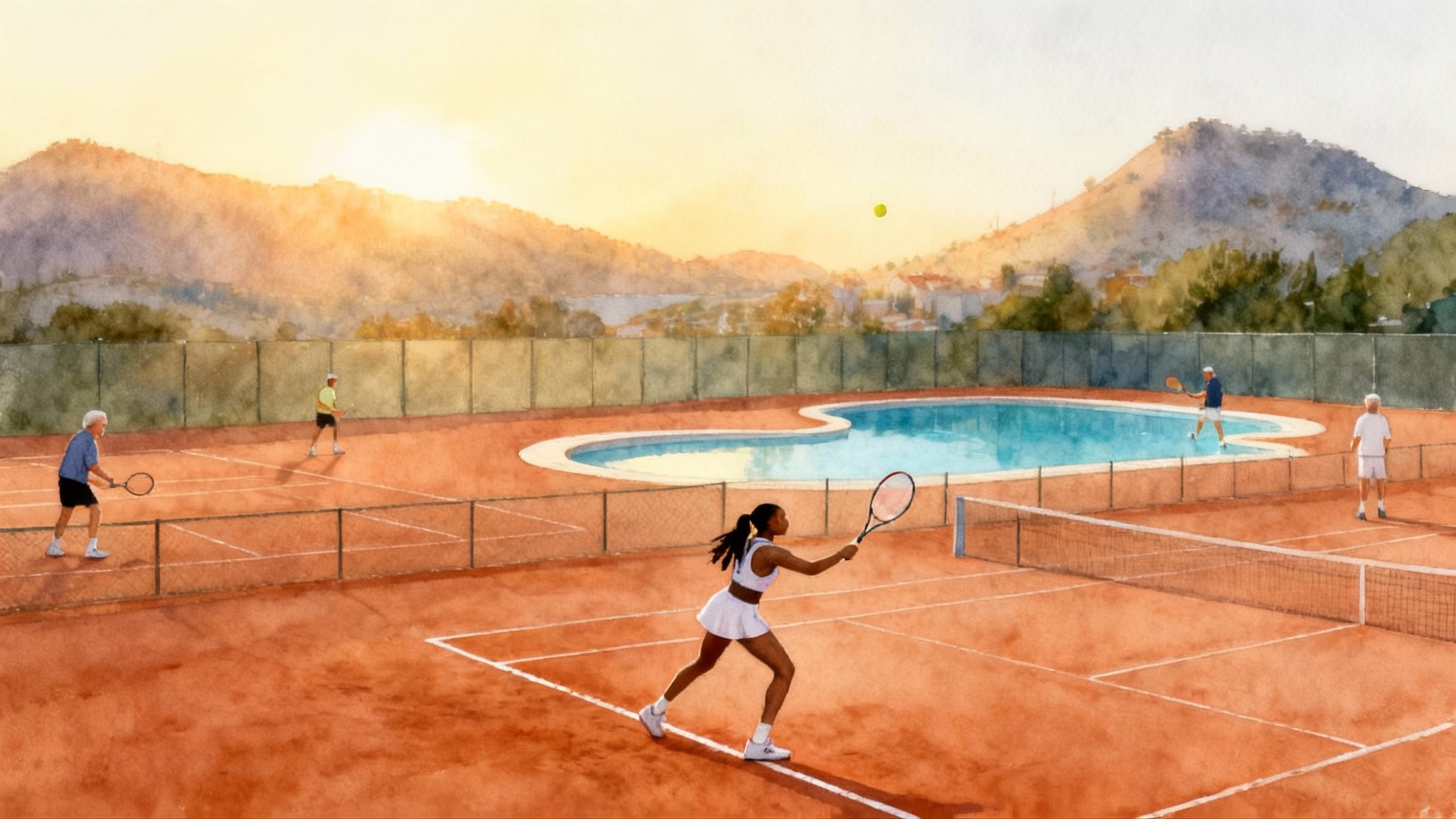
Within a ninety minute drive of Cannes, a teenager can face a week of different game styles, practice on multiple surfaces, and play quality practice sets with future tour opponents. That density matters. Improvement accelerates when the frictions of distance, weather, and logistics shrink. Mirra’s rise shows how the right base compresses years of learning into months. We have seen similar relocation dividends in other case studies, including Rybakina’s academy blueprint.
Inside the Elite Tennis Center model
Elite Tennis Center is not built around slogans; it is built around levers that move performance. Four of those levers mattered most for Mirra’s fast climb.
1) Two players per court per coach
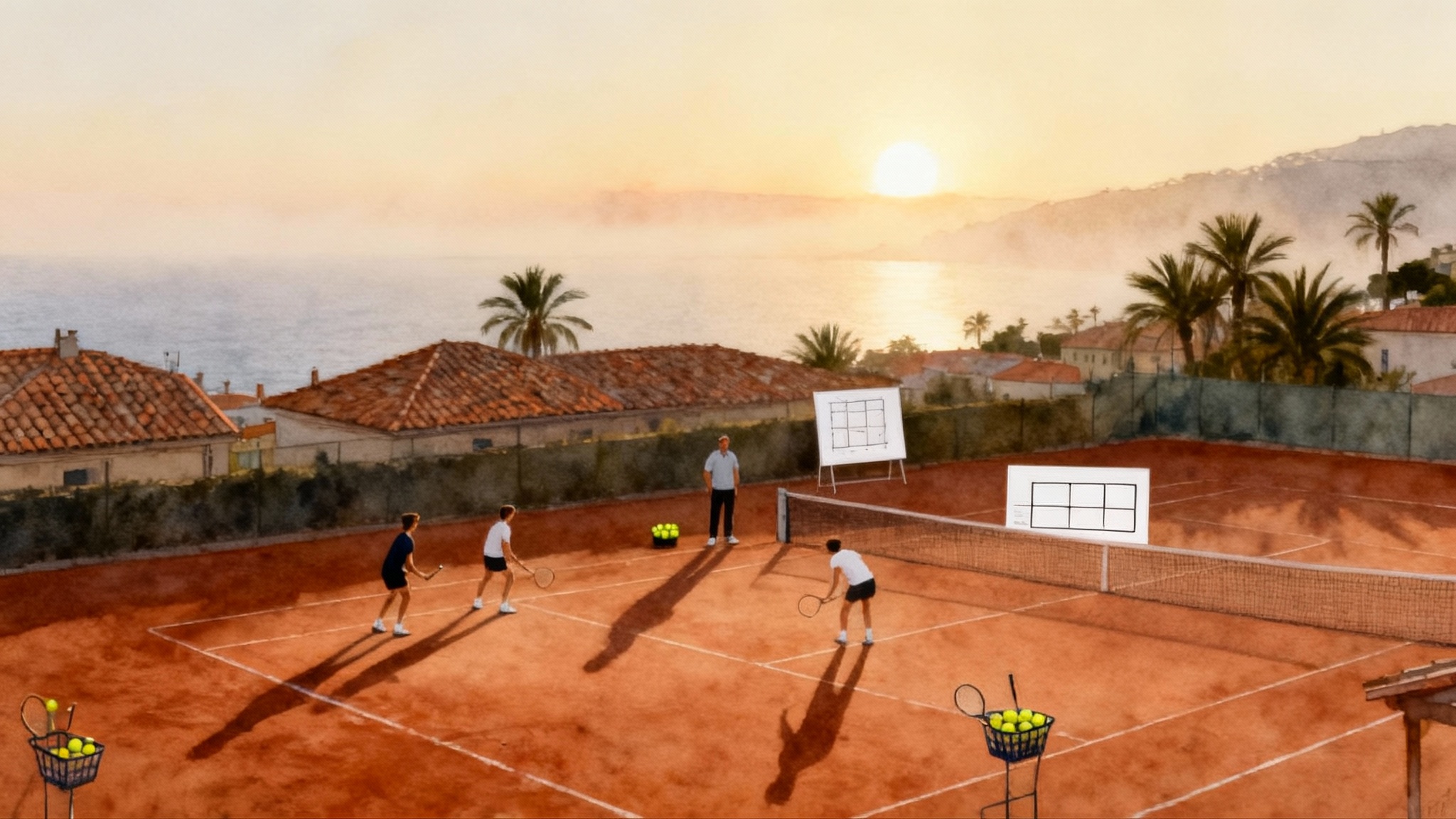
If you want a simple metric that predicts practice quality, start with how many balls a player hits under supervision. Elite Tennis Center fixes that variable by running a two-players-per-court-per-coach format. This ratio raises the number of coached contacts per hour, which raises the number of immediate corrections, which in turn raises the chance that technical changes stick. Think of it as increasing the frame rate of feedback. With more frames, the coach can freeze the moment where a racquet path wanders or a contact point drifts, correct it, and see it again within minutes.
In Mirra’s case, that meant sharper patterns on both wings and a faster transition from defense to counterpunch. It also meant that sessions could be individualized without losing intensity. One player works on forehand height windows while the other rehearses serve rhythm, then they switch while the coach tracks both checklists. Over a block of weeks, that ratio compounds into visible change.
2) Multi-surface blocks on clay and Greenset
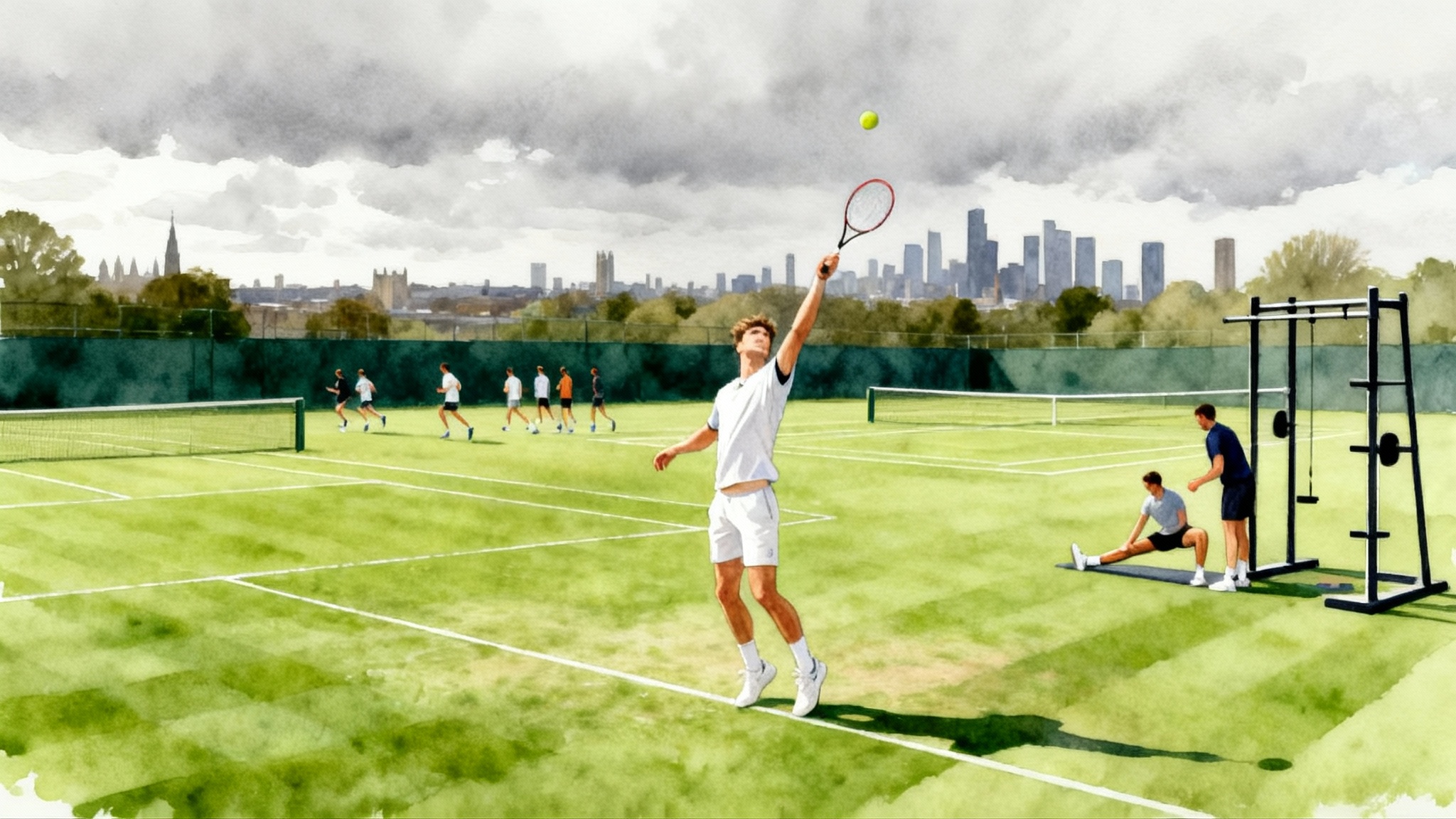
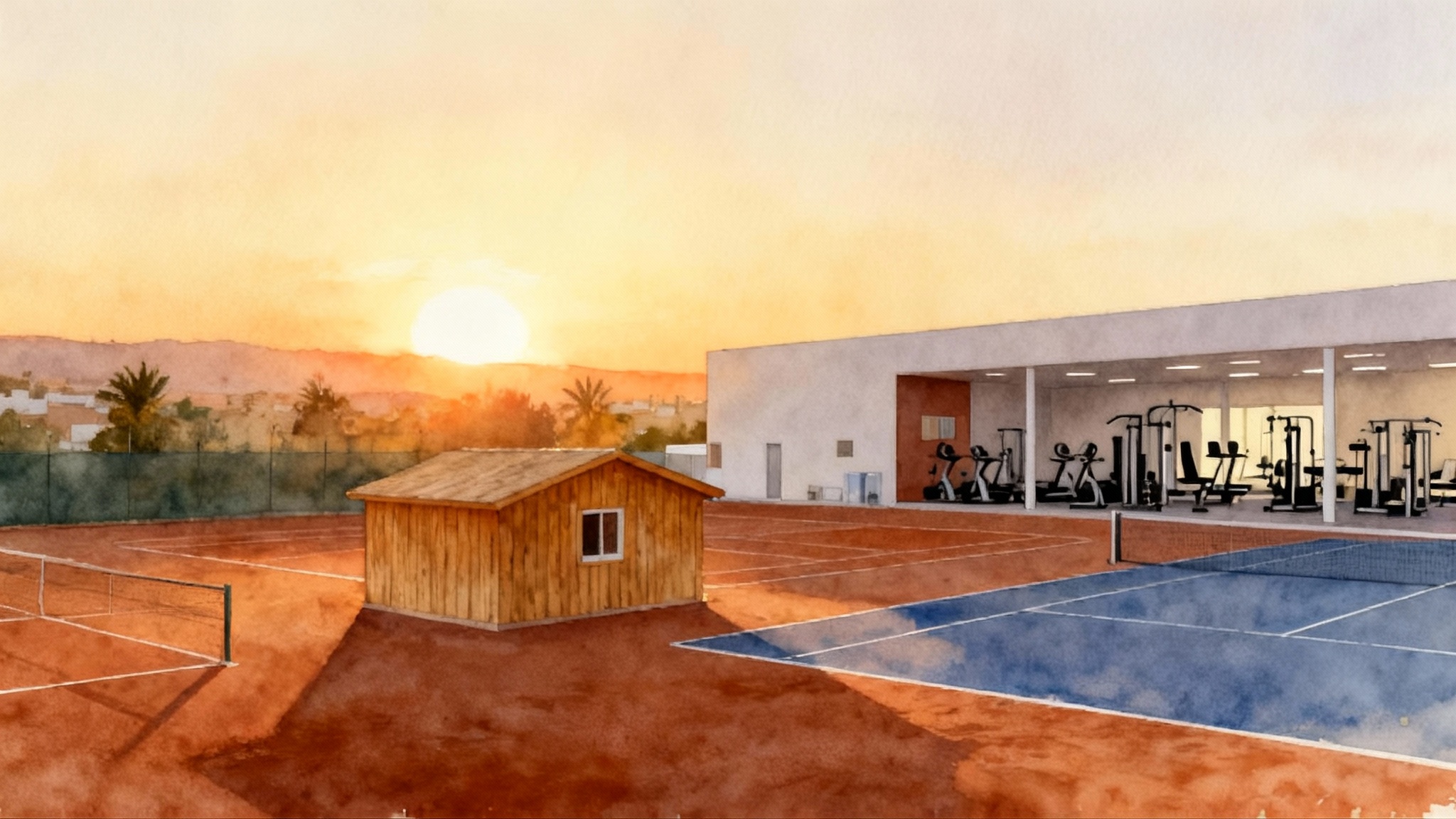
Mirra’s game is not built on raw power. It is built on timing, disguise, and adaptability, which is why surface literacy matters. Elite Tennis Center runs on clay and Greenset, a top-tier acrylic hard court used widely in Europe. Training in structured blocks lets a player carry the best habits from one surface to the other. On clay, Mirra rehearses sliding recovery and higher margin patterns. On Greenset, she tightens first-strike choices and return position. The aim is transfer, not siloed skills. Elite Tennis Center even states the format publicly, including ratios and surfaces Elite Tennis Center format. Put simply, clay builds patience and elasticity, Greenset builds assertiveness and clarity. Switching between them inside the same training week hardwires adaptability that pays off during mixed-surface swings on tour.
3) Integrated boarding and studies
Relocation only works if school does not become an afterthought. Elite Tennis Center partners with an education provider that adapts timetables to training and competition. French-speaking students can follow national and international programs in cooperation with distance education options, while English-speaking students receive tailored tutoring aligned to tournament travel. The practical effect is that a match in Lyon on a Thursday does not wreck a week of coursework. Families see fewer tradeoffs between sport and schooling, which lowers stress on the player and on the household.
4) Tournament scheduling as a development tool
A common mistake is to chase points instead of building the player. Elite Tennis Center maps the calendar around clusters of events that are close in geography and similar in competitive level. For a young pro, that often means two or three International Tennis Federation events in a six to eight week window, then a reset week to convert match notes into practice goals. The travel radiuses are tight. The goal is experience density without burnout.
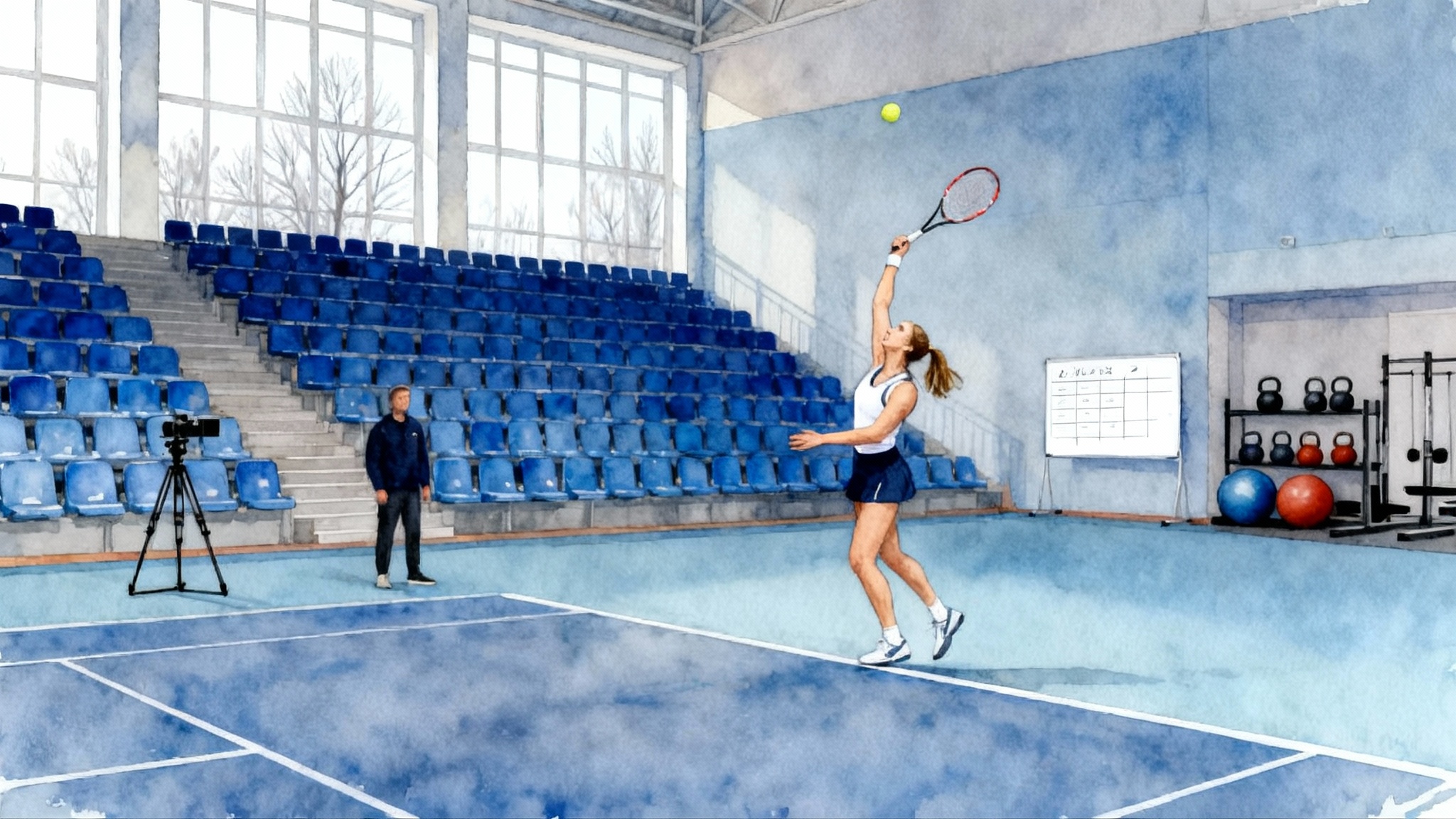
Mirra’s early European schedule looked like this in principle. Start with a string of clay events to anchor patterns and earn enough ranking points to enter stronger draws. Add indoor Greenset weeks to sharpen first-pass aggression before a bigger clay swing. Use each cluster to solve one or two tactical problems, not everything at once. With that discipline, results came as a byproduct.
Proof of concept: the track record in Cannes
A model is only as good as its graduates. Elite Tennis Center lists alumni that matter. Daniil Medvedev used Cannes as a training base on his ascent to world number one in the Association of Tennis Professionals rankings. Varvara Gracheva trained there during her climb into the top forty of the Women’s Tennis Association rankings. Anna Blinkova did the same as she pushed toward the top thirty. Mirra’s progression sits in that line, different in style but similar in trajectory. The shared signal is not a single coach’s blueprint. It is a system that turns daily work into predictable improvement. Similar Riviera ecosystems have also shaped champions; see how Mouratoglou accelerated Gauff.
A practical note about Mirra’s current setup adds context. As she rose, her team evolved. By late 2023 she added work on the Riviera at All In Academy on the Riviera and began collaborating full time with coach Conchita Martínez, while remaining based in France. Elite Tennis Center shaped the acceleration phase. A second phase built on it. Families should expect elite careers to pass through multiple environments as needs change.
How the model translates into match skill
The combination of ratio, surfaces, schooling, and calendar is not abstract. It maps directly to competencies a player carries onto stadium courts.
- Pattern clarity under pressure. Two players per court per coach means more rehearsed repetitions of go-to patterns. Mirra’s inside-out forehand paired with a crosscourt backhand counter is a concrete example. Because the pattern is rehearsed at high ball counts, it survives nerves in round one and week two.
- Footwork fluency. Clay teaches deceleration and balance after the slide, Greenset teaches acceleration to the first step of the next ball. The brain learns to switch gears, which is why Mirra looks comfortable when a rally suddenly changes pace.
- Return specificity. On Greenset blocks, first-serve and second-serve return positions are measured, not guessed. That shows up against bigger servers when the first strike decides the point.
- Rally elasticity. On clay blocks, height and spin windows are drilled with targets. When match momentum flips, Mirra can buy time with shape, then step back into the court when the window opens.
What families can borrow from the Cannes blueprint
You may never move your child to the Riviera, and that is fine. The point is to copy the mechanisms, not the postcard.
When relocation makes sense
- Your player is consistently dominating the best local peers without strain over a three to six month span. The key word is consistently. One hot month is not a signal.
- You can quantify a ceiling that the current environment cannot raise. For example, there are not enough opponents who can maintain rally speeds above the level your player needs to rehearse.
- The cost of travel to suitable tournaments from your current city exceeds the cost of boarding at a training hub that sits near a denser schedule. Do the math over a full year, including hidden costs like missed school days.
Relocation is not a status symbol. It is a logistics upgrade whose return should be visible on video and in match behaviors within a season.
What to vet in an academy
- Ratio, written down. Two players per court per coach is a strong benchmark. If a program cannot state its ratio precisely and show you a sample week, look elsewhere.
- Surfaces and periodization. Ask how the academy sequences clay and hard court work. You are listening for block design and transfer, not random variety.
- Education. Demand to see how the timetable flexes during competition weeks, and how teachers coordinate assignments before and after travel.
- Medical and physical support. Confirm access to a sports physician, physiotherapist, osteopath, and strength coach, and ask who coordinates return-to-play after a niggle.
- Tournament planning. Ask for two sample calendars at your player’s level, one conservative and one ambitious, and the criteria used to switch between them.
- Coach continuity. Request to meet the coach who will run the daily court time, not only the academy director.
How to phase match play
- Discovery phase, 10 to 13. Emphasize variety. Play different age groups and surfaces. The primary goal is curiosity and resilience, not rankings.
- Consolidation phase, 14 to 16. Cluster tournaments by geography and surface. Measure success by how well one training goal transfers to competition. Use video to track a short list of habits.
- Breakout phase, 16 to 17. Pick a surface identity, usually clay or hard, then add the complement to pressure test adaptability. Enter draws that stretch but do not crush confidence. Protect practice weeks.
- Transition to Women’s Tennis Association or Association of Tennis Professionals level, 17 to 19. Target qualifying at events where your patterns match the surface and the altitude. Use protected training blocks after each swing to convert match notes into adjustments.
Support layers at each stage
- Fitness. In early teens, build movement quality and coordination, not just capacity. Add structured strength only when technique is clean. By late teens, plan year-round strength cycles aligned to the calendar.
- Physiotherapy. Use baseline screens at the start of each season. Small asymmetries cost matches when the calendar tightens. Prevent before you rehab.
- Mental training. Start with routines, not mantras. Teach pre-serve and return rituals, changeover checklists, and post-match debriefs. Later add coping tools for handling momentum swings and external noise.
- Nutrition and recovery. Standardize pre-match meals and hydration, then add travel hydration and sleep routines for long weeks.
Why Europe changed Mirra’s slope
Cannes put Mirra inside a network. On any given week she could spar with future main-draw opponents, switch surfaces without a flight, see a physio the same day, and handle schoolwork without panic. The ratio on court multiplied ball contacts. The surface blocks fused patience and initiative. The calendar design delivered experience without chaos. Her move to the Riviera did not guarantee anything, but it made improvement more likely every day.
The proof is not only her results. It is the way she plays. The traits that made her a threat so young are exactly the ones an engineered training environment should produce. Situational awareness. Composure across surfaces. Patterns that hold up under lights.
Your checklist before you pack a suitcase
- Watch three recent matches and write down the five most common errors. If those errors are not solvable where you live, relocation is on the table.
- Ask every academy to share a week plan, a four week plan, and one tournament calendar. Compare the documents, not the marketing.
- Call two families whose players trained there for at least a year. Ask what changed in six months, not what trophies were won.
- Set a review date before you move. If there is no measurable progress by that date, change something.
The takeaway
Mirra Andreeva’s jump from junior promise to Women’s Tennis Association contention did not happen by magic. It happened because her team chose a base that multiplied the right reps, trained her on the right surfaces, kept school aligned with sport, and built a smart calendar. Elite Tennis Center in Cannes shaped the acceleration phase. As her needs evolved, her setup evolved too. That is the pattern families can copy. Do not chase a brand. Chase a system that lets your player improve every day, then verify that the improvement shows up when the score starts at love all.