How JTCC Shaped Frances Tiafoe’s Path to the ATP Top 10
Frances Tiafoe grew up at the Junior Tennis Champions Center in College Park. Here is the step-by-step pathway of coach continuity, scholarships, and match-play training that lifted him to the ATP Top 10, with takeaways for families.
 Tommy
Tommy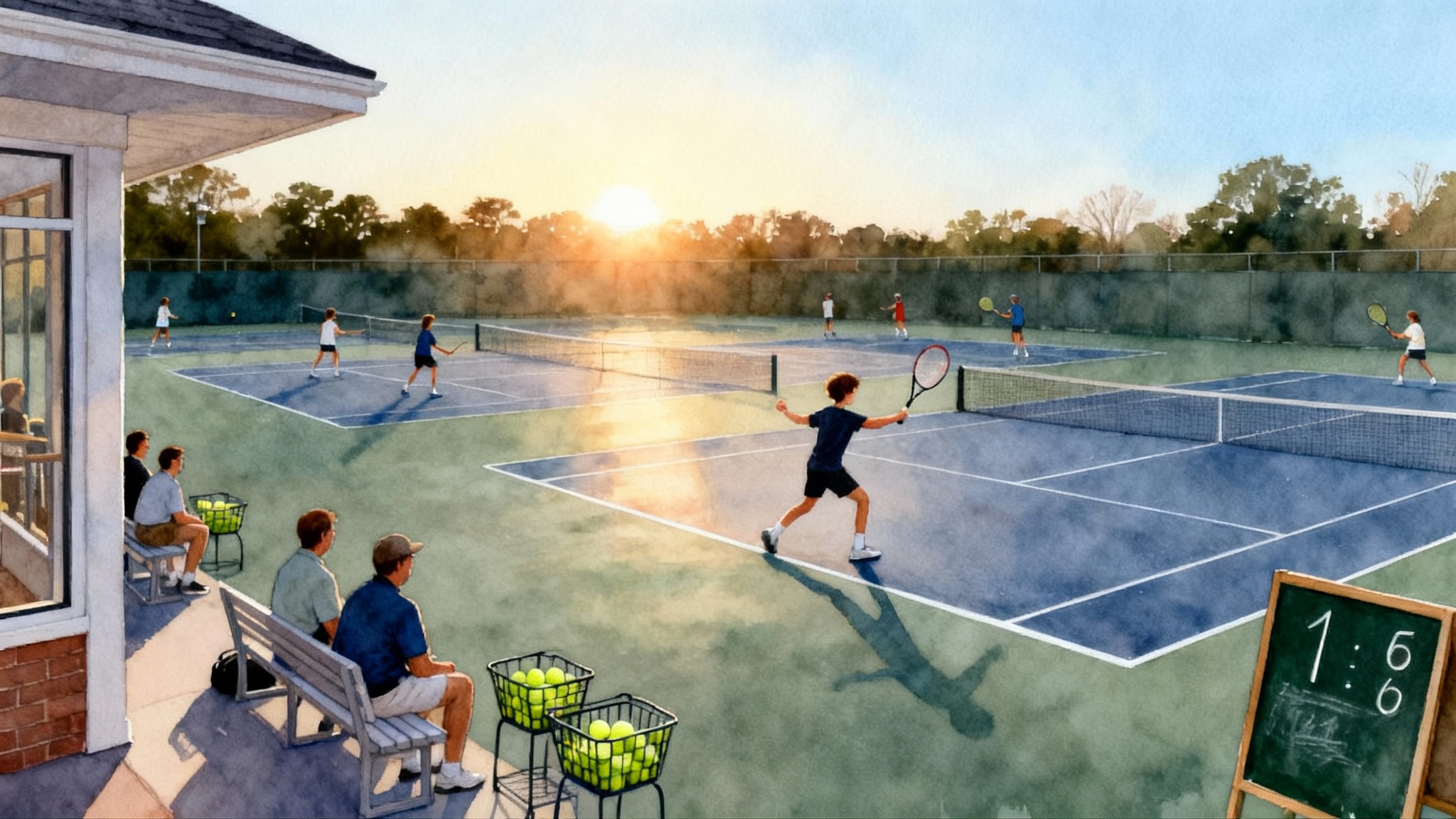
The College Park origin story
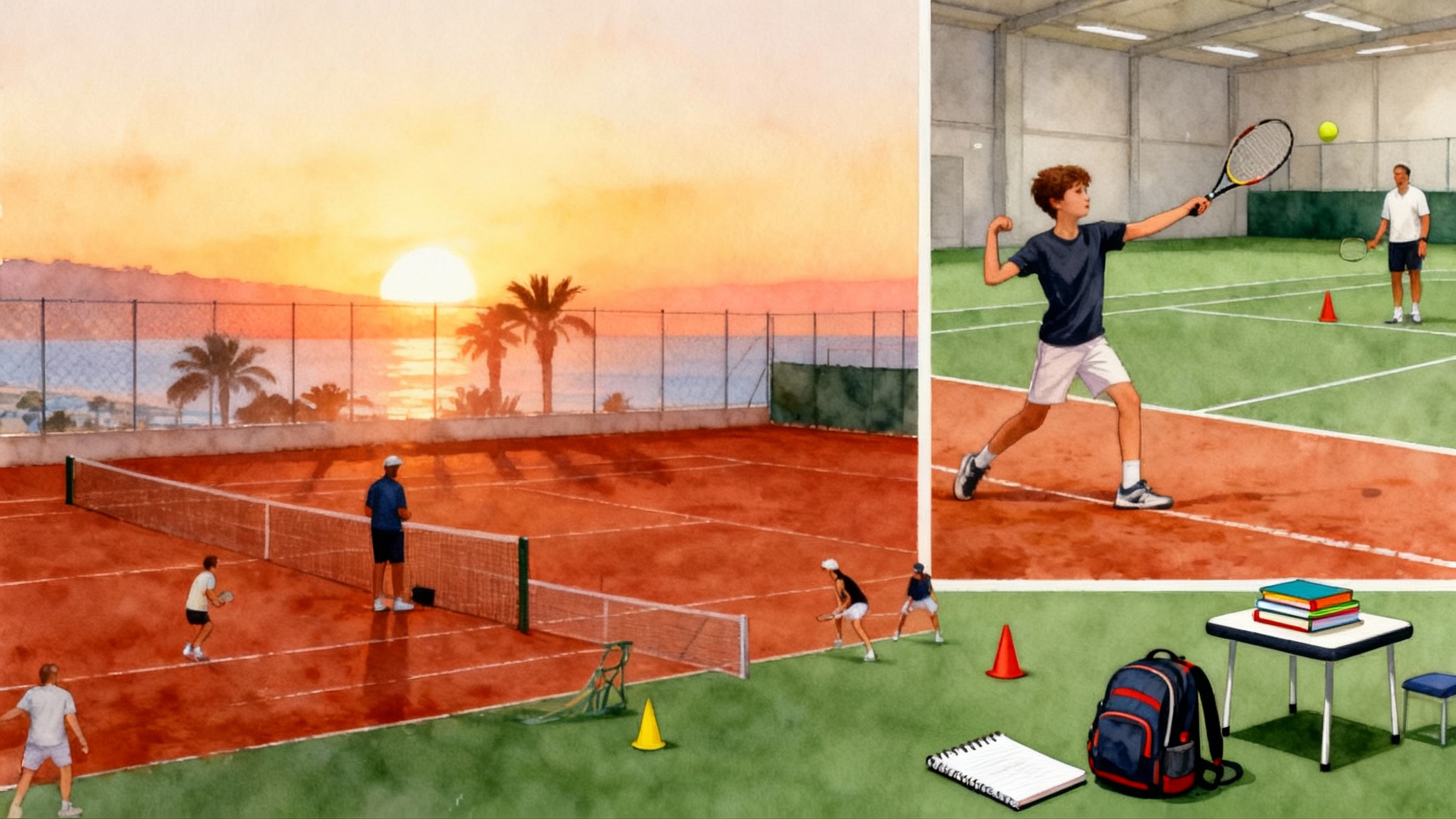
Frances Tiafoe’s rise did not begin in a private academy tucked behind palm trees. It began at a public facing training center in suburban Maryland, where his father worked long hours maintaining the courts and the buildings. Frances and his twin brother spent countless days and nights inside that facility, soaking in the rhythms of a place built to turn promising juniors into hardened competitors. The Junior Tennis Champions Center, known as JTCC, offered a home, a habit, and a standard. By his late teens, Tiafoe was winning big junior titles, earning professional wild cards, and learning how to compete against men. By June of 2023 he had climbed into the ATP Top 10, a marker of consistency and belief that validates the pathway he walked in College Park, and one families can adapt to their own context. For an overview of his ranking milestones and tour progress, see his official ATP player profile.
This is not a fairy tale about talent rescuing someone from circumstance. It is a system story. JTCC stacked small advantages that compound over time. Three pillars defined that system: coach continuity, access through scholarships and support, and a training culture built on relentless match play. Together they produced a player whose game is equal parts power and improvisation, and whose competitive habits travel to any court.
What made JTCC different
Most academies promise volume. JTCC focused on sequence. Their pathway for promising players looked less like a buffet and more like a syllabus. Each year had its purpose. Each coach understood where the player came from and where the next step should lead. Tiafoe’s story shows how that syllabus plays out in the real world and how families can borrow its logic even if they never set foot in College Park.
If you are comparing models, study parallel case studies like Piatti’s Bordighera blueprint for Sinner and the Equelite pathway for Alcaraz to see how different academies systematize continuity and competitive reps.
We will break the approach into three pillars first, then lay out a stepwise pathway, and close with practical tools families can use this season.
Pillar 1: Coach continuity that compounds
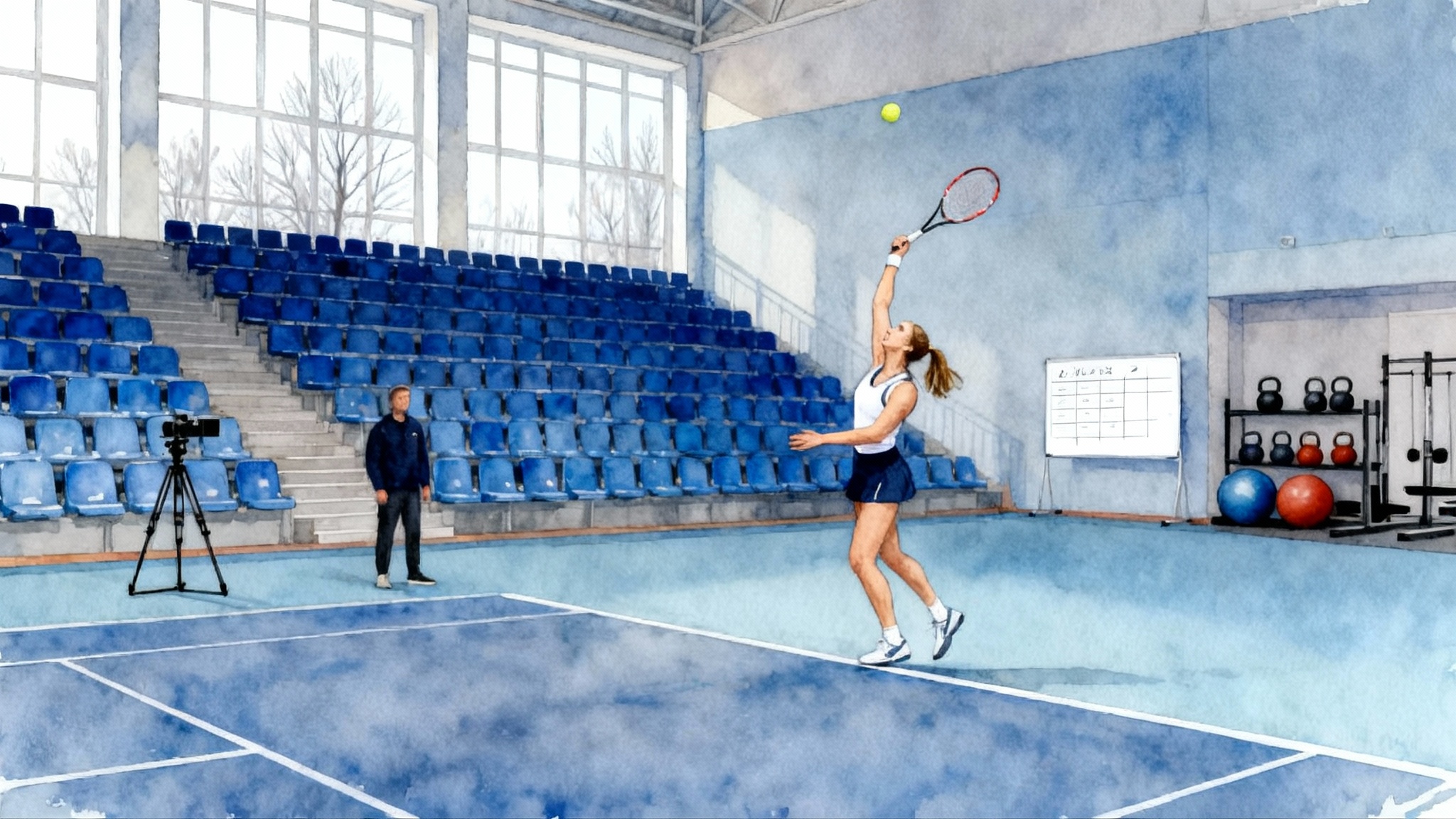
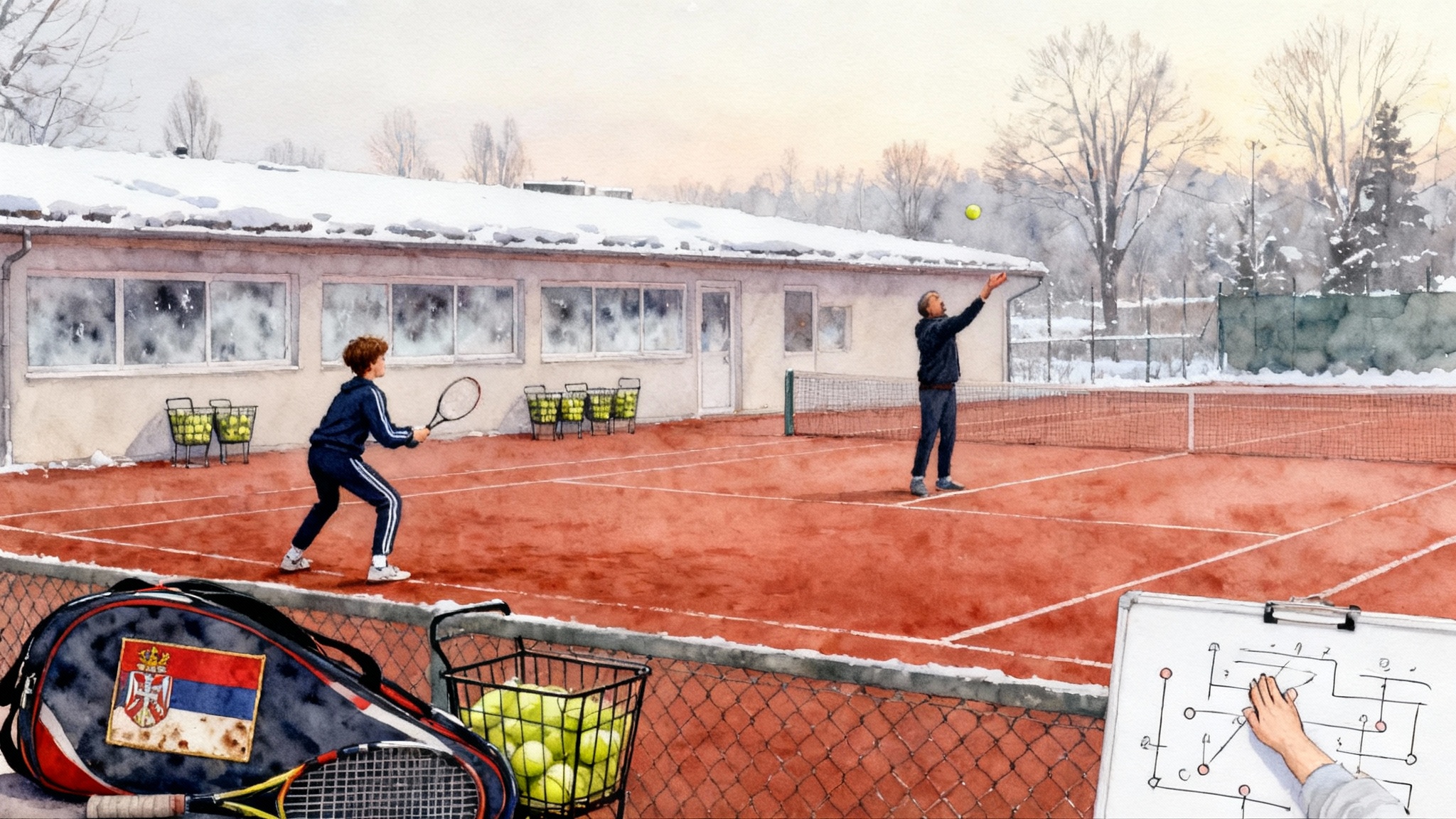
Two ideas sit at the heart of JTCC’s coaching model. First, one voice leads while several support. Second, the voice does not reset each year. For Tiafoe, the continuity began when he was a young player working day after day with a coach who knew his strokes, his temperament, and his life outside the court. That coach could sequence development in a way that felt coherent. Technical changes came in winter blocks, not the week before nationals. Competition blocks were built around surfaces and opponents that stress tested the latest improvements. Video from one month was referenced the next. The player did not start from zero with each new instructor.
Continuity compounds like interest. A slice backhand developed at age 12 becomes a defensive neutralizer at 14 and a surprising approach shot at 17. A serve target routine learned at 13 becomes a patterning habit at 15 and a scoreboard lever in Futures events at 18. None of these gains are spectacular in isolation. Together they carry a player from good to dependable.
For families, continuity means three actions:
- Assign one lead coach who owns the yearly plan and speaks with parents after each block.
- Document two or three technical priorities per season and do not add new ones until there is evidence of progress.
- Hold monthly review sessions that compare match-video clips against practice goals. Keep a living document. Avoid resets.
Pillar 2: Access through scholarships and support
Talent needs court time, tournament starts, and recovery days. Those cost money. JTCC’s model includes need-based scholarships and community partnership that lower the barrier to sustained training. That mattered for Tiafoe, whose family devoted time and labor to the center while the center opened doors to training and competition. The mission is public. JTCC describes its player pathway and community focus on its official Junior Tennis Champions Center programs.
Access is not charity. It is infrastructure. More daily touches with the ball reduce the randomness of performance. More tournament starts reveal patterns you can train. More recovery days protect the body from overuse. Scholarships and support turn sporadic opportunities into a repeatable week.
For families outside any scholarship system, access can be built by making a budget-driven, high-leverage calendar. Spend on what multiplies development. Save on what does not. Examples include pooling resources for group travel to tournaments, sharing video equipment, and negotiating off-peak court times. The goal is to protect continuity and match volume without burning out the family’s finances. Community-rooted programs such as the Milwaukee Tennis & Education Foundation model show how access and mission translate into real match volume.
Pillar 3: Match-play heavy training
Practice wins look tidy. Real matches look messy. JTCC made match play the center of the curriculum to teach decision making under pressure. Tiafoe’s creativity and resilience did not appear from thin air. They were rehearsed in hundreds of practice sets and tiebreakers where score mattered and consequences felt real.
The weekly pattern often looked like this:
- Two technical days with focused drilling on serve targets, first-strike footwork, and recovery steps.
- Two match days with a 3 to 1 rally-to-point ratio, meaning every drill ends in a live point.
- One pressure day that bakes in scoreboard stress, such as starting every game at 30 to 30, playing no-ad across sets, or running a first to 15 super tiebreak with consequences for errors.
Points shape identity. They expose a player’s default choices when the mind speeds up and the hands get tight. For Tiafoe, those repetitions grew a style that could absorb pace, flip defense into offense, and ride the crowd without losing the plan.
The JTCC pathway in steps
Below is a step-by-step pathway that mirrors what JTCC modeled for Tiafoe and other top juniors. Adjust ages to suit your player’s growth. The sequence and purpose matter more than the calendar.
- Love the place, not just the sport, ages 7 to 10
- Objective: build a daily tennis habit that feels like a second home.
- How: two to four short sessions per week that mix games with fundamental technique, plus one unstructured hour where the child plays mini sets with friends. End every session with serve practice.
- Measurement: simple skills bingo such as 20 out of 20 tosses within a landing circle, 8 of 10 serves to the backhand side, 10 neutral rallies of 10 balls.
- Foundations plus movement, ages 10 to 12
- Objective: groove movement patterns and a repeatable serve.
- How: three structured sessions per week with one match-play day. Add a basic strength circuit that trains landing mechanics, trunk control, and shoulder stability.
- Measurement: track serve percentage in practice sets, rally balls per point, and footwork errors per set. Introduce a simple pre-point routine.
- Local competition blocks, ages 12 to 13
- Objective: learn to compete without travel friction.
- How: four to six weeks with two local events. Treat them like labs. Between events, run pressure drills that target what broke down. Keep travel to a one hour radius when possible.
- Measurement: produce a one page tournament report after each event, highlighting serve plus one patterns and return plus one responses.
- Regional stretch and surface exposure, ages 13 to 14
- Objective: build the ability to win three matches in two days.
- How: six to eight tournaments per year across different surfaces, mixed with school team or club league play for volume. Add a second weekly match-play day.
- Measurement: chart patterns on 20 points per match. Track percentage of points started in neutral, attack, or defend, and how often each state turns into a hold or a break.
- National readiness and physical base, ages 14 to 15
- Objective: compete at national level without losing weekly rhythm.
- How: two national events per quarter. Use the rest of the month to rebuild base fitness. Plan strength blocks after travel.
- Measurement: monitor energy availability with a simple wellness check in the morning, track match load, and note between point heart rate recovery when tech allows.
- Junior majors and pro introductions, ages 15 to 17
- Objective: collect wins at high level junior events and taste pro Futures.
- How: schedule one or two junior majors and insert one Futures qualifying event to learn. Keep training weeks intact. Make sure every pro trip has a practice partner and a coach.
- Measurement: set clear goals for serve points won, return games to 30 to 30, and break chances created. Use two video clips per match to confirm progress on technical priorities.
- Dual track decision point, ages 17 to 18
- Objective: choose between college first or direct pro.
- How: hold an honest review of ranking trajectory, physical maturity, preferred learning environment, and family resources. Ask whether the player thrives with team structure or with a travel-first lifestyle.
- Measurement: expect competitiveness in Futures main draws and a plan to enter Challenger qualifying by year two if turning pro. If college bound, target line one impact by the spring semester.
- Pro consolidation, ages 18 to 21
- Objective: collect enough wins to live in the top 300 to 200 and graduate to Challenger fields, then top 100.
- How: block the calendar into four to six week arcs with recovery weeks in between. Work backward from entry deadlines. Travel with a hitting partner whenever possible. Review match film every Sunday.
- Measurement: focus on hold percentage, break percentage, and first serve in percentage before obsessing over ranking points. Points come from performance drivers.
Coach continuity in practice
Continuity is not code for a closed circle. JTCC made a lead coach responsible for Tiafoe’s arc, then invited specialists at the right time. A serve specialist might step in for a two week block with clear objectives. A sports psychologist might teach between point routines during preseason. The lead coach integrates the new tools into daily training so the player does not juggle competing messages.
For families, build a small team around one plan. Share a one page document before any short-term work begins. It should list two technical keys, two tactical patterns, and two mental habits. If someone proposes a new change, it must replace an old one. This keeps attention scarce and progress visible.
Scholarships and resourcefulness
Tiafoe’s story reminds us that opportunity is not only about money. It is about schedule control and community. JTCC’s scholarship structure helped protect his training week and tournament access. If you do not have a formal scholarship, you can still borrow the logic.
- Use group sessions for volume and save one-on-one time for the hardest technical changes.
- Share travel costs with other families by building mini touring groups for regional events.
- Ask local clubs for off-peak court time in exchange for mentoring younger players or helping with clinics.
The goal is to make the weekly plan predictable. Predictability reduces stress and frees mental bandwidth for competition.
Match play as a curriculum
Match-play heavy training is not unmanaged scrimmage. It is designed stress. Below are three formats that build competitive habits.
- The first strike set
- Play one set to 6 with no-ad scoring. Every rally must start with a designated serve target and a scripted first shot. The goal is to learn patterns, not to avoid mistakes.
- The survival tiebreak
- Play to 15 points. After every three points, the returning player starts the next point down 0 to 30. This forces the server to protect leads and the returner to find pressure returns.
- The red zone game
- Every ball inside the baseline must be attacked crosscourt for two shots before you can change direction. This builds patience and purposeful aggression.
Record scores. Keep a simple chart of percentage of points won when following the plan. Over time, that number predictably grows. Competitive identity hardens.
Building your family plan
Families often ask where to start. Use this three part template to build a plan for the next 12 weeks.
- Skills block
- Choose two technical keys. For example, a higher contact point on the serve and a more stable backhand wrist at impact.
- Choose one tactical pattern on serve plus one and one on return plus one.
- Define one between point habit. Examples include one breath, one keyword, one look to the box.
- Competition block
- Schedule two events in a four week stretch that match the current goals. If you are building serve plus one aggression, pick hard courts with lower bounces. If you are improving defense, sprinkle in a clay event.
- Protect the week before and after each event. The week before is for pattern rehearsal and live points. The week after is for recovery and video review.
- Review block
- After each two event sequence, run a 60 minute review with coach, player, and parent. Confirm whether the technical keys showed up under pressure. Keep what is working. Replace what is not.
Sample competition calendars
Below are sample calendars for three stages. Adjust for school schedules and travel realities. The purpose is balance between building skills and testing them.
U12 example, January to March
- Week 1 to 2: training with one practice set per week
- Week 3: local one day event
- Week 4: recovery and review
- Week 5 to 6: training with pressure drills
- Week 7: local two day event
- Week 8: light training and fun doubles
- Week 9: regional event within one hour drive
- Week 10 to 12: rebuild skills and add a strength intro block
U14 example, April to June
- Week 1: regional event
- Week 2: review and technical block
- Week 3: training with two match-play days
- Week 4: school team matches for volume
- Week 5: national qualifier
- Week 6: recovery and movement skills focus
- Week 7: regional event on a different surface
- Week 8: video review and serve upgrade
- Week 9: training with practice tiebreaks
- Week 10: national event or strong regional
- Week 11 to 12: rebuild base and address any soreness
U16 to U18 example, July to September
- Week 1 to 2: training plus one money tournament or open event for adult matches
- Week 3: junior major or national
- Week 4: recovery and film review
- Week 5: Futures qualifying attempt if ready, otherwise top regional
- Week 6: training with heavy serve and return focus
- Week 7: second Futures attempt or strong open event
- Week 8: rest, mobility, and school prep
- Week 9 to 10: block aimed at a September national event
- Week 11 to 12: compete, then reset
Timing the transition to pro
There is no universal timetable. Tiafoe moved quickly because match data and coaching observation said he could win points against pros and recover day after day. Families can use three signal categories to decide when to chase pro starts.
- Performance signals
- In practice sets against top college players or established adults, the player holds serve near 75 percent and creates break chances in at least half of return games. These are not absolutes, but they indicate patterns that scale.
- Physical signals
- The player repeats a best effort match on back to back days without sharp drops in movement speed. Recovery between points stays stable. Cramping is rare and managed by routine.
- Psychological signals
- The player shows tactical discipline in tiebreaks, accepts uncomfortable scorelines, and can regroup after a bad service game within two points. Coaches see the routine hold under pressure.
A smart transition uses trial runs. Try one or two Futures events while keeping a full junior or college slate. If the player competes well, expand. If not, come home and train the specific gaps you saw under real fire.
What parents can borrow from JTCC today
- Protect a lead coach and write down the plan. Avoid system resets.
- Spend on match volume and recovery. Save on nonessential shiny extras.
- Turn practice into points. A 3 to 1 rally-to-point ratio ensures skill transfer.
- Build competition blocks that test the latest skills, then rest and review.
- Treat scholarships and community support as development infrastructure, not as favors.
A note on style and identity
Tiafoe’s game is explosive and expressive. That identity grew out of a training culture that allowed creativity while insisting on standards. JTCC did not sand down his flair. It taught him when to use it and how to recover when it fails. Families can adopt the same spirit. Encourage a player’s gifts. Then build a framework that makes those gifts reliable at 5 to 5 and deuce.
The bigger lesson for academies and coaches
A great academy is not a collection of courts. It is a sequence of choices that make progress likely. JTCC made those choices in a way that fit its mission and its community. It invested in relationships that lasted years. It used scholarships to protect the training week. It treated match play as the teacher and results as feedback, not as identity. The product was a player who could stand across from the best in the world and trust the work.
Conclusion: From College Park to any court
Frances Tiafoe’s story began in a place that felt like home, with coaches who stayed, doors that opened, and a scoreboard that mattered every day. The Junior Tennis Champions Center shaped his path not with slogans but with structure. If you are building a pathway for a junior today, borrow that structure. Choose continuity over novelty, access over polish, and match play over perfect looking drills. Block your season, measure what repeats, and fix what fails under pressure. Do this for a year, then another. Small advantages compound. That is how a kid who grew up at a tennis center can become a contender on the biggest courts in the world.