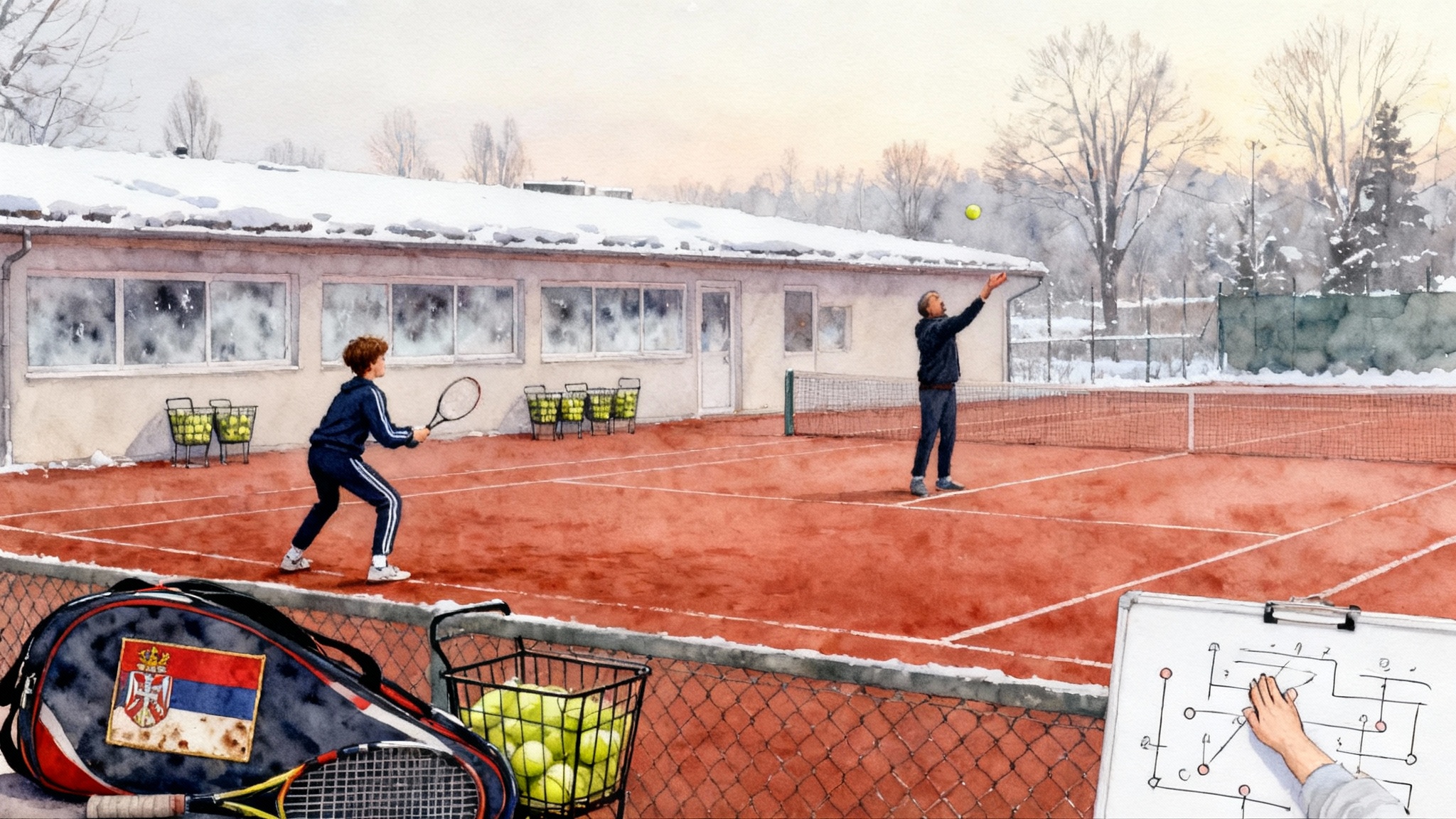
Master the Tennis Serve: Technique, Drills, and Pressure Proofing
Build a reliable, fast, and accurate tennis serve with science-backed checkpoints, court-tested drills, and pressure tools. Learn the kinetic chain, toss control, spin production, and match routines that hold up under stress.
 Tommy
Tommy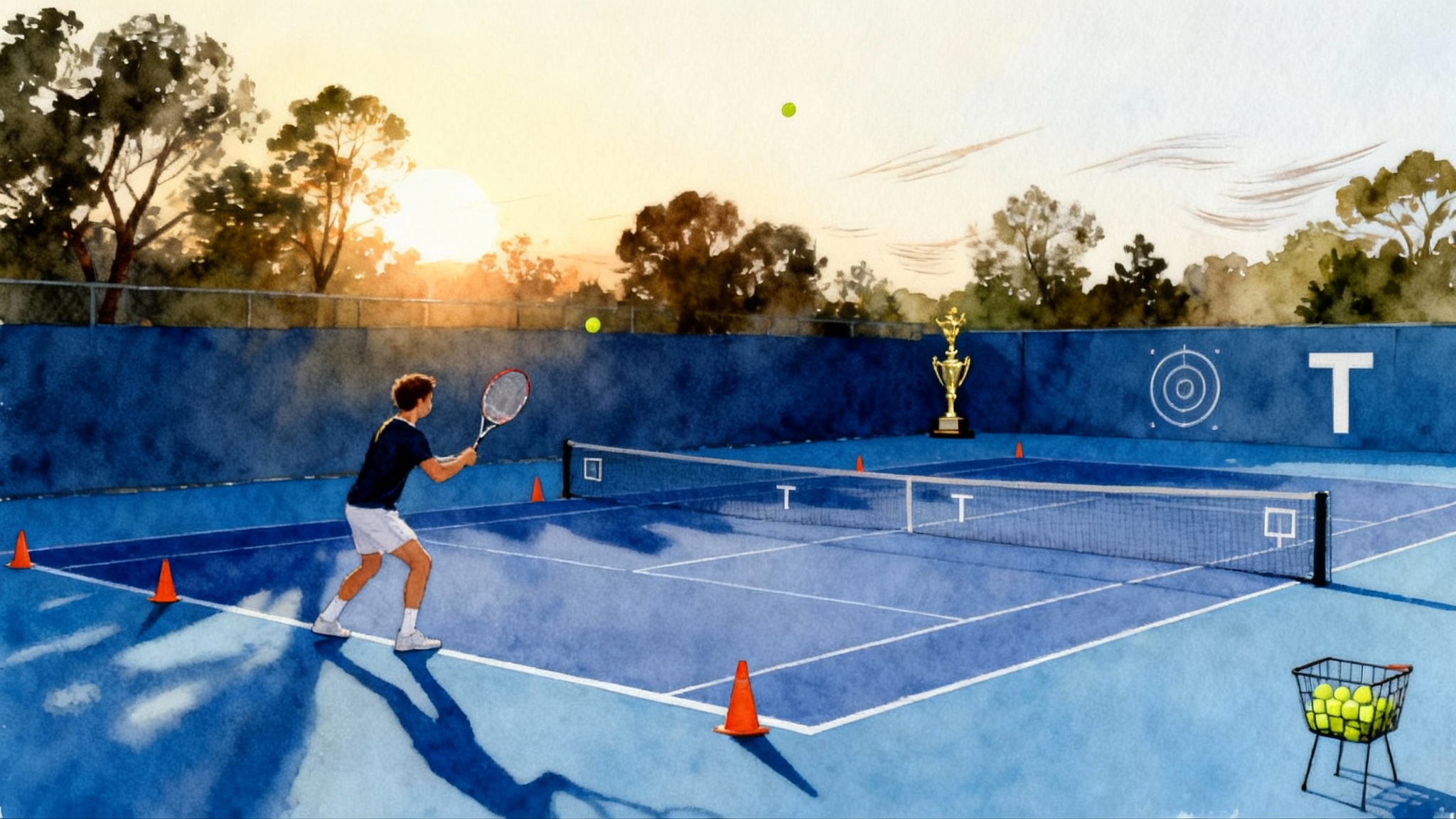
Why the serve decides more than you think
The serve is the only shot you start on your terms. No rally, no scramble, just you, the ball, and a plan. Players who shape a dependable serve gain easy points, protect second serves, and script first-strike patterns that control the next ball. You do not need a cannon to win more service games. You need a chain that fires in order, a toss that repeats, and a set of drills that make pressure feel familiar.
Biomechanics research is clear on the blueprint. Energy travels from the ground, through the legs, hips, trunk, shoulder, elbow, and finally the wrist, a sequence coaches call the kinetic chain. When the order is right, you create racquet head speed without muscling the ball, which protects your shoulder and boosts consistency. For a coach’s-eye overview, see the ITF serve biomechanics overview. To see how elite academies convert this science into match wins, study how Equelite built Alcaraz and how Piatti shaped Sinner.
In this guide, you will learn the key positions and how to practice them. You will also learn how to train your serve for pressure with scoring games, routines, and targets that separate practice from real improvement.
Your foundation: stance, grip, and alignment
Start with a base that lets the chain fire.
- Stance: For most players, a platform stance is the simplest way to build stability. Feet about shoulder width, front foot aimed at the right net post for right-handers, left post for left-handers. A pinpoint stance can add lift, but only after you master balance.
- Grip: Use a continental grip. Imagine holding the racquet like a hammer so that the bevel that forms a V is on top. The continental grip makes spin and pronation natural, and protects the wrist at contact.
- Alignment: Think of your body as a box. Hips and shoulders start side-on to the net, like a closed door. As you swing, the door opens. Start closed, finish square.
Coach cue: Draw a chalk line from your back foot to the baseline edge. If your back foot drifts during the toss, the chain will fight balance later in the motion.
The toss that repeats
A good toss is not high or low in the abstract. It is in the right place for the serve you are trying to hit.
- Flat serve: Toss slightly forward and just to the hitting-shoulder side. Imagine placing the ball above the right edge of the hitting shoulder for right-handers. Height just enough to extend and strike at full reach.
- Slice serve: Same height, but the ball is a touch more to the right for right-handers, which lets you brush across the back of the ball.
- Kick serve: Toss a little more over your head and slightly to the non-dominant side, which opens the path to brush up the back of the ball.
Toss drill: Hold the racquet in your non-dominant hand, toss five balls in a row, and let them drop. They should land in a dinner-plate sized area. If they wander, slow down, keep your tossing arm straight longer, and release at eyebrow height.
The kinetic chain, step by step
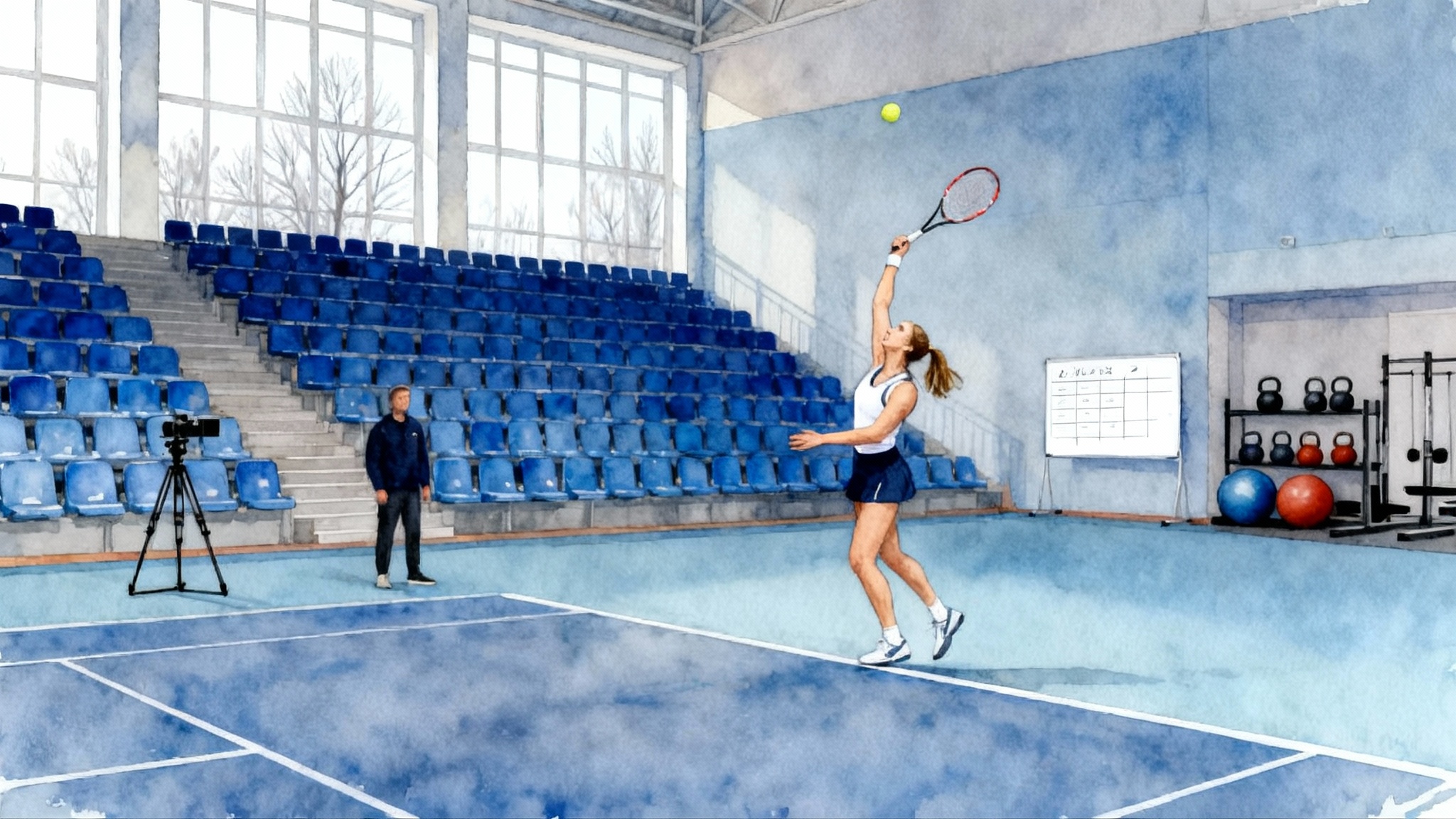
Use these checkpoints to feel the sequence, then film from the side and from behind the server to verify.
- Load: Knees flex as the tossing arm rises. Hips and chest stay side-on. Weight sits mostly on the back leg but not exclusively. You should feel pressure through the inside edge of the back foot.
- Trophy position: Tossing arm extended up, hitting elbow bent, racquet head pointing down behind you, shoulders tilted with the front shoulder higher. If your tossing arm collapses early, your timing window shrinks.
- Drop and turn: Racquet head drops behind your back, shoulders and hips begin to unwind. Keep your chest lifting as your legs extend. This is the moment where many players rush. Let the legs drive first.
- External to internal rotation at the shoulder: As your trunk rotates, your hitting arm accelerates into contact. Think of reaching up to the ball, not forward at it.
- Pronation through contact: Forearm rotates so the strings face the target and then continue to rotate across the ball. This is not a wrist flick. It is a forearm and shoulder action powered by the body turn.
- Landing and recovery: Land inside the court on the front foot with balance, racquet finishing on the opposite side of your body. Flow forward to be ready for the next shot.
Troubleshooting cue: If your serve feels weak, check the order. Legs first, then hips and trunk, then arm. If your shoulder aches, reduce arm effort and focus on leg drive and trunk rotation.
Spin is your safety net
Spin raises your margin over the net and brings the ball down faster. It also lets you aim near lines with less risk. Think in two families.
- Slice: Brush across the back and slightly to the side of the ball, like turning a doorknob as your arm pronates. Aim for the sideline on the deuce side for right-handers, which pulls the returner wide.
- Kick: Brush up the back of the ball. Toss a little farther back, get your chest up to the sky, and feel the ball roll off the strings. On the ad side for right-handers, this serve climbs into the backhand of many opponents.
Do not chase extreme spin on day one. Start with moderate spin that you can land eight out of ten. Stability first, upward speed second.
Target map that teaches accuracy
Set up four cones or flat markers in the service boxes:
- Deuce wide
- Deuce body
- Ad wide
- Ad T
Warmup game: Hit three serves to each cone, then rotate. Track how many land within one racquet length of the cone. Your first benchmark is ten out of twelve. When you hit it, shrink the targets.
Progression: Add a deep target by placing a towel one meter inside the baseline. Serves that cross the service line near the target tend to land deeper and rush the return.
Ten serving drills that actually move the needle
- Knees-to-net rhythm: Stand on the service line, toss and serve with half swings to feel smooth extension. Goal is ten in a row to the box without forcing speed.
- Tall toss, slow motion: Exaggerate a high toss and move through the motion at half speed. Focus on a straight tossing arm and a pause at trophy. Five sets of five.
- Back fence drop: Start with the racquet touching your back like a backpack strap. Drop and swing without forcing the elbow up. This encourages a natural racquet drop. Fifteen reps.
- Toe tap timing: Tap the front toe as your tossing arm reaches its peak. Serve on the second tap. It sets a rhythm and limits rushing.
- Two-cone accuracy: Place cones at ad T and deuce wide. Alternate targets with no second tries. Keep a score out of 20. Anything above 14 is match ready.
- Serve plus one forehand: Call your serve target, then hit an aggressive first ball to the open court. This teaches patterns. Ten rounds per side.
- Second serve ladder: Start on the service line. Land five kick serves, step back one stride after each success. If you miss twice in a row, step forward. Climb to the baseline and hold there for ten in a row.
- Pressure pockets: Put four balls in your pocket. You must win three of four serves to each target to move on. If not, reset. This mimics the feeling of holding a game.
- Box-to-box cadence: From the ad court, hit a slice up the T, then immediately a kick to the deuce court. Repeat for ten cycles. This blends spins and footwork.
- Breathing and routine reps: Before each serve, inhale as you bounce the ball, exhale as you start the motion. Keep the same count every time. Film a set and check that your routine never drifts. For more high-performance routine models, see how Mouratoglou accelerated Gauff.
A routine that makes pressure feel familiar
In a match, routines reduce noise. Build yours in three parts.
- Between points: Step behind the baseline. Face the back fence for a moment, breathe, and let the last point go. Turn to the court with clear intent.
- Pre-serve: Bounce the ball the same number of times. Set your feet. See the exact toss location and the arc to the target. Name the serve and the next ball plan.
- Commitment: Once you choose, commit. If the toss is poor, catch it. A reset is better than a rushed swing.
Benchmark: When your heart rate climbs, your routine should anchor your timing. If you catch two tosses in a row, step back, reset your breath, and start again.
Serve patterns that win free points
A good serve is not the end of the point. It is the start of a pattern.
- Deuce wide slice, forehand to open court: Pull the returner off the court, then attack the space.
- Deuce body, backhand to backhand rally: Jam the returner to force a short ball to your forehand wing.
- Ad T, backhand change-up: Surprise with a flat or slice up the T, then change direction early with your backhand down the line.
- Ad kick to the shoulder, forehand inside in: Move them back and left for right-handers, then take the first ball early to the ad corner.
Write two favorite patterns per side on your practice card. Rehearse them in serve plus one drills until they are automatic.
Second serve you trust
The best second serve is the one you can land seven or eight out of ten with planned shape. For most players that is a kick or a high-safety slice. Work from close range and gradually back up. Commit to a target window that is two rackets above the net. If fear shows up, exaggerate brush and height. The longer the ball stays on your strings, the more control you feel.
A helpful technical refresher on placement and spin is the USTA serve fundamentals guide from the United States Tennis Association. Use it to cross-check your checkpoints and cues.
Equipment and setup that help, not hurt
- Racquet weight: A frame that is too light can tempt you to swing only with the arm. A frame that is too heavy can stall your acceleration. If your shoulder feels taxed on serves, test a frame 10 to 15 grams lighter with a slightly more head light balance.
- String and tension: Polyester can provide control on fast swings, but many players serve better with a softer hybrid or multifilament at a midrange tension. Softer strings often help you feel the ball for spin serves.
- Grip health: Replace overgrips often. A fresh grip reduces squeeze and helps your wrist stay loose through pronation.
- Targets and markers: Keep four flat cones and a roll of painter’s tape in your bag. Tape creates clear lanes that improve focus on windy days.
What to track each week
- First serve percentage: Aim for 60 percent or better without babysitting the ball.
- Second serve double faults: Keep them under two per set at the club level. If you exceed that, spend a week on the second serve ladder and high-net-window drills.
- Serve locations: Use a notebook or a notes app. Record which targets paid off and which returns gave you trouble.
- Speed and shape: If you have a radar device, measure peak and average, not just peak. If not, use depth and bounce height as your proxies.
A four-week serve plan
Week 1: Build your base
- Three sessions
- 30 minutes technique, 30 minutes accuracy
- Drills: knees-to-net, tall toss, two-cone accuracy
- Goal: Trophy position that looks the same every rep, ten of twelve to big targets
Week 2: Add spin and second serve trust
- Three sessions
- 25 minutes kick and slice mechanics, 35 minutes second serve ladder
- Goal: Land eight of ten second serves to a high window
Week 3: Patterns and serve plus one
- Three sessions
- 20 minutes accuracy, 40 minutes serve plus one patterns
- Goal: Name your pattern before each serve and hit it at least six of ten times
Week 4: Pressure and match play
- Two sessions practice, one session match play
- 20 minutes routine work, 40 minutes pressure pockets and game scoring
- Goal: Hold serve four of five service games against a similar opponent
Common problems and fast fixes
- Toss drifts right for right-handers: Keep the tossing palm facing the net longer. Release at eyebrow height and imagine sliding the ball up a wall.
- No racquet drop: Relax your grip to a five out of ten. Start your swing slower and let the elbow lead as the racquet head falls.
- Netting flat serves: Raise your contact point by aiming at a window above the net. Add a touch of spin to lift the arc.
- Long on second serves: Reduce forward toss, increase brush, and target deeper within the service box instead of barely over the line.
- Shoulder pinch: Check that your chest rises through the hit. If the chest collapses forward, the shoulder joint carries too much load.
How to coach this to juniors and adults
- Juniors: Teach the continental grip early and protect the shoulder with smaller buckets of reps. Use targets and games to make technique stick. Reward the routine, not just the speed.
- Adult beginners: Start close to the net to build contact confidence. Progress distance only when the motion stays smooth. Celebrate spin serves that land deep, even if speed is modest.
- Competitive adults: Use film and clear metrics. Pick two patterns per side, and rehearse under scoring rules to avoid random practice.
A simple test to see if you are ready
Set up a twelve-serve challenge. Four serves deuce wide, four ad T, four body targets. Two attempts per target. You pass if you land eight or more without slowing down your rhythm. If you pass, add a layer of pressure by letting a partner call the target randomly.
Bring it together
A great serve feels like a whip that wakes up from the ground. It starts with a still base, a clean toss, and a body that turns like a spring. It grows with spin that raises your margin, targets that sharpen intent, and patterns that script your next ball. Most of all, it lasts under pressure when your routine is simple and trusted. Use the map in this guide, film your sessions, and keep score. The result is a serve that you do not hope will show up. It is a serve you can count on.