Sutton, Weybridge and the NTC: How Academies Built Jack Draper
 Tommy
Tommy
The club-to-NTC pipeline, in real life
Jack Draper’s 2024 season looked like a jump cut on TV, but on the ground it was a long, layered build that began at a local club, deepened inside a small-group academy, and then scaled up with federation sports science at the National Tennis Centre in Roehampton. This is the United Kingdom’s club-to-NTC pipeline working as intended. It shows families a practical route that does not require magic, only good environments joined at the right times.
Sutton: the first court, the first habits
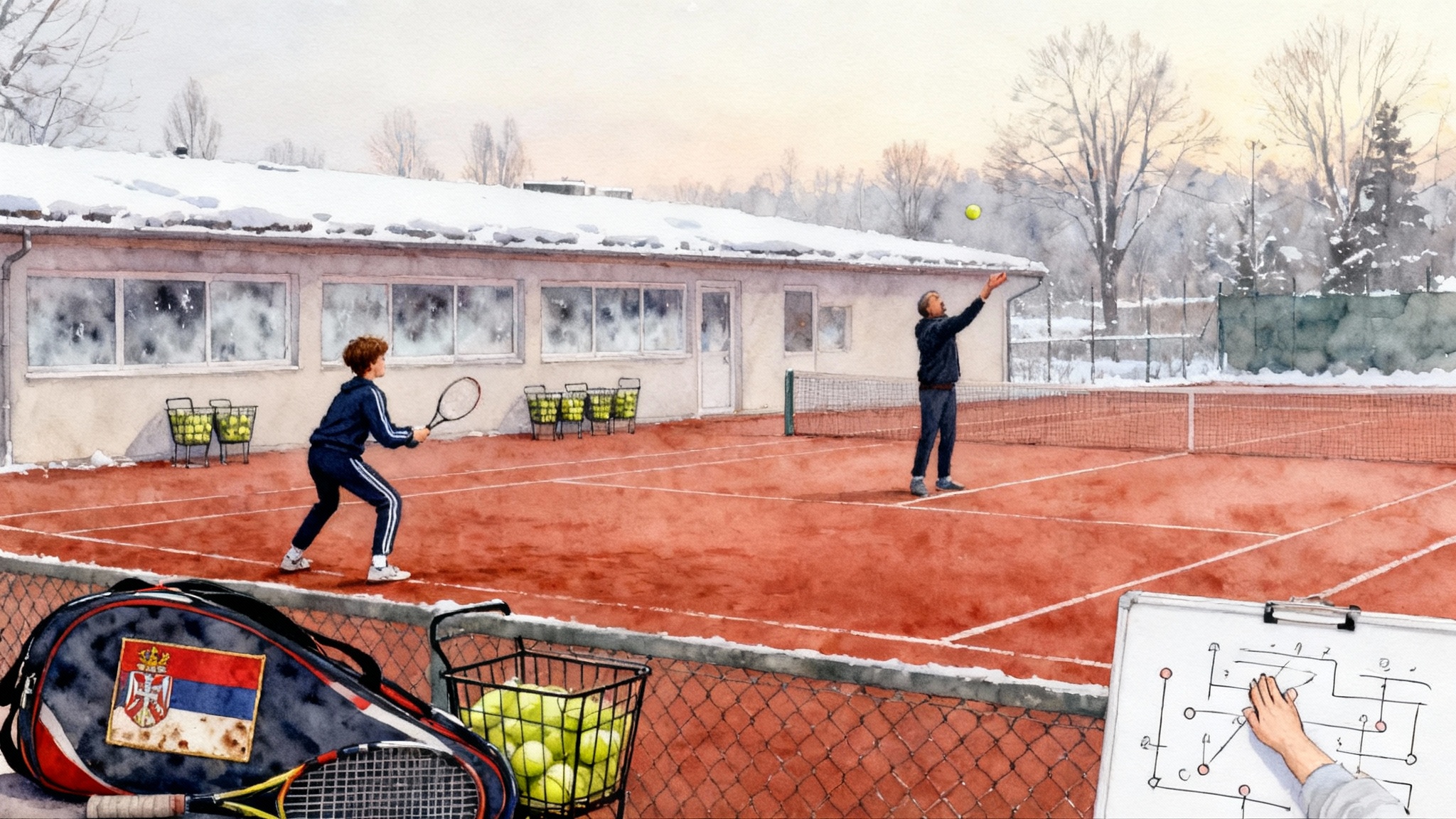
Draper’s story begins at Sutton Tennis and Squash Club in South London. His mother, Nicky, coached there. Sutton was not a high-performance lab. It was homey and close by, which meant two priceless things for a six-year-old: frequent contact with a racket and a backboard that never says no. Contemporary reporting notes he started at Sutton and soon connected with coach Justin Sherring while still in primary school (BBC profile with early-years detail).
At Sutton the wins were small and steady. Think of a savings account that grows through deposits, not jackpots. A child who can get 200 quality ball touches in 15 minutes on a wall session builds timing, feel, and confidence. Multiply that by months and the return compounds.
Weybridge: small groups, big gains
From Sutton, Draper’s tennis entered its second stage at Weybridge Tennis Academy with Justin Sherring, where he spent roughly a decade. What changes when a player moves to a focused academy setting?
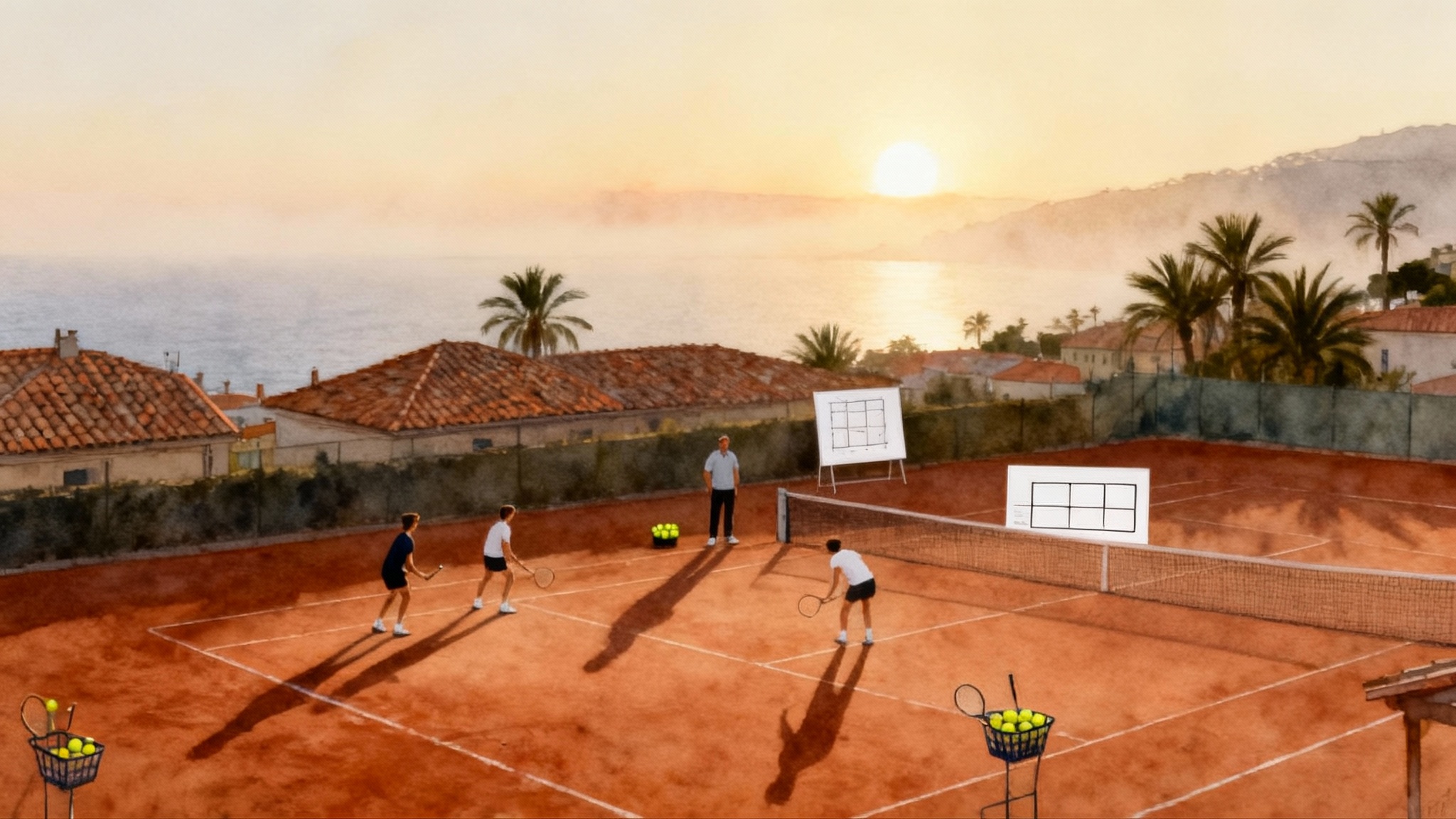
- Group size shrinks. Instead of a queue of eight kids, you get pods of two to four. That raises ball contacts per minute and the number of decisions made under mild pressure.
- Practice gets purposeful. Sessions target patterns like serve plus one, return plus one, and neutral-to-offense transitions. The ratio of balls hit with intention rises.
- Peer quality increases. Training with one or two slightly better hitters forces adaptation without crushing confidence.
A useful metaphor: big club programs are like public libraries. You can read widely and cheaply. A good academy is a quiet research room with a mentor at your shoulder. Weybridge provided that room. Sherring is known for nuts-and-bolts progress, not slogans. Routines were simple and repeatable: first-serve percentage and patterns, plus the bread-and-butter lefty forehand runaround in the ad court that now shows up whenever Draper wants a hold under pressure. This small-group discipline mirrors Piatti’s small-group model.
Concrete examples families can copy from the Weybridge model:
- Three-ball pattern ladders. Serve wide ad court, forehand to open court, recover to middle. Repeat for 10 minutes, switch targets, then add a live point on ball four.
- Return depth games. Returns must land beyond a cone line. Miss short, you sprint to the net post and back. This pairs skill with consequence and keeps juniors honest, similar to Mouratoglou’s pattern-first training.
- Mixed-intensity blocks. Twenty minutes of high-tempo feeds, then ten minutes of live points with strict constraints, then five minutes of serves to hit a simple target. Kids leave with both reps and the memory of winning patterns.
Roehampton: what the federation adds
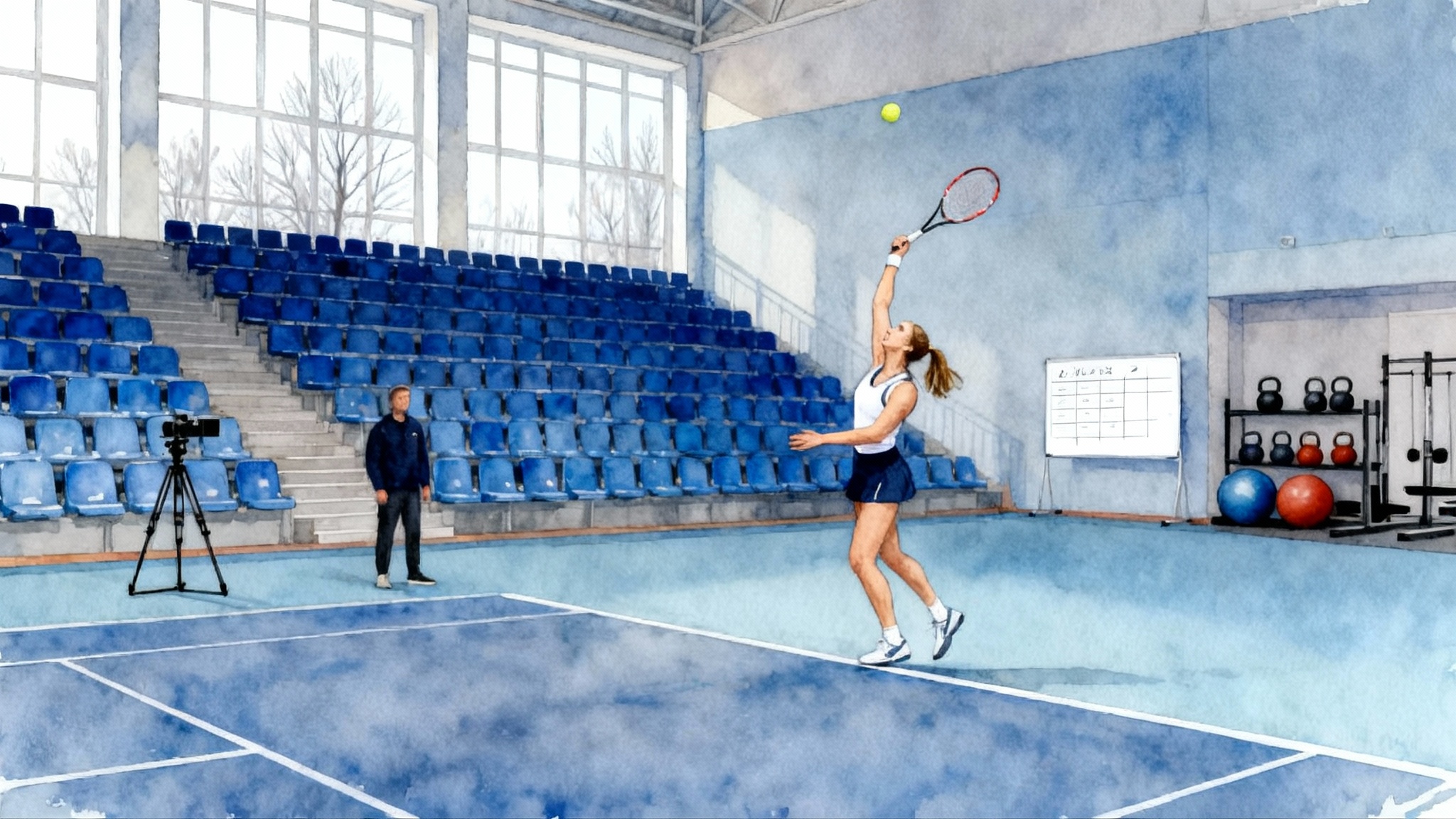
The National Tennis Centre is where the pipeline scales. It adds specialization that local clubs and academies cannot match year-round: strength and conditioning, medical support, rehab, performance analysis, psychology, nutrition, and access to multiple court surfaces that mirror tour conditions. The LTA outlines this suite of services and access criteria for elite players on its site (LTA National Tennis Centre overview).
Why it matters:
- Load monitoring and screening. Consistent movement screening and force-plate style testing reduce guesswork about when to push and when to back off. Avoiding one soft-tissue setback can preserve an entire season’s momentum.
- Surface specificity. Training weeks that shift from indoor hard to clay to grass in the same complex let a team prepare for tour transitions without wasting travel days.
- Video and analytics. Clip-based feedback accelerates correction. If a player’s second serve dips in speed mid-set, that is not a feeling. It is a measurable drop a coach can solve with a cue or a grip tweak.
For Draper, this meant the academy-built base could be hardened into tour durability. The lefty serve became not just fast but sustainable across long weeks. The forehand got heavier without losing shape late in matches. And rehab blocks could be anchored by a multidisciplinary team that already knew his history.
The 2024 inflection points, with dates
The results that made the path visible:
- June 16, 2024: first ATP title in Stuttgart, on grass. The match to clinch it was a three-setter decided by a key tie-break. Title number one mattered for more than the trophy. It also validated a scheduling choice to open grass season early and build confidence before Queen’s and Wimbledon.
- June 20, 2024: a signature win at Queen’s Club over the reigning Wimbledon champion, snapping a long grass-court winning streak from across the net. Stuttgart provided momentum, Queen’s provided a stress test.
- Late October 2024: a second ATP title indoors at the ATP 500 level. After a wobble in set two of the final he steadied and closed in straights. That was the season’s confirmation signal: a 250 on grass and then a 500 indoors, two different conditions powered by the same underlying base.
If you zoom out, the pace of these results resembles a well-designed training plan. Each peak has a runway and a taper. The wins we notice in June and October are often purchased in January and March by the parts of training no one posts on social media.
The quiet driver: post-injury scheduling discipline
Draper’s team made choices after prior injuries that most families can understand and replicate at their scale:
- Fewer consecutive weeks. Instead of stacking four or five tournaments, they often built two-week blocks with a training and recovery window after. Juniors can do the same by resisting the urge to enter every available event.
- Early surface shift. Opening grass season at a smaller event like Stuttgart provided a controlled on-ramp. Juniors can copy this by playing a lower-tier tournament when switching surfaces. Confidence travels.
- Targeted entries with clear aims. Smaller events for match volume, Queen’s for elite exposure, majors for physical and tactical validation, and indoor 500s for ranking points against top fields. Juniors should write the aim on paper for each event week: volume, exposure, or points.
- Non-negotiable training blocks. When soreness appears, the choice is not between playing or doing nothing. It is often between playing and training differently. That means movement work, second-serve patterns, return depth, and cardio that does not load the irritated area. Families can borrow this mindset to keep progress moving during rest periods.
What families can copy right now
You do not need a national center to apply the principles that powered Draper’s year. Start small and specific:
-
Build a pod
Action: Form a training pod of two to four players at similar level and height. Meet twice a week in addition to club practices.
Why: More touches per minute, more decisions, and more peer demand without overwhelming a young player.
How: Ask one coach to set a 60-minute plan with three segments: serve plus one patterns, return plus one depth games, and 15 minutes of live points with constraints. -
Use constraints, not lectures
Action: Instead of saying “hit deeper,” create a rule that a point only starts after a ball lands beyond a cone line.
Why: Kids feel the task instead of hearing it. Learning speeds up.
How: Two cones at three feet inside the baseline. Miss short, you sprint to the net post and back. Keep score. -
Track two numbers per week
Action: Pick one technical metric and one physical metric to log every week.
Why: Progress beats perfection. Two numbers keep it practical.
How: Technical can be first-serve percentage out of 50 balls. Physical can be a three-minute shuttle count. Write them in a shared note with the coach. -
Plan mini peaks and tapers
Action: Circle two junior events in a 10-week span. Build two weeks of training into each, then play, then rest two or three days.
Why: Performance improves when stress and recovery are balanced.
How: In training weeks, raise volume and lower stress. In event weeks, cut volume by a third and sharpen pattern work. -
Create a home sports-science kit
Action: No lab needed. Use a simple heart-rate monitor, a jump-test tape mark on a wall, and a short readiness questionnaire in the morning.
Why: Data beats guesswork for fatigue and growth tracking.
How: Three questions at wake-up scored one to five: sleep quality, muscle soreness, mood. If the sum falls, cut intensity that day. -
Give injury a job
Action: When a wrist or shoulder is irritated, assign a skill to the off-arm, to footwork, or to the eyes.
Why: Momentum stays alive. Athletes who keep improving something during rehab return faster and more confident.
How: Design 15-minute blocks around split-step timing, first step speed, and return recognition without hitting.
For academies: partnering with a federation center
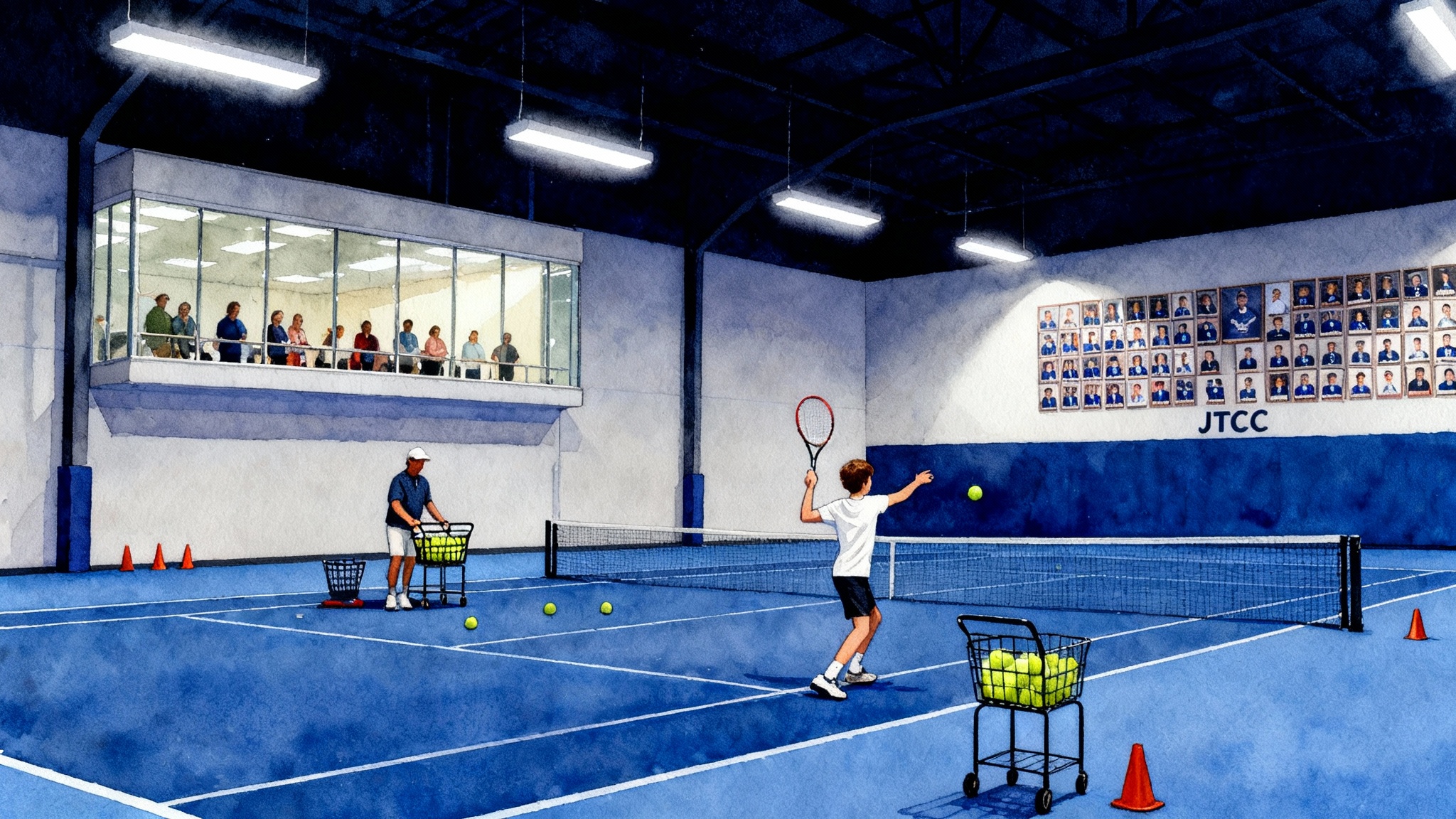
Small academies can magnify their work by plugging into a regional or national center rather than competing with it. See how JTCC’s community-to-pro pathway aligns with this collaboration mindset.
- Align on testing. Share a basic screening template so that when a player visits the center, strength or mobility results can be compared over time.
- Swap coaches for a day. Send a hitting coach to shadow a performance analyst, and invite the analyst to observe a small-group session at the academy. Each side learns what the other measures.
- Build a shared language. If the academy calls one drill “ad-court forehand unlock” and the center calls it “serve plus one wide-ad,” agree on tags so player notes and videos line up.
Common detours to avoid
- Endless tournament loops. Playing often feels like progress, but growth usually happens in training blocks where you can change a habit and reinforce it.
- One-size strength plans. A tennis player is not a powerlifter. The gym should serve the court. If weight jumps up but movement quality declines, the plan is wrong.
- Big groups for convenience. Eight or ten kids on a court saves money, not forehands. Keep technical sessions small and move larger groups to fitness or games where volume is the aim.
Why this pipeline travels
Draper’s rise is not an argument for one coach or one building. It is a compounding model.
- Club stage grows love and basic skill. It is local, affordable, repeatable.
- Academy stage increases intensity and intention with small groups and pattern training. See the parallel in Piatti’s small-group model.
- Federation stage adds science, rehab, and surface specificity.
The magic is in the handoff. Families can build those handoffs even without a national stadium. Clubs and academies can cooperate instead of compete. And when the time comes to add science and recovery, a federation center becomes a force multiplier rather than a reset.
The takeaway for parents and players
Map your next six months on one page. Circle a couple of training blocks, two or three tournaments with clear aims, and one window to visit a higher-resource center for testing or a camp. Build a small pod. Keep your sessions short and specific. Track two numbers. Give your athlete a reason to believe that today’s small deposit accumulates.
That is how a pathway turns into results you can feel. It is how a kid who started on a Sutton backboard and grew up in a small group in Weybridge walked into Queen’s in June with momentum and finished the autumn with an indoor title. None of it was sudden. It was a staircase. The next player who climbs it may be practicing on your nearest public court.