Coco Gauff’s Grand Slam Path: Delray Roots, Mouratoglou Blocks
How Coco Gauff mixed a Florida home base with short, targeted training blocks at the Mouratoglou Academy in Biot to refine clay skills, build belief, and plan smarter. A step by step blueprint families can copy without relocating.
 Tommy
Tommy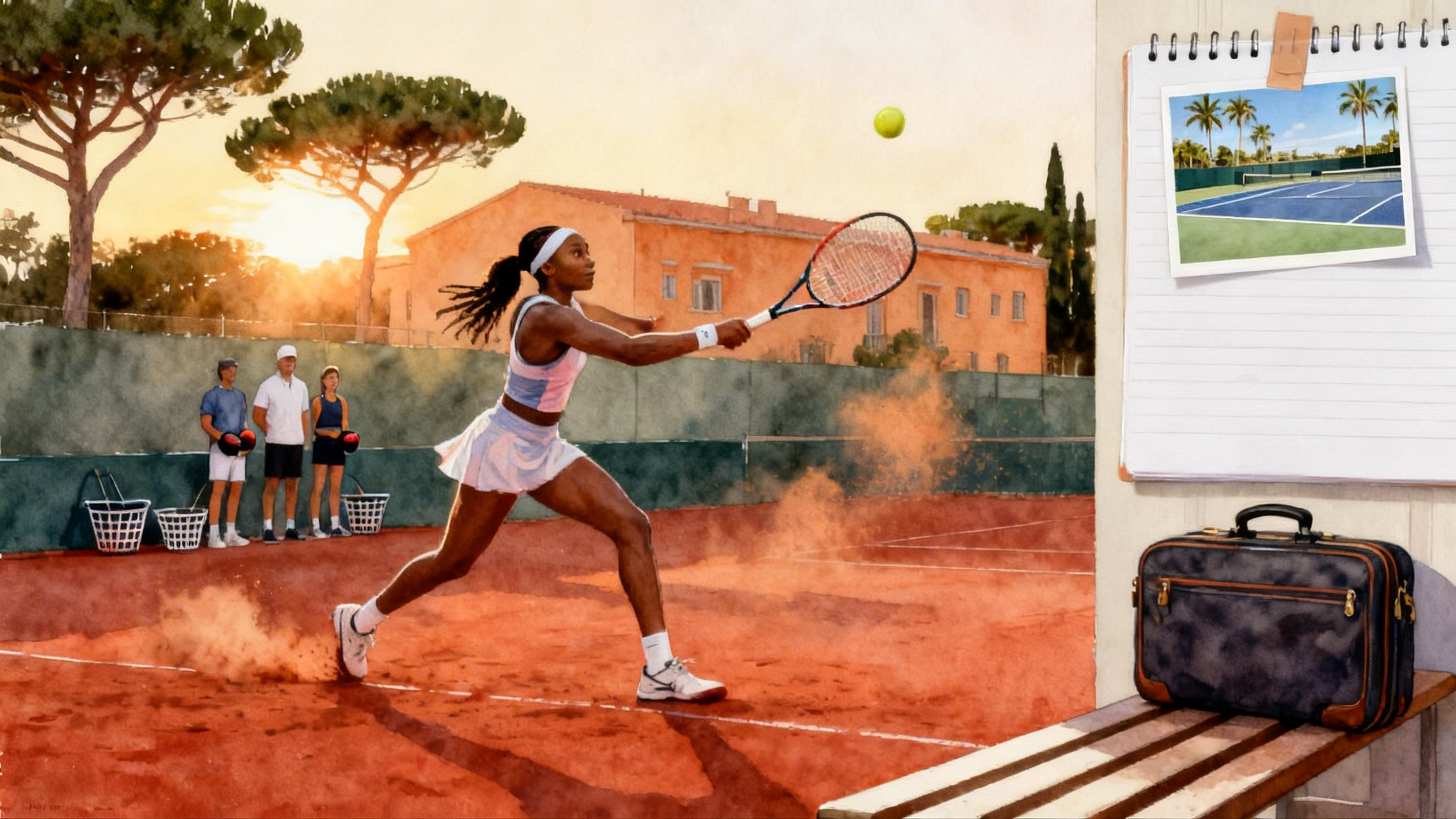
From Delray Beach to Biot, and Back Again
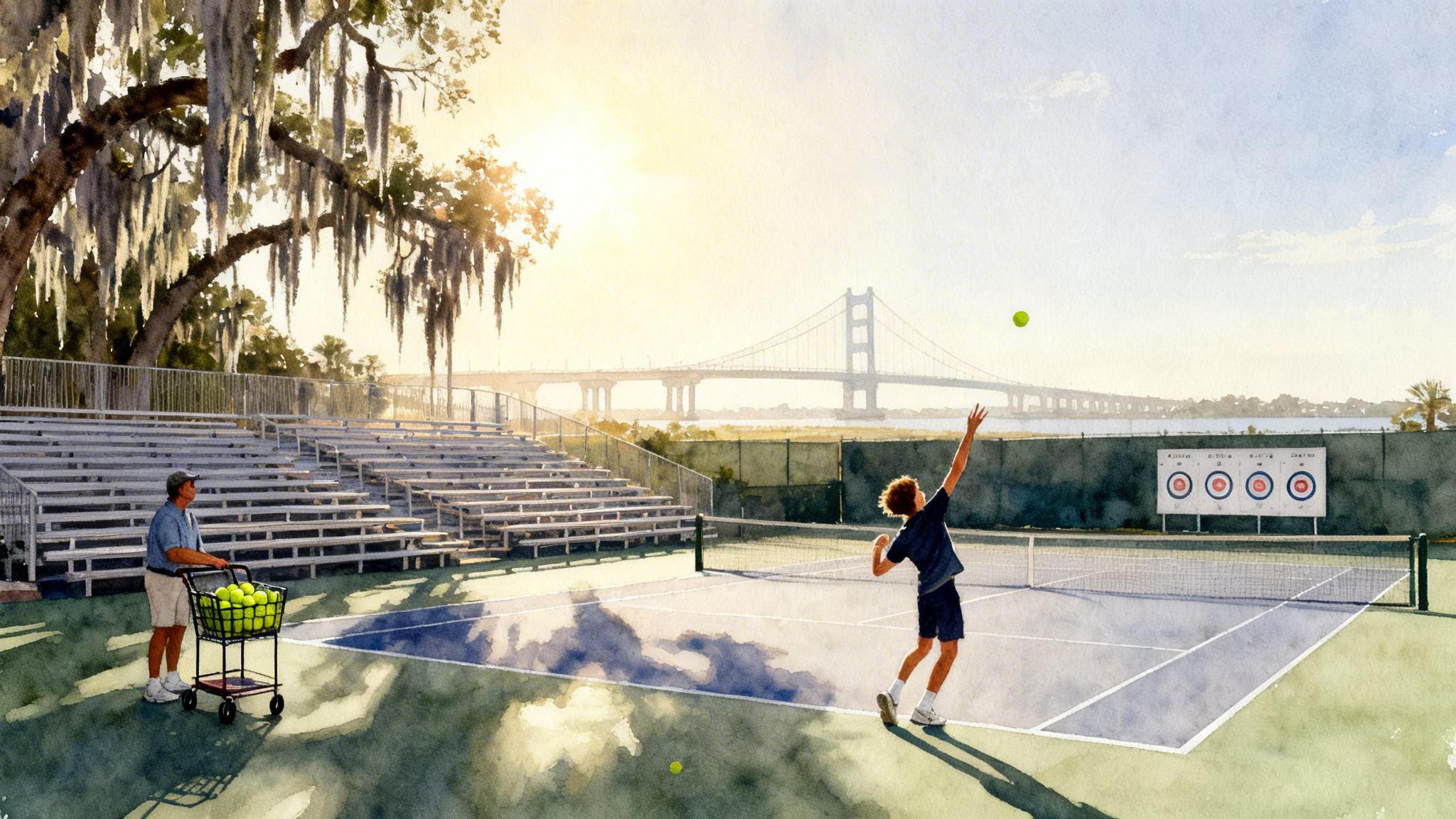
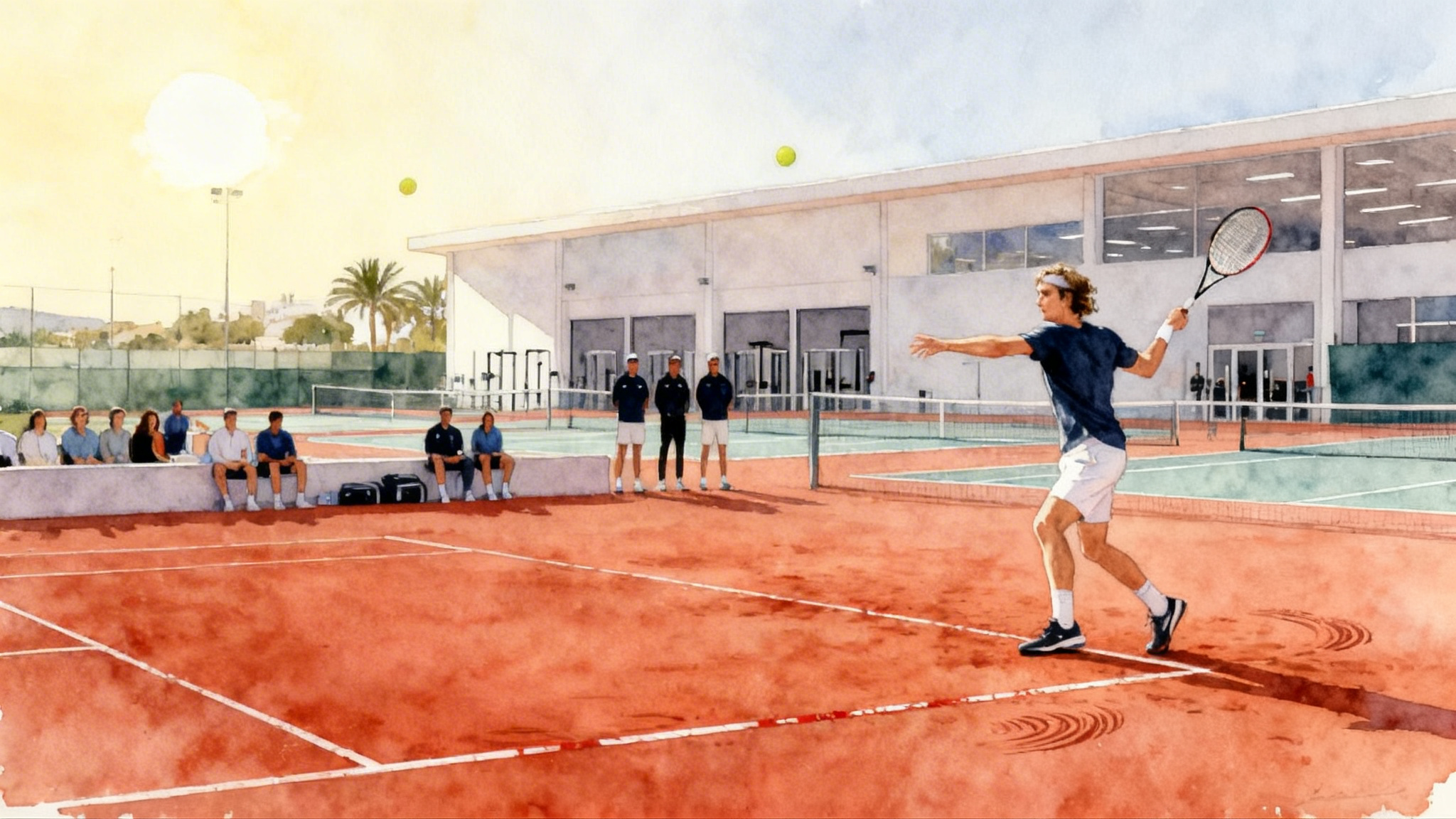
Coco Gauff did not leave home to become a Grand Slam champion. She kept Delray Beach as her center of gravity, with her father Corey leading the coaching, then punctuated the year with short, high‑intensity training blocks in Biot, France. Those stints at the Mouratoglou Academy gave her a second laboratory for skill building, mindset work, and match rehearsal. The approach let her keep family, school, and community close, yet still tap into the density of elite sparring partners, structured clay time, and professional habits that a top academy can offer.
Gauff’s team began using the model early in her teens. Reports and the academy’s own profile indicate that she spent periodic stints in Biot from about age 10, folding those trips back into a Florida schedule that emphasized hard‑court speed and family‑run development. The blend did not ask her to choose between home and Europe. It made both serve a single plan.
The Problem Her Team Set Out to Solve
Every rising junior hits the same wall on the way from national level to the early pro stages. You need to master skills that are hard to acquire in normal weekly life.
- Reps against many styles in a short time window
- Consistent clay exposure to learn depth, patience, and sliding mechanics
- Reality checks through matchplay ladders with older, stronger hitters
- Mentorship that normalizes pro habits like travel planning, recovery, and tactical prep
Short academy blocks target those constraints head on. You compress what might take months at home into focused cycles that have a clear theme, a start, and an end. Then you return home to let the changes sink in, without losing your family‑led culture.
Why Biot, and Why the Mouratoglou Environment
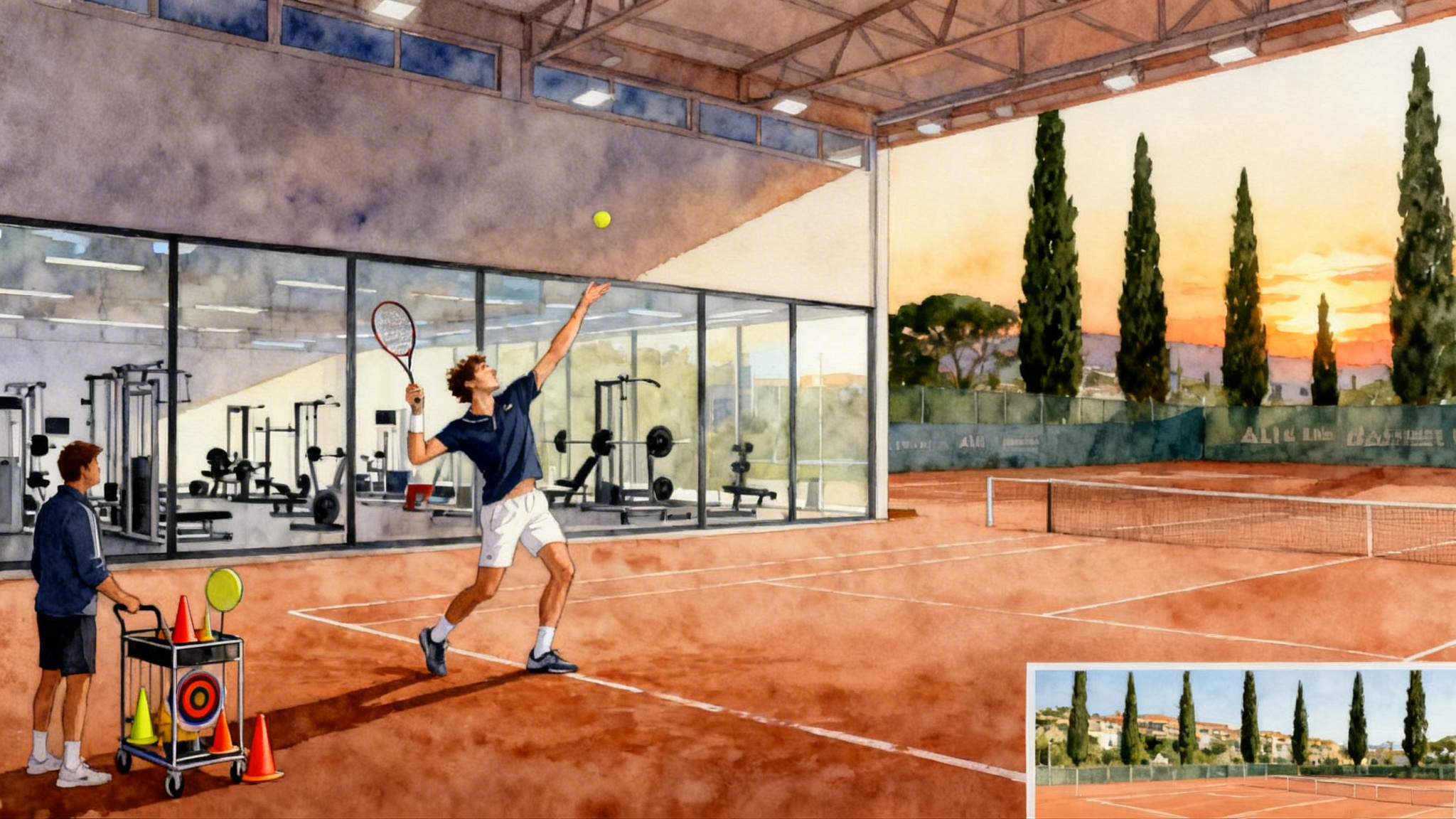
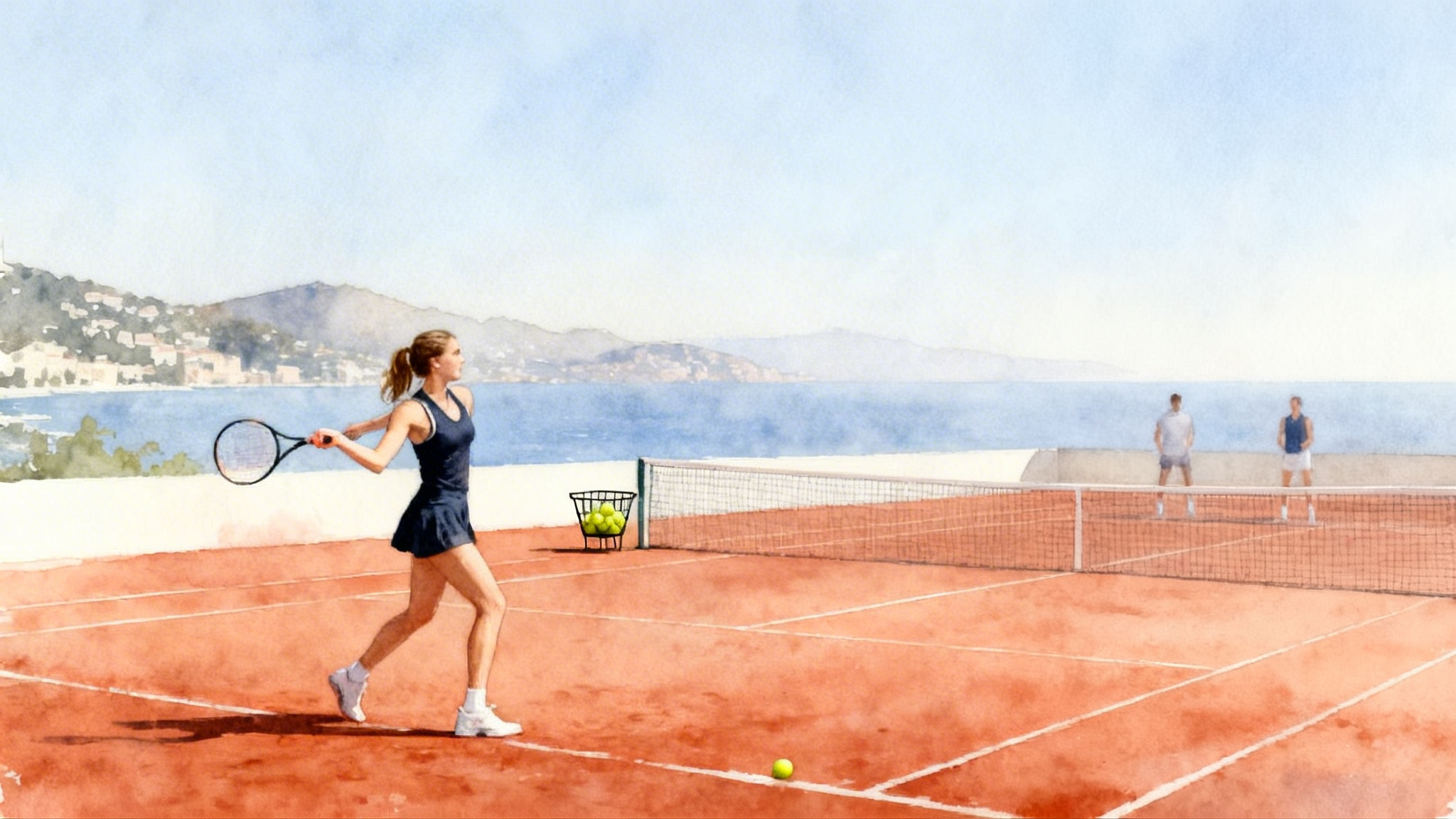
Biot sits on the French Riviera, a short drive from Nice. The academy there offers a dense ecosystem: many courts, many levels, and a staff used to bridging the junior to pro gap. For a Florida based player, three things stand out. Nearby peers and programs, including All In Academy on the Riviera, add to the region’s training depth.
-
Clay density. The sheer number of quality clay courts guarantees daily patterns that demand topspin, height, and decision making. You absorb patience by force of environment.
-
Peer quality. Sparring partners rotate fast. You get a lefty counterpuncher in the morning, a big first‑strike baseliner after lunch. The variety speeds up tactical learning.
-
Professional rhythm. Warm ups run on time. Video reviews are normal. Matchplay has consequences. The culture shrinks the psychological distance between a strong junior and a tour level pro.
Clay Complements American Hard Courts
Most American juniors grow up on hard courts that reward first strike instincts. Clay changes the math. Points last longer, so choices matter more. Contact windows stretch out, which spotlights balance and footwork. Sliding lets you arrive to the ball on a better line. Serves that kick shoulder high set up forehands that can push opponents back.
Here is how that complement showed up in Gauff’s development timeline.
- Patience became a weapon. On clay you cannot fake depth. You learn to lift the ball, clear the net with shape, and still attack short replies when they appear.
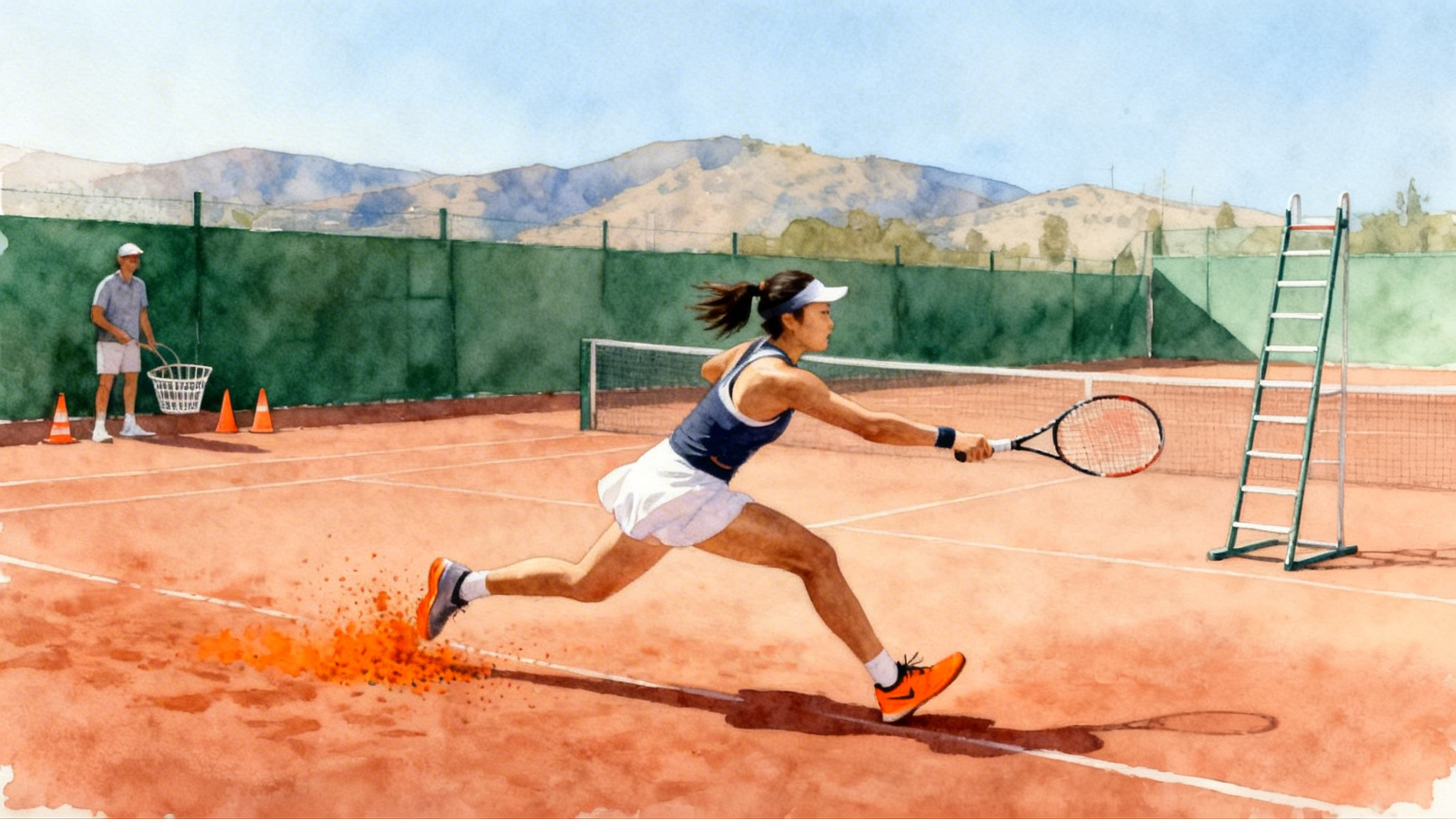
- Defense became offense. Sliding into the outer third of the court teaches you to escape deep balls without falling off balance. From there you can re‑center with a high, heavy reply and flip the rally.
- The serve diversified. Practicing second serves that jump above the strike zone builds a margin that carries onto fast American hard courts.
A Day Inside a High‑Impact Block
Think of a block as a four week mini season. Here is a representative day that Gauff’s team could have run in Biot, translated into a template you can copy.
- 08:00 Mobility and activation. Mini band work, ankle range, split‑step timing drills.
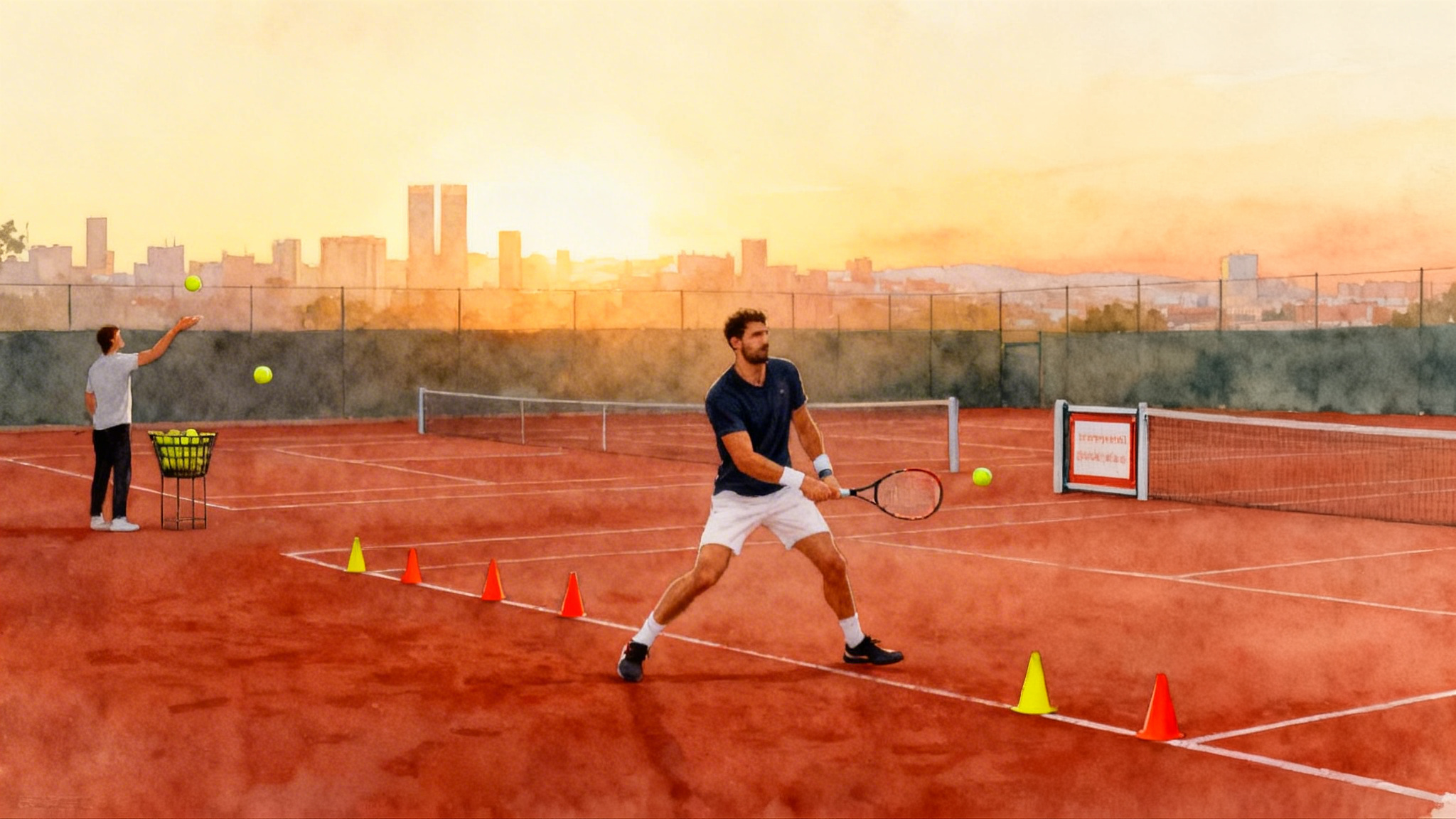
- 09:00 Technical court. One to one or two to one. Serve targets with clear zones, then forehand depth to cones past the service line, then backhand drive plus cross exchange.
- 11:00 Situational points. Crosscourt neutral exchanges to 8 balls before opening the line. Two second serve points per game. One change‑up per rally allowed, such as a high roller or short angle.
- 13:00 Lunch and video. Ten minutes of clips focused on one cue. For example, whether the racket head is below the ball at contact on heavy forehands.
- 15:30 Matchplay set. Pre‑set goals like 70 percent first serve to backhand side, or one deep cross per rally before changing line. Track to a whiteboard.
- 17:30 Strength and movement. Acceleration on clay with low center of gravity, deceleration ladders, posterior chain work.
- 19:00 Notes and planning. Two wins, one fix, one question for tomorrow.
You are not chasing volume for its own sake. You are lining up inputs that serve a single theme, then logging them.
Mentorship and Belief, The Hidden Multiplier
The right academy does more than supply courts and coaches. It supplies belief. A teenager who warms up next to a tour player recalibrates what is normal. Big lifts happen when a player realizes that tour routines are human and repeatable. You can see the same rhythm in stories like Ferrero Academy forged Alcaraz and Piatti Academy forged Sinner.
Mentorship can be as concrete as a pro explaining how they pick targets on big points. Or it can be a coach telling a young player to schedule back to back events on clay and accept early losses to buy future wins. The environment teaches that the short term feeling of friction is a signal that you are in the right drills.
Scheduling and Match Readiness, Built Around Blocks
Gauff’s team used the Florida home base for stability and the Biot blocks for specific upgrades. After each block, they picked events that would cash in the new skills. If a block leaned heavy on clay, they aimed for a sequence of clay events to bake in the changes. When at home, they kept a smaller echo of the block alive. A Tuesday serve day, a Thursday pattern day, a Saturday matchplay morning with older hitters.
You can do the same without crossing the Atlantic. Use a clay week at a domestic academy to launch a four week mini season of local tournaments on green clay, then return to hard courts with a serve goal tied to kick height rather than pure pace. The key is not location. The key is the arc.
A Copyable Four Week Blueprint
Below is a sample that mirrors the block logic many elite teams use. Tweak it for age and load.
Week 1: Movement and foundations
- Sliding entries and exits with cones that force angle changes
- Heavy crosscourt forehand drill, 12 ball rally minimums, change the line only after depth past the service line
- Second serve kick to the ad court, three targets and tracked makes
- Two matchplay sets, no change‑ups allowed, to engrain base patterns
Week 2: Patterns and serve pressure
- Serve plus one drills, alternating deep cross to short angle
- Backhand down the line under pressure after a squash defensive ball
- Approach patterns off short balls and volley closures with two volley minimum
- Three matchplay sets with serve focus, tallying holds rather than wins
Week 3: Problem solving and variety
- One practice per day devoted to a nemesis style, for example a lefty counterpuncher
- Drop shot and lob combinations to disrupt rhythm
- Return plus two patterns that start neutral and end with a high percentage finish
- Two practice matches with between‑set video clips and one coaching adjustment rule
Week 4: Race pace and readiness
- High intensity intervals, 30 minute live ball blocks with heart rate targets
- Serve games under scoreboard pressure, start at 30 all, then back to love all
- Two full matches, one on clay, one on a faster court to feel the translation
- One light day before travel, one day to set micro goals for the event
Metrics That Tell You It Is Working
- First serve location accuracy above 65 percent to the chosen quadrant
- Second serve that bounces above shoulder height for at least half of ad court deliveries on clay
- Rally tolerance of 8 or more balls in crosscourt exchanges without dropping depth
- Break point save rate above 50 percent in practice sets by month two
- One clear pattern per side that you can describe in a sentence
These are simple, visible, and tied to match outcomes.
Budget and Logistics Without Moving
You do not need a permanent European address to copy the model. Here is how to make it viable.
- Travel in clusters. If you cross an ocean, stack two to three weeks. If you stay domestic, plan two long weekends around one five day block.
- Borrow clay if you must. Book time at a club two towns over, or arrange a short membership, then treat the week like a road trip with a purpose.
- Trade sparring. Offer to host a strong peer the week after your block and return the favor next month. Quality partners can matter more than facilities.
- Make recovery non‑negotiable. Travel days count as training stress. Slot in a light day after long flights and a mobility day before the first match.
Guardrails So The Plan Does Not Backfire
- Do not over‑camp. Two high quality blocks per year can beat six unfocused trips. Let changes consolidate at home.
- Do not overhaul technique inside two weeks of competition. Lock mechanics earlier, then move to targets and patterns.
- Do not chase a constant uptick in volume. The point is precision. Leave gas in the tank for the match simulation sets.
The Coco Gauff Timeline, In Two Sentences
The early blending of Florida hard courts and French clay produced a player who could hold the baseline, counterpunch with patience, and still accelerate when an opening appeared. The arc culminated when she won the 2023 US Open, a result that reflected skills rehearsed for years in short, focused cycles.
What Parents and Coaches Can Do This Month
- Pick one theme for a four week micro season. Clay defense to offense, or serve variety that sets up forehands.
- Find one place with the surface and partners you need. That can be across the ocean or one county over.
- Write a two line scoreboard for practice sets. The first line is the tactical goal, the second is the make percentage for two key shots.
- Block two tournament starts on the calendar. Use the first for data collection and the second for execution.
- Film ten minutes per week. Clip only the moments tied to your theme.
A Final Word On Belief
Families often fear that a move away from home is the price of entry. Gauff’s path shows another route. Keep a strong home base that protects identity and joy. Add short, targeted blocks in an environment that stretches the player’s skills, network, and standards. Use clay to sharpen patience, use hard courts to sharpen first strike patterns, and connect them with a plan. Belief grows when a young player sees their blueprint work in real matches, at home and abroad, on both fast and slow courts. That is how a prodigy becomes a champion.