From Spartak Moscow to Wimbledon Champion: Elena Rybakina
How Elena Rybakina’s formative years at Spartak Moscow shaped her flat, first‑strike power and world‑class serve, and how a teen decision to represent Kazakhstan unlocked funding, travel, and coaching continuity that sped her jump from juniors to WTA titles.
 Tommy
Tommy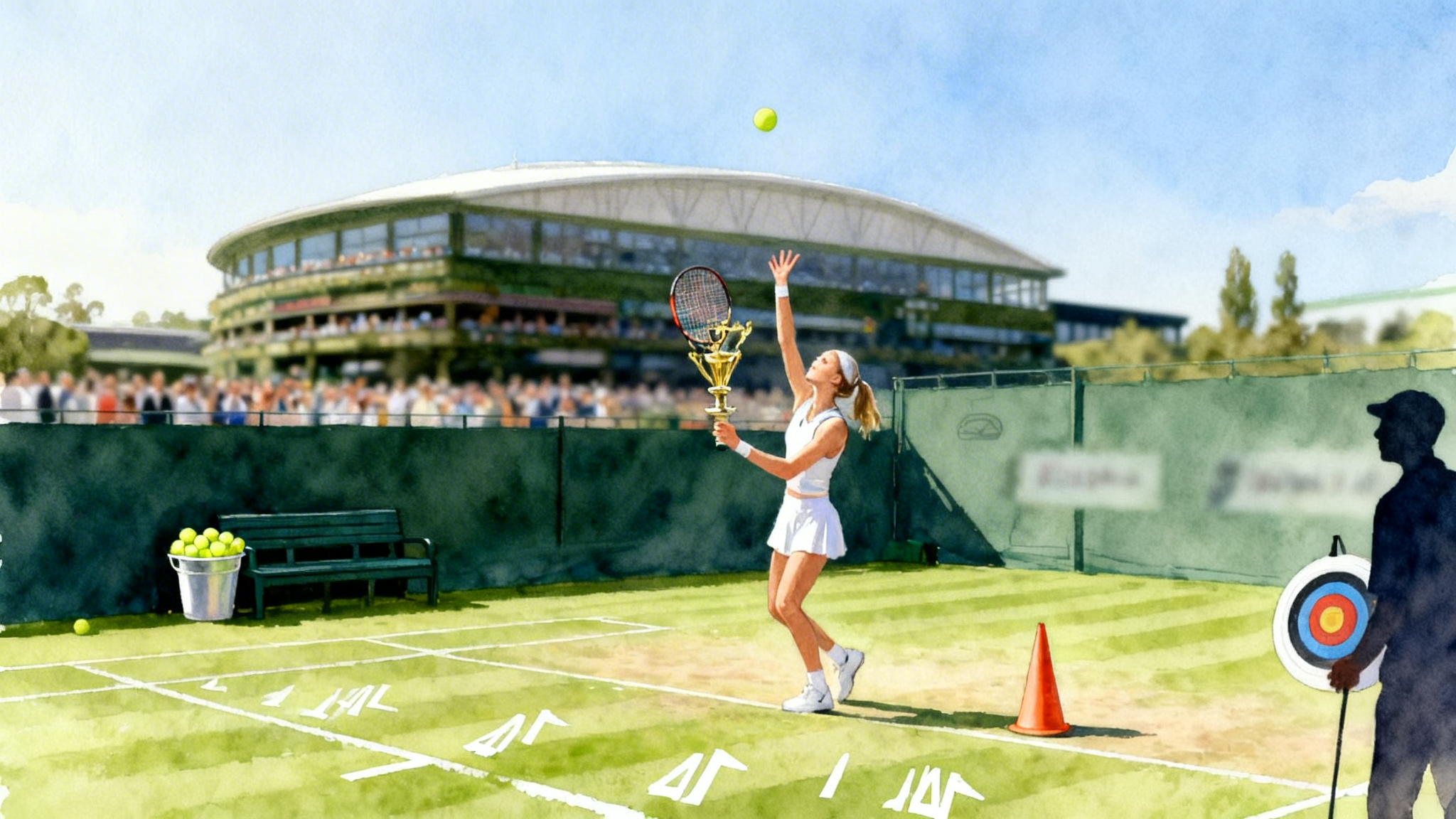
The two decisions that built a champion
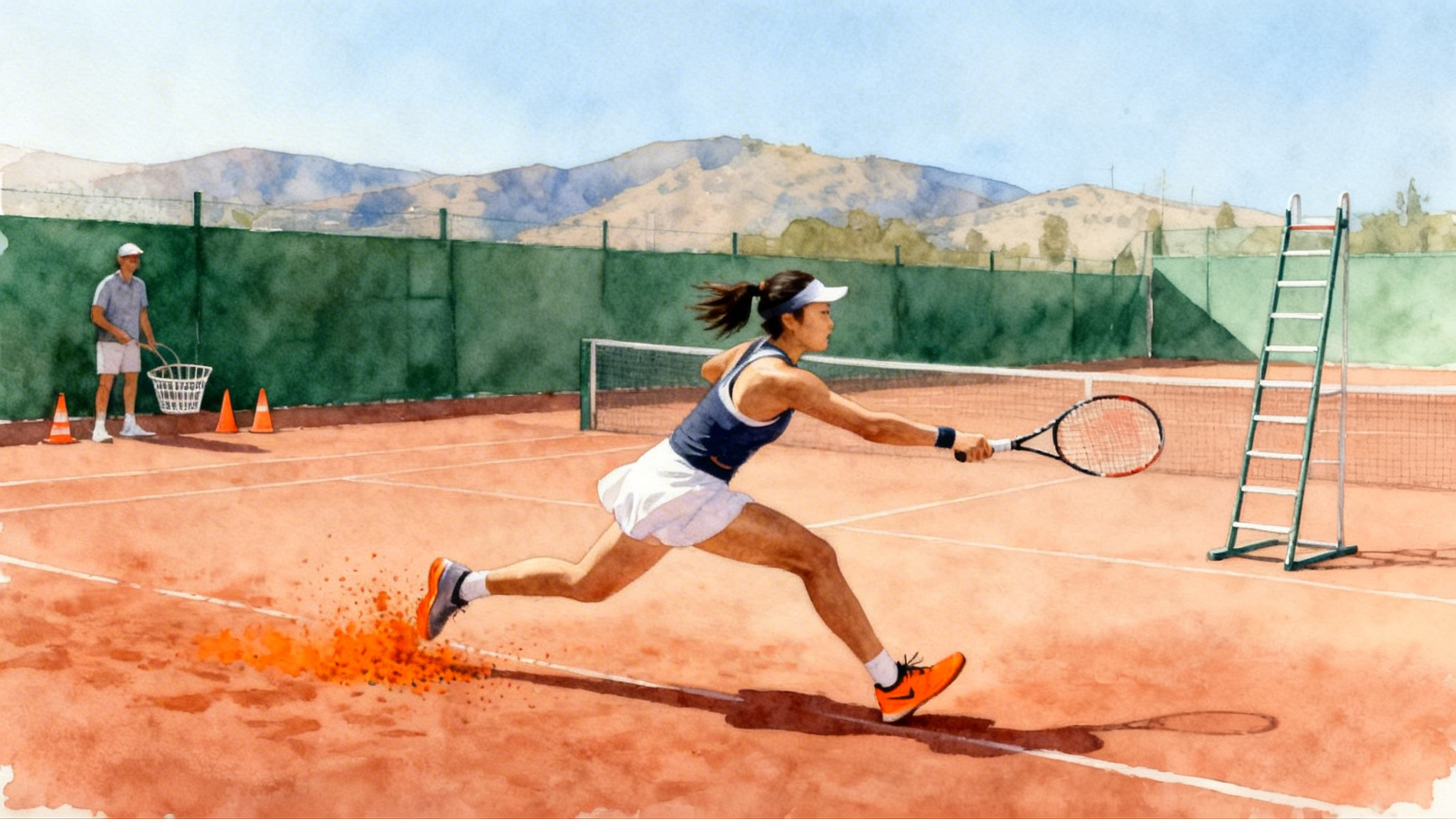
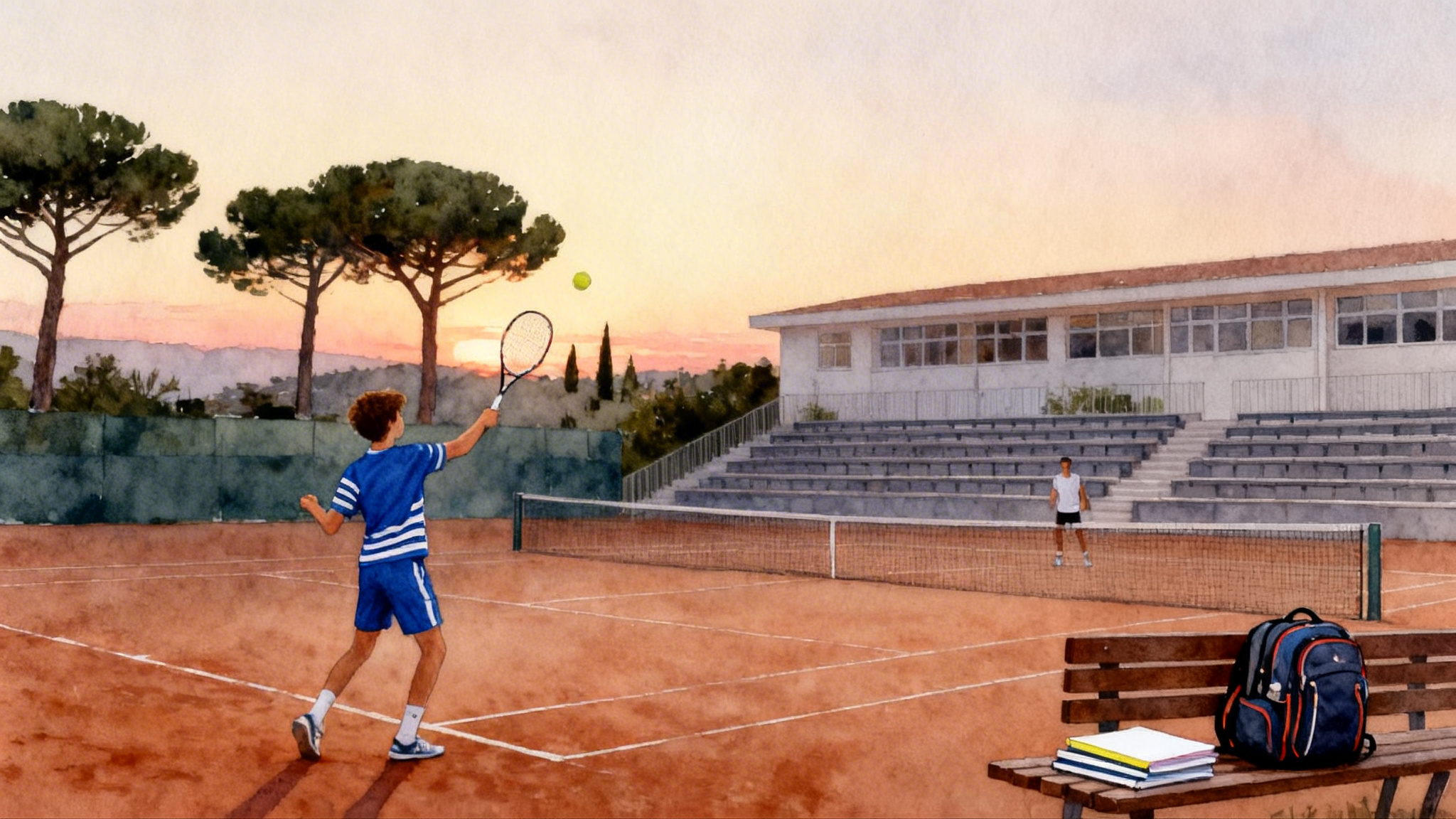
Walk back from Centre Court and you eventually arrive at the crowded group courts of Spartak Moscow. That is where Elena Rybakina learned to hit through the ball, to value repetition, and to treat the serve as a daily project rather than a mere start to the point. Years later she stood with the Wimbledon trophy in 2022, proof that an academy culture and a well timed career choice can alter an athlete’s ceiling. You can read how her serve and first‑strike baseline game changed the final’s momentum against Ons Jabeur in the WTA’s report on Rybakina’s 2022 Wimbledon triumph.
Two decisions shaped that day. First, as a young teen, she committed to Spartak’s exacting standards. Second, at 18, she chose to represent Kazakhstan, a move that brought immediate resources and structure to help her turn pro without interruption. Together they turned clean, flat power into a winning system. For another blueprint of academy impact on a champion’s game, see Piatti Academy forged Sinner.
What Spartak actually teaches
Spartak’s reputation can sound mystical from afar, but its methods are practical. The club is a public‑facing sports school with a deep coaching bench and a long queue of players trying to earn court time. That pressure forces the program to be specific about standards.
Four pillars stand out from players and coaches who have passed through Spartak.
- Technical standards before swagger
- Contact height is coached, not guessed. Players learn to meet the ball in front, with compact takebacks that keep the racquet head stable through impact. The early work looks plain on video, but it engrains depth and low net clearance without forcing.
- Grip discipline is consistent. Juniors are steered to grips that allow them to flatten the ball without losing the ability to add spin when needed. That shows up in Rybakina’s two‑way baseline game. Her forehand and backhand can both drive straight through the court.
- Volume that means something
- Reps are not mindless. Ball‑machine or hand‑feed segments use corridor targets and depth lines, often with a scoring system. Miss long and you lose a point. Land inside the back third and you gain two. The point is to make flat drives that land deep and stay inside a three‑foot window above the net.
- Fitness is daily. The strength base is built before and after the hit. That helps explain why Rybakina’s long levers do not get in her way. She can load and unload with balance even when rushed.
- Serve‑first habits
- Sessions start with serves. Not a few warmup tosses, but buckets, targets, and carry‑over drills where the first shot after the serve is scripted. The player learns that a good serve is only useful if you expect the next ball and take it early.
- The second serve is not a bailout. Juniors are expected to hit up and through with the same toss and a clear target, even if they miss early in the block. That creates confidence under pressure and keeps the toss honest.
- Multi‑surface repetitions
- Despite Moscow winters, Spartak juniors get both clay and hard repetitions across the year. Clay blocks force footwork patterns that make the flat drive reliable on skidding hard courts. Early exposure to different bounces is a quiet reason Rybakina adapted so quickly to grass.
Translate those habits into a pro profile and you see Rybakina’s identity. A world‑class serve sets patterns. The first strike is often a firm, flat backhand line or a heavy forehand into the deuce corner. When rallies extend, she stays balanced enough to change direction without muscling the ball.
How flat power gets built, not born
Parents and players often label strokes as either spin heavy or flat, as if that choice is a personality trait. Spartak treats it as geometry and timing.
- Contact in front: Flat power depends on striking the ball marginally earlier, with the strings traveling more forward than up. That demands footwork that gets the hip and shoulder through without an oversize loop. Rybakina’s shoulders stay quiet and the racquet travels on a straighter path, which is why her backhand down the line looks effortless.
- Short takeback, long follow‑through: A compact preparation reduces timing errors against pace. The extension after contact adds length to the shot without a last‑second jerk. Watch her forehand finish. It often ends forward and across the chest rather than high and around the head. Depth without drama.
- Depth targets, not angles, in practice: Instead of fishing for sharp corners, Spartak juniors learn to land the ball beyond the service line with modest net clearance. The goal is to push the opponent back first, then change direction second. The result is rally speed that feels heavier even with less spin.
Families sometimes worry that a flatter strike is risky. It is, if the player never learns height control. Spartak’s solution is repetition with constraints. Feed 20 balls that must land in the back third. Change the court to alleys that are eight feet wide. Give two points for any ball that lands deep and stays under a forearm’s height above the net tape. Make aim and height non‑negotiable.
The teenage pivot that unlocked resources
By 2018 Rybakina faced a practical choice. She could accept offers to play college tennis in the United States or she could turn pro with the support of the Kazakhstan Tennis Federation. She chose the second path, citing the funding, travel backing, and coaching continuity Kazakhstan offered. She told reporters at Wimbledon that she was happy representing Kazakhstan and changed in order to gain the resources required to build a career, as detailed in why she switched nationalities in why she switched nationalities in 2018.
What changed immediately:
- Travel and scheduling: Access to a professional calendar rather than a week‑to‑week search for cheap entries. That meant targeting higher‑value ITF events, then early WTA qualifying, with enough recovery between to keep training quality high.
- Coaching continuity: The federation support made it possible to hire and keep a private coach and add a fitness lead. Continuity is underrated. Keeping the same cues across months lets a player refine patterns rather than rebuild them every trip.
- Financial runway: Strings, physio, flights, and second‑serve double faults all cost money. The federation’s backing reduced the panic that forces many young pros into overplaying.
Results followed. In 2019 she won her first WTA title in Bucharest and made two more finals. In early 2020 she started the year on a run of finals that lifted her into the top tier. Those were not lucky weeks. They were the proof that Spartak fundamentals plus a funded schedule create compounding gains.
From juniors to pros: what money and structure actually buy
Switching flags does not give you forehands. What it buys is time and clean decision making.
- Better tournament math: Instead of entering six low‑level events to chase points, a funded player can enter three right events and build quality wins. For a serve‑first player, that means more main‑draw hard‑court matches where the serve is a true weapon.
- More practice during tournament weeks: With a coach present, every pre‑match hit has a plan. The serve is checked against video. The first‑ball pattern is rehearsed. Between matches, fitness is adjusted rather than abandoned.
- Health maintenance: Budgeted physio and well planned travel reduce the soft‑tissue surprises that sabotage power players who rely on timing.
That combination is why the jump from junior to WTA level looks sudden from the outside and steady from the inside.
The serve as a daily project
If you watch Rybakina live, the first ball that makes your notebook is the serve. It is fast, but more important, it is organized.
How to build it, Spartak style:
- Two target trees: Divide each box into a T tree and a wide tree. Work through six serves per branch in order, then reverse. Track not just makes, but depth and bounce height. A flatter trajectory that lands deep is the currency.
- Same toss rule: The toss lands a hand’s width in front and slightly right for a right‑hander. Slice is produced by racquet path, not a wandering toss. If the toss starts to drift, reset and repeat the preceding make until the toss is true.
- Second‑serve bravely: Use a kick‑to‑body and kick‑to‑backhand progression, then add a body slice. The aim is to own the center of the box rather than shave the line. Only when body targets are 70 percent do you add edges.
- First ball is part of the serve: Every second bucket includes a plus‑one pattern. Serve wide deuce, then backhand through the open court. Serve T ad, then forehand on the rise back behind. Do not separate the two.
Measure it. Power tennis is measurable tennis. Set a weekly floor for made first serves in targets. Record second‑serve percentage under pressure games. Track how many returns you draw short enough to step inside the baseline on ball two. This is the quiet math behind a world‑class serve.
Choosing an academy that can build modern power
Parents do not have to live near Sokolniki Park to borrow from Spartak. When you evaluate an academy, look for the following and ask for proof. Our deep dive on development cultures at scale in Ferrero Academy on Alcaraz shows how clear standards travel across contexts. If you want a US option with a measurable junior pathway, explore the Legend Tennis Academy pathway.
- Coach to player ratio: Group sessions can be powerful if the coach to player ratio allows individual corrections. Ask for the typical ratio in stroke blocks and the rotation plan for feedback.
- Serve‑first structure: How many minutes per session are dedicated to serve builds. Is there a second‑serve progression and plus‑one scripting. Do they keep charts.
- Multi‑surface access: Do they offer both clay and hard blocks across a season. If not, is there a seasonal plan to rent or travel for surface changes.
- Video and feedback cadence: Weekly clips for serve and two groundstrokes should be table stakes. Ask to see a sample report with cues and next steps.
- Sparring and tournament travel: Is there a pathway to hit with older or stronger players at least twice a week. Does the program run supported travel blocks, or do families carry that alone.
- Strength and movement: Conditioning is not a side station. Look for a written plan that builds strength, acceleration, deceleration, and mobility. Ask how they progress loads during growth spurts.
If an academy cannot answer with specifics, move on. Rybakina’s development was not generic. It was the product of precise habits repeated for years.
Financing the pro transition without false economies
The jump from juniors and small ITF events to the WTA Tour is as much a budget problem as a talent problem. A family that plans early can avoid the most expensive mistake of all, which is quitting because the runway ended.
- Build a two‑year budget, not a six‑month guess: Include coaching retainers, travel for the player and coach, stringing, physio, nutrition, visas, and insurance. Add a 15 percent buffer for injury or schedule changes.
- Separate investment from vanity: Pay for coaching continuity and smart scheduling. Do not pay for logo value if it does not change daily work. A modest academy that delivers serve targets and travel support beats a flashy complex that leaves you alone on the road.
- Mix federation, sponsors, and crowd support carefully: Federation backing often comes with clear requirements and travel plans. Private sponsors want visibility and predictable schedules. Crowdfunding is helpful for a specific purchase like a stringing machine or a physio block, but it cannot be your operating budget.
- Consider the college bridge honestly: If funding is thin, one or two years of high‑level college tennis can be a development bridge for a power player, especially if the program offers top coaching, indoor facilities, and pro‑level travel to summer events.
Structuring training blocks for modern power tennis
Power games need periods of construction, not constant tournament churn. Use a simple three‑phase cycle across 8 to 12 weeks and repeat.
Phase 1: Foundation, 3 to 4 weeks
- Goal: Strengthen the base and refine contact.
- Tennis: High volume of depth‑target drills with compact takebacks. Serve buckets daily with second‑serve emphasis. Add plus‑one patterns at the end of each session.
- Fitness: Strength three days per week focused on lower body and trunk, with sprint mechanics and change of direction.
Phase 2: Conversion, 3 weeks
- Goal: Turn power into points.
- Tennis: Live ball patterns on both surfaces. Serve plus one plus two, with the first groundstroke scripted and the second reactive. Play sets starting every game at 30‑all to force quality first serves.
- Fitness: Keep strength, add more reactive movement and short accelerations. One day per week of heavy medicine ball work for sequencing.
Phase 3: Competition, 2 to 3 weeks
- Goal: Peak for the chosen events.
- Tennis: Reduce volume, keep speed. Serve targets at match pace. Pattern rehearsals against lefty and righty looks. Pressure games that mimic scoreboard stress.
- Fitness: Maintenance and mobility. Travel days incorporated into rest planning.
Between cycles, run a short audit. Did depth hold in matches. Did the second serve hold under pressure. Which plus‑one pattern won free points. Adjust the next foundation block accordingly.
A checklist families can steal this week
- Ask the coach for a 10‑minute serve block at the start of every session with written targets.
- Mark depth lines on the court and score drills by landing in the back third.
- Record one angle of serve and one angle of backhand each week. Compare to last month rather than perfect form videos.
- Book two surfaces across the month. If you live on hard courts, rent clay for one weekend a month.
- Build a travel plan that clusters events by region. Play two or three in a row, then schedule a training week before the next swing.
- Price your next three months by category. If you do not know your stringing or physio costs, you are guessing.
Closing lesson from a cold Moscow court
Elena Rybakina’s story is not just about a big serve and a summer on grass. It is about a player shaped by a place that values standards and volume, and by a decision to secure the support necessary to turn those standards into a career. Spartak gave her clean lines and repeatable power. Kazakhstan gave her a runway and a team. Families can borrow both sides of that equation. Choose programs that coach specifics. Choose budgets and partnerships that protect training quality. If you do, your player’s game will not just hit hard. It will hold up when it matters most.