How Cannes’ Elite Tennis Center Fueled Mirra Andreeva’s WTA Rise
 Tommy
Tommy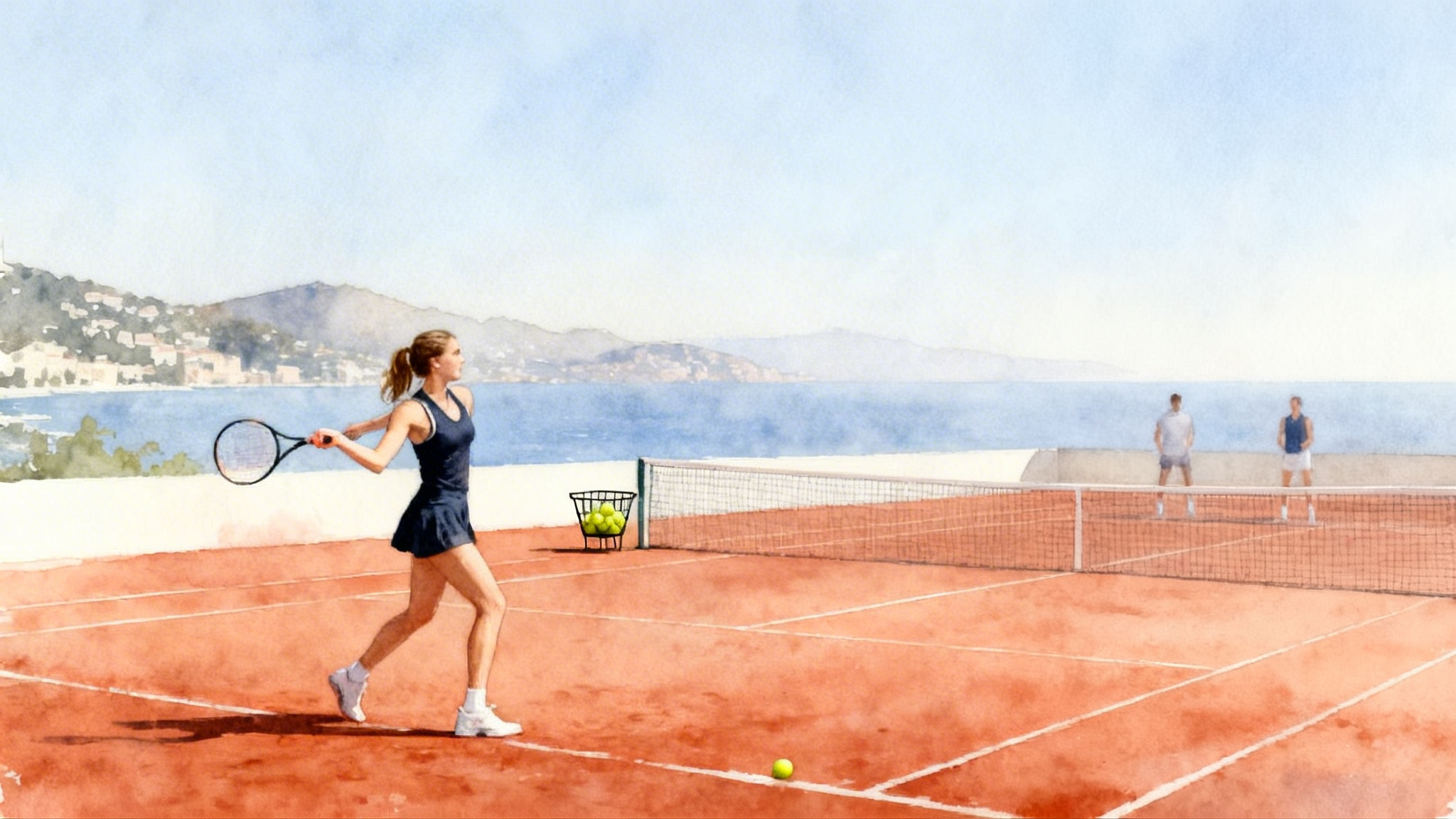
From Siberia to the Riviera: the decision that changed the pace
Every breakthrough story has a moment when the family decides to jump. For Mirra Andreeva, that moment began far from the tour’s glamour. Born in Krasnoyarsk, she and her sister Erika chased winter light under a cold Siberian sky before the family charted a path toward warmer courts and deeper competition. That road led to Cannes, where Mirra joined Jean‑René Lisnard’s Elite Tennis Center, a move that switched her daily environment from survival to acceleration. Public reporting has traced that pathway clearly, including her family’s move from Krasnoyarsk to Cannes. The location mattered. The methodology mattered even more.
This article maps how specific choices at Elite Tennis Center turned Mirra’s junior promise into professional traction. We will look at four levers that moved fastest for her game: small‑squad drilling, daily sparring with pros, clay‑to‑hard adaptation, and hands‑on tournament planning. For more academy‑driven playbooks, compare our breakdowns of the GR Tennis Barcelona forged Zheng Qinwen pathway and the Champ’Seed pathway that lifted Coco Gauff.
What Cannes gives a rising pro that most cities cannot
- A tournament highway within a few hours by car or train. From the French and Italian circuits to Spain’s deep calendar, a player can stack weeks of matches without long flights or jet lag.
- A living scrimmage culture. The Riviera attracts established pros who winter or preseason there, so a teenager can see, feel, and copy grown‑up ball speed daily.
- Year‑round outdoor rhythm. Weather stability means fewer cancellations, more repetitions, and predictable physical loading.
Elite Tennis Center sits inside that ecosystem with a staff built to serve touring pros and ambitious juniors. The academy publicly highlights a broad coaching and performance staff and a medical unit that can be pulled in as needed under Jean‑René Lisnard’s coaching team. That infrastructure is the quiet part of a leap. It removes friction. It lets the work compound.
Four levers that accelerated Mirra’s jump
1) Small‑squad drilling that multiplies meaningful touches
A teenager’s problem is not talent; it is touches. In a big group a player might hit many balls yet solve very few real problems. The small‑squad format flips that equation.
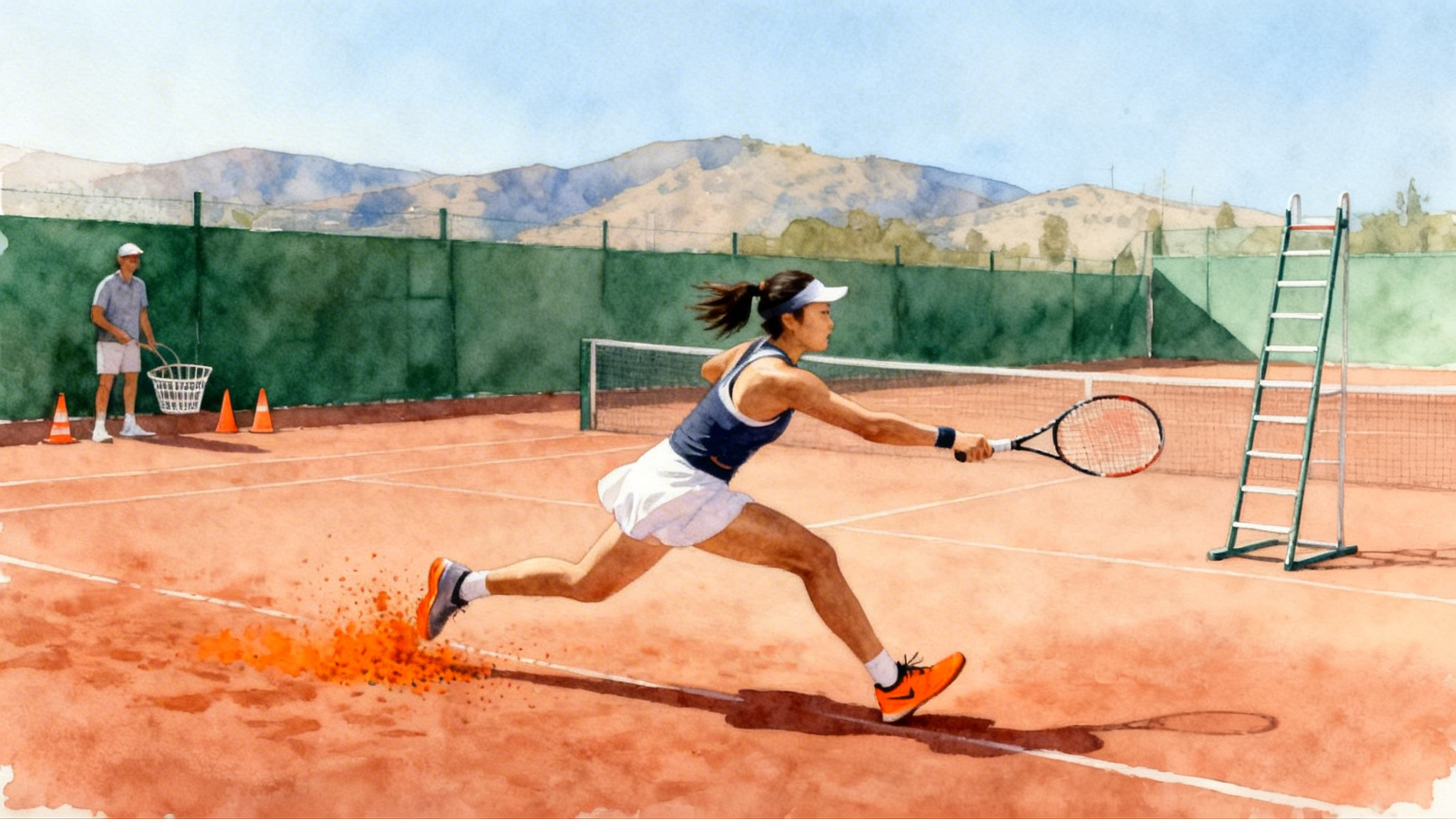
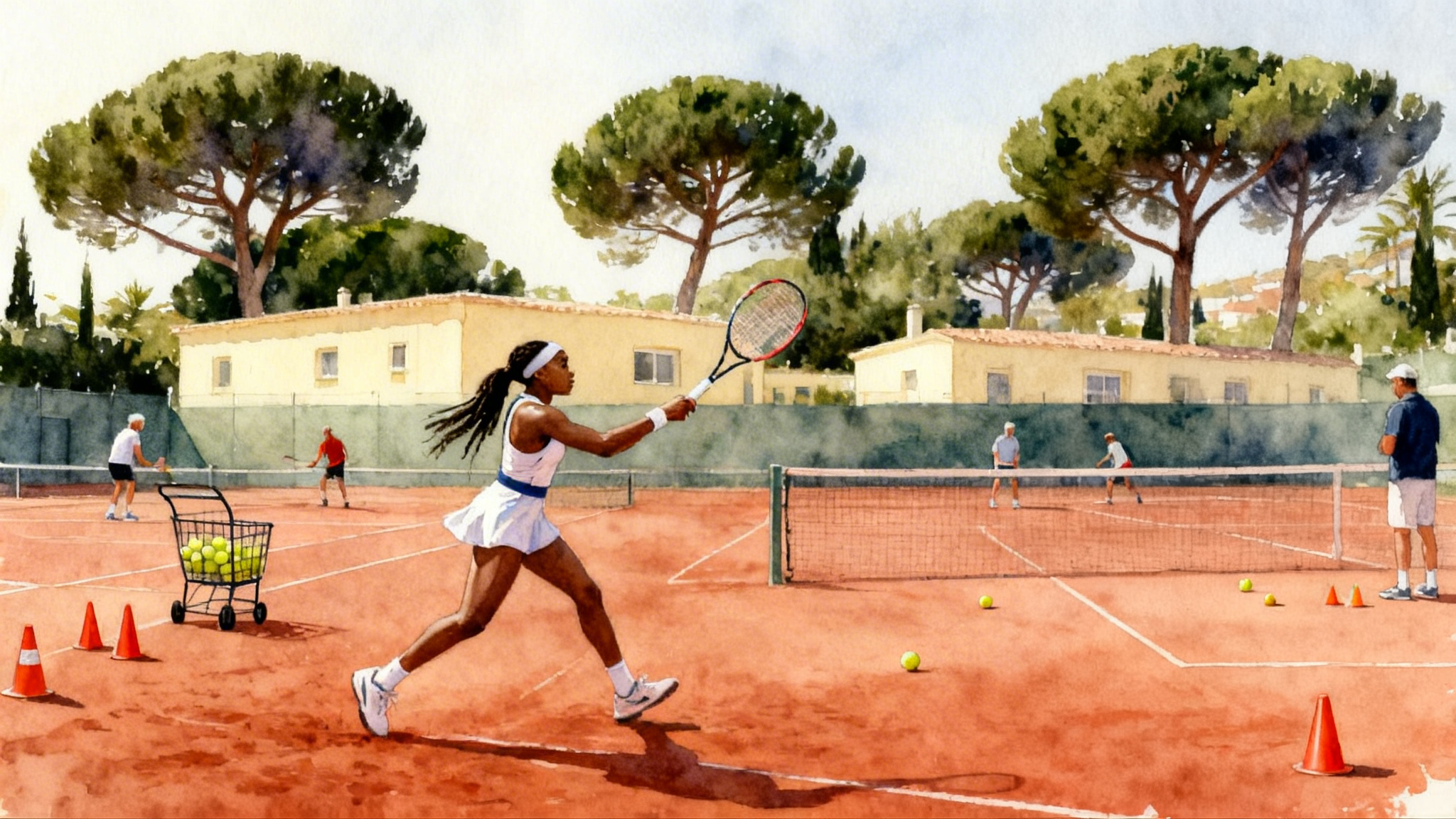
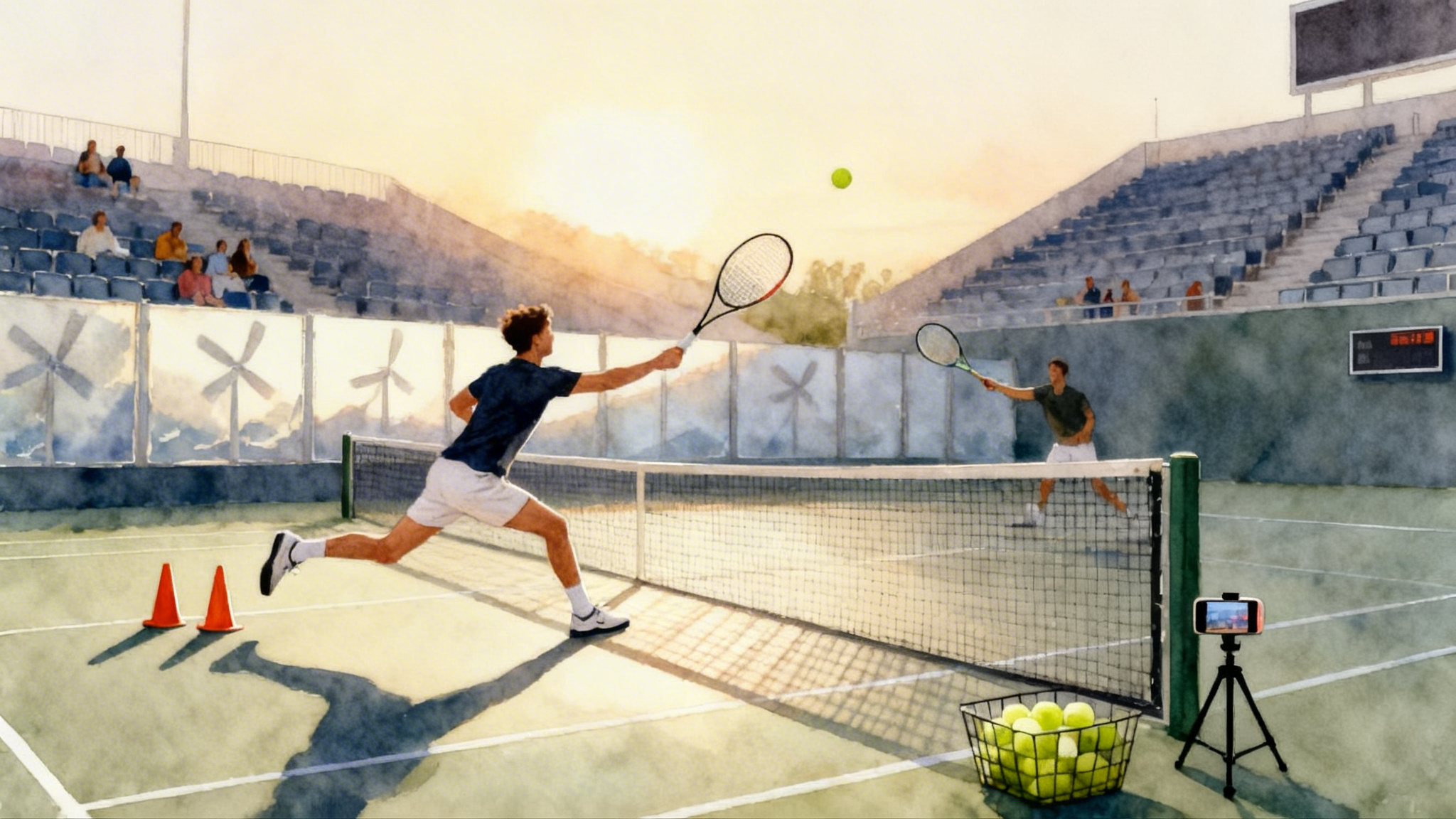
At Elite Tennis Center the work is organized so a coach can watch every rep and edit the drill in real time. Think three players to a court, rotating in short bursts. Instead of a 90‑minute bucket‑ball session, you get compact 12 to 15 minute blocks that force quality. A typical block could be:
- Pattern compression: serve plus first ball, then coach feeds a neutral ball and calls a number that forces an early directional change. The job is to keep the feet ready for a second change of direction, not to hit a highlight winner.
- Reactive defense: one player attacks from the middle; the defender must buy three balls of time using height, depth, and legs. When the defender buys a neutral ball, the rep ends. The purpose is not defense; it is recovery to neutral.
- Finish repetitions: one short ball per rep with the rule that the finishing swing must land one meter inside the line. The metric is first‑swing accuracy, not power.
Small groups let the coach adjust court geography on the fly. If a right‑handed player over‑protects the backhand corner, the target shrinks and the feed goes crosscourt a touch faster. The rule is simple: fix the habit today and let the player repeat the correction tomorrow.
Why this mattered for Mirra: her game already had clean timing and an old‑school sense for angles. Small‑squad drilling hardened that timing under pressure and removed wasted movement. The result shows up as earlier contact and the ability to turn defense into counterpunch without changing the swing.
2) Daily pro sparring that normalizes tour speed
Juniors improve in jumps, not steps, and the biggest jump is getting used to tour pace. In Cannes, Mirra could share courts with established professionals or top‑200 sparring partners who cycle through the Riviera. Daily sets with older hitters push a teenager into grown‑up patterns: protect the middle first, recover on a diagonal, shorten the unit turn against pace, buy time high and heavy when the ball jumps off the line.
Two things change fast under that pressure:
- Decision speed. Instead of hitting the right ball on the third try, the player starts choosing correctly on the first or second. That is where upsets are born, because a teenager who stops guessing and starts predicting can hold her own against seeds in early WTA rounds.
- Serve tolerance. It is not only about miles per hour. It is about placing the second serve under stress and keeping double faults low when the returner stands inside the baseline. That habit grows only when the server must protect her delivery every day against adults who punish float.
3) Clay‑to‑hard adaptation that travels across the calendar
Cannes sits in clay country, yet the academy’s environment builds tools that translate to hard courts. The sequence looks like this:
- Start on clay to exaggerate use of legs and shape. Learn to buy time with height, recover diagonally, and build the point with margin.
- Transition to a medium‑speed hard court for serve plus one, return plus one, and backhand redirect under pace. Keep the clay rules for spacing, then shorten the backswing only as much as needed.
- Finish the day on a slightly slicker hard court, even if it is only a different bounce or a lower‑coefficient surface. Rep the same patterns but reduce time to contact by a fraction and shrink targets by a racket length.
That rhythm teaches a teenager not to treat surfaces as different languages. Instead, they become dialects. The grammar stays the same: space early, keep the strings organized at contact, play the first two balls like insurance policies. Mirra’s results across surfaces as a teenager were not an accident; they were the output of one grammar spoken with three accents.
4) Hands‑on tournament planning that stacks points, not postcards
Families often plan around where they want to go; coaches plan around what the ranking needs next. At Elite Tennis Center the schedule is built backward from ranking math and forward from game development. The typical steps for a teen ready to test WTA waters:
- Anchor six to eight weeks of International Tennis Federation events within train distance. Examples include France, Spain, Italy, and Switzerland. Choose draw strength that guarantees three to four matches per week when including doubles and qualifying.
- Identify two windows for a WTA 125 or 250 qualifying bid when form is trending up. Enter early, keep a backup event in driving range, then decide seven days out based on practice metrics.
- Protect the body with a three‑week block during which travel stops, the serve gets taller, and the return position is stress tested. Use that mini preseason to solve something specific, like second‑serve kick height or forehand spacing against lefties.
- In the second half of the season, split the group between a clay swing and a hard swing. Put the player where point building is more likely to compound this year, not where social media looks better.
Mirra’s jump from European juniors and International Tennis Federation events to WTA results followed that logic. The breakthrough moments captured attention; the cadence underneath is what made those moments repeatable.
Parent takeaways you can act on this season
You do not need Cannes to copy the principles that made Cannes work. Here is a practical blueprint for families who want to time a move, keep costs sane, and navigate federation relationships without drama.
1) Timing an international relocation
- Benchmark your player against objective signals, not local wins. If your 15 or 16 year old consistently wins domestic Open level events yet loses to top‑200 juniors abroad by routine scores, you are late to harder daily hitting. Begin with a three‑month trial block in Europe, then reassess.
- Let winter be your forcing function. If weather closes outdoor courts for more than ten weeks a year, your player is losing repetitions that competitors in southern Europe are gaining. The year you first notice that gap in Match Facts is the year to act.
- Move the school plan first. Before you sign a training package, secure accredited distance learning, identify a local proctor, and agree on daily windows for academics. A relocation that ignores school becomes a relocation that ends early.
- Build a guardian network. List two families at the academy who can stand in for you during travel weeks. Put that expectation in writing with phone numbers, medical authorization, and a cost‑sharing plan for rides.
2) Building a cost‑smart Europe base
- Choose the right address, not the flashiest one. A small apartment near Cannes la Bocca or Antibes often costs less and sits closer to train lines than a postcard neighborhood. The daily savings on food and transport outstrip the glamour tax.
- Share the expensive stuff. Stringing, airport transfers, and physiotherapy can be pooled across two or three families. Agree on a spreadsheet before the first trip, not after the first invoice.
- Make the train your default. A France‑Italy‑Spain loop by rail with a youth card often cuts costs by half versus short‑haul flights and kills far less time at security. Rail also spares the body from repeated cabin dehydration.
- Pack a three‑surface string plan. For example, bring reels that let you go up one kilogram for clay days and down one for slick indoor hard. Budget for more frequent restringing during indoor blocks where the ball feels quicker off the stringbed.
- Use a simple budget tool. Break down housing, food, transport, court time, coaching, and stringing by week so you can adjust before costs spiral.
3) Balancing federation support with a private academy
- Treat federation help as additive, not defining. If your national body offers travel grants or camp weeks, say yes, then keep the academy as the daily home where habits live.
- Assign clear roles. The academy coach is the project manager. The federation coach is a consultant for designated weeks. Share match video and practice metrics so advice does not conflict.
- Keep a transparent schedule. Put the season plan in a shared calendar with entry deadlines and alternates. When you choose between a national camp and a WTA qualifying push, make the choice for the player’s ranking pathway and communicate it early.
- Protect the locker room. If diaspora politics lurk in the background, let adults manage them and keep the player out of it. The only non‑negotiable is a stable daily environment where the athlete’s job is clear.
For a Riviera comparison point, study how All In Academy on the Riviera structures its dual campuses and integrates schooling with competition blocks.
A 90 day ramp families can copy
Here is a simple, repeatable 12 week template that mirrors what works in a Riviera setup.
- Weeks 1 to 3: Arrival and assessment. Two fitness screens, a serving baseline test, a return depth map, and a footwork audit. Small‑squad drilling in the morning, set play or point construction in the afternoon. The only match is an internal set to measure progression on three cues.
- Weeks 4 to 6: Match density. Two back to back International Tennis Federation events reachable by train or car. Doubles is required. The fitness block drops volume and adds sprint quality; the technical block narrows to two priority patterns.
- Week 7: Problem solving camp. No tournament. Raise serve height by two ball diameters. Chase the return forward on second serve with a protected line rule. Run three videos with side by side comparison to Week 1.
- Weeks 8 to 9: WTA 125 or 250 qualifying window if entry sits within striking range. Keep an International Tennis Federation alternate event nearby. The rule is form first, prestige second.
- Weeks 10 to 12: Consolidation. If the player got matches at the higher level, step down one rung for confidence stacking, then close with a home training week that presses the serve and return numbers again.
This plan is not glamorous. That is the point. Mirra’s surge did not come from a single headline match. It came from ordinary days done precisely in an environment that layers pressure at the right dose.
What coaches can lift straight from Elite Tennis Center
- Rotate three player squads with 12 minute blocks, then change a single constraint each block. Examples: target shrink, pace change, footwork rule.
- Script one pro speed exposure daily. If no touring pros are around, use a high level sparring partner and a new ball can for a set of first strike points.
- Dual surface days twice per week. Clay first for spacing and height, hard court second for time and targets.
- Rank driven scheduling. Force every tournament entry to pass a single test: will this week raise the probability of two wins at the next level up within 60 days.
Closing the loop
Cannes did not give Mirra Andreeva her timing or her competitive edge. It gave her repetitions at the right speed and decisions under the right kind of pressure. Small squads edited her mechanics without turning her into a robot. Daily pro sparring forced her to choose earlier and trust her patterns. Alternating clay and hard grounded her game in one grammar that travels across surfaces. Scheduling turned momentum into points instead of postcards.
Families do not need a Riviera postcode to use these levers. They need a plan that removes friction and compounds the right work. If you time the move carefully, base yourself near dense competition, and coordinate federation help with a private academy that manages the project, you build a runway that looks very familiar: a teenager who starts to look like a tour player on ordinary Tuesdays, and then proves it on Fridays when it matters most.