From South Tyrol to Bordighera: How Piatti Academy forged Sinner
 Tommy
Tommy
The move at thirteen
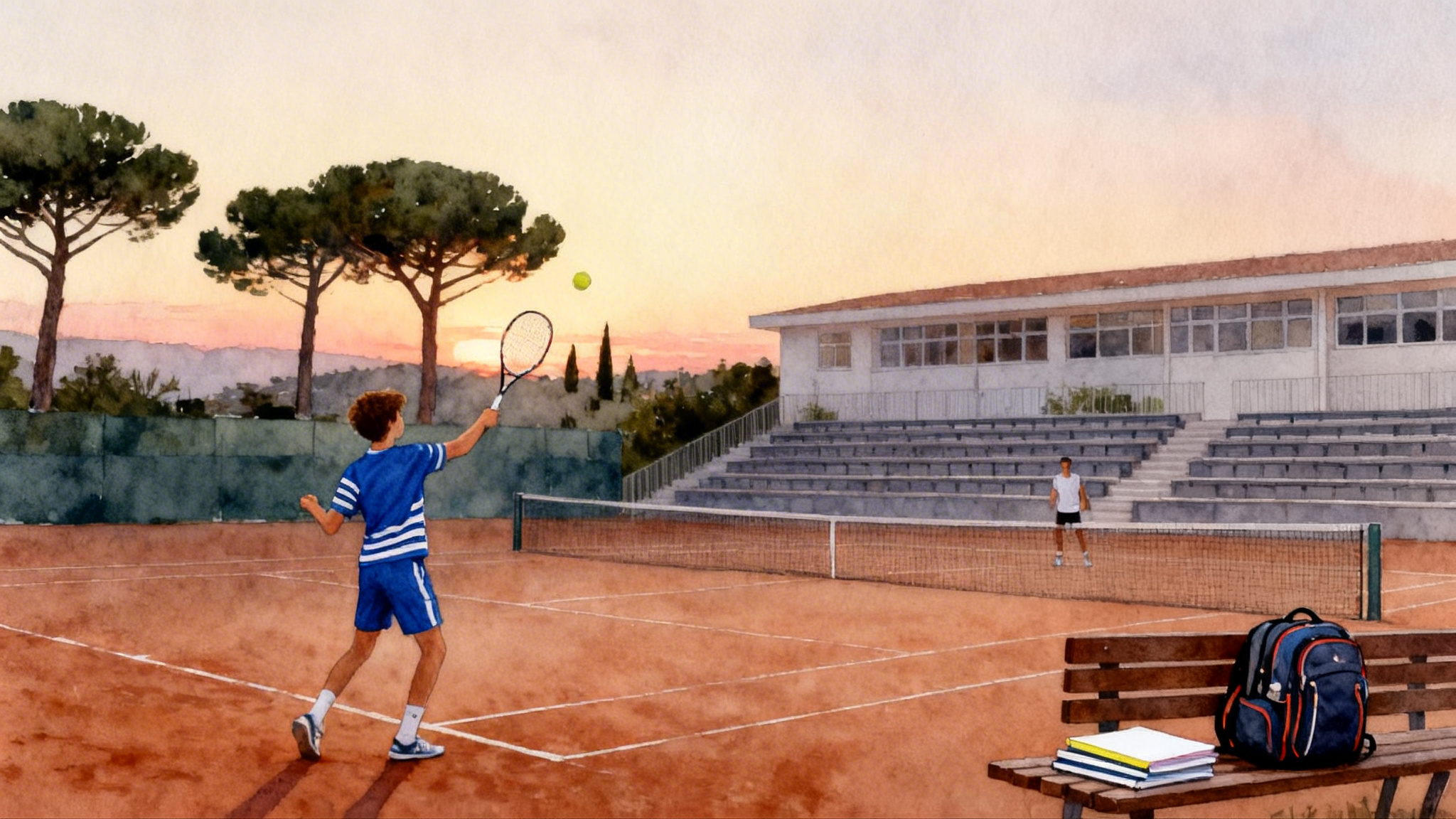
Jannik Sinner grew up in South Tyrol, a village kid who could carve turns on snow almost as well as he could time a backhand. At thirteen he and his family made a choice that separates weekend talent from world class: he relocated to Bordighera on the Ligurian coast to join coach Riccardo Piatti at his training center. It meant a new home, new school routines, a new language rhythm, and a daily environment built around one thing only, getting a little better at tennis by dinner time.
Why leave a supportive hometown community so young? Because the calendar and the body do not wait. When a player hits early adolescence, coordination windows open, stamina expands, and technical habits harden. Sinner’s family saw that keeping him in a generalist setup risked letting those windows close. At Bordighera, he could stack high quality repetitions, guided by a staff with a track record of turning promising teenagers into tour level pros.
Inside Piatti’s daily culture
The Piatti center is not just a place to hit balls. It is a system that turns practice into a language. That emphasis on early contact and compact shapes echoes how JC Ferrero’s Equelite developed Alcaraz. What Sinner absorbed in Bordighera can be grouped into three pillars.
1) Technical detail that survives under pressure
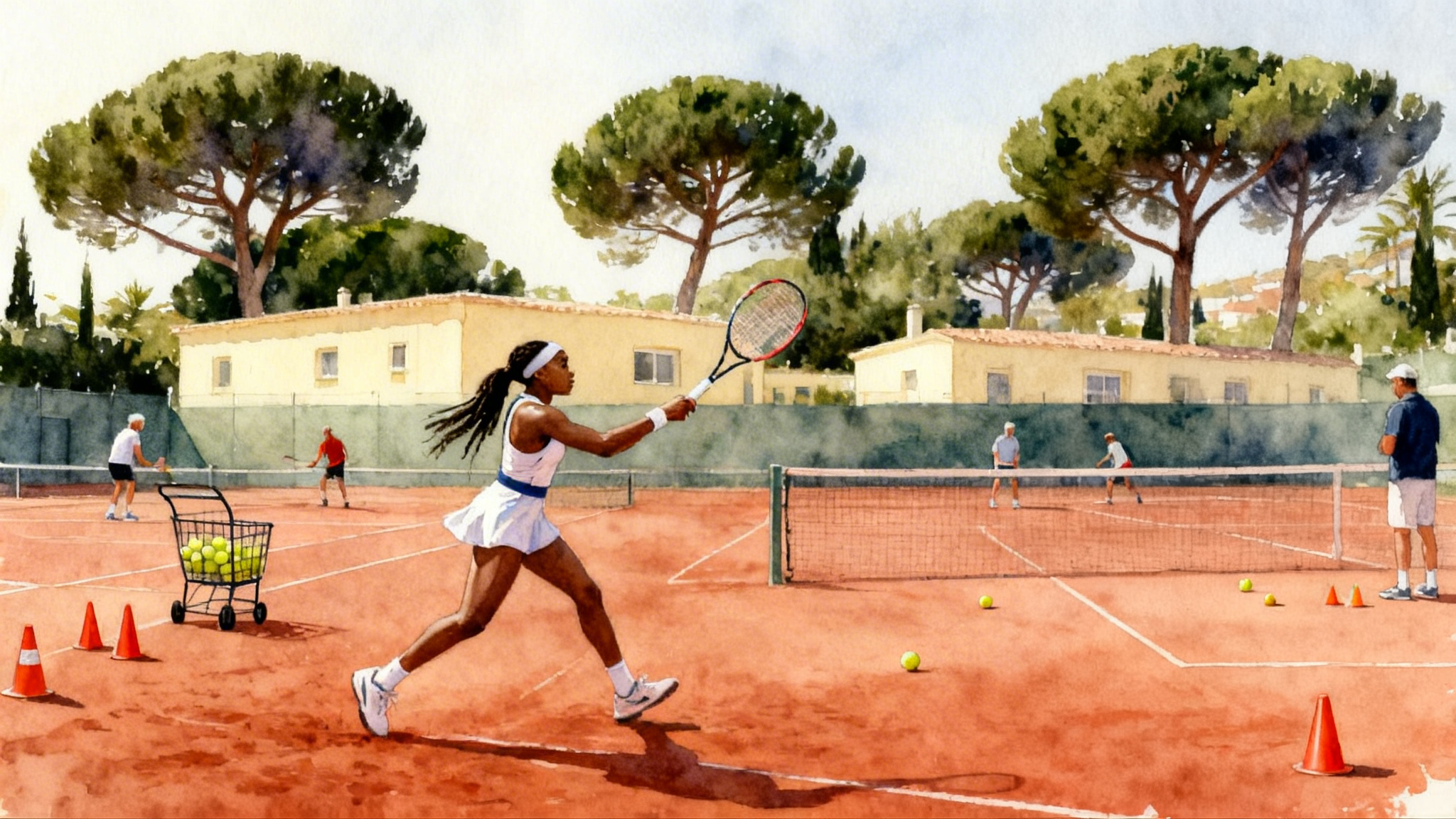
- Early contact as a habit. Coaches built drills that forced Sinner to take the ball on the rise. Feeds came fast, targets were small, and rallies were scored on depth, not just in or out. The result was a backhand that stays compact and a forehand that drives through pace without giant takebacks.
- Footwork loaded from the hips. Sessions emphasized split step timing and first step efficiency. A common constraint was the two bounce rule on approach patterns: if Sinner let the second bounce get too deep, the rep did not count. That taught him to close space and finish points.
- Serve patterns, not just speed. He learned to build points off second serves with inside out forehand starts, mixing wide and body targets to set up first ball offense even when speed was not perfect.
2) Physical capacity with a skier’s balance
Sinner arrived with the balance and ankle strength that years on snow can give a teenager. Piatti’s team turned that into tennis endurance and elastic speed.
- Elastic strength before brute strength. Medicine ball throws, band work, and short shuttle accelerations came before heavy lifting. The goal was to be springy through long rallies rather than bulky for a few highlight points.
- Repeatable engine. Interval blocks matched likely match scenarios: 45 second rallies replicated with 90 second turnovers, then later stacked into 20 minute pressure segments. That is why Sinner’s fifth set movement looks like his second set movement.
3) Mental routines that travel
- Process in, score out. Each practice block began with a single controllable: first ball height, return position, or split step call. Coaches rated the session on whether the process stuck, not the winner count. Score looked after itself.
- Normalized stress. Simulation days were built to make pressure feel ordinary. Umpires, towels, time between points, even practice crowds were used so that match pace was not a shock. By the time Sinner stepped onto bigger courts, he had played that movie in his head and on practice courts dozens of times.
If you are mapping options on the Riviera, compare structures like the All In Academy training model.
Milestones while at the academy
Results are never the only story, but they are the best audit of method.
- The first professional breakthroughs came fast. Still based in Bordighera, Sinner rose through Futures and Challengers, showing the two things academies dream of developing: clean patterns and a body that recovers overnight.
- In 2019 he announced himself to the wider tennis public by winning the season ending Next Gen event in Milan. The stage lights did not wobble his balance, and the early contact backhand that had been drilled for years suddenly looked like a cheat code against pace.
- In 2020 he reached the Roland Garros quarterfinal as a teenager. Clay courts revealed the depth control he built on the Ligurian red dirt. The ability to step inside the baseline on heavy topspin is not a switch you flip. It is the memory of thousands of short hop reps.
- By 2021 he was banking tour titles and competing at Masters 1000 level. The step from promising to reliable often breaks on the serve. His did not, because the academy had made serve plus one a solvable pattern with targets, not a mystery of hope and adrenaline.
This arc resembles Niki Pilic’s shaping of Novak Djokovic, where a clear base preceded pro level breakthroughs.
The 2022 handover and what changed
In early 2022 Sinner ended his work with Piatti’s team and moved to a new two coach model under Simone Vagnozzi with Darren Cahill joining that summer. Some fans read any split as drama. In reality, a good academy relationship often ends when it has done its job.
What did the new team emphasize?
- Serve height and location discipline. You could see a higher first serve percentage without sacrificing pattern clarity. T targets to the deuce side and wide sliders on the ad set up the forehand lanes he likes.
- Front court skills. There was a clearer plan to finish at net, not only when dragged in but as a chosen endpoint to patterns. The volley technique did not reinvent itself, it just became part of the decision tree earlier in rallies.
- Defensive variety. Under Vagnozzi and with Cahill’s eye, Sinner added better depth on the backhand slice and a more flexible return position against big servers. Those are the micro tools you introduce once the macro base, built in Bordighera, is non negotiable.
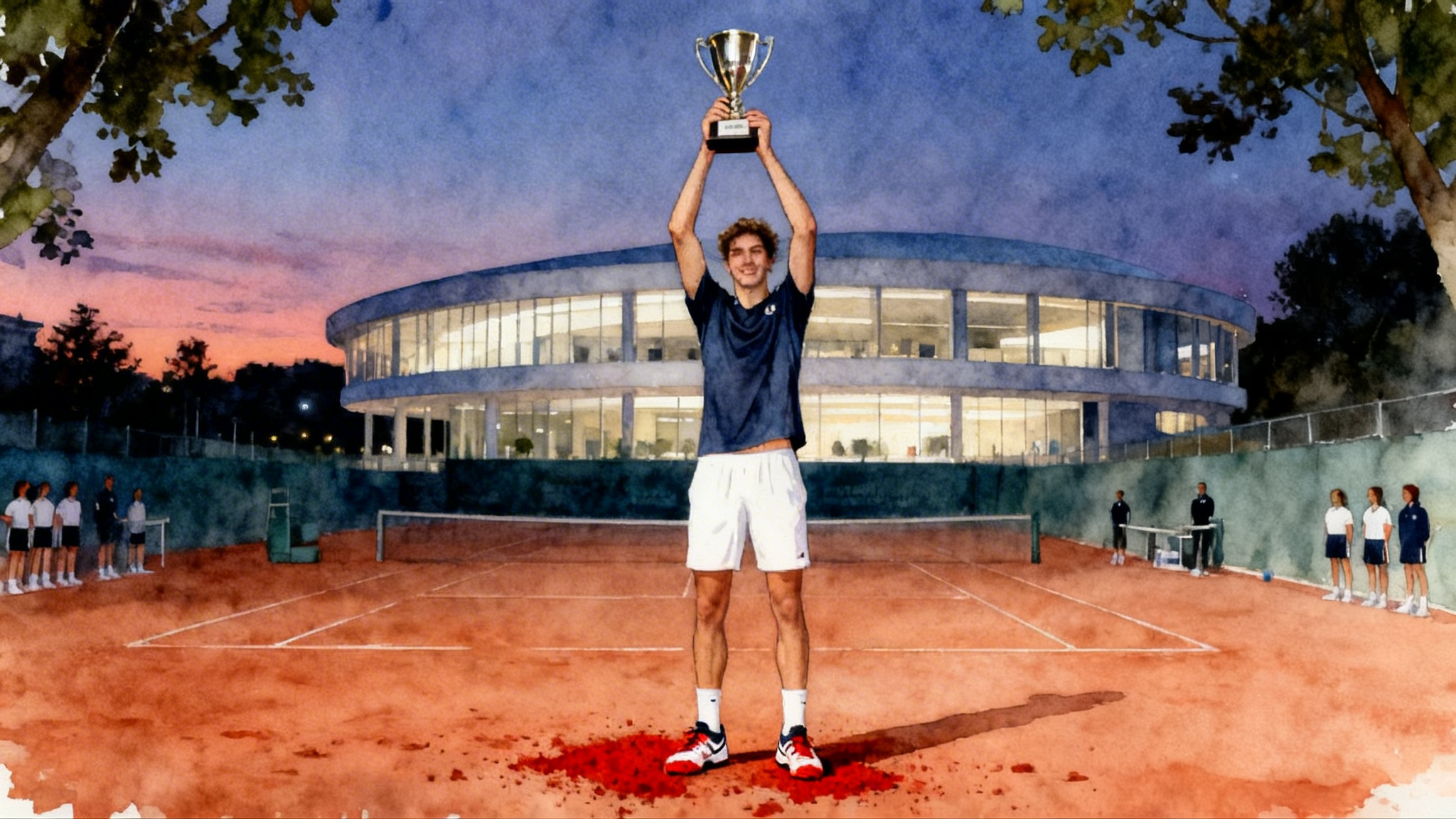
By 2023 and 2024 the results validated the sequence. He lifted his first Grand Slam trophy in Melbourne in 2024 with Sinner’s 2024 Australian Open title, and he led Italy to a Davis Cup title in the same period. The lesson is not that the academy was replaced. It is that the academy built a platform sturdy enough for a bespoke team to stand on and reach higher.
Actionable lessons for families
Most families will not raise a Grand Slam champion. Many will still face similar decisions. Here is how to borrow the parts of Sinner’s pathway that generalize.
1) When to relocate
Relocation is not a rite of passage. It is a trade.
- Skill floor first. If your player cannot rally 20 balls crosscourt with shape, land 6 of 10 second serves to a target, and split step on time in live points, the academy will spend weeks fixing basics you can build at home. Relocate only when the floor is solid.
- Growth windows. Ages 12 to 15 are golden for coordination and movement patterning. Earlier moves risk burnout. Later moves may miss the neuromuscular window. If school and family can support it, the thirteen to fourteen pivot is often the sweet spot because bodies can handle added volume and players are still programmable.
- Trial blocks. Before any move, do a two to four week trial at the academy. Track three metrics you care about, such as first serve percentage in practice sets, unforced error rate from neutral rallies, and recovery heart rate five minutes after a set. If none improve, the fit is not right or the timing is off.
2) How to choose an academy
Skip glossy photos. Ask for receipts.
- Coach to court ratio. Ideal is one coach for two players on live ball days, one coach per player for technique days. Anything worse than two coaches for six players in key sessions is crowd control, not development.
- Video and data habit. Not fancy motion labs, just routine. Ask how often they record practice sets and how they tag clips. If the answer is not weekly and searchable, the feedback loop is too slow.
- Integrated fitness and physio. Look for a weekly plan that lists strength, speed, mobility, and recovery with names assigned. A trainer who knows your player’s serve day is tomorrow will protect legs today.
- Match play calendar. Demand a published schedule of internal match days, practice sets, and tournament travel blocks. Improvement needs pressure rehearsals, not only baskets of feeds.
- Educational support. Confirm there is a clear schooling pathway that fits your player. The best programs have a designated school liaison, quiet study slots on the daily schedule, and proctored test options during travel.
- Parent transparency. You should receive a monthly report with two positives, two focus areas, and three simple tasks for home breaks. If the academy will not commit to this, expect mixed signals and guesswork.
3) School and travel that actually work
You can have both. You just cannot improvise both.
- Pick a school model. Options are in person with flexible hours, accredited online programs, or a hybrid. Make the choice before the move and test the login, assignments, and exam proctoring during the trial block.
- Lock daily anchors. Set two non negotiable 45 minute study windows on training days. Tie them to meals. For example, study 45 minutes after lunch and 45 minutes after dinner, then lights out. The body loves rhythm, and so does the brain.
- Travel syllabus. For each tournament swing, ask teachers for a pared down syllabus with due dates. Pack analog backups like printed problem sets. Bandwidth fails in hotel lobbies when you most need it.
- Vocabulary plan. If your child is moving countries, add a short daily language habit. Ten minutes of vocabulary before breakfast pays off in coach communication and friend making.
4) Designing a year that compounds
Do not maximize any single week. Maximize the slope of the year.
- Block your year. Use six to eight week arcs that finish with competition and then a deload. Within each arc, build a mini progression: technique focus in weeks 1 to 2, heavy practice sets in weeks 3 to 4, tournaments in weeks 5 to 6, recovery and review in week 7.
- Track three numbers. Choose a physical number like repeated sprint test time, a technical number like first serve percentage in practice sets, and a tactical number like break point conversion in matches. Graph them monthly. If the slope is flat for two arcs, change something.
- Recovery is a session. Put sleep and soft tissue work in the schedule, not in the margins. Write it on the whiteboard next to forehand drills.
5) Knowing when to shift to a bespoke pro team
An academy is a greenhouse. A pro team is a farm. The crops are different.
- Performance thresholds. Consider a shift when your player lives inside the top 150 to 200 in the world and is holding seeds or winning rounds consistently at Challenger level. If ranking progress stalls for nine to twelve months in a group setting, the marginal return of bespoke attention may exceed the academy’s value.
- Problem profile. If the next gains require dedicated serve work, specific return patterns against elite pace, or body remodeling to handle best of five, those needs are hard to solve in mixed groups with mixed goals.
- Team composition. A typical bespoke setup includes a lead coach, a secondary coach who can run weeks alone, a strength and conditioning coach who travels in key blocks, and a physio who knows the player’s history. Budget for a performance analyst part time. Build this stepwise rather than all at once.
- Budget reality. Ask for costs in three columns: coaching day rates on the road, home base salaries or retainers, and travel expenses. Compare this to current academy fees plus travel. Many families discover the bespoke model is similar in cost once a player is deep into the tour calendar.
- Graceful exit. Leave the academy with gratitude and clarity. Request a dossier with testing history, injury notes, and technical priorities. A good academy will hand this over because your success is their best marketing.
A phased blueprint you can copy
Here is a simple version of Sinner’s pathway in phases you can adapt.
- Phase 1, Ages 10 to 12: Build the floor. Rally control, serve mechanics, movement patterns. Compete locally. Keep school fully in person. Test your family’s scheduling muscles.
- Phase 2, Ages 12 to 14: Trial and relocate. Do short blocks at a target academy, then move if the metrics climb. Shift school to a flexible model. Add national events. Start physical screening and a simple strength plan.
- Phase 3, Ages 15 to 17: Turn reps into weapons. Full academy immersion. Weekly practice sets with scoring. Regular video review. International junior schedule with selective pro events. Clear study rhythm with a tutor attached to the academy.
- Phase 4, Ages 17 to 19: Professional launch. Mix Challengers and lower tour events. Keep the academy as home base but add specialist consults in two or three areas. Do not rush to a bespoke team until you have a problem profile that justifies it.
- Phase 5, Ages 19 to 22: Bespoke build. Shift to a lead coach and small traveling staff when ranking and needs suggest it. Preserve the habits the academy gave you. Layer in serve targets, front court finishes, and travel recovery plans that fit adult bodies and best of five demands.
Conclusion: what Bordighera really gave Sinner
The story from South Tyrol to Bordighera and then beyond is not about one genius tweak or a magical drill. It is about sequence. First a family chose an environment that prized early contact, clean footwork, and patient repetition. Then a teenager learned to love boring excellence. After that, a new team stepped in to sharpen the edges required for the very top. The academy did not create the final version. It created the version that could become the final version.
Families can use the same sequence. Test the floor. Move only when the environment will multiply your work. Demand systems that capture video, protect bodies, and normalize stress. Keep school steady by design, not by hope. And when the time comes, do what Sinner did in 2022: thank the greenhouse, then plant in a bigger field. That is how a promising player turns the daily grind into a career.