From Metz to All In: Tsonga and Ascione’s plan for Humbert
Ugo Humbert’s choice to anchor with the All In Academy from late 2020, under Thierry Ascione with day‑to‑day work by Nicolas Copin, reshaped his training into a two‑campus rhythm and fueled his best indoor seasons with multiple Association of Tennis Professionals titles.
 Tommy
Tommy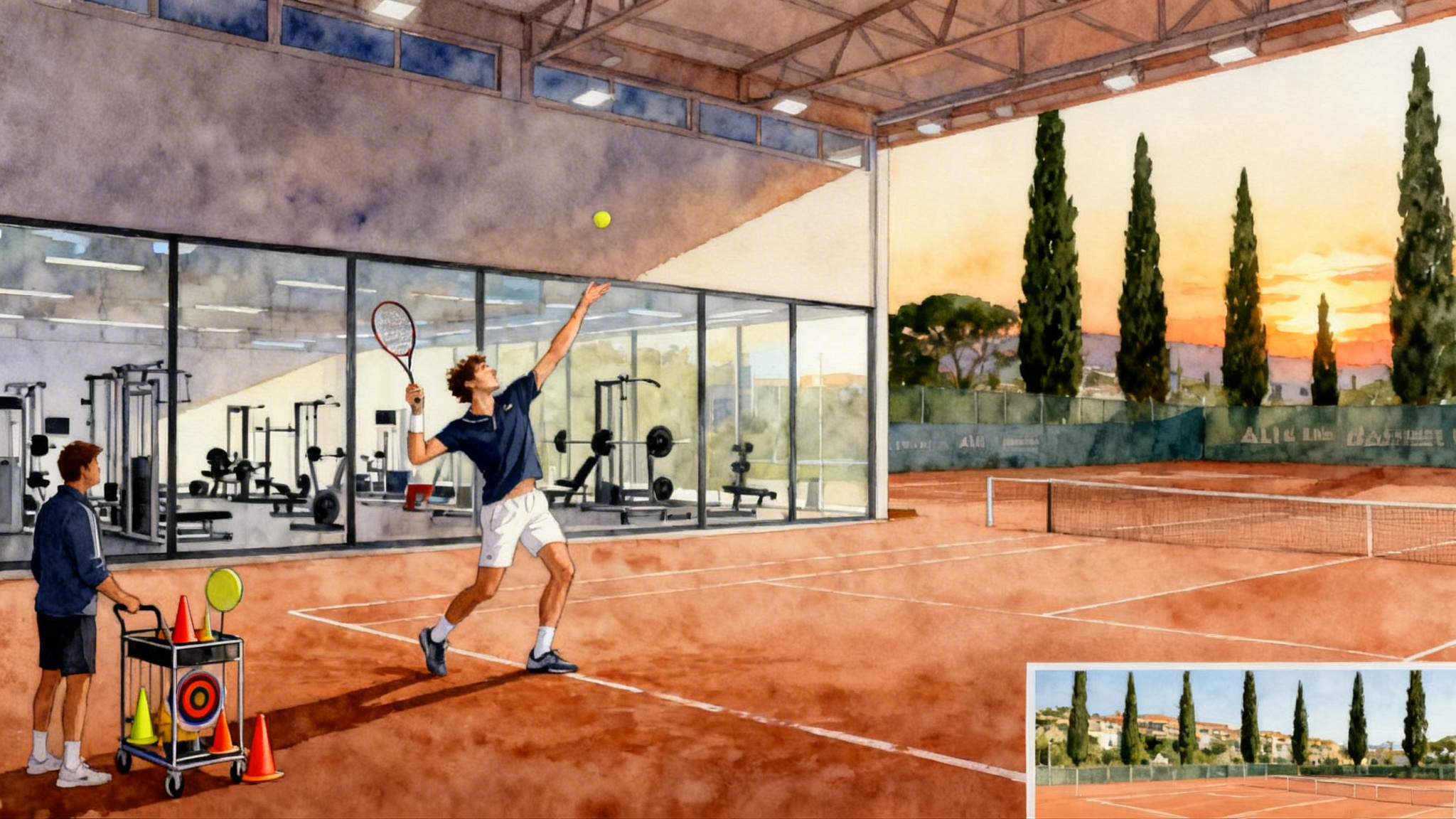
The decision that changed Humbert’s rhythm
In late 2020, Ugo Humbert made a quiet but decisive move. The left-hander from Metz committed to the All In Academy, a structure built by Jo-Wilfried Tsonga and Thierry Ascione, and set his daily work under coach Nicolas Copin within Ascione’s broader guidance. The switch was not a headline grabber at the time. Yet as the next seasons unfolded, Humbert’s tennis gained a clearer identity, his scheduling became more deliberate, and his results hardened into a pattern: deep indoor runs in France and beyond, and signature trophies like his Dubai title in 2024.
This is a story about infrastructure meeting intention. All In’s two-campus model, a unified staff that coordinates on court with physical and mental preparation, and a training calendar designed to mirror tour conditions created a feedback loop for Humbert. Each block of work primed him for the next block of competition. Families who are weighing academy choices can borrow the same logic. For more context on two-site systems and player development, see how the Piatti Academy forged Sinner and how the Ferrero Academy shaped Alcaraz.
What All In really offers: two campuses, one playbook
Plenty of academies advertise courts and gyms. What set All In apart for Humbert was a two-site system that behaves like one organism.
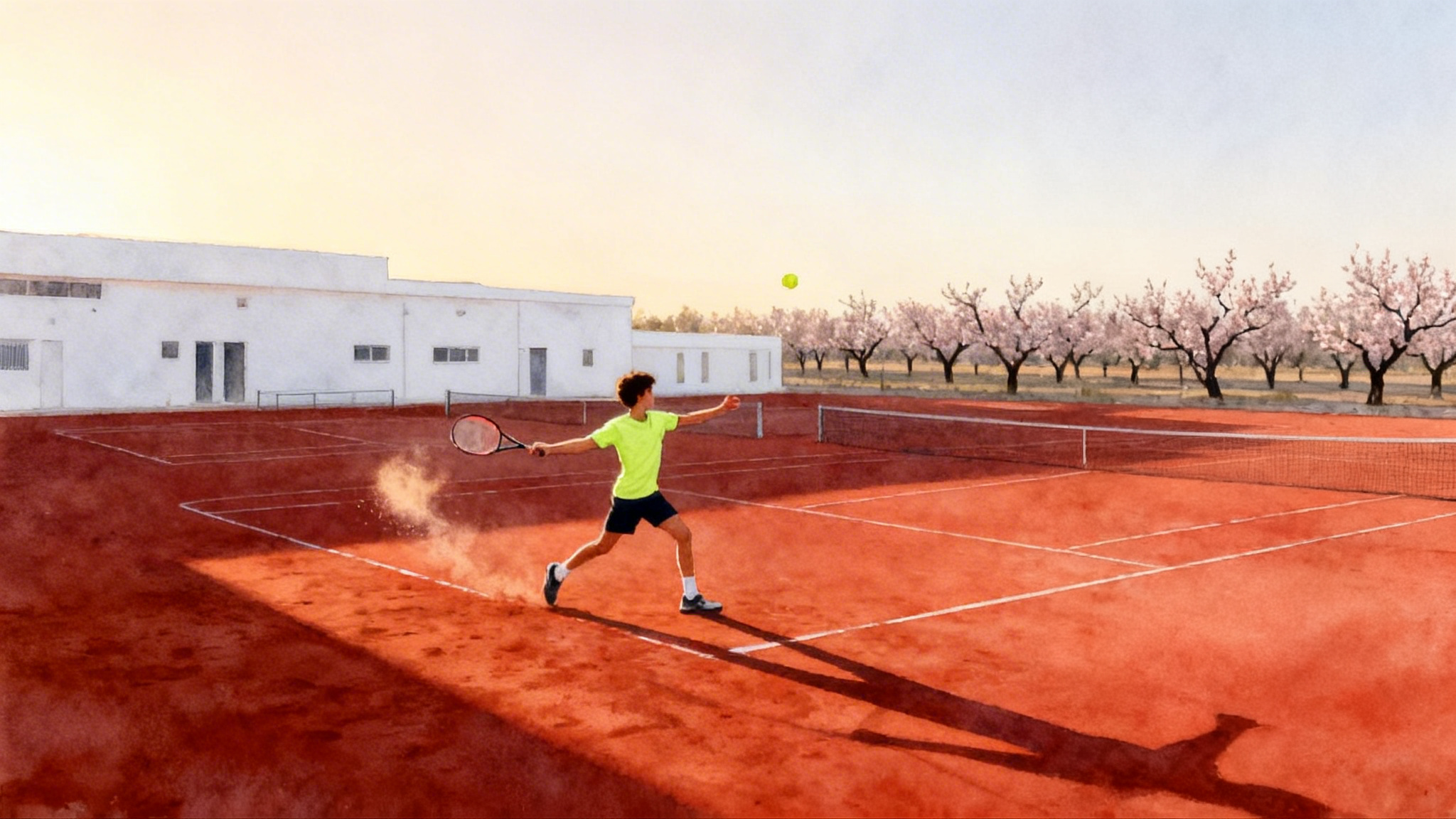
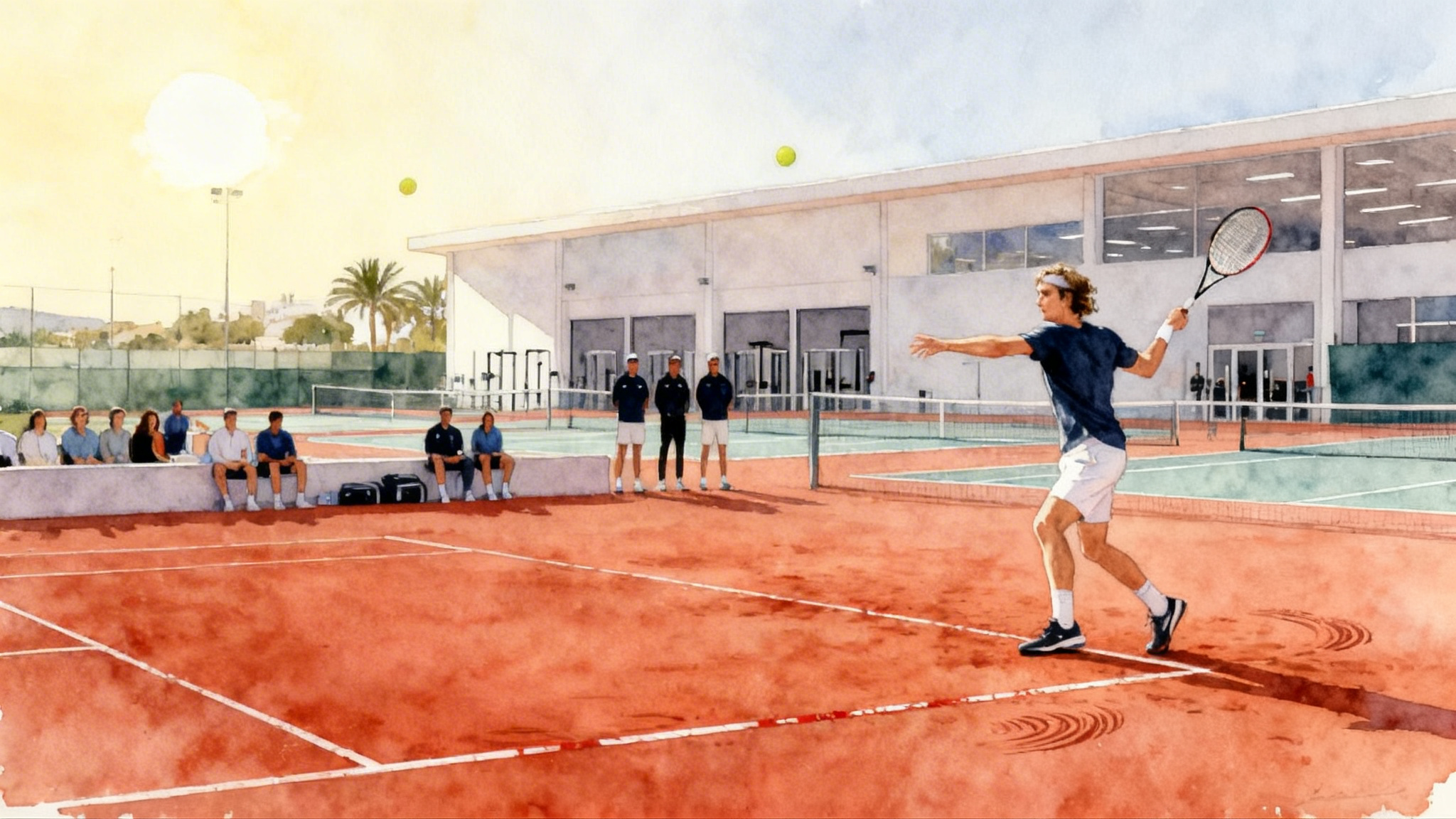
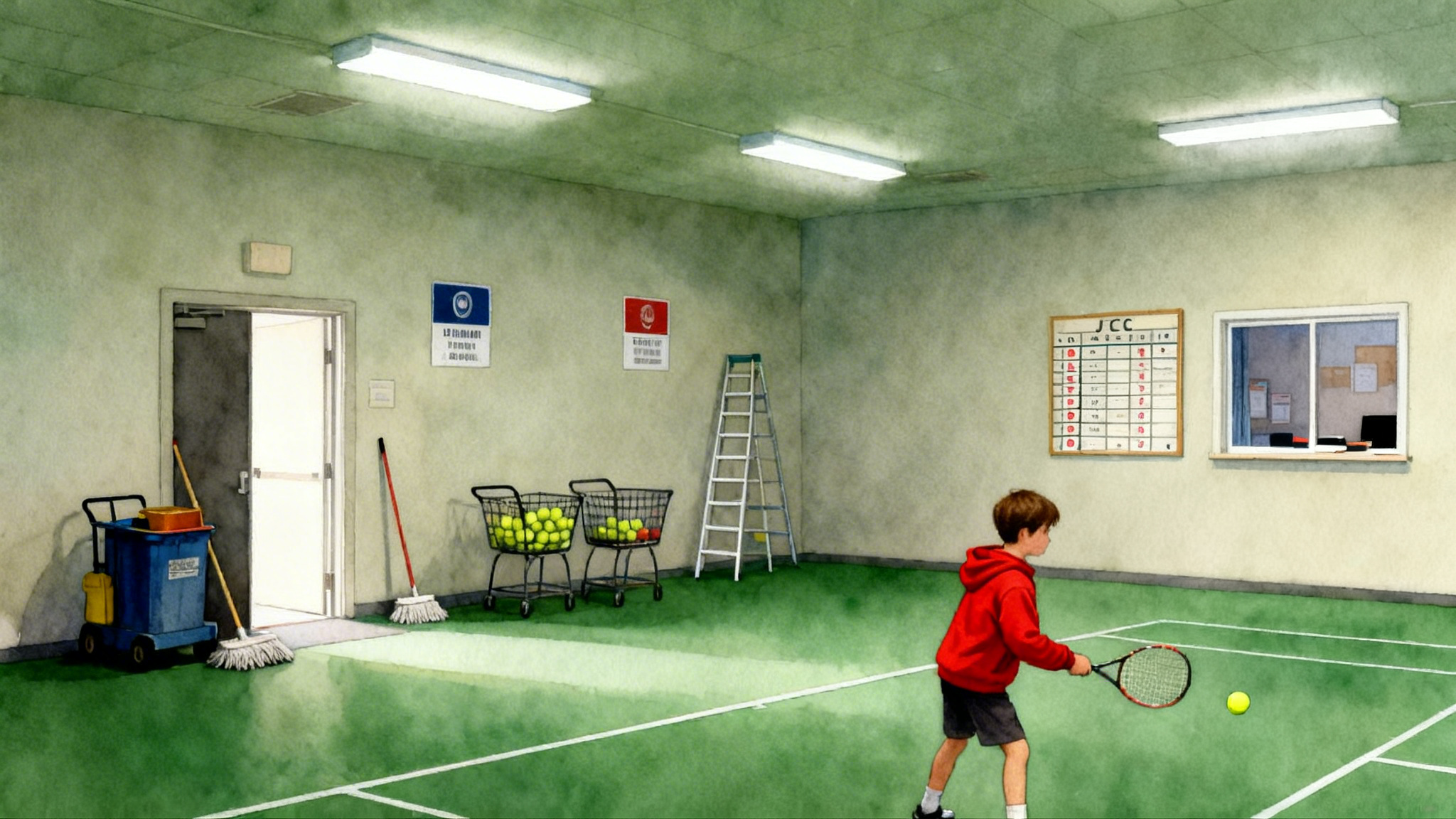
- Lyon campus (Décines-Charpieu): indoor reliability, high-density facilities, and a school setting that allows true periodization. When the weather turns, courts remain available, recovery spaces are close, and the day flows without wasted time.
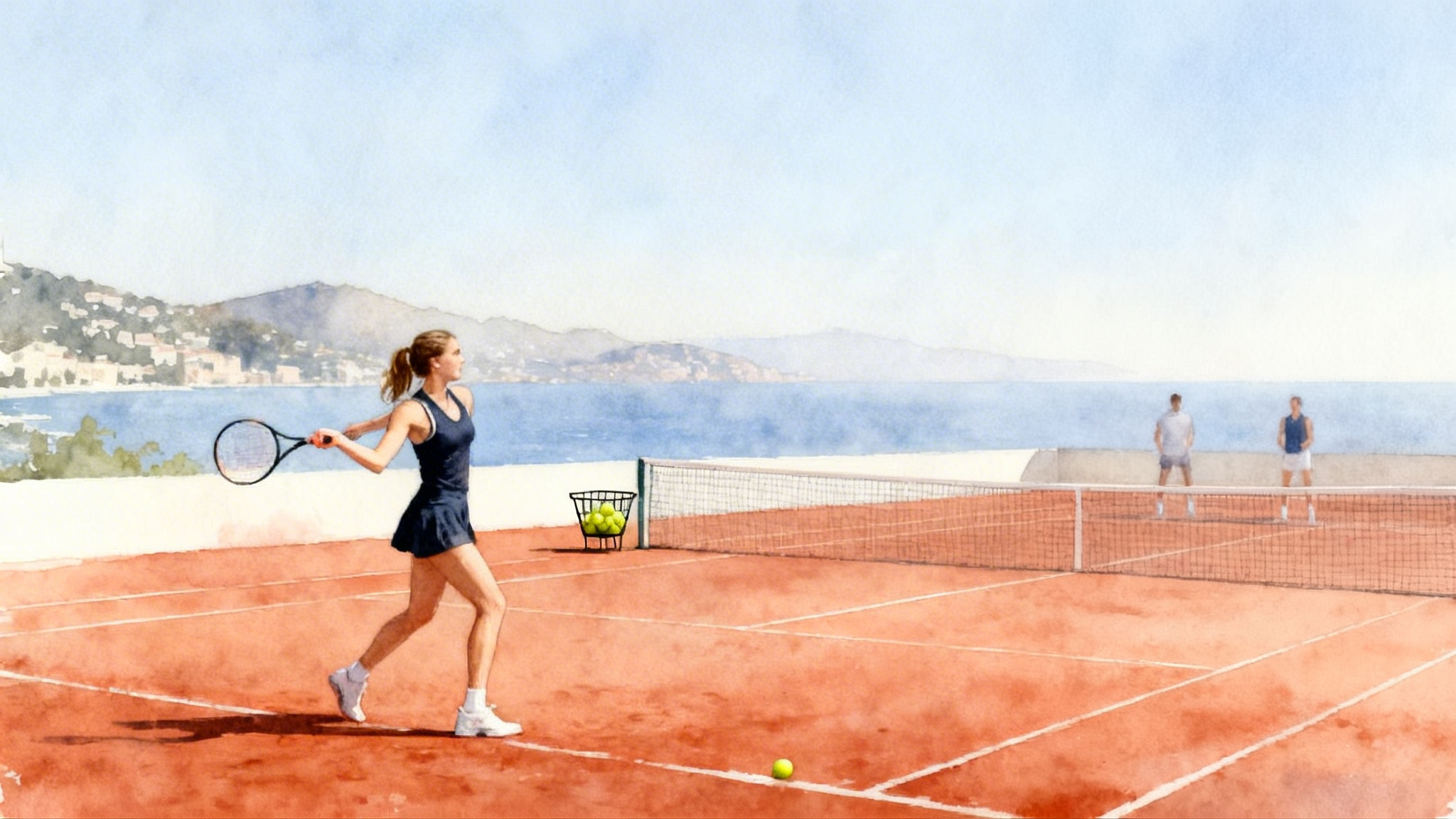
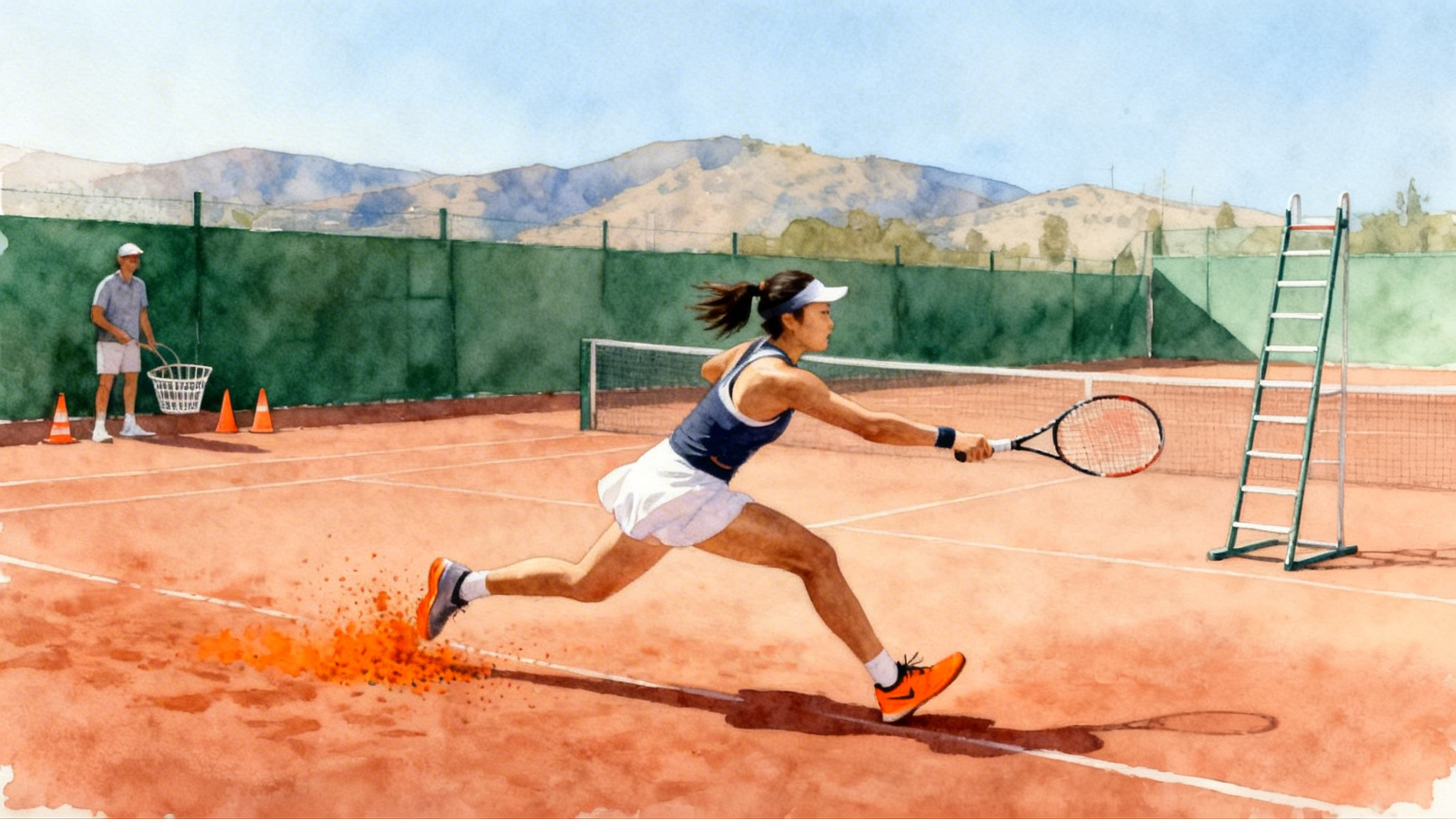
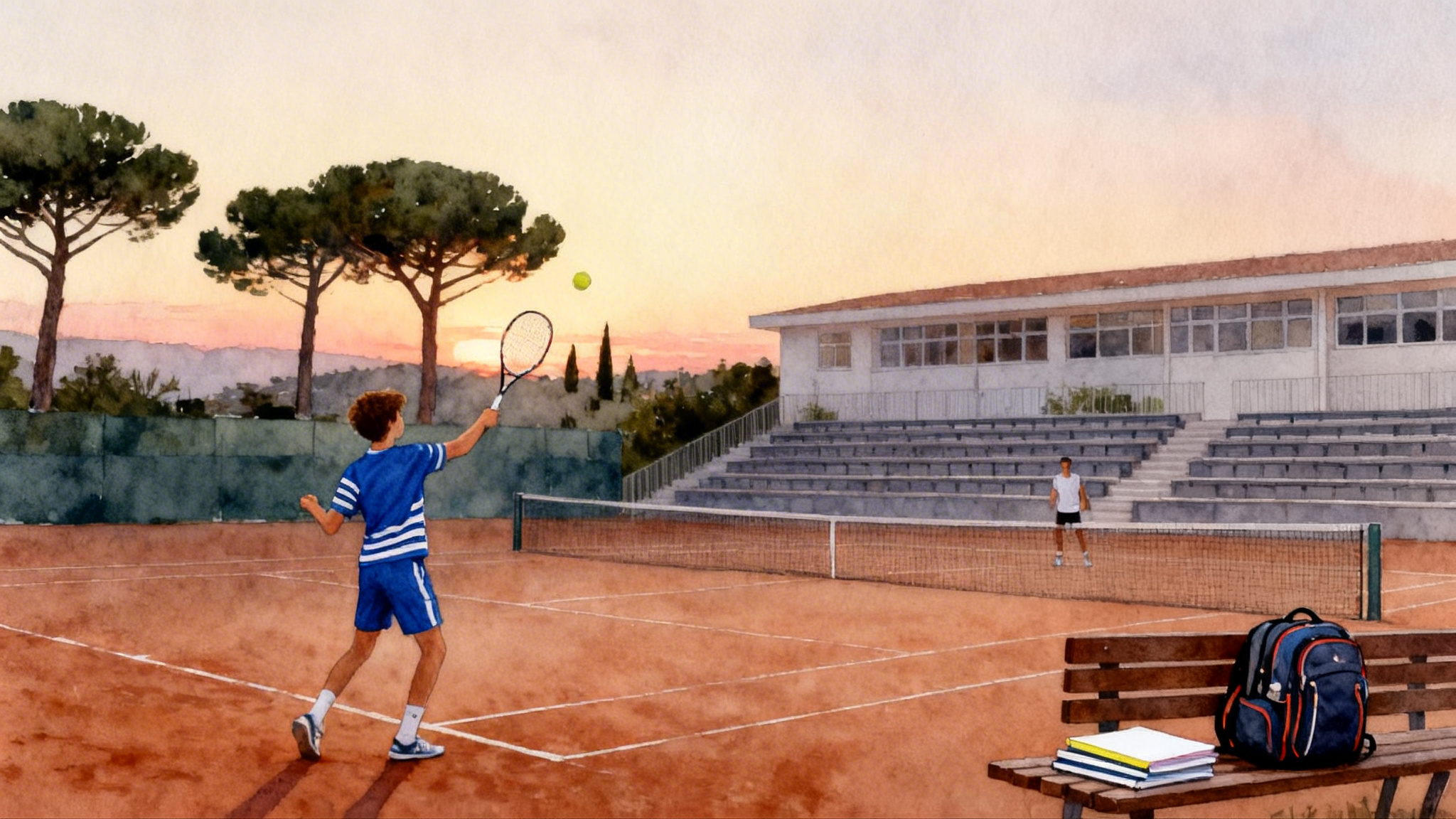
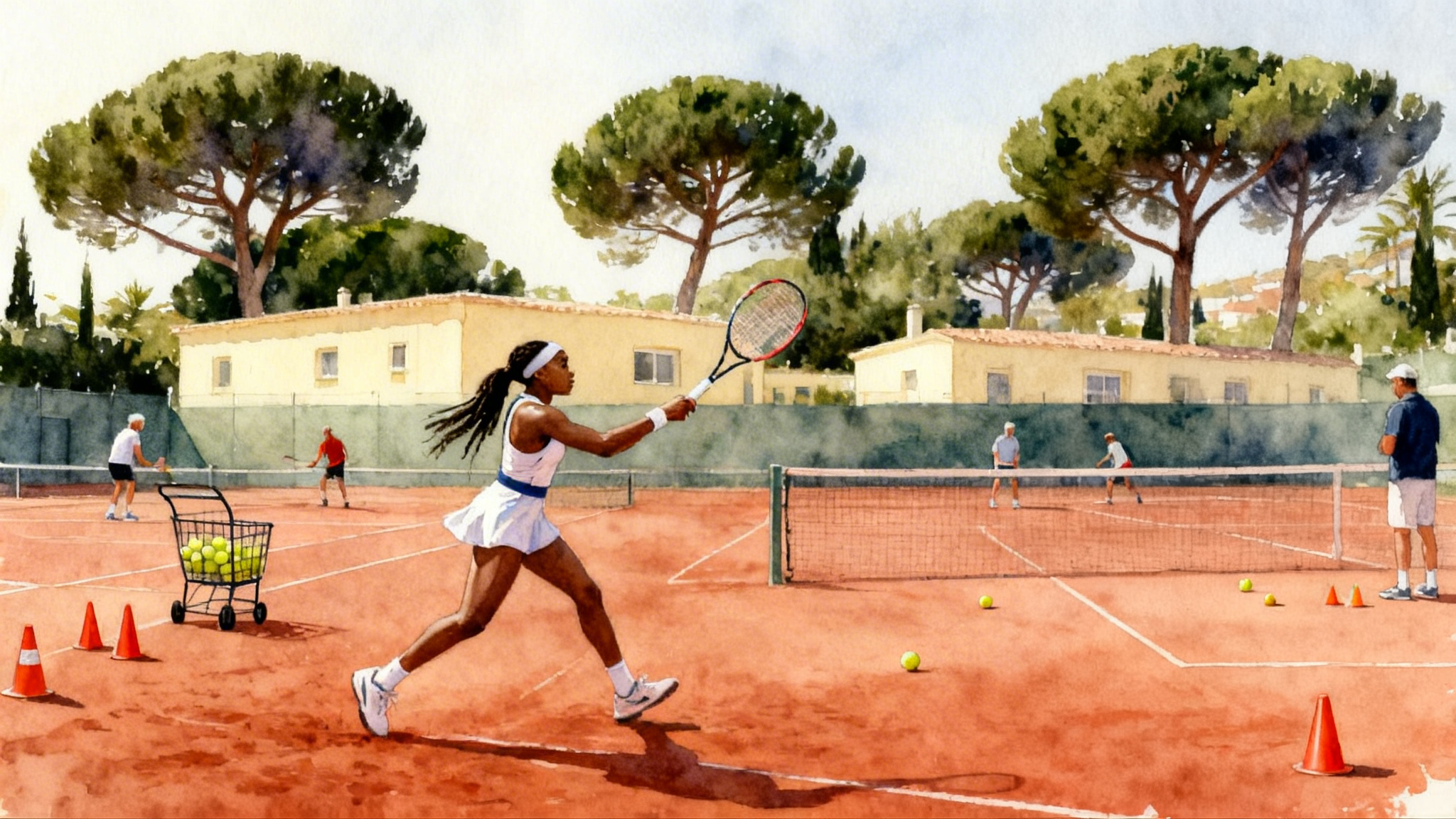
- Côte d’Azur campus (Villeneuve-Loubet): faster outdoor hard, different light and wind, and the kind of humidity and sea-level bounce that you meet each February and March on the Middle East swing. The setting is not a postcard, it is a rehearsal space.
All In’s staff operate as a single unit across the two locations. That matters. A player can do a volume block in Lyon, then ship south for tempo and decision-speed work without starting from zero or losing continuity with coaches, fitness, or routines. The academy plays like a home-and-away series, not two separate teams. For a quick overview of facilities and curriculum, read the All In Academy profile.
A staff built around a left-hander’s identity
Humbert’s game looks simple from the stands: a lefty serve that opens the court, early-taken backhands, and forehands that change lanes more than they explode through the court. The simplicity is deceptive. Timing and structure are everything, and that is where a unified staff helps.
- Technical lens: The team kept the left-side patterns front and center. That meant deuce-court slice serves for body jams, ad-court wide serves to pull the returner off the alley, and third-ball geometry that finishes in the open lane. In practice this looked like live point-play with constrained targets and court gates rather than endless feeding.
- Tactical lens: Humbert is at his best when the first two shots are scripted but he is free to improvise on ball three and four. The academy built small-sided games that forced earlier contact, like service-line starts or reduced-court diagonals that punish late preparation.
- Physical lens: Lyon sessions stacked gym, court, and recovery within one map, so tempo never died. That sustained heart rate turns technical work into a match-like load. The Côte d’Azur blocks added footwork in light wind and bright glare, so tracking and contact height stayed consistent when he shifted outdoors.
- Mental lens: Rather than bolt on visualization at the end of practice, brief reset routines were embedded into live sets. A breath at the towel, a cue word before serve toss, a short anchor after errors. The point was not to become a different person. The point was to leave each drill with a repeatable restart.
Why the two-campus model mattered for results
Humbert’s record the past few seasons is not an accident. His training blocks lined up with his competitive calendar.
- Autumn to early winter in Lyon created a laboratory for the French indoor swing. The lighting, the surface pace, even the depth perception of an indoor ceiling build instincts you cannot fake outdoors. That set him up to win at home and to be comfortable on quick points when the margins are tight.
- January tune-ups split between indoor foundations and short outdoor bursts in the south matched the transition from European practice to the Association of Tennis Professionals calendar, which flips surfaces and conditions quickly.
- February and March on the Côte d’Azur mirrored Middle East hard courts. Ball speed and contact height behave differently in dry air and evening sessions. Practicing toss stability and first-step acceleration in that light is not just general fitness, it is specificity.
This is the same logic orchestras use before a new hall. You rehearse in a room with similar acoustics, then you open the program in tune. Humbert’s team rehearsed the tour’s acoustics.
Proof on the scoreboard
Results do not prove a method on their own, but they do tell you if the method fits the player. After committing to All In from late 2020, Humbert consolidated his strengths: a first-strike indoor style that travels and a calm decision-making baseline under pressure. Titles followed in different contexts, with a special concentration indoors in France and a notable win beyond Europe in Dubai. The week in the Gulf in March 2024 checked every box the south-of-France blocks aim to simulate: night sessions, quick hard courts, and opponents who thrive in first-strike tennis. He completed the week with a trophy and a clear blueprint for future swings.
On the coaching side, the arrangement was clear and stable. Humbert worked day to day with Nicolas Copin under the umbrella of Thierry Ascione and the academy structure, a partnership that began in October 2020 and matured through his strongest seasons. Tennis Majors summarized the setup succinctly in French, noting his coaching setup since October 2020.
The mechanism under the hood
Families often ask which factor matters most: coaching, facilities, or schedule. The honest answer is that it is the connection between the three.
- Matching style to philosophy: All In’s philosophy for pros emphasizes taking time away from opponents with early contact, smart serve patterns, and disciplined first-strike choices. That lined up with how a tall left-hander should play. When style and philosophy align, the drills you repeat are the shots you will need at 5-all.
- Coordinated staff, not a single genius: A strong lead coach is invaluable, but gains stick when the fitness team, hitting partners, and mental coach share the same language. That is how a cue like “early shoulder turn” appears in gym warm-ups, in live points, and in debriefs after matches. Consistency turns a tip into a habit.
- Block training that mirrors the next six weeks: Blocks that look like the next tournaments sharpen anticipation. If humidity will slow the ball and lift the bounce, you build higher contact windows and heavier legs in practice. If you will face indoor lighting and quicker skids, you train flatter through the court and play more drive volleys.
Takeaways for families building a pathway
Here are three concrete, repeatable steps you can use, whatever your player’s level.
- Align on-court style with an academy’s philosophy
- What to do: Ask for two things before you commit. First, a short playing-style assessment after a trial session. Second, a written example of a one-week plan that targets that style.
- Why it matters: Philosophy shows up in daily constraints. If your player needs to take the ball early, but the drills are mostly slow-feed baskets, you will build a habit that fails under match speed.
- How to execute: Watch the academy’s top players for 30 minutes. If your child’s ideal version looks like those players, you are likely in the right place.
- Build a coordinated support team through the academy
- What to do: Identify a lead coach, a fitness coach, a mental skills point person, and a hitting partner pool. Put them on a single shared plan with one page per week.
- Why it matters: Tennis is a game of transitions. Players fall into gaps when the gym does not reflect what the court demands or when the mental routine fights the tactical cue.
- How to execute: Ask the academy how weekly debriefs happen. Request that one person owns a Monday memo with three action items that every staff member sees.
- Use targeted training blocks to mirror tour conditions
- What to do: Map six weeks at a time. If you live near Lyon, schedule indoor blocks before indoor events. If you can reach the Côte d’Azur, schedule outdoor tempo work before Middle East or spring hard-court trips.
- Why it matters: Specificity beats volume. The body and brain adapt faster when the practice “sounds” like the matches you are about to play.
- How to execute: Choose one environmental factor per block to reproduce. For indoor blocks, raise serve rep counts under constant lighting. For coastal blocks, practice in late afternoon glare and light wind with serve plus one patterns.
A sample two-week blueprint, Lyon and Côte d’Azur
Below is a simple example that mirrors how Humbert’s calendar often flowed. Adjust volume and intensity for age and level.
-
Week 1 in Lyon
- Monday: Morning gym strength with posterior-chain emphasis, then serve plus first-ball patterns on indoor hard. Afternoon reduced-court diagonals to enforce early contact.
- Tuesday: Fitness emphasis on acceleration over 5 to 10 meters, then live tiebreak sets indoors with depth targets taped to the court.
- Wednesday: Recovery, mobility, and video. Short afternoon hit for rhythm, then mental skills session that defines a three-step between-point routine.
- Thursday: Return games starting inside the baseline, heavy on ad-court lefty patterns. Gym power session with medicine ball throws mirroring serve motion.
- Friday: Match play with conditions that reward first-strike patterns. Post-session debrief, write next week’s cues.
-
Week 2 on the Côte d’Azur
- Monday: Outdoor timing session in light wind. Serve toss stability, forehand through the court, and defensive lobs in crosswind.
- Tuesday: Night session simulation. Start at dusk, practice second-serve points that begin with a neutral baseline, then escalate to net finishes.
- Wednesday: Regeneration in the morning, data-light review in the afternoon. If your academy has heart-rate or movement data, use it to adjust next sessions, not to chase numbers.
- Thursday: Patterning under fatigue. Ball baskets are allowed only as finishers after live points. Gym session focuses on anti-rotation and landing mechanics.
- Friday: Match play outdoors, final 30 minutes spent on return plus two patterns that you will need in the first round next week.
The aim is not to copy Humbert shot for shot. It is to copy the rhythm: build foundations in Lyon-like indoor reliability, then move to Côte d’Azur-like conditions for speed, light, and decision quickness.
Common pitfalls and how to solve them
- Pitfall: Chasing variety instead of specificity. Solution: Cap the number of environments per month. One indoor and one outdoor base is enough for most developing players.
- Pitfall: Treating fitness as a parallel track. Solution: Put one tennis cue in every gym session. If the week’s tactical theme is early shoulder turn, program med-ball throws and band work that teach the same timing.
- Pitfall: Outsourcing mental skills to a side session. Solution: Bake micro-routines into live points. Track only one behavior per week, like the breath at the towel or the cue before toss.
- Pitfall: Overloading with data dashboards. Solution: Use one number tied to a behavior, like first-serve percentage in tiebreak simulations. Ask whether a change in practice raised or lowered that number.
What parents should ask an academy before signing
- Which two or three patterns define your top players, and how do you teach them under pressure?
- How do Lyon-style sessions differ from Côte d’Azur-style sessions in your curriculum, and who coordinates the switch?
- Who is the player’s point person each Monday morning, and how do they align technical, fitness, and mental cues for the week?
- What does a match-debrief look like, and how do the notes flow into the next day’s drills?
The bigger picture
Results like Humbert’s are not just a matter of talent and confidence. They emerge when a player’s style, staff, and setting form a triangle that does not wobble when the schedule gets hard. All In gave Humbert two stages that behave like one, and a crew that pulled in the same direction. The trophies that followed, including a major overseas victory during the Gulf swing and a run of indoor wins in France, read like the natural output of that design.
For families, that is the real lesson. Choose an academy for alignment, not just for courts. Build a coordinated team through that academy, not a patchwork that meets for the first time on tournament day. Then plan training blocks that make the next matches feel familiar. Do those three things with discipline and your player’s calendar will start to sound like music rather than noise.