From Oslo to Mallorca: How Rafa Nadal Academy Fueled Ruud’s Rise
Casper Ruud left snowy Norway for the Rafa Nadal Academy and turned promise into top 5 results. Here is how intensity-led training, clay-to-hard work, and close mentorship sharpened his forehand, schedule, and composure.
 Tommy
Tommy
Why a teenager from Oslo chose a base in Mallorca
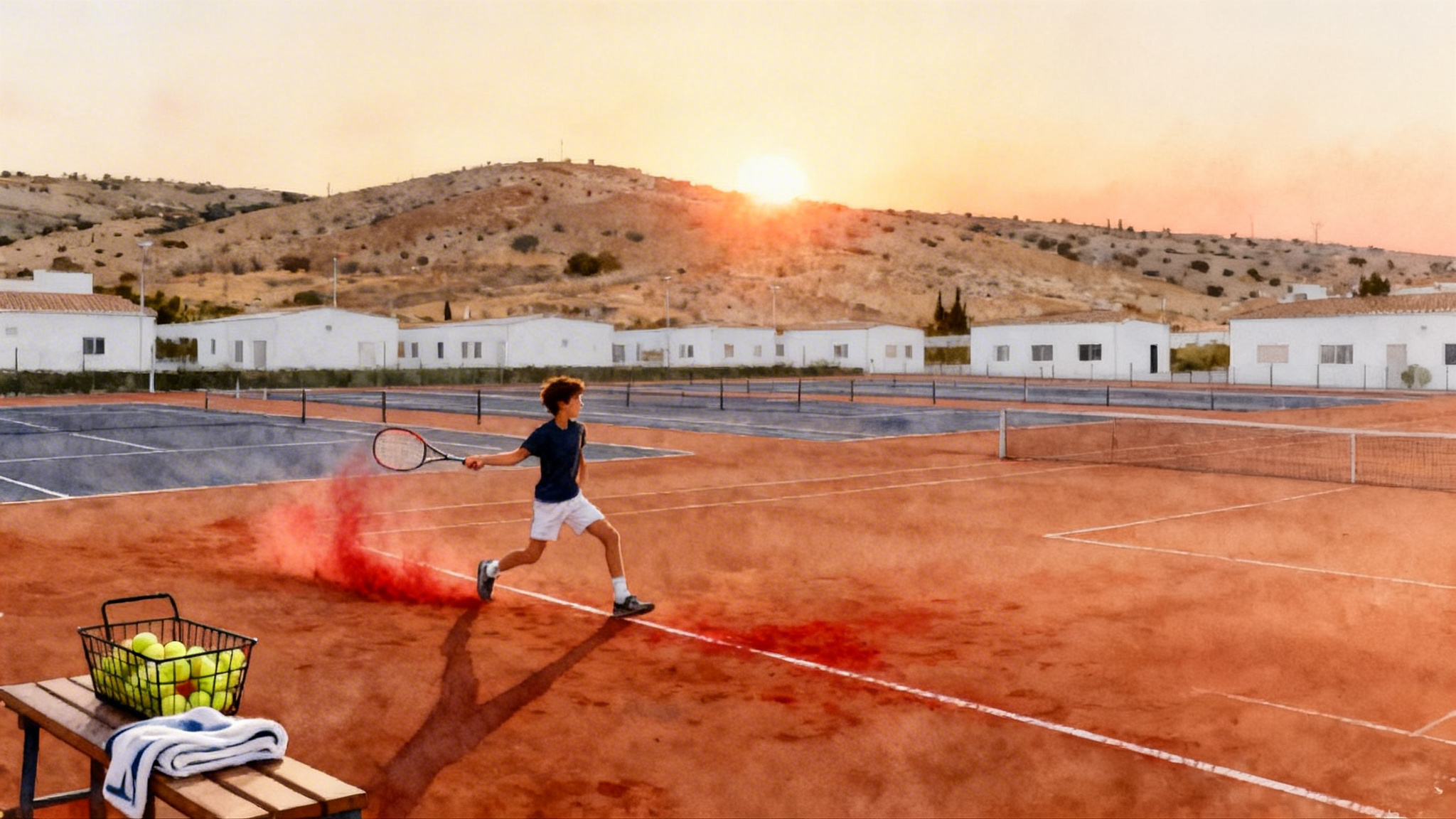
Casper Ruud was already gifted. Clean forehand, reliable temperament, strong work habits that came from a tennis family. What he lacked as a rising pro was not belief but a base. Norway’s winters limit outdoor reps, and stringing together quality hitters every week is hard when the entire national pool trains in different places. In 2018, the Ruud team chose Mallorca and the Rafa Nadal Academy as a permanent training home. That single decision reframed the next few seasons.
A base matters because tennis is decided by repeated micro advantages. If you hit 300 more high-quality forehands per day than your rivals, stack that for 40 weeks, and you have a different player by summer. At a purpose-built campus, the court surfaces, the gym, the recovery, and the hitting partners are all inside the same daily loop. That loop compounds.
The results showed up in ranking climbs and big-match readiness, including deep runs at the majors that placed him among the elite. For context on that arc, see Casper Ruud’s Grand Slam finals. You can spot similar academy-to-tour progress in Sinner’s Piatti pathway to ATP elite.
The wins did not arrive because of one magic drill. They came from a culture built on intensity first, an intelligent clay-to-hard translation plan, and the right mentorship from the Nadal circle.
Inside the intensity-first culture in Manacor
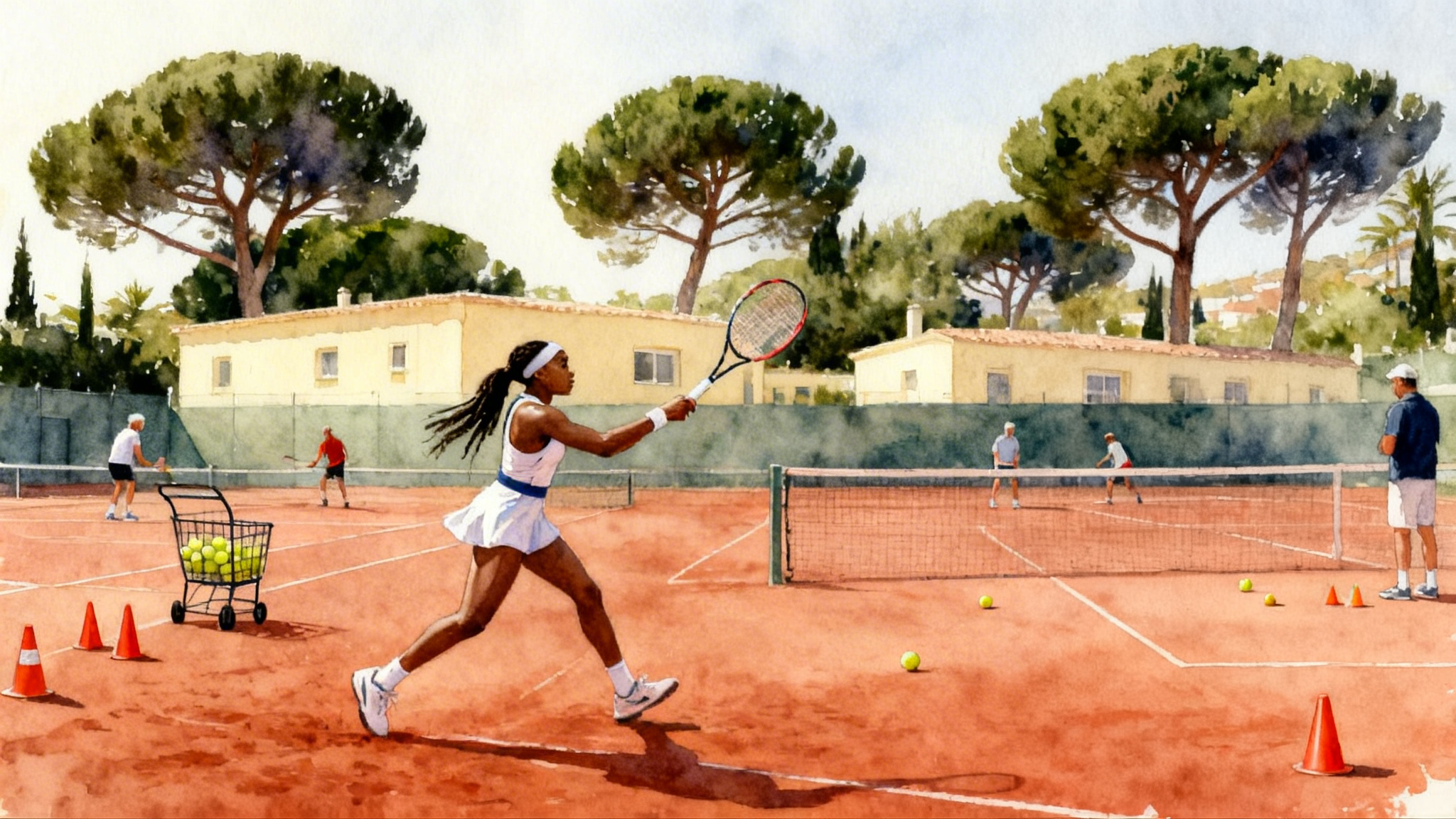
At the Rafa Nadal Academy, intensity is not a mood. It is measured, scheduled, and protected. Coaches there treat practice quality like a match result. Sessions are designed around three non-negotiables:
-
Ball tempo and height over the net. Rally balls must be heavy, not just in pace but in trajectory. A deep, rising ball that clears the tape by a forearm’s length travels with authority and lands near the back third of the court. Players are graded in live drills by the percentage of balls that meet a depth target. If the bar is 70 percent and you come in at 58 percent, the drill extends or resets.
-
First step and recovery speed. The culture prizes the first micro step out of the split, then the urgent shuffle back to neutral. Coaches count how many contacts a player makes with their feet in a 10-ball exchange, rewarding economical footwork instead of panicked hustle. Less noise, more bite.
-
Session density. Work-rest ratios are built to stress decision speed, not just lungs. Blocks might run 4 minutes on, 90 seconds off, repeated five to eight times. The rally count per minute is tracked. If the goal is 16 to 20 contacts per minute in a crosscourt drill, the practice only moves on when that density is sustained.
Ruud fit this system perfectly. He has the temperament to repeat high-quality reps, and he learns by doing. Volume, in this case, was not mindless. It was targeted volume with feedback that sharpened patterns he would later use on tour.
Clay-to-hard translation and the heavier forehand
It is one thing to groove a big forehand on clay, where you have time to set the body and use the slide. It is another to carry that same weight to medium-fast hard courts. The coaching staff in Manacor helped Ruud make that bridge.
-
Contact height and stance. On clay, Ruud often hits from a semi-open stance with more load on the outside leg. To prepare for hard courts, the staff emphasized earlier contact and a slightly more neutral base on balls inside the baseline. The cue was simple: if the bounce is above hip height, move forward through contact rather than sitting back into the slide.
-
Shape into line. Heavy crosscourt forehands forced opponents deep and wide, then the second or third forehand turned into the court. The pattern was crosscourt to the opponent’s backhand, recover, then either inside-in to the open court or an inside-out ball that sat up heavy enough to draw a short reply. Rehearsing these two-ball and three-ball chains turned his forehand from rally shot into point engine.
-
Serve plus one. Ruud’s serve placement paired with a clear first-forehand call. Body serve on the deuce side followed by a forehand to the backhand corner. Wide serve on the ad side followed by a forehand back behind. The transition from clay to hard was not just footwork. It was the promise that every serve begins a story the forehand knows how to finish.
-
Return position. On hard courts he adjusted the return contact point half a step further inside the baseline against second serves. The goal was to steal time and force neutral rallies to start on his terms rather than allowing big hitters to take control.
The output of these changes was not just pace but heaviness. The ball carried both speed and shape, biting into the last meter of the court. Opponents who loved to trade flat found themselves blocked behind the baseline.
Mentorship from the Nadal team that travels into matches
The word mentorship is often abused, but in this environment it has texture. Watching Rafael Nadal train from 9 a.m. to 1 p.m. is a clinic on routines that stick under stress. Ruud absorbed three habits that translate directly to match play:
-
Pre-point reset. Nadal’s teams talk constantly about the small reset: a breath, a visual of the next ball, and a simple cue word. Ruud built his own cue list. Before return points he might think “height,” a reminder to lift the rally ball early. Before serve points the cue could be “body then open,” a two-step plan. The ritual is short and repeatable, which is why it shows up on stadium courts.
-
Pattern rehearsals at full speed. Live-ball drilling with consequences is the heartbeat of the academy. If a drill is serve plus one, the point is over if you do not earn a neutral by ball two. The punishment is a court sprint or a quick repeat. This turns practice into a place where you must act on your plan right away. In finals, when time feels faster, the muscle memory helps.
-
Emotional posture. Nadal’s practice court has a rule: language stays neutral, body language is tidy, and the focus returns quickly to the next task. That is not empty stoicism. It is practical. You cannot rebuild the last point, but you can improve the next first step. Ruud mirrored that economy of response and became a very hard opponent to outlast mentally.
A comparable mentorship framework is outlined in Mouratoglou Academy and Tsitsipas’s rise. The mentorship was not hero worship. It was proximity to a proven operating system.
Smarter scheduling that compounds confidence
Results are built in practice, but ranking is built on calendar choices. Ruud’s team targeted clusters of events that matched his strengths. Early in some seasons he committed to clay-court swings where his patterns yield traction, then used the points and rhythm to attack the hard-court phases with less pressure. The schedule avoided yo-yo travel and overreaching into events that did not align with the current training block.
Two lessons for families and juniors:
-
Cluster by surface and goal. If the training block is about depth and forehand patterns, choose three events in a row on the same surface within a short flight. Let the training focus echo through your match weeks.
-
Protect training days. Do not cram events back to back at the cost of the next month’s work. Keep one or two miniblocks inside the season to reset patterns and reload.
This is exactly the kind of practical calendar thinking a purpose-built base encourages, because the gym, physio, and courts are ready to support your re-entry between tournaments.
What parents and juniors can copy now
You do not need Mediterranean weather to borrow this blueprint. You need a base mindset, a plan for intensity, and a way to measure.
- Build or choose a base
-
One campus, many tools. Do not chase novelty every week. Pick a place where you can line up courts, a gym, and a hitting partner pool. If you cannot move, pick two local clubs and commit to them. Familiarity saves minutes and energy that you can invest in reps.
-
Year-round surface access. If your goal includes clay patterns, secure at least two clay sessions per week all year. If that is impossible, use a gritty hard court and adjust balls or targets to simulate higher bounces.
-
A lead coach with a calendar voice. Your child does not need ten opinions. They need one voice to set training blocks, then a small circle for specialty inputs like movement or serve.
- Structure pre-season blocks that stick
Think in four to six week blocks before a surface season.
-
Weeks 1 to 2: Capacity and posture. Two-hour court sessions with lower density, focusing on movement ladders, first step out of the split, and long rally balls to deep targets. Gym emphasis on general strength, trunk stability, and ankle stiffness. Serve buckets are high volume with technical checkpoints.
-
Weeks 3 to 4: Intensity and patterns. Increase rally density. Add constrained points like serve plus two or crosscourt to inside-in. Gym shifts to power: medicine ball throws, jump-rope intervals, and short sprints. One match-play set per week against a style you struggle with.
-
Weeks 5 to 6: Match engine. Two match-play days per week. Serve percentage targets must be met before you leave the court. Return position is rehearsed against a variety of speeds. Gym is maintenance and mobility.
- Use simple tools to measure practice intensity
You do not need lab equipment. Use a few clear metrics that tell the truth.
-
RPE and density. Rate of perceived exertion from 1 to 10 at the end of every drill, then record rally contacts per minute. If today’s crosscourt block was an RPE 7 with 18 contacts per minute, try to repeat or slightly exceed that next time.
-
Depth percentage. Place two striped cones in the back third of the court. In every neutral rally drill, track how many balls land past the cones. Set a bar. If you hit 65 percent this week, chase 68 percent next week.
-
First four quality. In serve plus one drills, grade the first forehand or backhand after the serve as A, B, or C. A means you took time and gained court position. B means neutral. C means you lost time or gave up court. Track A’s over total reps.
-
Unforced error threshold. Count errors into the net on neutral balls. The goal is not zero errors. The goal is eliminating cheap errors under no pressure. If you make 4 or fewer net errors per 15-minute neutral block, raise intensity. If you make 8 or more, lower pace and rebuild shape.
-
Heart rate windows. If you have a basic monitor, use it. Build sets that hit 80 to 88 percent of max in tempo blocks, then 70 to 75 percent in skill blocks. This is not medical advice; it is a reference to keep the session honest and varied.
- Turn mentorship into action
You may not train next to a 22-time major champion, but you can still learn from a model. Study a player whose patterns match your goals and use three habits:
- A 10-second reset between points with a breath and one cue word.
- One or two basic serve patterns you plan to run all week.
- A neutral body language rule that survives good or bad points.
Hold a five-minute debrief after practice to check if you actually did those three things. The debrief is where imitation turns into ownership.
A sample pre-season plan you can borrow
Below is a practical, weeklong microcycle you can plug into a larger four to six week block. Adjust volume by age and injury history.
-
Monday, intensity court: 2 hours. Crosscourt forehand density block, 4 minutes on and 90 seconds off, 5 rounds. Inside-out to inside-in patterning, 2 rounds of 8 minutes. Serve plus one, 60 balls total with targets. Gym: lower body strength and trunk stability, 50 minutes.
-
Tuesday, skill court: 90 minutes. Backhand depth ladders and approach plus volley. Return position work, 40 second-serve returns standing inside the baseline. Mobility plus shoulder care, 30 minutes.
-
Wednesday, match play: Two tie-break sets starting at 3 to 3 to raise decision speed. Record first serve percentage and A-grade first balls.
-
Thursday, intensity court: 2 hours. Forehand offense into line, 3 rounds of 6 minutes. Neutral forehand depth test, 15 minutes. Serve targets under fatigue, 40 balls after a 4-minute rally block. Gym: medicine ball rotational power and short sprints, 40 minutes.
-
Friday, skill plus patterns: 90 minutes. Slice and short-angle defense. Pattern rehearsal, 3-ball chains. Recovery session with light bike and mobility, 30 minutes.
-
Saturday, match play or a set of point starts: 8 games first strike and 8 games extended rally. End with 20 minutes of serves.
-
Sunday, rest or light technical work: 45 minutes of hand feeds and footwork ladders.
Write the plan on paper. Track the four key metrics: rally density, depth percentage, first four quality, and RPE. If they trend upward, you are building the same kind of base that helped Ruud.
Why the academy environment accelerates learning
A campus that orbits around high-quality repetition is not just convenient. It changes how you behave. When the physio is 30 steps from the gym, you go. When the hitting pool includes older pros, your average ball quality rises without a speech. When the coaches speak a common language about intensity and pattern goals, the signal-to-noise ratio improves. Programs like All In Academy campuses in France show how a daily script reduces friction and speeds development.
If you want a window into that script from the source, explore the official Rafa Nadal Academy site. You will see a consistent emphasis on competition-style training, education, and long-term development.
Big-stage composure is a daily habit, not a mystery
Fans think composure arrives on match day. In reality it is rehearsed in those four-minute rally blocks when your legs burn and a coach asks for one more clean depth series. It is built when you finish a drill with two A-grade first balls because that is how many you need to start a hold game. It is confirmed when your pre-point cue word survives the last tight deuce.
Ruud’s evolution did not look flashy. It looked like a forehand that found depth without drama, a calendar that protected training windows, and a posture in big moments that carried no panic. Those are the traits that move a good player toward the top of the sport.
The takeaway for families and coaches
- A base solves problems you cannot out-will. It bakes quality into the day and reduces friction that steals reps.
- Intensity must be measured or it drifts. Choose two or three numbers and live by them.
- Patterns beat vibes. Rehearse two-ball and three-ball chains until they run at match speed.
- Schedule with purpose. Cluster events by surface and objective. Leave space to reload.
- Mentorship is a system, not a slogan. Borrow a champion’s habits and make them your own with daily debriefs.
Casper Ruud’s path from Oslo to Mallorca was not about copying Rafael Nadal’s forehand. It was about copying a way of working that any serious junior can adopt. Build a base that makes intensity normal, design practice that travels from clay to hard, and choose a calendar that lets your best patterns breathe. Do those things for months, not days, and the results will start to look inevitable.