Tournament-Day Fueling 2026: Hydration and Nutrition Guide
 Tommy
Tommy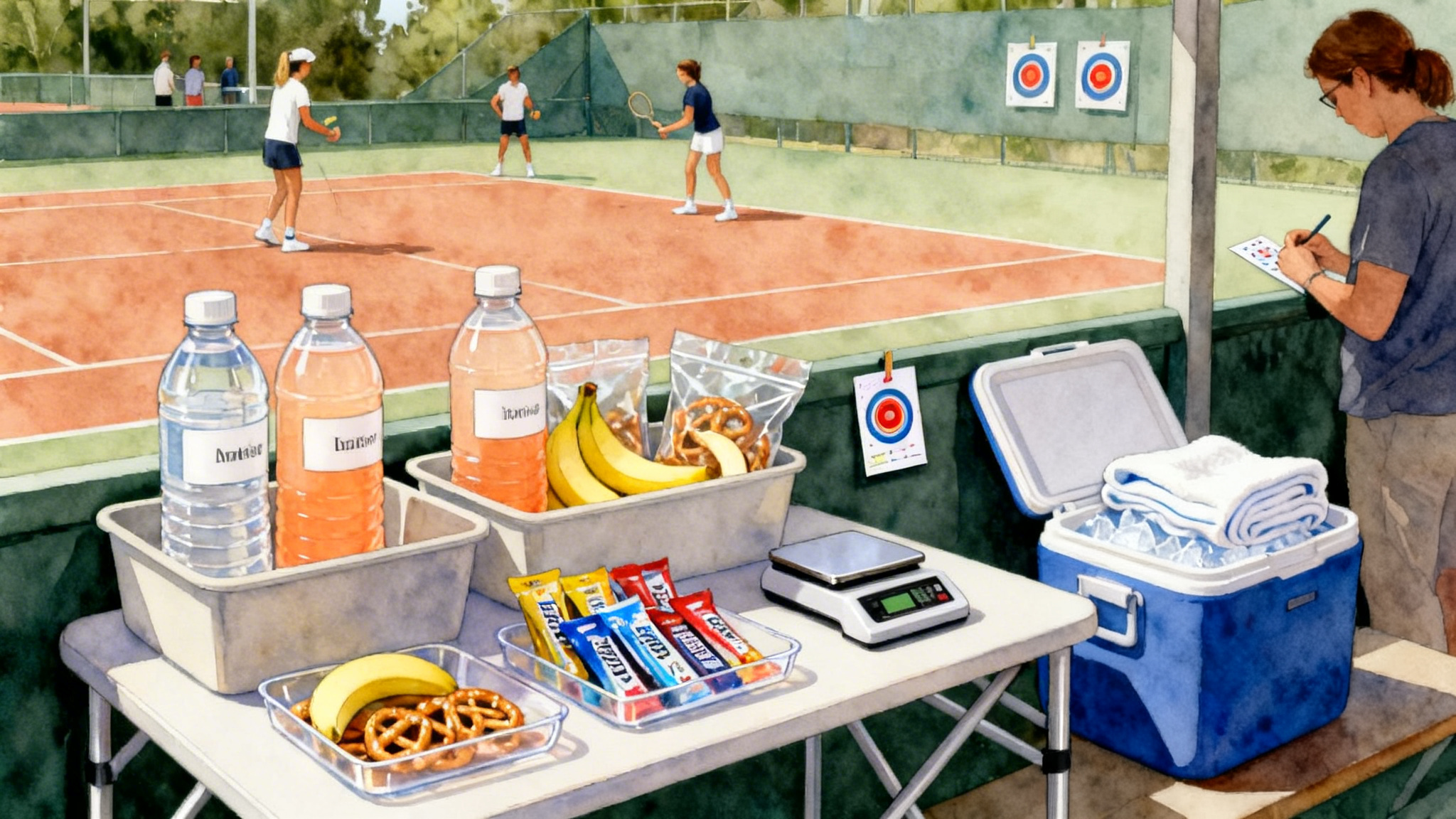
Why a 48-hour plan beats winging it
Tournament tennis is stop and go, hot and humid, long and unpredictable. Points are short, breaks are brief, and balls soak up sweat like sponges. That combination drains glycogen, pulls sodium into sweat, and quietly dehydrates you while you feel fine. A structured 48-hour fueling plan turns those physics back in your favor. It protects pace between points, steadies decision making under pressure, and helps you show up with the same legs in the third set that you had in the first.
Two factors swing matches more than most players realize: heat stress and hydration. If your event posts a heat index, use it. If not, check a reliable public chart such as the NWS heat index guidance so you can plan cooling, fluid, and sodium before the first ball. If you are moving outdoors after winter training, layer this plan with our Indoor to Outdoor 2026 plan to acclimate smoothly.
Think of your body as a two-tank system. Tank one is fuel, mainly carbohydrate stored in muscle and liver. Tank two is coolant, mostly water with dissolved sodium and other electrolytes. Both tanks need topping off before you compete, steady maintenance while you play, and thoughtful refills between matches. The plan below tells you what to do, why it works, and exactly how much to eat and drink for different ages and body sizes.
The 48-hour timeline
Use this as your tournament week template. Adjust portions with the weight-based guide in the next section.
24 to 36 hours before first match
- Meals: center plates on grains, fruits, vegetables, and lean proteins. Target two balanced meals plus one snack.
- Carbohydrate focus: build your base with hearty starches like rice, pasta, potatoes, oats, beans, and fruit.
- Fluids: sip throughout the day. Aim for pale straw colored urine by evening.
- Sodium awareness: if you sweat heavily or notice salty streaks on clothing, start adding lightly salted foods like pretzels, broth, and tomato juice.
- Sleep: treat tonight as non negotiable recovery. Seven to nine hours for adults. Eight to ten hours for teens. Nine to eleven hours for younger juniors.
Night before
- Dinner 12 to 14 hours before match time: balanced bowl or plate with 2 parts carbohydrate, 1 part protein, plus a thumb sized portion of fat. Examples below.
- Hydration top off: drink steadily with dinner. Stop heavy drinking one to two hours before bed to reduce bathroom trips.
- Pack your kit: bottles, powders, foods, and checklists so you do not scramble in the morning.
Match morning
- Breakfast 3 to 4 hours before match: carbohydrate centered with moderate protein and low fat. Portion sizes in the guide below.
- Pre match drink 4 hours before: 5 to 7 milliliters per kilogram of body weight. If urine is still dark at 2 hours before, add another 3 to 5 milliliters per kilogram. This leads to predictable bathroom timing and a comfortable start.
- Heat plan: pre cool with ice water sips and a cool towel on the neck for 5 to 10 minutes if the heat index is high.
Warm up window, 60 to 15 minutes before
- Top up snack: small, familiar, low fiber item like a banana, applesauce pouch, sports chews, or a slice of toast with honey. Portion by age and weight below.
- Bottle check: one bottle plain or lightly flavored water, one bottle with sports drink mixed to your sodium target. Label them.
On court: every changeover and set break
Each changeover is 90 seconds. Think of it as a fuel stop.
- Drink 150 to 250 milliliters each changeover, more if it is very hot. Spread sips across the break rather than one big gulp.
- Alternate plain water and sports drink if you like that feel. Many players stick with a sodium containing drink every break in the heat.
- Carbohydrate target by hour of play: juniors 20 to 35 grams per hour, teens 25 to 45 grams per hour, adults 30 to 60 grams per hour. For multi hour marathons, experienced adults may go up to 90 grams per hour if using a mix of glucose and fructose and only if gut tolerance is proven in practice.
- Simple options that match changeovers: 2 to 3 chews, a third of a banana, a few sips of a carbohydrate gel with water, or 2 to 3 pretzels. Rotate to avoid flavor fatigue.
Between back to back matches
- First 30 minutes: 1.0 to 1.2 grams of carbohydrate per kilogram of body weight, plus 20 to 30 grams of protein, plus 600 to 1,000 milliliters of fluid with sodium. Choose soft foods that go down easy.
- Keep it simple if time is short: a large yogurt drink and a banana, or a turkey wrap and a sports drink. If you have 2 hours, follow with a small second snack.
After your last point
- Rehydrate to within 1 percent of starting weight before leaving the venue. Quick check: drink 1.5 liters of fluid for each kilogram of body mass lost during play, spaced over several hours.
- Eat a complete meal with carbohydrate, protein, vegetables, and salt within 60 to 90 minutes.
The day after
- Use normal meal patterns and plenty of fluids to restore balance.
- If you cramped or felt sluggish in heat, debrief. Adjust sodium and fluid targets for next time.
How much to eat and drink, by age and body weight
Use body weight to personalize amounts. If you do not know exact weight, pick the closest example.
Carbohydrate for meals and snacks
- Three to four hours before the match: 2 to 3 grams of carbohydrate per kilogram of body weight.
- Example juniors: 30 kilograms needs 60 to 90 grams. 40 kilograms needs 80 to 120 grams.
- Example teens: 55 kilograms needs 110 to 165 grams. 70 kilograms needs 140 to 210 grams.
- Example adults: 80 kilograms needs 160 to 240 grams. 95 kilograms needs 190 to 285 grams.
- One to two hours before: about 1 gram per kilogram.
- Protein with meals: about 0.3 grams per kilogram for adults and teens, 0.2 to 0.25 grams per kilogram for younger juniors.
- Keep fats modest right before you play to reduce gut lag.
Fluids and sodium
- Four hours before: 5 to 7 milliliters per kilogram. Two hours before, if urine is still dark, add 3 to 5 milliliters per kilogram.
- During play: start at 0.4 to 7 liters per hour. In high heat and for larger or very sweaty players, this may rise to 0.8 to 1.0 liters per hour. The goal is to limit body mass loss to about 2 percent.
- Per changeover: 150 to 250 milliliters usually fits the time window without stomach sloshing. In extreme heat, increase by another 100 to 150 milliliters.
- Sodium concentration in drinks: 400 to 800 milligrams per liter for most players. Heavy or salty sweaters in intense heat can benefit from 800 to 1,200 milligrams per liter. If you see salt crystals on clothing, start at the higher end. Use a scale if possible to compare pre and post match weight and tune your plan.
Carbohydrate during play
- Juniors 9 to 12 years: 20 to 35 grams per hour.
- Teens 13 to 18 years: 25 to 45 grams per hour.
- Adults: 30 to 60 grams per hour. Up to 90 grams per hour only for experienced athletes using mixed carbohydrate sources and only if gut tolerance is proven in practice.
Heat and humidity adjustments
Heat and humidity stress slow sweat evaporation and raise core temperature. Adjust your plan this way when the heat index is high or courts feel like a sauna:
- Add 100 to 150 milliliters to each changeover drink.
- Increase sodium toward the higher end of the ranges above.
- Pre cool with an ice slurry, a cold wet towel on the neck, and brief shade at every changeover. Do not skip movement between points, but find shade whenever you can.
- Choose foods that are easy to swallow quickly and do not sit heavy. Applesauce pouches, chews, gels with water, and soft fruits work best.
- Practice your plan on the hottest practice days. Gut training is real and pays off in tournaments.
If you want a complementary on-court movement plan that saves energy in the heat, pair this with our 2026 Footwork Playbook.
Caffeine and supplement guardrails
Caffeine helps some players feel more alert and may improve reaction time and stroke precision, but it is not magic and it is not for everyone.
- Adults: 1 to 3 milligrams of caffeine per kilogram of body weight taken about 45 to 60 minutes before a match is a common performance range in sports nutrition research. Many adults do well at the low end. Total daily intake should remain reasonable. Most healthy adults tolerate up to about 400 milligrams per day from all sources.
- Teens: discuss with a clinician and coach. Many teens perform just as well without caffeine. If used, stay at or below 1 milligram per kilogram and avoid energy drinks with added stimulants.
- Children under 12: avoid caffeine on match day.
If you choose to use caffeine, start in a non competitive practice and record any jitters, stomach issues, or sleep disruption. For performance-focused ranges and context, see the ISSN position stand on caffeine.
Supplement caution checklist:
- Look for third party certifications such as NSF Certified for Sport or Informed Sport on any sports drink powder, gel, or capsule.
- Be wary of blends that hide exact amounts. You need to know how much caffeine and sodium you are taking.
- Avoid new supplements on tournament day. Test in practice only.
Sample menus that fit the plan
Portions scale with the grams per kilogram and milliliters per kilogram guidelines above. Use them as templates.
Night before dinner
- Bowl option: brown rice, grilled chicken, roasted vegetables, avocado, and a sprinkle of feta. Side of fruit and a glass of milk or a fortified dairy alternative.
- Pasta plate: penne with marinara, turkey meatballs, side salad with olive oil, a whole grain roll, and a banana.
- Burrito bowl: white rice, black beans, lean steak or tofu, salsa, corn, shredded cheese, and tortilla chips.
Match morning breakfast, 3 to 4 hours before
- Oatmeal with berries, honey, and Greek yogurt. Toast with jam. Water and a light sports drink.
- Bagel with peanut butter and banana. Apple juice or orange juice. Water.
- Rice and eggs bowl with soy sauce, a small side of fruit, and water.
Top up snack, 60 to 15 minutes before
- One banana or applesauce pouch.
- Two to three sports chews or a small granola bar.
- Half a bagel with honey.
On court rotation
- Drink a few sips at every changeover. Rotate water and sports drink if you prefer lighter flavors.
- Alternate bites: banana thirds, 2 to 3 chews, 1 to 2 pretzels, or a sip of gel with water.
Between matches, 30 to 90 minutes window
- Recovery smoothie: milk or fortified alternative, frozen fruit, whey or plant protein, a spoon of honey, and a pinch of salt.
- Turkey and cheese wrap, pretzels, grapes, and a sports drink.
- Yogurt drink, banana, and a small handful of cereal.
After last match of the day
- Stir fry with rice, vegetables, and chicken or tofu. Side of pineapple and water.
- Baked potato with beans and salsa, grilled fish, salad, and chocolate milk.
Smart grocery list for tournament week
Build two small kits: one for the hotel room and one for the courtside bag.
- Carbohydrate bases: instant oatmeal cups, rice packets, pasta, whole grain bread, tortillas, cereal, pretzels, fig bars.
- Quick fruits: bananas, apples, grapes, oranges, applesauce pouches, dried mango.
- Proteins: Greek yogurt cups, shelf stable yogurt drinks, string cheese, turkey slices, tuna packets, protein powder.
- Fluids and mixers: bottled water, boxed coconut water, sports drink powders with known sodium content, small juice boxes for a quick top up.
- Salt sources: pretzels, tomato juice, broth packets, salted rice cakes.
- Cooling: zipper bags for ice, small towels, a soft sided cooler, reusable ice packs.
- Tools: two labeled bottles per player, a small food scale or set of measuring cups, permanent marker, zip bags for portioning.
Printable checklists
Cut and paste these to a single page and print copies for every tournament bag.
Parents of juniors
- Night before: pack two labeled bottles, sports drink mix, water, snacks portioned for changeovers, one recovery meal option, cooling towel, ice packs, hat, sunscreen, socks, extra shirt.
- Morning of: confirm breakfast time, bathroom trip schedule, pre match drink at 4 hours out, top up snack at 60 to 15 minutes, heat index check.
- On court: enforce every changeover sip and bite. Replace bottles and snacks between sets if needed.
- Between matches: recovery drink within 30 minutes, light second snack if 90 minutes or more until next match, shade and shoes off if appropriate.
- After: weigh if you have a small travel scale, log how much was drunk and eaten, note cramps or dips for next time.
Adult league captains
- Team kit: extra bottles, sports drink powder, salt packets, cups, fruit, pretzels, gels and chews, cooler, ice, towels, sunscreen, shade tent.
- Communications: share fluid and sodium targets at the lineup meeting. Remind players to bring two bottles and to eat at first changeover.
- In heat: set a rotation for ice towels and bottle refills. Assign a teammate to manage the cooler.
- Between lines: ensure recovery snacks are visible and easy. Encourage shoes off and feet up if there is time.
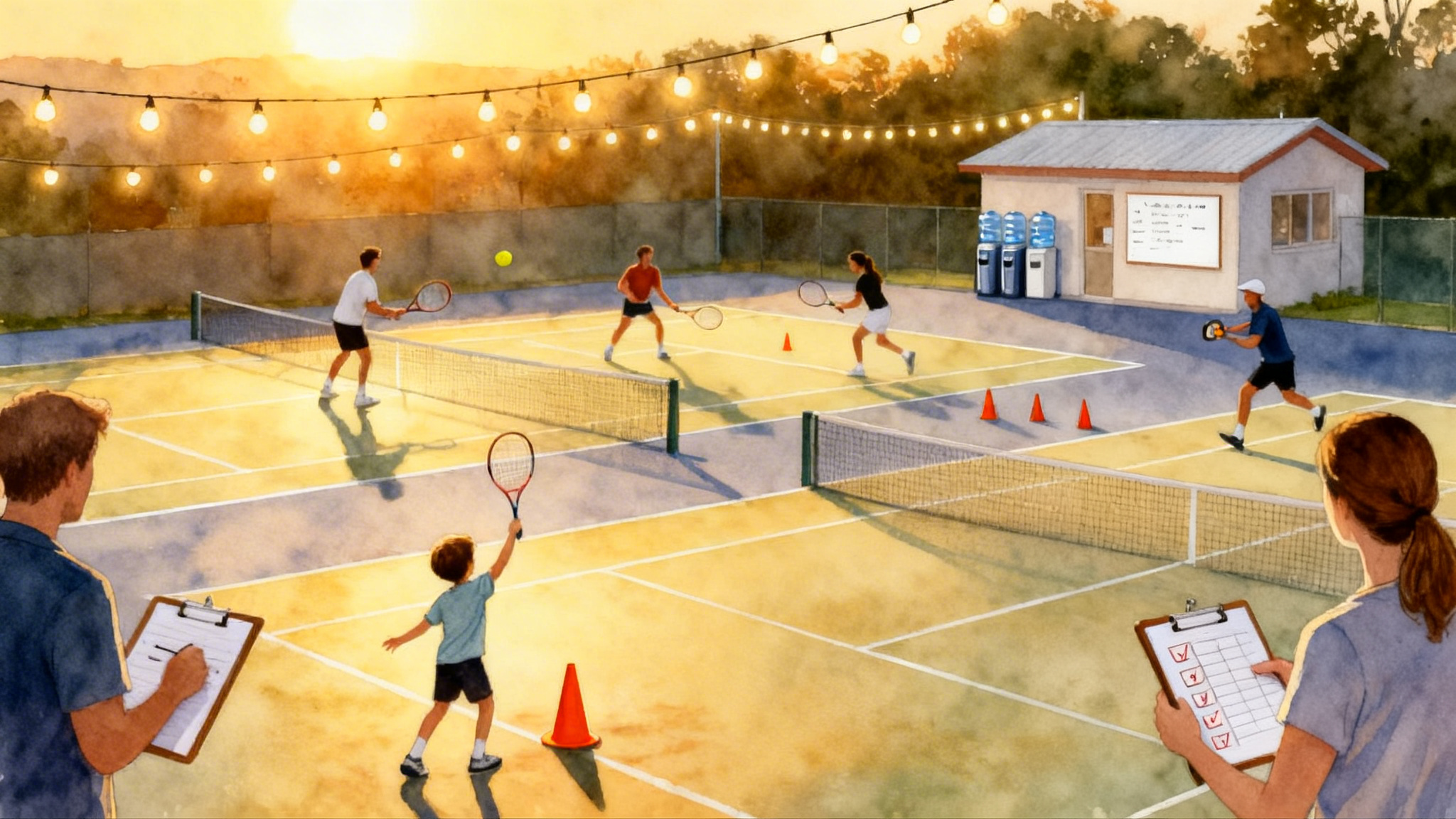
Legend Tennis Academy Fuel Up Station model
Legend Tennis Academy profile built a courtside system that takes the guesswork out of fueling. Here is how it works, and how you can borrow the ideas.
- Check in and weigh in: players step on a quick scale before warm up. Weight is recorded on a small card that lives in the racquet bag. A color sticker indicates heat risk level for the day.
- Two bottle layout: the station has one water tap and one pre mixed sports drink tap. The sports drink sodium is set by the day’s heat level and the player’s sweat pattern from prior events. Heavy sweaters use a stronger mix.
- Portion cards by age and weight: each player has a laminated card with their per changeover drink in milliliters, their per hour carbohydrate target, and a sodium range. Juniors get simple icons. Adults see exact numbers.
- On court bites: transparent bins hold banana thirds, pretzel bags, chews, and gels. A coach or parent quickly reloads between sets.
- Post match routine: players return to the station, step on the scale again, and get a short printout that estimates sweat rate and fluid gap with a clear next step. For example, drink 900 milliliters over the next two hours with an added pinch of salt.
- Personal notes: if a player cramps, the coach records weather, duration, and intake. Next event, the card starts at higher sodium and a slightly larger per changeover drink.
You can build a mini version for your team with a cooler, a digital kitchen scale, a marker and tape for bottle lines, a few airtight bins, and a simple spreadsheet.
Frequently missed details that swing matches
- Too much fiber too close to play. Fix it by moving high fiber vegetables and beans to dinner the night before, not the final pre match meal.
- One bottle on court. Fix it by always carrying two bottles. Label them water and sodium. Drink at every changeover.
- Random snacks. Fix it by pre portioning changeover bites in small bags. Aim for 5 to 10 grams of carbohydrate per break and rotate flavors.
- No plan for heat. Fix it by checking the heat index in the morning and increasing per changeover fluid and sodium. Store ice towels in your cooler.
- Caffeine timing mistakes. Fix it by testing on a practice day and staying at the low end of the range. Avoid late afternoon caffeine if you have an evening match or need sleep for the next day.
A short word on evidence and safety
Sports nutrition guidance evolves, but several principles are consistent across position stands and field experience. Keep caffeine modest and planned. Tailor sodium to your sweat loss and the day’s heat. Avoid chugging large volumes of plain water without sodium in long, hot matches. If you have a medical condition or take medication, ask your clinician before significant changes. For warm up structure that pairs well with this fueling plan, see our Age-Smart warm-ups and strength guide.
For heat risk cues that inform fluid and cooling decisions, use the NWS resource linked above. For caffeine specifics, refer to the ISSN resource linked in the caffeine section.
The finish line
Champions do not rely on luck to feel great late in the day. They use a plan that is simple under stress, personal to their body, and repeatable across venues. The 48-hour approach above gives you that plan. Match the portions to your weight, adjust the bottles to the weather, eat a little at every changeover, and use the checklists so small details never cost you a game. Then let your strokes do the talking.