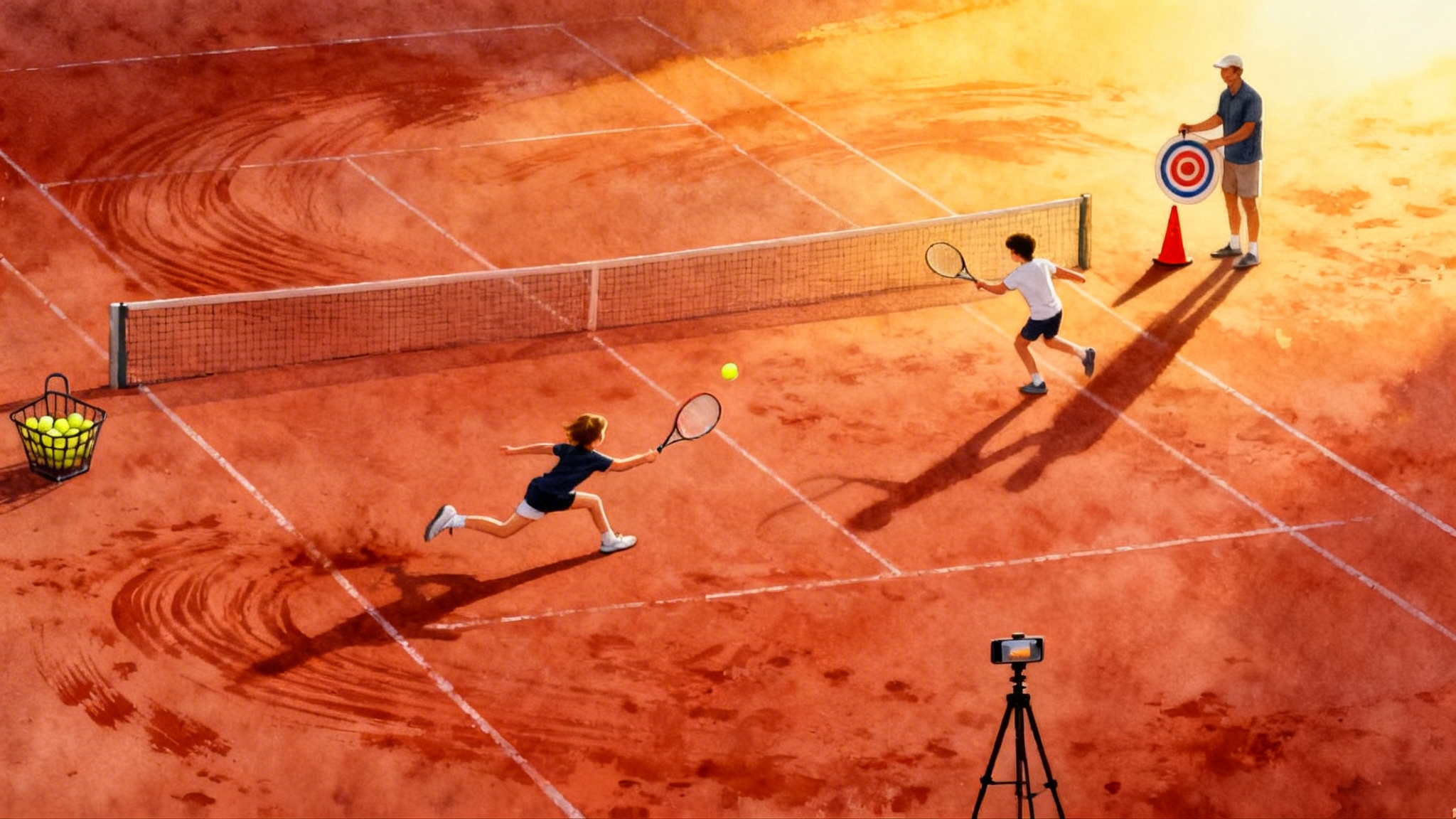
Indoor to Outdoor 2026: 14-Day Tennis Transition Plan
Make the switch from indoor courts to spring sunshine with a two-week plan that covers technique for sun and wind, fitness for heat and movement, and equipment updates. Includes parent checklists, junior and adult tracks, and a mini-competition ramp.
 Tommy
Tommy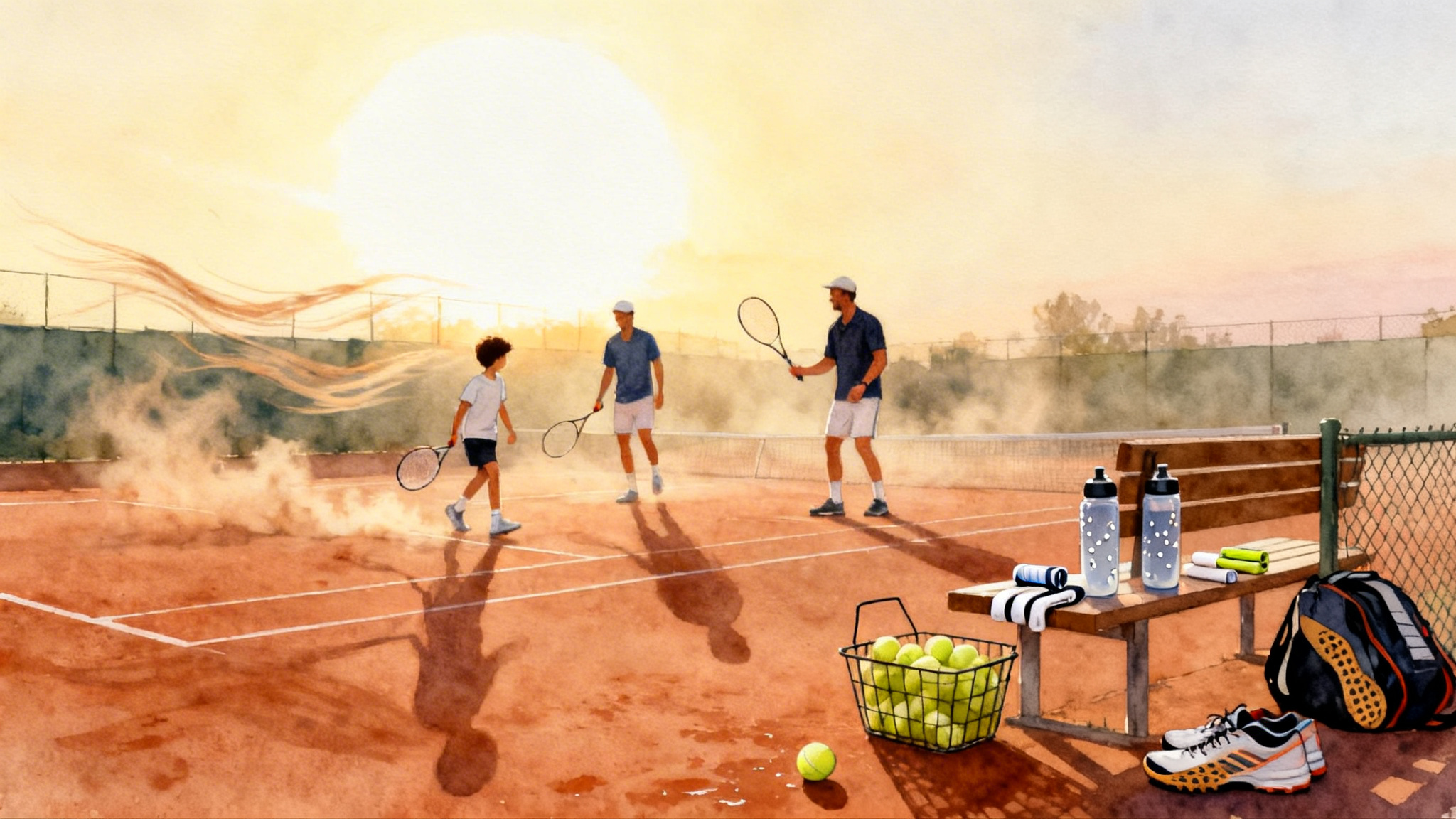
Why the indoor-to-outdoor switch matters in 2026
If the last months of your tennis have been inside a climate-controlled bubble, the first ball you strike outdoors will feel different. The sun shifts your visual timing, wind edits your ball flight, and a higher, livelier bounce stretches your contact point. Most players drop two to three games per set during their first outdoor week simply because the environment changes faster than their habits. This two-week plan rebuilds those habits. You will adjust contact-point spacing, sharpen your spin windows, and recalibrate your serve toss. You will also add heat-acclimation and movement intervals so your legs arrive early enough to make good choices. Finally, you will tune your string tension, footwear, and grips so the racquet and shoes work for the surface, not against it.
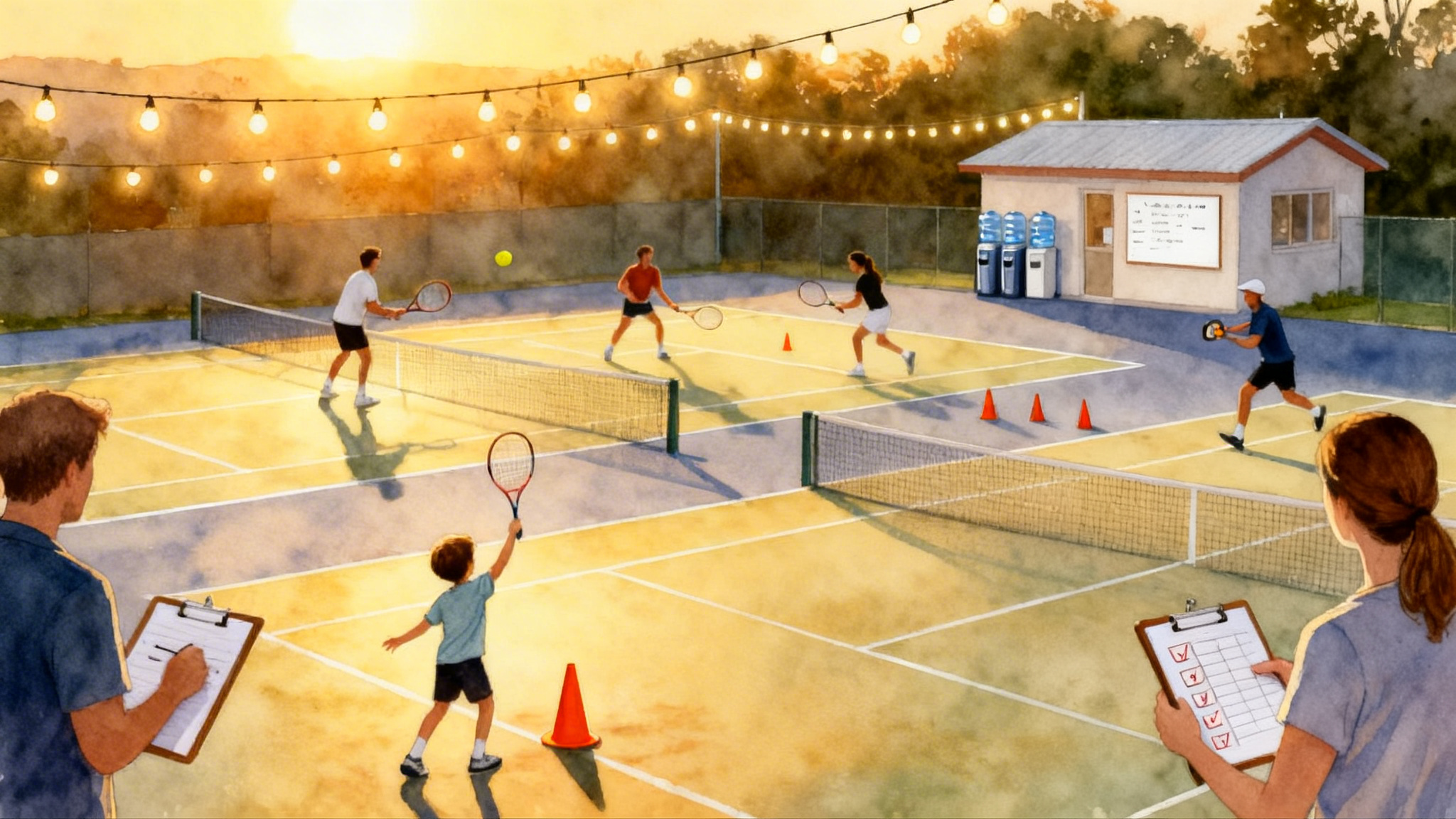
The plan serves three tracks at once. Juniors get a practical schedule that fits after-school windows. Adults get short, focused blocks that beat job and family constraints. Parents get checklists so the home team stays ahead of logistics like hydration, sunscreen, and stringing. There is also a mini-competition ramp that prepares players for high school matches, college identification camps, and summer events hosted by the United States Tennis Association and the International Tennis Federation.
The three outdoor shifts to master
Sun: see it earlier, meet it earlier
Outdoors you must spot the ball against a bright sky. That slows recognition by a fraction, which often pushes contact late. Plan for a slightly earlier set position, and add six to twelve inches of distance between your body and the incoming ball. This extra spacing gives your swing room to travel without jamming. As a cue, treat your strings like a windshield. If your nose touches it, you are too close. If you can read the logo on the ball well before contact, spacing is about right.
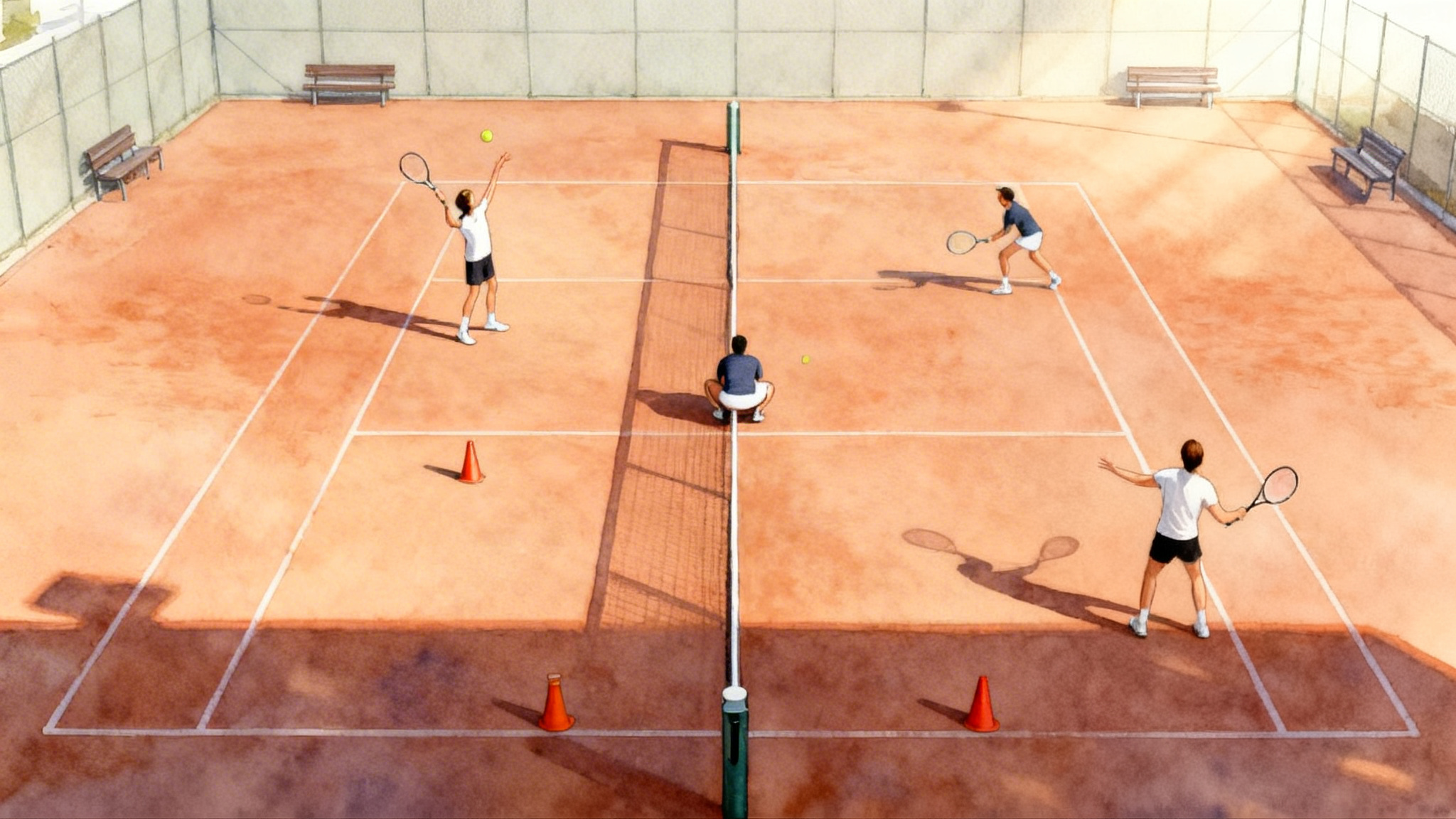
On the serve, a bright sun can burn your toss window. If the sun is directly above your right eye for a right-handed server, shift your toss a few inches left and slightly forward, which keeps your head posture neutral. Keep the toss height consistent, then adjust your feet rather than chasing a higher toss that ruins rhythm.
Wind: build a bias, not a guess
Wind does not just push the ball sideways. It also changes the arc. With wind in your face, your ball climbs and then drops hard, so you can aim higher over the net and swing through the court. With wind at your back, your ball flattens and runs, so you must lift earlier and add more vertical racquet speed. In crosswinds, aim your start line into the wind and accept a heavier spin to anchor the ball.
Use a bias system. Into the wind: two more feet of net clearance and one extra target width inside the lines. With the wind: one less foot of net clearance and one target tighter to the line. Crosswind: start three feet upwind of your usual target and finish with a decisive wrist pronation to keep the strings covering the ball.
Higher bounce: raise the window, not the effort
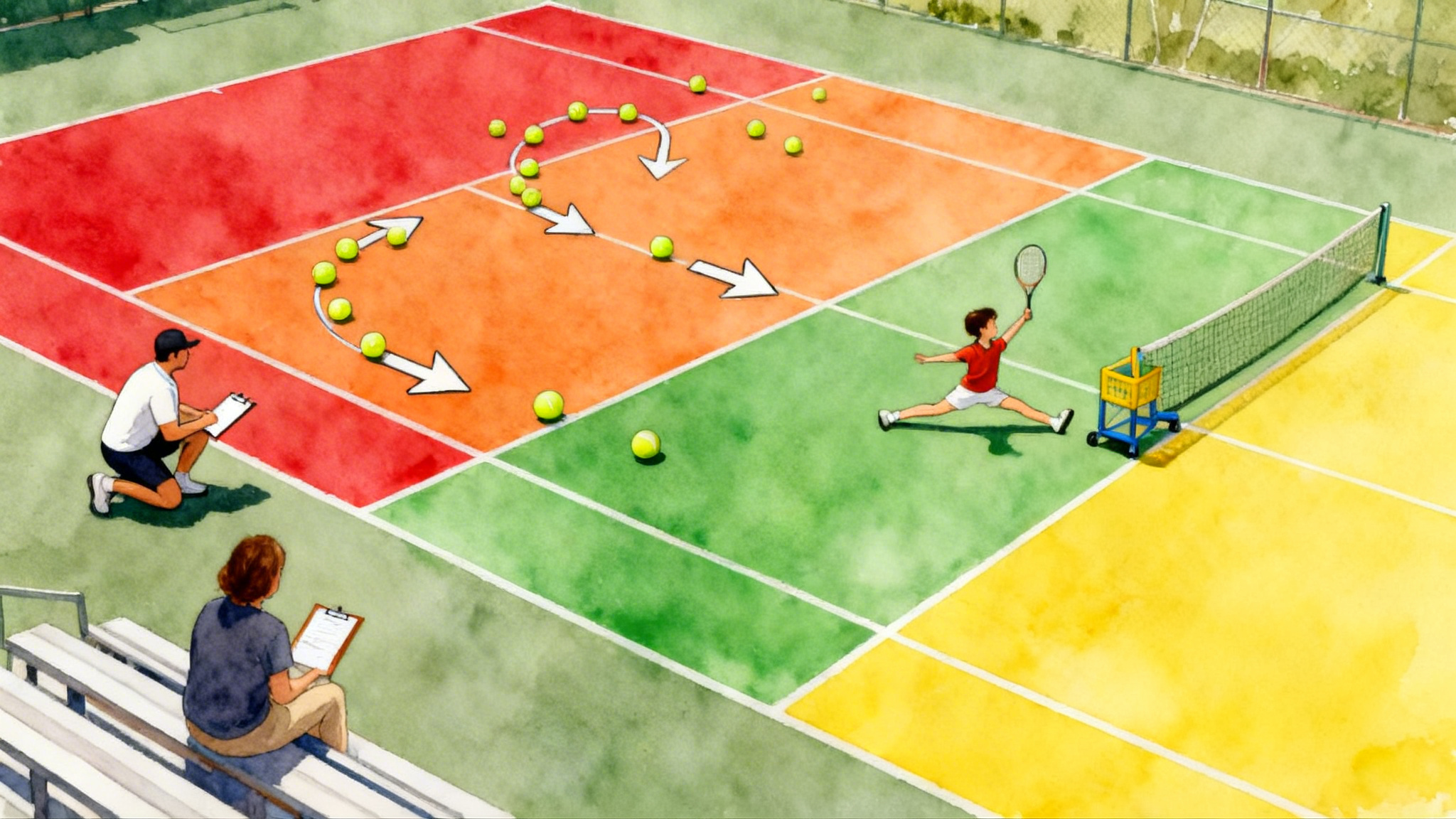
Outdoors, balls sit up longer. Your task is not to swing harder, it is to raise your spin window. That means sending the ball through a taller tunnel. On rally balls, visualize a window that starts two feet above the net and tops out at four feet. If you are on the run or late, elevate that window by another foot. Position-wise, back up a half step on returns and mid-court balls until timing catches up. The goal is early contact at hip to chest height rather than late contact near the shoulder with a busy front elbow.
Equipment tune-up for outdoor reality
- Strings: drop tension two to three pounds from your indoor setup to add dwell time and spin, especially if you play a firm polyester. If you use a hybrid, keep the softer cross tension unchanged and drop the main string tension two pounds.
- Grips: switch to sweat-ready overgrips and carry two spares per hour of play. Heavier perspiration outdoors will glaze a non-tacky grip in 30 minutes.
- Shoes: move to outdoor outsoles with a more durable pattern. If you play on hard courts, a full herringbone or modified herringbone with hard rubber resists abrasion while keeping a responsive push-off.
- Balls: test one can of a higher-altitude or type-3 ball only when you play at altitude or very fast courts, since ball type shifts trajectory and feel. See the ITF ball types and altitude classification.
Heat, sun, and recovery: plan the body first
Schedule one short heat exposure most days this fortnight. Start with twenty minutes in mild midday sun with long sleeves and a hat, then progress to full sessions. Hydrate with water and electrolytes before and during practice, and weigh yourself before and after long sessions to learn sweat rate. The United States Tennis Association provides practical guidance on fluids, sodium, and warning signs. Review the USTA heat and hydration guidance and set family rules accordingly.
Sleep is your real performance drug. Add a one-hour wind-down window before bed, no screens, and a consistent wake time. Outdoor tennis demands stable rhythms, not heroic willpower.
The 14-day plan
This plan assumes four to five days per week on court. If you have seven available days, keep the work blocks but shorten sessions on the lighter days.
Daily structure
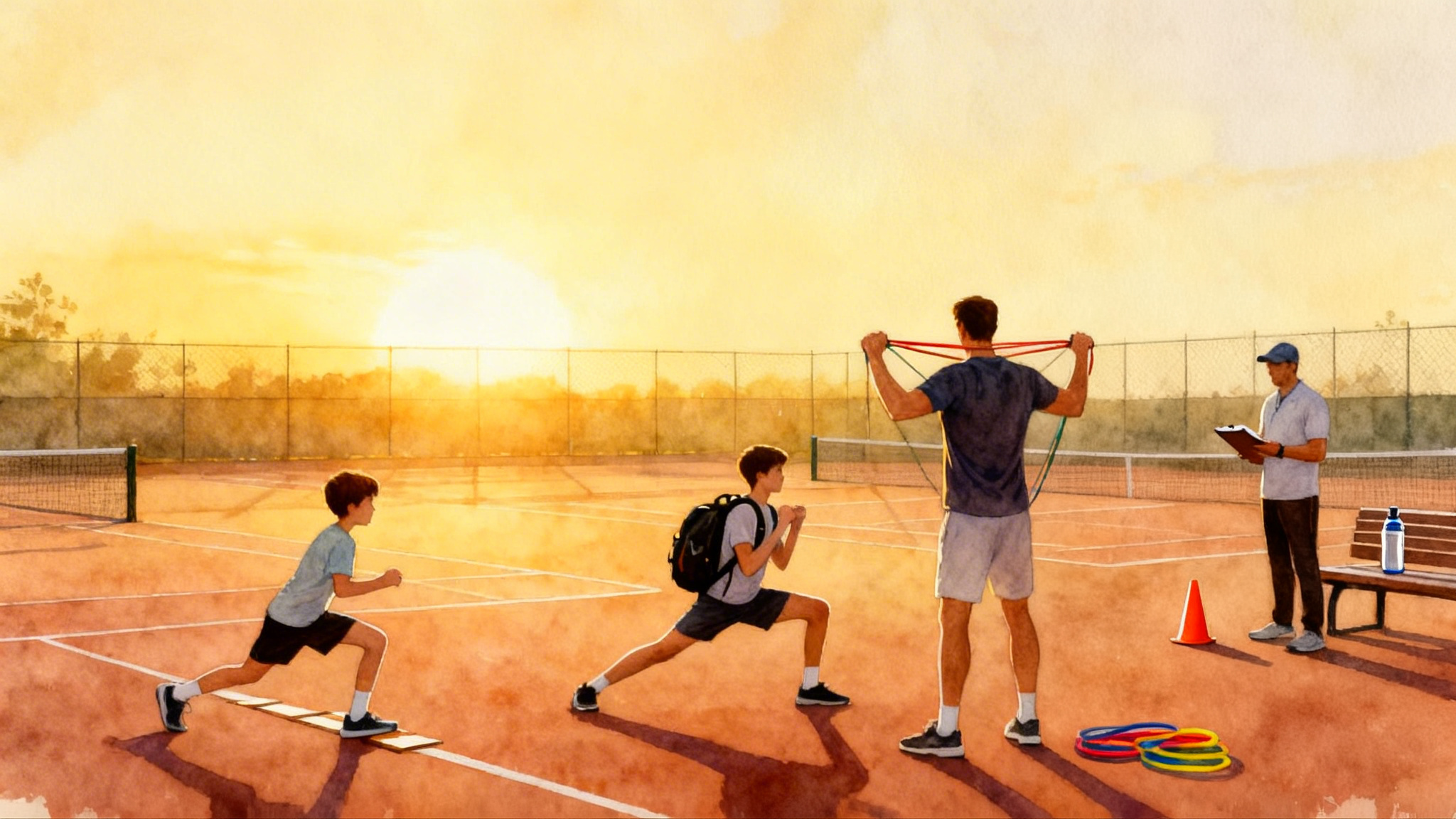
- Warm-up: 8 to 10 minutes of skipping, lateral shuffles, and elastic band work for shoulders. For extra ideas, see the 2026 footwork playbook.
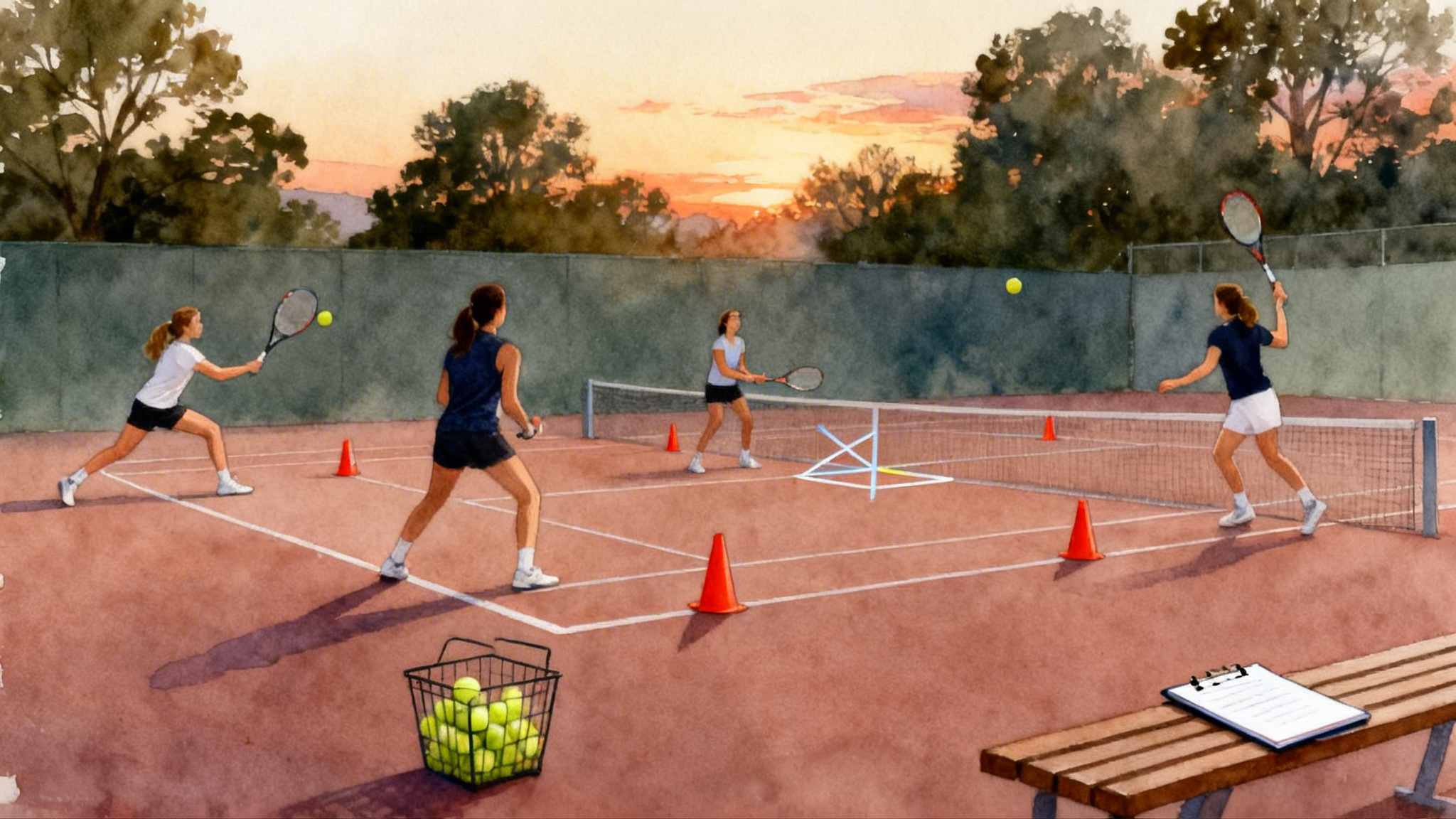
- Ball flight drill: 10 minutes to calibrate spacing and spin windows.
- Tactical block: 20 to 30 minutes on serve plus one, return games, or patterns.
- Movement interval: 8 to 12 minutes of court sprints and recovery.
- Cooldown: 5 minutes of breathing and gentle mobility.
Juniors track (after-school window, 75 to 90 minutes)
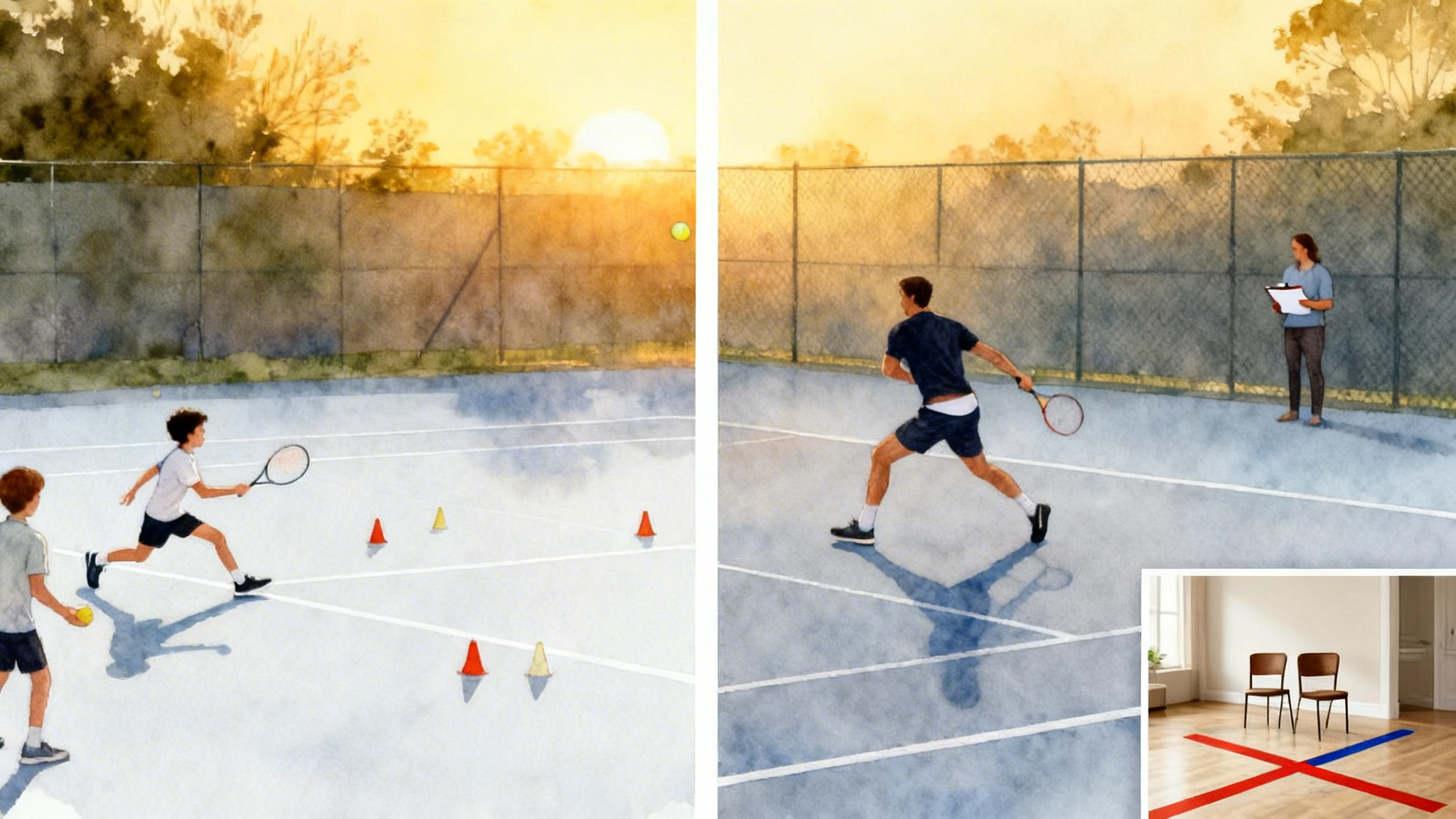
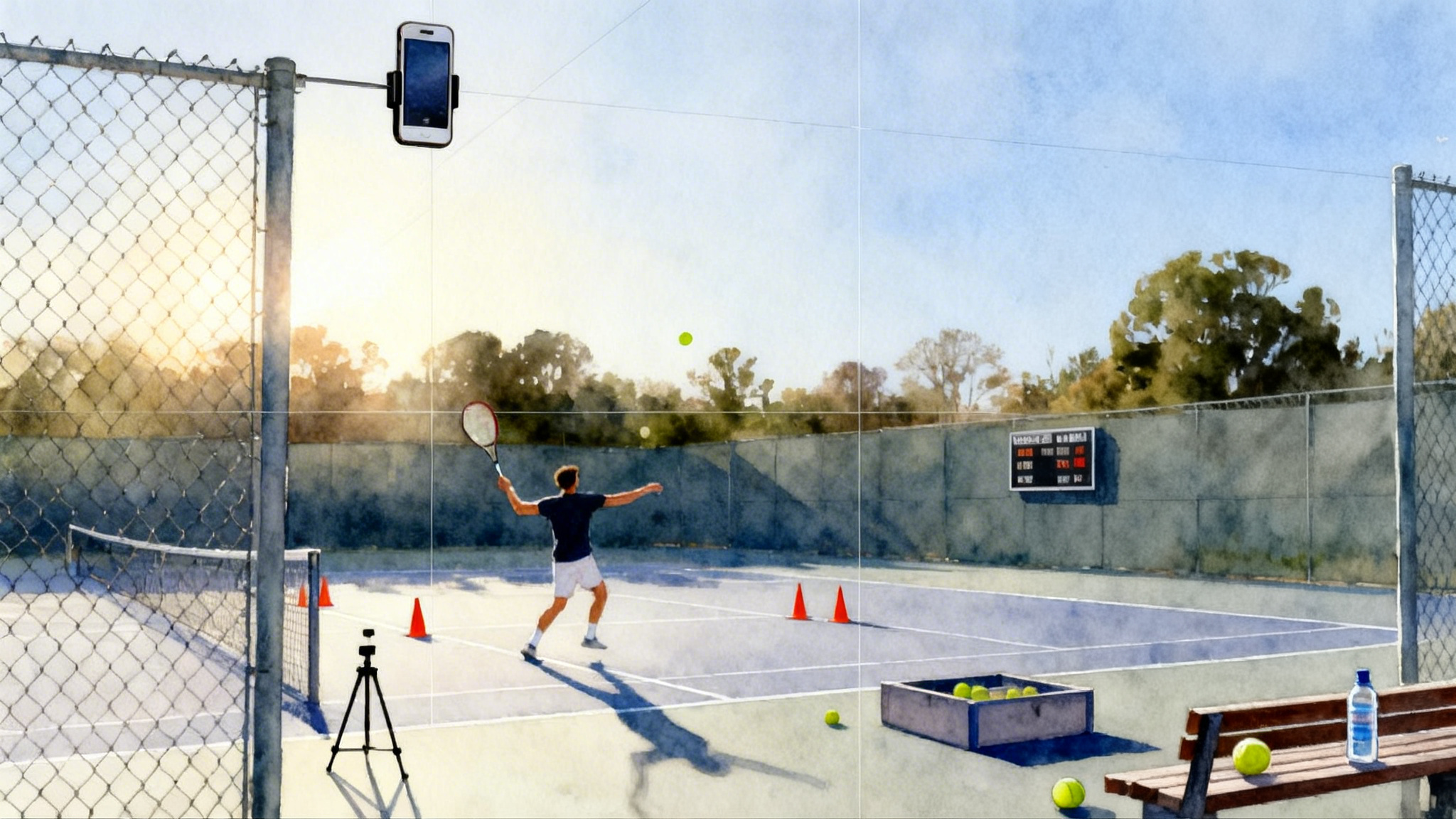
- Day 1: Sun read. Cross-court rally to a two-to-four foot window, 50 balls each side. Serve toss to avoid the sun, five sets of six serves, video the toss from front and side. Finish with 4 by 20 second alley shuttles.
- Day 2: Wind bias. Partner feeds crosswind forehands. Aim three feet into the wind. Return games to five points with second serves only. Interval: 3 by 90 second continuous split-step and first step patterns.
- Day 3: Higher bounce defense. Back up half a step, absorb and loop. Two by eight minutes of continuous rally with two-foot net clearance target. Serve plus one to the open court. Interval: 6 by 15 second baseline to service line sprints.
- Day 4: Heat acclimation short day. Twenty-minute hit at midday, cap and long sleeves. Hydrate by plan, then stop early and stretch. Log sweat weight change and how you felt at the end.
- Day 5: Returns in sun. Practice tracking the ball off the server’s hand. Two sets of 20 returns alternating deuce and ad. Mini set first to four games with no lets.
- Day 6: Pattern day. Cross-court forehand, inside-out forehand, recover. Add one down-the-line change-up every fourth ball. Serve targets, 30 balls each corner. Interval: figure-eight cones around the T and each service corner, 4 by 60 seconds.
- Day 7: Light match play. One set to six with wind-aware targets and a written post-match note on toss and spacing.
- Day 8: Reset. Mobility, 30-minute easy hit, grips and string check.
- Day 9: Transition volleys in gusts. Coach or partner feeds hard to mid-court, take ball early with a firm wrist. Serve second serves to the body, 40 reps. Interval: 8 by 10 second split and crossover to wide ball.
- Day 10: Return plus two. Each return must clear the net by three feet, then a deep second ball to the middle. Mini set first to four games starting at 30 all.
- Day 11: Forehand window lift. Add one foot net clearance on every neutral ball. Serve toss tune: five sets of five with a left-of-head target for righties when the sun is high.
- Day 12: Scrimmage with constraints. Crosswind only side for ten minutes, then switch. Play a tiebreaker to seven with one wind read spoken out loud before each point.
- Day 13: Tournament starter pack. Pack bag, apply sunscreen, test overgrips, check strings. Two short practice sets, stop when quality dips.
- Day 14: Benchmark day. Film 15-ball cross-court on both sides, and 20 serves to deuce wide. Compare to Day 1. For better footage and feedback habits, use our video analysis guide.
Adults track (busy schedule, 50 to 65 minutes)
- Day 1: Spacing tune-up. Two cones set for hip-high contact. Rally to a three-foot net clearance. Serve toss adjustment away from the sun, 24 balls.
- Day 2: Wind targets. Upwind side aim taller, downwind side aim lower. Play three games starting at 30 all. Interval: 6 by 20 second sideline shuttles.
- Day 3: Bounce management. Back a half step on high kick balls. Serve plus one pattern to backhand corner, 15 reps each side.
- Day 4: Heat short hit. Twenty minutes with deliberate hydration. Stop while feeling fresh.
- Day 5: Returns and first step. Two by 12 returns from the ad side to the middle. Interval: 5 by 30 second continuous split step and first step.
- Day 6: Pattern ladder. Three-ball pattern, then four-ball, then five-ball. Keep the window tall on the first rally ball.
- Day 7: Light set. First to six with a tiebreaker, practice the wind bias rules.
- Days 8 to 14: Repeat the cycle, then finish with a measured set and serve speed or accuracy test.
The movement interval menu
Rotate these across the fourteen days to build court legs without overtraining.
- Alley shuttles: side shuffle up and back, 20 seconds, rest 40 seconds, repeat 4 to 6 times. Emphasize low hips and quiet hands.
- Figure-eight around the service boxes: run around two cones near the service line corners, cross the T each lap, 60 seconds on, 60 seconds off, 3 to 4 sets.
- Baseline bursts: split, three explosive steps to a wide forehand cone, recover, three to a wide backhand cone, 10 seconds on, 20 seconds off, 8 reps.
- Midline recoveries: from the doubles alley, sprint to the center mark, backpedal to the alley, 15 seconds on, 45 seconds off, 6 reps.
Technique checkpoints that travel well outdoors
- Contact-point spacing: extend your arm enough that the hitting elbow clears your ribs, but keep a relaxed wrist so the racquet can accelerate. If the ball is above chest high, think lift and wrap instead of drive and push.
- Spin windows: pick a tunnel above the net, two to four feet for neutral balls, higher when you are late or off balance. Think window first, then direction.
- Serve toss: set the ball at a height you can reach with full extension, not a desperate jump. In wind, toss a touch lower and forward to reduce drift and keep the kinetic chain smooth.
- Return of serve: soften the arm, use a shorter backswing, and recover your eyes to the opponent early. Outdoors, the second ball you hit often wins the point. Train return plus two, not just the return. For a deeper framework, see the master the return system.
Parent-run checklists
Parents are the quiet engine of a smooth transition. Use these checklists to reduce stress and surprises.
- Night before: pack two towels, three overgrips, sunscreen, hat, and a frozen water bottle to thaw during warm-up. Confirm string tension and note the last restring date.
- Arrival: stand in the sun for one minute to let the eyes adapt. Apply sunscreen on the ears, back of neck, and hands. Quick dynamic mobility: ankles, hips, shoulders.
- During play: hold a hydration cue card. Two to three good sips on changeovers, small bite of a simple carbohydrate if the session is longer than 60 minutes.
- Post play: shoes off for five minutes to let feet cool, log how many grips were used, note any hot spots or blisters, schedule restring if the string bed feels board-like or dead.
Mini-competition ramp
Use low-pressure scoring to close the gap between practice and tournaments.
- Day 5 or 6: first to four games, no ad scoring, start at 30 all to accelerate pressure exposures.
- Day 7: tiebreaker series to seven, then to ten, with wind-read statements before each point.
- Day 10: serve plus one match. Each point starts with a serve, the server must call the plus-one target before the toss.
- Day 13 or 14: set to six with two constraints. Constraint one, deuce side serves must be body or wide. Constraint two, every rally must aim through the chosen spin window for the first two balls.
Spotlight: accelerate the switch in Austin
If you live near Central Texas, book a late afternoon or early evening slot and train with both sun and crosswind on purpose. You can schedule wind-and-sun sessions at Legend Tennis Academy Austin, stack a return-of-serve clinic with a serve toss tune-up, then close with a short set that bakes in the adjustments.
Aim at spring goals: high school, college identification camps, summer USTA and ITF events
- High school season readiness: by the end of this two-week block, you should feel comfortable raising or lowering your spin window on command, and you should have a reliable serve toss in sun. Schedule one high school practice match on Day 14 or the next day with the same wind rules you trained. Use your post-match notes to set the next two priorities.
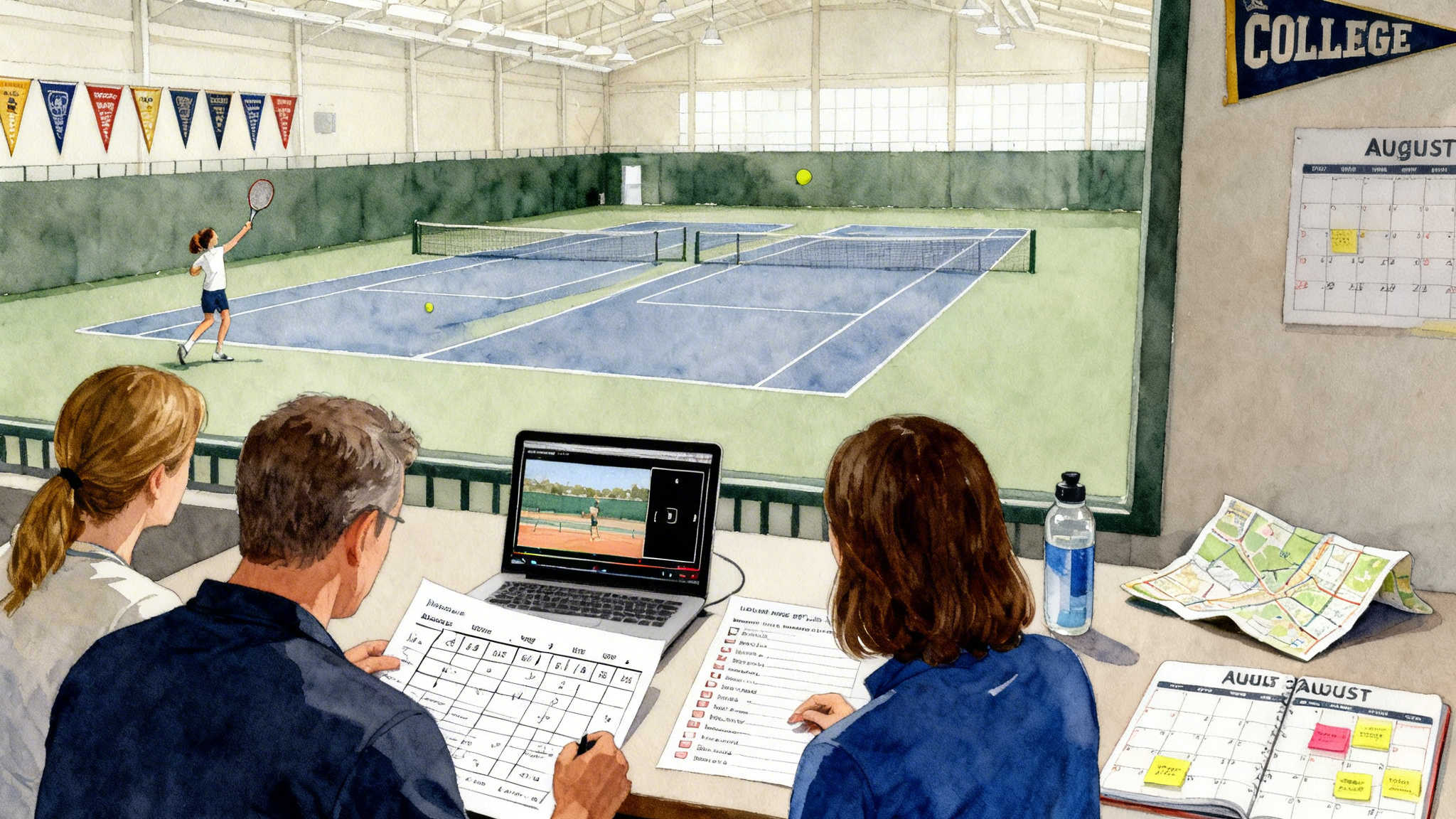
- College identification camps: coaches watch for first step speed, a clean toss, and problem solving in the wind. Arrive with clips from your Day 14 benchmarks and the mini-competition tiebreakers. Keep string tension notes, since talking about your setup shows ownership of your game.
- United States Tennis Association and International Tennis Federation summer events: calendar your entry dates now, then match the mini-competition ramp to those deadlines. Two weeks out, repeat the fourteen-day plan with slightly higher intensity and one extra match day. Keep the heat-acclimation blocks in play since many events run in midday heat.
Common pitfalls and how to fix them
- Overhitting in tailwind: the ball rockets long. Fix it by starting your target three feet shorter and adding a higher finish with more racquet head vertical speed.
- Late contact in bright sun: you feel jammed. Fix it by moving back a half step on the bounce, and by setting your unit turn earlier on the rise.
- Slipping on gritty hard courts: indoor shoes wear fast outdoors. Switch to a durable outsole with a firm edge and check laces for a locked midfoot.
- Dead strings after two outdoor sessions: ultraviolet light and grit age strings. Lower tension slightly and restring earlier than your indoor cadence.
Your two-week scoreboard
Track these metrics in a simple table or notes app.
- Serve targets hit out of 40, broken down by deuce wide, deuce body, ad T, and ad body.
- Rally length to first error outdoors compared to indoor baseline.
- Wind decision accuracy, rated by whether you aimed into the wind and lifted when needed.
- Heat and recovery note, did you follow the hydration and cooldown plan.
Bring it all together
The indoor-to-outdoor switch is not a mystery, it is a set of adjustments you can practice. Space the contact a touch farther from your body, raise or lower your spin window with intention, and put your serve toss where you can reach it in sun and wind. Use short, smart movement intervals to help your legs arrive early, and tune your equipment so it supports higher bounces and hotter days. Parents, your checklists turn good sessions into a steady season. Finish with the mini-competition ramp so pressure does not surprise you when the first real match arrives. Two focused weeks will not just make spring tennis feel normal, they will make it a foundation for the high school schedule, college identification camps, and summer events that follow.