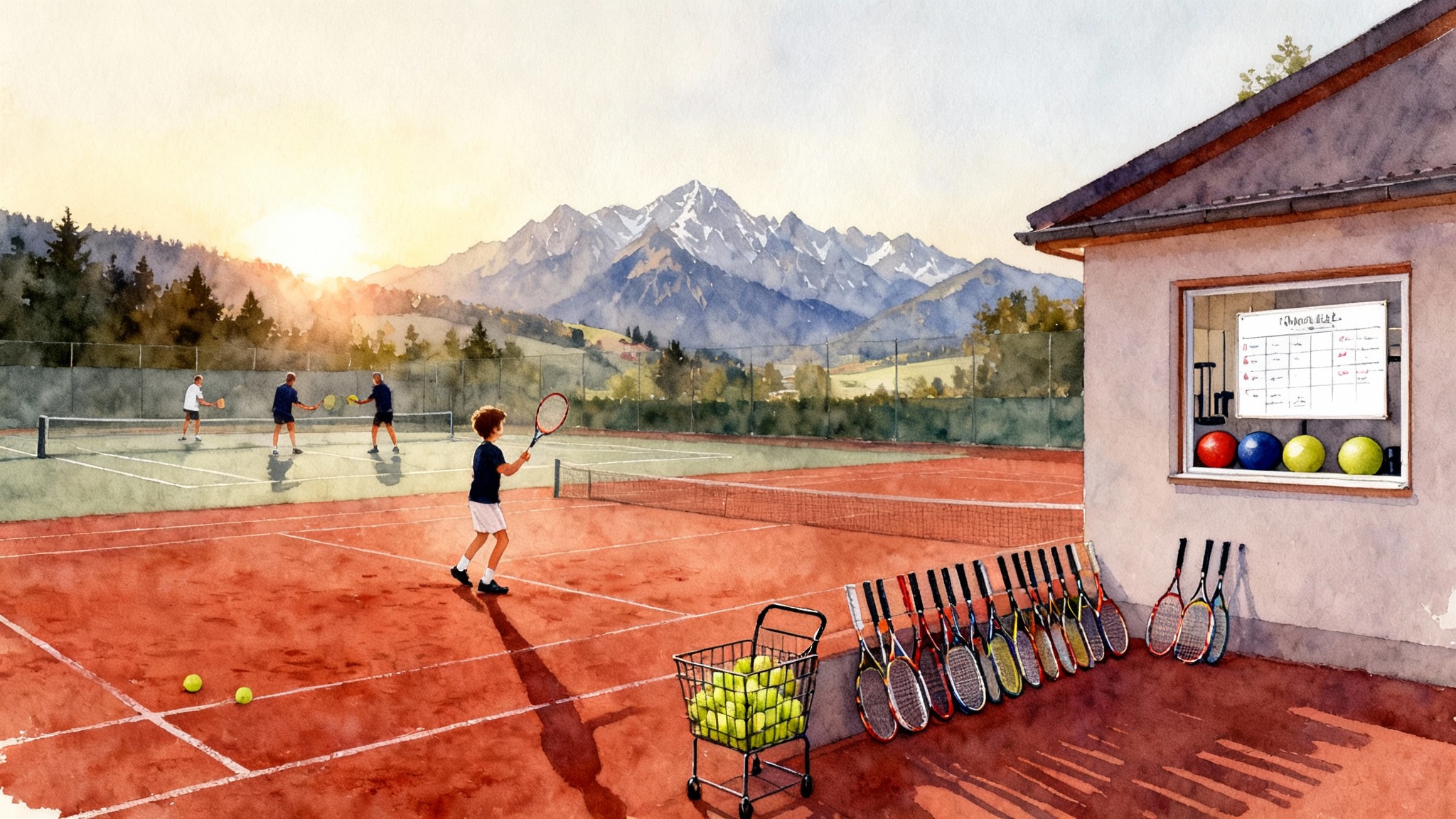
Delray to the Riviera: New Generation and Mouratoglou built Gauff
Coco Gauff’s pathway blended community‑court roots in Delray Beach with scholarship‑backed residencies at Patrick Mouratoglou’s academy. Here is the verified map of how New Generation and the Riviera stints built the game that won New York.
 Tommy
Tommy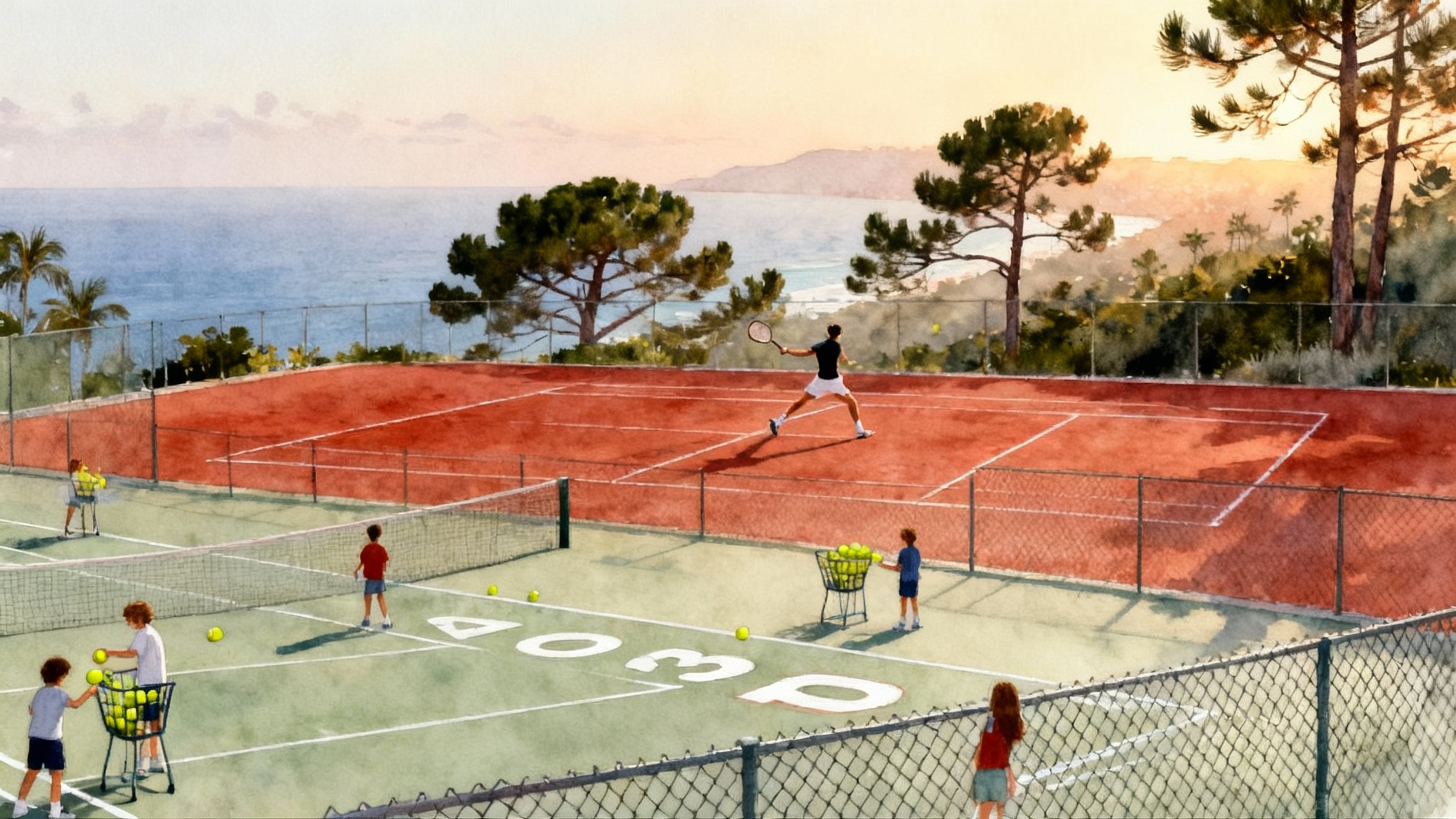
A pathway that can be traced, tested, and copied
Coco Gauff’s rise did not come from a single breakthrough. It came from a repeatable loop any ambitious family can understand: build at home, stress test abroad, return to home courts to consolidate, repeat. Delray Beach provided the roots. Targeted residencies on the French Riviera provided the accelerant. The combination produced a player who, at 19, won the 2023 US Open in New York and who, at 21, entered 2026 with a foundation sturdy enough to carry more. If you are a parent, coach, or junior plotting the next step, you will leave with checklists, not slogans. For another U.S. case study in structure and transfer, see the IMG blueprint for Korda.
Back to Delray, forward at New Generation
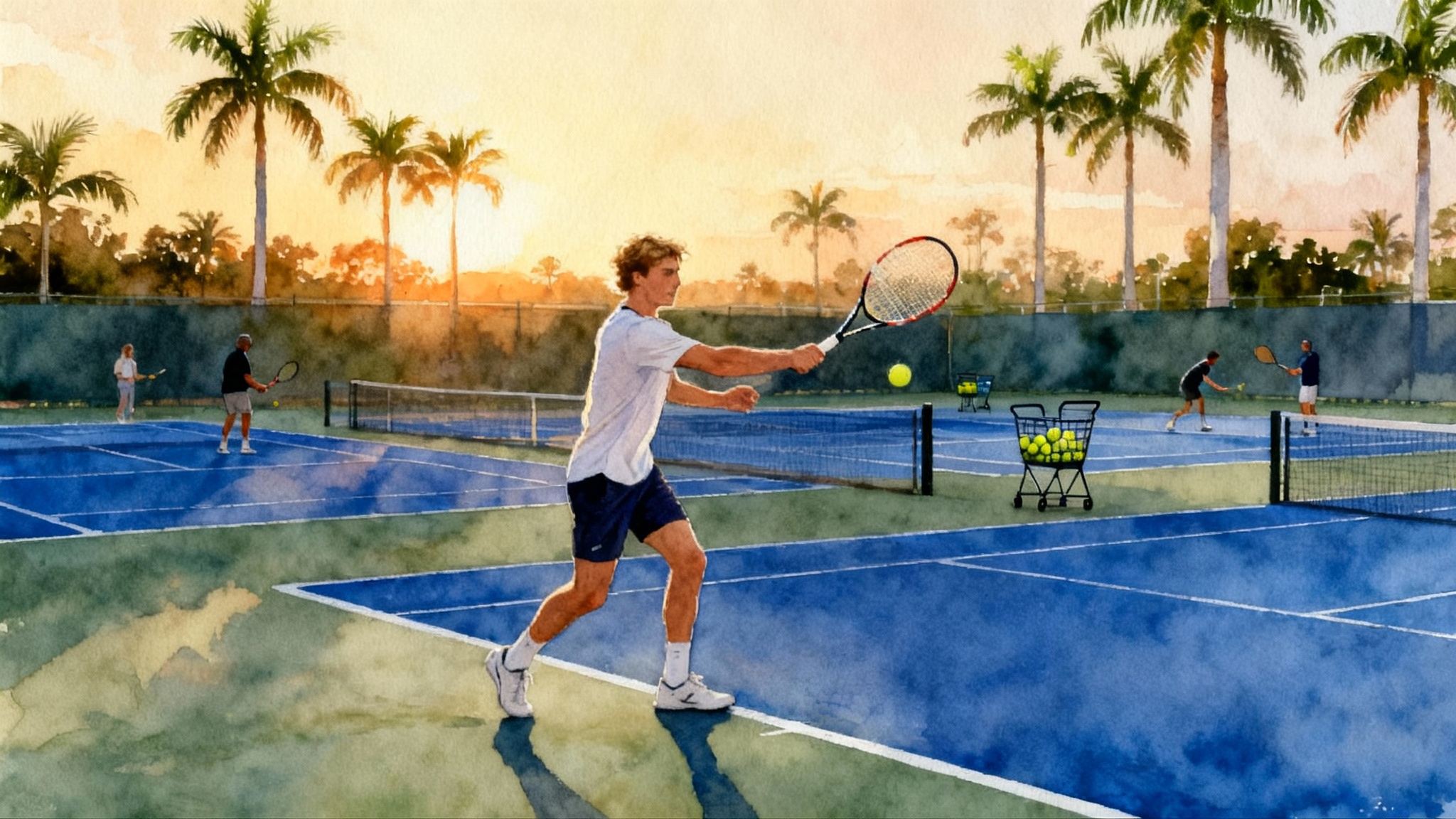
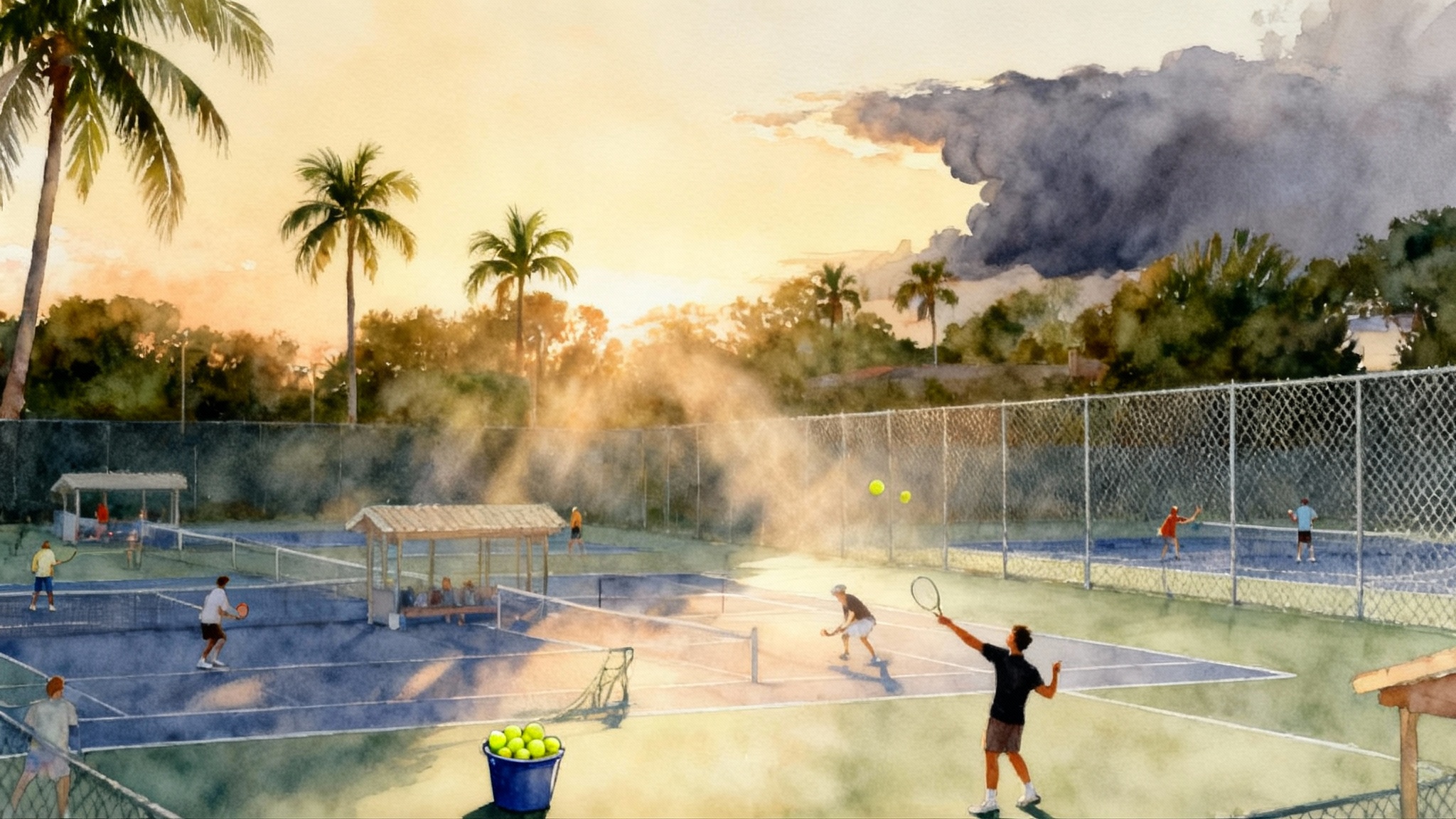
The Gauff family returned to Delray Beach when Coco was young, choosing familiarity over commute time. Community courts at Pompey Park and other public sites made volume affordable. When it was time to add structure and peer competition, they placed her with coach Gerard Loglo at New Generation Tennis Academy in Delray Beach. Daily work looked ordinary on paper and ruthless in practice: baskets of crosscourt backhands to a deep triangle, forehand defense from the doubles alley, return blocks from two starting positions, and tiebreak rehearsals that ended only when the session goal was met.
Results followed, but the deeper gain was repetition with purpose. The academy gave her a local team, sparring partners who pushed pace without ceremony, and a coach who insisted that patterns be scored, not just drilled. That ethos, score every pattern, would later become a competitive advantage on tour.
Champ’Seed support and the Riviera residencies
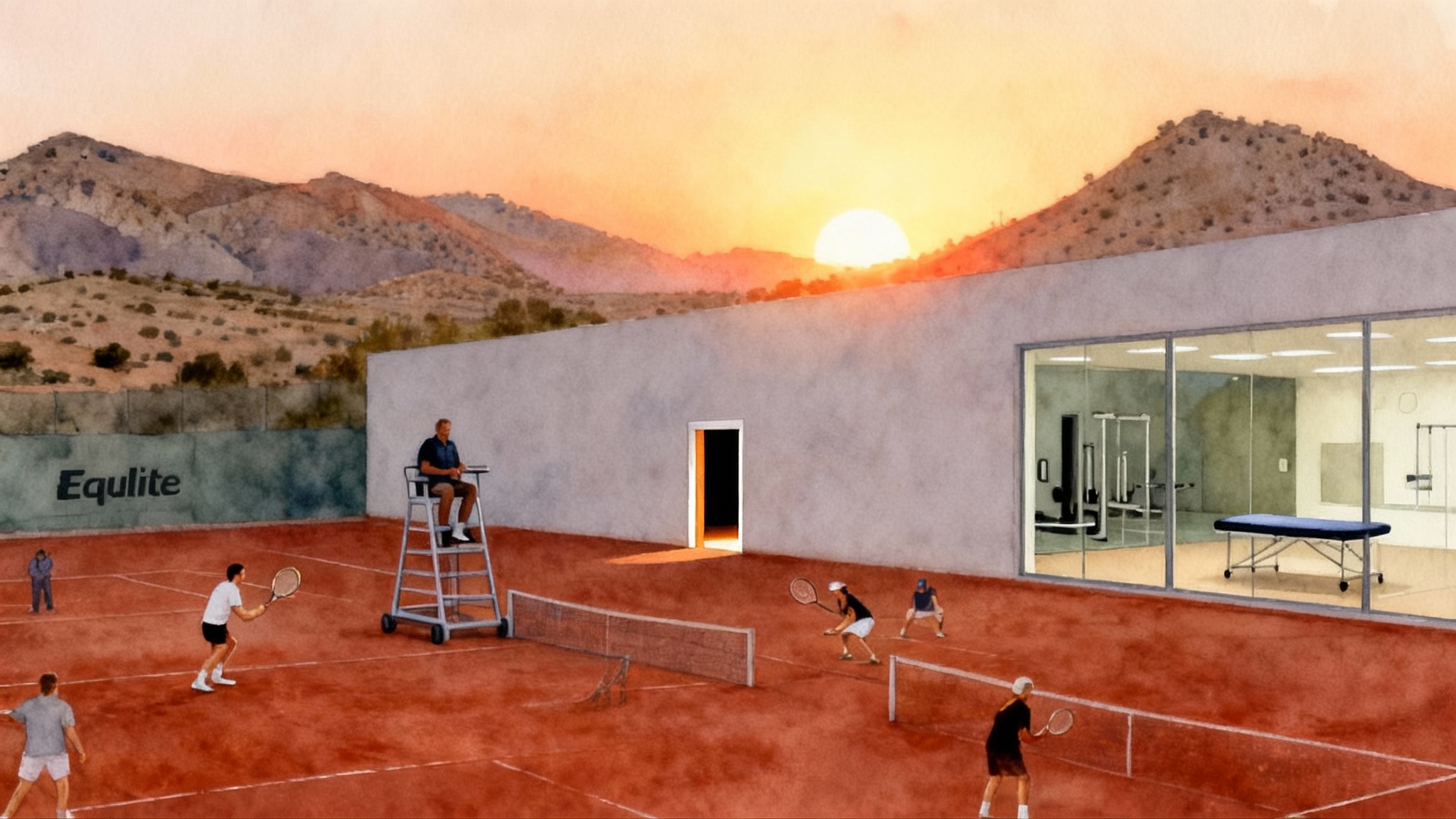
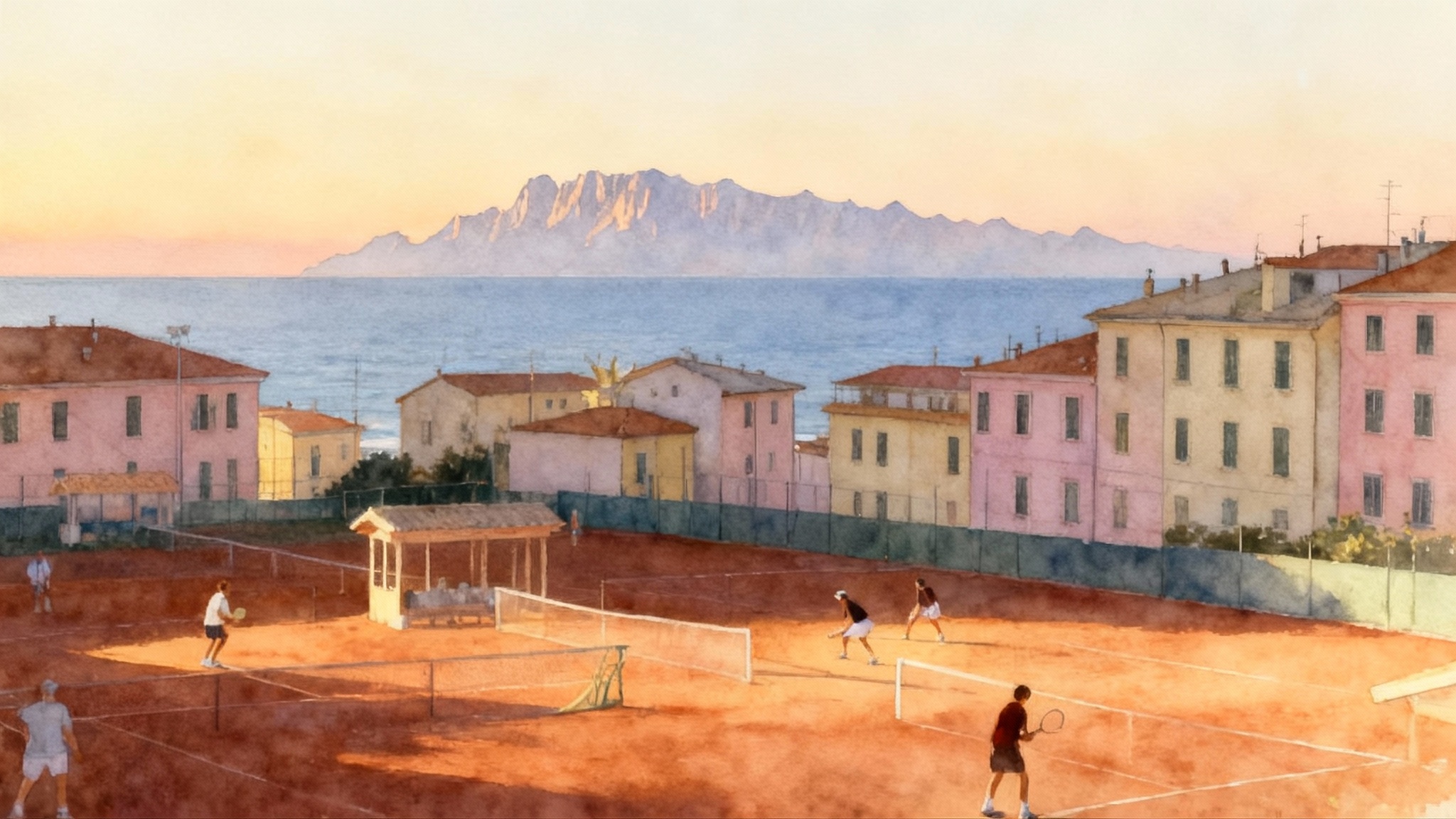
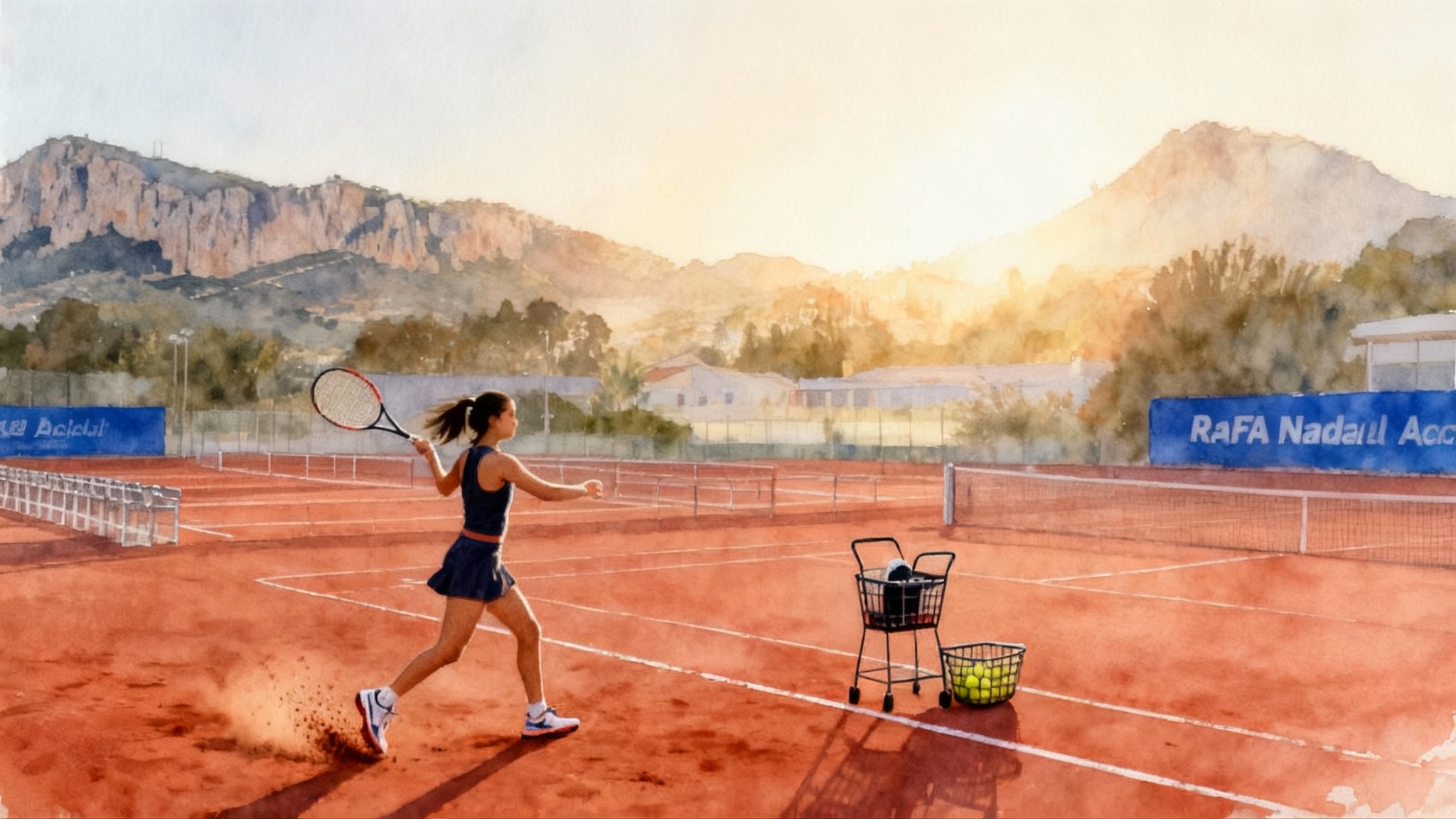
At age ten, Gauff began training blocks at Patrick Mouratoglou’s academy near Nice, supported by the Champ’Seed foundation. That move mattered for two reasons. First, it placed her in an environment where the floor was high and the standards were explicit. Second, the time there came in blocks, not as a permanent move, so each residency had a focus and each return home had an assignment. You can see the relationship in the Champ’Seed alumni profile, which also outlines the foundation’s purpose and selection model.
Families considering France can compare structures and facilities at the All In Academy campuses as a reference point for block-based residencies.
What changed on the Riviera:
- Clay first, speed always: Weeks began with clay movement and ended with decision speed. Coaches emphasized two neutral balls with height, an aggressive third ball to the open lane, and a recover step that reset the hips, not just the feet.
- Pattern libraries: Ball machines and live hitters delivered preplanned sequences. Example: deuce‑court serve wide, first ball to backhand corner, second ball deep middle to freeze the opponent, third ball change to the forehand pocket. The point was not creativity, it was reliability under fatigue.
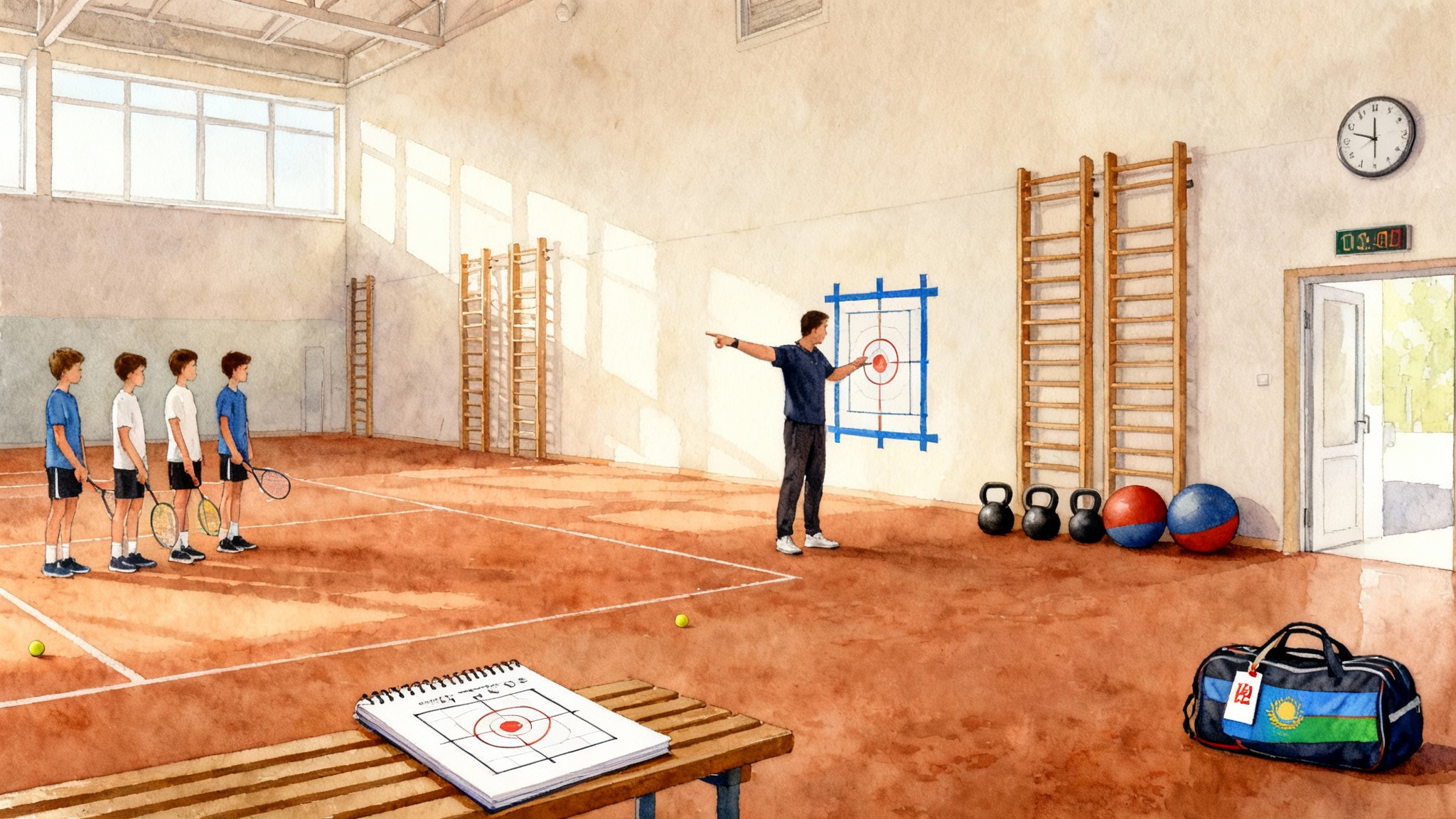
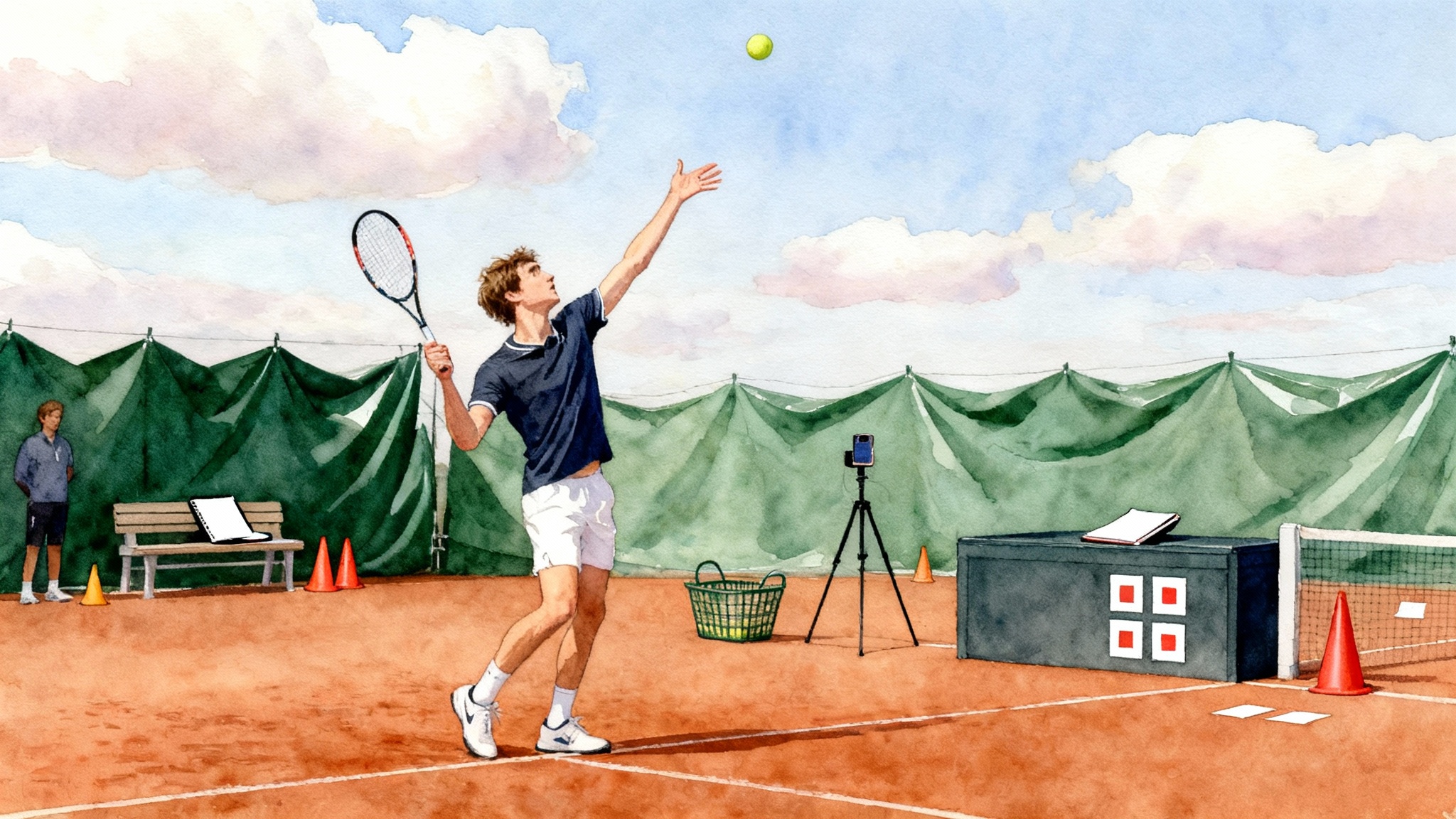
- Movement testing: Basic but revealing tests appeared every block. Ten meter acceleration, 5‑10‑5 shuttle, and reactive light gates, followed by film of the first step and shoulder line. The target was not a magic number, it was beating your last block by a measurable margin.
Crucially, the residencies were funded. Scholarships reduce the financial drag that ends many promising journeys. Families often wait too long to ask. The Gauffs did the opposite, they applied early and used outside resources to buy high‑quality time on court.
Alternating roots and residencies, the cycle that stuck
The most important design choice was the alternation itself. Delray periods rebuilt confidence and volume. Riviera periods added friction, new opponents, and a different tactical vocabulary. Back in Florida, the family and New Generation staff integrated the upgrades without losing the player’s identity. Think of it like upgrading an operating system, not replacing the device. The core remained Florida fast, the updates added clay patience and pattern depth.
You could see the alternation in her junior match habits:
- On hard courts, she took return position a half step inside the hash on second serve, committed to a backhand drive through the middle, then played the first rally ball heavy to buy time. That was New Generation pragmatism.
- On clay, she accepted longer exchanges, used the crosscourt backhand as a metronome, and waited for the ball that sat up. That was a Riviera education.
Which academy habits became tour wins
The point of any junior pathway is transfer. Here are the habits that translated directly to Women’s Tennis Association match wins and how you can build them.
- Backhand patterns that begin points, not just end them
- What Gauff used: Crosscourt backhand as a rally stabilizer, then a sudden down‑the‑line change when the opponent’s outside foot crossed the baseline. The decision cue was footwork, not emotion.
- How to train it: Score a 15‑ball ladder. The hitter earns one point for every crosscourt that lands past the service line and a bonus point if the down‑the‑line change is followed by a recover step to the center mark. Stop when the player reaches 25. If you end a set under 20, repeat.
- Footwork that resets the hips, not just the feet
- What Gauff used: A negative step that preloads the outside hip, then a crossover that carries her out of corners. You can see it most clearly when she defends forehand inside‑out and still wins the depth battle on the ninth ball.
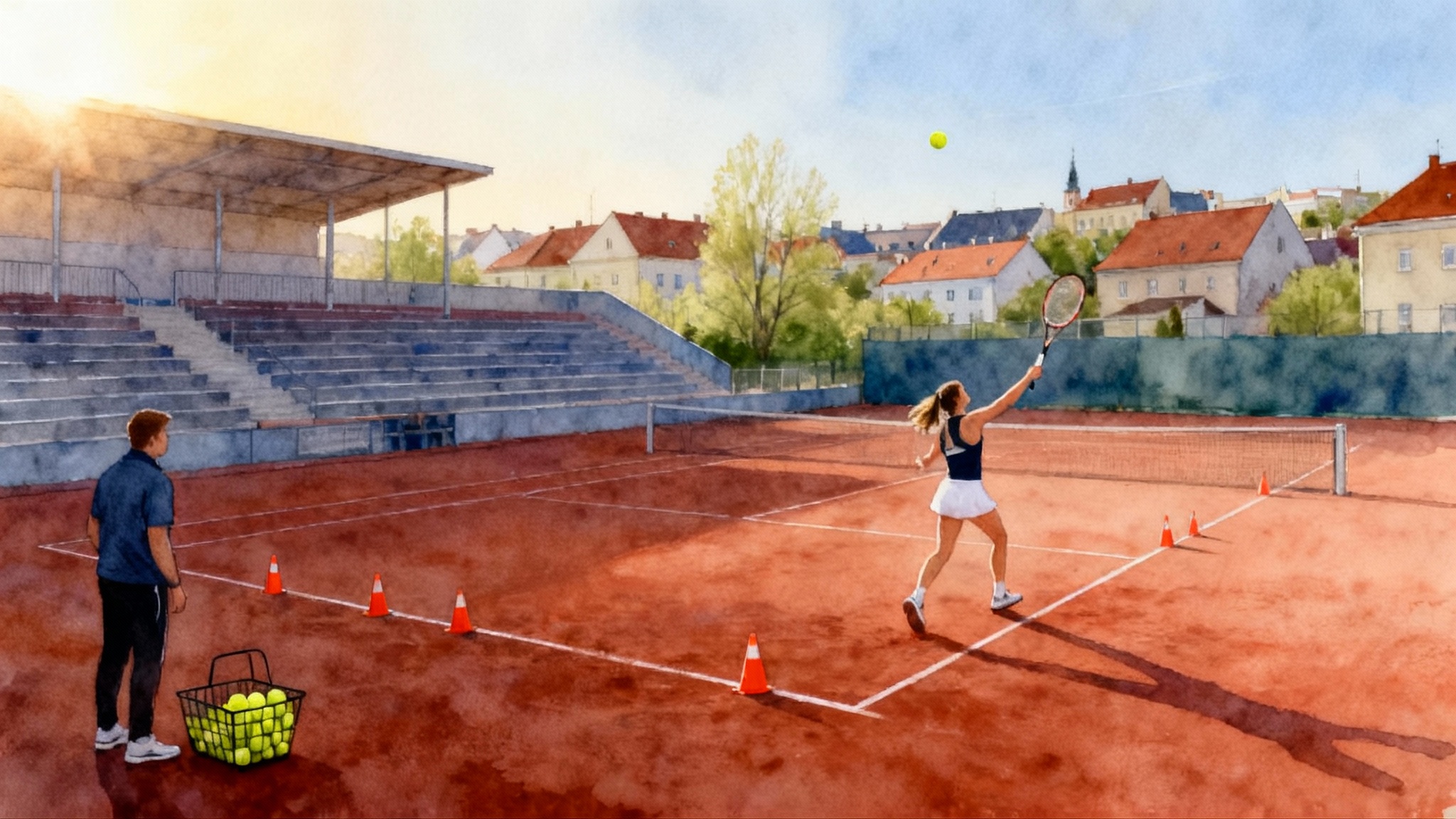
- How to train it: Place cones two racquet lengths outside each singles sideline. Feed alternating deep balls. Require a crossover and a full recover to the center stripe with the hips facing down the court before the next feed. Ten continuous reps equals one set. Three sets. Time the total and beat it next session.
- Resilience that is practiced, not hoped for
- What Gauff used: Composure after bad starts and a consistent reset routine between points. When she won her 2023 US Open title, she did it after dropping the first set in the final. The mindset was a skill, not a mood.
- How to train it: Script momentum swings in practice sets. At 3‑all, force the player to start every game at love‑fifteen. At 5‑all, start at love‑thirty. Track break points saved. Debrief the between‑point routine, including breath, focal point, and pattern choice.
- Return of serve with two presets
- What Gauff used: Versus second serve she stepped in with a short backhand block through the middle. Versus first serve on the ad side she slid back a half step and favored a high crosscourt to the backhand corner to start neutral.
- How to train it: Alternate ten second‑serve blocks with ten first‑serve neutralizers. Score contact height and landing zone, not winners. Move the server around the box to remove autopilot.
Why clay blocks and movement testing mattered
Clay was not about romance or tradition. It was about time, repetition, and movement literacy. On clay a neutral ball buys you a second chance, so juniors can repeat patterns long enough to learn which ones hold under stress. Movement testing turned an abstract goal into a weekly scoreboard. Beat last week’s first step by five hundredths, lengthen the rally by one ball on average, reduce emergency shots by ten percent. Those are boring metrics, which is why they work. For a complementary example of clay‑to‑hard transfer at the elite level, study JC Ferrero’s Alcaraz plan.
If your local program does not offer testing, build a simple protocol:
- Ten meter split from a two‑point stance. Three trials, keep the best.
- Side shuffle with touch points at singles sideline and center mark for fifteen seconds. Count clean touch‑and‑goes.
- Reactive start using a coach’s clap or a hand drop. Video from the side and check whether the first move is a heel drop or a loaded hip.
Record, chart, and revisit after every training block.
The pro staff choices that locked the gains
As Gauff moved into the top tier, the family kept the alternation principle, only the actors changed. A trusted core remained, then specific specialists were added for targeted windows. In 2023, veteran consultant Brad Gilbert joined during the North American hard court swing, simplifying patterns and sharpening pre‑point routines. A European voice, Pere Riba, helped bridge training habits from clay to hard courts. The staff shaped a season where problem solving was the theme, and the results arrived.
When she won in New York, the performance looked like an audit of the pathway. She absorbed a rough first set, tightened her crosscourt backhand depth, extended rallies until the errors came, and trusted the fitness built across years of measured blocks. That triumph validated the home‑and‑residency model, not as a one‑off, but as a way to keep improving after the big result.
Actionable takeaways for families
Here is a concrete plan you can adapt.
- When to seek scholarships
- Apply as soon as your player shows national‑level results in their age group and your family budget tightens at the idea of travel plus coaching. Do not wait for a perfect résumé. Foundations are built to identify potential early.
- Build a one‑page dossier with three items: best wins, video of five points that show decision making, and a letter from the home coach that states the next three goals in measurable terms.
- Target a camp or block that has a clear focus. Write it on the application. For example, a two‑week clay block to improve movement and depth control, measured by rally length and forced errors.
- How to blend home coaching with academy camps
- Assign roles. The home coach owns the daily plan and the debrief after every camp. The academy block provides stress, resources, and a new lens. If you return home without a written two‑week plan, the block was incomplete.
- Use a simple template. Day one after return, repeat the three most valuable drills from the camp. Day three, test movement. Day seven, play a practice match using two patterns learned in the block and score them.
- Why clay blocks matter for hard court success
- Clay forces you to value time. A neutral rally ball that lands deep and high buys recovery and makes your opponent hit on the move. On hard courts, that same ball often becomes a short forehand opportunity.
- The footwork that clay demands, especially the recover step and the hip reset, translates to defending corners on any surface. The goal is not to become a clay specialist, it is to become unbreakable in neutral.
- Movement testing, the cheapest upgrade you can add
- You do not need a lab. A smartphone and cones will do. Test on Monday, re‑test on Friday. Plot the numbers. Vocabulary like first‑step split, crossover distance, and hip angle should live in your weekly notes.
- Reward improvements in tests with a privilege the player values, such as choosing the first practice pattern or the playlist. That connects boring gains to daily motivation.
- Which habits to import directly from elite academies
- Backhand patterning: Crosscourt until the front foot crosses the baseline, then down the line and recover. Score it.
- Footwork under fatigue: Every corner escape ends with hips square before the next ball. If not, stop and reset the rep.
- Resilience as a routine: Breath, cue word, pattern choice. Treat the routine as a technical skill and coach it.
Setting up for 2026 without guessing the future
Families often ask what to plan when a player moves from first breakthrough to sustained contention. The lesson from Gauff’s pathway is to keep alternating environments and to assign intent to every block.
- Off‑season blueprint: Two weeks clay, two weeks hard, with the same movement tests bookending both. Choose one offensive pattern and one defensive bailout that you will measure all month.
- Tournament run: Enter with two patterns you promise to use in deuce and ad points under pressure. Track not only win‑loss, track whether you actually used the patterns. Honesty beats optimism.
- Staff cadence: Keep your core voice, then bring in a specialist for a defined window with a defined outcome. End each window with a report card that travels back to the home coach.
A simple blueprint you can copy
- Build a local base where volume is affordable and coaching is consistent.
- Add scholarship‑supported residencies that create friction and offer objective testing.
- After every residency, return home with three written drills, two patterns to measure, and one movement test to beat.
- On court, start with backhand patterns that stabilize points, then train the change of direction that turns defense into initiative.
- Test movement weekly. Keep the numbers where the player can see them.
- Treat resilience as a skill you can rehearse, not a personality trait.
- When big results arrive, keep the alternation. Success is proof the model works, not a signal to abandon it.
Conclusion
From Delray to the Riviera, Coco Gauff’s story is not mysterious. It is specific. Community courts, a local coach who scores patterns, scholarships that buy time in elite environments, and residencies that are short, focused, and measured. The wins on tour look like what she practiced as a kid because the pathway demanded transfer from day one. If you are building a player for 2026 and beyond, start with that loop. Define a local base, secure a focused residency, measure the gains, and bring them home. Repeat until the big stage feels like another practice court, only louder.