From Bradenton to ATP Top 20: IMG’s Blueprint for Korda
Sebastian Korda did not relocate overseas. He grew up in Bradenton, trained at IMG Academy under his father’s eye, added veteran mentors, and chose a smart schedule. Here is a replicable plan for families who want a composed baseliner.
 Tommy
Tommy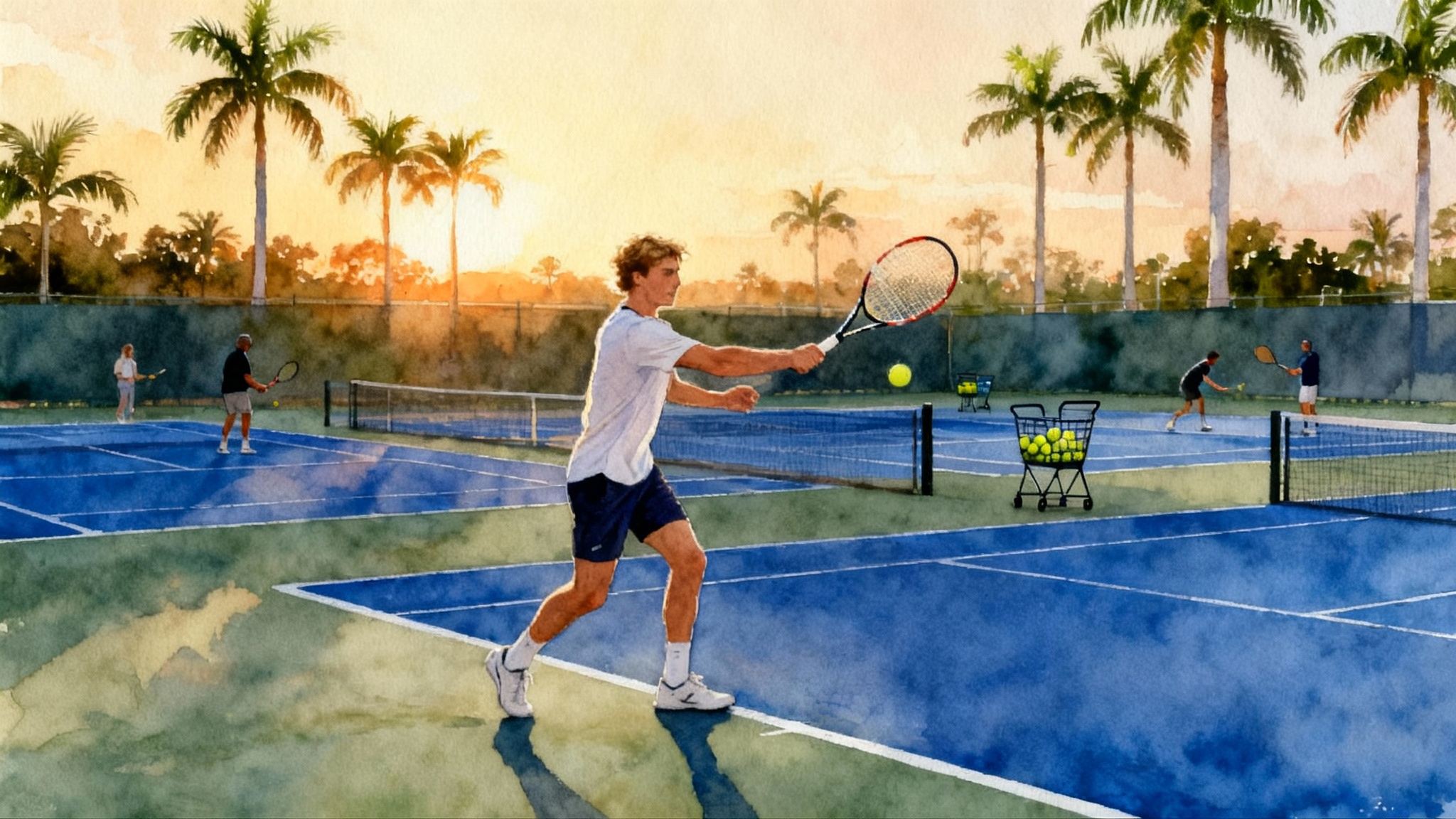
The Bradenton origin story
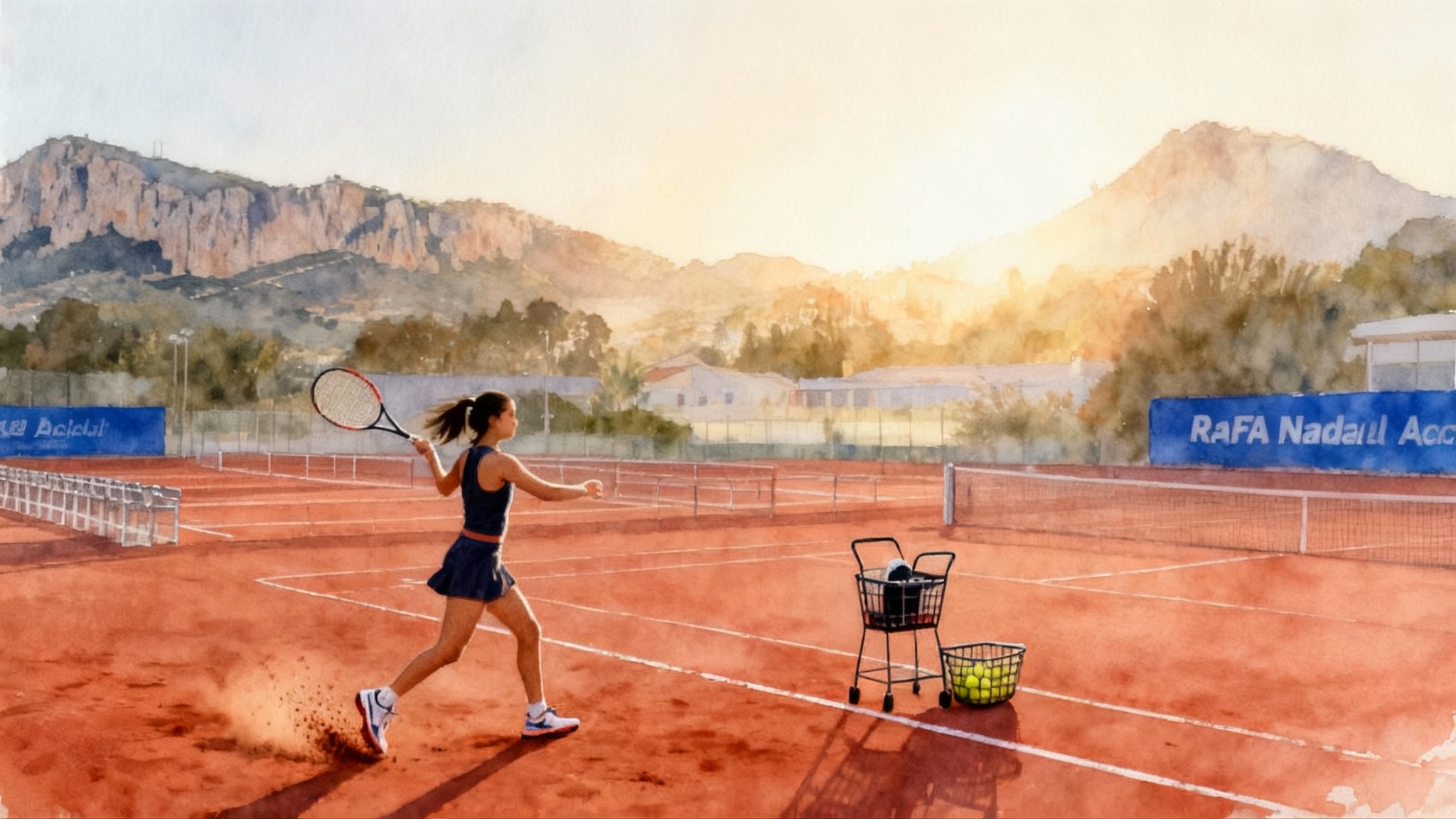
Sebastian Korda’s path did not begin with a passport stamp. It began with a decision at nine years old, after a night match in New York convinced a hockey‑loving kid to choose a racket. He then grew up training in Bradenton with his family and within the structure of IMG Academy. Years later he would break into the ATP top 20, joining his father Petr, a former world number two. The public details of that timeline are clear, including that he pursued tennis at age nine and rose into the top tier while basing himself in Florida.
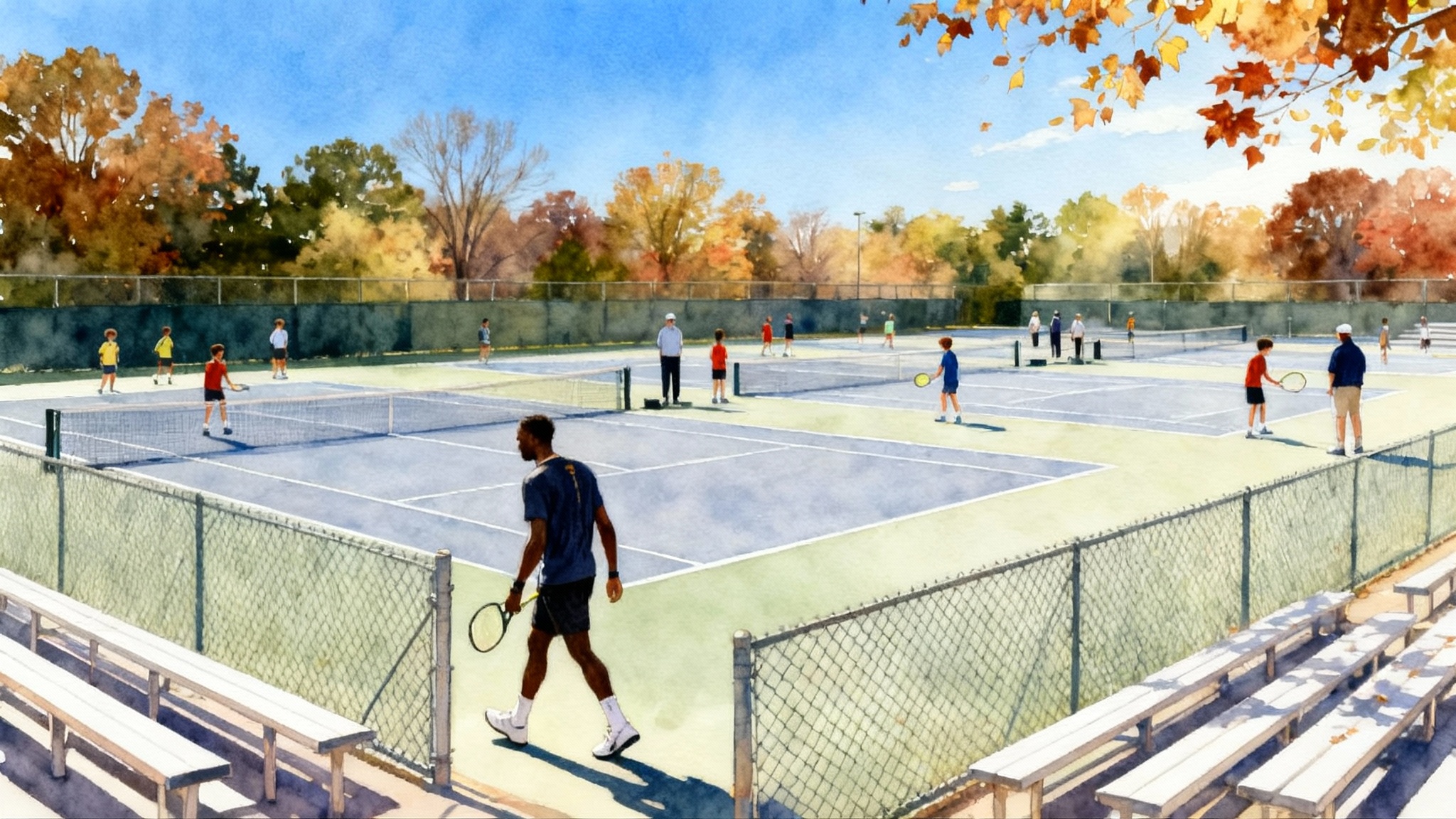
If you are a parent or a junior coach, Korda’s route offers something both specific and replicable. It shows how a stable home‑base academy can supply the daily volume, variety, and mentorship of a touring life without the disruption of full‑time relocation overseas. For a Florida comparison on how a local base scales, see the Osaka’s Florida academies playbook.
What IMG Academy actually provided
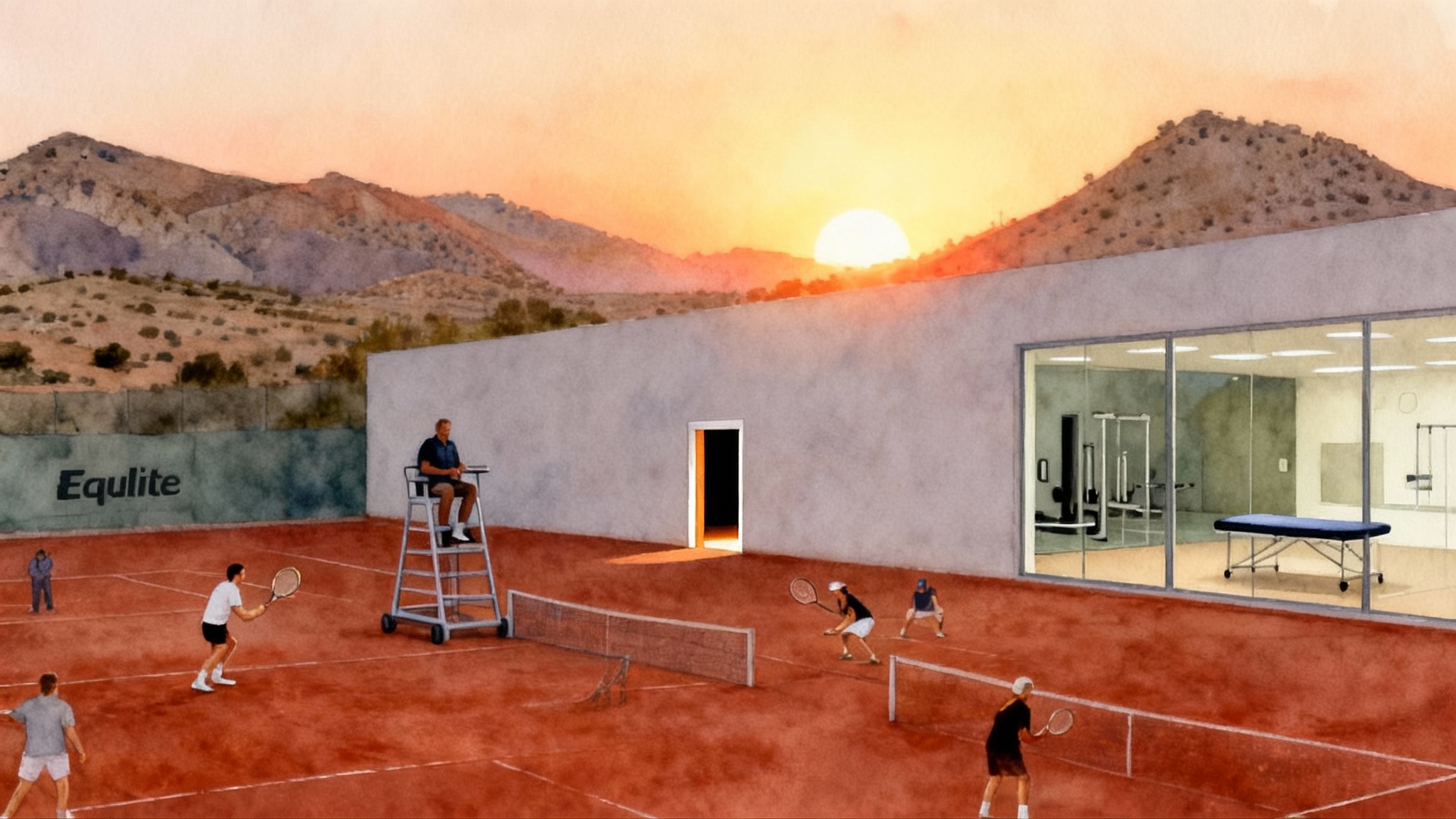
IMG Academy is not just a cluster of courts. It is a repeatable training environment that makes a player’s development predictable, which is the real advantage for families. Korda had three ingredients that IMG can systematize for many players:
-
Sparring density. A constant stream of high‑level hitters produces better decisions under pace. This is not about perfect ball feeds, it is about solving point patterns against people who are good enough to punish half‑measures.
-
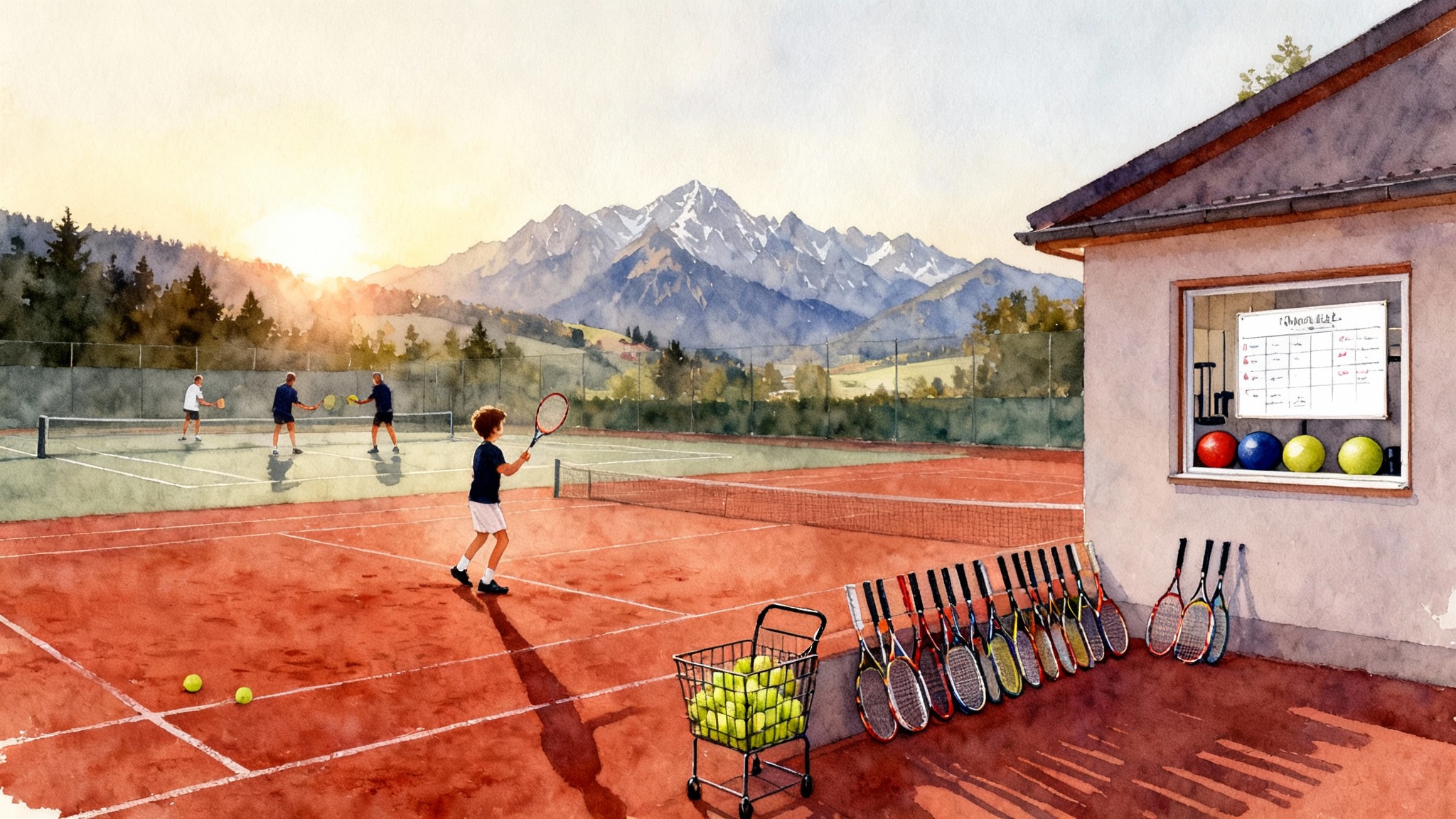
Surfaces and scheduling. Hard, clay, and indoor options on the same campus let a player rehearse surfaces without long trips. That keeps the training‑to‑travel ratio tilted toward improvement.
-
Integrated support. Fitness coaches, physio, nutrition, and sports psychology sit within walking distance. That removes friction, which is usually what sabotages junior plans.
Korda could train at home, then jump into events in Florida or travel in short blocks, then return to baseline work. This rhythm is one reason the family did not have to uproot.
The style target: a composed modern baseliner
Korda’s game is an excellent case study in a modern, composed baseliner. Here is what that means in practice:
- First‑strike patience. The goal is not to hit first, it is to earn the right to hit first. That shows up as neutral‑ball tolerance, especially into a reliable backhand that does not leak errors when the rally is even.
- Clean redirection. A player who can change direction down the line, especially off the backhand, keeps opponents from camping in cross‑court patterns.
- Height as an asset, not a crutch. A taller player must learn to defend lower balls and keep spacing pristine. Footwork ladders do not fix that by themselves; regular live drilling against low skidding balls does.
- Serve and first forehand as a pair. A composed baseliner does not chase aces. He looks to land a high‑percentage first serve that sets up a repeatable forehand lane, usually into the opponent’s backhand corner.
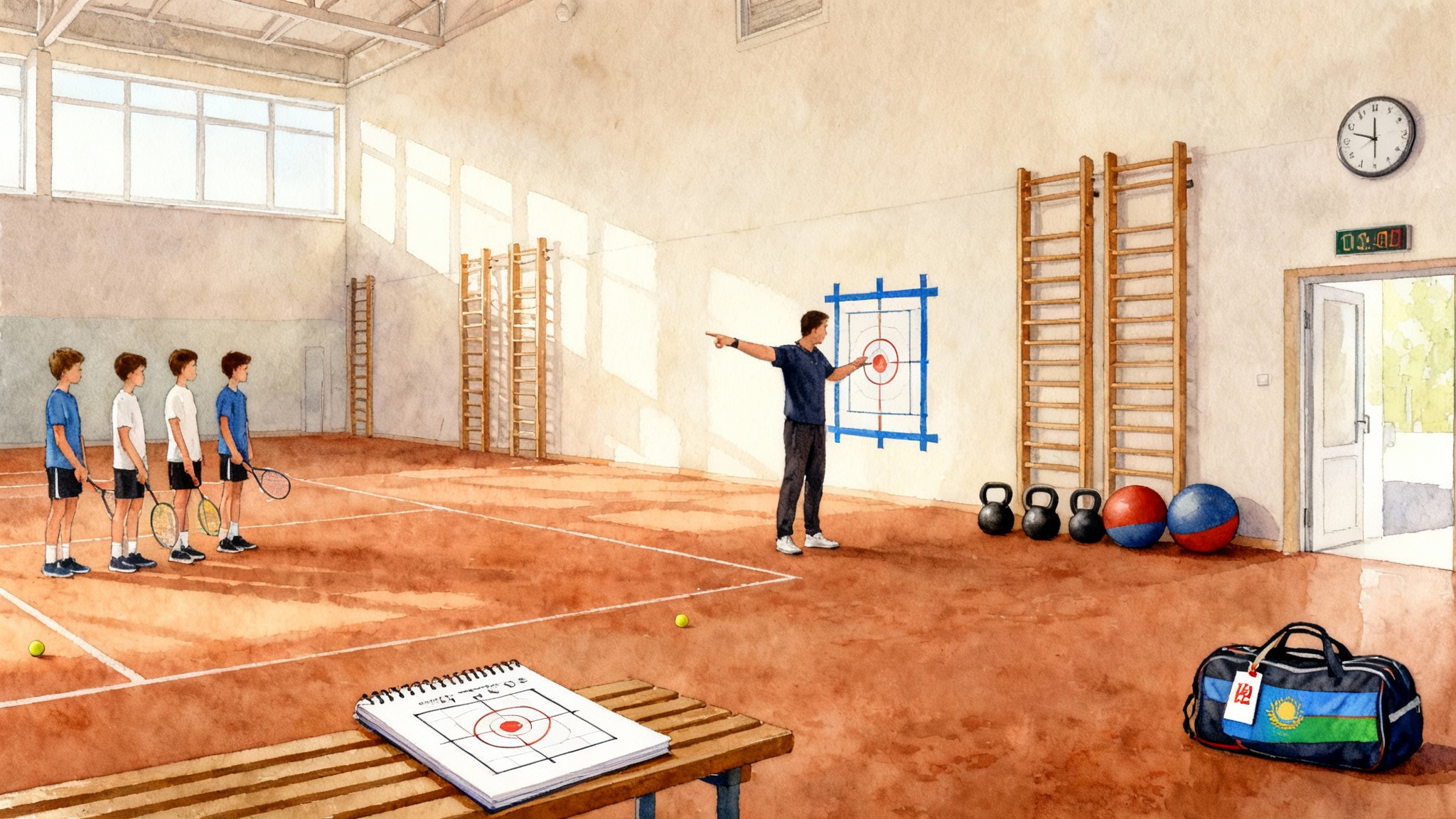
Korda’s calm on court is not mystique. It is the by‑product of thousands of live reps against quality hitters with specific constraints, for example forehand to forehand to three balls, then any pattern; backhand cage work with a mandatory down‑the‑line change on the third neutral; return games starting at 30‑all. Structure trains composure.
The actual pathway: milestones that matter
Below is a simplified timeline that families can pattern without copy‑pasting every detail.
-
Ages 9 to 13, late switch with acceleration. Korda chose tennis at nine, later than many peers. The family closed the gap with higher quality, not just more hours. The emphasis was on rally foundations, full‑court movement, and compact match play rather than constant age‑group tournament hopping.
-
Ages 14 to 18, selective junior escalation. Korda climbed the junior ladder with a handful of targeted events while continuing to build at home. He won the Australian Open boys’ singles title in 2018 and reached junior world number one. The key move was not the titles; it was the choice to keep IMG as the daily lab while using travel to test specific themes, such as return depth against big servers or forehand height control on European clay. For another U.S. blueprint that stayed anchored at home, study the JTCC and Tiafoe blueprint.
-
Ages 18 to 21, home‑based pro entry. The camp did not change just because the ranking now had a prize money column. Korda blended Challenger events, North American events, and a few top‑level wild cards, then returned to Bradenton to reinforce patterns that cracked under stress. He added veteran mentors along the way, including instruction and perspective from Andre Agassi and Steffi Graf.
-
Ages 22 to 24, the top‑20 push with mentors and schedule discipline. He stayed anchored at IMG, sharpened patterns for faster courts, and did not chase ranking points blindly. Washington, Cincinnati or Canada, and the United States Open became performance targets. When he won the Washington title and pushed into the top 20, it validated the approach.
Crucially, this arc never required a permanent move to Europe. The family used Europe in blocks, usually around the clay season, then came home to reset.
Why staying at a home base works
Think of a home‑base academy like a well‑equipped kitchen. Travel tournaments are dinner service. You do not run a restaurant by shopping and cooking in a different kitchen every night. You prep in one place because repetition produces quality.
A stable base reduces three hidden costs that quietly drain most junior campaigns:
- Decision fatigue. You know the facilities, trainers, and daily plan. That frees the player’s attention for solving the opponent.
- Frictional time loss. When weight rooms, treatment tables, and analytics tools are nearby, you lose fewer minutes switching contexts. Over a season, those minutes become skill.
- Emotional volatility. Returning to a familiar bed and routine after travel lowers stress. Lower stress stabilizes performance.
Korda’s family used IMG precisely this way. He practiced with his father when he was home and mixed with strong hitters on campus, a routine he often described as being back home at IMG.
The replicable blueprint for families
You can apply the same principles whether your home base is IMG Academy or a strong regional equivalent. Here is a step‑by‑step playbook.
-
Choose the academy as headquarters, not a destination
What to do: Select one primary academy within realistic driving distance that has multiple surfaces, a fitness center, full‑time coaches, and a steady supply of high‑level sparring. Consider options like Gomez Tennis Academy in Naples for a Florida‑based model.
Why it matters: Development requires consistent constraints and feedback loops, not a rotating cast of courts and voices.
How to execute: Commit to three to four anchored training blocks per year at this base, each four to eight weeks, with two thorough return‑to‑base weeks after every travel swing. -
Build a weekly structure that trains composure
What to do: Divide the week into technical, tactical, physical, and competition days. Include at least two constrained match‑play sessions with scorekeeping and specific pattern goals.
Why it matters: Composure is trained when the player must make decisions under repetition and score pressure.
How to execute: Examples include return games starting at 30‑all; serve plus one to a lane target; backhand cross to five balls then mandatory down the line. Track first‑serve percentage and rally length. -
Curate sparring partners like a ladder
What to do: Design a sparring ladder with three tiers: slightly weaker hitters for pattern rehearsal, peers for true neutral rallies, and stronger hitters for stress exposure.
Why it matters: Each tier builds a different part of the composed baseliner. Confidence, neutrality, and resilience all need their own reps.
How to execute: Coordinate with academy staff to rotate fifteen to thirty minutes per tier within a ninety‑minute session. Record two sessions per week for video review. -
Layer in veteran mentors
What to do: Bring in a respected former professional or elite coach for two short consults per year, ideally around preseason and midseason. The brief is not to overhaul technique, it is to refine tactical identity and training focus.
Why it matters: A thirty‑minute conversation with a veteran can prevent months of wandering. Korda’s exposure to mentors like Andre Agassi and Steffi Graf served this function.
How to execute: Prepare a dossier with recent match clips, analytics, and three questions. The primary coach stays in charge and translates mentor insights into daily drills. -
Schedule selectively
What to do: Choose tournaments that stress the skills you are building, not only those with soft draws. Mix local events for volume, regional events for travel practice, and two international blocks per year tied to surface goals.
Why it matters: Points follow skills when you test the right skills. Korda’s calendar concentrated on surfaces and events that matched his progress.
How to execute: Create six‑week micro‑cycles: four weeks training at base, two weeks competing, then a reset week. Do not chase week‑to‑week entries on the other side of the world without a reset. -
Treat health and recovery like appointments, not suggestions
What to do: Lock in strength, mobility, and treatment sessions on the calendar before hitting sessions. Use readiness screens to modulate daily load.
Why it matters: Composed baseliners win with repeatable legs. Fatigue ruins spacing and decision making faster than it ruins forehand technique.
How to execute: Minimum two lifts per week in season, three off season. One soft‑tissue or physio session weekly during travel. Ten minutes of prehab daily for shoulders, hips, and ankles. -
Build a simple data stack
What to do: Track first‑serve percentage, second‑serve points won, return depth, unforced errors by wing, and short‑ball conversion rate. Limit to five metrics so you actually use them.
Why it matters: Numbers reveal whether you are training the right patterns. They also focus coach meetings.
How to execute: Use a camera and a shared spreadsheet. Review every Monday. If a metric stagnates for three weeks, dedicate two drills per day to it until it moves. -
Keep school and life stable
What to do: Use an education format that flexes around travel without whiplash, whether that is traditional school with planned absences or an accredited online option.
Why it matters: Emotional volatility is the hidden tax on junior tennis. Stability off court protects attention on court.
How to execute: For every two weeks away, plan a two‑day buffer at home for school catch‑up and sleep normalization.
A sample 52‑week outline anchored at home
This outline assumes a Florida base with IMG Academy access. Adapt the months to your region.
- Preseason block, December to January, eight weeks at base. Strength emphasis, technical tidy‑up, mentor consult. Two local match‑play weekends.
- Early hard‑court swing, late January to February, two to three events in the Southeast United States. One week home reset afterward.
- Spring build, March, four weeks at base. Serve plus one lanes and return depth focus. Add constrained practice sets against bigger servers.
- Clay block, April to mid May, two domestic clay events, then a targeted Europe trip of two events, no more than three weeks abroad. Immediate return for a two‑week consolidation at base.
- Grass preparation, early June, three weeks at base on faster courts, then one grass event to test patterns, travel with a clear plan for serve patterns and lower‑ball defense.
- Summer hard courts, July to August, two to three events in North America, including a peak event. Two weeks at base post peak for recovery and pattern reinforcement.
- Fall indoor, September to October, alternate two weeks at base and two weeks on the road. Finish with a debrief week at home.
Every travel block is anchored on a prewritten return‑to‑base plan that includes two days of light hitting, two days of targeted pattern drilling, and a coach review with data.
What to avoid
- Chasing points without a plan. If a tournament does not test a skill you are training, skip it. A mediocre quarterfinal with bad patterns teaches the wrong lesson.
- Permanent overseas moves before the player is ready. Use Europe in short blocks with a purpose. Korda’s family showed that a United States base can work when the daily environment is strong.
- Constant coach turnover. Add mentors, do not replace the core voice every six months. The primary coach should implement and filter outside input.
- Over‑drilling without live reps. A composed baseliner needs game‑speed reads. Allocate at least forty percent of on‑court time to live points with constraints.
Practical drills that build a Korda‑like base
- Neutral tolerance ladder. Cross‑court only for six balls, seventh ball must change line. Score a bonus point for a successful change and hold. This teaches patience before the strike.
- Return depth game. Server aims corners at 65 percent pace. Returner must land past the service line to unlock offense on ball two. Track a simple count to ten deep returns per set.
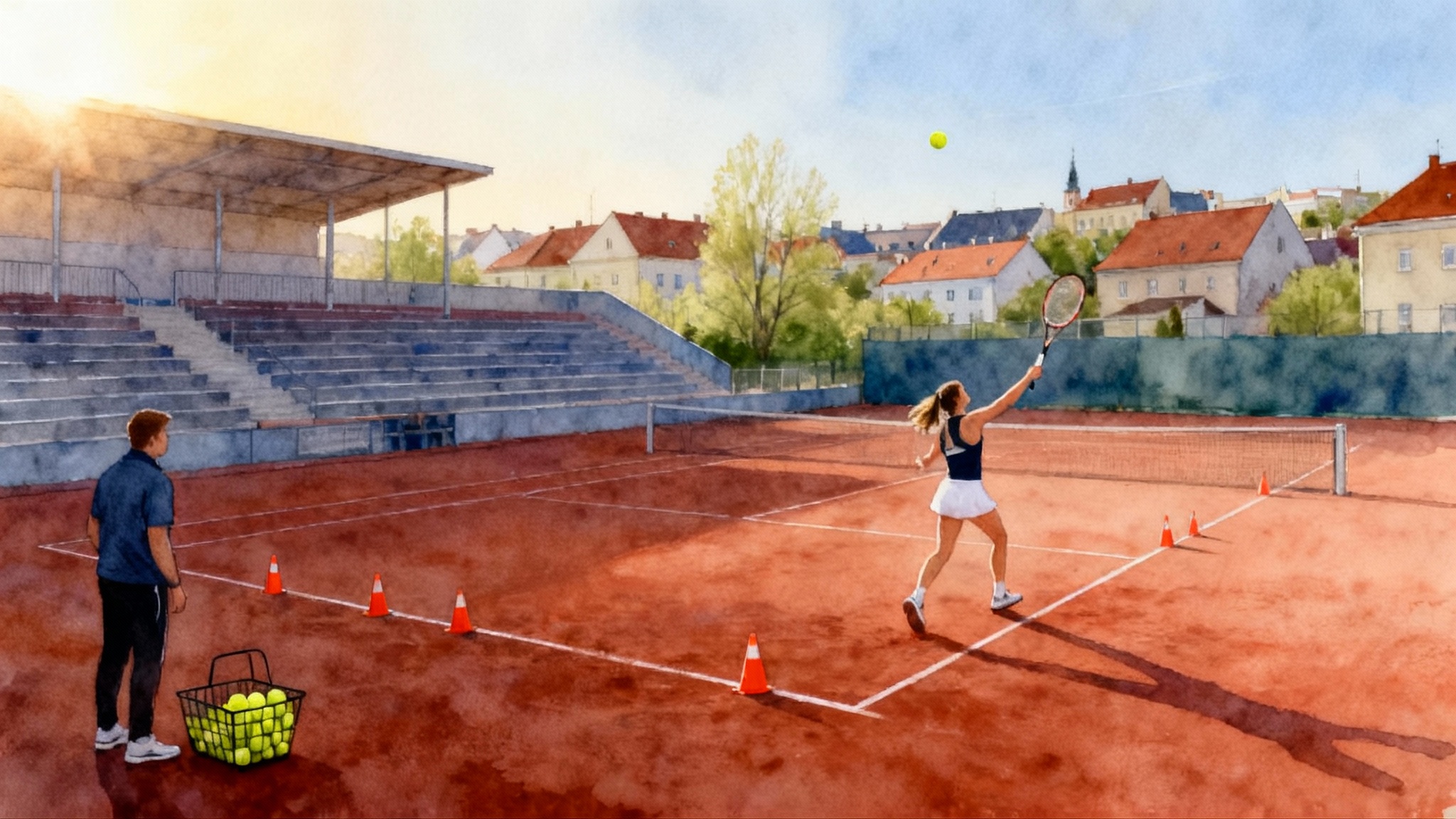
- Serve plus one lanes. Cones one racket length inside both sidelines at the service line. Player must hit serve, then land forehand into either cone lane before rally opens.
- Low‑ball defense. Feed or serve slice and low topspin balls that dip under net height. The goal is spacing and height control, not winners. Film from behind to check contact height.
Equipment and support, kept simple
- Two racket setups, not five. One match string setup and one slightly softer practice setup to protect the arm. Consistency beats tinkering.
- A weekly stringing plan. String on the same day and log tension alongside performance notes. This keeps feel stable over months.
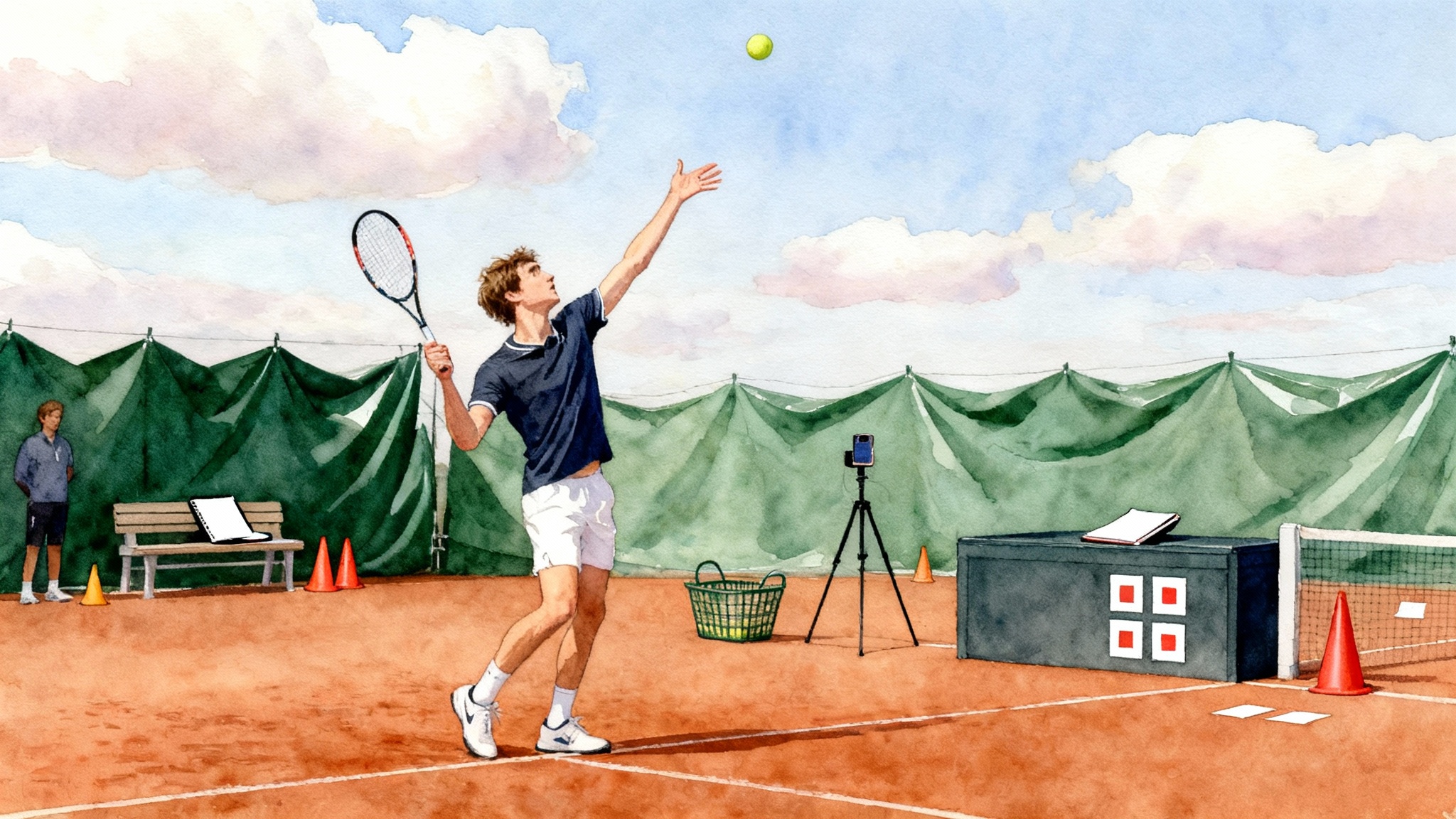
- Video and notes. A phone on a fence mount and a shared cloud folder are enough. The point is repetition and review, not fancy software.
- Recovery routine. Ten minutes of shoulder and hip work every day, ice only when swelling is present, sleep before supplements.
The takeaway for families
Sebastian Korda’s climb was not magic. It was a set of decisions that any committed family can emulate. Choose a strong home base, load up on quality sparring, add a few voices of hard‑earned wisdom, and schedule tournaments that stress exactly the skills you are building. The key is to let the home base do its job. In Bradenton, that meant IMG Academy and a father who coached with a light but steady hand. For your player, it might be a different academy and a different coach, but the structure can be the same.
You do not need to live out of a suitcase to grow a composed, modern baseliner. You need a kitchen where the prep is excellent and a menu that makes sense. Then you step out for service, plate the work under lights, and come home to cook the next course. That is how Korda went from a nine‑year‑old in the stands to a top‑20 professional, and it is a blueprint you can use today.