From El Palmar to Villena: Inside JC Ferrero’s Alcaraz Plan
At 15, Carlos Alcaraz split time, then moved from Murcia to Villena to train under Juan Carlos Ferrero. Here is how a mentor-led academy, an integrated support team, and precise scheduling turned potential into a fast track to the ATP elite.
 Tommy
Tommy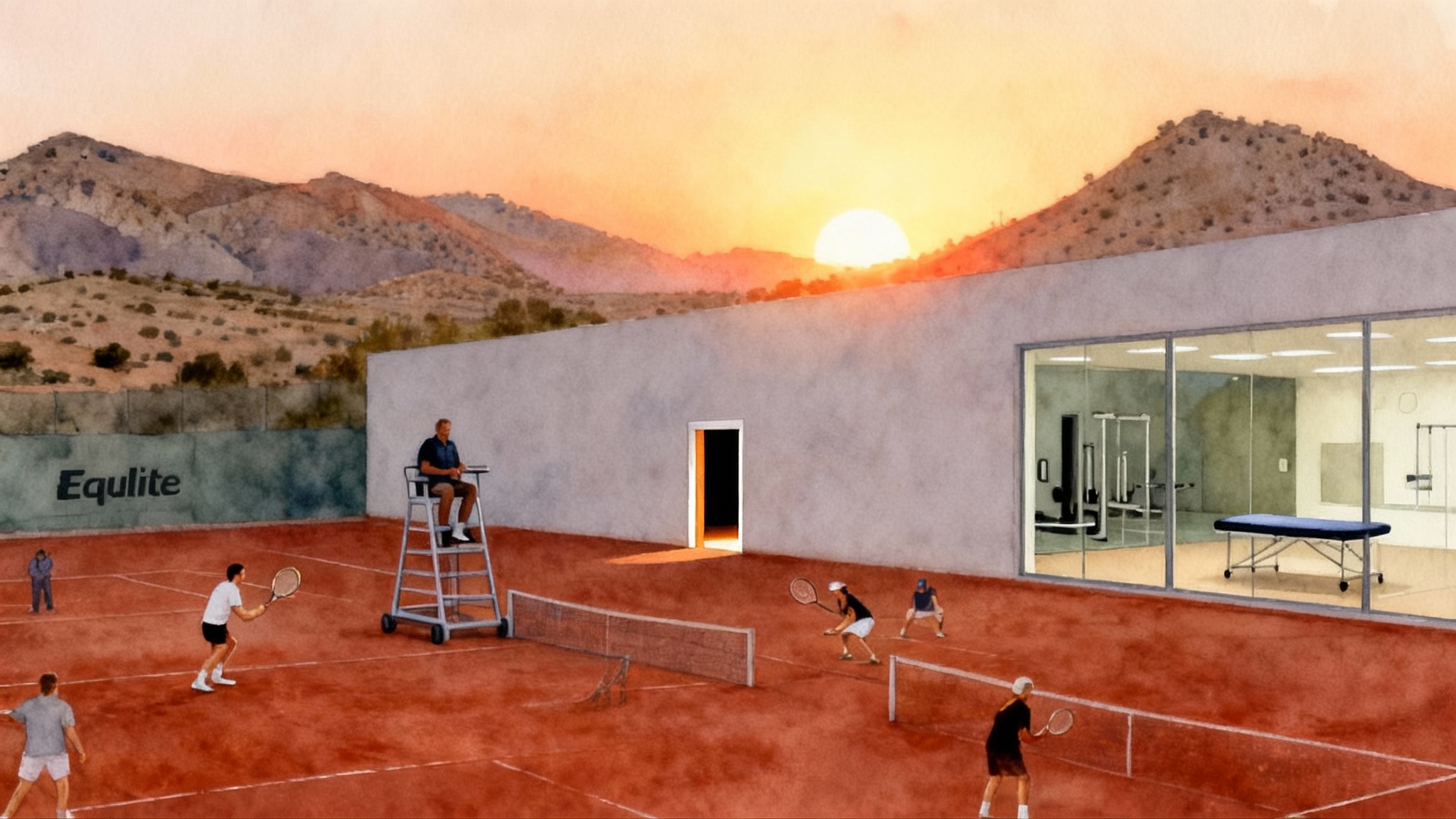
The choice at 15: split time, then relocate
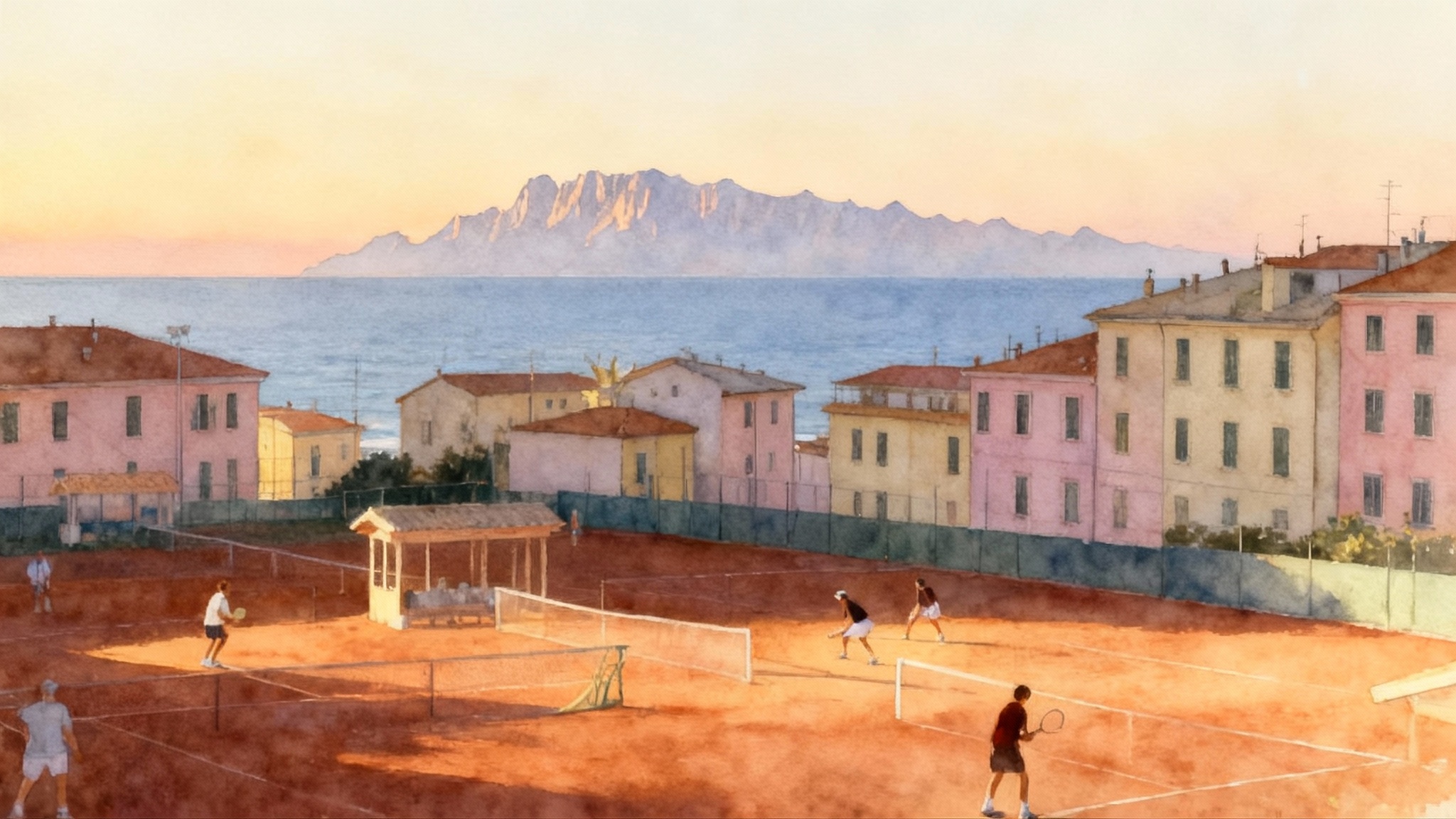
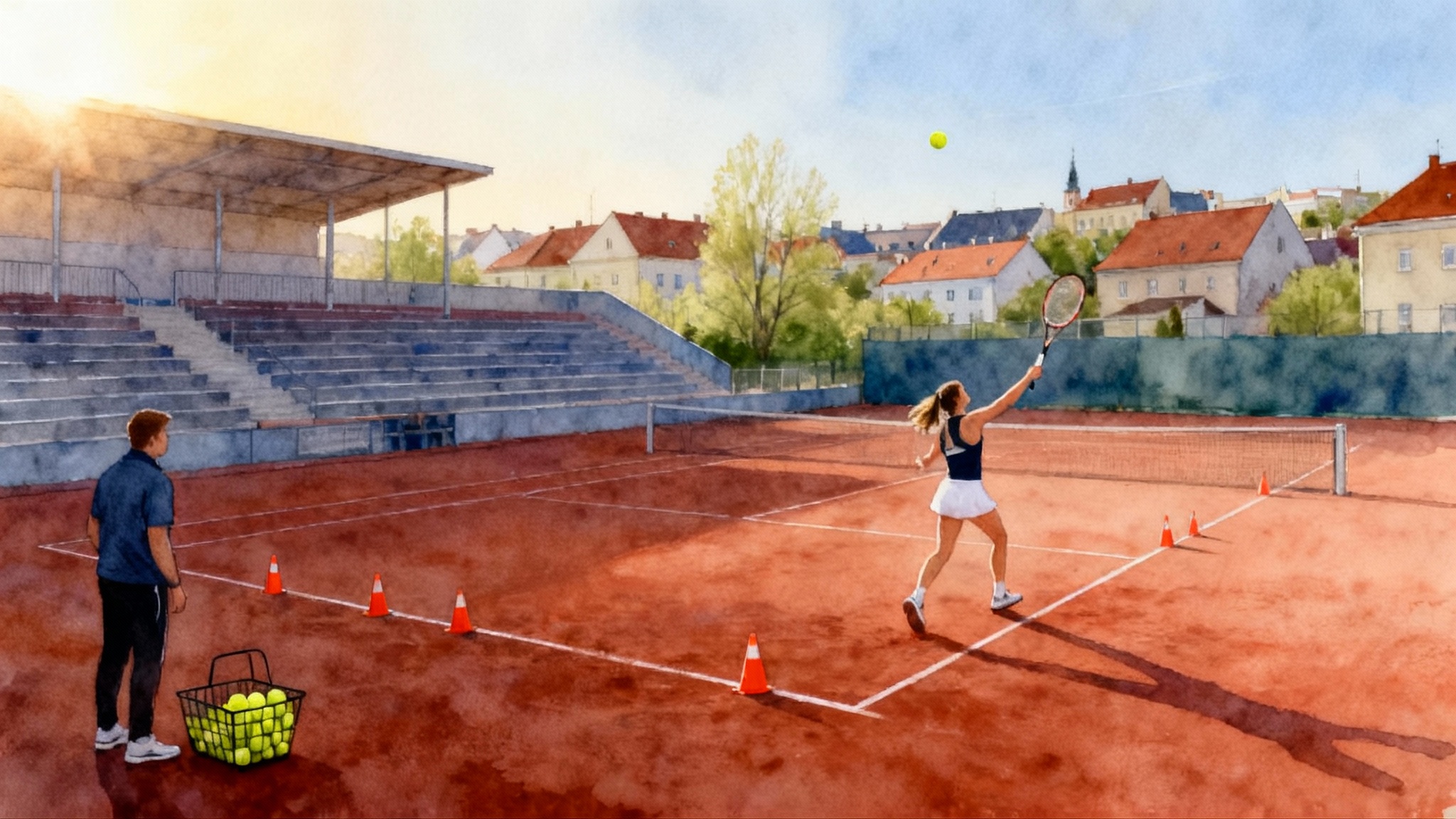
Every great leap in a sporting career begins with a decision that reorders a young athlete’s world. For Carlos Alcaraz, that decision arrived around his 15th birthday. He began splitting time between the familiar comfort of El Palmar’s Real Sociedad Club de Campo in Murcia and the more demanding, professional rhythm of Juan Carlos Ferrero’s academy in Villena. Within a few seasons he moved full time, and the results spoke loudly. The teenager who had thrived in regional and national events vaulted into the International Tennis Federation and Challenger circuits, then into the Association of Tennis Professionals main tour. By 19 he was the youngest year‑end world number one of the modern rankings era, a rise you can trace in the milestones listed on Alcaraz’s ATP player profile.
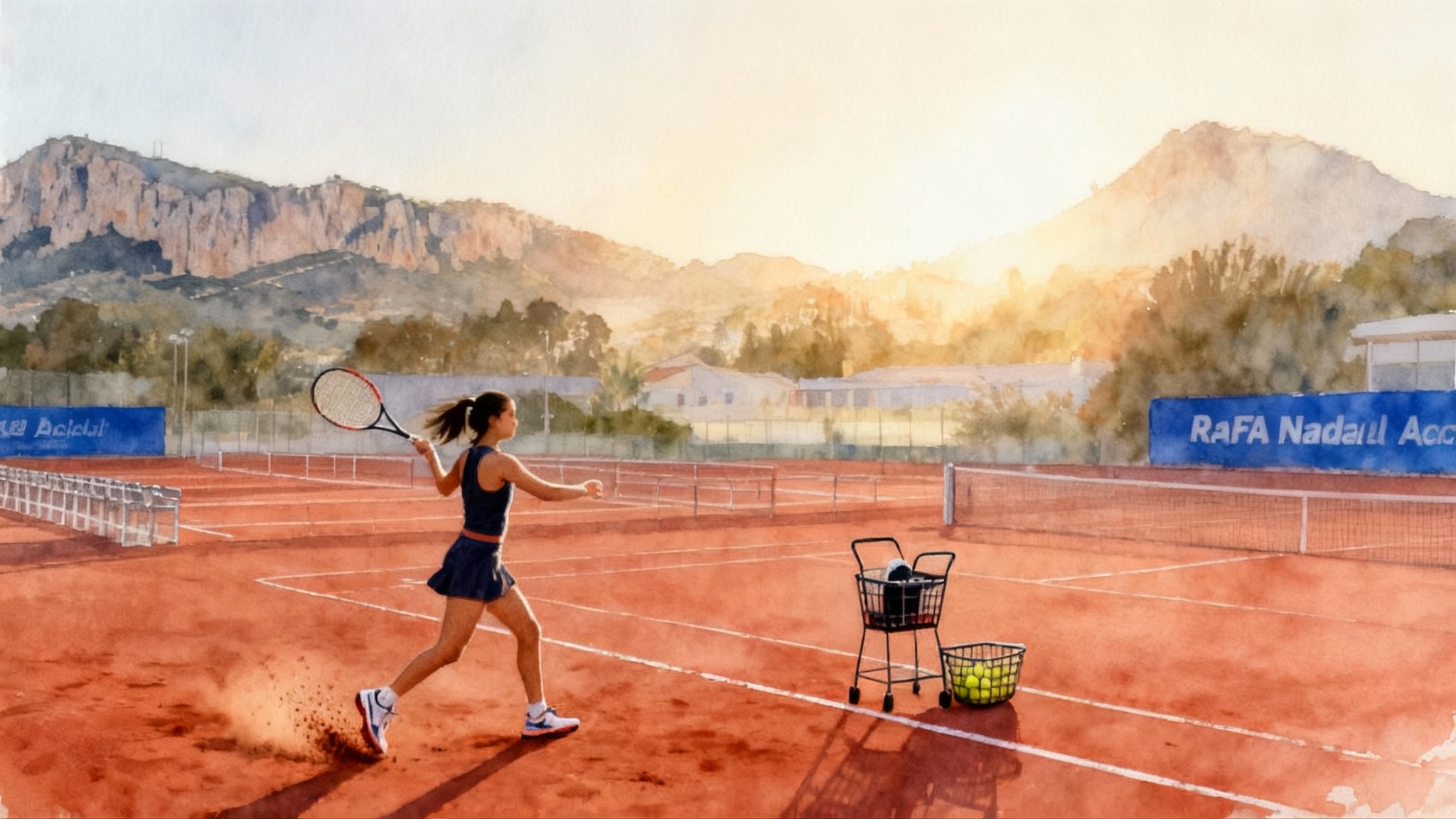
Families often imagine these moves as a change of address. In practice, they are a change of operating system. The academy in Villena offered what Murcia could not provide at the same scale or intensity: a mentor who had been number one himself, a unified performance team, and a tournament plan that treated the calendar like a syllabus. That is the story worth studying, because it offers a blueprint for players who feel they have hit a ceiling. Similar mentor‑led blueprints shaped other champions, including Piatti Tennis Center forged Sinner and Niki Pilic Academy shaped Djokovic. For a US pathway, see Mouratoglou and Champ’Seed guided Gauff.
What changed in Villena: the mentor‑led model
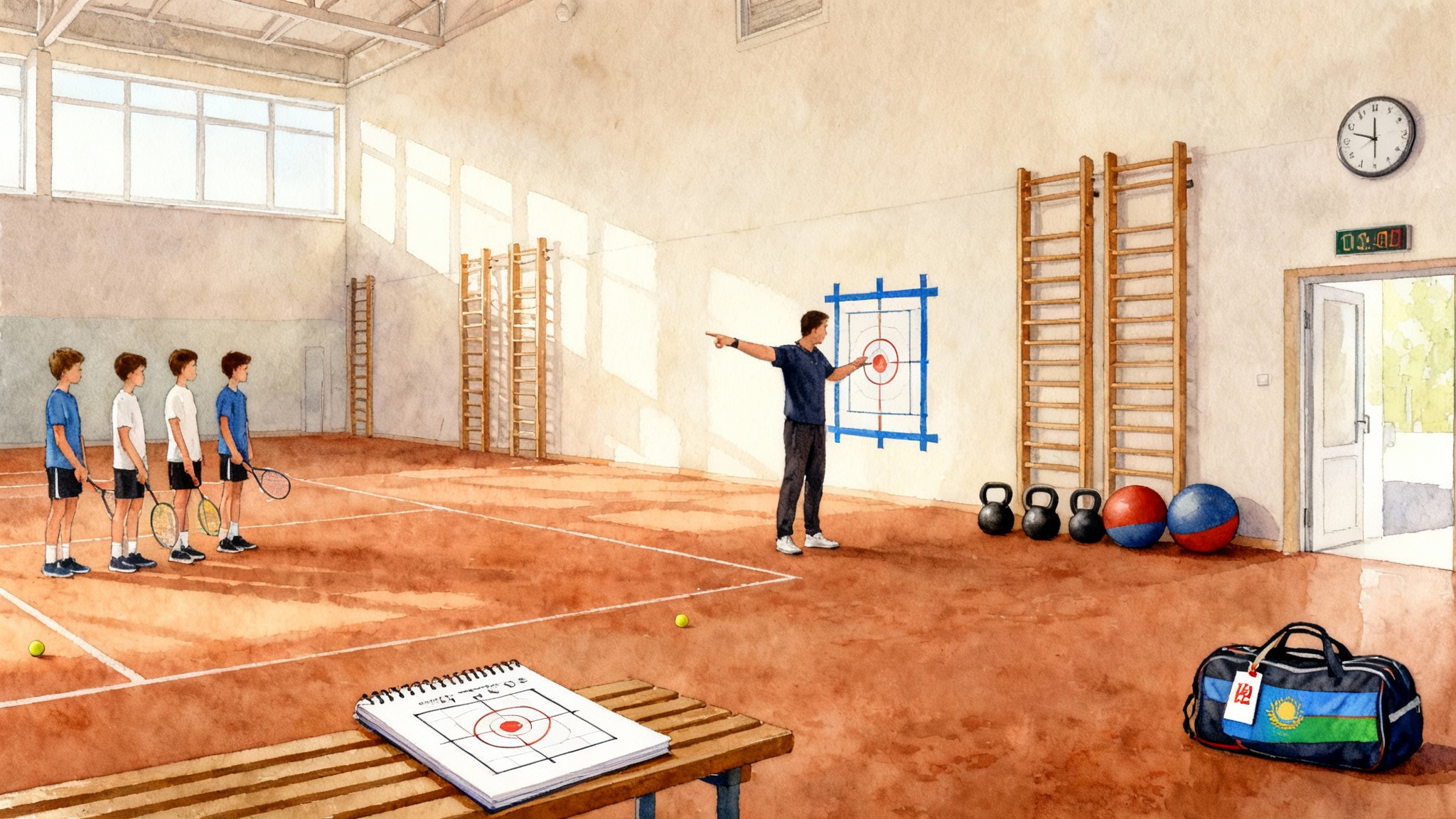
The defining feature of the JC Ferrero approach is that the head coach is not a figurehead. Ferrero set the technical and tactical north for Alcaraz and made sure every department pointed toward that compass. In many junior settings, coaching advice can feel like a group text thread, helpful but uncoordinated. In Villena, the message came from one phone, and everyone else echoed it with their own tools.
Why this matters: teenagers grow quickly and compete often, which creates noise. A mentor‑led model filters the noise. When a player adds pace to his forehand, the fitness plan adapts to protect the shoulder, the physio work adds posterior chain stability, and the tactical goals reinforce that forehand as the point starter rather than a bailout shot. The same message repeats in different rooms until it becomes habit under pressure.
One court, one plan: the integrated performance team
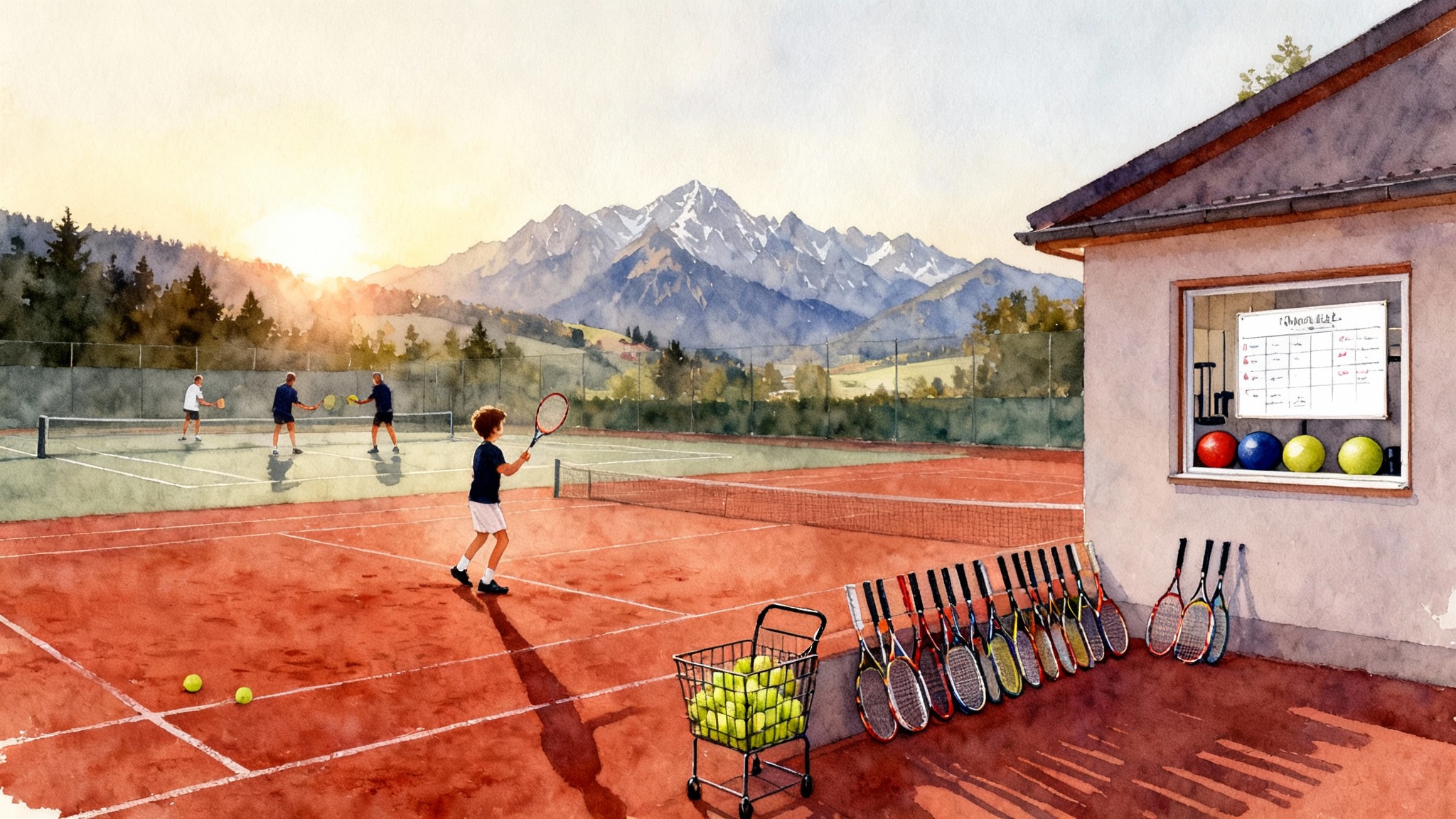
An academy can rent courts and still be a finishing school for champions if the departments are knitted together. In Villena, integration looked like three standing habits.
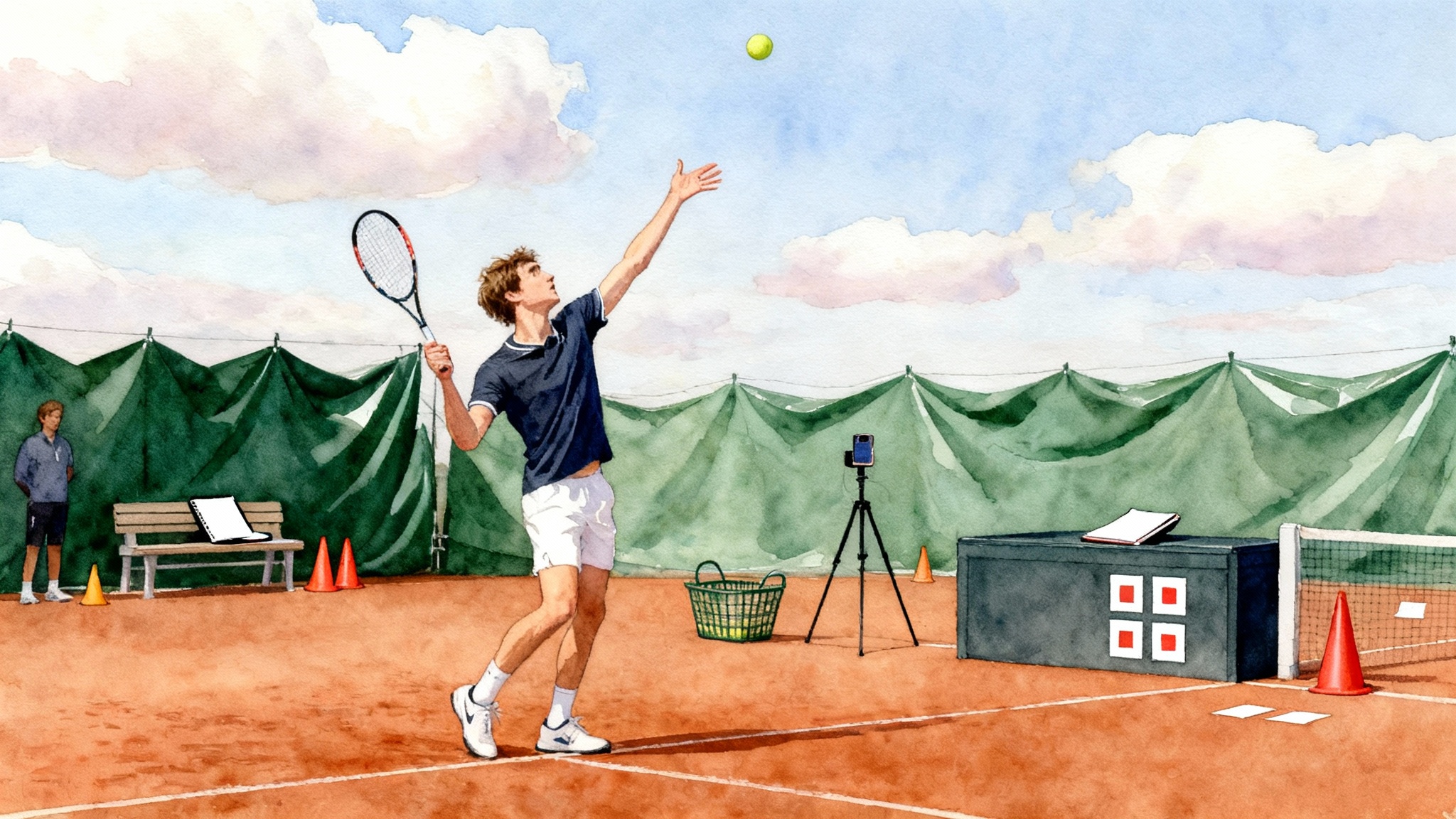
- Shared diagnosis. Technical changes began with video and on‑court data. That fed straight to strength and conditioning, which wrote sessions that served the new technique rather than generic gym gains.
- Daily micro‑communication. Coaches, fitness staff, and physios traded short updates during warm‑up, cool‑down, and treatment. Those quick loops meant the week evolved in real time, not in the next meeting.
- Case ownership. The head coach owned the case. Everyone else specialized but did not steer. That prevented conflicting instructions and gave the player clarity day to day.
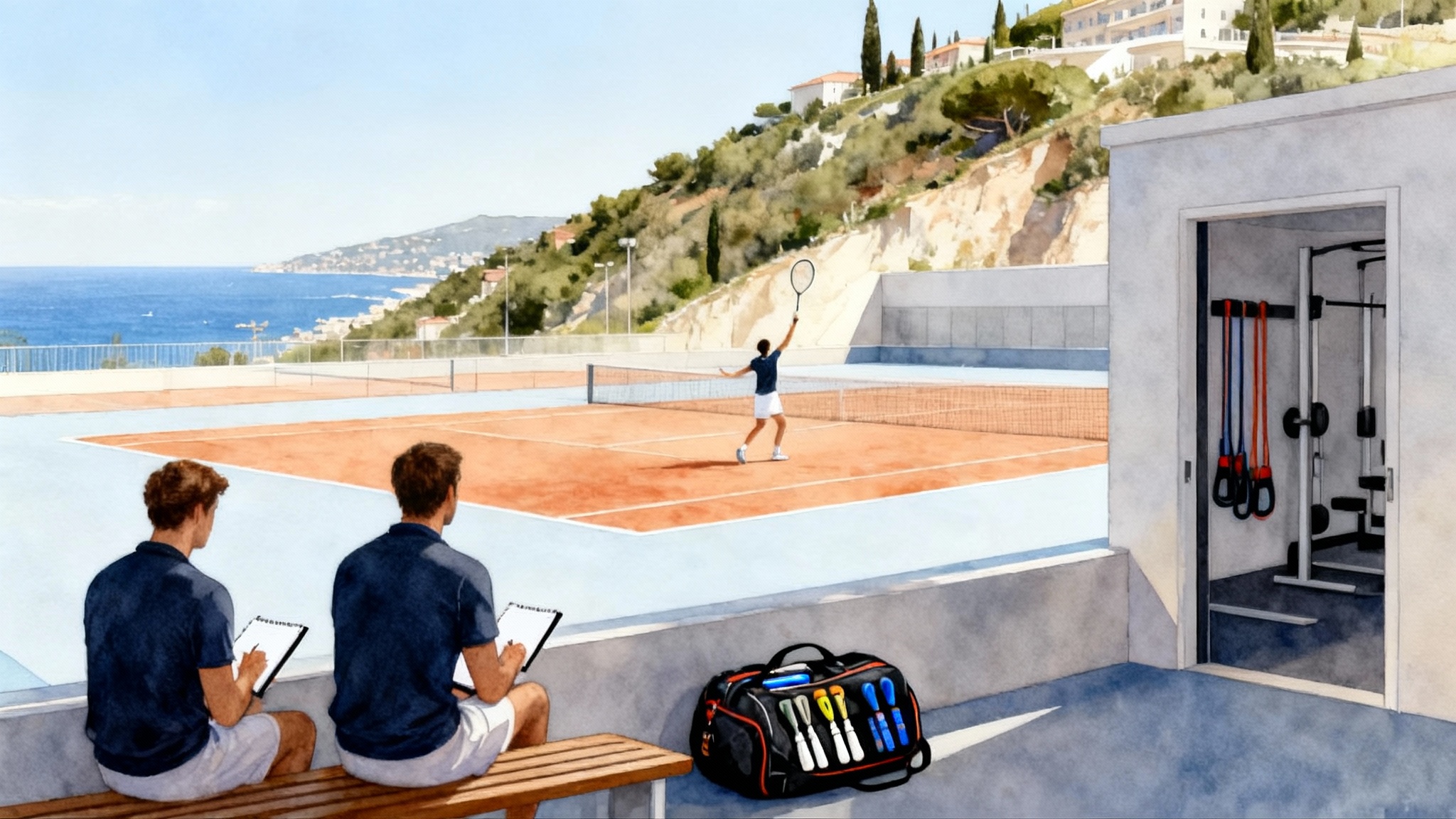
On the ground, this meant the gym and clinic were not side quests. They were the point. The goal was not to make Alcaraz stronger in isolation. It was to make his court identity repeatable across surfaces and weeks. When his team emphasized first‑step speed and recovery sprints, they also drilled neutral ball patience and short‑angle forehands, so the bodywork and the shot patterns matured together.
Scheduling as strategy, not logistics
Tournaments were not dots on a map. They were progressive overload for competitive stress. The staff built blocks that fit Alcaraz’s age, growth, and technical priorities.
- Start where success teaches quickly. Instead of chasing prestige, the team used regional International Tennis Federation men’s events and early Challenger opportunities to stack matches with winnable risk. The point was not to shop for ranking points. The point was to buy confidence in his game model.
- Cluster events, then recover. Two or three tournaments within driving distance, then a defined reset week. Clustering maximized form while minimizing travel fatigue. The reset made training quality the default again, rather than letting matches dictate mechanics.
- Surfaces by season, not by fashion. Clay blocks anchored pattern building and legs. Hard court blocks sharpened the return and the transition game before key stretches of the calendar. When entering higher‑level draws, the staff selected events where conditions matched current development goals.
The practical benefit of this plan was compounding. Breakthrough wins came earlier than typical, which unlocked better draws, practice sets with higher‑ranked players, and occasional wild cards. Each new rung offered more feedback and a stronger belief that the work translated.
How the game itself was built
We often talk about weapons as if they exist in isolation. In Villena, the staff built a system, not a collection of shots.
- Forehand as the director. The inside‑out and inside‑in forehand patterns set the terms of rallies. The team emphasized simple cues: hold court position, show the same preparation, change at the last moment with the wrist and forearm timed by the legs.
- Two backhands, one choice. The crosscourt backhand established depth and tempo. The down‑the‑line redirect was the surprise. Fitness and footwork sessions added the lateral repeatability to make that choice available late in sets.
- Return stances as game plans. On slower courts, start deeper, use looped neutralizing returns, build to forehand leadership. On medium to faster courts, move in, block more, and accept shorter point lengths. The staff ran return‑plus‑one drills that tied the second ball to the return intention.
- Transition and finishing. Rather than teach net play as a separate module, transition patterns were embedded into rally construction. Approach footwork was paired with volley technique, and the choices were reduced: hit into space from shoulder height, or drop‑volley only when the opponent is overcommitted.
Nothing in that list is novel on paper. The difference was the repetition under fatigue and the clarity of the hierarchy. When the mind and body both know what comes first, the player spends less energy deciding and more energy doing.
A week that teaches winning
Here is a simple skeleton for a development week that mirrors the Villena logic. Timings adjust for school, travel, and tournament proximity, but the idea is fixed: court themes line up with gym and recovery.
- Monday
- Morning: Baseline patterns, forehand leadership, live points to specific targets
- Gym: Lower body force, posterior chain, anti‑rotation core
- Recovery: Hip mobility, ankle stiffness work
- Tuesday
- Morning: Return stances and return plus one, situational tiebreaks
- Gym: Acceleration and deceleration, short sprints, change of direction
- Physio: Soft tissue for adductors and calves
- Wednesday
- Morning: Transition and finishing, approach shapes, overheads
- Gym: Upper body power, shoulder prehab
- Video: Ten clips, three key decisions, one adjustment for Thursday
- Thursday
- Morning: Patterns under fatigue, serve plus one to both corners
- Gym: Mixed circuits with heart rate targets
- Recovery: Contrast, breathwork, sleep extension goal
- Friday
- Morning: Compete day, set play against styles the next events will feature
- Physio: Check for hot spots, adjust weekend load
- Saturday
- Morning: Short, sharp session, focus on weapons
- Afternoon: Optional practice set, or off if travel Sunday
- Sunday
- Off or travel, 30 minutes movement, light band work, sleep bank
The structure sounds ordinary until you track the conversations that connect it. The coach knows Tuesday’s return shape is being supported by Tuesday’s acceleration session. The physio warns that a knee is at twelve out of ten on workload for the month, so Thursday’s mixed circuit switches to low‑joint‑stress conditioning. The week becomes a braided rope, not three separate strings.
A tournament ladder that matched development
The Villena plan also used the calendar to teach specific lessons.
- Early International Tennis Federation men’s events rewarded patterns, not highlight shots. The goal was to graduate from winning pretty points to winning 25 patterns in two hours.
- Challenger entries offered pace and veterans. The staff framed them as research trips. What patterns hold against bigger servers and flatter hitters, and where do you need to buy more time or take it away sooner.
- Main tour steps came with guardrails. Event choice considered travel, surface speed, altitude, and draw strength. They targeted weeks where match‑ups were likely to offer two styles within the first three rounds so that the player could test a broader toolbox quickly.
This progressive ladder conserved belief. A brutal draw too early can harden doubt. A soft run can encourage bad habits. The team’s scheduling found the middle lane, where good tennis would be rewarded and bad tennis would be revealed without feeling fatal.
The unseen engine: culture and accountability
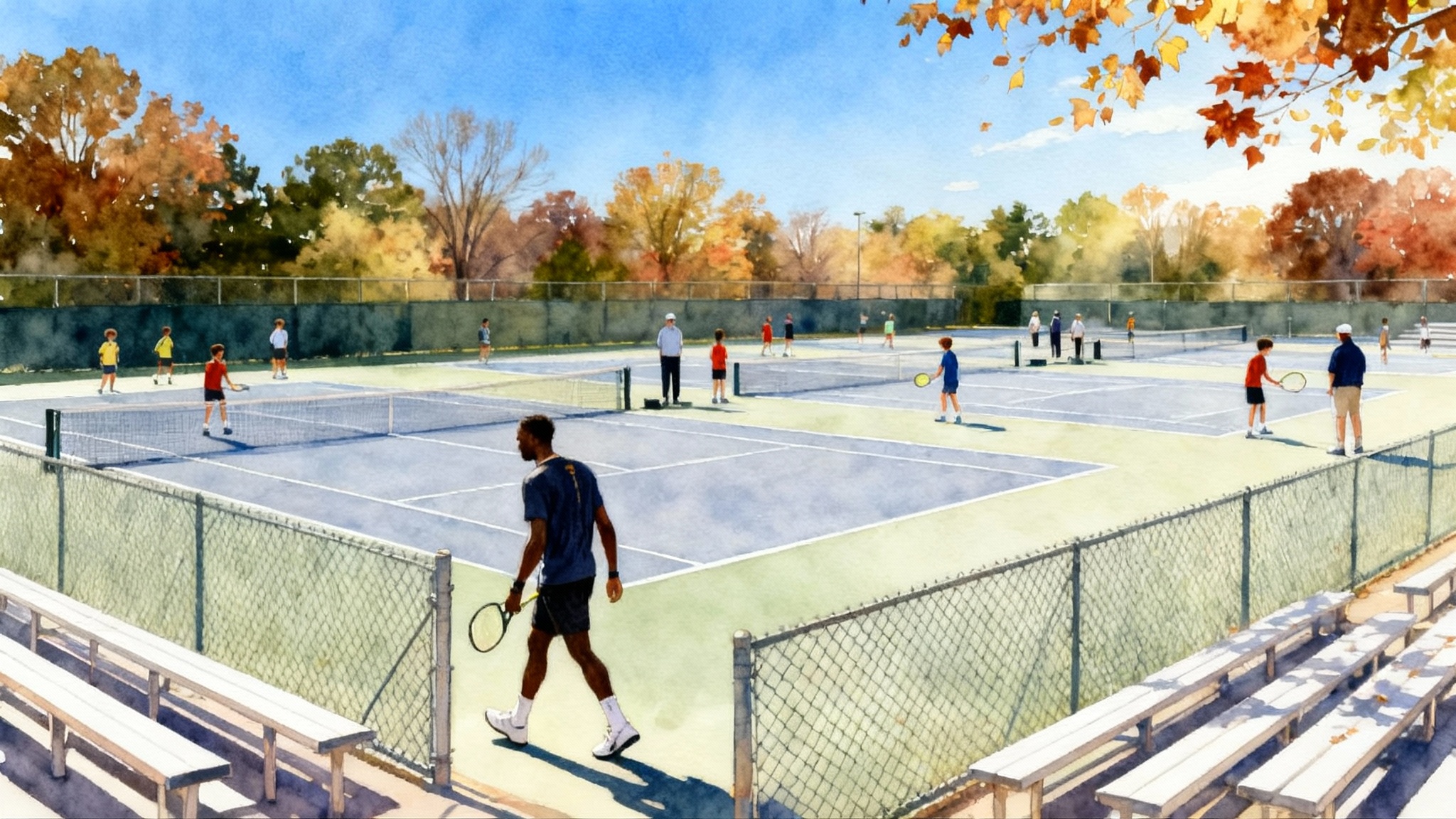
Walk around a well‑run academy and you feel tempo. That is culture. In Villena the tempo came from three rules that families can spot in a single visit.
- Everyone is on time, especially the head coach. Punctual mentors create punctual players.
- Meetings end with the next small action. If the takeaway is not measurable by the next session, it is not finished.
- Video is a tool, not a trophy. Clips are short and tied to a single choice that the player will face inside the first five games tomorrow.
Culture is not posters or slogans. It is who gets listened to when the day goes long. In a mentor‑led academy, the head coach closes the loop and protects the player from becoming the messenger between departments.
When to change environments
Families ask the same hard question in different words. How do we know it is time to move? Three signals tend to travel together.
- The player’s game identity has stalled. You cannot finish the sentence, “We win when we…” with anything specific.
- The schedule is random. Events are chosen by convenience, not by what the player needs to learn next.
- Feedback conflicts. The coach, the fitness trainer, and the physio speak in different languages and the player tries to translate.
If two of these are true for three to six months, it is time to explore alternatives. Start with short trial blocks rather than permanent moves. Alcaraz split time first, then relocated when the signals were clear and the process matched his needs.
How to vet a coach‑centered academy
You do not need a famous name to get this model, but you do need a clear structure. Here is a practical checklist and the questions that reveal it.
Checklist
- One person is clearly responsible for the player’s plan.
- The fitness and physio staff can describe the technical work in the same words the coach uses.
- Tournament schedules are written with reasons, and the reasons map to the player’s game identity.
- Data is simple and actionable. The staff tracks two to five key metrics that link to patterns on court.
Questions to ask
- Who owns the player’s case when departments disagree, and how is that decided?
- How do you choose events for a 16 to 18 year old who is moving from national events to International Tennis Federation men’s events and then to Challengers?
- Can we see a sample week where the gym, court, and treatment connect around one theme?
- What is your rule when the player is tired but not injured? Show me what changes that day.
- When do you say no to a tournament opportunity, even if the ranking points look attractive?
Ask to sit in on a daily wrap for ten minutes. If the meeting ends without a one‑line instruction that the player can execute tomorrow, the academy may be organized around talking rather than doing.
What parents can copy without moving cities
Not every family can relocate. You can still steal the structure.
- Choose one voice. Appoint a lead coach who approves all changes. Other specialists contribute but do not steer.
- Tie the gym to the court. For every two new technical cues, write one strength or mobility routine that supports them.
- Plan events in blocks. Two to three tournaments, then a training week where the lessons are practiced. Keep travel simple.
- Track the same few metrics. First serve percentage, forehand forecourt conversion, and forced errors created are a strong starting trio for many aggressive baseliners.
The goal is not to replicate Villena. It is to import its logic.
The Equelite foundation and life after 2025
Coaching teams evolve. Head coaches take breaks, assistants step up, and players test new voices as their bodies and games change. The question for any rising pro is whether the foundation survives those changes.
The Equelite foundation is portable because it is a set of principles, not just a relationship.
- One mentor owns the plan. If that mentor changes, the structure remains. The new lead inherits a map with clear north.
- Departments speak one language. Even if staff members rotate, the glossary of game identity, key patterns, and physical priorities stays on the whiteboard.
- Scheduling serves development first. The player learns to ask, “What do I need to learn next,” before opening the calendar.
As Alcaraz navigates coaching adjustments after 2025, the habits built in Villena can travel. The on‑court identity, the compact feedback loops, and the calendar discipline are not tied to one building. They are tied to how the player and his team make decisions. That is why the academy years matter so much. They create a method that survives change.
For families and players considering a similar path, remember this: the best academies are not factories. They are systems that reduce chaos and turn talent into repeatable habits. If you visit Villena, you will see an example of that system in action at Equelite Academy in Villena. The lesson is not to chase a brand. It is to chase the structure that makes improvement the default.
Conclusion
From El Palmar to Villena, the shift looked simple on a map and seismic in real life. A teenager stepped into a mentor‑led environment, where the on‑court plan, the gym, the treatment room, and the tournament schedule all spoke the same language. Confidence grew because choices were clear. Results came because repetition was honest. Whether you are moving across Spain or staying in your hometown, the blueprint stays the same. Give one person the compass. Build a team that rows in rhythm. Treat the calendar like a syllabus. Then let the work compound.