Osaka’s Florida Academies: Four Slams and 2024–26 Return
From public courts to short, targeted stints at ISP, Harold Solomon, and ProWorld, Naomi Osaka built a first‑strike game that won four majors. Here is her verified path, why it worked, and a blueprint families can adapt for 2024–26.
 Tommy
Tommy
The Florida patchwork that forged a first-strike champion
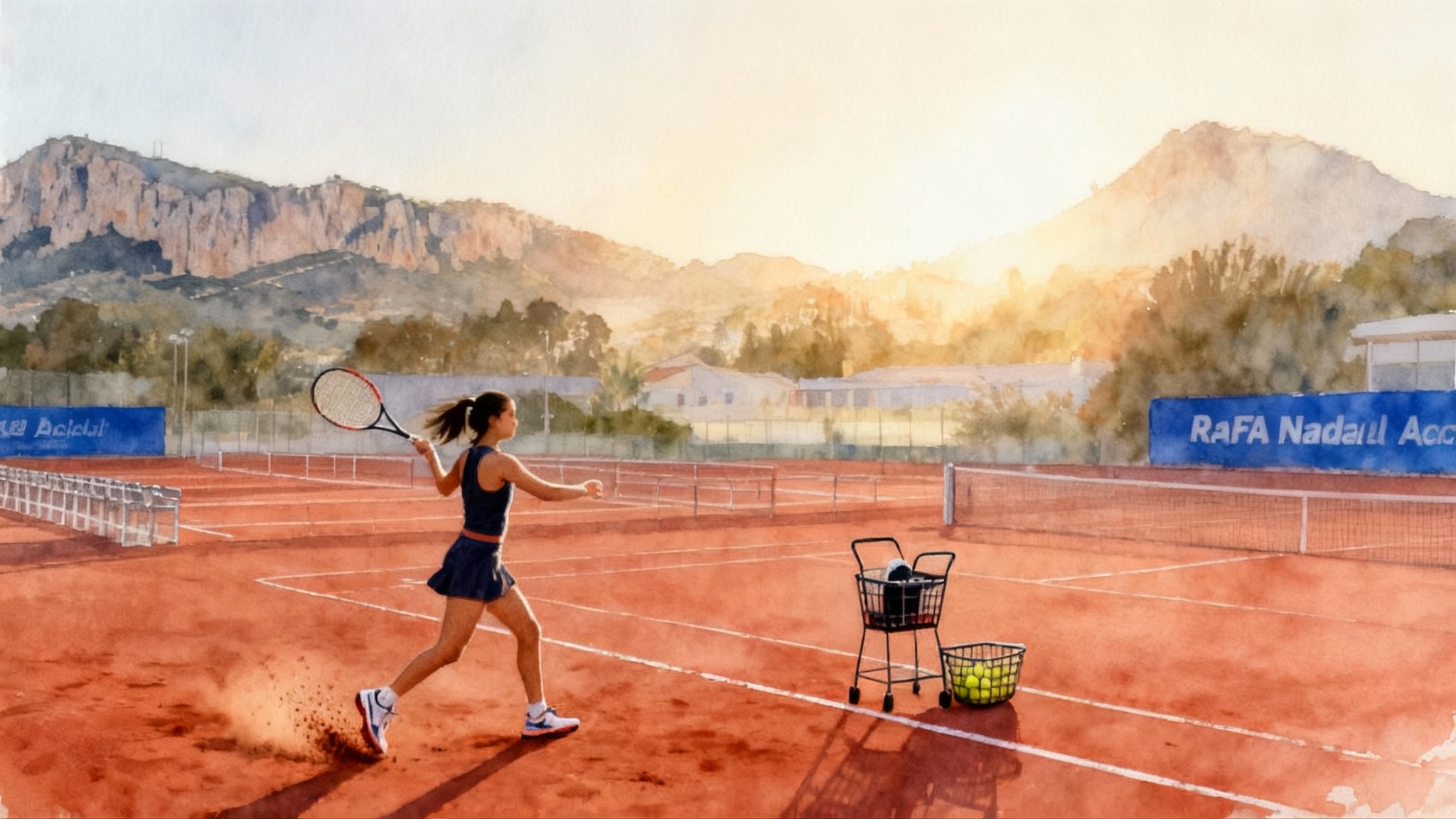
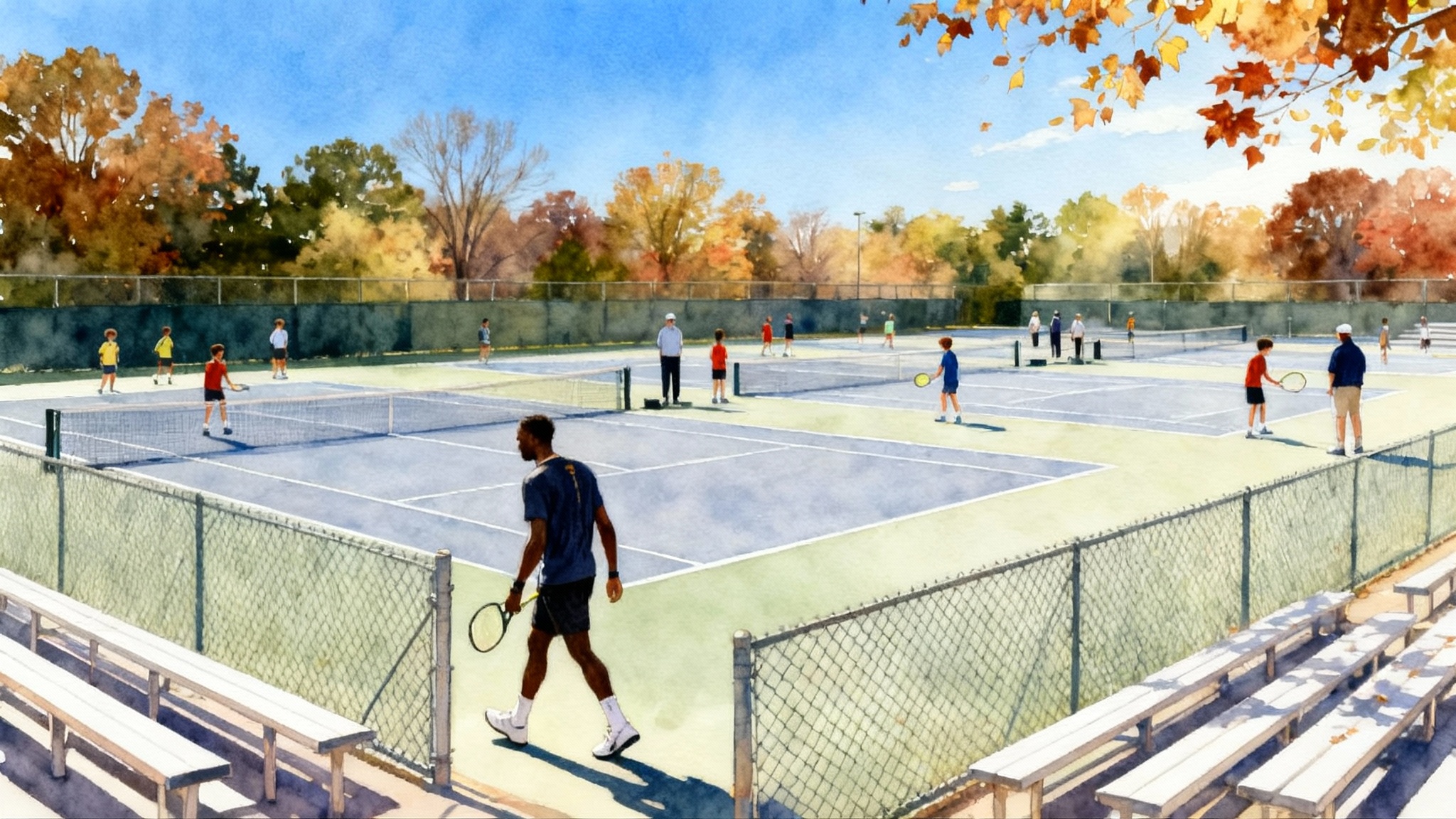
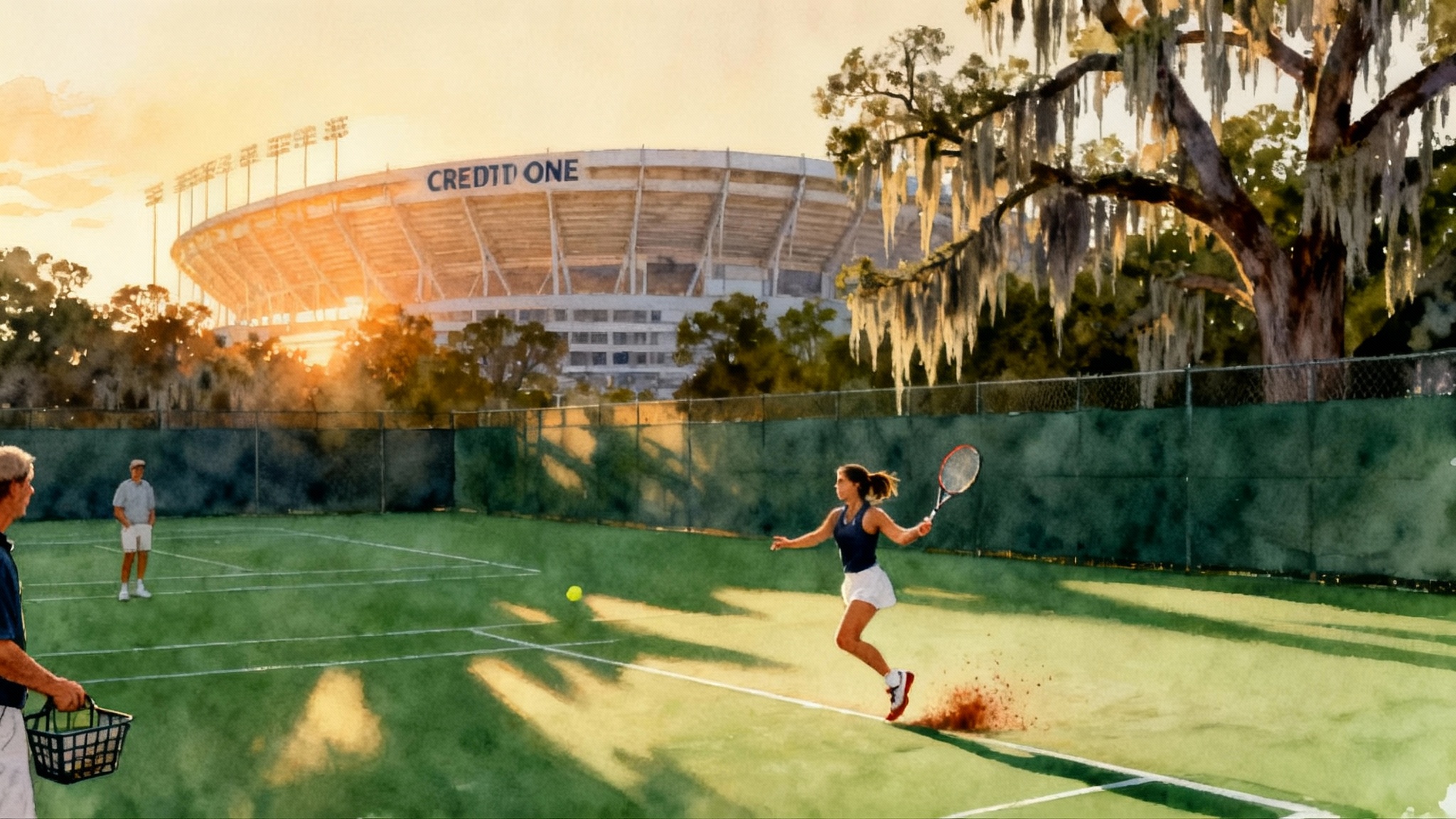
Picture a hot afternoon in Pembroke Pines, Florida. A bucket of balls, a public court, and a homeschooled teenager repeating the same two-ball pattern until the light fades: a big serve, then a forehand that takes time away. That was Naomi Osaka’s foundation. The volume came from public courts; the sharpening came from short, targeted blocks at three Florida academies. The result was a first-strike identity that carried her to four major singles titles and set the stage for a 2024 to 2026 comeback window.
Her origin story is documented in reliable profiles that note public-court training in Pembroke Pines, homeschooling to free daytime hours, and a junior-light schedule that prioritized pro pace over youth trophies, as captured in the museum profile on public courts in Pembroke Pines. From there, the family stitched together brief academy stints that functioned like specialized apprenticeships: precise, time-boxed, and mission-driven.
Step one at 15: a focused block at ISP
At 15, Osaka began working with coach Patrick Tauma at the ISP Academy in Florida. Think of ISP as a first lab for turning raw pace into repeatable patterns. Rather than living full time on a campus, she treated it like a clinic. The goal was not swag; it was wiring patterns she could trust against pros.
- Serve architecture: vary wide, body, T on both sides, with a plan for the second ball.
- Forehand primacy: get the forehand on the second shot and finish in two or three swings.
- Return intent: step in on second serves, aim deep middle, start neutral rallies on her terms.
The important idea is not the brand name on the gate. It is the block design. A short, clear block introduces specific upgrades, then the player returns to the lower-cost environment of public courts to consolidate.
2014: an extended Harold Solomon module to harden patterns under pressure
In 2014, Osaka moved to the Harold Solomon Tennis Academy for a longer module. Solomon, a former top-five professional and Roland Garros finalist, is known for structure. This period emphasized two themes that would define her: disciplined point building and steadiness through momentum swings. That season included a breakthrough tour-level win over a former major champion, early evidence that the patterns held under stadium pressure.
Mechanically, this block added polish to the same three pillars: serve location, forehand court position, and return depth. The difference was the stress test: more live-ball, more score, and more accountability on film. The blueprint for parents is simple: when you buy an academy month, you are buying high-intensity game play with decisions and consequences. Ask for that explicitly.
ProWorld as finishing school: more pace, more looks, same identity
Later, Osaka trained at ProWorld in Delray Beach. ProWorld’s daily mix tends to include a wide range of hitters, from juniors to touring pros, which means more looks at the kind of pace and spin you meet on the WTA Tour. The emphasis did not change the essence of her tennis. It reinforced it: her best tennis starts with the serve and ends with the forehand. For more Florida development context, see our look at the Mouratoglou and Coco Gauff pathway.
This three-stop path — ISP, Solomon, ProWorld — was a patchwork. That is the point. The family kept control of scope and sequence. Each academy block had a purpose, a start date, and an end date. Between blocks, she went back to the public courts to absorb the changes without burning budget on lodging and annual fees.
How skipping most juniors helped a first-strike game
Osaka played very few International Tennis Federation junior events. Instead, she sampled the women’s professional circuit as a teenager. That choice removed a distraction, junior rankings, and replaced it with a harder but more relevant test: can your patterns win points inside the first four shots against adult pace? For a player built on serve plus one, this was rocket fuel. It forced the right habits early.
For families, the lesson is not to avoid every junior event. The lesson is to align your tournament menu with your player’s identity. If your player’s core skill is first-strike tennis, the biggest gains come from matches that demand those first strikes at speed. That often means adult events and the lowest rungs of professional qualifying when the time is right. For a U.S. example of public-court development to pro impact, study JTCC’s Frances Tiafoe blueprint.
The comeback lens, 2024 to 2026: what stayed the same, what changed
Osaka returned to competition in January 2024 and by January 2025 she was collecting gritty wins at the Australian Open again. A good example was her three-set turnaround against Karolina Muchova in Melbourne, which showed both physical readiness and her familiar pattern of commanding with serve and forehand, as chronicled in ESPN’s piece on two gritty Australian Open wins. In May 2025 she lifted a title on European clay, evidence that the baseline identity can travel to slower surfaces when serve locations and plus-one discipline hold.
What is different in this comeback window is not the core game. It is the scaffolding around it. The travel schedule is more selective. Strength and conditioning work is periodized to protect the abdomen and back, the engine room for a heavy serve. The inner circle is tighter and more role-clear. The academy blocks, when used, are shorter and even more specific. Everything is optimized for energy return on investment.
Turn her path into your blueprint
Families do not need a blank check or a permanent dorm room to copy the parts of Osaka’s story that matter. You need a clear game identity, a low-cost volume engine, and targeted spikes of expert input.
Phase 1: Volume on public courts, with a purpose
Volume is not laps. It is purposeful repetition.
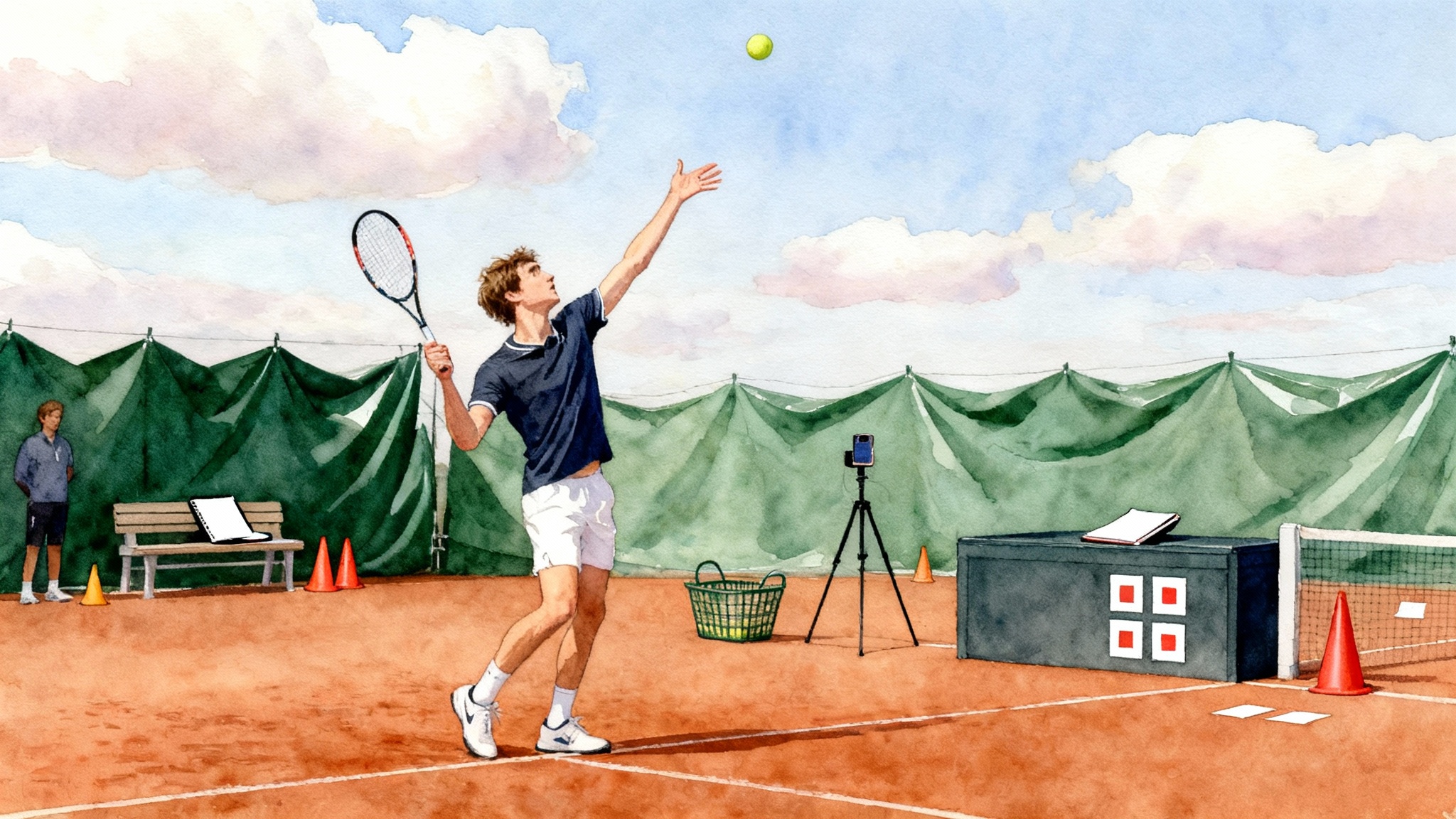
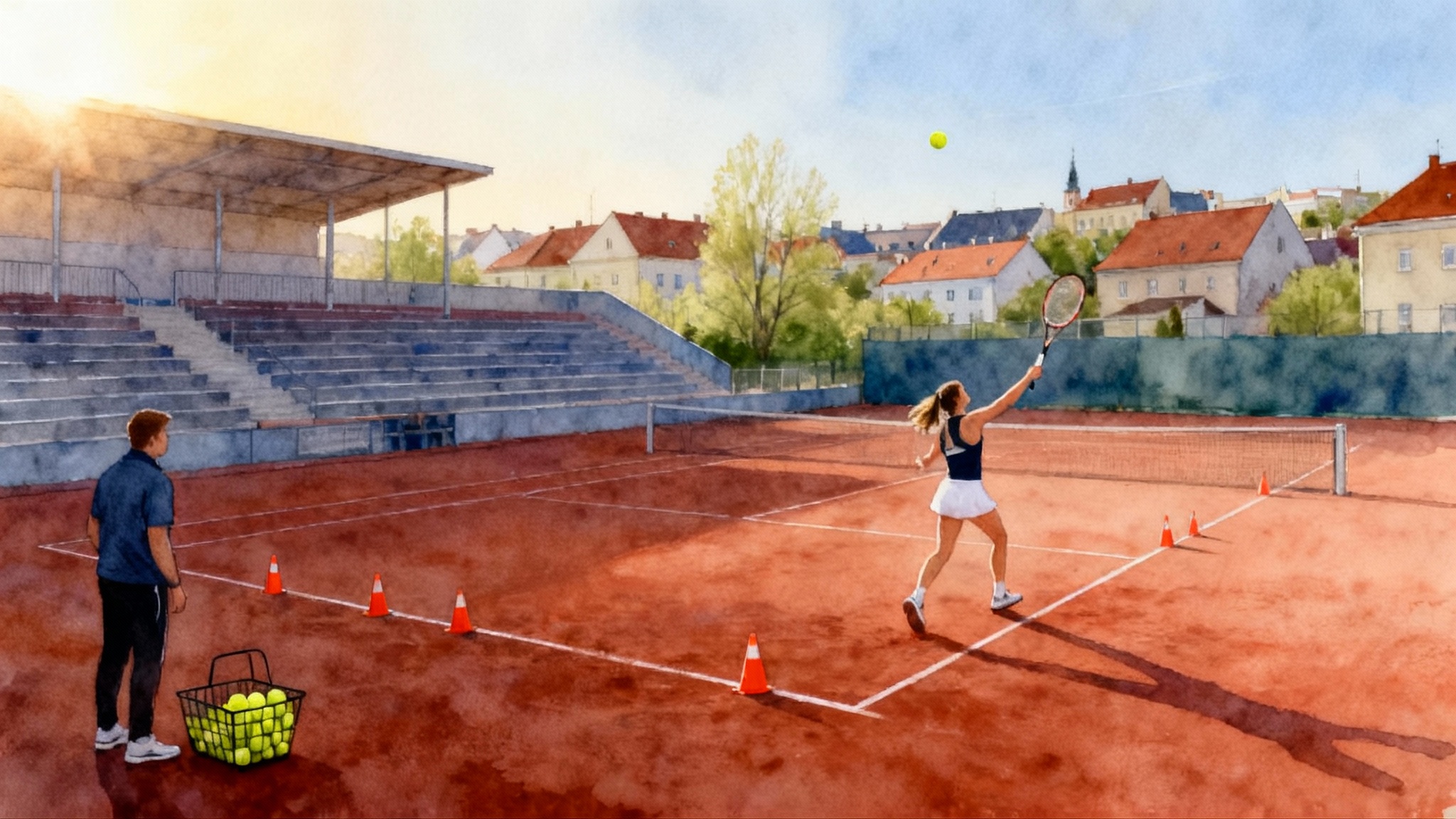
- Serve map practice: place three cones per box. Hit 20 first serves to each cone from both sides. Track makes and misses on a simple spreadsheet. Add 20 second serves with depth targets.
- Plus-one patterns: feed or self-serve, then demand a forehand to the open court or deep middle. Count how many balls it takes to finish the point. Your scoreboard is balls-to-finish and unforced errors.
- Return plus one: coach hand tosses or lightly feeds second serves. Step in, drive deep middle, then play out one forehand to space.
What to measure each week
- First-serve percentage by location, not just total.
- Second-serve depth, defined as landing beyond the service line by at least one racket length.
- Balls-to-finish for forehand-led points. The target is two or three when you start the point with the serve or a short return.
Why it works
The serve plus one is a time-stealing pattern. On any surface, the server controls the clock. Practicing that pattern in low-cost settings maximizes the repetitions you can afford.
Phase 2: Short, targeted academy blocks
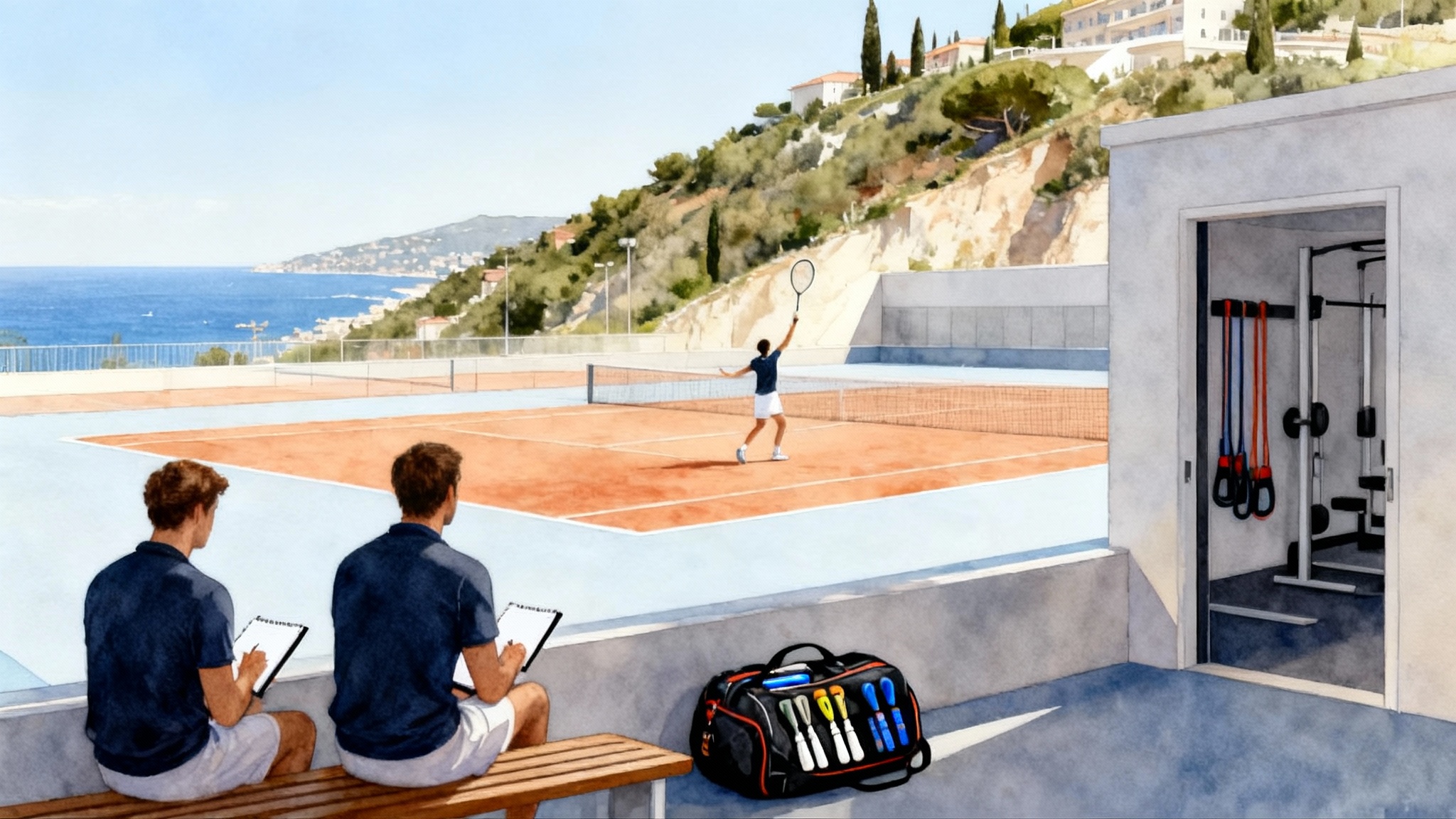
Choose two to six week blocks with a single purpose. Treat the academy like a specialist clinic.
How to write a one-page brief for the academy
- Objective: for example, raise wide-serve accuracy in the deuce court from 48 percent to 60 percent; add a reliable inside-out forehand from a neutral rally.
- Deliverables: weekly video clips of serve mechanics, a written serve map for matches, a two-page footwork plan for forehand patterns.
- Daily mix: proportion of basket feeding, live ball, and competitive scoring. Ask for at least 40 percent live ball under score.
- Ratio and reps: coach to player ratio on court, number of live return reps per day, and the exact conditioning plan.
Questions to ask at ISP, Solomon-style programs, or ProWorld-style programs
- Who runs the first-strike block and what recent players improved serve locations here?
- How often are players moving from basket to live returns in one session?
- What is the film process, and when do we get the cut-ups?
Red flags
- Vague promises about college or pro placement with no plan for serve maps or return depth.
- Days built on endless feeding without score.
- No film. If you cannot see it, you cannot fix it.
Phase 3: Early pro exposure, carefully dosed
Osaka’s junior-light approach created pressure at the right speed. Families can copy that pressure without skipping every junior event.
- Add adult open tournaments locally to introduce pro-pace serves and deeper returns.
- Sample entry-level professional qualifying when the player’s hold percentage against adults is above 70 percent and the second serve can land beyond the service line reliably.
- Use these events as diagnostic days, not billboard days. The goal is to discover what breaks under speed so you can design the next academy block.
Phase 4: Build a tight inner circle
A tight circle matters most on hard days, like injuries or the first months of a comeback. Define roles in plain language.
- One lead technical voice. Assistants can cue, not override.
- One strength and conditioning leader who owns warm up, recovery, and the weekly lift.
- One parent or manager owns logistics and boundaries, including sleep, food, and media time.
- One counselor or sport psychologist available at a set cadence, not just when the sky is falling.
Run a weekly 20 minute debrief with the whole circle. Agenda: one win, one bottleneck, one action for the next seven days. Log it. Small teams beat large committees because they execute.
Phase 5: Plan the comeback before you need one
Osaka’s 2024 to 2026 stretch underscores a simple truth. The game you trust is the one you can come back to after a break. Build that resilience now.
- Anchor weeks: two non-negotiable training weeks per month when travel is light. Protect those on the calendar like tournament weeks.
- Fitness baselines: three tests you can do anywhere, such as a medicine ball overhead throw, a 20 meter shuttle, and a serve-speed average over 30 balls. Track them monthly.
- Match simulation: once a week, play two practice sets under full routines, with serve and return boxes coned and filmed.
Why this blueprint fits real-world budgets
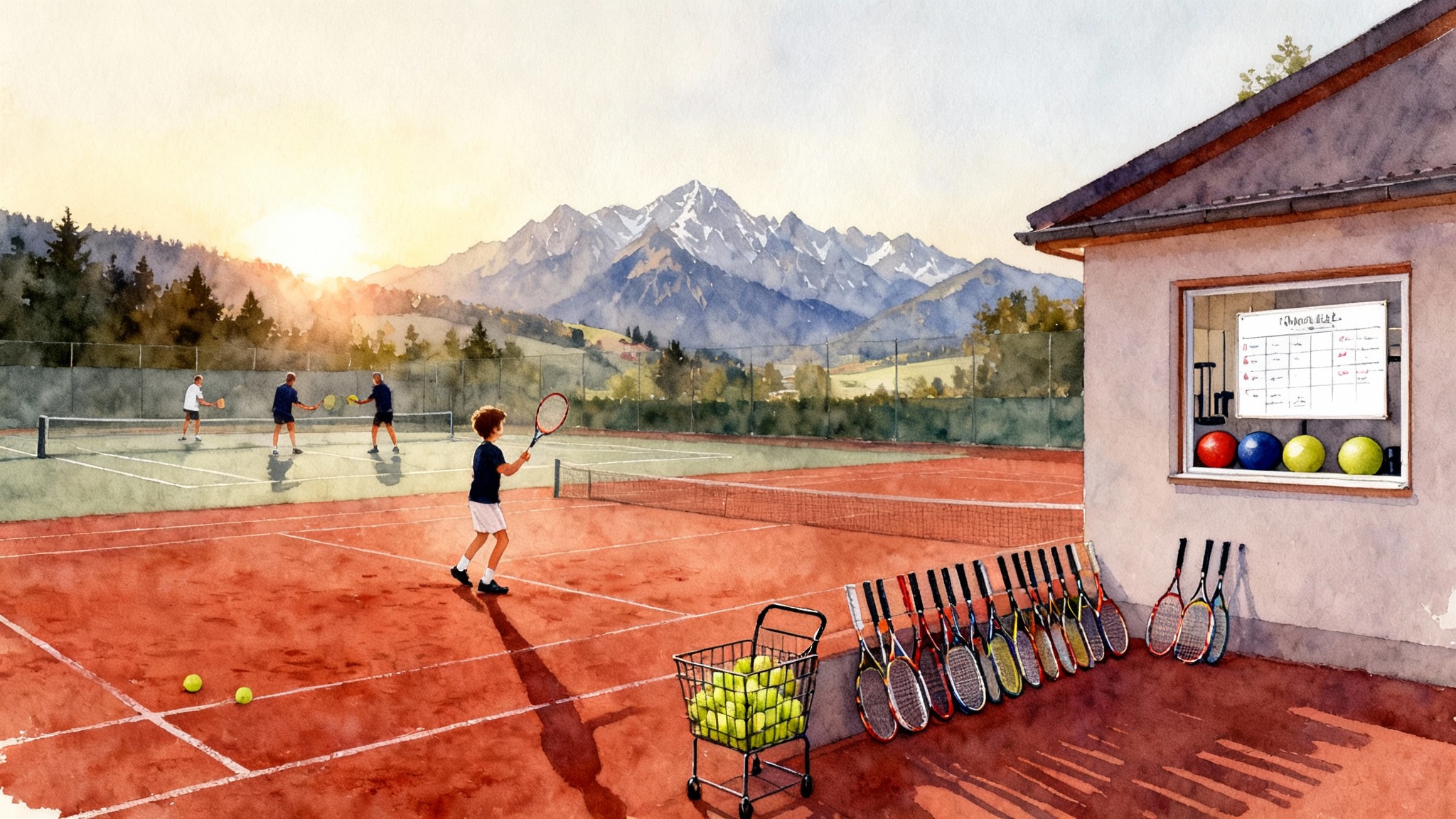
Public courts and city programs can supply about 70 percent of a player’s yearly court time. Short academy blocks supply the 30 percent that a public system cannot: concentrated pro pace, structured competition under score, and expert feedback loops. The travel and boarding you pay for are capped by design. If you are carrying a budget, consider a rhythm like this for a 10 month training year:
- Eight months with a public-court base, two to three sessions per day, five days per week, with one day light and one day off.
- Two months of academy time broken into three blocks, with missions, deliverables, and guaranteed film.
- Two or three adult or entry-level pro events placed immediately after academy blocks to test upgrades while they are still fresh.
This pattern is flexible. You can slide blocks earlier for a growth spurt or later after an injury. The core idea does not change: the family sets the arc, the academies supply the spikes. If you want a Florida option that mirrors this mix of manageable cost and measurable work, explore Gomez Tennis Academy in Naples.
Tactics that define first-strike tennis, made simple
Serve patterns
- Deuce court: start with a wide serve to pull the returner off the court, then drive forehand to the vacant deuce corner. Mix in body serves when the opponent cheats wide.
- Ad court: mix a flat T serve to surprise and a slice wide serve to force a backhand return on the run.
Return patterns
- Second serves: step in, drive deep middle to shrink the court, then play the forehand to space.
- First serves: block crosscourt to neutral, then reset the pattern on ball three or four.
Footwork rules
- Two steps to set the forehand behind the ball, then a hop into contact for balance.
- After the plus-one forehand, recover with a crossover, not a shuffle. Time matters more than comfort.
If these sound like small choices, they are. First-strike tennis is a hundred small on-time choices. That is why Osaka’s early environment worked. Public courts gave her repetitions, academy labs gave her clean patterns, and pro exposure gave her the speed to make those choices under pressure.
A note on picking between Florida academies
Florida has an unusual density of pro-level training. That is the value you are buying. The names on the gate, ISP, Harold Solomon, or ProWorld, each come with history, but the label is less important than the daily work.
- Ask how they will measure serve accuracy by location, not just total percentage.
- Ask how many live returns, under score, your player will hit each afternoon.
- Ask what video you will receive on Fridays and who will walk through the clips with your player.
If the answers are specific and written, you are in the right place. If the answers are vague, you are buying a tour, not a training plan.
The bigger lesson from a four-major resume and a live comeback
A patchwork can outperform a monolith. Osaka’s career shows that a family can run the long arc while academies sharpen specific tools. In 2024 she returned to the tour. In 2025 she showed again that her game scales under pressure. The period ahead in 2026 should focus on the same basics, served in smarter doses.
For parents, the takeaway is practical. Combine low-cost public-court volume with short, targeted academy blocks, add early pro exposure when the data say you are ready, and keep a tight inner circle that helps you through the inevitable dips. Do that with discipline, film the important work, and your player will have a game to come back to, not just a story about where they trained.