From Sutton to Weybridge: The UK path to Jack Draper’s Top-5
Jack Draper’s rise did not run through a mega academy overseas. It began at Sutton Tennis and Squash Club, sharpened at Weybridge, and scaled at the LTA National Tennis Centre. Here is how a high-touch British pathway built his lefty serve, rock-solid backhand, and match IQ.
 Tommy
Tommy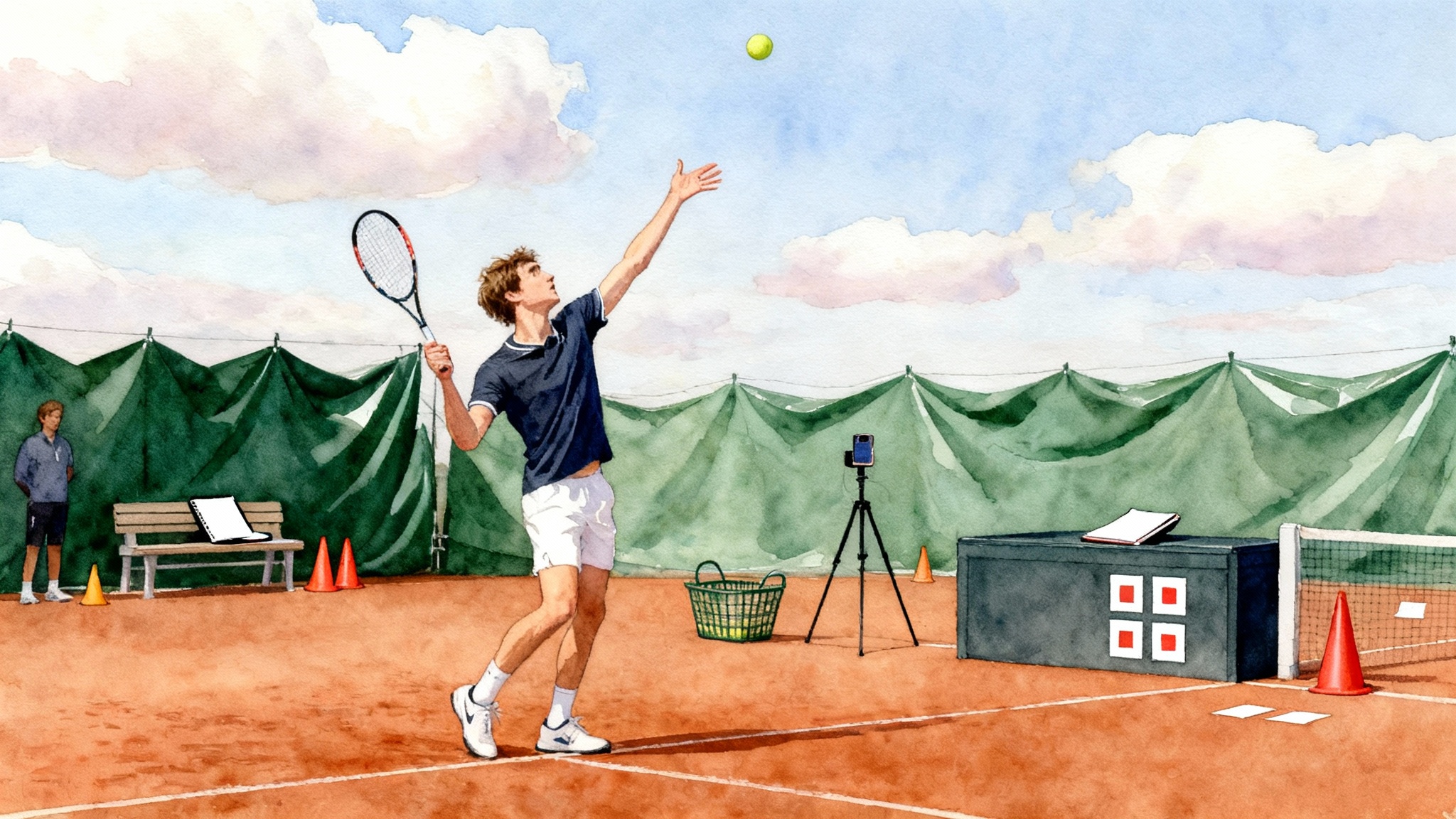
A British pathway, not a flight to Florida
Most tennis fairy tales start with a suitcase and a one-way ticket. Jack Draper’s did not. His route to the world’s top tier was unmistakably British, stitched together from community courts in Sutton, a tight-knit academy in Weybridge, and the Lawn Tennis Association’s National Tennis Centre in Roehampton. That steady, near-home progression did more than save airfare. It created a development-first cocoon where his left-handed serve and backhand could be rebuilt patiently, and where his match intelligence could be shaped through thousands of real conversations rather than a carousel of new faces. For a wider look at how local systems can scale, compare the continuity-first stories in our case studies on How Piatti built No. 1 Sinner and JTCC’s Frances Tiafoe blueprint.
The result speaks for itself. Draper won his first tour title in Stuttgart in June 2024, captured his first ATP 500 in Vienna in October 2024, lifted his maiden Masters 1000 at Indian Wells in March 2025, and cracked the Top 5 in May 2025. The point is not that you must stay home to succeed. The point is that a well-run, high-touch academy and a coordinated national program can be enough.
Sutton to Weybridge to Roehampton
Sutton Tennis and Squash Club
Draper’s story begins with a family and a local club. His mother, Nicky, a former British junior champion and coach, introduced him to the game and gave him the sort of grounded start that local clubs excel at: frequent court time, friendly rivalries, and coaches who notice growth spurts before you do. BBC reporting details this phase, including toddler sessions at Sutton and school-day lessons at Parkside in Cobham with Weybridge coaches; see the BBC profile on Draper’s Surrey roots.
The Weybridge apprenticeship
By primary school age, Draper was getting regular time with coach Justin Sherring in a setup that prized continuity. Continuity reduces noise. When a coach tracks a player through physical changes and tournament cycles, they know what is a blip and what is a trend. That is especially true for a player who does most things right-handed but plays tennis left-handed, where timing and footwork can change quickly as the body grows.
The LTA National Tennis Centre
The move to the National Tennis Centre in Roehampton did not break that continuity, it formalized it. Under national coaches who had already logged years with Draper, the training environment scaled up without losing signal. Roehampton added better sparring, sports science, and a schedule that used British events strategically. The rhythm of week-to-week work stayed familiar while the stage grew.
What the academy actually built
Parents often hear “holistic” and “bespoke” and wonder what they mean on court. Draper’s game offers tangible answers.
The lefty serve that opens doors
Every left-hander needs two reliable patterns. First, the ad-court slider that pulls right-handers off the court and sets up a first ball into the open space. Second, a deuce-court serve that avoids the opponent’s backhand strike zone. A simple progression any development-first academy can copy:
- Block practice on the ad side with targets, 50-ball buckets, aiming for a knee-high bounce that crosses the sideline before the service line. Only count the balls that move the returner a full step outside the doubles alley.
- Alternate days where the goal is disguise, not speed. Vary the release point by centimeters, keep the toss within a dinner-plate window, log how often the opponent guesses wrong.
- Add live play where the goal is a clean +1 ball, not an ace. Score the drill on whether the first groundstroke lands deep and neutralizes the opponent’s first step.
This turns the serve into a platform rather than a lottery. In pressure moments, the same sequences appear, not improvisation born of panic.
A backhand that decides matches
Draper’s backhand is not just reliable, it is directional. That matters. A reliable backhand keeps you in rallies. A directional one moves the opponent into the wrong shot. British coaches doubled down on two habits:
- Crosscourt backhands struck heavy to the outside hip of a right-hander, which makes the next ball float. The cue was simple: lift the opponent’s contact point, then go.
- Down-the-line changes made early in rallies to claim the pattern, not late as a bailout. When the backhand owns the line first, the forehand gets the short ball two strokes later.
The result is a player who can drive the middle, hold his ground, and then choose when to accelerate.
Match intelligence that scales up
Match IQ is not a personality trait, it is the sum of rehearsed decisions. Weybridge and then Roehampton layered match plans in a way young players can copy:
- Write one sentence that describes your opponent’s least comfortable rally. For example, “Forehand inside-out exchanges above net height.”
- Build two serving plans that point toward that rally. If an opponent likes pace at hip height, give them elevation and spin. If they like to block returns, crowd them with the body serve.
- Review one or two scoreboard triggers. At 30 all on the ad side, agree in advance which play you trust. Treat it like a pre-flight checklist.
Because these decisions were rehearsed locally, then tested on bigger stages, big points arrive with a short menu, not a buffet.
Results that validate the model
Sequence matters. Draper won his first ATP title on grass in Stuttgart in June 2024, then captured Vienna’s ATP 500 in October 2024. In March 2025 he swept through Indian Wells for his first Masters 1000, and six weeks later his Madrid quarterfinal win confirmed a Top 5 debut. The ATP reported both the Indian Wells breakthrough and the Madrid jump; see the article that confirmed his Top 5 debut.
Why does that sequence matter for development? Because each step stresses a different part of the toolbox. Stuttgart tests serve patterns on slick grass. Vienna tests baseline discipline indoors. Indian Wells tests patience and height control on slow, gritty hard courts. Madrid tests movement and point construction at altitude on clay. A domestic pathway that keeps the coach relationship intact lets a player carry lessons forward rather than starting over each time.
A blueprint for parents who want development first
You do not need a famous surname or a blank check to apply the lessons. You need a plan and the discipline to follow it.
- Choose an academy for coaching density, not prestige
- Ask for the real coach-to-player ratio on main court hours, not the brochure number. A good target is one coach for every two to four players during key technical blocks.
- Review a sample week. You want clear technical themes for the month, not a new theme every day. Look for a mix of block practice, live ball, and match play. If every session is live ball, technique may drift. If every session is blocked, decision-making will lag.
- Red flags: constant coach rotation, no written plan, no video review cadence, and conditioning run by generalists who do not speak tennis. For a high-touch model done well, see the environment at Legend Tennis Academy in Austin.
- Integrate school fit from day one
- Map the timetable before you commit. A realistic week for a 12 to 16 year old might be four afternoon tennis blocks, two morning conditioning blocks, and one protected rest afternoon. Exams get color-coded into the plan early.
- Keep daily commute time under 60 minutes total where possible. Travel is invisible fatigue.
- Ask the academy how they adapt loads during exam windows. If the answer is vague, keep looking.
- Manage growth spurts and training loads like a project
- Track height, body mass, and shoe size monthly. When a growth spurt hits, reduce serve volume, add ankle and hip stability, and prioritize movement quality over heavy lifting. Think of the body as software updating in the background.
- Use a simple load rule of thumb. Alternate heavy and light days. Keep total weekly hours similar for three weeks, then schedule a lighter deload week.
- Build shoulder health into the week. Two sessions of scapular stability and external rotation work can prevent months of lost time for a serving arm.
- Leverage national program support rather than replace it
- In the United Kingdom, LTA county training, national camps, and the Pro Scholarship Programme add structure and resources that complement a good academy. Ask how your academy coordinates with national staff and prepares players for those camps.
- The goal is a single integrated plan. If the national camp wants to shift forehand shape for higher bounce conditions, the academy coach should have the video and drills ready when your child returns.
- Build a targeted competition ladder
- Juniors and early pros should climb level by level with stat thresholds, not emotions. For example, move from national events to lower-tier professional events when hold percentage sits above 75 percent and return games created average at least four per match over eight weeks on the same surface.
- At Futures level, use domestic wild cards to test the water, then commit to qualifying draws where you must win two matches to reach main draw. This builds resilience and match rhythm.
- When results stabilize, add home Challengers. The purpose is to learn pro-level patterns near home, not to chase points in six time zones.
- Treat wild cards like investments, not gifts
- A wild card has a yield curve. Early on, choose the wild card that gives the most learning per travel hour. Later, choose the one that aligns with your strengths.
- Debrief the wild card the same way you would debrief a regular tournament. Note what worked at 30 all on the ad side, what did not, and which drill will fix it next week.
What this means for academies
Draper’s path should encourage British academies to double down on three things.
- High-touch feedback beats high-gloss branding. Parents will pay for attention and continuity more than new logos.
- Coach continuity compounds. Keep a lead coach in the room for three to five years where possible, and create a shared language across technical, tactical, and physical work.
- Fit beats fame. Use the National Tennis Centre and national staff as multipliers. Do not reinvent every wheel in-house. Own the daily work and let national camps add stress tests and sparring.
The bigger picture
Staying in the United Kingdom did not shrink Jack Draper’s world. It focused it. Sutton gave him a love of the game. Weybridge gave him a coach who knew his body and his tendencies through awkward years. Roehampton gave him scale without chaos. That combination built a lefty serve that opens the court, a backhand that dictates, and a match brain that keeps the menu short under pressure.
Parents do not need to chase the sun to find this. They need to chase environments that will still be there on the good weeks and the bad ones, that will log the small wins, and that will protect the long arc of development. Draper’s story is not a blueprint for staying home at all costs. It is a blueprint for building a home base that travels with you, so when the moment arrives in a packed stadium far from Surrey, the patterns feel familiar and the decisions feel simple.