See the Ball Sooner: Anticipation Drills That Win Points
Great players seem to know the shot before it happens. Learn how to train anticipation with simple on court drills, vision routines, smart video work, and footwork timing that helps you read the ball sooner and win more points.
 Tommy
Tommy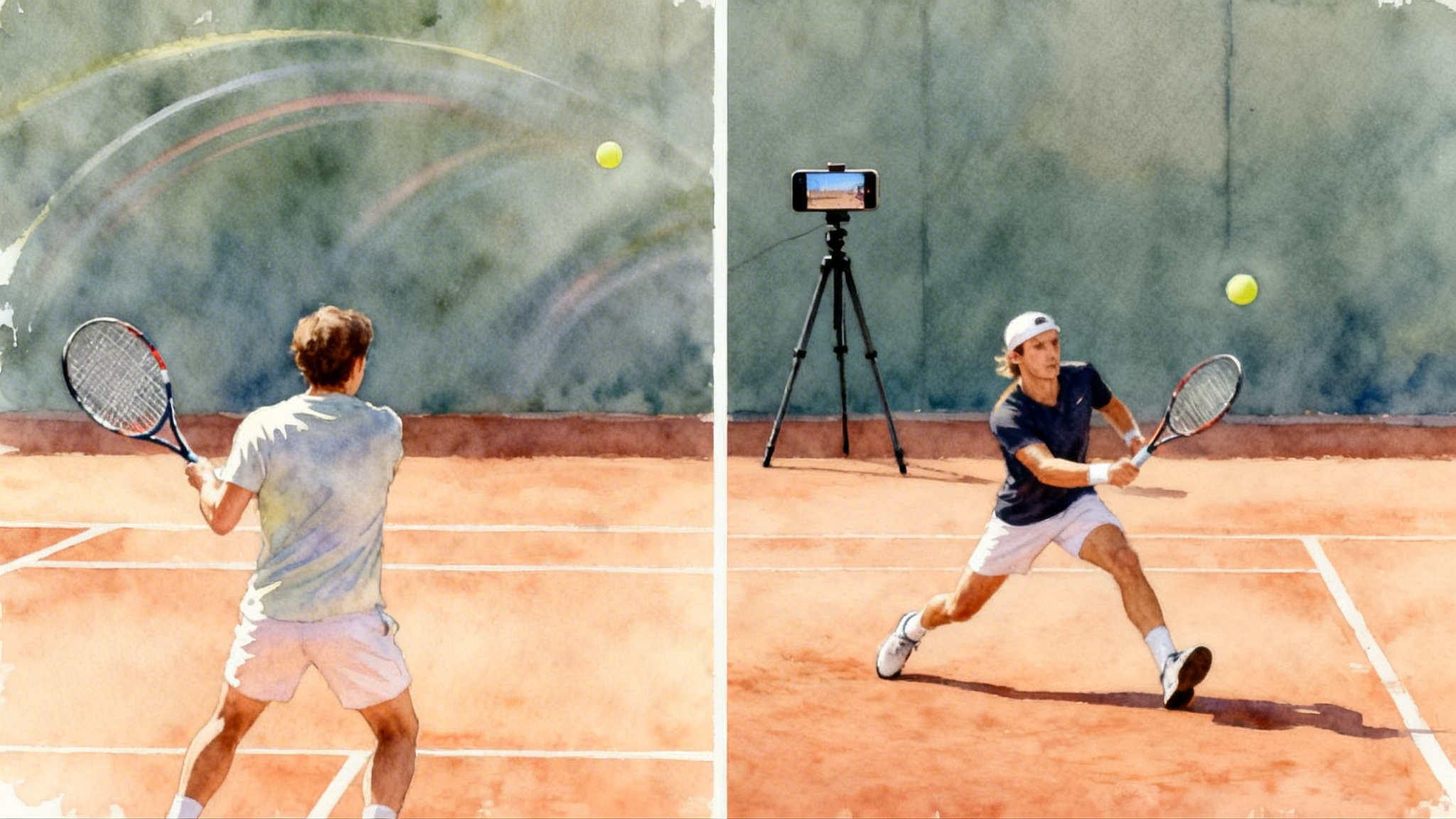
The half second that decides the point
If a first serve travels close to one hundred and ten miles per hour, the ball reaches the returner in roughly four tenths of a second. Your swing alone takes a few tenths. That leaves only a slice of time to recognize spin, predict direction, move your feet, and organize the racket face. Players who win that half second do not swing faster. They see sooner.
Anticipation is not magic. It is a set of learnable skills that combine visual attention, pattern memory, and movement timing. The best part is that you can train it with basic tools and a partner. In this guide we will break down what expert readers notice, how to train those cues, and how to build a short plan that makes anticipation feel natural in match play.
What great readers actually look at first
Before the ball leaves the opponent’s strings, your brain is already building a forecast. Skilled players watch these early cues:
- Shoulder and trunk rotation: Turn tells direction. Closed shoulders often drive crosscourt, open shoulders can send the ball down the line.
- Contact height: Higher contact shortens the available court and often flattens the shot. Lower contact invites more lift and usually deeper net clearance.
- Grip and racket face: A more extreme forehand grip often produces heavier topspin and a higher arc. A continental grip at the net hints at a punchy volley, not a roll.
- Stance and foot load: Loading the outside leg tends to drive crosscourt. A neutral stance at the baseline can support either line.
- Preparation speed: A rushed backswing telegraphs a defensive shot. A relaxed setup often means the player is about to change direction or add pace.
These are not absolute rules. They are probabilities. When you pair them with the score, the surface, and your opponent’s habits, the picture sharpens. Your goal in training is to make these cues automatic so your body moves before your inner narrator starts to speak.
The three clocks of anticipation
Think of anticipation as three small clocks that you learn to read in order:
- Opponent clock: What their body and racket are about to do.
- Ball clock: What the ball’s early flight says about speed, curve, and depth.
- Bounce clock: How the court and spin will change the ball after it lands.
Train the clocks in sequence. First, predict from the body. Then confirm with the first ten feet of ball flight. Finally, adjust with the bounce. When those three clocks click together, you feel early and calm.
On court drills that build a faster read
You do not need a basket full of complex constraints. You need clarity and measurable cues.
1) Traffic Light Return Drill
Purpose: Build a quick first read on serve.
Setup: Server stands on the baseline. Returner stands in ready position. Use colored calls to label commitment.
How it works:
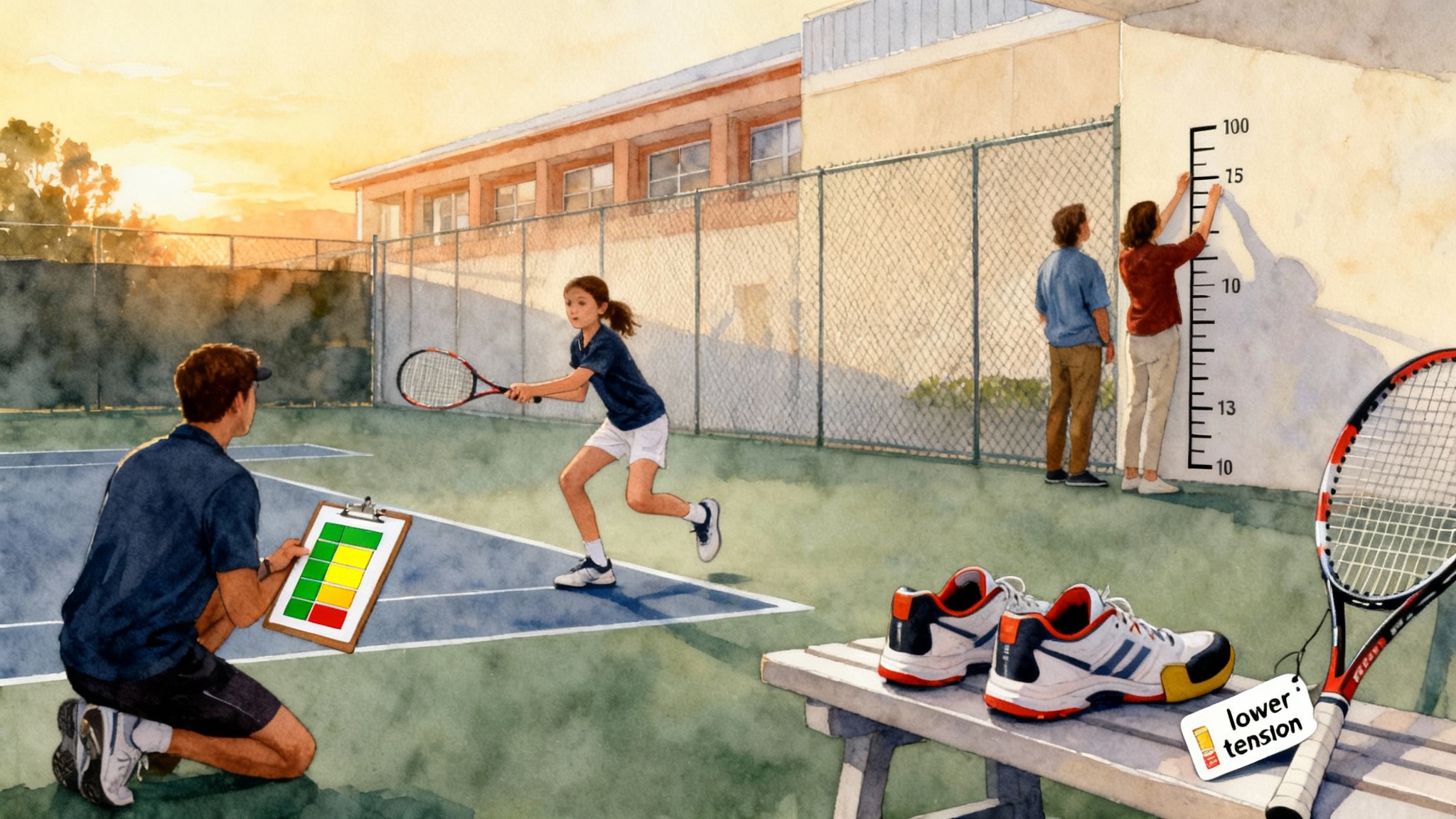
- Server tosses normally. As the ball reaches the server’s shoulder, the returner says "red" if they have no read, "yellow" if they have a partial read, "green" if they feel confident about direction or spin.
- Returner must start the split step before the ball clears the net tape, not after.
- Score yourself on two things: the timing of the split step and the accuracy of the call. Keep a simple tally on a notepad.
Progression: Add targets for the return. Green calls must be followed by aggressive depth. Yellow calls go deep middle. Red calls prioritize height and recovery. For deeper frameworks on serve returns, see the return of serve blueprint.
Why it works: Naming your read compresses indecision. It also rewards a correct early forecast even if contact is imperfect.
2) Bounce-Call Rally
Purpose: Sharpen the ball clock and bounce clock.
Setup: Cooperative rally crosscourt. Both players must say the bounce height out loud just after impact with the court: "low," "medium," or "high."
How it works:
- Start at slow speed. After each bounce, call the bounce height and immediately adjust your contact height to match.
- Add spin variety. One player aims for a higher arc, the other for a skidding slice. The receiver calls the bounce and moves the contact point forward or back accordingly.
Progression: Play out points crosscourt where the only tactical rule is this: if you call "high," you step inside the baseline on the next ball. If you call "low," you recover behind the line.
Why it works: The voice anchors your attention to a specific post-bounce cue and builds a clean movement rule you can trust under stress.
3) Shoulder Read Game
Purpose: Train the opponent clock.
Setup: Crosscourt live points. Before each opponent’s contact, you say "open" or "closed" based on their shoulder angle.
How it works:
- If you call "open," you shade the line with your first step. If you call "closed," you shade the middle.
- Keep score. A correct read earns you one point regardless of rally outcome. A wrong read costs you a point. Winning the rally earns a bonus point.
Why it works: The scoring emphasizes reading, not just ball control. Your first step becomes decisive instead of reactive.
4) Three-Ball Pattern Builder
Purpose: Turn pattern memory into anticipation.
Setup: Feeder plays one short ball, one neutral ball, one high and heavy ball in any order. Hitter must call the likely response before striking their shot.
How it works:
- As you move to the ball, say "they defend cross," "they counter down the line," or "they float middle," based on the ball you just sent.
- Play out the point and track how often your call matched reality.
Why it works: Your own shot choice is the biggest predictor of what comes back. You train that link until it is reflexive.
At home vision and cognition that transfer
You can build better reads away from the court with simple tools.
Near-far switching
Use a string with beads or any object at arm’s length and a distant object across the room. Rapidly switch focus from near to far for sets of thirty seconds, rest for thirty seconds, and repeat three times. This improves the speed of accommodation, which helps when a heavy topspin ball kicks up late.
Saccade ladders
Place two small sticky notes on a wall about two feet apart. Snap your eyes from one to the other as quickly as possible while keeping your head still. Do for twenty seconds, rest, and repeat five times. Faster saccades help your eyes lock onto the racket face and then the first feet of ball flight without delay.
Occlusion video
Open a rally video on your phone. Use a notecard to cover the moment of contact for each player. Pause just before contact and say where you think the ball will go. Reveal and check. Start with ten guesses, record your score, and try to beat it next time. This builds the habit of predicting from pre-contact body shape.
Quiet eye routine
In your service return stance at home, fix your gaze on an imaginary contact point on the opponent’s strings for about two tenths of a second before their impact. Then shift your eyes to your intended contact point in your own strike zone. This pre-programs the gaze sequence you will use on court and reduces last second head movement.
Footwork that supports early seeing
Anticipation is wasted if your first step is late. The split step is your synchronization tool. Time it to land as your opponent makes contact. That small landing triggers the stretch reflex in your calves and hips and gives you a spring toward the ball.
A simple way to learn the timing is to think in three beats: load, float, land. As your opponent starts the forward swing, you load by dropping your center of mass a little. As their racket travels forward, you rise and float. As their strings meet the ball, you land softly and push toward your first step. Film ten points of yourself and count how often you land early, on time, or late. Aim for on time at least seven out of ten.
Your stance width matters as well. A stance that is about one and a half shoulder widths helps you redirect quickly. Too narrow and you tilt. Too wide and you cannot rotate. In returns, start a touch wider and slightly closer to the baseline so your first step wins ground, not just survives.
Doubles anticipation in the service box
In doubles, the net player is the best reader on the court. Train two habits.
- Racket position tells you volley shape. A volley with the strings facing crosscourt stays crosscourt unless the player is very skilled. Shade that lane with your first step.
- Ball below net height invites a defensive return through the middle. Take one big step to the center strap and make the court look small.
Run the “Poach or Hold” drill. Server hits three serves in a row. On each return, the net player must decide to poach or hold before the returner hits. Say the choice out loud. Poach on any ball where the returner is late or stretched. Hold when you see a short backswing and balanced base. To upgrade roles and formations, read the college-ready doubles fast-track.
Use video and simple data to improve reads
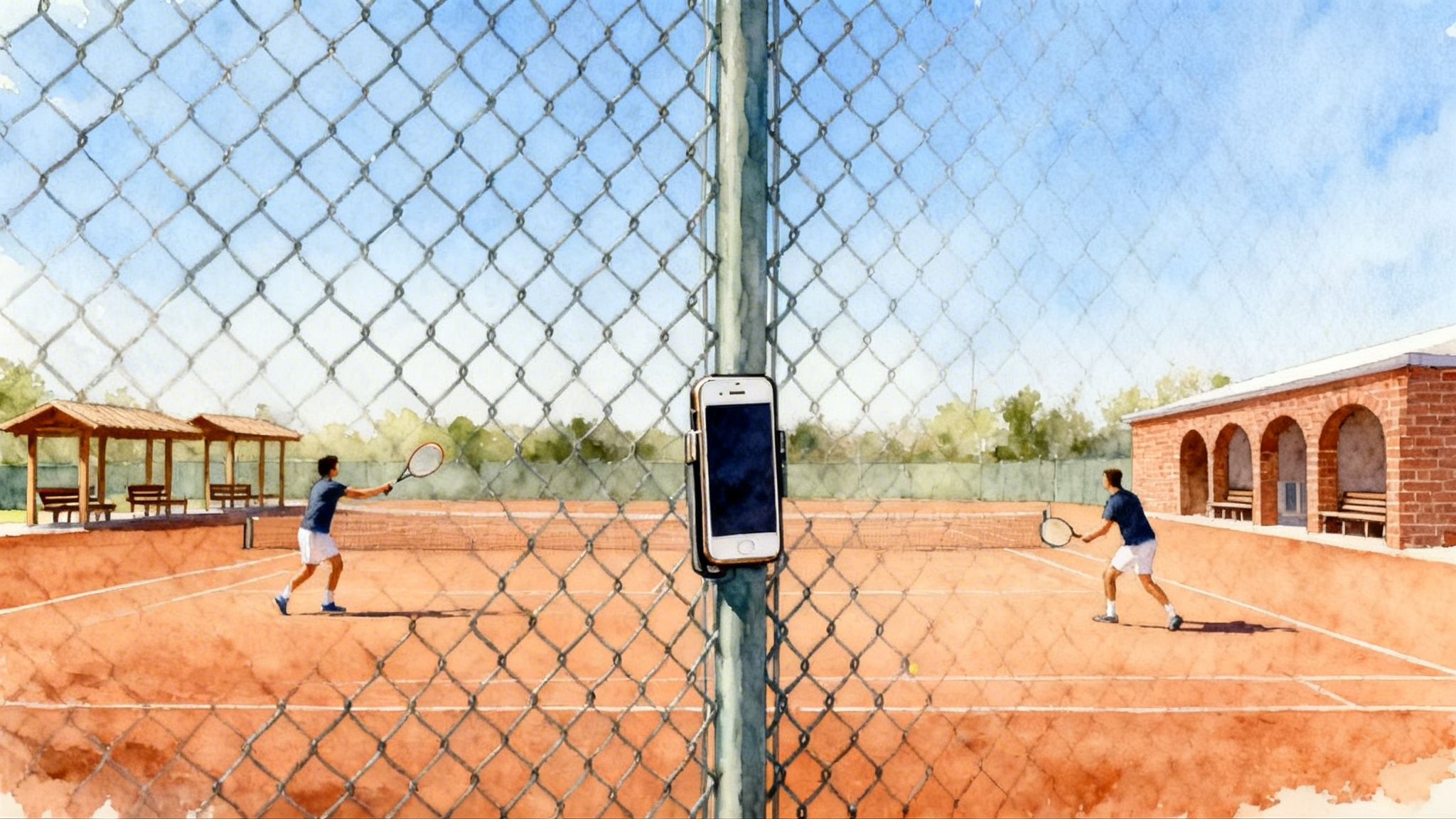
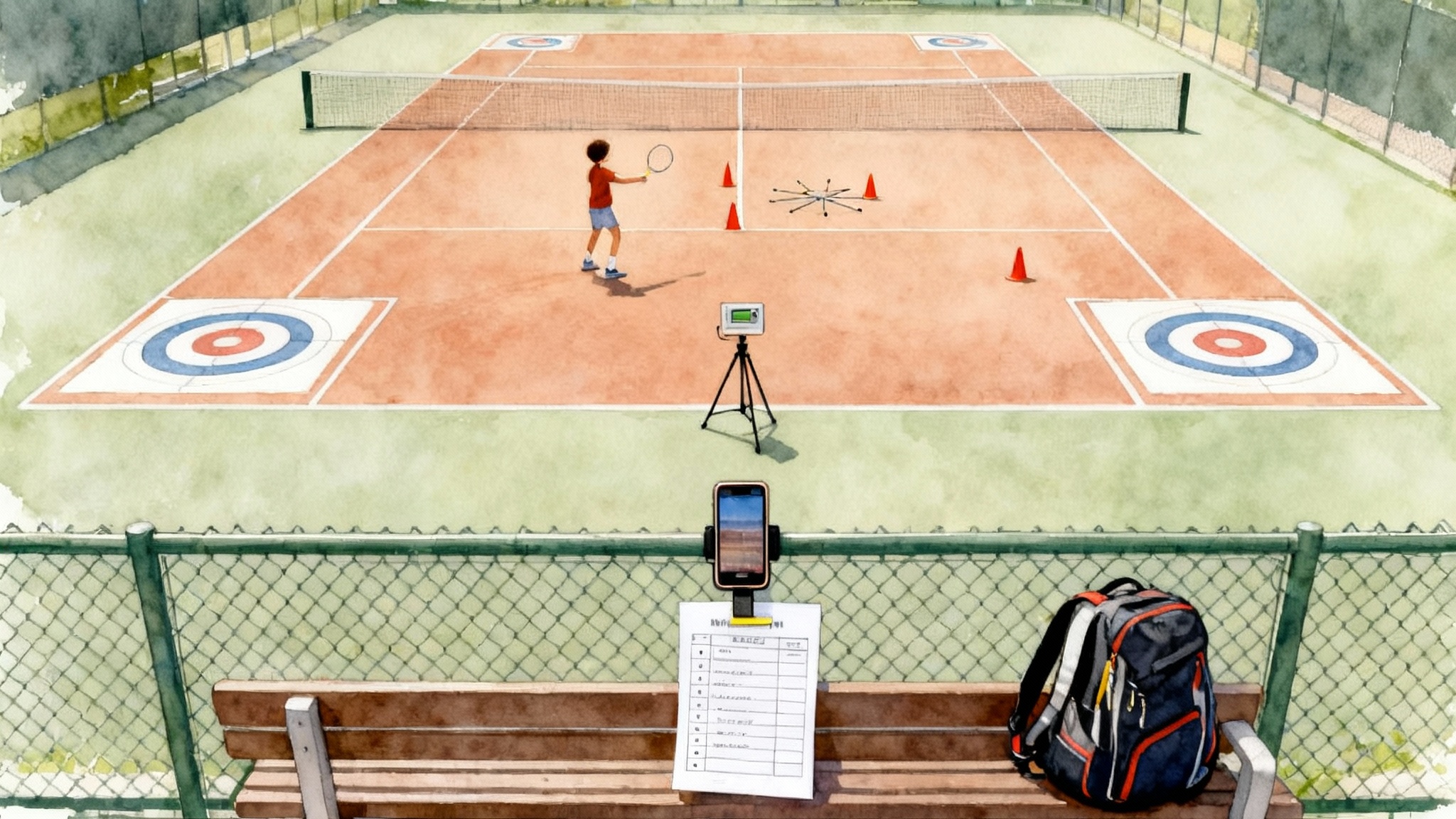
You do not need expensive systems to learn from video. A smartphone at sixty frames per second on a small tripod is enough.
- Film from behind, aligned with the center service line. This angle shows shoulder rotation and ball flight.
- Mark three events in each rally: opponent contact, your split step landing, and your own contact. Use any basic editing app to place quick markers.
- Count frames between opponent contact and your landing. Convert to time by dividing frames by frame rate. Aim to land within one frame of their contact.
- Note your first step direction. Was it correct based on the final shot direction? Keep a simple tally: correct first step or wrong first step.
In a single practice set, review ten returns and ten baseline rallies. If your on time landings are below sixty percent, prioritize split step timing in the next session. If your first step direction is wrong more than four out of ten times, add the Shoulder Read Game back into your plan. For filming checklists and tagging ideas, see the AI tennis video 2026 guide.
Pattern literacy: how score and surface change the read
Anticipation improves when you understand which options are most likely in a given context.
- On a deuce court second serve to your backhand, many players roll a safer crosscourt shape. Stand a small step to the backhand side and prepare to drive middle first.
- On clay, heavy topspin jumps high and pushes you back. Expect more short angles that pull you off the court after a deep crosscourt exchange. Protect the sideline with your first step.
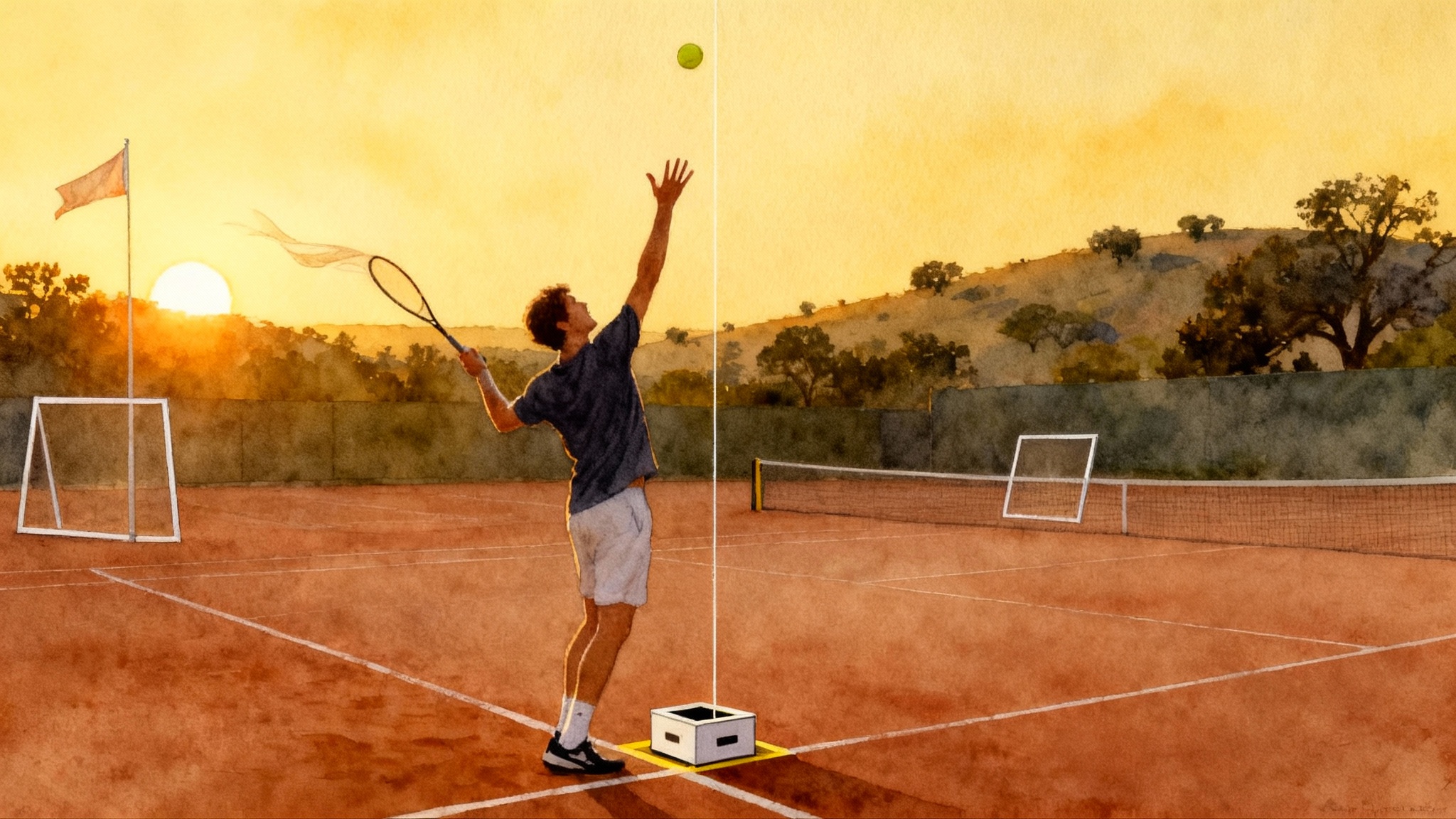
- In a windy match, watch the toss. A toss that drifts right for a right handed server often leads to slice wide. Start with your outside foot already loaded to that side.
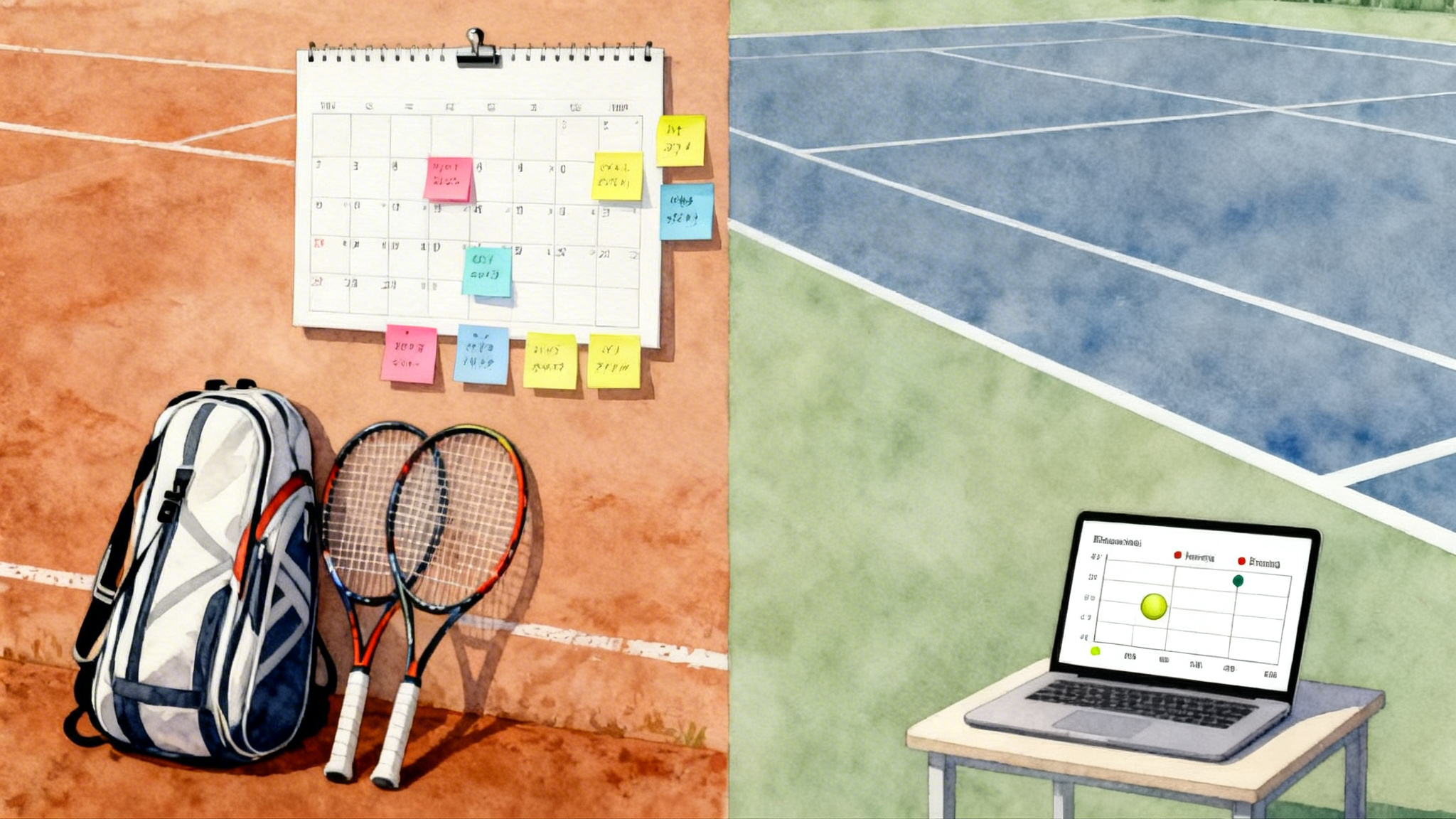
Make a short list of three tendencies for your regular opponents. Tape it to your bag. Read it before you warm up. You will find your first step lines up earlier with what actually happens.
Common mistakes that slow your read
- Staring at the ball too soon: Keep your eyes on the opponent’s upper body and racket during their preparation, then snap your gaze to the ball as the racket accelerates forward. If you lock onto the ball too early, you miss the body cues.
- Split step on landing, not on takeoff: The value comes from landing when the ball is struck. If you think about jumping at contact, you will land late. Think land on contact.
- Flat feet in the waiting phase: Bounce gently on the balls of your feet as the opponent starts to swing. Stillness turns into stiffness and then into slowness.
- Overcommitting to guesses: A read is a lean, not a lunge. Shade one step first, then accelerate when the ball confirms your prediction.
A simple fourteen day plan to speed up your read
Day 1: Baseline test. Film fifteen returns and fifteen baseline rallies. Record split step timing and first step correctness.
Day 2: Traffic Light Return Drill, twenty serves per side. Finish with ten point play.
Day 3: Saccade ladders and near far switching, three sets each. Ten minutes total.
Day 4: Shoulder Read Game crosscourt to the forehand. First to eleven points.
Day 5: Bounce Call Rally with slice and topspin. Two sets of five minutes.
Day 6: Video review session. Mark contact and landing on ten points. Note one improvement target.
Day 7: Rest or light footwork. Practice the quiet eye routine five minutes.
Day 8: Traffic Light Return Drill with targets. Add a score target for green calls.
Day 9: Three Ball Pattern Builder. Fifteen balls per pattern. Switch sides.
Day 10: Doubles Poach or Hold with three serves per rotation. Emphasize early call.
Day 11: Saccade ladders and occlusion video. Ten guesses, record your score.
Day 12: Shoulder Read Game to the backhand. Keep read score and rally score separately.
Day 13: Match play set. Film from behind. Focus on timing the split step and the first step direction.
Day 14: Review your numbers. If split step timing on time is above seventy percent and first step correctness is above sixty percent, you are on track. If not, repeat the cycle with an extra footwork emphasis on Days 2 and 8.
How to coach anticipation for juniors
If you coach, keep your language simple and external. Tell players what to look at and what to do, not what muscles to fire.
- "Watch the shoulder turn, then land as they hit."
- "If the bounce is high, step in. If it is low, recover."
- "Call red, yellow, green before the ball crosses the net."
Use games that reward reads rather than just rally length. Keep a separate anticipation scoreboard and celebrate progress. Young players learn faster when the goal is clear and the scoring matches the goal.
Bringing it all together
Anticipation is the quiet superpower behind great tennis. It is not a trick, it is training. You learn to read the body before contact. You confirm with the first feet of ball flight. You adjust with the bounce. You land your split step on time and your first step goes to the right place more often. Do the simple drills, speak your reads out loud, and keep a few numbers. When that half second shows up in your favor, points start to feel easier, not because the ball slowed down, but because you did not waste any of your precious time.