Red Orange Green to Yellow: Tennis Progression for Families
A practical roadmap for juniors, parents, and adult starters to know exactly when to move up through Red, Orange, Green, and Yellow stages. Clear benchmarks, serve tests, footwork checks, weekly drills, and a printable checklist.
 Tommy
Tommy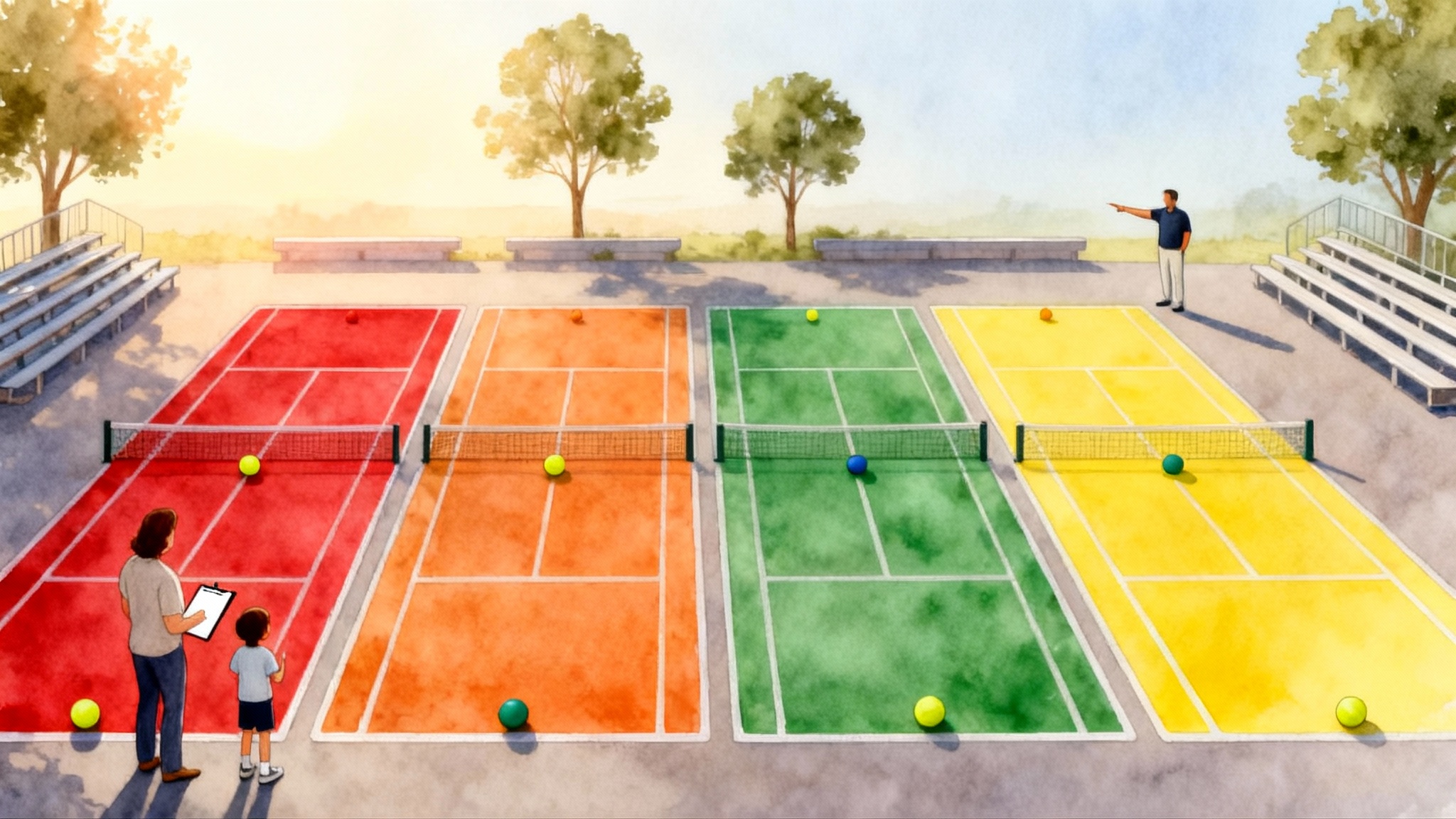
Why staged balls and courts work
A full court and a lively yellow ball ask a lot from a new player. The ball bounces high, arrives fast, and the court feels huge. Red, Orange, Green, and Yellow is a simple system that shrinks the space and softens the bounce until timing, balance, and contact become reliable. It is not only for kids. Adult starters benefit just as much because a predictable ball builds clean habits. If timing on the split step is new, skim our split-step timing guide before you start.
Think of it like learning to ride a bike. You start with a balance bike, then small pedals, then the full bike. The goal is the same speed and distance, but you scale the tools so the rider learns control first. In tennis, the colored ball and court size are the scaled tools.
The ROGY idea at a glance
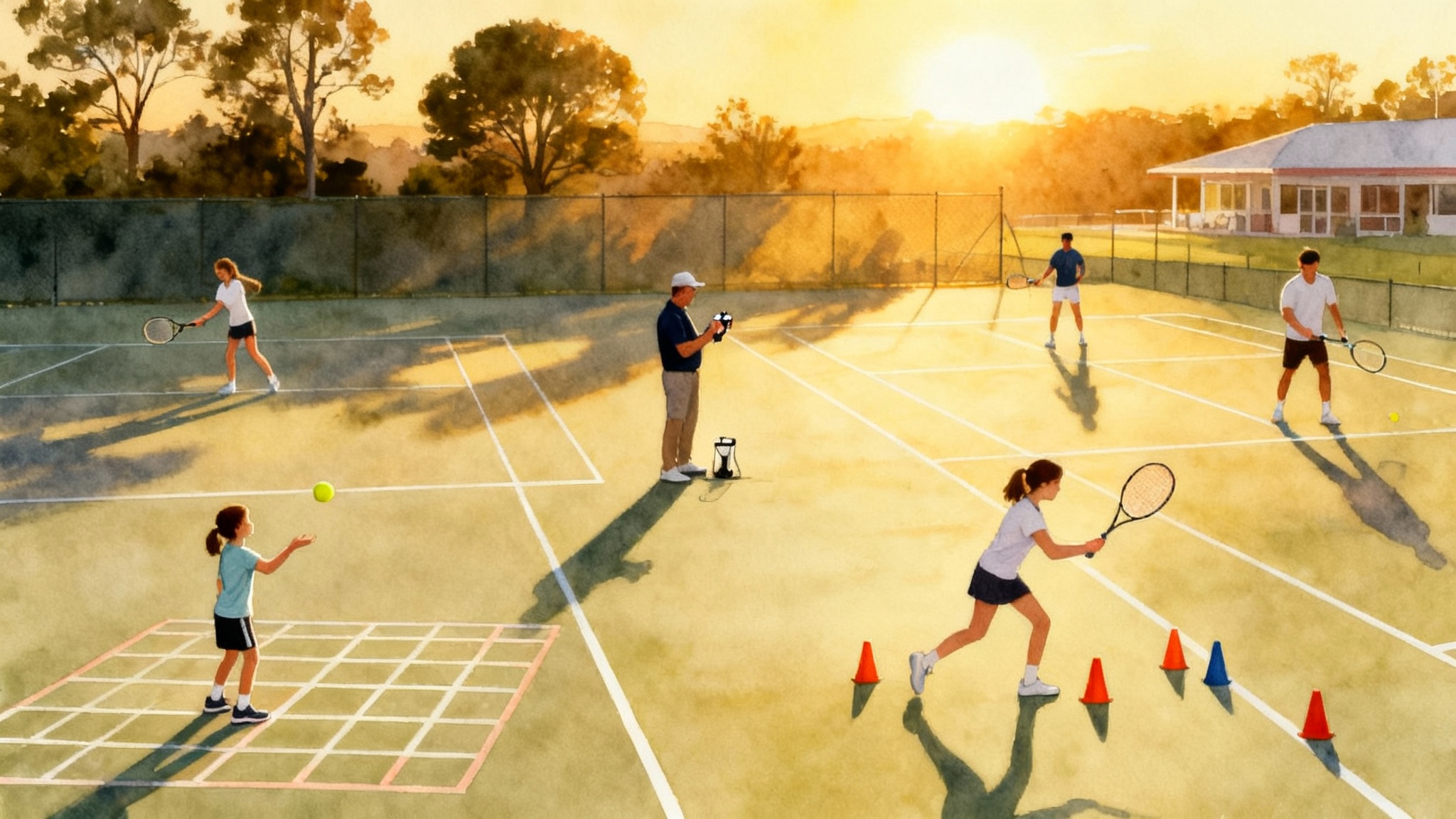
Red, Orange, Green, Yellow is often shortened to ROGY. Each stage tunes the bounce, speed, and space so players can swing comfortably in front of the body and find repeatable contact. Here is the simple picture many coaches use:
- Red ball on a 36 foot court: slowest flight and lowest bounce; short swings; simple serves; high rally success.
- Orange ball on a 60 foot court: medium flight and bounce; longer swings; early topspin; directional control.
- Green ball on a full 78 foot court: almost a standard bounce; emphasis on depth, height control, and second serve shape.
- Yellow ball on a full 78 foot court: standard ball; full speed; full tactics.
The rest of this guide tells you exactly when to move up, with measurable checks that any family can use on court or at home.
How to know when to move up
Progress when you can pass the stage benchmarks twice in one week or once during a coach assessment. Aim for calm rallies, not lucky sprints. Quality before speed. To map your week around these goals, use our build your tennis week guide.
Benchmarks for Red
Use a Red felt ball on a 36 foot court with a lower net or a portable net across the service boxes.
Skill benchmarks
- Rally length: 8 balls in a cooperative rally. Start forehand to forehand inside the service boxes, then repeat backhand to backhand.
- Contact height: most groundstrokes struck between knee and waist height, and out in front of the lead hip.
- Spin control: 5 of 10 forehands with a clear arc over the net strap that land before the baseline without skidding.
Serve and return readiness
- Serve test: 7 of 10 underhand or simple overhead serves land in the correct diagonal service box. Player can start a point without a drop feed.
- Return test: 8 of 10 returns placed crosscourt back into play with a compact swing.
Footwork and fitness checks
- Split step on time at contact in 8 of 10 feeds.
- Side shuffle from hash mark to sideline and back in 8 seconds or less, twice with a 20 second rest.
- Balance hold: finish a forehand and hold the follow through for one full count without a step back in 8 of 10 swings.
Weekly at home
- Toss and catch: throw a foam ball up so it lands in the other hand at head height, 20 times without moving the feet.
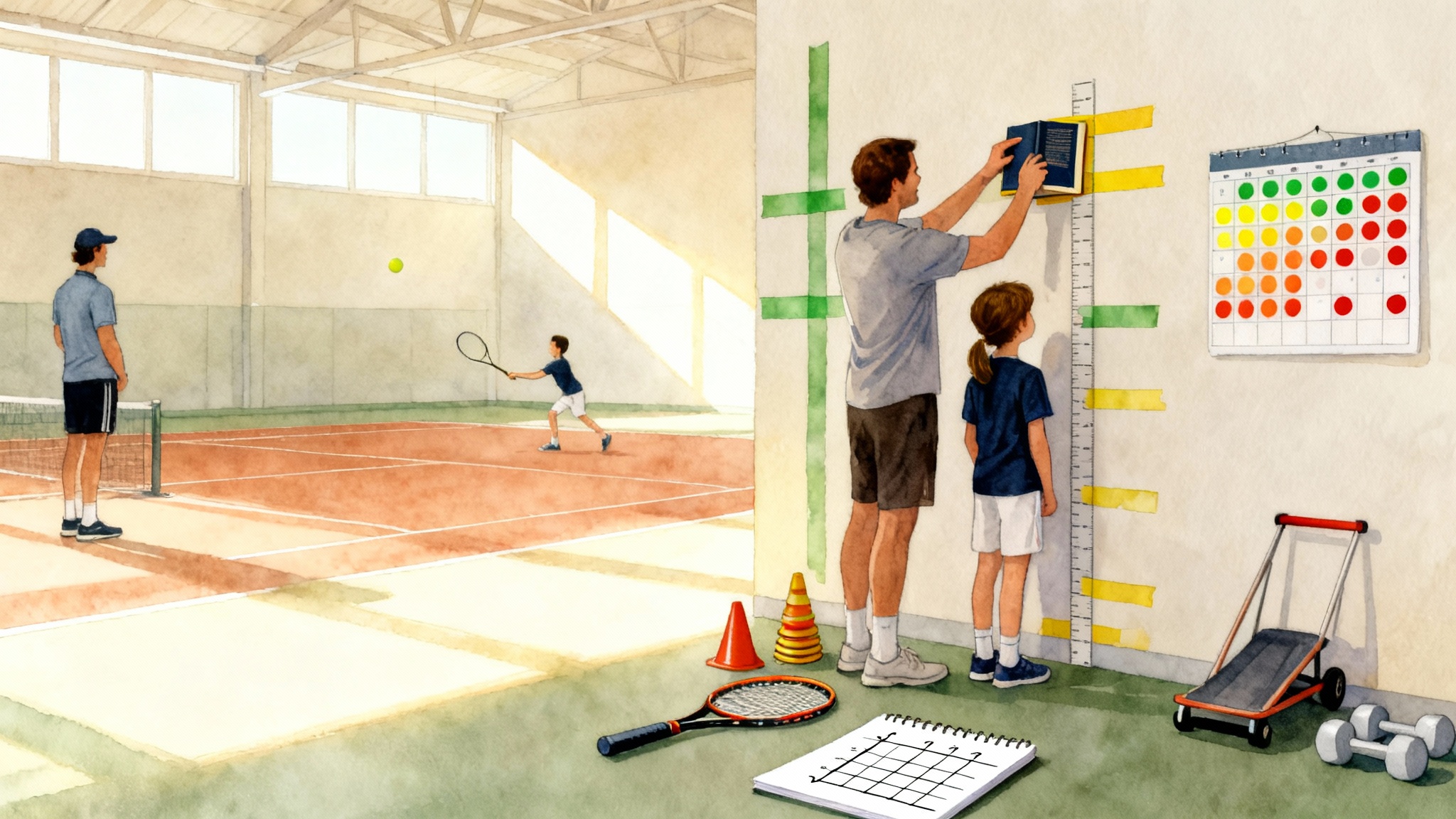
- Wall rally: 30 touches with a red foam ball and a short swing. Mark a strike zone on the wall at waist height with painter’s tape.
- Shadow swings: 3 sets of 10 forehands and 10 backhands with a split step before each.
When to move to Orange
- You pass all Red checks on two separate days in the same week. You can also move if a coach confirms you sustain 8 ball rallies in a live games class.
Benchmarks for Orange
Use an Orange ball on a 60 foot court with standard net height.
Skill benchmarks
- Rally length: 12 balls in a cooperative crosscourt rally on both forehand and backhand.
- Contact height: most groundstrokes between knee and chest height with the ball rising into contact at least half the time.
- Spin control: 6 of 10 forehands with visible topspin arc and bounce that rises after the bounce rather than skids.
- Directional control: 6 of 10 targets hit to deep crosscourt or deep middle without sailing long.
Serve and return readiness
- Serve test: 6 of 10 overhead serves per side into the diagonal service box. Toss peaks between eye and forehead level. Player can hit 2 of 5 second serves with more net clearance than first serves.
- Return test: 7 of 10 returns crosscourt, and player can change direction to down the line on a short ball 3 of 5 times.
Footwork and fitness checks
- First step: on coach clap or a partner’s toss, take one explosive split step then a three step move to the ball without crossing feet, 8 of 10 times.
- Recovery: after a wide ball, recover to a mark two steps inside the singles sideline before the next feed, 8 of 10 times.
- 5 10 5 shuttle: touch the center mark, sideline, center, opposite sideline, center in 13 seconds or less, twice with 45 seconds rest.
Weekly at home
- Jump rope: 3 sets of 30 skips with relaxed wrists.
- Serve sock drill: place a ball in a long sock, hold the open end, and swing to learn a smooth loop. 3 sets of 10 swings, both sides.
- Wall rally topspin: 20 forehands brushing up, target a tape line at net height on the wall.
When to move to Green
- You pass all Orange checks. You handle 12 ball rallies with height control and can start points with an overhead serve.
Benchmarks for Green
Use a Green dot ball on a full 78 foot court.
Skill benchmarks
- Rally length: 16 balls cooperative crosscourt, then 8 balls crosscourt followed by 8 balls down the line on a call.
- Contact height: comfortable from knee to shoulder height, with clean contact above waist on high balls 6 of 10 times.
- Spin control: on command, 7 of 10 forehands with higher arc that land deep beyond the service line. On low ball feeds, 6 of 10 slice backhands that stay under net height.
- Depth: 7 of 10 balls land deeper than the service line in cooperative rallies.
Serve and return readiness
- Serve test: 7 of 10 first serves in on each side. 4 of 10 second serves with clear topspin or kick shape that clears the net higher and lands shorter.
- Return test: block returns 6 of 10 deep; counterpunch aggressive serves 3 of 5 into the middle third.
Footwork and fitness checks
- Split step timing with a call: land the split during opponent contact in 8 of 10 repetitions.
- Crossover and recover: after a wide backhand, crossover recover to the center mark before the next feed, 8 of 10.
- Four corner pattern: touch front right, back right, back left, front left, and center in 22 seconds or less, twice with one minute rest.
Weekly at home
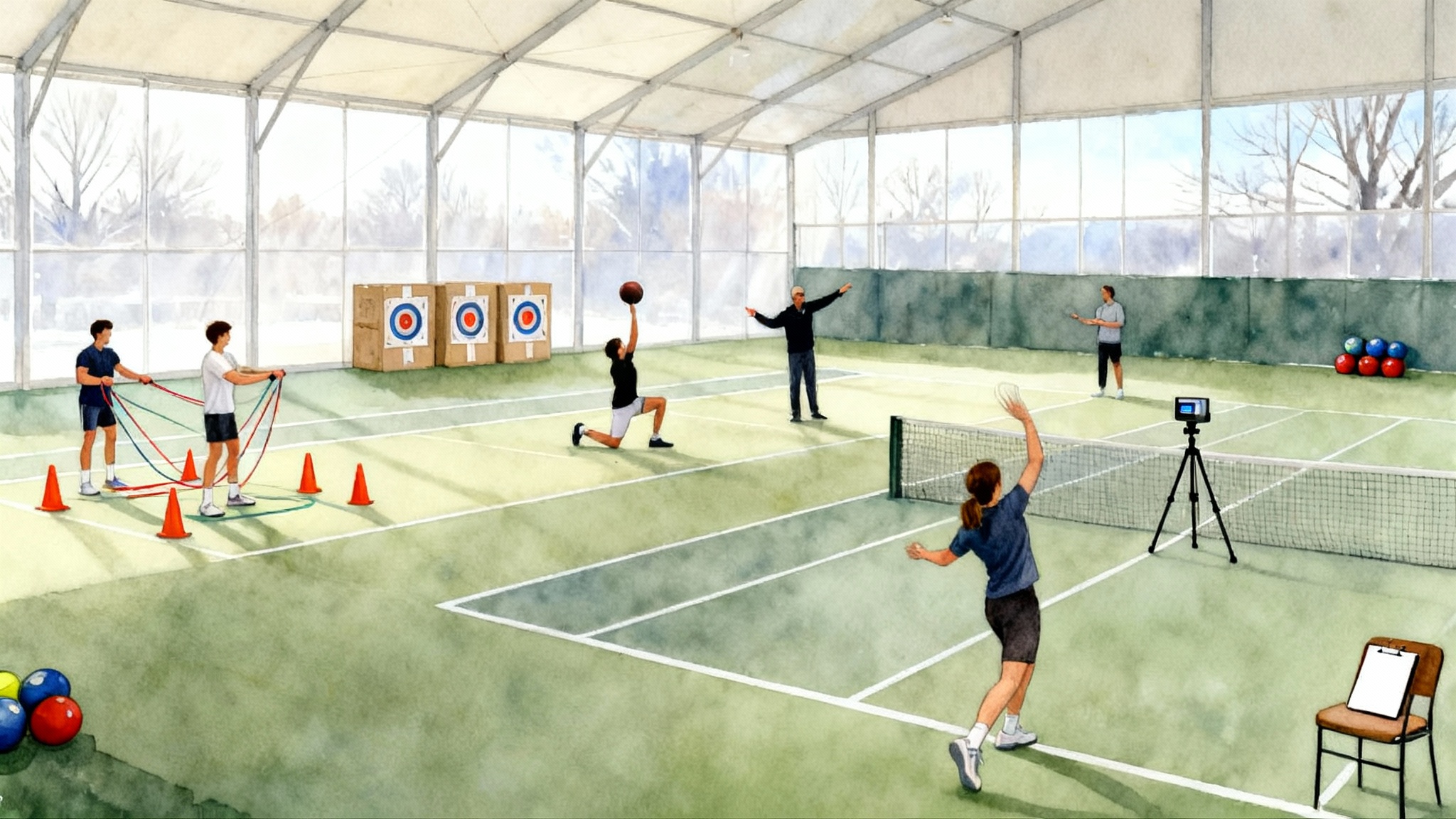
- Medicine ball or backpack throw: 3 sets of 8 rotational throws per side into a wall. Keep loads light enough to move fast.
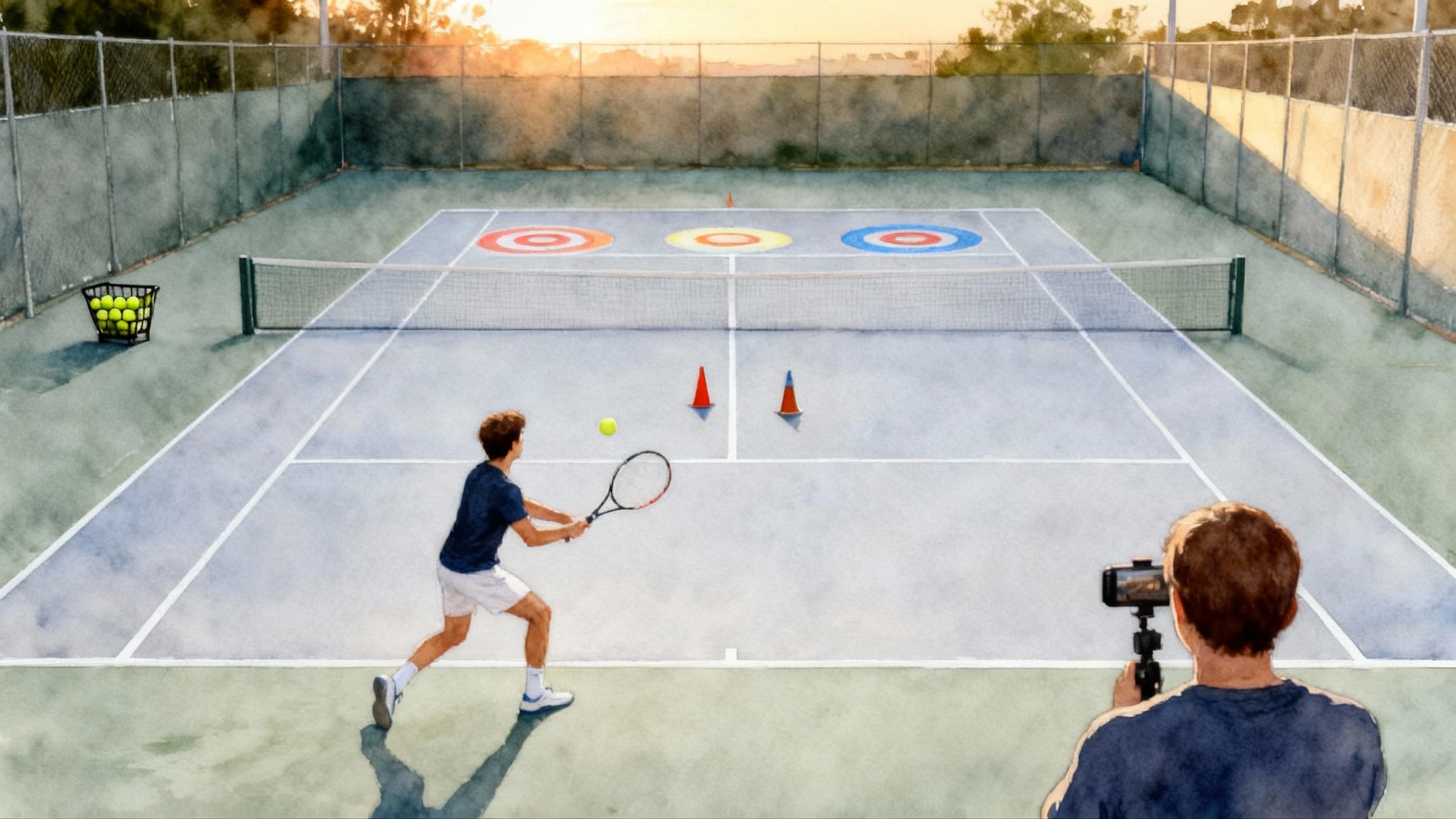
- Serve ladder: 20 serves focusing on routine; 10 first serves to corners with a target cone; 10 second serves higher over the net strap with shape.
- Visualization: 5 minutes imagining a point, including split step, height over net, and recovery.
When to move to Yellow
- You pass all Green checks and can rally 16 balls at full court with height and depth control. You can start points with a distinct first and second serve.
Benchmarks for Yellow
Use a standard Yellow ball on a full 78 foot court.
Skill benchmarks
- Rally length: 20 balls crosscourt on both sides, then 12 ball patterns that combine crosscourt and down the line on a call.
- Contact height: stable on shoulder height balls, confident on knee height skidding slices.
- Spin control: change spin on purpose. 6 of 10 forehands with a flatter trajectory to finish points. 6 of 10 with heavier topspin to build.
- Depth and height: 7 of 10 rally balls cross the net with a safe arc and land deeper than the service line.
Serve and return readiness
- Serve test: 8 of 10 first serves in on each side to a called target area. 6 of 10 second serves with spin shape that lands reliably shorter and bounces higher.
- Return test: 7 of 10 neutral or better returns on both sides. 3 of 5 attacking returns on short or slow serves.
Footwork and fitness checks
- 5 10 5 shuttle in 12 seconds or better, twice with one minute rest.
- Recover inside the baseline after a deep ball and take the next on the rise 6 of 10.
- Rally tempo: maintain a point for 60 seconds with purposeful height and depth without rushing.
Weekly at home
- Target serving: 30 serves with two targets per box and a simple routine. Tally first and second serve makes separately.
- Mobility and strength: 10 minute routine of hip hinges, lunges, calf raises, and thoracic spine rotations.
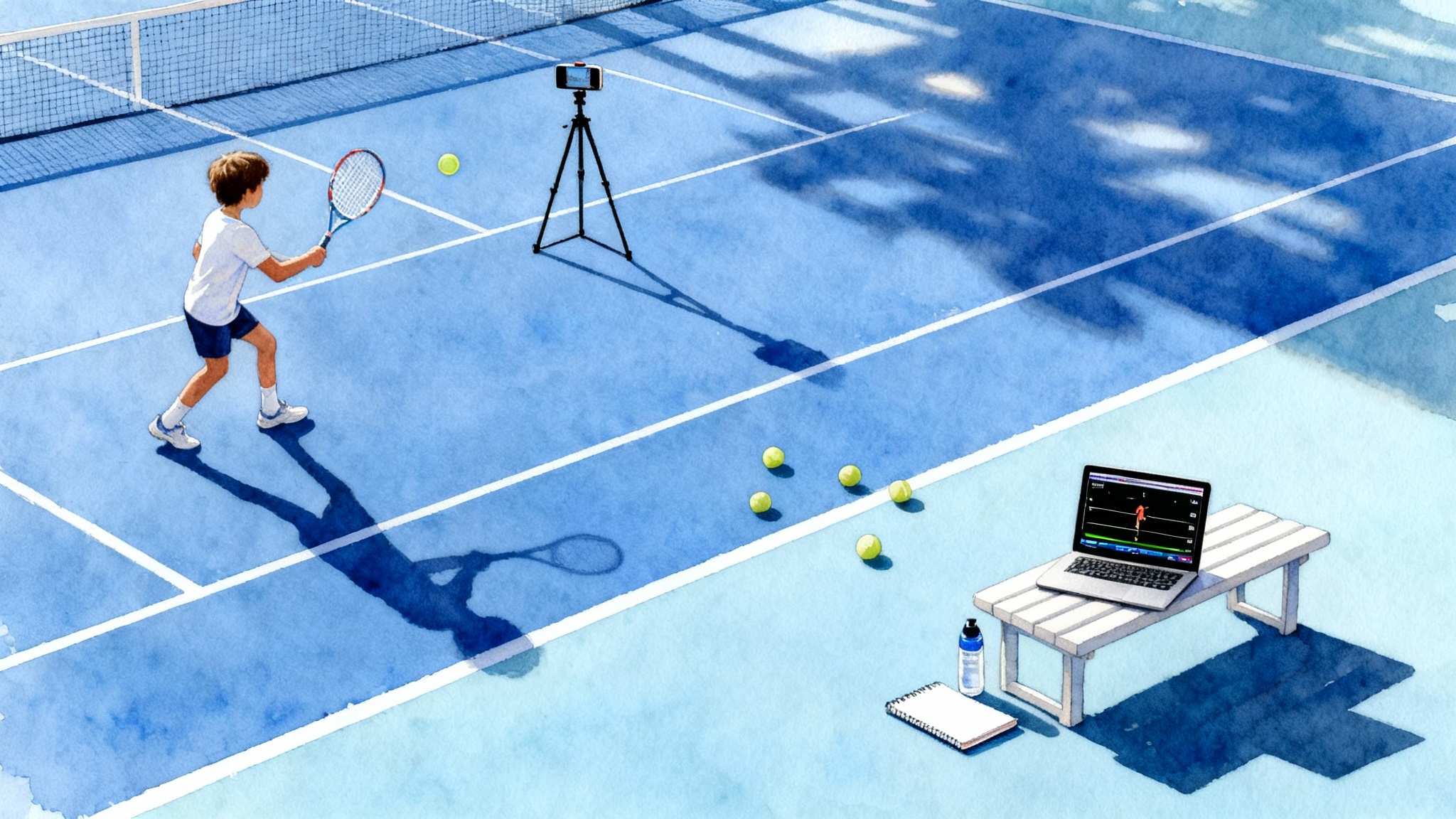
- Video feedback: record 10 groundstrokes per side. Check for contact in front, balanced finish, and immediate split step after recovery.
A printable ROGY checklist
Copy this list into a notes app or print it. Check off each box twice in the same week, or once during a coach run assessment, before you move up.
Red stage
- Rally 8 balls forehand to forehand inside service boxes
- Rally 8 balls backhand to backhand inside service boxes
- 7 of 10 simple serves in the correct box
- Contact mainly knee to waist height and in front
- Split step before each hit without reminders
- Side shuffle there and back in 8 seconds or less
- Wall rally 30 touches at waist height strike zone
Orange stage
- Rally 12 balls crosscourt on both sides
- 6 of 10 topspin forehands with clear arc
- 6 of 10 serves per side in the box with consistent toss
- Change direction on a short ball 3 of 5 times
- 5 10 5 shuttle in 13 seconds or less
- Serve sock drill 3 sets of 10 swings
Green stage
- Rally 16 balls crosscourt at full court
- 7 of 10 deep rally balls beyond service line
- 7 of 10 first serves per side in; 4 of 10 second serves with spin shape
- Slice backhand under net height 6 of 10 on low feeds
- Four corner pattern in 22 seconds or less
- Medicine ball or backpack rotational throws completed
Yellow stage
- Rally 20 balls crosscourt per side
- 8 of 10 first serves in to a called target; 6 of 10 second serves with spin
- 7 of 10 returns neutral or better on both sides
- 5 10 5 shuttle in 12 seconds or better
- Video check for contact in front and balanced finish
How to map lessons and local play to each stage
A smart calendar builds from class to match in small steps. Use this menu to place the right experience at the right time. For deeper scheduling examples, read our build your tennis week guide.
Red
- Lessons: 30 to 45 minute classes, 4 to 6 players per coach, rapid rotations, basket feeding into cooperative rallies.
- Play: Red ball festivals, team relay games, and timed point play to three shot rallies. Score by completed rallies, not only by winners.
- Compete: Short matches to 7 points, service from closer line if needed.
Orange
- Lessons: 60 minute classes, 6 to 8 players per coach, live ball patterns, serve and return every session.
- Play: Team challenges on 60 foot court, one serve to start, players serve two points then rotate.
- Compete: Short set to 4 games with no ad scoring. Tiebreaks to 5.
Green
- Lessons: 75 to 90 minutes, 6 players per coach, more crosscourt control, depth and height patterns, and second serve development.
- Play: Match play days on full court with green balls. Players call lines and keep score.
- Compete: Short set to 6 games with no ad scoring and a standard 7 point tiebreak.
Yellow
- Lessons: 90 minutes, 4 to 6 players per coach, live ball drills with patterns, point building, and transition game.
- Play: Ladder matches, doubles nights, and themed match play like crosscourt to short ball.
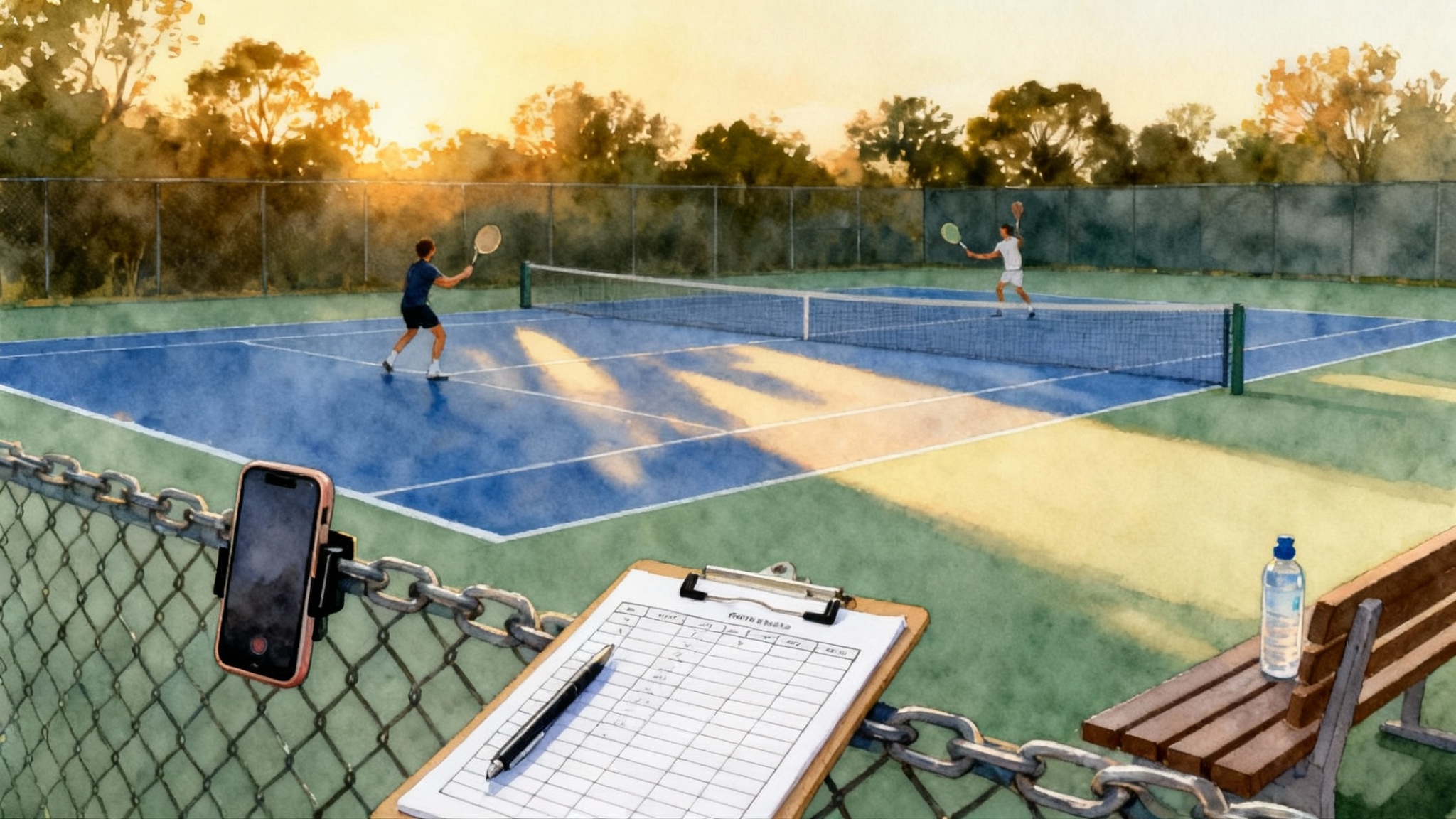
- Compete: Full scoring matches or league play that matches age and readiness. Keep a simple match journal with three goals and two reflections.
Example: how an academy runs progression with confidence
Below is an example structure based on a composite of strong academy practices, such as those at Legend Tennis Academy. Adjust details to fit your program and resources.
Assessments and placement
- Welcome session: every new player completes a 20 minute court assessment that covers rally length, contact height, and a simple serve test at the intended stage.
- Color card: each player receives a color coded card with their stage benchmarks and a space to log check marks.
- Move up windows: formal move ups occur every 6 to 8 weeks. A player can also move mid cycle if they pass all checks on two separate days.
Class design
- Red: 45 minute classes; 5 minute athletic warm up; 15 minute rally skills; 15 minute serve and return; 10 minute games. Target two touches per minute average.
- Orange: 60 minute classes; 10 minute warm up; 20 minute crosscourt control; 10 minute directional change; 10 minute serve and return; 10 minute games with patterns.
- Green: 90 minute classes; 10 minute movement; 20 minute depth and height; 15 minute approach and volley; 15 minute serve and return; 20 minute match play; 10 minute cool down and notes.
- Yellow: 90 minute classes; 10 minute dynamic warm up; 25 minute live ball patterns; 15 minute transition game; 15 minute serve plus one; 15 minute match play; 10 minute review.
Readiness tests
- Red to Orange: pass the Red checklist twice in one week; coach verifies 8 ball rallies and serve start.
- Orange to Green: pass the Orange checklist; coach verifies 12 ball rallies and a visible topspin arc.
- Green to Yellow: pass the Green checklist; coach verifies a distinct first and second serve.
Parent and player feedback
- After every class, players tick at least one skill box in their card. Parents see concrete steps rather than vague labels.
- Every eight weeks, Legend hosts a Move Up Night that feels like a celebration. Players demonstrate their best skills, then receive a colored wristband to mark progress.
Events map
- Red: monthly Red Ball Festival with stations and team relays.
- Orange: biweekly 60 foot Team Challenge with short sets.
- Green: weekly match play with scorekeeping, sportsmanship points, and a short debrief.
- Yellow: monthly round robin for singles and doubles. Players bring a simple goals sheet and fill a two line reflection afterward.
Staff playbook
- Each class has a printed flow, targets on the court, and cones that suggest depth. Coaches carry a simple tally card to track rally length and serve success for each player once per month.
Common questions from families
What if a player wants to move up before they pass the checks?
- Test on a different day. Nerves are real. If they are close, add a small stretch goal for two weeks, like 10 minutes of wall rally or serve ladders at home. Then retest.
What if a player stalls at one check, like second serve, for a long time?
- Freeze progress on that single skill rather than the whole stage. Move them into the next stage for everything except second serve. In class, give them second serve reps on a smaller target with a height challenge. This keeps confidence high while the limiting skill catches up.
Do adults really need Red and Orange?
- Many do, for a short time. The softer ball and smaller court teach timing and contact. Adult groups often progress faster because strength and attention allow longer practice blocks. The checks still apply.
What if local events do not offer Orange or Green play?
- You can still train on the right ball and court. Use team in-house events, ladders, and parent run play days. When you enter a Yellow event, use the Green skill checks to set success targets like height and depth, not win loss record.
Putting it all together
Pick the stage you can pass today. Circle two checks that feel closest. Build a week that includes one group class, one guided practice, and one at home session from the lists above. Retest on Friday. If you pass, celebrate and set the next two checks. If not, keep the same plan and try again next week. Momentum comes from repeating the right things, not from rushing to the next color.
Tennis rewards patients who make small promises to themselves and then keep them. Use the benchmarks to make progress visible. Use the checklists to make practice concrete. Whether you are seven, seventeen, or forty seven, this roadmap helps you grow a game that holds up under pressure and feels good to play.