Safe Serve Speed: 6-Week Overhead Strength and Throw Plan
Build serve speed the smart way with a level-based, six-week plan that protects the shoulder first, then adds power. Includes readiness screens, weekly volumes by age, radar-gun scripts, red flags, and an academy example.
 Tommy
Tommy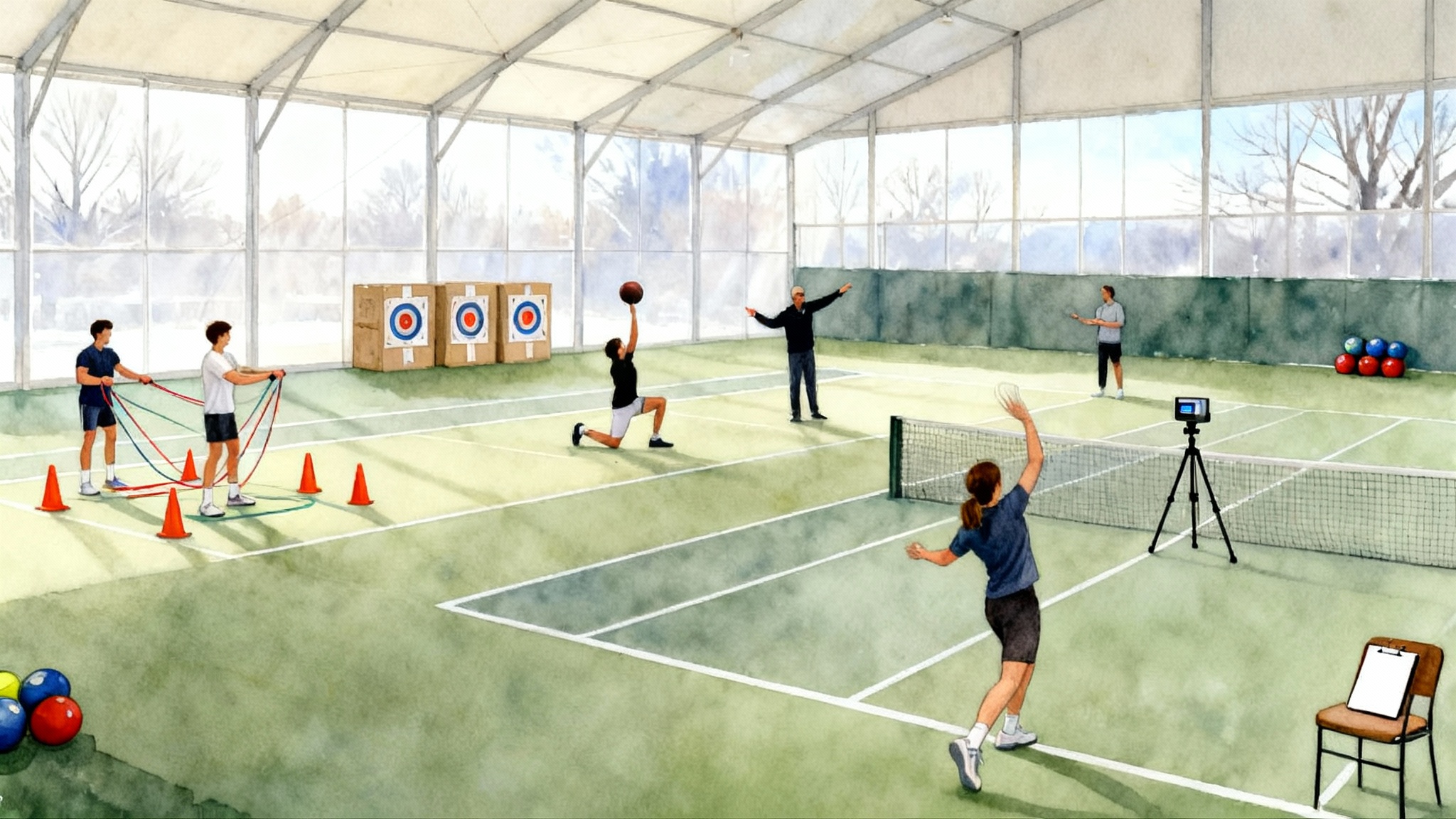
Why serve speed should start with shoulder health
Big serves look like magic. In reality they come from a healthy shoulder blade that glides, a rib cage that rotates, and hips that load and unload in rhythm. When that system is sound, the racquet head moves fast without forcing it. When it is not, the arm muscles do too much, the elbow and biceps take the hit, and velocity plateaus or pain shows up.
This six-week plan builds speed in the right order. Level 1 builds scapular stability and range. Level 2 layers force absorption and rhythm through medicine ball and elastic work. Level 3 expresses power with plyometric throws and on-court intent drills. You will also get readiness screens, age-specific weekly volumes, radar-gun session scripts, and red-flag rules that keep overuse away.
Use this as a stand-alone plan or plug it into your team environment. If you want printable checklists and logs, grab the templates in our drills section on TennisAcademy.app.
What you need and how to use it
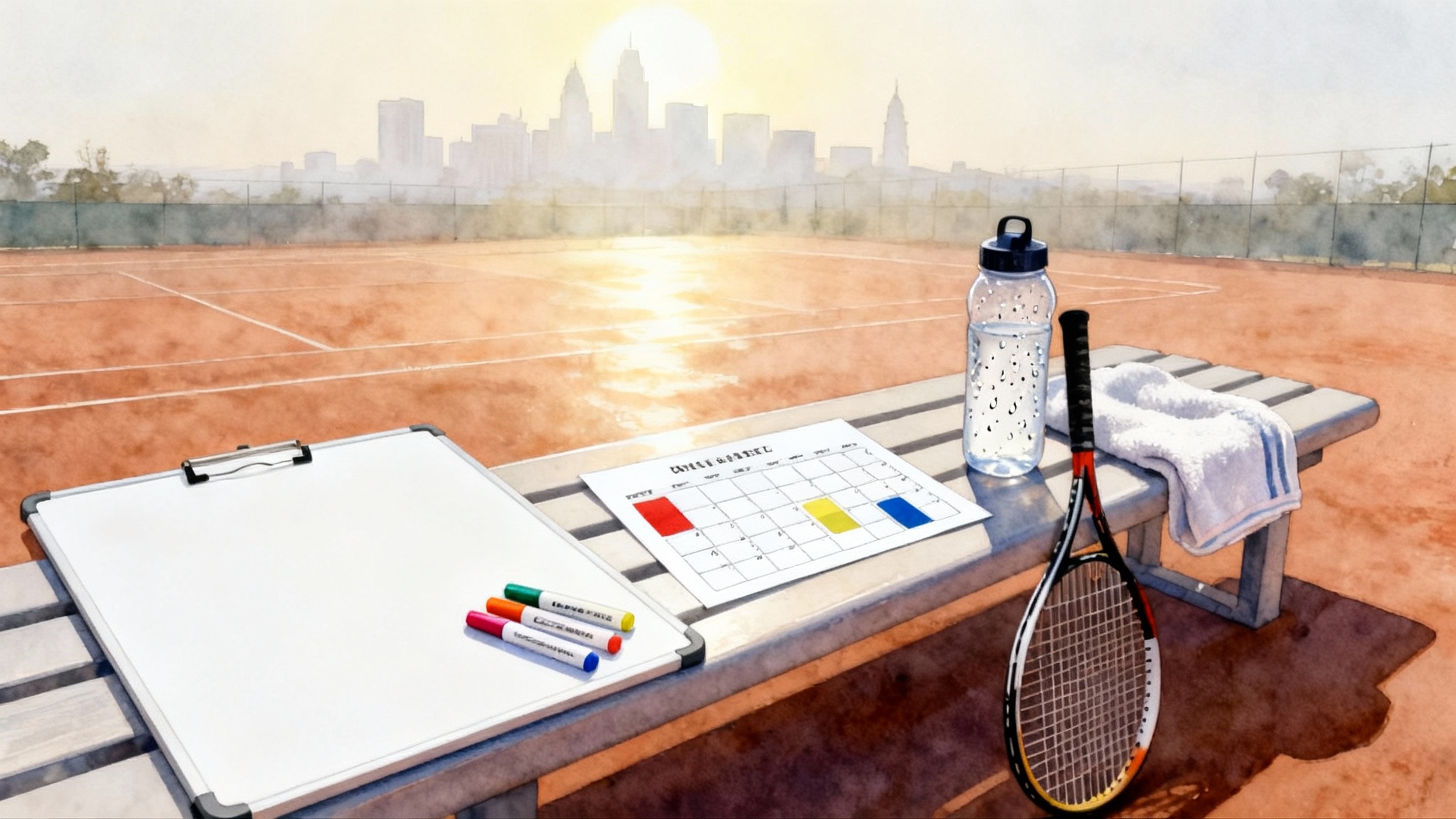
Equipment
- Light and medium elastic bands with handles or loops
- Medicine balls: 1 to 2 kilograms for under 12, 2 to 3 kilograms for under 16, 3 to 4 kilograms for adults
- A small plyometric ball or soft ball for wall throws
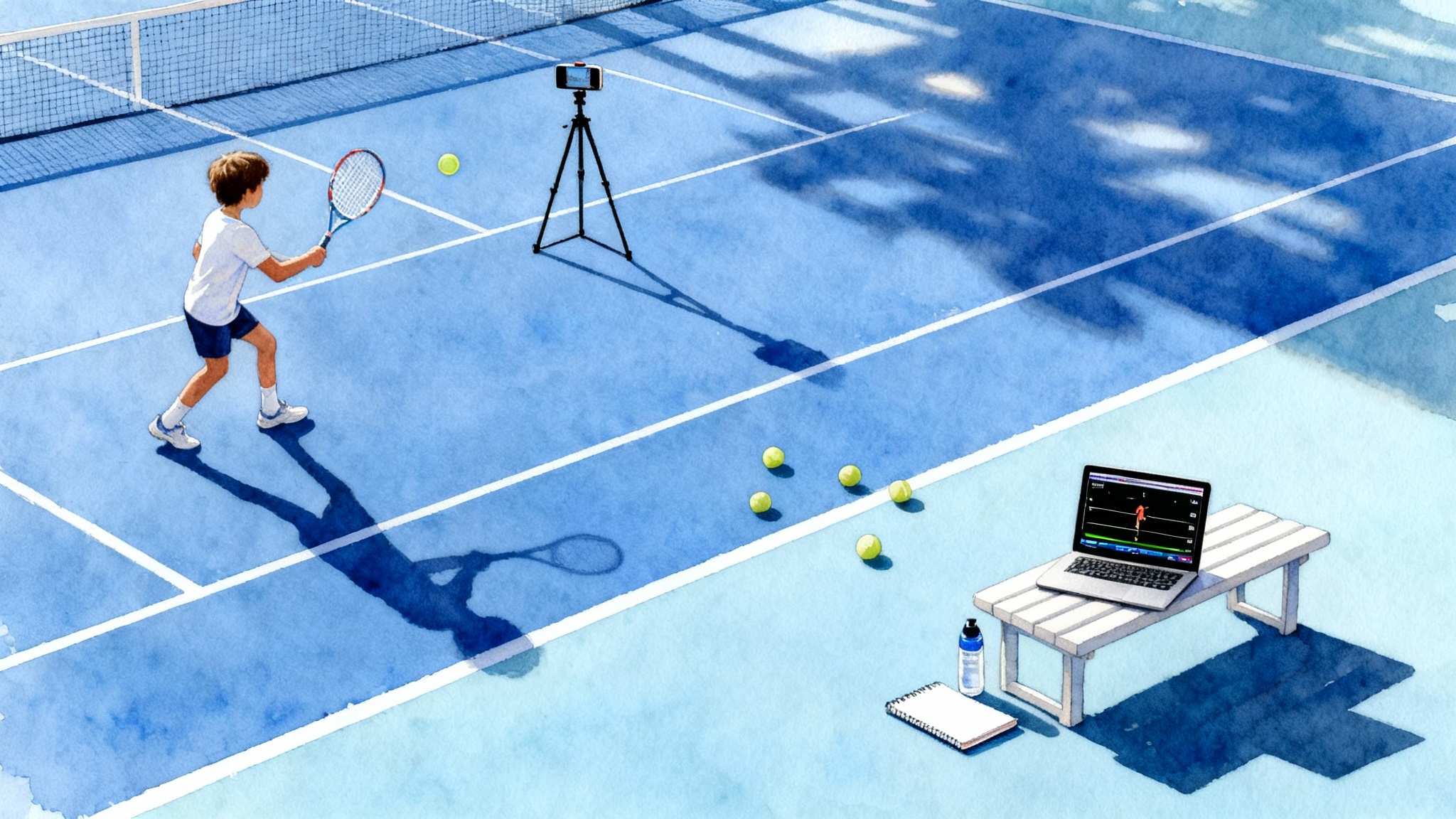
- A radar gun if available such as a Pocket Radar speed gun
- Cones and tape for target boxes
Structure
- Three weekly sessions that build the overhead pattern off court
- Two weekly on-court serve sessions that focus on quality and intent
- One radar session per week in Weeks 2 to 6
- One full day off completely each week
Age brackets
- Under 12: focus on technique, rhythm, and light power. No heavy loading
- Under 16: moderate loading and more intent. Prioritize clean mechanics
- Adults: moderate to higher loading based on training age, not just years
Readiness screens you can do in 5 minutes
Use these before Week 1 and again at Week 4. If you fail a screen, reduce intensity and clean the pattern first.
- Wall slide and reach
- Stand with back against a wall, ribs down, thumbs touching the wall
- Slide arms overhead to full reach without arching the back or shrugging
- Pass: you can reach overhead with your wrists near the wall, no pain, no back arch
- Scapular push up plus
- Push up position on the floor or a box. Keep elbows locked, protract and retract shoulder blades
- Pass: 10 smooth protraction reps without winging or shrugging
- Seated thoracic rotation
- Sit tall, squeeze a foam roller or pillow between knees, arms across chest. Rotate left and right
- Pass: at least 45 degrees each way without the pelvis moving
- Single arm front plank tap
- Plank on forearms. Lift one arm and tap opposite shoulder for 10 controlled taps per side
- Pass: no hip drop, no rib flare, no neck strain
- Prone Y and T lift
- Lie face down, forehead on towel. Raise arms in a Y, then in a T. Thumbs up
- Pass: 10 slow lifts each position without shrugging or pain
- Elbow check
- Straighten the elbow and flex the wrist. No sharp pain along the inside of the elbow
- Pass: no pain. If pain is present, stop any high-intent work and see a qualified professional
Red-flag rules that prevent overuse
- Pain rule: pain above a 3 out of 10 during or after serving means stop the session and switch to mobility only
- Soreness rule: next-day soreness that limits range of motion means 24 to 48 hours off from high intent
- Velocity drop rule: if radar speed falls more than 5 percent for three serves in a row, end the high-intent block
- Elbow warning signs: sharp inside elbow pain, tingling, or loss of grip strength. Stop and seek evaluation
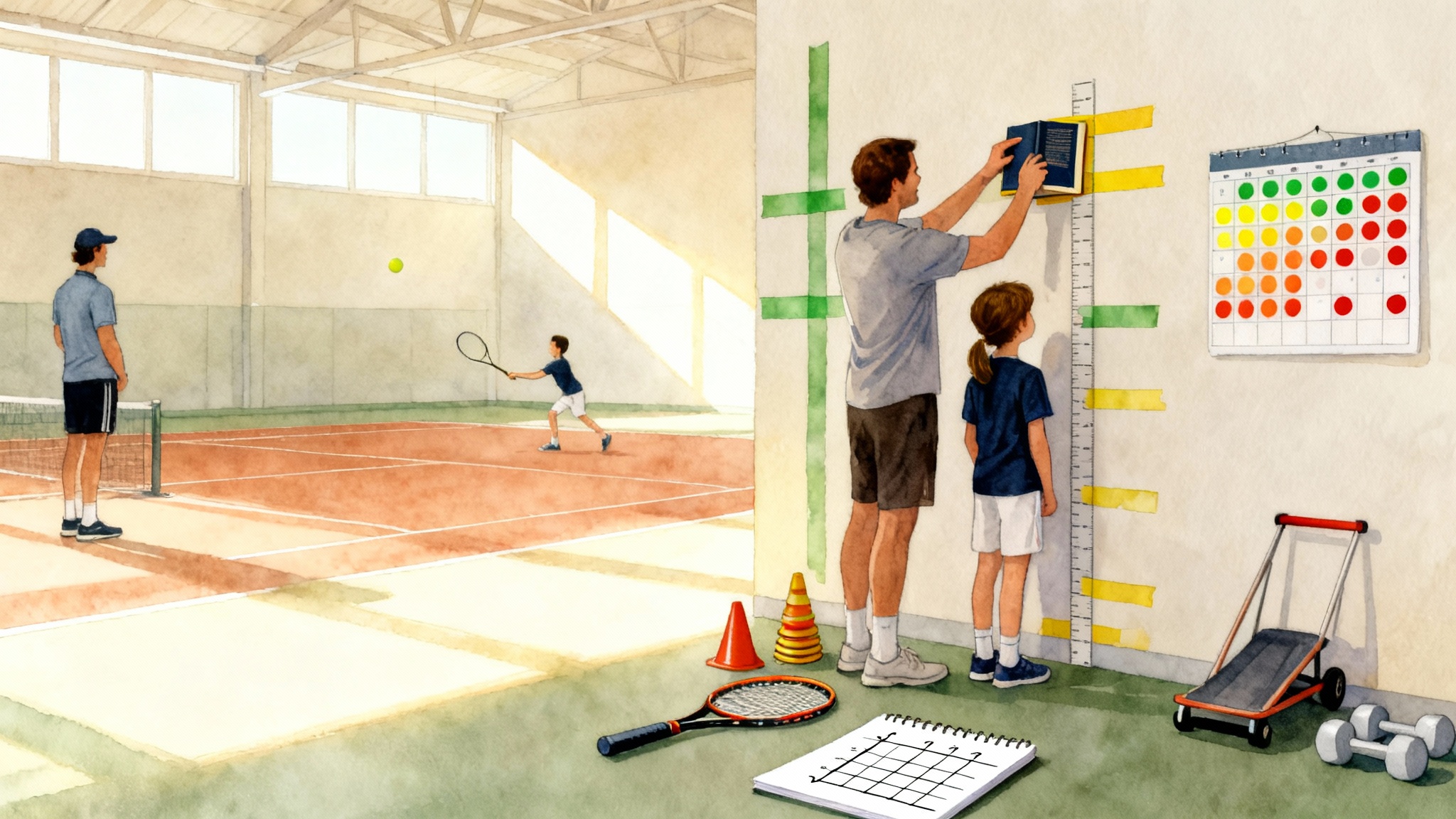
- Growth spurts: juniors adding more than 2 centimeters in height in a month should reduce high-intent volume by one third for two weeks. Parents can review the parents' PHV growth-spurt guide
- The 10 percent rule: do not increase weekly serve or throw volume by more than 10 percent from the prior week
Weekly volume targets by age
These are total weekly ceilings including practice and matches. High intent means 85 to 95 percent effort measured by feel or radar.
Under 12
- Serves: 60 to 80 total, with 10 to 20 high intent
- Medicine ball throws: 40 to 60 total
- Elastic sets: 8 to 10 sets total
Under 16
- Serves: 90 to 120 total, with 20 to 30 high intent
- Medicine ball throws: 60 to 80 total
- Elastic sets: 12 to 14 sets total
Adults
- Serves: 100 to 140 total, with 25 to 35 high intent
- Medicine ball throws: 70 to 90 total
- Elastic sets: 12 to 16 sets total
If you play two matches in a week, drop the elastic and medicine ball totals by 20 percent.
The six-week level-based plan
Each week has three strength or throw sessions and two court sessions. Rest at least one full day per week.
Level 1: Build shoulder health and patterning (Weeks 1 and 2)
Session A: Scapular stability and mobility
- Foam roll upper back: 60 seconds
- Breathing drill, supine 90-90 with reach: 3 sets of 5 slow breaths
- Serratus wall slide with lift off: 3 sets of 6
- Scapular push up plus: 3 sets of 8
- Band external rotation at 30 degrees abduction: 3 sets of 10 per arm
- Half kneeling anti-rotation press with band: 3 sets of 8 per side
Session B: Medicine ball rhythm and deceleration
- Chest pass to wall, tall kneel: 3 sets of 6
- Side toss, step behind pattern, light ball: 3 sets of 6 per side
- Overhead rainbow throw to partner, light arc, stick the landing: 3 sets of 5
- Reverse lunge to overhead reach with band: 3 sets of 6 per side
Session C: Elastic and isometric holds
- Isometric external rotation at 90 degrees elbow bend, band hold 20 seconds: 3 holds per side
- Band face pull to external rotation: 3 sets of 8
- Trap raise with light dumbbells or plates: 3 sets of 10
- Copenhagen plank short lever: 2 sets of 20 seconds per side
Court sessions, Weeks 1 and 2
- Warm up: shadow serves 10, mini court serves 10, baseline to service line 10
- Intent drill 1: Tall-knee serve toss and snap, 2 sets of 6 focusing on clean contact
- Intent drill 2: Box-in-box accuracy, 3 sets of 5 to deuce and ad targets
- Top-up serves: 10 at 70 percent effort, smooth rhythm. No radar yet in Week 1. Introduce radar in Week 2 for three test serves only
Progress marker by end of Week 2
- You can complete all sets with no pain and maintain posture on video from the side
- Radar, if available, shows a small gain of 1 to 2 miles per hour at the same effort or a steadier cluster of speeds
Level 2: Absorb and redirect force, then add intent (Weeks 3 and 4)
Session A: Deceleration and mid-back strength
- Split stance row with band, soft landing on front leg: 3 sets of 8 per side
- Eccentric external rotation with light dumbbell, 3 seconds down: 3 sets of 8 per side
- Prone Y followed by T, 2-second holds: 3 sets of 8 each
- Tall kneel pallof press with overhead reach: 3 sets of 8
For additional change-of-direction work that protects knees and hips, see our tennis deceleration plan.
Session B: Medicine ball power
- Step-behind rotational throw, medium ball: 4 sets of 5 per side
- Overhead scoop to wall with quick hip pop: 4 sets of 4
- Reverse overhead throw behind you, stick the landing: 3 sets of 4
Session C: Plyometrics and elastic
- Stick and pop pogo jumps, forward and lateral: 3 sets of 10 total
- Push up with plus, hands on med ball for instability: 3 sets of 6
- Band diagonal pattern D2 flexion, control the return: 3 sets of 6 per side
Court sessions, Weeks 3 and 4
- Warm up sequence repeated
- Intent drill 3: Landing line drill. Draw a chalk line for the front foot. Land on the line, hold balance for one count. 3 sets of 5
- Intent drill 4: Two ball check. Hold a second ball in the toss hand to discourage early opening. 3 sets of 5
- Radar script, Week 3 only: see Baseline Radar Session below. Cap high-intent reps at age-specific numbers
- Radar script, Week 4: Ramp Radar Session. If speed drops 5 percent across three serves, stop the high-intent block
Progress marker by end of Week 4
- You can perform rotational throws with clean footwork and quiet neck and shoulders
- Serve speeds cluster tighter with fewer outliers, or you can sustain peak speed for more attempts without pain
Level 3: Express power without losing control (Weeks 5 and 6)
Session A: Contrast power
- Medicine ball overhead throw, stick, then 2 shadow serves at high rhythm: 4 rounds
- Step-behind side toss, then elastic D2 flexion fast but smooth: 4 rounds
Session B: Plyometric overhead
- Kneeling chest pass to rebounder or wall, quick return catch: 3 sets of 6
- Overhead slam to soft floor or sandbag, full hip extension: 3 sets of 5
- Single leg RDL reach with band row, balance for 2 seconds: 3 sets of 6 per side
Session C: Arm care circuit
- Band external rotation 90-90: 3 sets of 12
- Band internal rotation 90-90: 3 sets of 12
- Face pull, slow return: 3 sets of 10
- Side plank with reach through: 2 sets of 20 seconds per side
Court sessions, Weeks 5 and 6
- Warm up sequence
- High-intent clusters with radar using Peaking Radar Session below
- Finish with 10 accuracy-first serves per side to reinforce control while a bit fatigued
Progress marker by end of Week 6
- Peak speed up 2 to 6 miles per hour compared to Week 1 baseline for many players, or noticeably higher average speed at the same perceived effort
- No pain, no next-day limitation of range
Radar-gun session scripts you can trust
Use rate of perceived exertion, abbreviated RPE, to estimate effort. Ten is absolute max, eight to nine is high intent, six to seven is controlled hard, four to five is smooth medium.
Baseline Radar Session, Week 2 or 3
- Warm up: 5 shadow, 10 mini, 10 full at RPE 5
- Set 1: 5 serves at RPE 7, 20 seconds between
- Set 2: 5 serves at RPE 8, 30 to 40 seconds between
- Set 3: 3 serves at RPE 9, 60 seconds between
- Stop if three serves in a row drop more than 5 percent. Log best and average
Ramp Radar Session, Weeks 4 and 5
- Warm up as above
- Potentiation: 2 rounds of step-behind side toss to wall, 4 throws each. Rest 60 seconds
- Set 1: 5 serves at RPE 7
- Set 2: 4 serves at RPE 8
- Set 3: 2 to 3 serves at RPE 9 to 10 if pain free
- Finish with 6 accuracy-first serves at RPE 6
Peaking Radar Session, Week 6
- Warm up as above
- Potentiation: 2 overhead med ball throws, stick the landing, then 2 shadow serves. Repeat 3 rounds
- Peak cluster: 6 to 8 single serves at RPE 9, 60 to 90 seconds between, stop if 5 percent drop holds for three attempts
- Cool down: 6 serves at RPE 5, long smooth finish
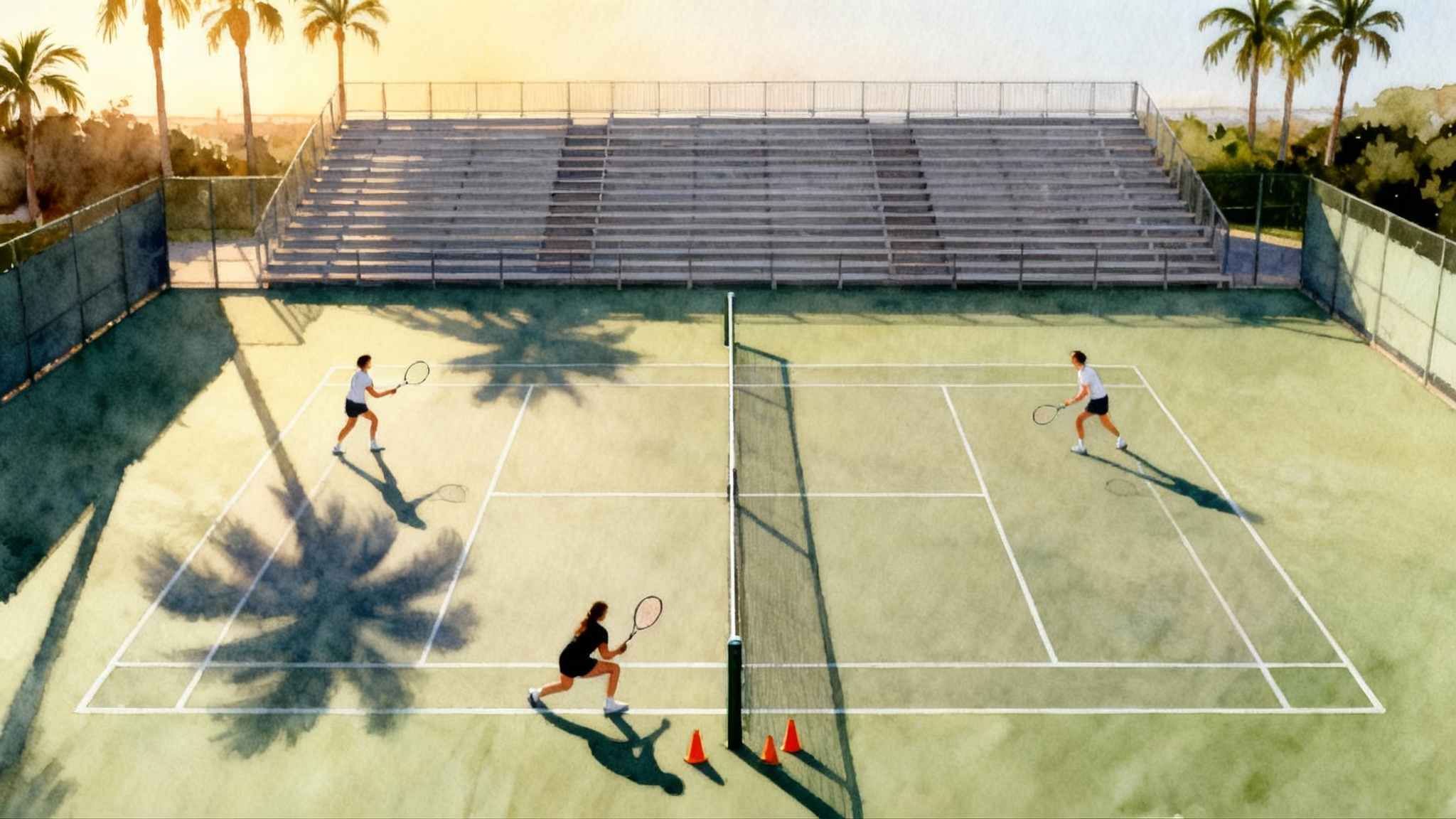
On-court intent drills that teach speed without forcing it
- Snap and stack: Start tall, ribs stacked over hips. Toss, lift, and feel the racquet snap without jumping. 3 sets of 6. Cue: smooth up, quick through
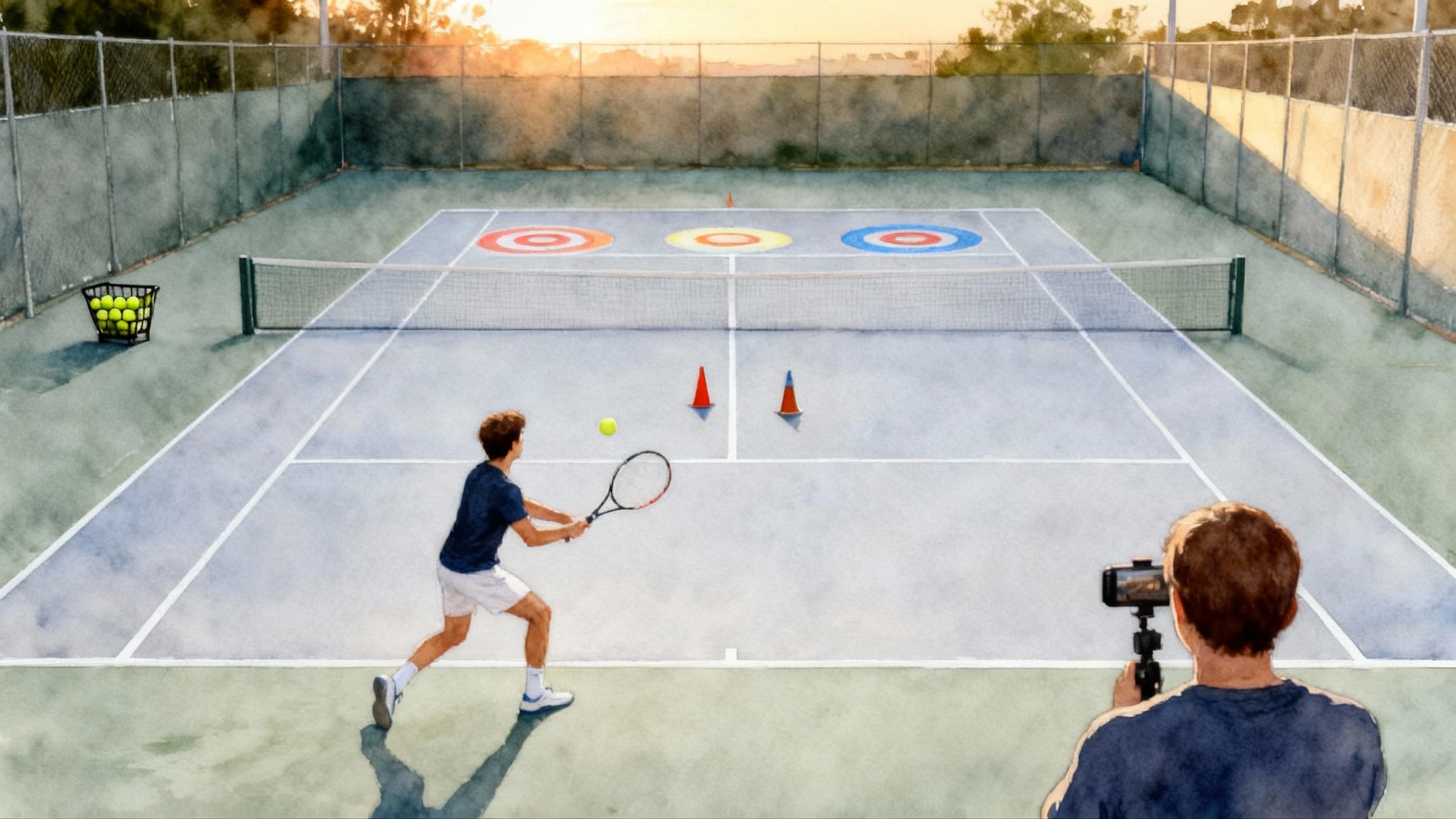
- Box in box: Tape a small square inside the service box. Hit to the small square from deuce and ad. 3 sets of 5 each. Cue: swing fast to a small target
- Landing line: Chalk a line and land on it, hold for a one count. Teaches force absorption. 3 sets of 5
- Rhythm ladder: Place three cones behind the baseline. Rock back, step into the toss, and serve. 2 rounds of 6
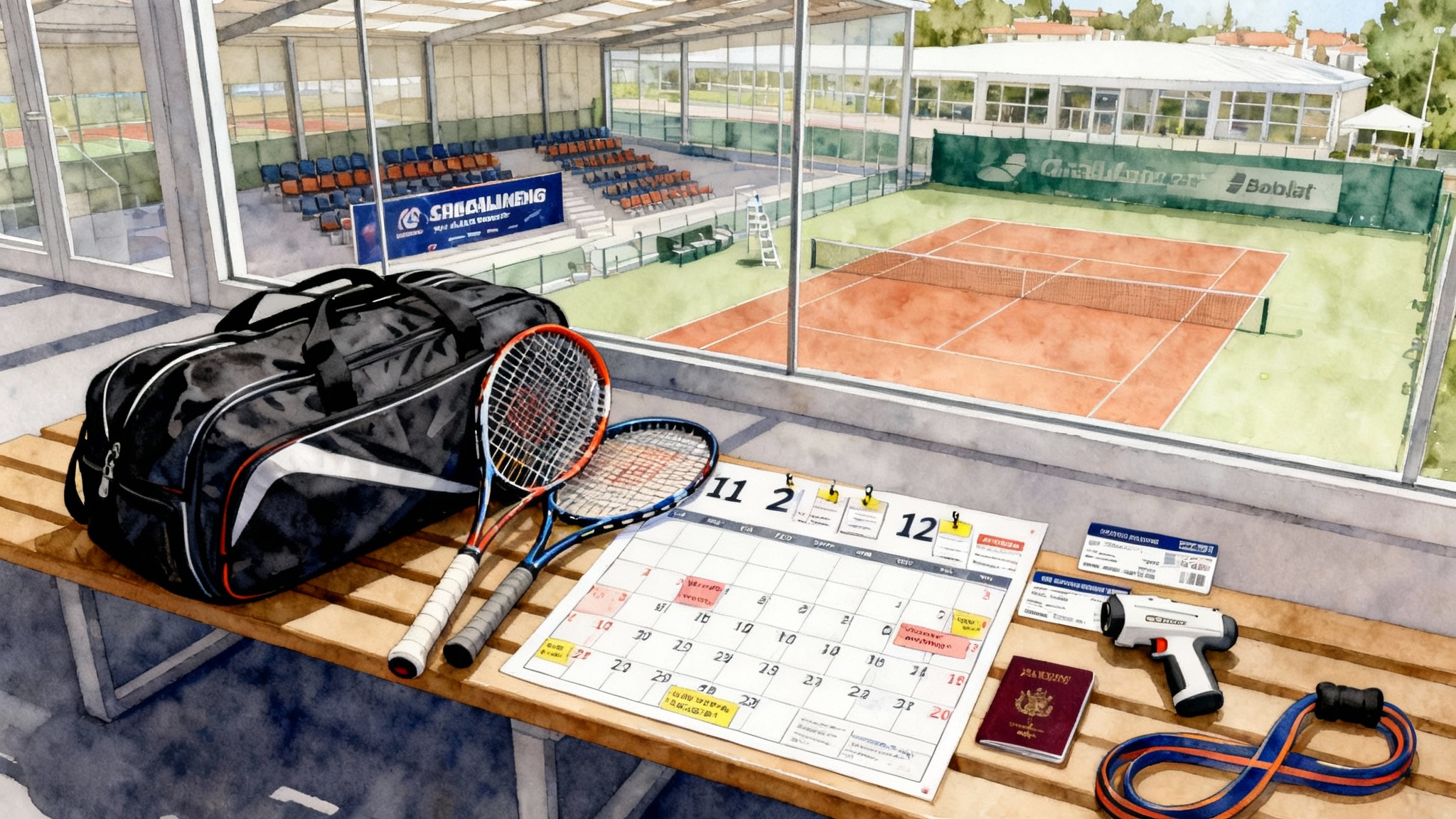
How Legend Tennis Academy runs this in a covered-court setup
Legend Tennis Academy runs a winter block in a three-lane covered court. Here is their flow that you can copy.
Layout
- Lane 1, Elastic and arm care: cones and bands at the back fence, mirrors or a coach for posture checks
- Lane 2, Medicine ball station: rebounder or concrete wall with a taped target
- Lane 3, Radar lane: a tripod-mounted radar behind the baseline, safe distance and clear communication. A coach manages the queue and logs results
Forty five minute block, twelve players, two coaches
- Minutes 0 to 8: group warm up, mobility and shadow serves
- Minutes 8 to 18: Lane 1 elastic circuit in pairs. Players rotate every 2 minutes
- Minutes 18 to 32: Lane 2 medicine ball throws with coaching on landings
- Minutes 32 to 45: Lane 3 radar clusters. Each player does one Baseline or Ramp script scaled to age volumes
Safety and quality
- One player serves at a time in the radar lane
- Only soft throws toward a wall in the medicine ball lane. No chasing stray balls across lanes
- Coaches use clear hand signals for start and stop
Integration across six weeks
- Weeks 1 to 2: more time in Lane 1, shorter radar sets
- Weeks 3 to 4: even time split, add rotational throws
- Weeks 5 to 6: slightly longer radar clusters, then finish with accuracy serves at RPE 6
How to scale loads for U12, U16, and adults
Medicine ball weights and tempos
- Under 12: 1 to 2 kilograms, focus on stick and control. Count a two second hold on landings
- Under 16: 2 to 3 kilograms, smooth to fast intent. One second hold on landings
- Adults: 3 to 4 kilograms, fast intent if the landing is stable. One second hold
Elastic bands
- Under 12: light resistance, pristine positions, 12 to 15 controlled reps
- Under 16: light to medium resistance, 10 to 12 reps
- Adults: medium resistance, 8 to 12 reps based on control
Serve clusters per session
- Under 12: 10 to 12 warm ups, 8 to 12 medium, 6 to 10 high intent
- Under 16: 12 to 15 warm ups, 12 to 15 medium, 8 to 12 high intent
- Adults: 15 to 20 warm ups, 12 to 18 medium, 10 to 15 high intent
A simple log that makes progress visible
Track three things after each serve session
- Peak speed and average speed if you use a radar. If not, mark RPE and whether contact felt clean
- Accuracy to small targets, count of hits out of attempts
- Soreness the next morning from 0 to 10 and any pain location
Patterns you want to see
- Peak speed edges up by Week 3 and again by Week 6
- Average speed climbs without adding more high-intent reps
- Accuracy to the small box improves or holds steady while speed rises
Common adjustments
- Left-handed players: mirror the rotational throw directions. The red-flag rules and volumes are the same
- Doubles focus: mix in 30 percent more second-serve practice at RPE 6 to 7, but keep high-intent totals capped
- Clay schedule: slightly higher total serves may happen due to longer points. Reduce medicine ball totals by 10 to 15 percent in match-heavy weeks
- In-season match load: if you play more than three competitive sets in a week, drop the radar session and replace it with an easy arm care circuit
Troubleshooting speed plateaus
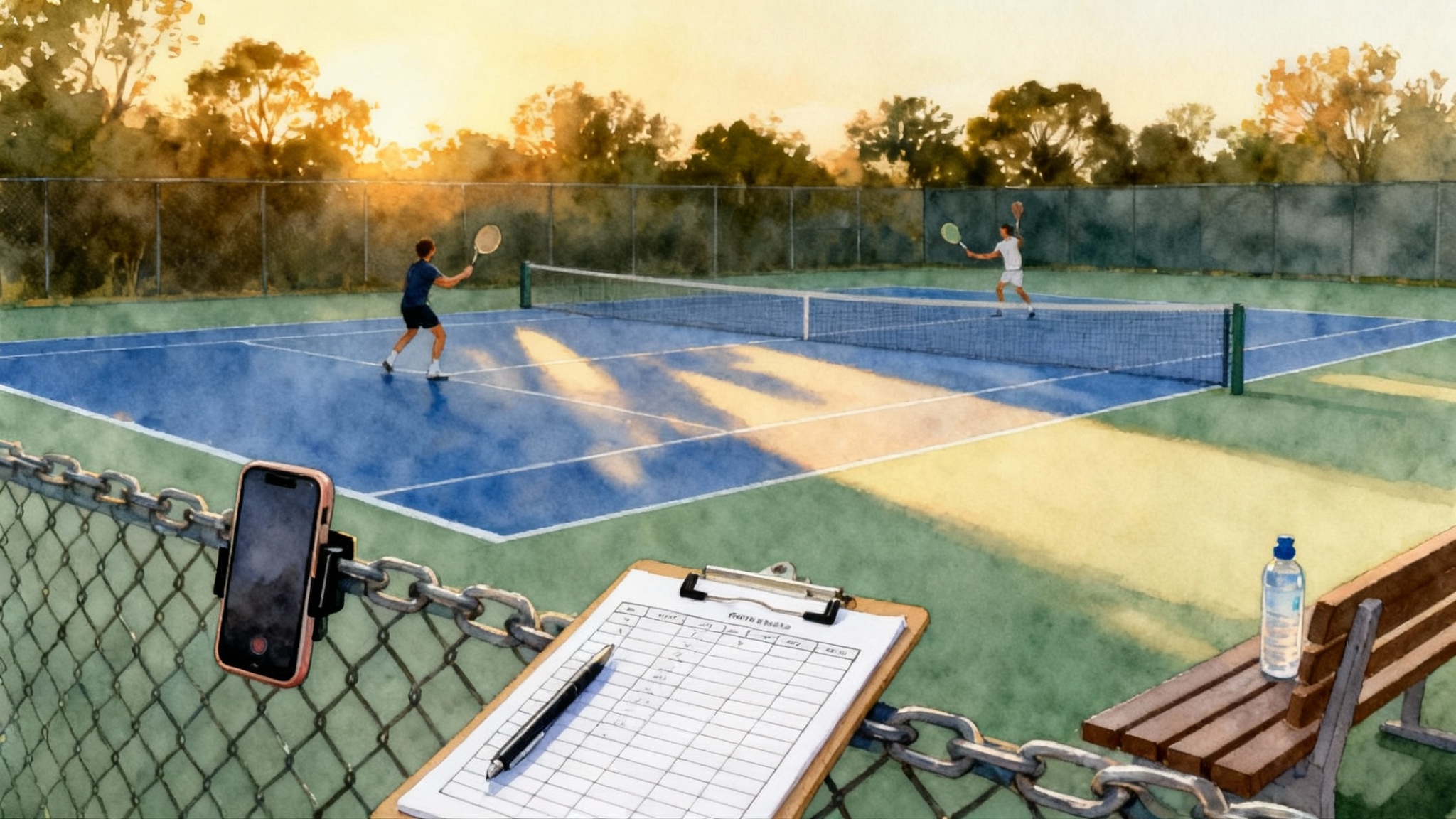
- If speed does not move by Week 4, film from the side. Look for early shoulder shrugging and a late toss. Fix the setup and the rhythm ladder before adding more intent
- If speed rises but accuracy crashes, keep the power work but shift court work to smaller targets. This sharpens aim under higher swing speeds without overthinking technique
- If elbows complain, pull back on internal rotation work and any extreme pronation drills. Add more external rotation isometrics and deceleration rows
The big idea to remember
Speed is not a trick. It is a byproduct of a healthy shoulder blade, a torso that turns, and legs that accept and return force. Build those first, then add intent in small clusters that you can sustain. Follow the red-flag rules, use the volumes that fit your age bracket, and let the radar tell you when enough is enough. Six weeks is long enough to feel and measure change, and short enough to repeat after a recovery week. If you stack two six-week blocks across a season, you will have a faster serve that you can trust when the match matters most.