Indoor-to-Outdoor Tennis 2026: 3-Week Plan for Families
Make the jump from winter courts to spring play with a clear three-week plan. Training loads, wind and sun footwork, shoulder and forearm prehab, clay and hard-court tweaks, string tension tips, shoes, and a first-tournament checklist.
 Tommy
Tommy
Why the indoor to outdoor switch matters in 2026
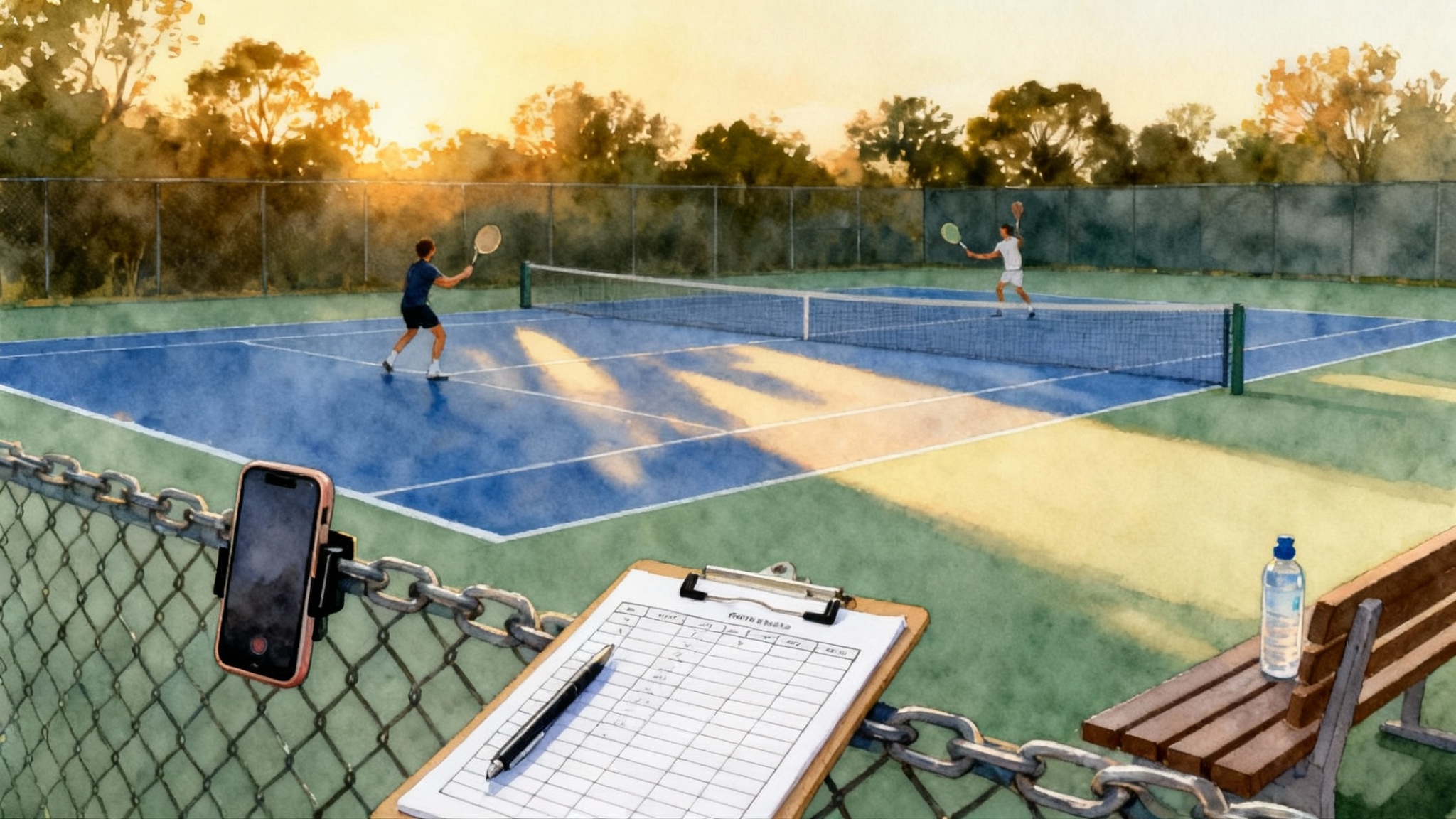
If you live in a region that spends winter under a roof, the first outdoor sessions of March and April can feel like a new sport. The ball behaves differently in wind, the sun changes your timing, and even your legs and forearms work harder on colder mornings or gritty clay. The goal of this guide is to make that transition smooth. You will find a three-week ramp-up plan that fits juniors, parents, and adult competitors, with specific loads, drills, equipment tweaks, and a tournament-ready checklist. Families at Legend Tennis Academy in Spicewood can plug directly into a structured version of this plan, but you can run it on your own as well.
Rather than guessing, you will progress volume and intensity deliberately, match your footwork to real outdoor variables, and protect the shoulder and forearm that usually complain first. Think of it as going from treadmill to trail. The surface, weather, and visuals change, so your plan must change too.
The three-week ramp-up at a glance
- Week 1: Reintroduce outdoor variables at 60 percent of your typical peak load. Prioritize movement quality, ball trajectory control, and arm health.
- Week 2: Build to 80 percent load. Add controlled match play and more live serve returns in wind and sun.
- Week 3: Reach 90 to 100 percent of target load with tournament simulations, then taper into your first event or match night.
If you have had a long layoff or are returning from an injury, stretch this to four weeks by repeating Week 2 before moving on.
Weekly load targets and sample schedules
Load is the total time and intensity of your tennis plus strength and movement training. For simple planning, use two cues: hours and the rating of perceived exertion from 1 to 10. Keep hard days hard and easy days easy.
- Week 1 target: 6 to 8 hours for competitive adults and top juniors, 4 to 6 hours for recreational adults. Keep most sessions at a 6 out of 10 and limit one session to an 8 out of 10.
- Week 2 target: 8 to 10 hours for competitive adults and top juniors, 5 to 7 hours for recreational adults. One or two sessions at an 8 out of 10.
- Week 3 target: 9 to 11 hours for competitive adults and top juniors, 6 to 8 hours for recreational adults. A single 9 out of 10 simulation day, then taper.
Sample Week 1 schedule
- Monday: On-court 75 minutes. Focus on depth control and spacing in a light crosswind. Strength and mobility 20 minutes.
- Tuesday: Off-court shoulder and forearm prehab 25 minutes. Light jog or bike 20 minutes.
- Wednesday: On-court 90 minutes. Footwork circuits and serve rhythm. Finish with 10 minutes of return practice into the wind.
- Thursday: Rest, plus an easy walk.
- Friday: On-court 60 minutes. Pattern play at 70 percent intensity. Strength 20 minutes.
- Saturday: Optional doubles or family rally 60 minutes at conversational intensity.
- Sunday: Mobility 20 minutes and short serve practice 15 minutes.
Sample Week 2 schedule
- Monday: On-court 90 minutes. Add first directional live points to 11. Strength 20 minutes.
- Tuesday: Prehab 25 minutes. Shadow movement for clay or hard 15 minutes.
- Wednesday: On-court 100 minutes. Serve plus one pattern under the sun. Add returns against second serves in a crosswind.
- Thursday: Light hit 45 minutes, then stop. Do not chase volume.
- Friday: Match play set or tiebreaks 60 to 75 minutes at 80 percent effort.
- Saturday: Recovery mobility 25 minutes and easy bike 20 minutes.
- Sunday: On-court 60 minutes. Transition volleys and overheads outdoors.
Sample Week 3 schedule
- Monday: On-court 90 minutes with first-ball speed at match intensity. Strength 20 minutes.
- Tuesday: Prehab 25 minutes and short serve session 15 minutes.
- Wednesday: Tournament simulation 90 to 120 minutes. Full warm-up, play a best-of-three short set format, and manage changeovers.
- Thursday: Rest or very light hit 30 minutes.
- Friday: On-court 60 minutes. Sharpening only. No grinders.
- Saturday or Sunday: First event or league match, or a second simulation if your first event is one week later.
Wind and sun smart footwork and spacing
Indoors you often plant early and drive through the ball. Outside, the air moves your target. Establish three habits that reduce mishits and rushed swings.
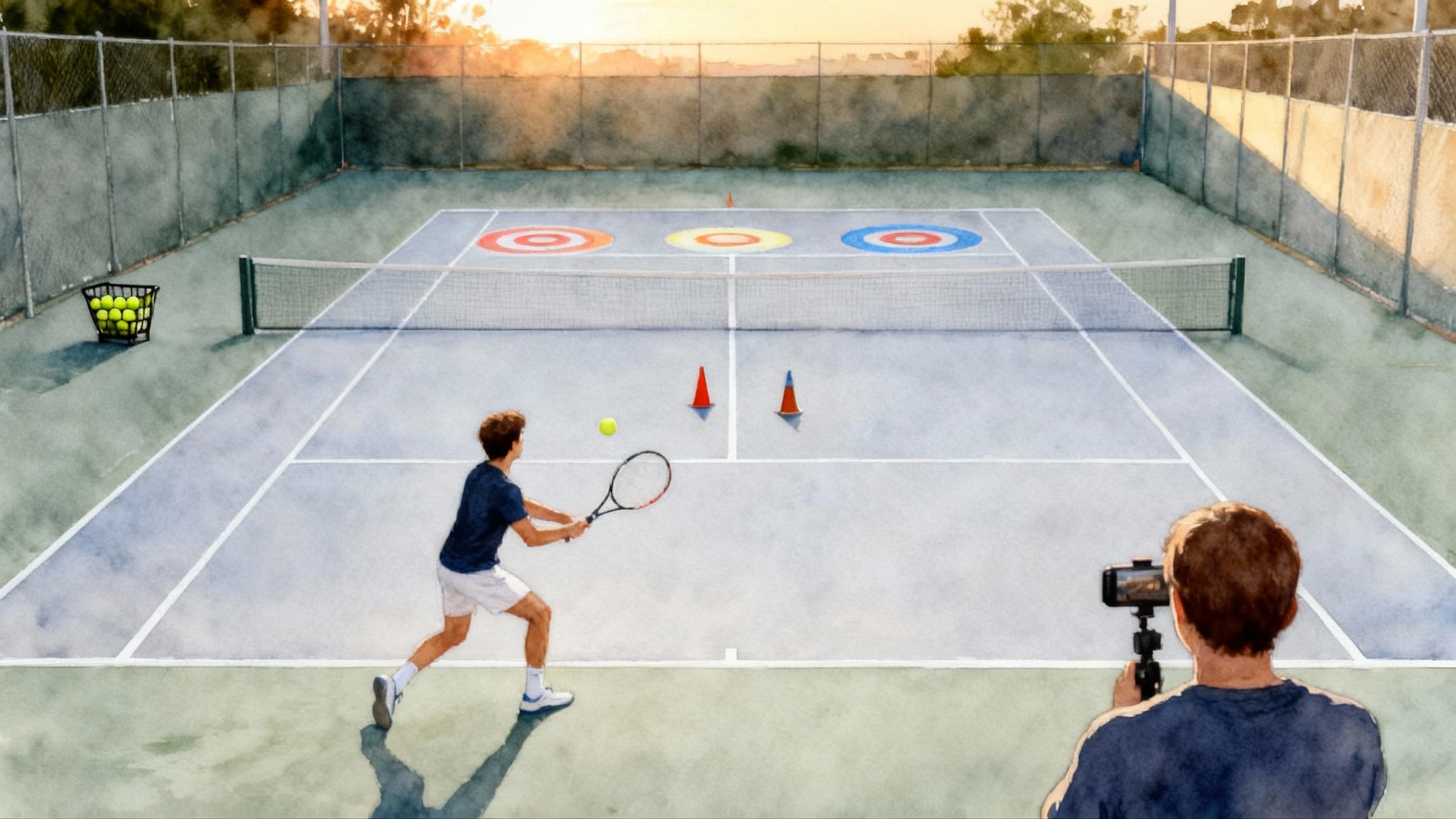
- Crosswind lane drill
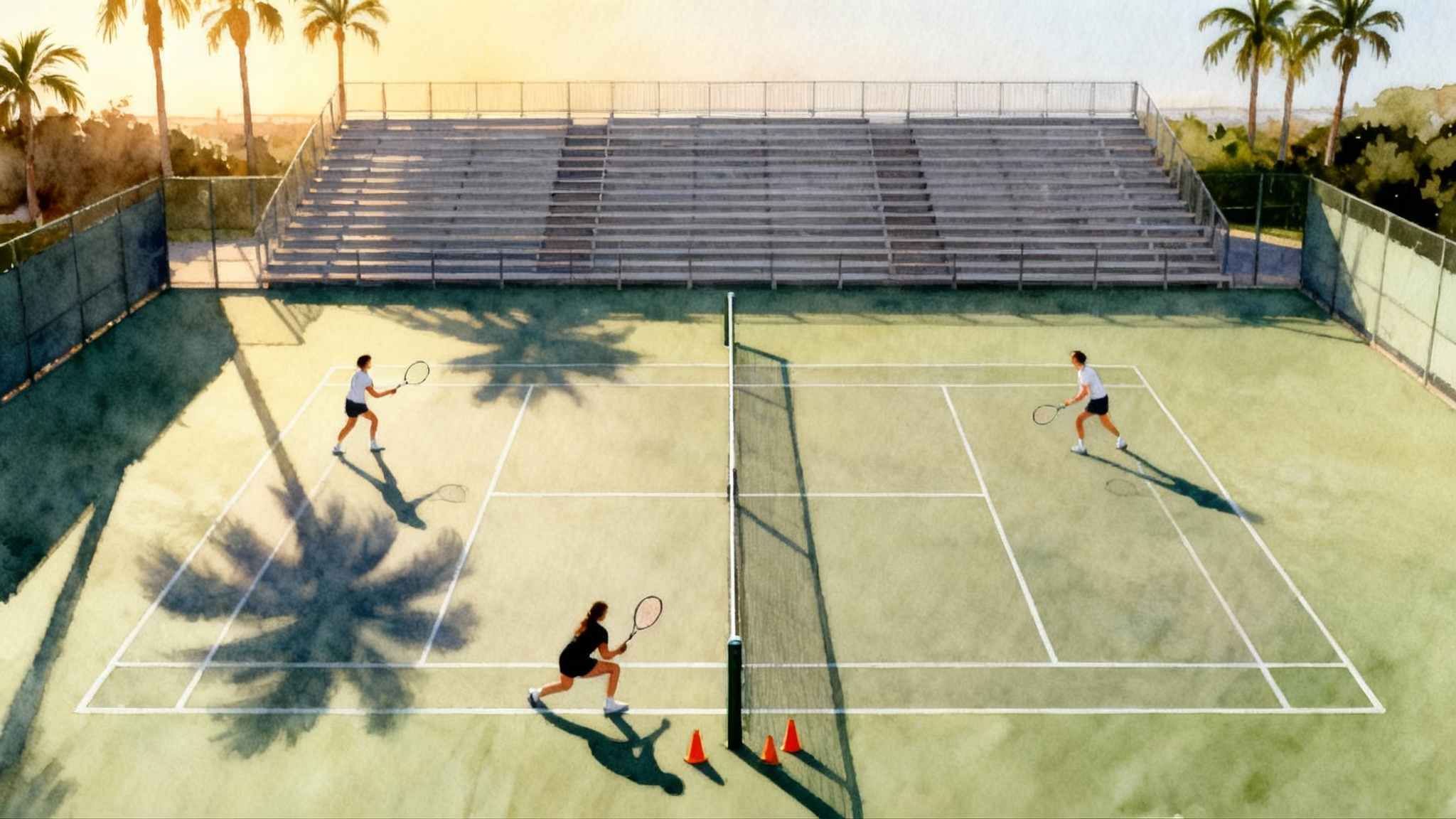
- Set two cones three feet inside each sideline. Rally crosscourt only and keep the ball inside the cones. For a right-hander with wind blowing left to right, aim higher over the net and start recovery one small shuffle earlier to avoid getting pushed wide. Hit ten-ball runs, switch sides, rest a minute, repeat three times.
- Into-the-wind height and legs
- When rallying into the wind, use your legs to lift. Set a string or tape across the net two inches above the cord. Rally ten balls that clear the tape while landing deep. This builds a higher, heavier ball that the wind cannot knock down.
- Sun read and shield
- Practice the sky-check. Before every overhead or high forehand, glance up quickly when the ball leaves the opponent’s strings. If the sun is directly in your line, use your non-dominant hand to shield momentarily while you move. Hit five sets of four overheads at different toss heights. If vision is still rough, choose a safer drop-step and let one ball bounce instead of forcing a risky swing.
Bonus spacing cue: Wind pushes the ball’s apex. Track the top of the arc, not the bounce spot. If the top shifts toward you, take a micro step back at contact to keep spacing. For timing support, review our guide on split-step timing footwork.
Clay and hard-court movement tweaks
Clay
- Approach every change of direction with posture low and chest quiet. Think of drawing a small J with your outside foot to allow a controlled slide into the stop, then push back with the inside edge of the shoe. If you have never slid, earn it by first stopping without a slide and feeling stable. Add a short slide only when the stop is solid.
- On high-bouncing clay, prepare earlier and use a higher takeback. Put three targets deep crosscourt and play five-ball patterns that finish with a heavy ball through target three.
- Volleys will sit up more. Close a little tighter and keep the wrist firmer. Recover diagonally, not straight back.
Hard court
- Brake and go. Use a clear outside-inside foot sequence to stop without a slide. Keep your center of mass over a bent outside knee for control and joint safety.
- Lower net clearance on drives. Hit a flatter, chest-high rally ball with precise height to avoid sailing long in a tailwind.
- Protect joints with good shoes and a firm cap on total court hours. Hard is less forgiving, so use full rest days.
If you want the science on why surfaces feel different, court pace and friction figures are part of international surface classification systems that coaches use when planning training blocks. The key idea is simple: more friction equals more time to set up and more demand on deceleration. Less friction equals quicker timing and more precise spacing.
Shoulder and forearm prehab that fits your week
You do not need an hour. Fifteen to twenty five focused minutes three times a week during the transition is enough for most players. Use this sequence before on-court sessions or as a stand-alone on off days.
- Warm-up and activation
- Two minutes of jump rope or quick line hops
- Arm circles and thoracic rotations 60 seconds each
- Scapular push-ups 2 sets of 8
- Cuff and scapular control
- External rotation with a light band, elbows at sides: 2 sets of 12
- Y, T, W raises prone or with bands: 1 set of 8 each pattern
- Serratus wall slides with a band around forearms: 2 sets of 8
- Forearm specifics
- Eccentric wrist extension: hold a light dumbbell or a water bottle. Lift with the non-hitting hand, lower with the hitting hand for a 3-second count. 2 sets of 12
- Eccentric wrist flexion: same approach, palm up. 2 sets of 12
- Pronation and supination with a hammer or weighted racquet handle: 2 sets of 10 each
- Towel grips or rice bucket squeezes: 2 sets of 30 seconds
- Serve ramp-up
- Shadow 15 smooth service motions. Focus on a loose hand and tall reach, not speed.
- Hit 15 second serves, then 15 first serves. If control fades, stop. Add 10 to 20 more in Week 2 and Week 3 as your arm adapts.
If your elbow or shoulder gets tender, cut total volume by 20 percent for three days and replace flat drives with higher, heavier rally balls. Many juniors and adults also benefit from a softer string in the crosses or a slightly lower string tension, which we will detail below. For added arm-care ideas, see our companion plan on safe serve speed development.
Strings, tension, and shoe traction for outdoor play
Strings and tension
- Baseline adjustment: change tension by 2 to 3 pounds when moving outdoors, then judge control. If balls sail long in warm, still air, go up 1 to 2 pounds. If you are short in a headwind or on slow clay, go down 1 to 2 pounds.
- String type: if you play a full polyester string and feel any arm discomfort, try a hybrid with a softer multifilament or natural gut in the crosses. Juniors who are still growing often prefer hybrids or full multifilament for comfort and depth.
- Gauge: a thinner gauge gives more bite and feel but will break sooner. During a busy spring, it is often wiser to keep your usual gauge and just tweak tension.
- Freshness: strings lose tension quickly. If it has been more than six weeks or you play more than three times per week, restring before the outdoor block so that your baseline is reliable.
Shoes and traction
- Clay shoes feature a full herringbone pattern that grips and releases consistently. Hard court shoes have more varied tread and extra cushioning under the heel and forefoot.
- If you only own one pair, pick a durable hard court shoe and bring a nylon brush. After clay sessions, brush the outsole to restore traction.
- Break-in plan: wear your new pair for two low-intensity hits before any tournament day. Lace snugly around the midfoot so your foot does not slide when you stop.
- Socks and insoles matter. Use a double-layer sock or a blister-resistant model. Replace insoles if they compress flat.
Outdoor drills that transfer to real points
Depth ladders
- Place three towels or throw-down lines deep crosscourt. Rally for five balls, landing in sequence 1-2-3. Repeat on the opposite wing. This forces you to manage height and wind with intention.
Serve target shuffle
- Put four targets in the deuce box and two in the ad box. Hit two-second serves to alternated targets, then step back and shuffle across the baseline to reset. Wind adds noise to the toss. The shuffle resets your lower body so your toss arm can be consistent. For more return patterns to pair with this, read our return of serve playbook.
Return on a dime
- Your partner feeds from the service line with a continental grip to mimic speed and movement, or you use a ball machine at 60 percent pace. You start on the service line and split-step as the feeder starts the motion. Take the ball early, block middle or to the big crosscourt. Add one step of depth after five returns. This teaches compact patterns when gusts steal your timing.
Transition volley tree
- Place three cones between service line and net in a shallow V. Start behind the service line, play a neutral ball, move forward to cone one for a firm neutral volley, then to cone two for a drop or angle, then recover to cone three and finish with an overhead. Outdoors the overhead is the honest truth teller. If you are not seeing it cleanly, catch and drop or let it bounce.
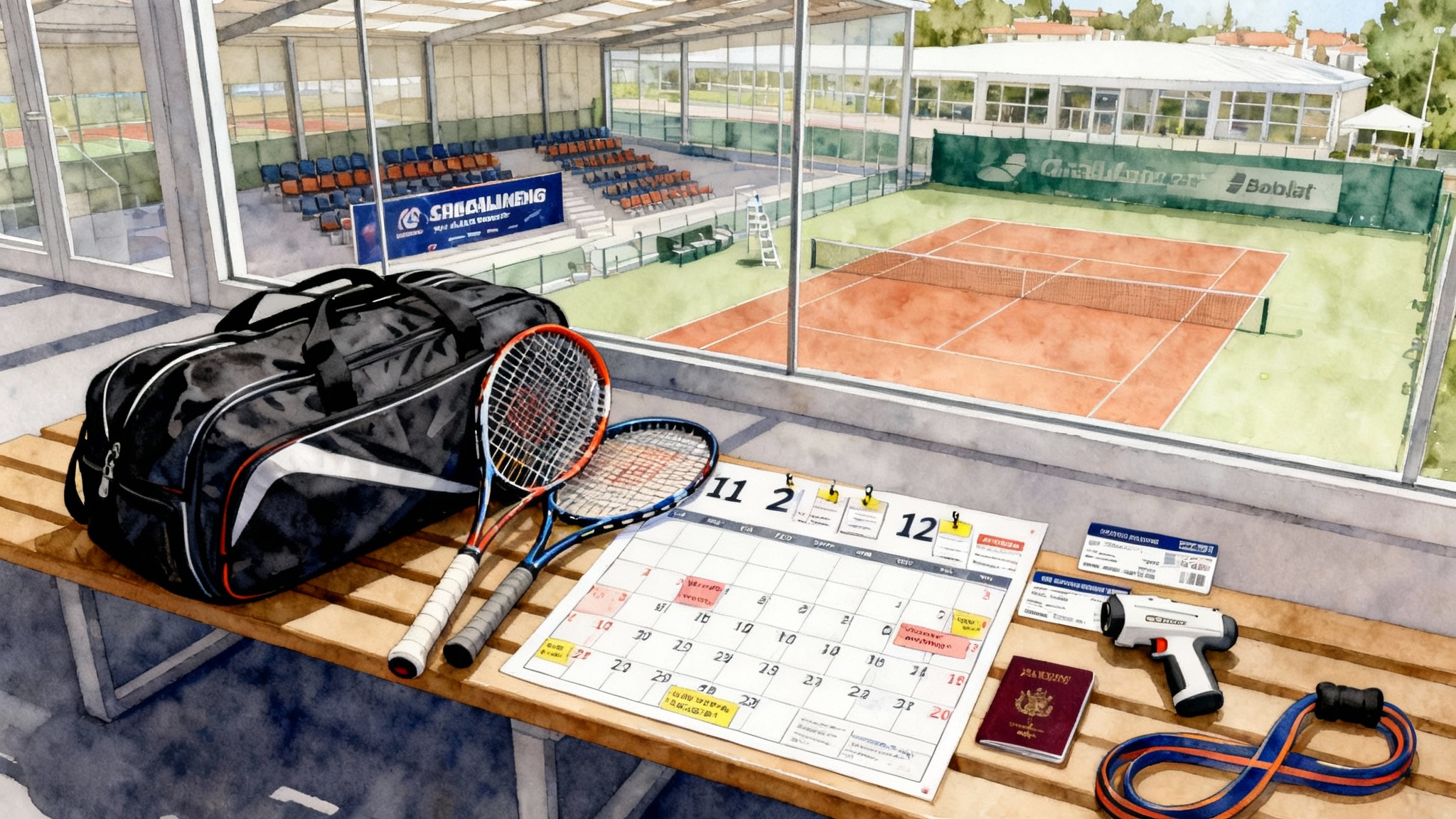
First tournament checklist and simulation day
Run a simulation in Week 3 that mirrors your first outdoor event. Give yourself the same report time, warm-up window, and recovery breaks.
Packing list
- Two strung racquets with tension labels
- Hat or visor and sunglasses
- Sunscreen and lip balm
- Overgrips, vibration dampener if you use one, and a small towel
- Electrolyte mix, two water bottles, and a simple snack such as a banana or bar
- Light jacket and a dry shirt for changeovers in cool weather
- Brush for clay outsoles or a small towel for hard court dust
- Basic first aid: athletic tape and blister pads
Pre-match routine
- Ten minutes of general warm-up: easy jog, skips, and dynamic stretches
- Five minutes of shoulder and forearm activation from the prehab list
- Two minutes of split-step and first-step acceleration
- Two minutes of serve rhythm into open court, not corners
In-match habits outdoors
- On changeovers in wind, adjust targets. Into the wind, think higher net clearance. With the wind, think safer margins to big crosscourt targets.
- If the sun is harsh on one side, choose serves that keep your toss away from the direct glare.
- Take five slow breaths under the towel if nerves and conditions speed up your mind.
Post-match
- Cool down with a short walk and two minutes of arm swings. Light forearm stretching only after play, not before.
- Note what the conditions did to your depth and toss, and change one thing in your next practice rather than three.
How Legend Tennis Academy runs these three weeks
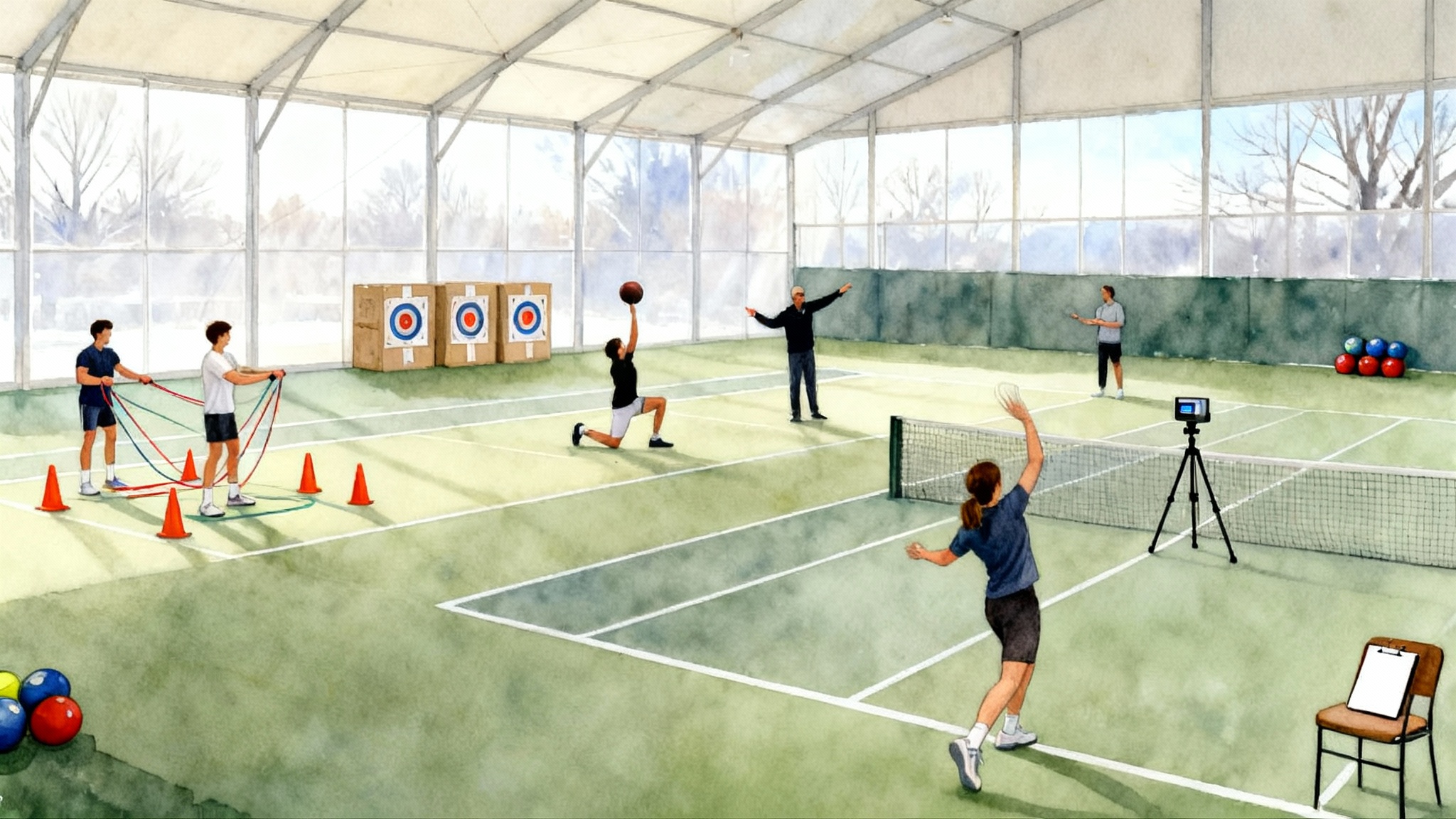
Families ask for clarity and a schedule they can trust. Here is how a typical block at Legend Tennis Academy is structured so juniors, parents, and adult players fit together without chaos.
Week 1: Foundation and feel
- Juniors: two 90-minute on-court sessions focused on movement quality and spacing, plus one 45-minute prehab class that parents can observe.
- Adults: one 90-minute technique and patterns session, one 60-minute cardio and footwork session.
- Family education: a 30-minute equipment and stringing workshop covering tension changes and shoe choices. Enrollment links and schedules are posted on the academy calendar page.
Week 2: Control under pressure
- Juniors: two group sessions with live points in wind lanes, plus one match lab of short sets. Serve count increases and return skills get extra time.
- Adults: one group play session with coaching on changeovers and outdoor patterns, plus an optional doubles clinic.
- Parents: a short seminar on supporting routines and packing checklists. Parents are invited to the last 20 minutes of junior match lab to practice constructive feedback.
Week 3: Simulation and taper
- Juniors: full simulation day with warm-up timing and court assignments, then a taper day of patterns and serves.
- Adults: league night rehearsal with scorecards and time management, then a light hit the day before first match.
- Family touchpoints: a quick check-in on string tension, shoe wear, and prehab adherence. Everyone leaves with a tournament checklist.
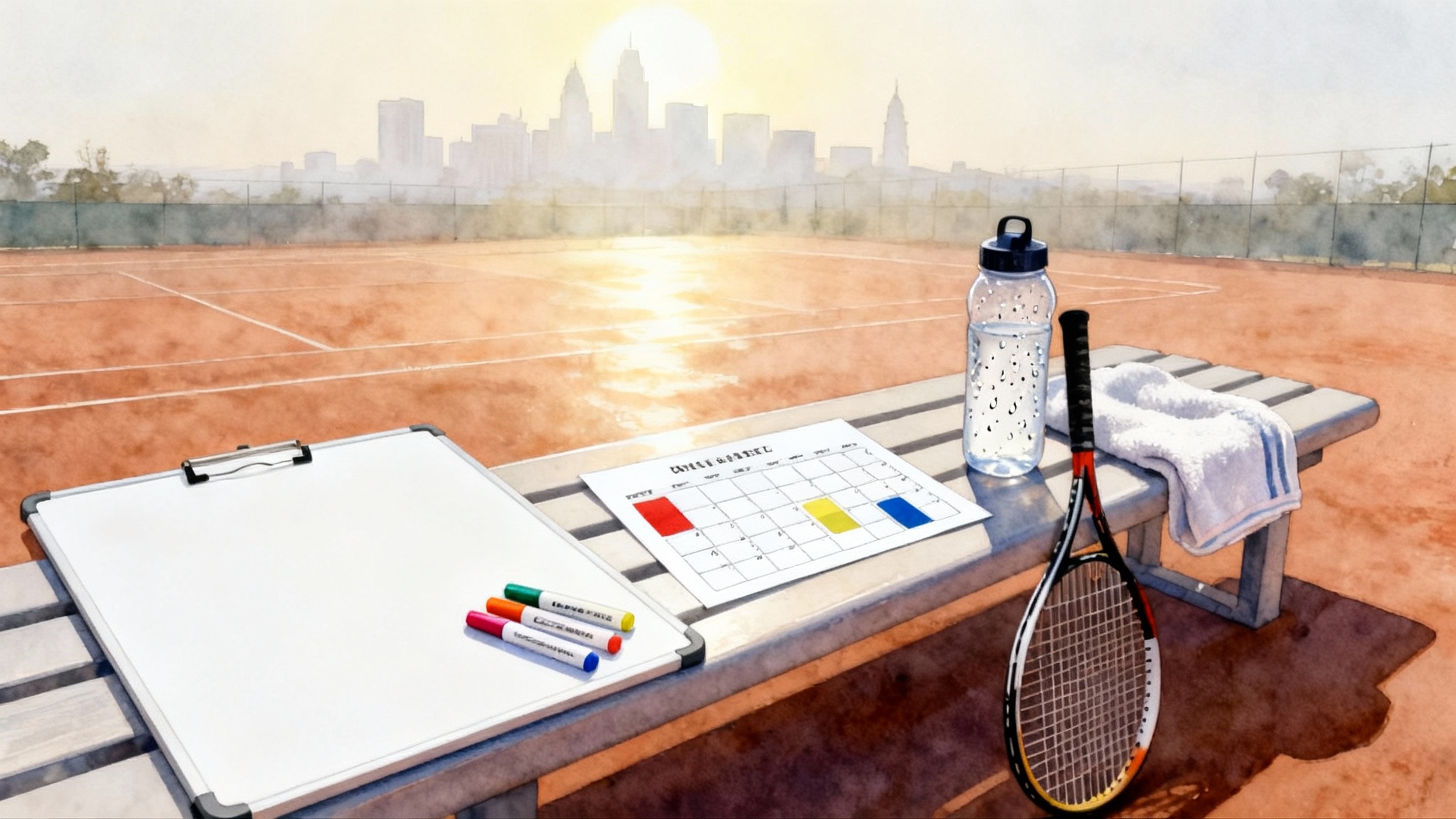
If you want a ready-made calendar for your family, ask your academy for an indoor-to-outdoor ramp-up schedule that mirrors these three weeks.
Frequently asked transition questions
Do I need a different racquet outdoors?
- No. Keep your frame and adjust strings and tension first. Grip comfort matters more than a new frame, so refresh overgrips weekly when the weather turns warm.
How do I choose practice partners?
- Pick one partner who moves well and values long rallies to build depth control, and one partner who serves big and attacks so you can rehearse first-strike points in wind.
What if it rains or the clay is heavy?
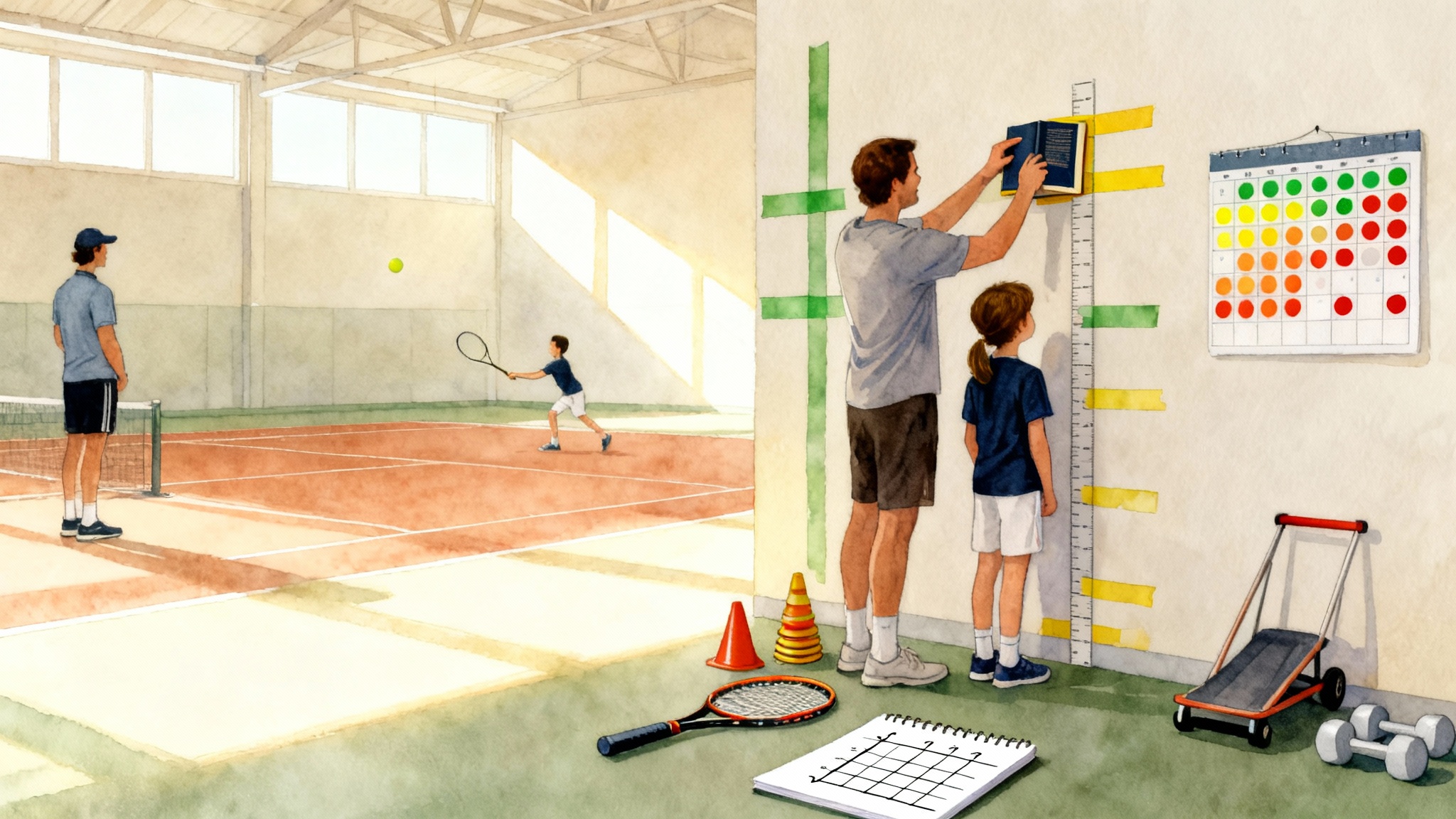
- Do your prehab and a 20-minute shadow movement session indoors. Mark three spots on the floor to mimic your recovery steps and spacing. If clay is damp, open your stance slightly on wide balls and commit to a longer braking phase.
Should juniors use full polyester strings?
- If a junior already uses them without discomfort and is strong enough to swing fast through contact, fine. If there is any hint of elbow or shoulder soreness, use a hybrid or a softer string during the transition months. Comfort and confidence beat a tiny control gain.
How much should I change tension for clay versus hard?
- Start with 2 pounds lower on clay for depth and spin, and 1 pound higher on fast hard courts for control. Adjust within a narrow range so your feel does not swing wildly between days.
Your spring, simplified
Three weeks is enough time to build outdoor habits that last all season. Control the variables that matter most: a steady rise in load, movement patterns that respect wind and sun, arm-friendly prehab, and smart equipment tweaks. The plan you just read is deliberately specific so you do not have to guess. If you want the family version run for you, Legend Tennis Academy schedules this as a plug-in block with defined sessions and simple sign-ups on the academy site. However you do it, give your next outdoor ball a target, give your feet a plan, and give your arm a fair shot to get strong. That is how a confident spring begins.