Growth-Spurt Tennis: Parents' PHV Guide to Strength, Speed, Skill
 Tommy
Tommy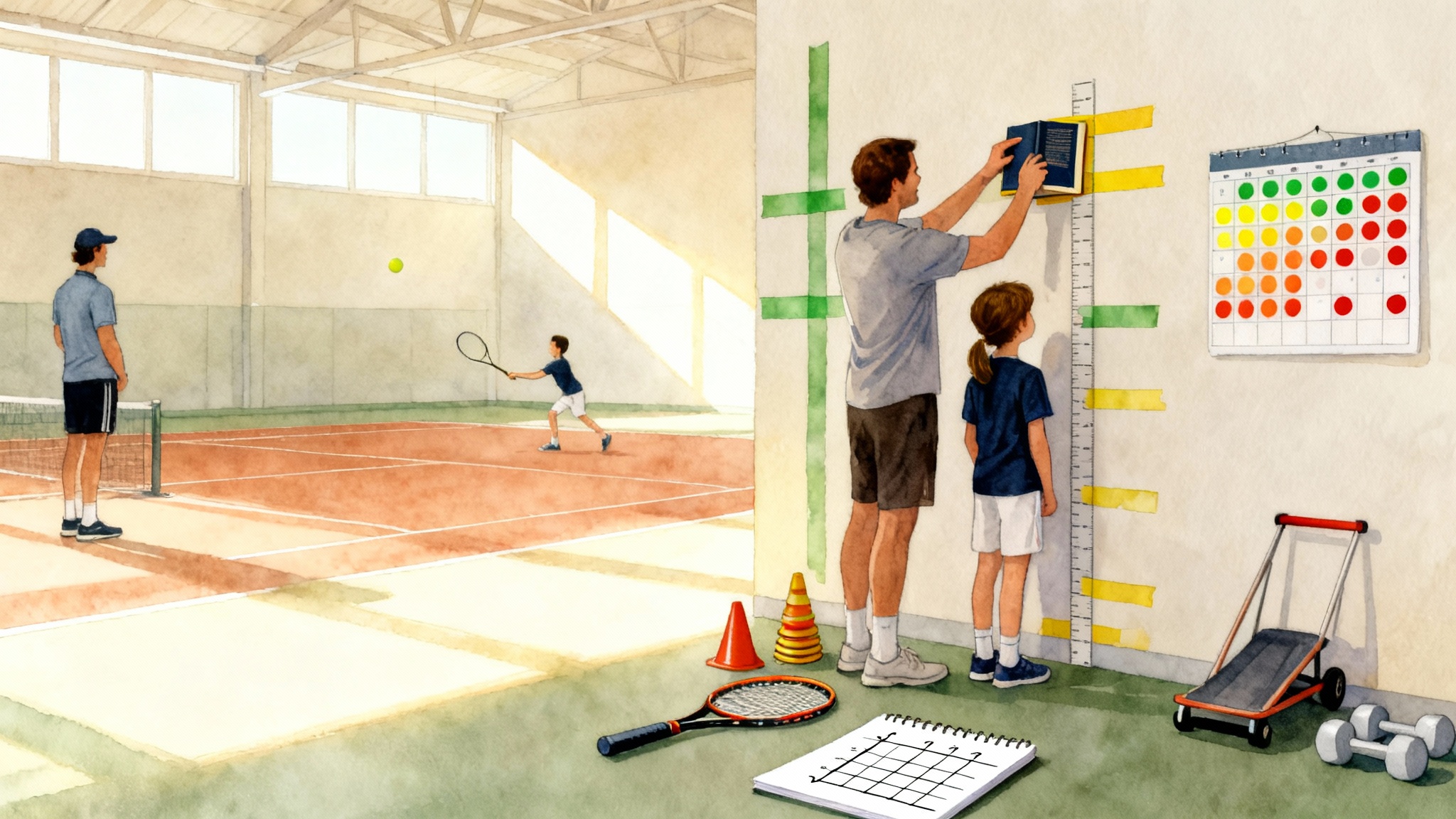
Why growth spurts change the game
If your 10 to 16 year old suddenly looks taller every week, you are meeting the fastest growth phase of adolescence. That rapid climb is not just about buying new shoes. It changes how bones, tendons, and muscles share load. It also changes timing, balance, and how a player produces power on court. Ignore it and you risk knee pain, back soreness, and skill slumps. Plan for it and your junior can keep improving while staying healthy.
The most useful anchor in this period is peak height velocity (PHV). Peak height velocity is the 2 to 6 month window when a child grows at their fastest annualized rate. This window often maps to growth-related aches, coordination hiccups, and higher injury risk. The good news: you can identify the window at home with simple tools and then steer training with clear rules.
This article gives you a science-based, practical blueprint. You will learn how to measure and mark peak height velocity at home, how to adjust serve counts, jumps, sprints, and strength work, which technique tweaks protect knees and backs, what red flags require stopping, and two ready-to-use two-week plans. You will also see how Legend Tennis Academy profile runs PHV-aware programming with measurable skill tracking.
What peak height velocity really means
- PHV is not a single day. It is a stretch of weeks where height increases unusually fast when expressed as centimeters per year.
- Bones lengthen first. Muscles and tendons take time to catch up. That lag can make joints feel tight and tendons irritated. The classic examples in tennis are front-of-knee pain at the tibial tubercle and low back discomfort with serving.
- Motor control can look worse for a while. A player may miss timing on the serve or struggle to brake before a wide ball. That does not mean they got worse at tennis. It means the body changed and the brain needs new calibration.
A simple at-home blueprint to spot peak height velocity
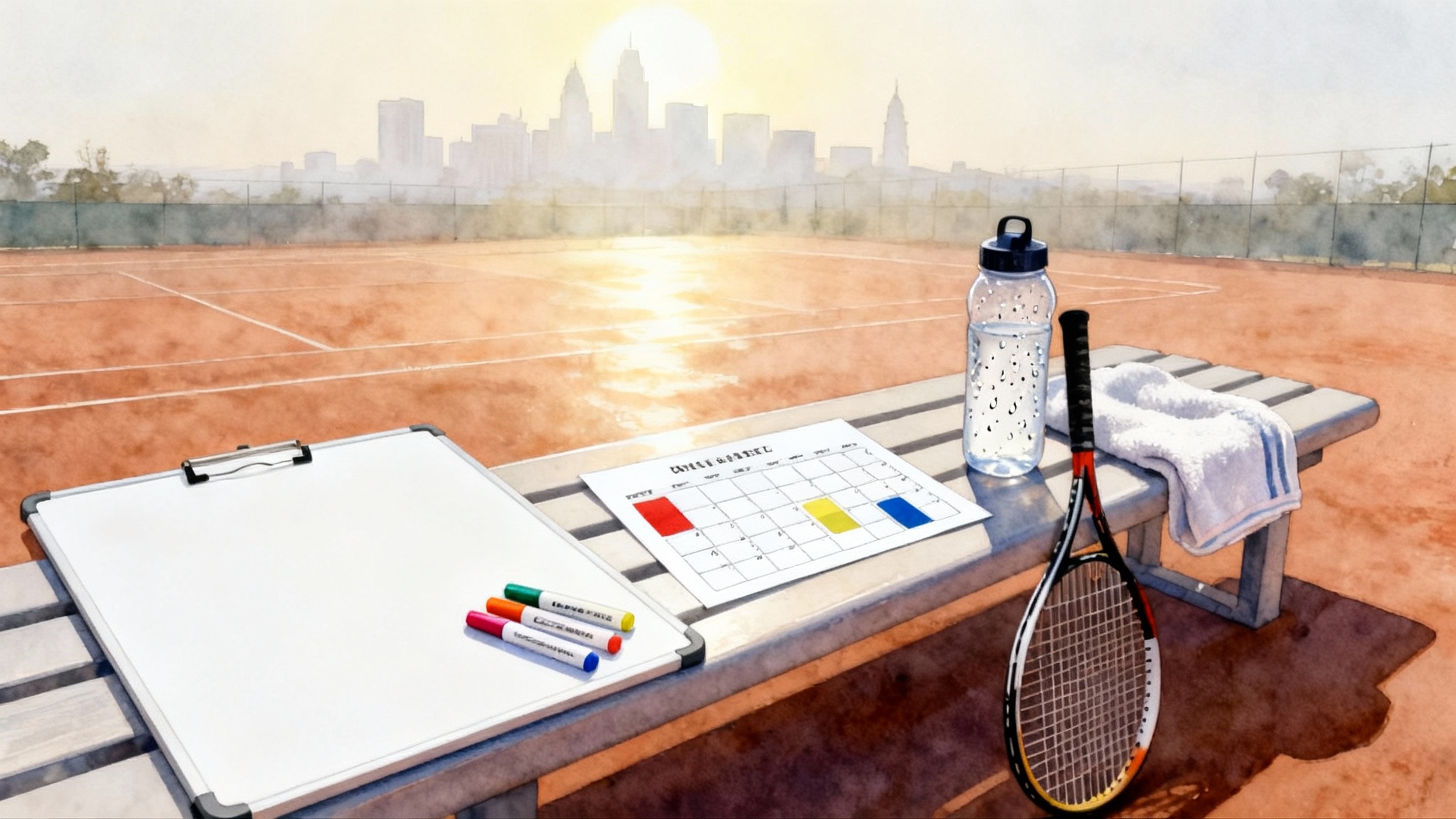
You do not need a lab. You need a wall, a hardcover book, a carpenter’s square or a right angle made with two books, painter’s tape, a metal tape measure, a scale, and a shared note on your phone.
Step 1. Build a repeatable measuring station
- Pick a flat wall with hard flooring. Tape a line on the floor where heels will go and a piece of tape on the wall at head height for alignment.
- Create a square edge by sliding a hardcover book against the top of the head and a vertical book against the wall to keep the first book square.
- Measure in the morning after waking, before shoes, twice each week on the same two days, ideally Monday and Thursday.
Step 2. Record height and weight
- Height: measure to the nearest millimeter. Write it as centimeters to one decimal place.
- Weight: once per week, same morning after using the bathroom.
- Optional but helpful: sitting height. Sit on a box against the same wall and measure top of head to the box surface. Subtract sitting height from standing height to estimate leg length.
Step 3. Calculate rolling growth rate
- Use a 30 day window. Subtract the height from 30 days ago from today’s height, then multiply by 12 to convert to centimeters per year. Example: 1.5 cm gained in 30 days equals 18 cm per year.
- Plot or note the last three 30 day rates. The pattern matters more than a single point.
Step 4. Mark the zones
- Green: under 4 cm per year. Normal growth. Train as planned.
- Yellow: 4 to 6 cm per year. Monitor loading. Small adjustments.
- Orange: 6 to 7 cm per year. Tighten controls. Prepare to dial volume down.
- Red: above 7 cm per year for two consecutive weekly checks or a 1 cm jump in a single 30 day window sustained for two checks. Treat this as PHV. Protect joints and coordination with specific rules below.
Step 5. Confirm with secondary signs
- Rapid shoe size changes, new stretch marks at knees or hips, and complaints of morning stiffness add confidence.
- A quick functional check helps: have your player do 5 single leg heel raises each side, 5 bodyweight split squats each side, and 5 small hops in place. New wobbles or tightness, especially around knees and heels, often show up near PHV.
Step 6. Put the window on the calendar
- PHV typically lasts 8 to 12 weeks. Mark the first red week and plan to use the protective plan below until rates drop back to orange or yellow for two consecutive checks.
What about maturity calculators?
- There are research equations that predict “years from PHV” using age, standing height, sitting height, and weight. These can help, but your rolling height data is still the most actionable trigger for daily tennis decisions. If you use a calculator, treat it as supporting context rather than the only truth.
The four knobs you can turn: serves, jumps, sprints, and lifting
When PHV hits, the goal is simple: maintain skill and speed while avoiding overload on growth plates and the lower back. Use these caps and swaps. Percentages are relative to the player’s normal pre-PHV week over the past month.
Serves
- Green: normal plans.
- Yellow: cap at 80 percent of usual weekly serves. Keep no more than 25 high intent bomb serves per session. The rest are rhythm and placement.
- Orange: cap at 60 to 70 percent. Split serving across more short bouts to reduce single session spikes. Use more second serve targets, reduce prolonged kick serve blocks that extend the spine repeatedly.
- Red: cap at 40 to 50 percent. No maximal serve speed testing. Prioritize toss consistency, trophy position, and contact height drills at 60 to 70 percent intensity. For a deeper plan, see our Serve Development 2026 guide.
Jumps and change of direction
- Green: normal plyometrics and agility.
- Yellow: keep total ground contacts under 100 per session. Favor low amplitude hops and pogo work. Two foot landings over one foot when possible.
- Orange: 50 to 80 ground contacts. Replace depth jumps and repeated broad jumps with submaximal snap downs and line hops. Teach deceleration patterns.
- Red: under 50 ground contacts. No depth jumps, hurdle hops, or single leg bounding. Use landing mechanics rehearsals, snap downs, and controlled lateral shuffles.
Sprints and court movement
- Green: normal.
- Yellow: keep hard accelerations under 300 meters total per session. Emphasize smooth accelerations and full recoveries.
- Orange: 150 to 250 meters total. Focus on technique segments, such as 5 to 10 meter starts, crossovers, and curvilinear runs at 80 percent.
- Red: 100 to 150 meters total. Replace high volume agility with patterning at 60 to 70 percent and video-based footwork learning.
Lifting and strength
- Green: progressive strength. Teach technique.
- Yellow: avoid weekly personal records. Use 3 to 5 sets of 5 at a weight the athlete could lift for 8 to 10 if they had to. Prioritize split squats, goblet squats, hex bar deadlifts, and rows.
- Orange: pull back axial loading on the spine. Favor single leg variations, hip hinges, sled pushes, and isometrics. Isometrics are holds against an immovable resistance; they build tendon tolerance with low movement stress.
- Red: no heavy back squats or deadlifts. Use bodyweight and light external load. Tempo work is useful: 3 seconds down, 1 second pause, 2 seconds up. Include trunk anti-rotation and anti-extension drills rather than back hyperextensions.
Technique tweaks that save knees and backs during the spurt
Serve
- Reduce excessive back arch. Cue the player to feel rib cage down and rotate through hips and upper back.
- Consider a platform stance over a pin point stance if the player struggles with balance. Fewer moving parts can improve consistency during rapid growth.
- Use a slightly lower toss to reduce time in extreme spinal extension. Accuracy and contact quality trump height in this window. For progressions, pair this with the Serve Development 2026 guide.
Groundstrokes
- Emphasize hip hinge and tall chest rather than collapsing into deep knee valgus. A small adjustment in setup angle protects the front of the knee.
- Use more closed or semi open stances when possible to share load across hips and trunk rather than the knee alone.
- Focus on timing drills at 70 to 80 percent power. For example, metronome forehands, two up one back rhythm patterns, and crosscourt ladders.
Movement
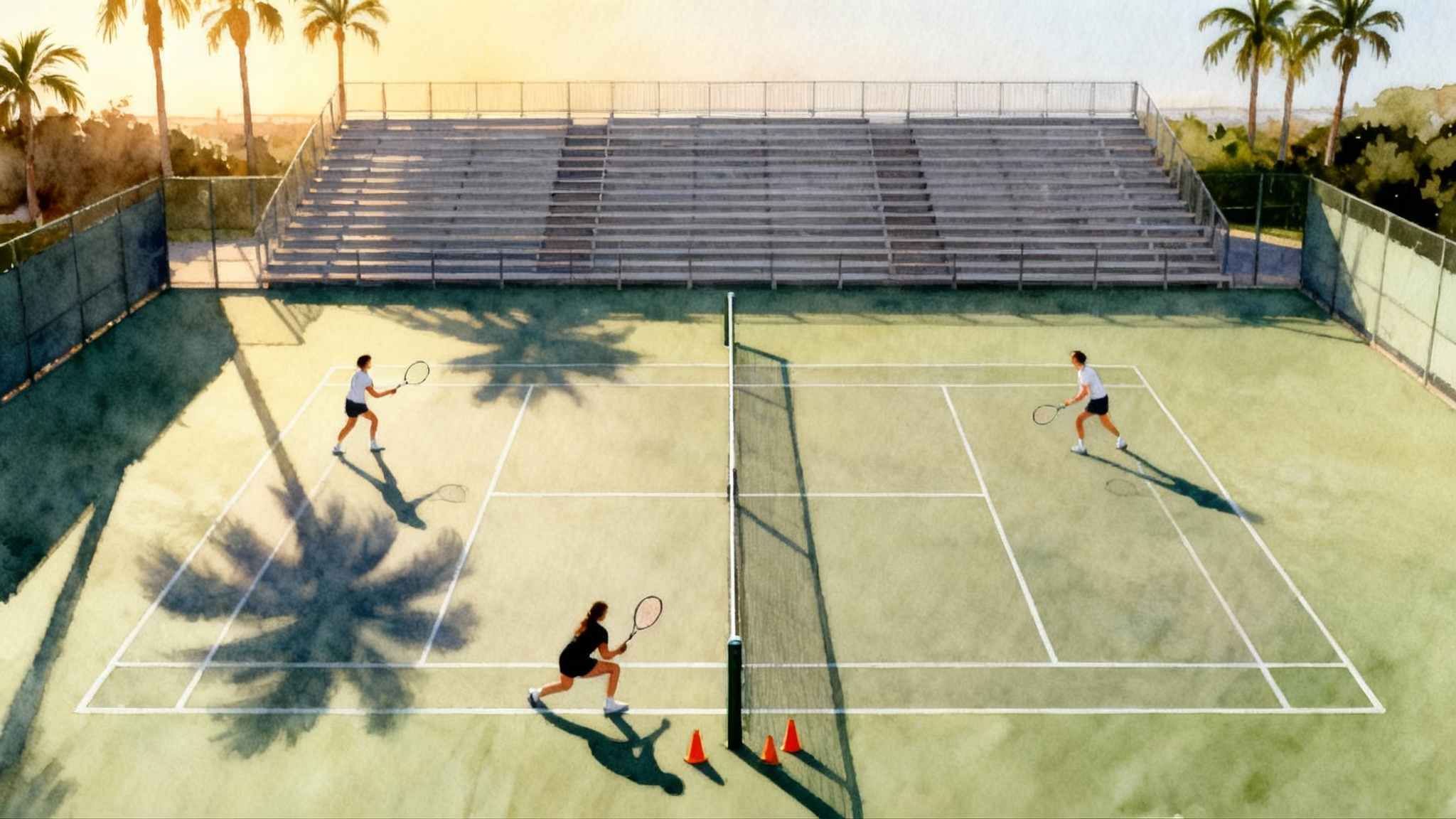
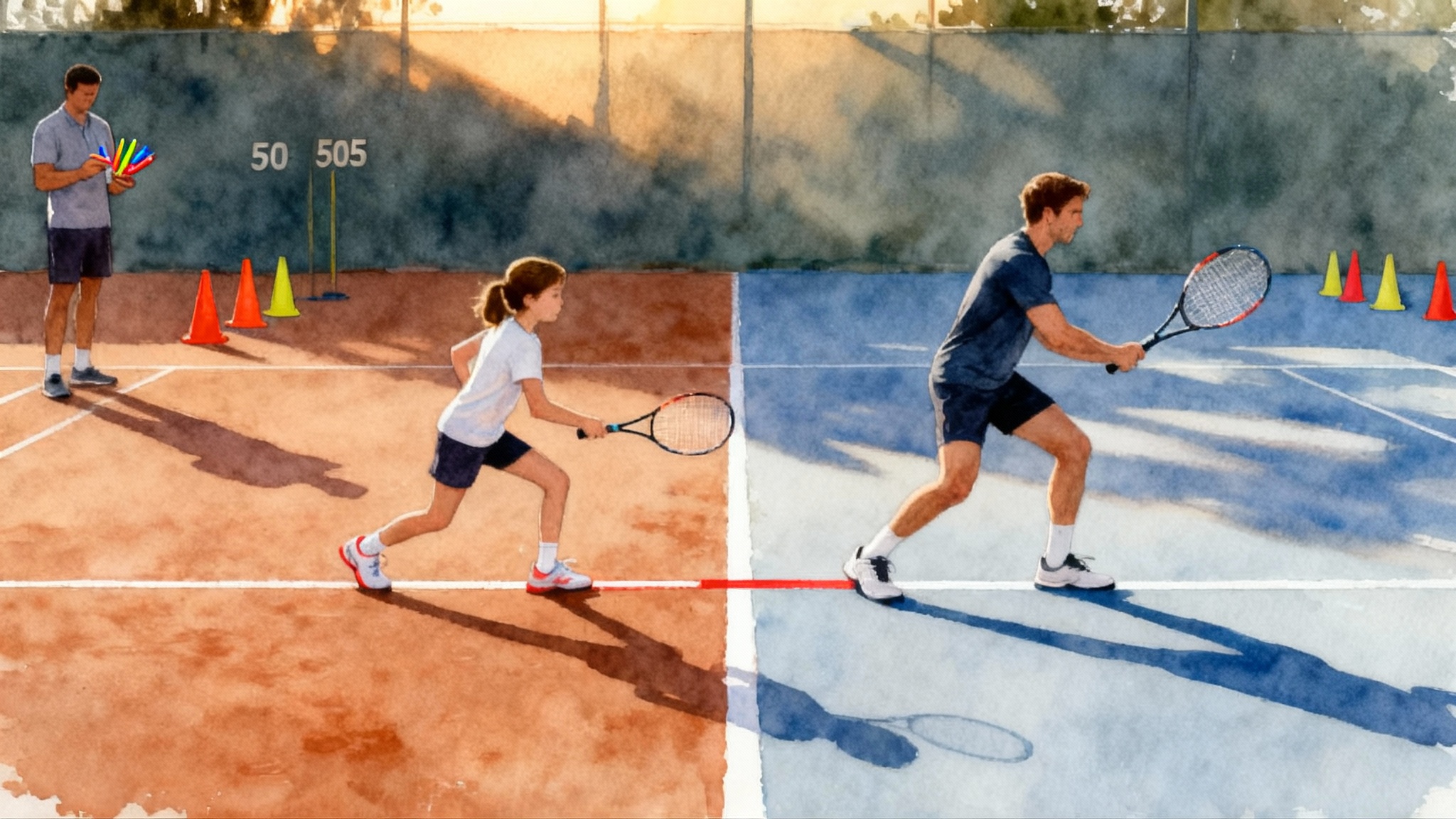
- Teach braking first. Use cone approaches where the goal is to stop balanced on the outside leg, then return. Good brakes make safe acceleration. For a complete progression, see our 6-week deceleration plan.
- On wide balls, cue a low center of mass with the chest over the lead thigh at the plant step. Video this from the side for instant feedback.
Equipment levers
- A slightly softer string setup or a one to two pound drop in tension can reduce vibration. Consider a softer replacement grip if the player complains of hand or elbow soreness.
Red flag checklist: stop and seek help if you see these
- Sharp, localized pain at the bottom of the kneecap or the bump on the shin during or after play
- Heel pain that worsens with hopping or first steps in the morning
- Low back pain that gets worse with repeated serving or bending backward
- Night pain that wakes the athlete or pain that lingers beyond 48 hours after rest
- Noticeable limping, visible swelling, or a painful catch in a joint
- Dizziness, fainting, or chest discomfort during exercise
If any red flag appears, stop tennis that day. If pain persists beyond 48 hours or affects walking, schedule a medical evaluation. Tell the clinician your player is in a rapid growth phase and bring your height log. That context matters.
Two sample two week microcycles you can copy
These plans assume two hours on court for main sessions and a 30 to 45 minute athletic development block. Adjust by age, history, and the zones you identified.
Microcycle A: Stable growth or green to yellow zone
Goal: build skill and fitness with manageable spikes
- Day 1 Mon: On court technical plus serve block. 90 minutes of patterning at 75 to 85 percent pace. Serve 80 to 100 total with 25 high intent. Athletic development: split squats 3x6 each, hex bar deadlift 3x5 light to moderate, push ups 3x8, med ball rotational throws 3x6 each.
- Day 2 Tue: Movement and speed. 10x10 meter accelerations with full walk back, curvilinear runs 4x20 meters, lateral shuffles 4x10 meters. Light footwork ladder for rhythm. Finish with isometric split squat holds 3x20 seconds each.
- Day 3 Wed: Off or light hit. Optional mobility and trunk work.
- Day 4 Thu: On court live play. 3 sets of 20 minute games focusing on depth and first ball after serve. Serve 60 to 80 total, all at 70 to 80 percent with targets. Athletic development: single leg Romanian deadlift 3x6 each, rows 3x8, side plank 3x20 seconds each.
- Day 5 Fri: Agility and jumps. Pogo hops 3x20, low hurdle hops 3x10, planned change of direction 6x15 meters, deceleration practice 6 reps per side. Keep ground contacts near 120.
- Day 6 Sat: Match play or tournament day.
- Day 7 Sun: Off. Family walk, mobility.
- Day 8 Mon: Repeat Day 1 but swap deadlift for sled pushes 6x20 meters.
- Day 9 Tue: Movement and speed. 8x10 meter accelerations, 4x20 meter strides at 80 percent, karaoke steps 3x20 meters. Isometric mid thigh pull on a home strap 3x5 second efforts if available.
- Day 10 Wed: Off or light hit.
- Day 11 Thu: On court live play and serve 60 to 80. Add approach and volley patterns.
- Day 12 Fri: Agility and jumps. Keep total contacts under 120. Add snap downs 3x6 and controlled skater hops 3x6 each.
- Day 13 Sat: Match play or tournament day.
- Day 14 Sun: Off.
Microcycle B: Red zone peak height velocity
Goal: protect knees and back, preserve skill, and keep speed qualities without overload
- Day 1 Mon: On court technical 75 percent pace. No more than 40 serves, none at max. Serve targets: body serve to both boxes, second serve kick shape at 60 to 70 percent. Athletic development: bodyweight split squats 3x8 each with slow tempo, band rows 3x10, dead bug 3x6 each, pallof press 3x8 each.
- Day 2 Tue: Movement patterning. 6x5 meter starts, 6 controlled close out steps to a balanced stop, 6 crossover steps each side. No jumps beyond small line hops 3x20. Finish with isometric calf holds 3x20 seconds.
- Day 3 Wed: Off or 30 minute feel hit with no serving.
- Day 4 Thu: On court tactical themes. Play 2 crosscourt games to 11 points each at 70 percent. Serve 30 to 40 at 60 to 70 percent with strict toss and rhythm focus. Athletic development: hip hinge dowel drills, suitcase carries 3x20 meters each hand, side plank 3x20 seconds.
- Day 5 Fri: Recovery and mobility. Gentle bike 15 minutes or brisk walk 25 minutes. Ankle and hip mobility sequence 10 minutes.
- Day 6 Sat: Light match play only if pain free and movement looks smooth. Cap total play at 75 minutes. No extra serves after the match.
- Day 7 Sun: Off.
- Day 8 Mon: Repeat Day 1. Replace split squats with rear foot elevated split squat bodyweight 3x6 each.
- Day 9 Tue: Movement patterning again. Keep total hard acceleration distance under 120 meters.
- Day 10 Wed: Off.
- Day 11 Thu: On court tactical with no more than 35 serves. Add drop feeds to rehearse contact height without jumping.
- Day 12 Fri: Recovery day.
- Day 13 Sat: Optional doubles only, 60 to 75 minutes. Doubles reduces serve count and large court sprints.
- Day 14 Sun: Off.
Track basic readiness each morning in red weeks: sleep hours, muscle soreness score from 1 to 5, and a simple one minute balance test eyes open. If two of three worsen compared with baseline, trim that day’s volume by 20 percent.
How Legend Tennis Academy runs PHV-aware programming
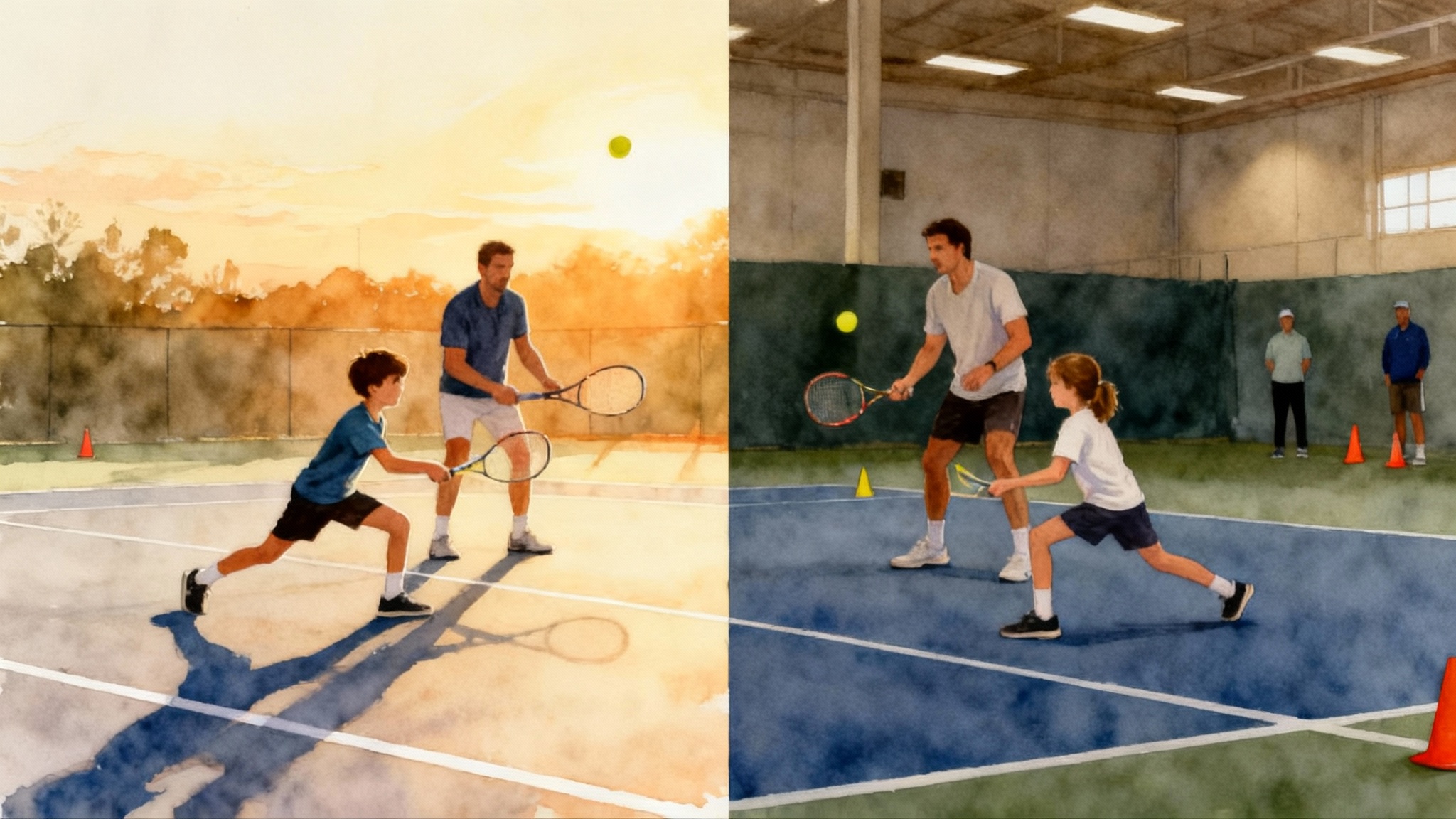
Legend Tennis Academy profile measures standing height every Monday at check in and keeps a rolling 30 day growth rate for each player age 10 to 16. The moment a player enters the orange zone, the academy alerts the family and the coaching team. A laminated card on each court lists the current serve cap and jump cap for that player.
Monitoring and tools
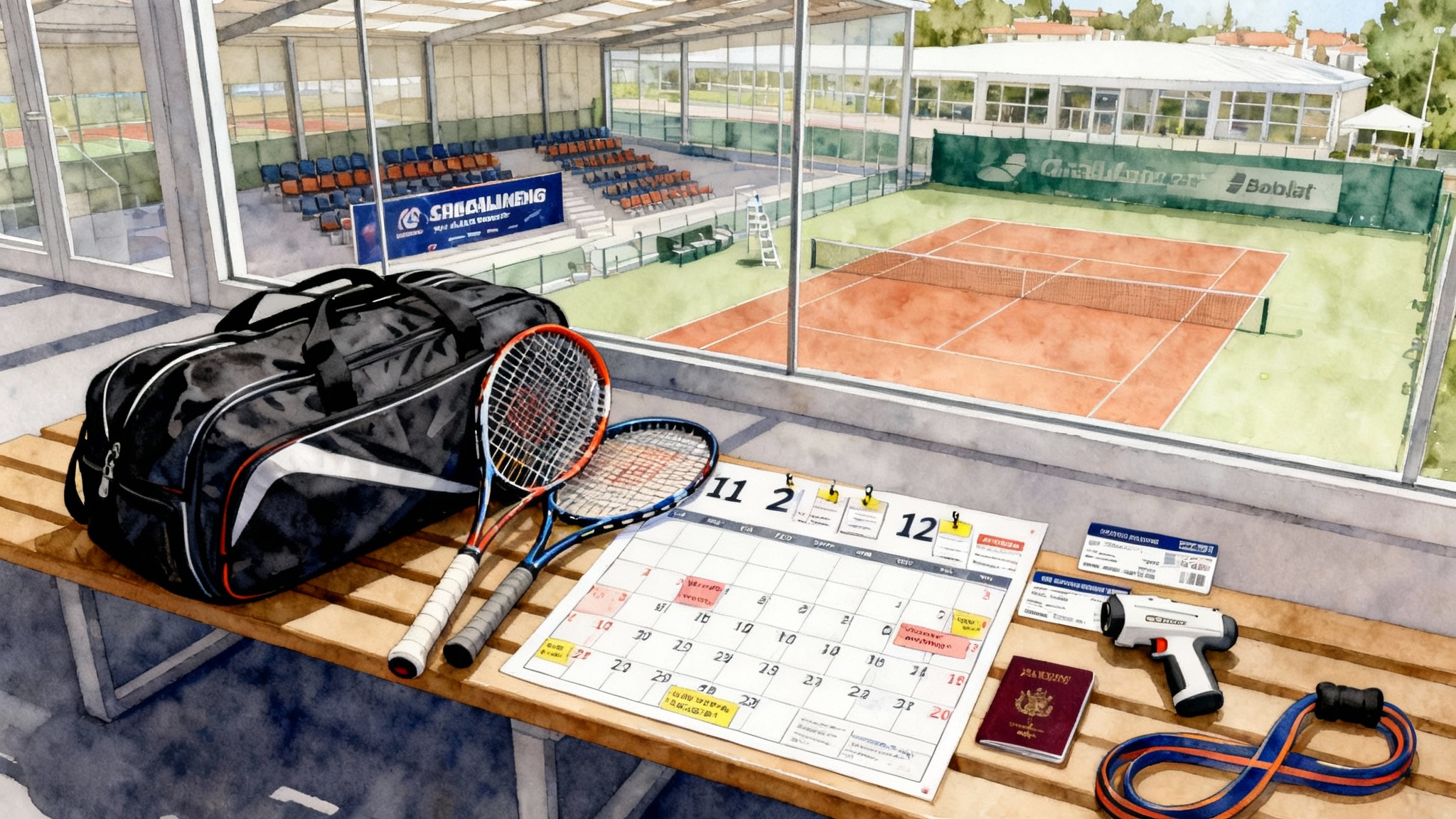
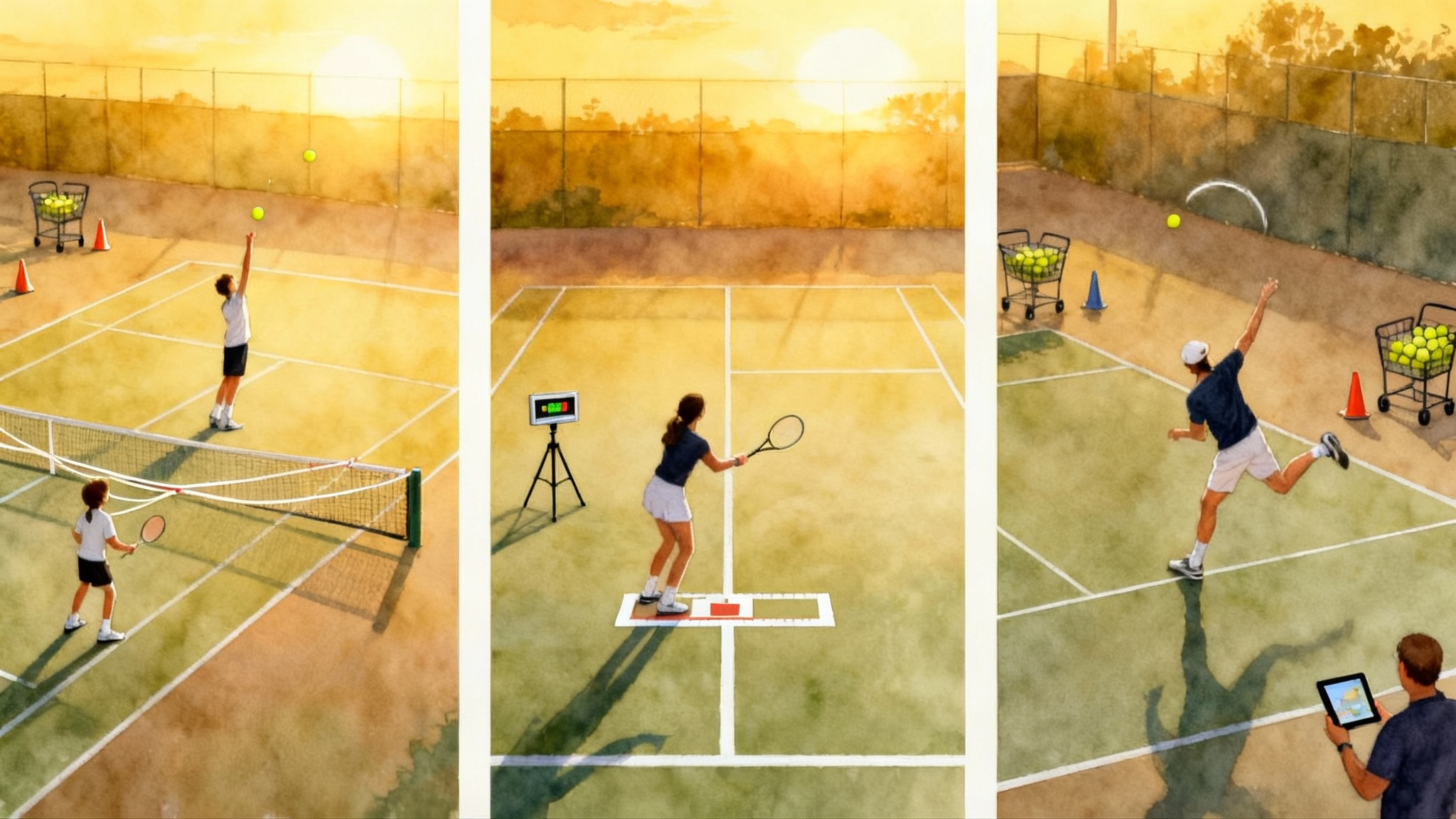
- Serve speed is measured monthly with a handheld radar so that progress is tracked without weekly maximal tests. Averages at 70 percent speed are logged to reflect technique quality.
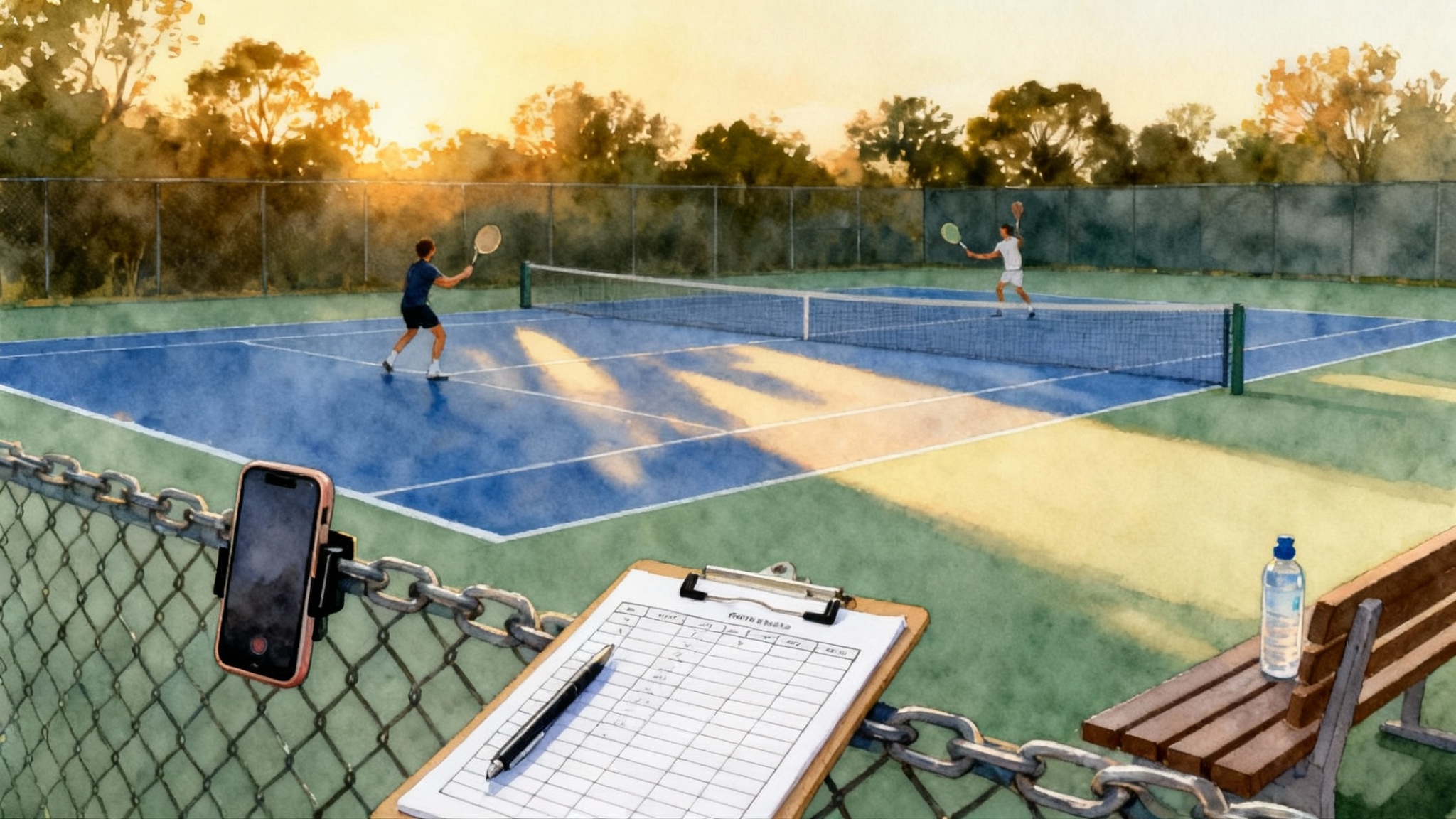
- Jump quality is checked with a simple three jump average height using a smartphone slow motion app. The academy uses the same phone and the same angle every time for consistency.
- Sprint timing is done over 10 meters with a stopwatch for broader groups and with timing gates during testing weeks for advanced groups.
- Some families choose to use wearable devices that track heart rate variability, which is a measure of nervous system recovery. Coaches use this information as one more data point, not a dictator of training.
Programming rules
- Green and yellow: normal tactical blocks, with one strength day that includes a hinge, a squat, a push, and a pull; one speed day with 10 meter accelerations; and one agility day with change of direction.
- Orange: serve volume cuts by 30 percent, jump contacts capped at 80, sprints capped at 250 meters per session, and no new exercises introduced. Video is used to show landing positions and trunk control.
- Red: the academy sets a 50 percent cap on usual serve volume, removes depth jumps, and removes heavy axial lifts. Singles match count drops. Doubles and themed point play keep decision making sharp without overloading the spine and knees.
Measuring skill so progress continues
Legend Tennis Academy uses a simple scoreboard for each player during growth spurts:
- Toss consistency: 20 tosses graded as in the hitting window or not. Goal is 18 out of 20.
- Contact height drill: target tape added to the net. Count balls contacting the tape window in 20 attempts at 70 percent power.
- First ball quality: after serve or return, count how often the first groundstroke lands deep and central. Target is 70 percent.
- Movement quality: a three cone stop drill graded by balance and posture. Players earn points for arriving under control.
By tracking these, the academy can show players and parents that even while volume is reduced, important skills improve.
Frequently asked questions from parents
How long does peak height velocity last?
- Most see 8 to 12 weeks of elevated growth rate. Some have two short peaks a few months apart. Use your data rather than averages.
Does pulling back now mean my child falls behind?
- No. When the body is remodeling itself, the athlete who protects joints, refines technique, and maintains speed qualities is the one who springs forward when the window closes.
Should my 12 year old lift weights during a growth spurt?
- Yes, with the right focus. Drop heavy spine loading and emphasize technique, single leg strength, isometrics, trunk stability, and controlled tempos. Think practice and polish, not personal records.
Do we need fancy tech?
- No. A wall, a book, a tape measure, and a shared note will take you most of the way. If you already have tools like a radar gun or a fitness watch, great. Use them to inform, not to chase numbers.
Put it into action this month
- This week: set up your wall station, pick Monday and Thursday mornings, and start measuring. Create your green to red zones and tell your player why you are doing this.
- Next week: apply the microcycle that matches your zone. Cut volume before pain appears, not after.
- Two weeks from now: check your log. If you enter the orange or red zone, switch to protective settings. If you fall back to yellow or green, gradually return to normal plans.
Growth spurts are not a problem to be feared. They are a season to be coached. With a wall, a plan, and a few guardrails, you can protect knees and backs, defend coordination, and keep real tennis skills moving forward. When the height line settles, your player will be ready to accelerate again, stronger, safer, and sharper.