From Athens to Biot: How Mouratoglou Academy Shaped Tsitsipas
Stefanos Tsitsipas left Athens as a teen to train at the Mouratoglou Academy on the French Riviera. A scholarship, world-class staff, and a smart blend of family coaching with data, fitness, and mental prep accelerated his rise. Here is the playbook.
 Tommy
Tommy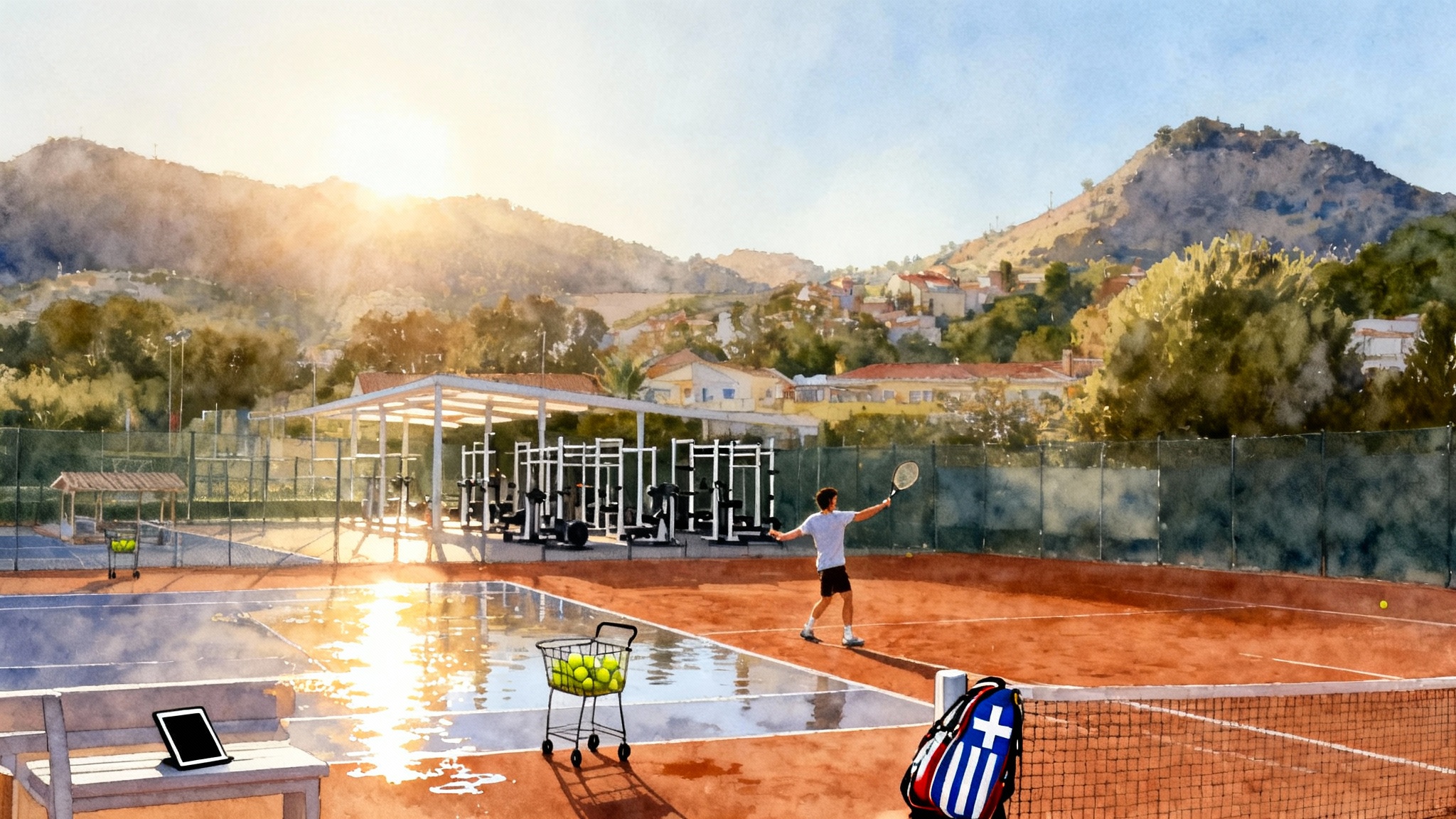
A teenager in Athens looking for a road map
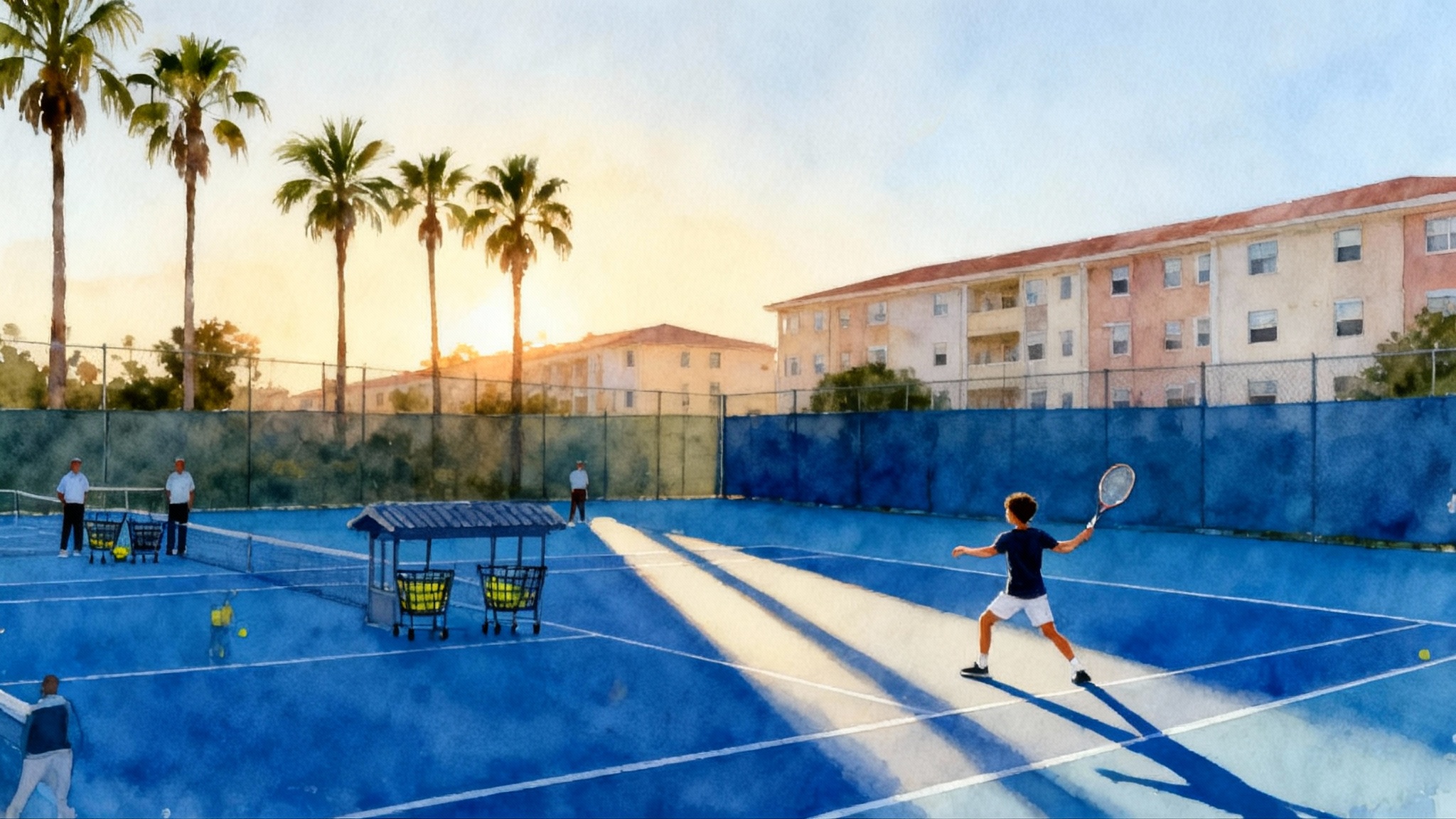
Before he was lifting trophies at Masters 1000 events and walking onto stadium courts as a contender, Stefanos Tsitsipas was a tall, curious teenager hitting serves on Athens courts that could not always match his ambition. Greece had passion and family support, but it lacked a dense calendar of elite junior events and daily hits with top peers. If you want to become a world-class tennis player, the people around you and the proximity to competition act like the weather for crops. The sun is your talent. The soil is your family. But to grow fast, you also need rain at the right time. For Tsitsipas, that rain came from Biot on the French Riviera.
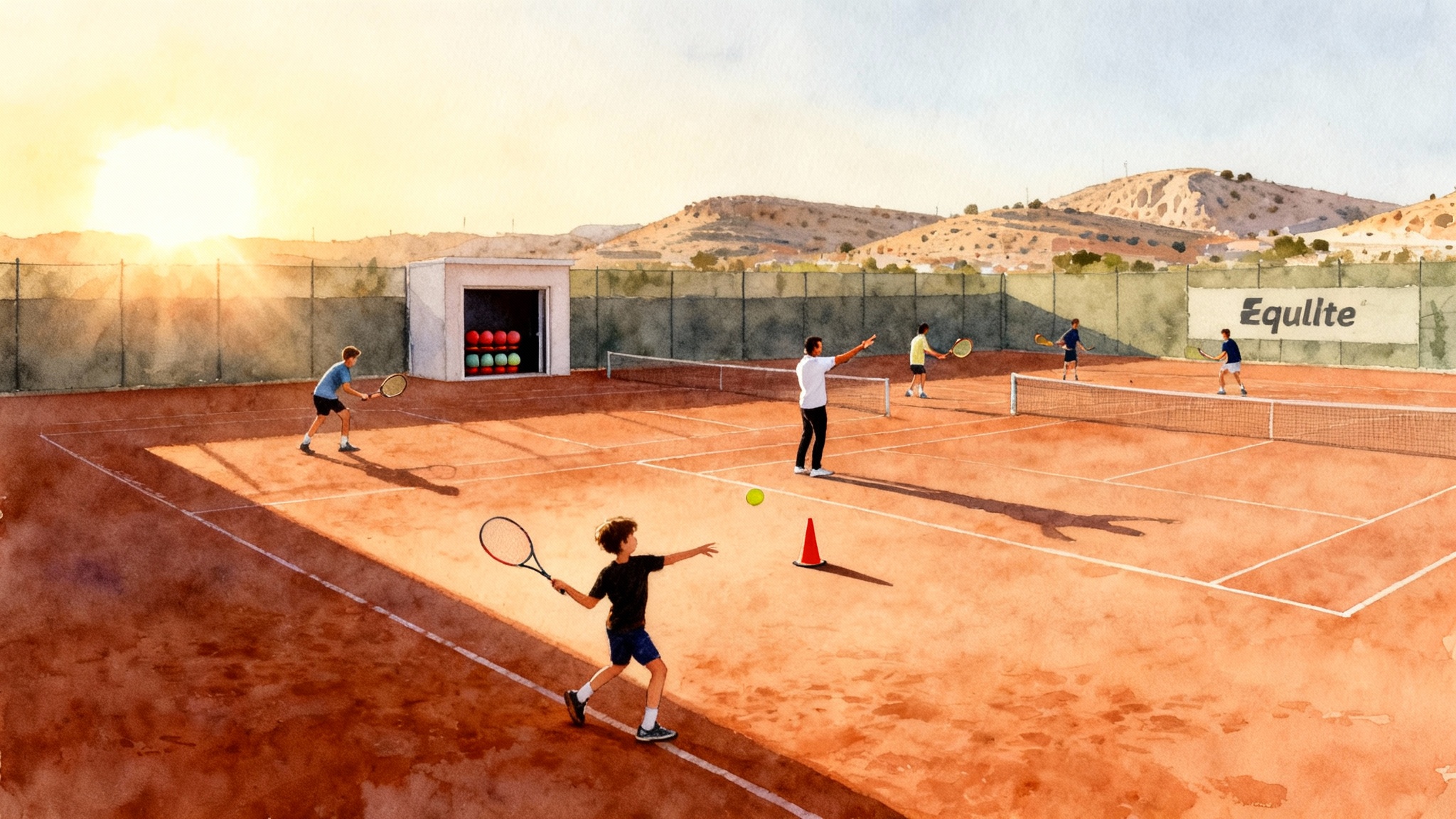
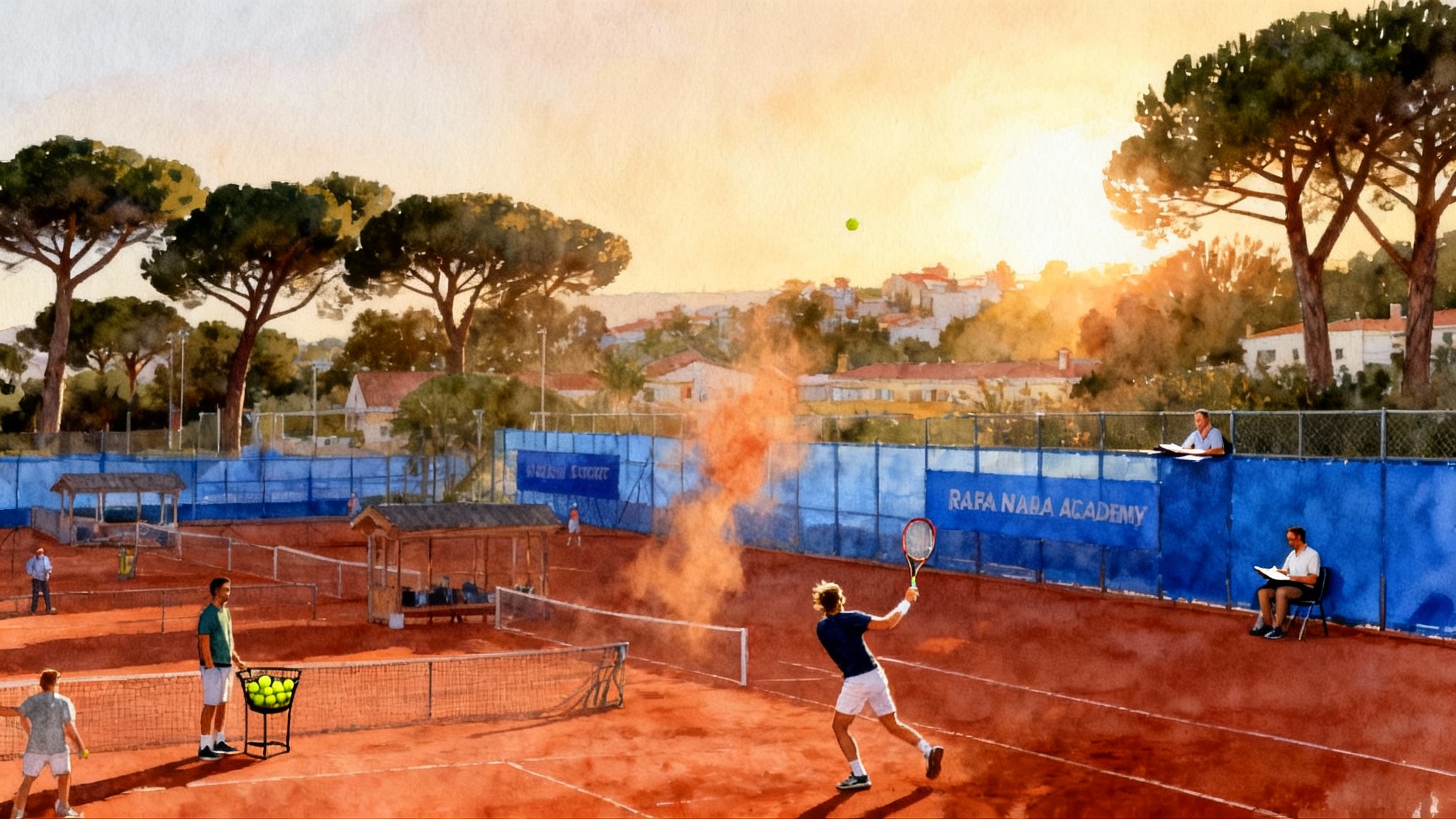
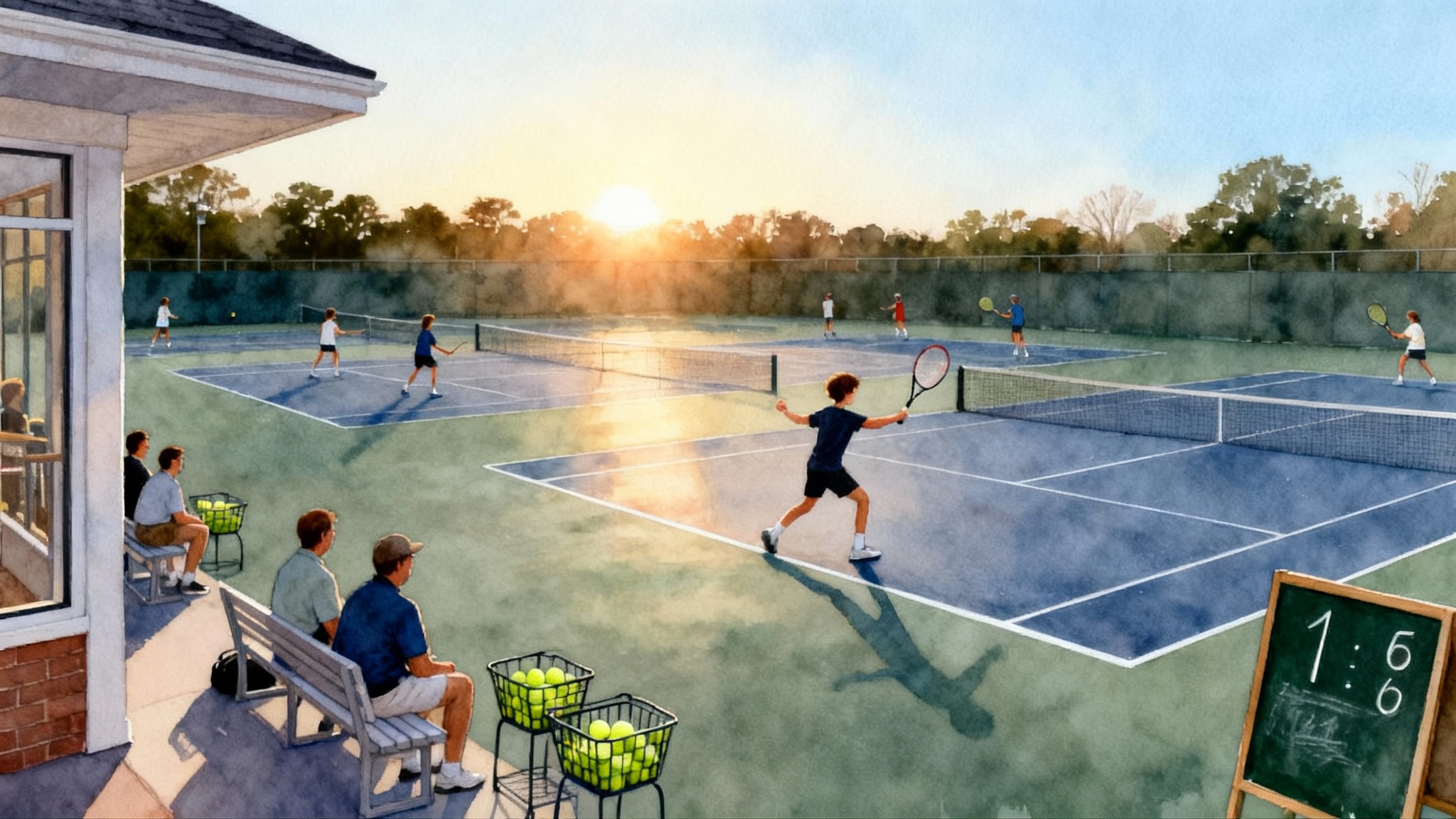
In 2015 he began training at the Mouratoglou Academy in Biot, near Nice and Cannes. Patrick Mouratoglou had noticed him early, even reviewing online match footage, and the academy opened a door that Athens could not. The decision was not a rejection of home. It was an upgrade in inputs: more high-level sparring, smarter planning, and a support network that helped a family project scale.
The scholarship that changed the math
Elite development is expensive. International flights, coaching, fitness, physio, and tournament entries add up quickly. Tsitsipas benefited from support through Patrick Mouratoglou’s charitable arm, the Champ’seed Foundation, which backs promising juniors who lack the resources to compete full throttle. This is not a small detail. It shifts the economics of a risky pursuit and lets a family focus on performance rather than survival. You can see Tsitsipas listed among the alumni on the Champ’seed Foundation alumni page. For a parallel story, see Coco Gauff's Champ'Seed pathway.
A scholarship also changes decisions at the margins. Instead of choosing between two tournaments on cost grounds, you choose based on match-up relevance. Instead of delaying a stringing change or a strength block, you invest in it. Over a season, those choices create compounding gains.
Blending family coaching with academy resources
Tsitsipas did not arrive in Biot as a blank slate. His father, Apostolos, was a trained coach and remained central. His mother, Julia, had competed on the professional tour and brought a seasoned eye. What the academy added was infrastructure.
- Match analytics: consistent video capture, charting, and patterns analysis turned hunches into facts. On clay, his rally length and forehand forecourt conversion were tracked. On hard courts, first-strike patterns and return depth were graded against benchmarks. The family’s tactical instincts were fed by data.
- Fitness and periodization: the academy environment supplied structured strength and movement work. That included simple but crucial elements such as planning heavy legs in the early days of a week and ensuring speed and footwork sharpeners two days before match play. Recovery protocols were standardized rather than improvised.
- Mental skills: routines around breath, between-point resets, and journaling were taught and rehearsed. Daily training matched competitive intensity, making pressure feel familiar.
The design principle was clear. Keep the family’s identity and values. Plug them into a system that makes the daily work measurable, repeatable, and aligned with the tournament calendar.
Shaping an aggressive all-court identity
Tsitsipas’s game has always pointed forward. The forehand is heavy and proactive. The one-handed backhand can be driven up the line or knifed low as a slice. His height gives him reach at net. Biot honed that inclination into an identity with simple, constraint-based drills.
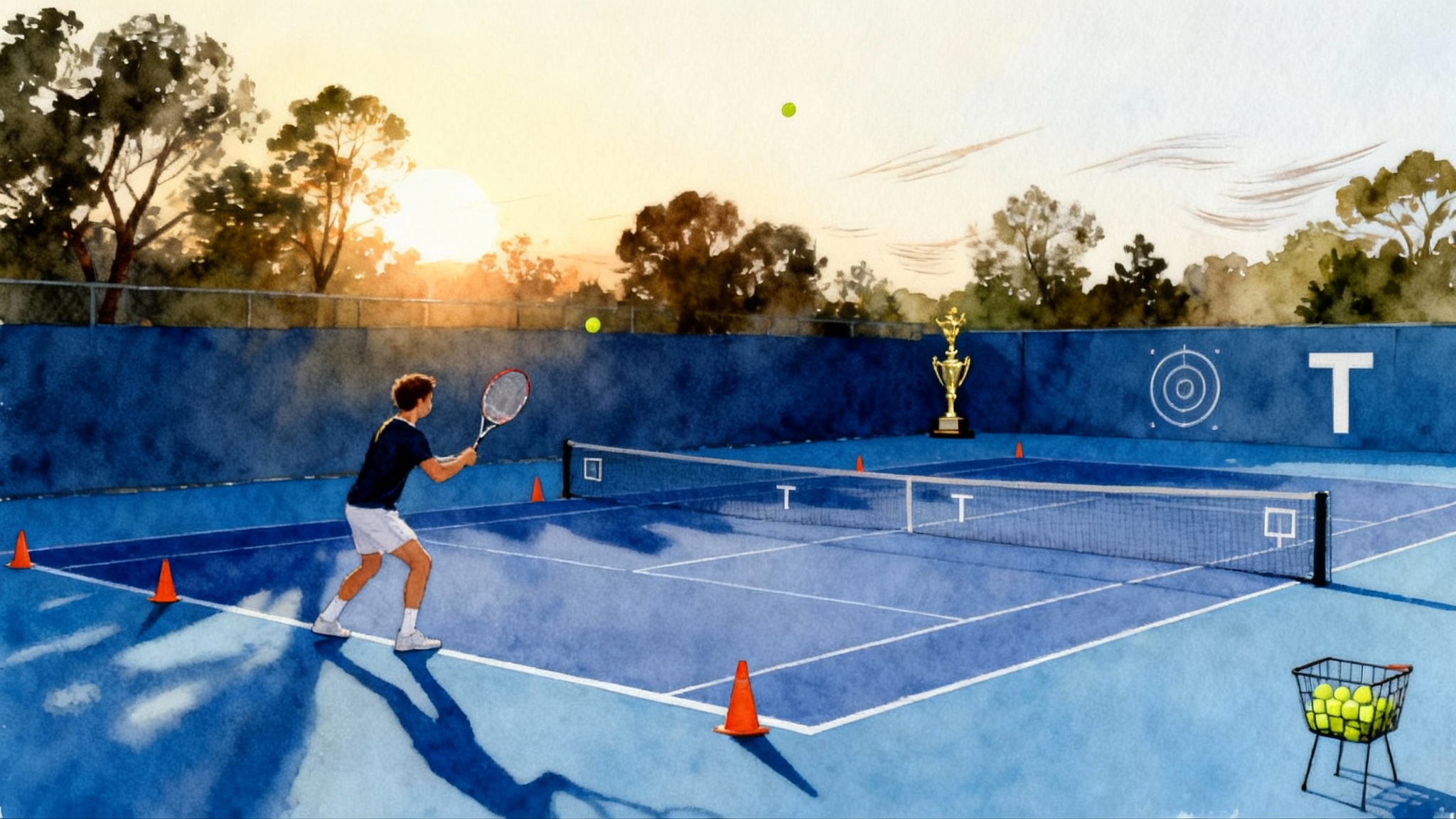
- Forehand dominance games: start rallies neutral, but award two points for any winner initiated by a forehand from the ad court. The rule pushes a player to run around backhands and work inside-out patterns, then close to net.
- Serve plus one ladders: serve to one target ten times, then move to the next target, but only if the first ball after the serve lands beyond the opponent’s service line and forces a neutral or defensive reply. This rewards depth and decision speed, not just placement.
- Transition density: six-ball progressions in which ball three must be taken on the rise and ball four must be an approach. The drill forces earlier court position and normalizes forward movement.
Clay never dulled these instincts. Instead, it built the stamina to repeat first-strikes and the patience to wait for the right ball. On hard courts, the same identity translated to shorter points and a higher serve-forehand conversion rate. For deeper serve work, see serve technique and drills.
Inflection points on the climb
Every career has turning points. For Tsitsipas, three stand out.
1) The jump from junior to pro
In 2016 he was a top junior, and by late 2017 he was winning matches on the Association of Tennis Professionals tour. The choose-your-moment transition plan mattered. Rather than lingering in junior draws, he mixed Futures and Challengers with selective ATP qualifying to feel pro pace. The academy’s scouting and scheduling helped prioritize live repetitions against grown men over symbolic junior titles.
The practical lesson: when a junior is consistently handling pace and holding serve against mid-level pros in practice, it is time to test longer formats in competition. Keep a foothold in the junior majors for confidence and points, but spend training days in pro environments.
2) Clay-to-hard adaptability
Tsitsipas’s base in Biot meant he could build clay fluency without losing hard-court timing. The campus provides both surface types, and the European schedule puts clay and hard events within short flights. In season, his training weeks often mixed surfaces to ensure carryover. The result was a player who could vary height and spin on clay but still flatten out forehands and take backhands early on hard.
One practical marker used by many teams is the neutral-ball tolerance test. On clay, can you defend two extra balls without losing depth? On hard courts, can you step inside the baseline and take the same ball earlier with similar error rates? When both answers are yes, the toolkit travels.
3) Masters-level peaks
The most visible validation came at Masters 1000 and year-end events. Tsitsipas won Monte Carlo three times and lifted the season-ending championship in 2019, with other deep runs confirming the level. For an overview of those milestones, the official ATP bio provides a reliable timeline.
The performance pattern behind those trophies looked consistent. He protected his serve with first-ball forehands to open space. He finished points at net when rallies tilted his way. And he leaned on a return position that adjusted with serve quality rather than locking him far back by default.
The European base advantage: more matches, less mileage
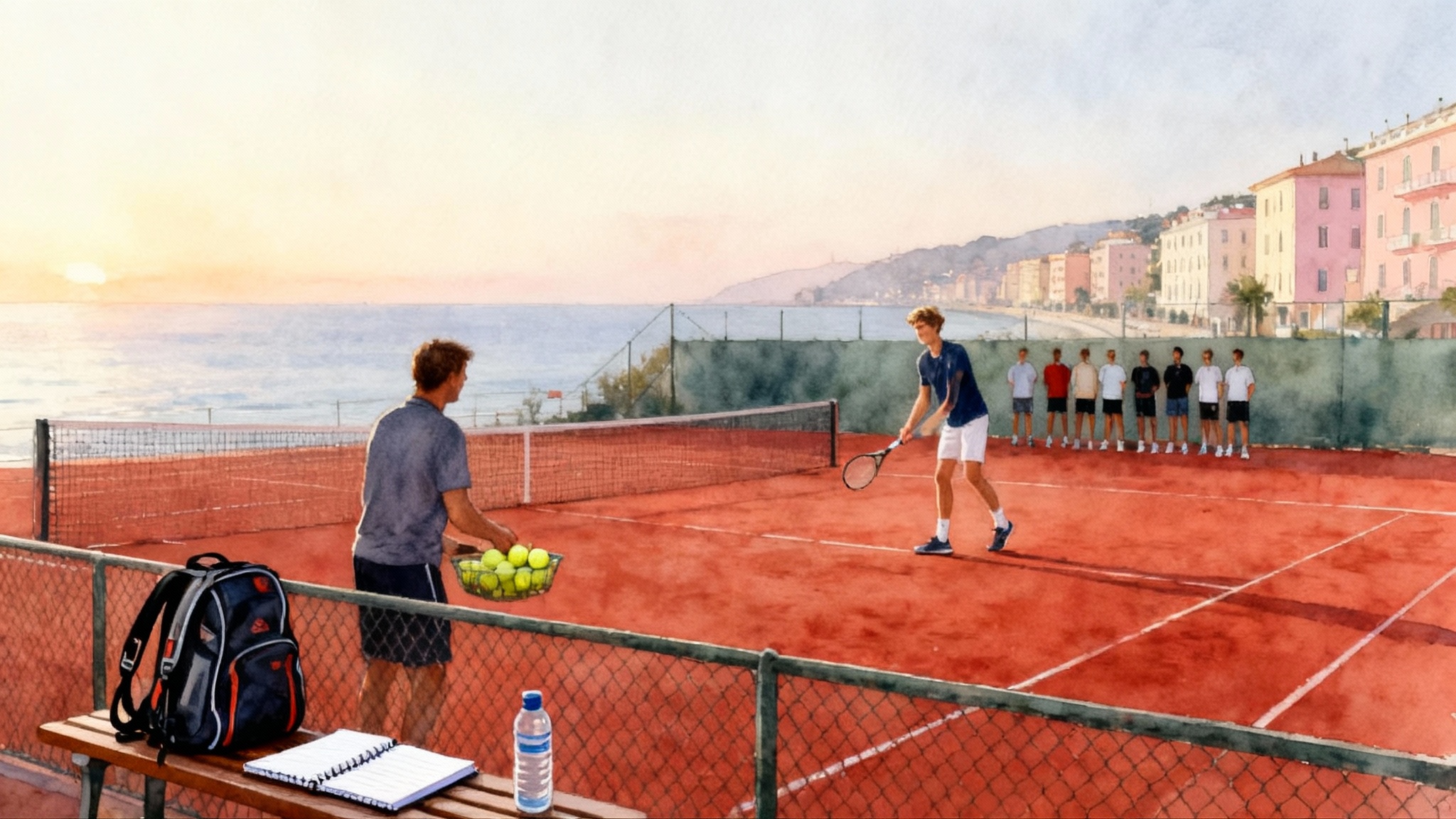
Why did Biot matter beyond coaches and courts? Geography. From the French Riviera you can reach a dense cluster of events by short flight or train. Juniors can play back-to-back Grade 1 tournaments without crossing oceans. Pros can schedule practice weeks with top hitters who pass through the academy between Monte Carlo, Rome, Paris, and the indoor swing. Less travel fatigue means more high-quality sessions and healthier bodies by the time the matches matter. Another Riviera option is profiled in the All In Academy profile.
To make that advantage real, a team needs a micro-calendar. Think in three-week blocks. Week one is volume and technical emphasis. Week two is intensity and patterns. Week three is a light taper wrapped around competition. Evaluate on Sunday night with simple metrics: serve plus one hold percentage, break-point save percentage, and points won on second serve returns. With a European base, you can rinse and repeat that loop without long-haul disruption.
How match analytics actually changed choices
Analytics can sound abstract, so here are concrete examples from the kind of reporting an academy provides.
- First-serve patterns: charting revealed that Tsitsipas earned more short returns when he served wide in the deuce court, but only if the next ball was struck to the open court within two bounces. When he waited on the third bounce, the edge vanished. Training solved that by adding a two-bounce rule during serve drills.
- Backhand height windows: on slow clay, his one-hander produced higher error rates against heavy topspin above shoulder height. Coaches framed the problem as a target window rather than a weakness. The answer was to change contact height by moving earlier and by mixing slice under the ball rather than trying to hit through it late.
- Return depth: reports showed that deep, middle returns drew more neutral balls than risky corner stabs on second serve. That led to a default return position one step inside the baseline against average second serves and an automatic step back against high-kickers.
The lesson for families is simple. Analytics should inform one or two training constraints each week, not become a slide deck that overwhelms everyone.
Fitness and recovery that matched the calendar
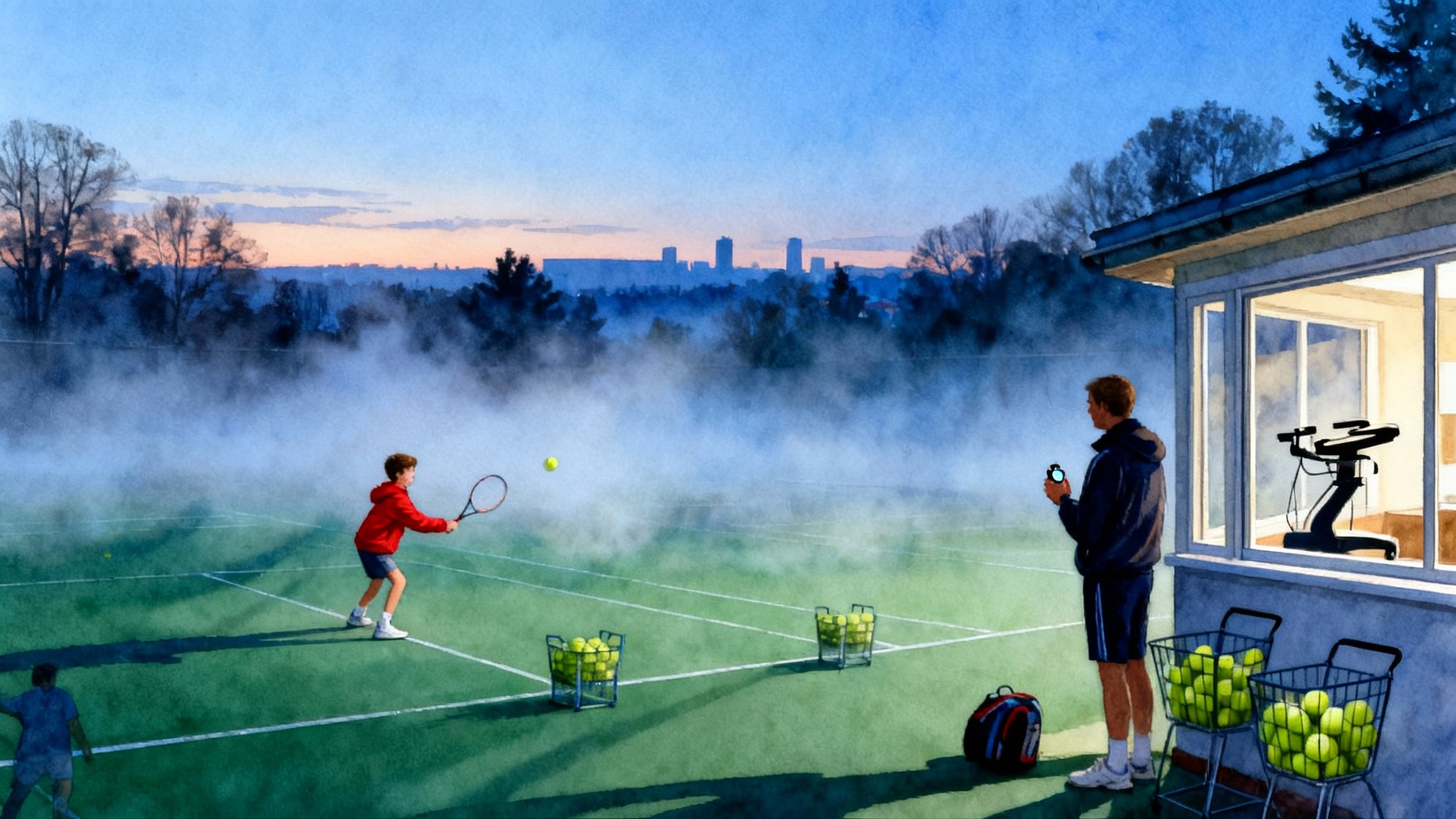
A teenager grows while he trains. That means the body is a moving target. In Biot, strength and conditioning blocks were aligned with the year’s travel. Heavy lower-body work before training blocks. Deload weeks built into travel windows. Speed and reaction sessions layered before fast-court events. Recovery was codified with baseline ranges: morning heart-rate variability, sleep duration, and a subjective ten-point fatigue score. If two of the three were outside the band, workloads dropped for forty-eight hours.
Parents can copy the structure with limited equipment. Use simple tests like the countermovement jump recorded on a smartphone. Track session rating of perceived exertion times minutes for a daily training load. If the seven-day rolling load spikes more than thirty percent, you are flirting with a soft-tissue issue.
Mental preparation that shows up on big points
Mental skills are not slogans. They are habits. The academy emphasized pre-point breath, a clear cue word, and a commit-or-reset rule on serve returns. Journaling focused on controllables with three prompts: What did I do well today that I can repeat? What needs one tweak? What will I do on the first point tomorrow? The family kept it compact so that it survived long weeks on the road.
When pressure rises, the brain loves familiar routines. Because those routines were rehearsed daily in Biot, Tsitsipas could default to them when scoreboards got loud.
The playbook for parents and juniors
Here is a practical checklist drawn from this Athens-to-Biot journey.
- When to commit to an academy
- Performance signal: in practice sets, your junior holds serve at least 70 percent against older regional opponents and is not overpowered in baseline exchanges.
- Competition need: local events no longer provide opponents who expose new problems. If match film looks the same each weekend, you need a deeper pool.
- Financial trigger: a scholarship or packaged program makes the budget predictable. If funding remains uncertain, start with short training blocks before moving to a full academic year.
- How to structure a support team
- Keep a family lead coach if you have one, but define roles. The academy handles periodization, analytics, and hitter scheduling. The family coach drives identity and day-to-day technical cues.
- Add a strength and conditioning coach who communicates in writing each week. Ask for the goal of the week and two red-flag criteria that would reduce loads.
- Secure a physio relationship early. Even one screen per quarter helps spot asymmetries before they become injuries.
- Use analytics without drowning in data
- Decide on two key indicators each month, such as first-serve points won and backhand unforced errors per set.
- Translate each indicator into one practice constraint. Example: if backhand errors rise when rushed, dedicate two sessions to taking the ball earlier or to mixing slice on defense.
- Review on a calendar cadence, not after every match. Consistency beats reactivity.
- Build a European base to maximize competition
- Cluster tournaments within two hours of flight time. Use Monday for travel and light hits, Tuesday for intensity, Wednesday for tactical rehearsal, Thursday for a half-load or match.
- Mix surfaces during training blocks even if the next event is on clay or hard. That preserves timing and adaptability.
- Protect two weekends per two months for no travel. Use them for strength and technical detail so that skill does not decay while chasing points.
- Guardrails against burnout
- Set a hard cap on consecutive weeks competing. For most juniors, four is the upper limit before performance and mood dip.
- Track a simple mood and motivation scale daily. If both drop for three days, cut volume by a third and shorten sessions.
- Make the player choose one non-tennis creative outlet and schedule it weekly. The point is not distraction. It is renewal.
What coaches and academies can take from this story
- Meet families where they are. Tsitsipas is proof that a strong family coach can coexist with an academy. Define lanes clearly and write them down.
- Convert identity into constraints. If a player should attack with the forehand, bake that into scoring rules every day.
- Build feedback loops that survive travel. Simple dashboards that fit on a phone beat elaborate reports no one reads on the road.
Why this path worked
The Athens base fostered love for the game and resilience. Biot supplied volume and variety, plus specialists who translated talent into repeatable habits. The scholarship removed a persistent constraint. The family kept control of the compass. When those elements aligned, the results followed at the highest levels. Masters titles and deep runs at the biggest events were not accidents. They were the visible tip of a system built carefully underneath.
A last word for the next family weighing a big move
The question is not whether an academy is good in the abstract. It is whether a specific academy gives your child access to better daily inputs than they can get at home, and whether you can sustain that environment for long enough to let compounding do its work. Tsitsipas’s journey from Athens to Biot shows what happens when those answers are yes. Find the rain your crop needs, measure growth honestly, and keep the roots strong. That is how a teenager’s promise turns into a player who can walk into Monte Carlo or Melbourne and believe that the next match can be the best of his life.