From South Tyrol to Bordighera: How Piatti Shaped Jannik Sinner
Jannik Sinner left elite skiing at 13 to train full time at Riccardo Piatti’s academy in Bordighera. This is the real path, the habits that mattered, the 2022 coaching change, and the takeaways families can use today.
 Tommy
Tommy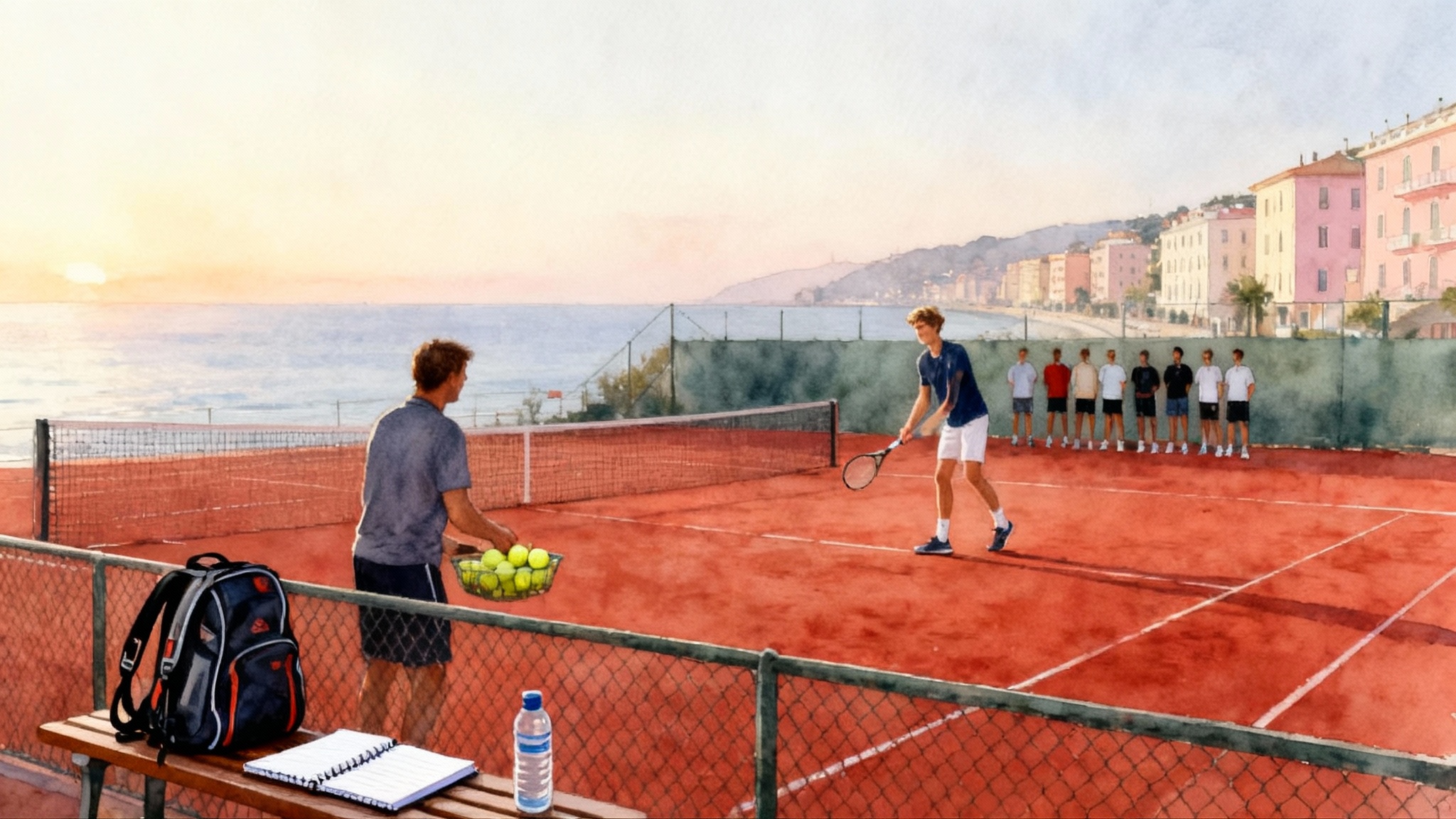
From snow to sea: a real pathway, not a shortcut
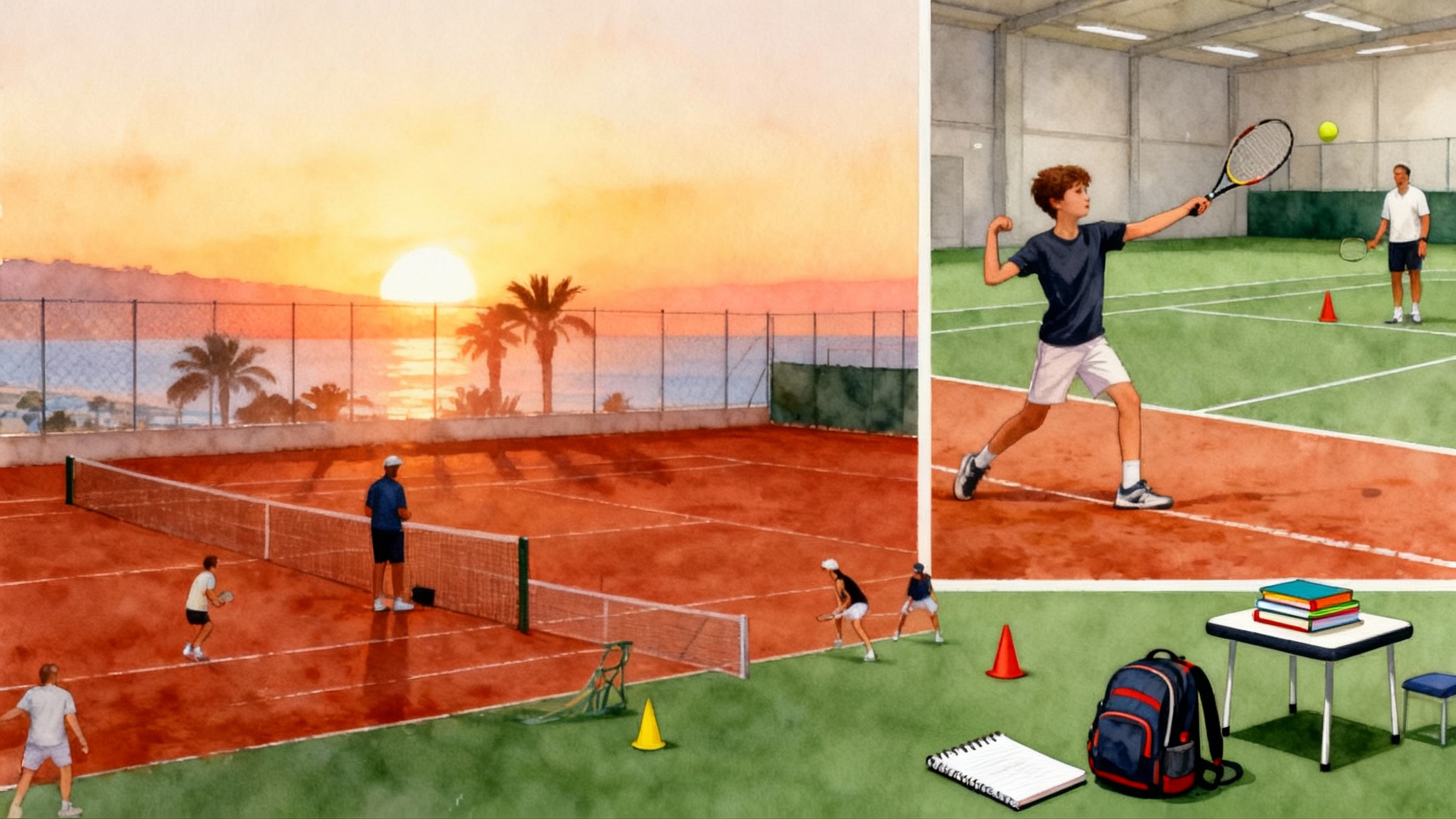
In South Tyrol, Jannik Sinner grew up with skis strapped to his feet and a racket never too far away. He was a champion junior skier, a disciplined student, and a child used to early mornings in a mountain culture that quietly prizes routine. At 13, he made a decision that can look romantic in hindsight but was simply practical: leave the snow, move to the coast, and learn tennis every day like school. That meant Bordighera, where Riccardo Piatti and his staff turned a promising mover into a complete player.
Sinner’s background is well documented by the tour. For families who want a single, reliable overview of the early years and the move, the ATP Tour biography of Jannik Sinner is a good north star.
The geography matters. South Tyrol taught endurance, balance, and patience. Bordighera added repetition, craft, and professional habits. The path was not overnight. It was weeks of learning to take the ball early, months of neutralizing pace with compact swings, and years of treating Tuesday practice like match day.
What Piatti Tennis Center actually did
Many academies promise intensity. Piatti’s center delivered structure. The difference shows up in the way Sinner learned to absorb pressure on a court that is only 23.77 meters long yet feels even smaller when you take the ball early. Here is how the academy shaped him.
Small groups that protect fundamentals
Piatti’s teams traditionally worked in pods small enough that feed-back-feed cycles were continuous. In that environment, Sinner refined the skills that let him grow without technical debt:
- Contact point discipline. Coaches built drills around meeting the ball slightly in front, with balance through the hips and a still head. The goal was to own time, not muscle the ball.
- Early-take timing. Sinner learned to shorten prep and hit on the rise. On hard courts, this converts opponent pace into your pace without added effort.
- Backhand reliability. The two-hander became a metronome. Coaches often test whether a junior can change direction down the line without losing balance. Sinner passed that test over and over.
- Return framework. The first step forward, split timing, and a repeatable block return were practiced as outcomes, not as isolated moves.
Daily structure that makes progress predictable
A typical training day in Bordighera had a rhythm. Families can copy this template even without a famous academy:
- Morning prep: dynamic warm up, movement patterns, and short-hand coordination drills.
- Two focused court blocks: one technical, one tactical. Technical blocks prioritized a single theme, such as forehand spacing or serve toss height. Tactical blocks recreated point patterns.
- Physical work in short segments: speed and footwork before lunch, strength and durability later. The goal was to arrive, not to exhaust.
- Debrief and notes: players wrote the day’s cues in a training journal. What moved the needle. What stayed sticky under fatigue.
Checklists and journals sound boring. They are the opposite. They remove noise. Sinner carried that habit into the tour, where a quiet routine travels better than a motivational speech.
Competitive sparring with constraints
Live points are only useful when they teach. Coaches at Piatti’s center would add rules to create learning pressure: hit crosscourt until you earn the down-the-line window, serve only to the body for ten minutes, or start points at 30–30 so every rally is emotionally loaded. The constraint makes behavior change stick.
The early proof: results before he could rent a car
Evidence matters. Sinner’s academy years translated into achievements that arrived fast, then compounded.
- At 17, he won the 2019 Bergamo Challenger as a wildcard. That is not common from a player who did not live in the junior tour. It signaled that his game scaled against men, not just juniors.
- Later in 2019, he won the Next Gen ATP Finals in Milan. The format rewards clarity, quick starts, and courage on big points. Those had been rehearsed.
- In 2020, he lifted his first ATP title in Sofia. That showed the capacity to play a full week with stable patterns.
- In 2021, he reached the Miami Open final and added more tour titles. The habits were traveling well.
The pattern underneath those trophies was stronger than the trophies: clean technique, predictable body positions, and a mindset that treats repetition as the craft, not the punishment.
The 2022 crossroads: changing a winning team
In February 2022, Sinner and Riccardo Piatti ended their collaboration. Coaching changes are rarely about a single reason. They are about the next set of problems to solve. Sinner hired Simone Vagnozzi, then added Darren Cahill that summer. The practical goal was to increase serve potency, thicken forehand tolerance in long rallies, and finish points with more front-court bravery. The decision was reported at the time by major outlets, including a concise Reuters report on the split.
This was not a rejection of the academy years. It was a sequel. When the organism grows, the stimulus must evolve. The Bordighera phase gave Sinner the base. The new team layered advanced ideas on top of that base.
What changed after leaving the academy
Families often ask what changed in the tennis itself. The answer is both specific and simple.
- Serve mechanics and intent. The toss became more consistent in height and location. The knee-to-hip sequence cleaned up, which turned speed into accuracy. First serves hit more corner targets. Second serves gained body-line variety. For families building serve work, see serve technique and pressure proofing.
- Forehand tolerance. There was more comfort rolling heavy crosscourt balls for as long as needed, then accelerating when the opponent’s contact point floated.
- Net skills and transition patterns. The team pushed him to finish points at the front of the court. That meant specific approach patterns and volley footwork rather than hope.
- Physical durability. Work in the gym shifted from linear strength to multidirectional durability. The goal was to repeat the same swing in the third hour as in the first set.
- Decision rules. The team refined when to step in and flatten, when to buy time with height, and how to vary return position by opponent and surface.
The payoff was obvious to anyone watching the tour. Titles stacked, including a first Masters 1000 in Canada in 2023, a landmark Davis Cup with Italy later that season, and a breakthrough Grand Slam title at the Australian Open in 2024. He rose to world number one in 2024. The academy years built the chassis. The new team tuned the engine and the aerodynamics.
Late specialization done right
Parents often hear two conflicting messages. Start early or it is too late. Or keep everything broad forever. Sinner’s path shows a third option that is more realistic.
- Multi-sport until early teens. Skiing gave Sinner balance, hip control, and courage to commit weight forward. If your child is 10 to 12, let them play multiple sports. The goal is movement quality, not spreadsheets of hours. We have covered similar late-specialization success in how Rafa Nadal Academy built Casper Ruud.
- A decisive pivot when motivation is internal. At 13, Sinner moved because he wanted the structure. Ask your player to write their own reason for committing. If they cannot state it, wait.
- Skill density over volume. When you commit, do not just add hours. Add density. In a two-hour block, count how many quality live-ball repetitions occur in the theme you are working on. That number should rise across weeks.
- Keep school habits. The way Sinner handled routine came from treating training like school. Families can set fixed wake times, block reading or study, and protect sleep windows. Predictable life supports unpredictable sport.
Action for families this month
- Audit the week. On paper, map school, sleep, and practice. Remove one low-value activity and insert one 30-minute footwork session.
- Pick a theme. For four weeks, choose one technical and one tactical priority. For example, neutral stance spacing on the forehand and crosscourt patience to eight balls. Track whether you stay on theme.
- Schedule unscored play. Once a week, play for 45 minutes without keeping score. The purpose is to try the new pattern without the noise of winning and losing.
Why small-group fundamentals and daily structure matter
A player who hits the ball well at 15 will not automatically hit it well at 20. Bodies change. Speed increases. The game demands earlier contact and better decisions. Small-group work keeps the main pieces under control.
What to look for in a small-group session:
- Coach-to-player ratio of 1 to 3 or 1 to 4. You want feedback every few balls, not every few minutes.
- A visible session plan. It should be written, with a theme, cues, and a drill progression.
- Constraints that teach. If every point looks like a free-for-all, the session is entertainment, not development.
- Filming with purpose. Phones or tablets are useful when clips are short and reviewed between blocks. Look for coaches who give one cue, not five.
Build a daily structure at home that mirrors professional environments:
- Set start times. If practice begins at 9:30, arrive at 9:00 and begin the same warm up every day.
- Journal. After practice, write three lines: what felt stable, what broke under pressure, what tomorrow’s first drill should be.
- Recovery. Choose one routine you will actually do. For many juniors that is a 10-minute mobility circuit after dinner.
How to recognize when it is time to move on
Leaving an academy is difficult. The relationship is real, and loyalty matters. Still, growth sometimes requires a new environment. Use a clear readiness checklist rather than emotion.
Signs it might be time to change:
- Plateau without a clear plan. The player is not improving key metrics for six months, and no one can show a roadmap.
- Technical debt that the academy cannot or will not address. For example, a serve toss that drifts or a forehand contact point that stays too far back, and no progress despite focused work.
- Mismatch of ambition or schedule. The academy’s tournament calendar does not match the player’s needs.
- Feedback fatigue. The player stops hearing the coach. Good coaches know when this happens.
How to manage a healthy transition:
- Build an exit portfolio. Record current technical videos from four angles, document strength benchmarks, list injury history, and summarize the last year’s themes. This protects continuity.
- Interview the next team with a trial block. Three to five days are better than one session. Ask them to propose a four-week plan based on your portfolio.
- Communicate with respect. Thank the academy in person, explain the reasons, and leave the door open. Sinner’s case shows that graduation can be a compliment to the foundation, not a rejection of it.
- Keep one anchor drill. When environments change, retain a familiar drill that gives confidence on day one.
A practical academy selection checklist
When you evaluate any academy or private program, use questions that reveal how learning happens:
- What is the coach-to-player ratio in technical blocks and in live-point blocks?
- How do you measure progress besides results? Show me the dashboard or the journal page you use.
- What are the five most common drills for improving early contact and spacing? Demonstrate one and explain the teaching cues.
- How do you modify sessions for growth spurts or fatigue? Give a recent example.
- Who leads transition to the net and how is volley footwork taught? Show the footwork pattern.
- How many matches will we play in the next eight weeks, and why those events?
- What is your policy on feedback. One cue per rally or a stream of commentary? Why?
Why Sinner’s story matters beyond Sinner
Every champion is a unique case. Yet the mechanisms that carried Jannik Sinner from Sexten to Bordighera to the top of the sport are transferable. Compare with how Equelite built Alcaraz.
- Clear timing. He did not force a decision at 10. He committed at 13 when he had a reason.
- Clean fundamentals that scale. Taking the ball early and holding balance will work in juniors, Challengers, and Grand Slam finals.
- A daily structure that travels. Journals and routines reduce chaos on the road.
- Courage to change. In 2022 he reconfigured his team to solve new problems. That is not disloyalty. It is stewardship of a career.
The takeaway for families
If your child loves tennis and the path feels foggy, borrow from this map:
- Keep movement broad in childhood. Think coordination and joy.
- If the spark is real at 13 or 14, commit to structure, not just more hours. Seek small-group fundamentals.
- Track progress with journals and periodic video. Treat the body like an instrument that needs tuning.
- Review the fit every six months. If the work is focused and the needle still does not move, consider a change with care and respect.
A final word
Jannik Sinner did not appear fully formed under the lights in Melbourne or Turin. He learned to love repetition in a seaside town after leaving a mountain life he also loved. The Piatti Tennis Center provided a foundation that was both technical and human. Years later, a new team added layers that the foundation could support. That is the pattern to copy. Build a base that scales, keep your habits simple, then have the courage to evolve when the next set of problems arrives. The result is not a fairy tale. It is a plan you can execute, one quiet day at a time.