From Athens to Nice: Mouratoglou Academy and Tsitsipas’s ATP Rise
 Tommy
Tommy
A teenager packs for Nice
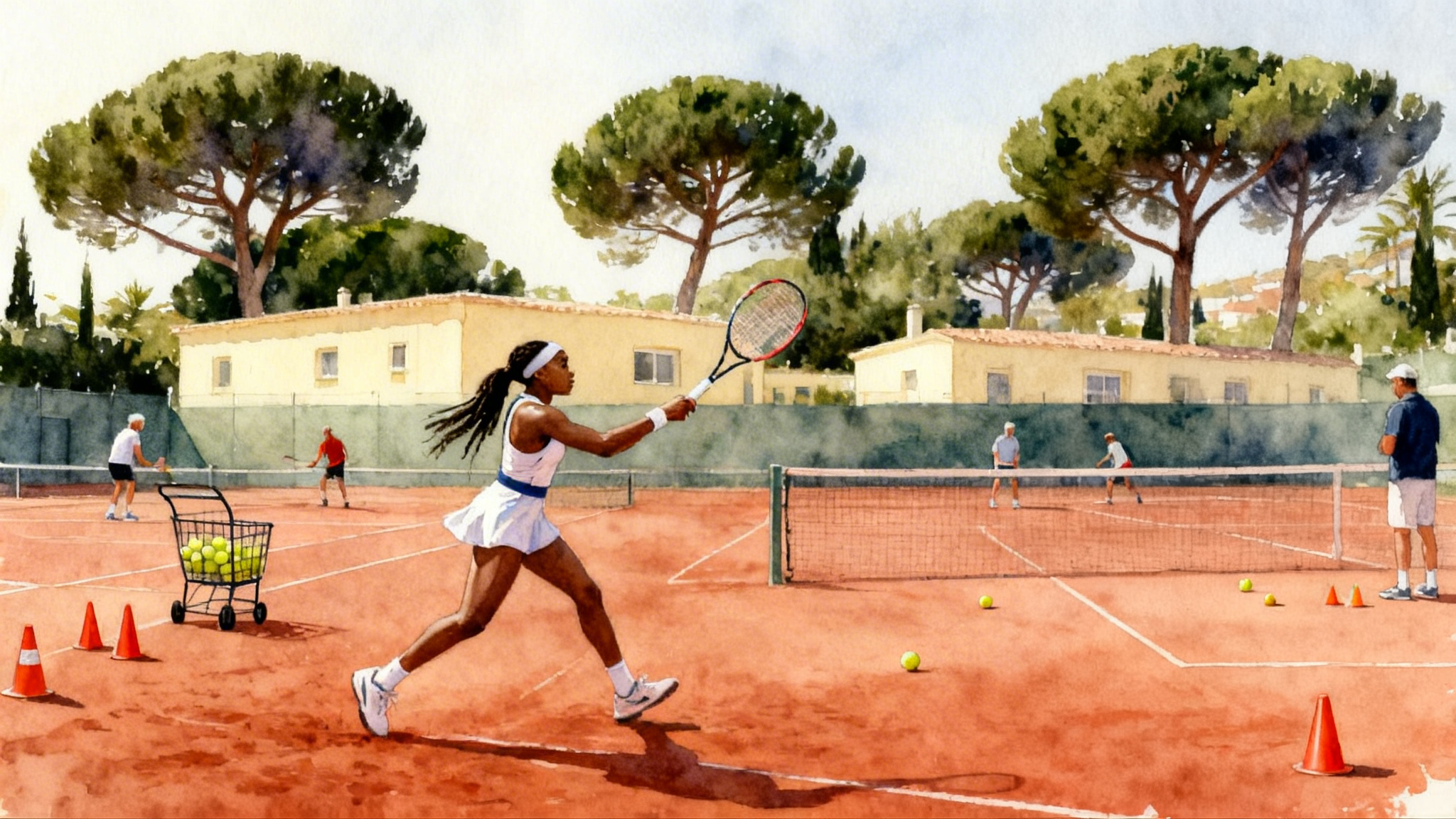
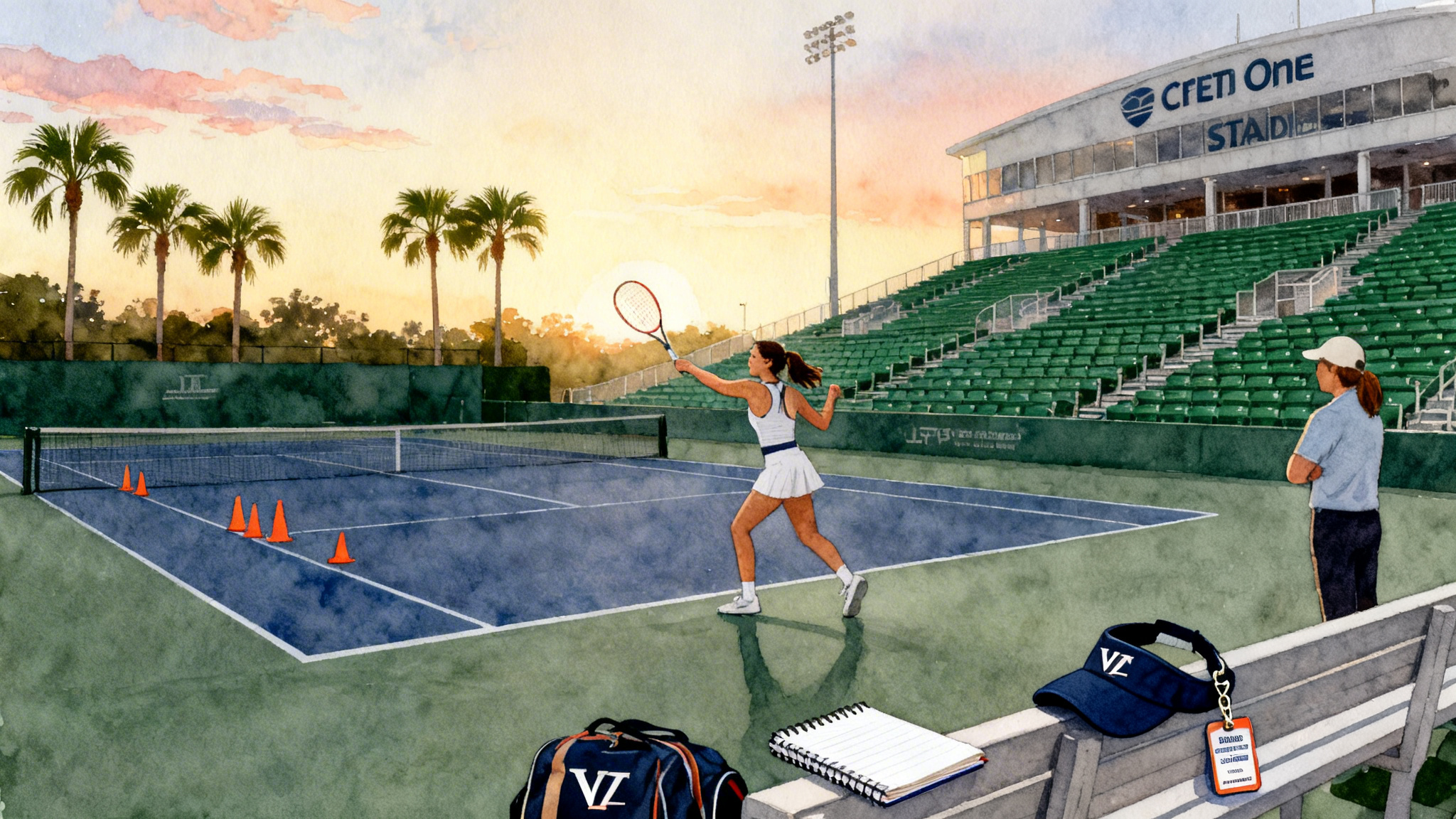
Picture a teenager leaving Athens for the French Riviera with two rackets, a physics textbook, and a head full of questions. How do you keep up with school when training twice a day? Can a family coach remain the compass when new voices enter the room? Will the work on hard courts show up on clay and grass? That was the challenge Stefanos Tsitsipas faced in his mid-teens when he began training at the Mouratoglou Academy near Nice. The move did not replace his father and long-time coach, Apostolos Tsitsipas; it amplified the system around him.
This is a case study in how a European academy environment can turn promise into adulthood-ready performance. For parallel pathways, explore Sinner's Piatti pathway to ATP elite and How All In Academy fast-tracked Arthur Fils.
We will break down three pillars that mattered in Tsitsipas's transition to the Association of Tennis Professionals (ATP) elite: a clear Tennis and School pathway, a mentoring culture that complements a parent-coach, and daily access to high-level sparring. Then we will extract the practical choices a family must weigh today.
The pathway: Tennis and School, one calendar
Many academies advertise balance. The difference is whether the academic calendar is truly integrated into the training calendar. At Mouratoglou, the Tennis and School model is built to schedule lessons, lifts, and match play around classroom blocks rather than squeezing homework into the cracks of a training day. See how the program is structured on the academy's own description of its Tennis and School pathway.
What this looked like for a rising pro:
- A fixed weekly rhythm. Early hitting or fitness before breakfast, a first on-court block, lunch and class, a second on-court block, then recovery and study hall. Consistency is the invisible coach. It makes technical repetitions predictable and academics sustainable.
- School that follows the tour. Coursework is designed to travel. When the player leaves for a two or three week competition block, the academic plan goes too, with remote check-ins and defined catch-up windows.
- Staff who speak both languages. Tennis coaches and teachers share a daily schedule and performance notes. If a heavy match block is coming, teachers reduce deliverables. If midterms loom, coaches reorganize volume and shift the emphasis to technical reps rather than all-out practice sets.
Why this integration matters: the brain handles skill consolidation during sleep and low-stress windows. When academic stress is unplanned and spikes at random, it collides with the loads of serve practice, footwork sequencing, and tactical review. A single shared calendar lowers interference. For a teenager, that is the difference between constant firefighting and gradual accumulation.
Action for families: during a trial week at any academy, ask for the real training and class schedules, and then ask to see what changes when a player travels. The key question is simple: when school gets busy, what specifically changes in tennis, and who decides?
Mentoring that complements a parent-coach
Tsitsipas's father was and remains a central coaching presence. The academy's role was not to replace him but to widen the lens. In practice, that meant three things.
- A lead coach of the day. Even when a parent-coach is present, a daily lead coach can run drills and provide a second set of eyes. They take notes, record a few key clips, and own one improvement goal per week, such as a higher contact point on the forehand return or a crisper first step out of the split. For movement quality, reinforce split-step timing fundamentals.
- Tactical roundtables. Once a week, player, parent-coach, and academy coach meet for 20 minutes with video. The agenda is tight: two strengths to protect, one weakness to attack, and one pre-point routine to refine. The parent-coach makes the call. The academy adds evidence and options.
- Specialist consults. Physio, strength and conditioning, and sport psychology support live adjacent to courts. The value is immediacy. If a player struggles with back-to-back practice sets, a coach can walk 30 meters to align training load with recovery and sleep.
This team-of-teams structure protects the bond that got the player to the academy while building professional edges around it. Families should listen for ownership language. The healthiest arrangement sounds like this: the parent-coach sets identity and long-term plan; the academy coaches design the weekly work; specialists fine tune. Everyone writes it down.
Sparring that shrinks the gap
Teenagers need to normalize the speed, depth, and decision time of the professional game. The academy environment in Nice provides a live practice ladder of nationally ranked juniors, college players on break, and touring pros passing through the Riviera. The day a player realizes that their solid crosscourt neutral ball now lands short against a top 200 forehand, the brain starts to reprice time. That is how a training block turns into a new standard.
Two habits made that sparring count for Tsitsipas-style development:
- Scored practices with constraints. For example, first-to-four games, no-ad scoring, and every third ball must be inside-out off the forehand. This tests how quickly a player can steer the rally to a reliable pattern.
- Immediate feedback loops. Coaches track serve percentage, rally length to nine balls, and forehand depth past the service line. The next day, ball machines and hand-fed drills target the weak link.
For families evaluating academies, the test is availability, not just prestige. Can your teenager book quality practice sets most afternoons without weeks of lead time? If the answer is yes, the gap starts to close.
Training patterns that travel across surfaces
Tsitsipas's rise coincided with patterns that worked on clay, hard courts, and grass. The academy setting helped stress test those patterns under different bounces and speeds. Here are the ones that generalize well for a modern aggressive-all-court style.
- Serve plus one. The first ball after the serve is programmed by design. Out-wide serve in the deuce court into a forehand inside-out lane. T-spins in the ad court into a backhand redirected down the line. The goal is to play the first forehand with chest facing the doubles alley, not the net. That body cue travels to any surface.
- Heavy crosscourt, line surprise. A heavy forehand crosscourt sets the high ball a meter off the backhand corner. When the opponent cheats, the down-the-line release becomes high percentage. The decision rule is visual: if the opponent's outside foot leaves the singles sideline, pull the trigger down the line.
- The slice that buys time. On quick courts, a knifed backhand creates skid and steals the opponent's strike zone. On clay, it floats enough to recover. It is the same shot with a different job, which is why the pattern travels.
- Short hop backhand. Taking the backhand early at shoulder height is a signature of elite play. Practice with cones a racket length inside the baseline and forbid retreat unless forced. The aim is to stand your ground and reduce the opponent's window.
- Return positioning rules. On second serves, a default step in with a shoulder-high target through the middle reduces angles and neutralizes kick. On first serves, favor depth over pace and aim third ball patterns, not winners. The simplicity helps on any surface.
Families should ask to see three things at tryouts: the pattern-of-the-day written on a whiteboard, constraint scoring that rehearses it, and a video archive that lets the player watch themselves run the pattern a week later. Improvement is easier to believe when you can see it.
Turning points on the way to the elite
Career arcs are not clean lines. Still, you can trace how the academy move connected to landmark steps.
- A year of blended training and school set a floor. With a shared calendar, the volume of ball striking rose without burning the player out academically. Repetitions accumulated and the strokes became more robust under pressure.
- Results began to stack, first in juniors, then in pros. By 2016, Tsitsipas finished as the International Tennis Federation junior world number one, and within the next seasons pushed rapidly into the top tier of the men's game. His breakout continued with the Next Gen title in 2018 and the season-ending championship in 2019, achievements captured on the ATP player profile for Tsitsipas.
- Big-match comfort arrived because practice speed became normal. Sparring daily with players who hit as hard as those in tour-level qualifying made the shock of professional pace fade. That made it easier to take risk when it counted.
Timeline note: the exact dates are not the point; the mechanism is. Upgrade the environment, pair it with a repeatable school and training plan, reinforce a few patterns that scale across surfaces, and the player increases the odds of a clean entry into the highest level.
What families can learn if you are weighing a European academy route
Here is a practical framework drawn from the choices behind the Athens-to-Nice leap.
1) Selection criteria checklist
- Player fit. Does the academy have recent success with your player's style and stage? Ask for two case studies that look like your player, including what did not work.
- On-court density. How many same-level or better hitters can your teenager face each week? Put a number on it. Quality sets per week is a key metric.
- Coach-to-player ratio. For teenagers, three to four players per coach on-court is usually the ceiling for real feedback.
- Shared calendar. Require a single schedule that shows classes, court time, fitness, recovery, and travel. If school and tennis sit in separate apps, daily friction will follow.
- Specialist access. Are fitness, physio, and sport psychology on campus and responsive within 24 hours? Delays kill momentum.
- Video and data. Can you get clips and basic stats weekly without begging? If not, development will rely on memory rather than evidence.
- Language and culture. If the student does not speak the campus language yet, is there an on-ramp plan? Clarity reduces homesickness and academic strain.
2) Boarding, day student, or hybrid
- Boarding upside. Structure, recovery time, social belonging with peers who share the same schedule, and a constant pipeline of sparring partners.
- Boarding tradeoffs. Distance from family, limited say in daily diet, and the need for a house parent who enforces sleep and study habits.
- Hybrid model. Some families place the athlete in boarding during the heaviest training months and shift to day student status when the pro calendar lightens or important exams arrive. Ask if the academy supports seasonal boarding.
Decision rule: if the commute steals more than 7 to 8 hours per week and there is a safe, well-run boarding option, boarding usually wins on training volume and energy conservation.
3) Cost and value, with a planning template
Actual fees vary widely across Europe. Instead of guessing, build a budget template and request the academy fill in the blanks.
- Training and coaching. Annual base plus any tournament travel day rates.
- Boarding and meals. Month by month, with holidays specified.
- Schooling. Tuition and any exam or materials fees.
- Tournaments. Flights, hotels, entry fees, and on-site coaching. Estimate the number of competition weeks per year and multiply.
- Specialist services. Physio, strength and conditioning testing blocks, and any external medical follow-up.
- Contingency. Ten percent for unplanned travel and equipment.
Value test: measure cost against the two outputs that matter most in a given season. For a 15-year-old, that might be increases in first serve percentage and the ability to win practice sets against older, stronger hitters. If the academy can move those needles, the spend is working. If not, reallocate.
4) Travel scheduling that respects learning and lungs
A simple annual rhythm works for most teenagers entering the professional ranks.
- Three-week competition blocks. Start with two smaller events and a third with stronger entry lists. The third week stress tests the upgrades.
- Two-week training blocks. Use the first week to repair patterns that broke under stress and the second for match play volume.
- One full week off every 12 weeks. Sleep, light cross-training, and no racket for a few days protect the nervous system.
- School windows. Schedule heavier academic loads in the two-week training blocks and protect one day off during each three-week competition run for assignments and rest.
This rhythm scales with age and success. As ranking and tournament level rise, the same principles hold: volume, stress test, review, recover.
5) Integrating national federation support with a private academy
Many federations want to help a top junior with camps, fitness testing, and partial travel funding. The risk is duplication and mixed messages. Solve it with paperwork and cadence.
- A single development plan. Put it on one page. Identity, goals for the next 12 weeks, key patterns, fitness targets, and the travel calendar.
- A monthly call. Parent-coach, academy lead coach, and federation contact meet for 30 minutes. Share data, confirm roles, and prevent surprise invitations that collide with training blocks.
- Shared video. Give the federation a read-only folder of match clips and practice highlights so their consultants can advise without starting from zero.
The win is alignment. The player hears the same language whether the shirt logo is private academy or federation.
How this approach produced results that stick
When Tsitsipas surged from junior accolades to the main tour, it looked sudden from the outside. Inside the daily grind, it was cumulative.
- He learned in an environment that treated training and school as parts of one system. That protected repetition and reduced friction.
- He worked with mentors who added tactics and tools without erasing the voice that raised him. That preserved confidence while accelerating learning.
- He sparred daily at a speed that blurred the perceived gap to the tour, so big stages felt less foreign. That stabilized decision making when it mattered most.
- He drilled patterns that did not belong to a single surface. Serve plus one, heavy crosscourt with a line change, flexible slice, early backhand, and clear return rules made his game portable across clay, hard, and grass.
The public milestones that followed, including deep runs at Grand Slams and the season-ending championship, make sense in that light. They record outcomes. The system explained here produced inputs.
A final checklist you can act on this month
- Book a trial week. Insist on a true day-in-the-life with two full practice sessions, a class block, study hall, and recovery.
- Ask to see evidence. One sample player plan, one week of video reports, and a coach-to-player ratio on paper.
- Map a budget. Get line items for training, boarding, school, tournaments, specialists, and contingency. Compare numbers across two academies.
- Stress test patterns. During the trial, request one constraint set that rehearses a pattern your player will need in the next 90 days.
- Align the team. Draft a one-page plan and schedule a monthly call that includes the parent-coach, academy lead, and federation contact.
Conclusion: the bridge is built on details
From Athens to Nice was not a leap of faith. It was a series of concrete choices that made training additive, not chaotic. A school calendar that fit the travel calendar. Coaches who added perspective without crowding out the voice that mattered most. Sparring that made professional pace normal. Patterns that worked everywhere. If you are weighing a European academy, borrow the parts of this system that you can verify and sustain. Do those well and the path from promise to the elite becomes less mysterious and more repeatable.