How All In Academy Fast-Tracked Arthur Fils to ATP Titles
From the Paris suburbs to Lyon–Décines, Arthur Fils moved from France’s federation pathway to a pro-modeled routine that mixed mentorship, match play blocks, and smart scheduling to claim an ATP title before 20.
 Tommy
Tommy
Paris suburbs, federation habits, and a new orbit in Lyon-Decines
Arthur Fils grew up in the belt of towns south of Paris, where weekday practice often means beating traffic and finding court time between school lessons. Like many French prospects, he entered the structure of the French Tennis Federation at the National Training Center next to Roland Garros. There he learned to build points on clay, won the Roland Garros junior doubles crown in 2021, and collected the habits that good juniors share: steady hours, frequent sparring, and discipline under watchful coaches.
The story changes when junior results must become tour results. The difference is not only ball speed or the size of the stadium. It is an adult routine that collapses wasted time, pairs hitting with gym and recovery, and links training to a precise competition plan. Around 2023, Fils assembled that routine, then turned a local run of Challengers and a home ATP 250 into a first title on the men’s tour, as detailed in the ATP Lyon title recap. He became champion in Lyon at 18, defeating Francisco Cerundolo in straight sets and jumping into the Top 100 the following Monday.
This article traces what changed as Fils shifted from a federation-centered pathway to the ecosystem Jo-Wilfried Tsonga and Thierry Ascione built at All In Academy in Lyon-Decines, and distills what parents can copy when choosing an academy for a player ready to make the same leap. For a fuller picture of the setting, see our All In Academy profile.
What a pro-modeled day looks like
Picture a training day as a relay, not a series of separated chores. At All In’s Lyon-Decines campus, courts and support spaces sit within a short walk. That proximity matters more than it seems. Here is the kind of schedule that turns potential into progress:
- 08:00 Activation and breakfast: light mobility, hydration, and a plan for the day’s keys. The talk is short and specific, not motivational wallpaper.
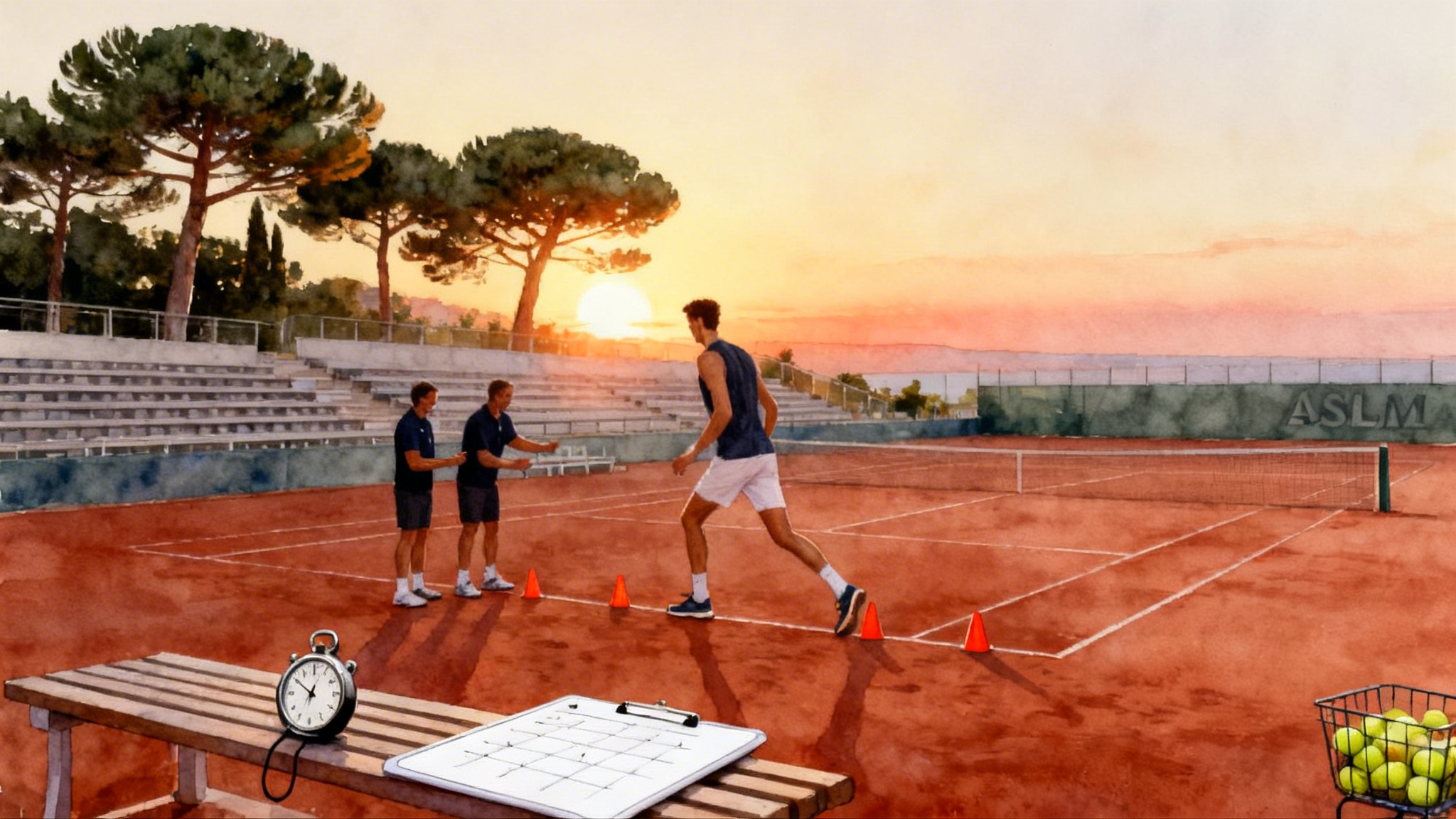
- 09:00 On-court block one: 90 minutes focused on patterns that match the next event. Pre-Lyon, that means first-strike forehand patterns and return depth on slower clay, plus live points starting 30-30 to practice closing games.
- 10:45 Gym block: compound lifts in low volume for neural intent, then medicine-ball torque work that mirrors the day’s patterns. Strength coach and tennis coach share language and targets.
- 12:00 Lunch and reset: the player logs perceived exertion, sleep, and specific notes on footwork, ball height, and serves won to the forehand.
- 14:00 On-court block two: situational sets. For Fils in spring, a common setup is one serve only, winner starts down 0-30, or a tiebreaker ladder. The goal is problem solving under constraint.
- 16:00 Treatment and regen: soft tissue, contrast, and ten quiet minutes with the match planner to refine the weekend competition choices.
- 19:30 Short review: two clips, one number, one cue. The clip shows a pattern done right, the number is a controllable stat target, the cue is what to feel tomorrow.
Parents should look for this coherence. If an academy lists great facilities but cannot show how each unit hands the baton to the next, your player will work hard without compounding gains.
Mentorship that is close enough to copy
There is a difference between admiring a champion on television and hearing him explain how he handled a second-serve slump after a poor night of sleep. All In’s edge is that its leaders are recently retired or still-active figures who have lived the modern tour. Jo-Wilfried Tsonga and Thierry Ascione helped design a setting where juniors see adult routines up close, from how to warm up on travel days to how to ask for the right practice partner.
Mentorship works when it becomes copyable. Players learn to:
- Pack a practice plan into a tight 60-minute slot without rushing.
- Make the first ten minutes of hitting count by scripting ball height and court position.
- Use scouting notes that fit in a pocket, not a binder. One line for serve locations, one for preferred rally ball, one for break-point tendencies.
For a prospect like Fils who already had a strong forehand and first step, that kind of mentorship was gasoline on a fire. For a complementary technique focus, explore our split-step reactions guide. The lesson is not star power. It is proximity to pro behaviors that a teenager can imitate tomorrow morning.
Smart scheduling: French Challengers into home ATP 250
The jump from juniors to tour is not a single leap. It is a staircase built with ranking points and confidence. Early in 2023, Fils targeted a run that looks simple on paper and brilliant in hindsight.
- January: he picked up matches and a title on the indoor Challenger swing, building speed without long flights and grabbing a first professional trophy.
- Late January: he pushed deep again at Quimper in Brittany, another short-haul event where he could stack matches without the weight of a new time zone or surface.
- Spring: he added selective tour-level starts in France where crowds and conditions were familiar, then rolled that rhythm into Lyon.
- May: he entered the Open Parc in Lyon with a wildcard, survived a three-setter over Brandon Nakashima in the semifinal, and finished the job in the final to seal that first ATP title on clay.
That itinerary did three things:
- It preserved freshness. Fewer border crossings meant more practice continuity.
- It matched surfaces. Indoor winter, then clay spring, then a clay event at home.
- It managed risk. If an early loss came, the next start was near and familiar.
Parents can borrow this template. Pick a three to five week arc that minimizes travel, aligns surface with strengths, and ends in a target event that fits the player’s current weapons. A similar staircase appears in Sinner’s Piatti pathway.
Why Decines made sense
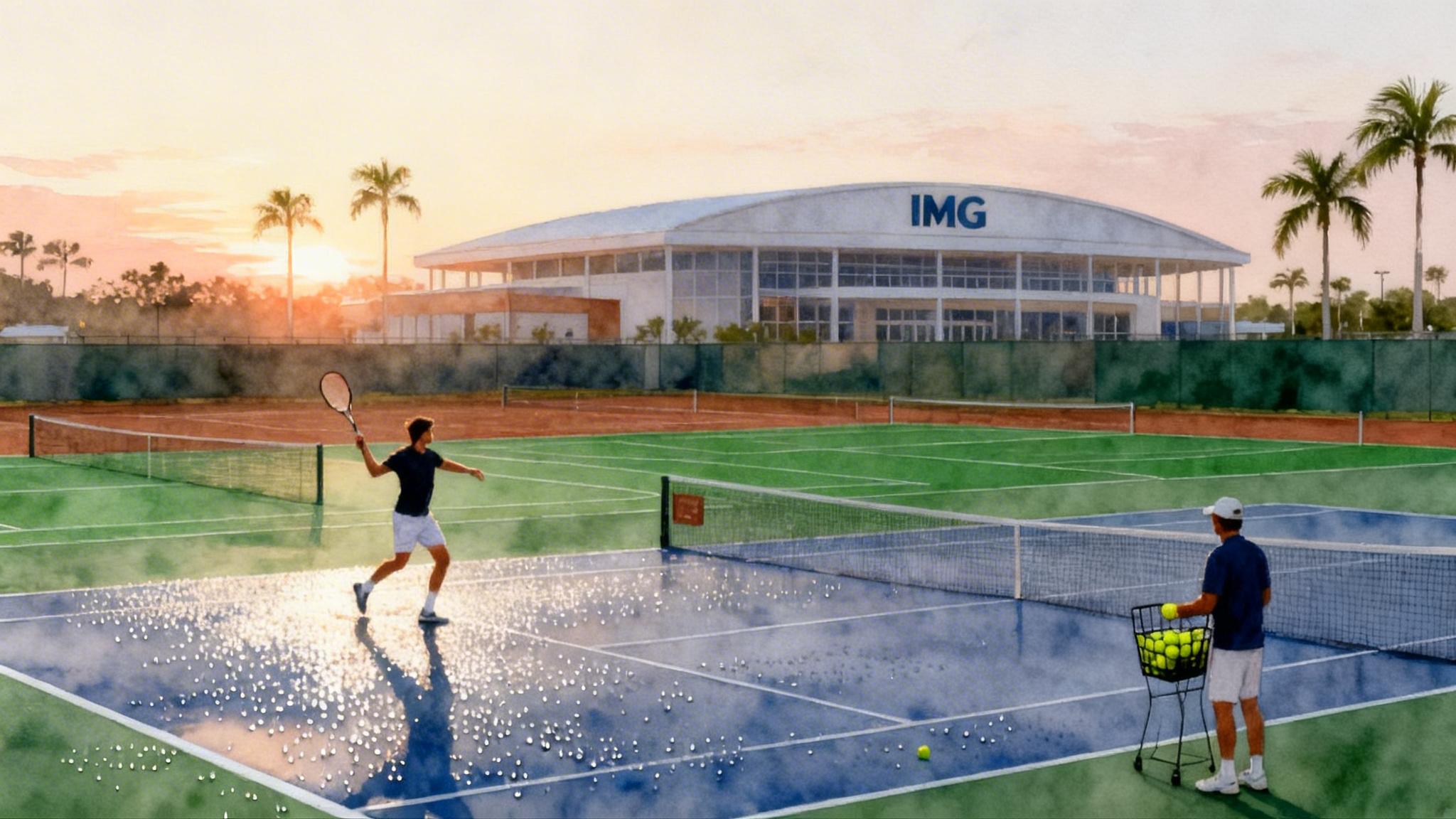
All In opened its Lyon-Decines site inside a large sports district near Groupama Stadium, a campus-sized footprint that gives players indoor and outdoor options, a full gym, treatment space, and an easy loop between rooms. The group also helps stage top French events, including the Lyon week itself, through its events arm. The result is a setting where training, logistics, and the competitive calendar speak one language. The academy outlines the project and amenities on the All In Lyon Decines facilities.
If you are visiting as a family, ask the staff to show you how a tournament week would look for your player. Where would warm-ups happen on match day. Who organizes practice hits. How are transport, meals, and recovery sequenced when the start time moves. A good academy can answer these with a site walk and a one-page plan.
The mechanisms behind Fils’s breakout
Fils did not suddenly add a new shot in May. The mechanics that paid off in Lyon were built across months and then expressed with clarity during one compact week.
- Serve plus one pattern: he used the serve to start neutral and the forehand to decide. In juniors he could blast through a rally. On tour he learned to repeat a pattern that earns short balls, then take the line when it appears.
- Return depth and foot position: he moved his return contact point forward on second serves and treated the first two shots as a pair. The goal was to neutralize heavy-forehand opponents like Cerundolo before they set up.
- Physical timing: indoor work in January raised ball speed and first step quickness. Clay blocks in spring added deceleration strength and endurance. The blend let him keep his shoulders loose deep into the Lyon final.
- Emotional regulation: a pro day with defined beats limits rumination. Between sessions he reviewed one number and one cue only. That containment keeps the tank full when matches pile up.
Each mechanism is portable. Parents and coaches can build them at any high-quality academy that runs a real performance loop between court, gym, and planning. For logistics and coaching structure, start with our All In Academy profile.
A parent’s checklist for a next-step academy
There is no single perfect academy. There are programs that match your player’s needs now. Use this list to assess whether an academy can help a junior become a week-in, week-out professional.
- Daily structure that compounds
- Ask to see a sample schedule from an actual athlete week. Look for two court blocks, one strength block, and one recovery block that feed one another.
- Demand evidence that coaches and strength staff share targets. One calendar, one set of session notes.
- Match play blocks built into the calendar
- The academy should schedule internal match weeks with real umpires and new balls, then pivot to nearby events that test those patterns.
- Sparring partners must be chosen for problems they pose, not only for name recognition.
- Travel planning that removes noise
- The staff should map a three to five tournament arc that fits the player’s school, injury history, and surface comfort.
- Ask for a Plan B if a player loses early. The best plans include a next hit within 24 hours that salvages the week.
- Mentorship that is specific, not sentimental
- Mentors should offer concrete routines your player can copy tomorrow, like a 12-minute warm-up or a set of second-serve targets.
- If the academy has access to recently retired pros, request a sit-down that results in one behavior change, not a selfie.
- Transparent progress metrics
- The program should track controllable stats: first-serve percentage in big points, return depth measured by four zones, break points earned per set.
- Ranking points matter, but the weekly dashboard must be actionable.
For families comparing options, our All In Academy profile includes practical notes on both campuses, travel, and where each site makes the most sense in a season plan.
What the Lyon week teaches about timing an upgrade
Fils’s Lyon title was not only a breakthrough performance. It was the payoff of aligning a base, a routine, and a schedule.
- Base: a campus in Decines where a player can stack days without commuting friction.
- Routine: a pro day that leaves little to chance, from activation to regen.
- Schedule: a staircase of events that keeps the player on the right surface, close to home, and building confidence.
That is the model to copy. Whether your player trains in France, Spain, the United States, or elsewhere, look for a center that can reproduce those three layers.
A practical template you can adapt this season
Here is a simple plan parents and coaches can apply. Adjust the cities to match your region.
- Weeks 1–2: indoor or hard-court Challenger stretch inside a three-hour travel radius. Goal: 6–8 quality matches, one strength emphasis per week.
- Week 3: training week with two internal match days and one tempo set day. Add a light density lift and movement prep before each on-court session.
- Weeks 4–5: transition to clay or target surface. Play one Challenger, then pivot to a home ATP 250 qualifying or main draw if a wildcard is realistic.
- Week 6: reset week. Two gym rebuild sessions, one technical day focused on serve plus one, one day of pure recovery.
Keep the calendar written on a single page. The player should be able to recite the next ten days at a glance. That simplicity frees energy for solving points.
The bottom line for families deciding now
Arthur Fils’s rise shows that the fastest path from junior promise to tour viability is rarely a talent explosion. It is a set of choices that remove friction and reward repeatable behaviors. A campus like Lyon-Decines makes those choices easier by putting the pieces in one place, while the broader All In group ties that daily work to France’s competitive map. The win in Lyon was a headline, but the story is organizational. If you choose an academy that integrates fitness, match play blocks, and travel planning with the same clarity, you give your player a chance to turn a good week into a season that moves the ranking.
And if the target is a title at home before 20, Fils’s example gives you the blueprint. Build a day that compounds, schedule a staircase that climbs, learn from mentors you can touch, then arrive at the right event already living like the players you want to beat. That is how a boy from the Paris suburbs walked into Lyon a contender and walked out a champion at 18.