From College Park to US Open: JTCC’s Frances Tiafoe Blueprint
How a public‑access academy in College Park helped shape Frances Tiafoe. We break down JTCC’s match‑play culture, scholarships, USTA integration, and the transition to pro tennis into concrete steps families can copy.
 Tommy
Tommy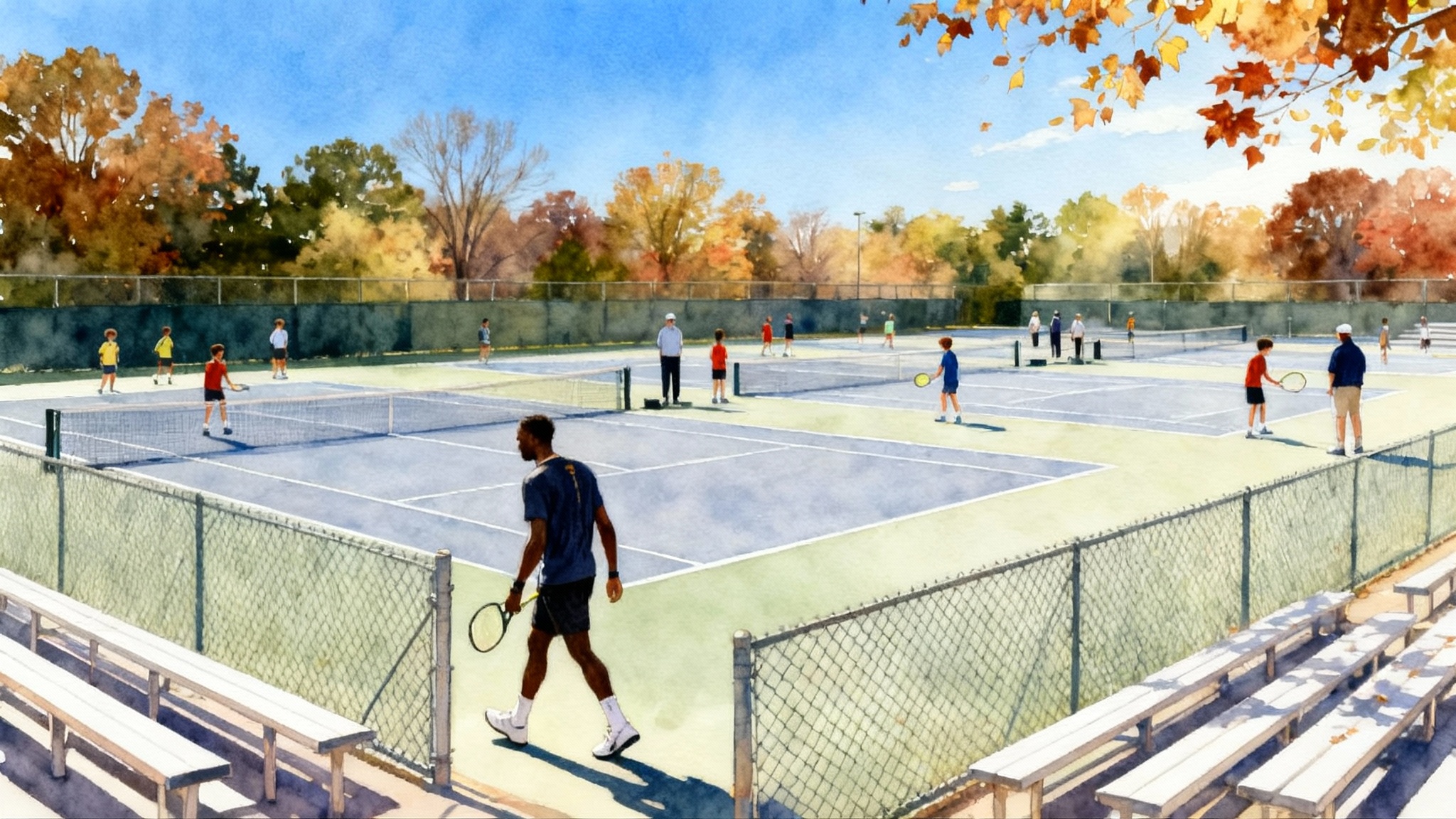
A story rooted in access, not exclusivity
Every sport has outliers who succeed because the door opened early and stayed open long enough for them to walk through. Frances Tiafoe is one of those stories. His rise did not begin inside a gated compound or an invitation-only camp. It began in College Park, Maryland, at the Junior Tennis Champions Center, known as JTCC, a nonprofit that treats tennis as a community project first and a performance lab second. That order matters. When resources flow toward broad access, talent finds its way to the front of the line.
JTCC’s mission shows up not in slogans but in how the place runs. Courts are busy with kids from different zip codes. Coaches teach in small groups, then hang around to feed extra balls to the stragglers. Scholarships exist not as rare exceptions but as a pipeline. You can see that commitment in the JTCC community-first mission. For a young Frances, that meant proximity to courts, coaches, and competition from morning to night. He could be around the game more hours than families with long commutes and short court access windows. The result was not instant stardom. It was steady accumulation of match mileage.
What JTCC actually optimized
A lot of academies promise intensity. JTCC optimized something more practical: match-play density. Think of match-play density as the number of real points you play per week against new opponents. Drills are the textbook. Matches are the quizzes and exams. If you want an A in tennis, you need both, but the exam grades your progress.
JTCC created density in four specific ways:
- Calendar stacking. Players compete in frequent Mid-Atlantic events so that a local weekend becomes a test, not a break. Travel can be short, yet the variety of opponents is high.
- Integrated sparring. A normal weekday can include a practice set against an older player who hits heavier, then a tiebreak competition after fitness. No special occasion required.
- Ladder accountability. Internal ladders create micro stakes. If you win, you move up and keep playing tougher matches. If you lose, you still get matches, just against peers who challenge you differently.
- Coaching continuity. The same primary coach follows your matches, logs patterns, and iterates small changes. The learning loop tightens because feedback lands within hours, not weeks.
For Tiafoe, this meant years where the next match was always coming, usually in three to five days. His game did not need hype because the proof sat in results from a constant stream of sets and small tournaments.
The public-access decision that shaped everything
The tennis world often assumes that paywalled programs are better. JTCC flipped that logic. When you build a public-access program with scholarship lanes, you get two advantages rarely found together: volume and diversity. Volume means more partners, more playing styles, more matches. Diversity means exposure to different tempos, heights, grips, decision speeds, and competitive behaviors.
In a private, small-cohort academy, a talent like Tiafoe might face the same three game styles for months. At JTCC, he could face five styles in one week. For a developing player, that variety matures shot selection. It teaches restraint on defense and ambition on sitters. Families evaluating academies should ask one simple question: How many different opponents can my child face this month without boarding a plane? For contrast with a large private campus model, study how IMG Academy shaped Sebastian Korda.
How the Mid-Atlantic became a launchpad
The Mid-Atlantic region is an underrated ecosystem for junior development. The level is deep enough to challenge a climbing player but not so dense with blue-chip recruits that a talented player cannot gather wins and confidence. JTCC leveraged this balance. Players enter local United States Tennis Association events, adults at the right moments, and internal match days. Tiafoe’s path through the region looked less like a straight line and more like a spiral that kept expanding outward. The center of that spiral was College Park. For another regional playbook that scales well, explore Emma Navarro’s Charleston plan.
If you are mapping this for your own player, aim for three layers:
- Local events for rhythm. These build decision speed and set routine.
- Regional rank-moving tournaments spaced every four to six weeks. These stretch the ceiling without burning travel budgets.
- Occasional national or international tests during peak readiness blocks. These are measuring sticks, not identity builders.
The lesson is simple. Let success compound locally before scaling.
United States Tennis Association integration without the headaches
The best academies make national pathways feel like part of daily life, not a separate bureaucracy. JTCC coaches understand the calendar and speak the language of the United States Tennis Association. They know how junior rankings translate into pro opportunities and where a player stands in line for wild cards or qualifying spots. Families often feel lost between junior and pro rules. The fix is an academy that translates rules into weekly actions.
Here is the practical recipe JTCC models:
- Set short windows for ranking pushes. Four to eight weeks with targeted events.
- Use off weeks for fitness and technical micro blocks, not total shutdowns.
- Schedule pro qualifiers only when two conditions align: match-play density is high and the player’s strength endurance is peaking.
- Treat a first Futures or Challenger qualifying draw like a capstone exam. You do not cram. You review and rest.
If you want to understand the structure of entry-level professional events in the United States, read the USTA Pro Circuit pathway. The key insight for families is that a strong junior season can open doors into qualifying or selective wild cards, but the foundation still comes from weeks of local competition and habit formation.
Coaching relationships that endure the jump
Young players often bounce between voices. JTCC kept Tiafoe’s circle tight. One primary coach, a small support group, and clear responsibility for each piece of development. That stability matters most during growth phases when timing feels unpredictable and confidence swings. The constant in that confusion should be the relationship with the coach, not the search for a new one.
Practical checks for families:
- Tenure. Ask how long the primary coach has stayed with previous top players.
- Match presence. Confirm that your coach will watch two or three matches per month and debrief within 24 hours.
- Feedback loop. Look for video use tied to single goals, like improving first-ball depth after the serve. Avoid sessions that chase five mechanical fixes at once.
Funding routes that are real, not theoretical
Tennis is expensive because court time costs money and travel stacks up quickly. JTCC lowers the barrier with scholarships and a community focus. That is different from vague promises of sponsorships that appear only after results come. For Tiafoe, early access to free courts and frequent play created the repetition that no budget can shortcut. He was inside the building often enough to make small gains every day. Community-first programs like the Milwaukee Tennis & Education Foundation show how access models scale beyond one city.
Here are funding routes families can actually pursue:
- Academy scholarships with published criteria. Ask to see historical acceptance rates and retention data.
- Municipal grants or parks department partnerships that offset court fees.
- United States Tennis Association section grants for travel tied to sectional or national events.
- Local sponsors who pay for a specific line item such as stringing or tournament entry fees. Keep it concrete and accountable.
- Shared travel with teammates so hotel and rental car costs drop by half.
When a family can remove two or three recurring costs, they can redirect money toward coaching consistency and a strength coach who knows junior development rather than buying one big trip that looks glamorous but produces no habits.
The junior to pro bridge that actually holds
The gap between the last big junior win and the first adult tour success swallows many careers. JTCC helps players handle that bridge by treating it as an 18 to 24 month window with measurable phases:
- First six months. Split time between high-level juniors and entry level Futures qualifying. Target match counts first, ranking points second.
- Months six to twelve. Shift toward more Futures main draws and selected Challengers if results warrant. Introduce targeted doubles for extra matches.
- Year two. Build a schedule that locks in reliable points from Futures while testing at larger events during fitness peaks.
Families should remember that the adult tour rewards habits under fatigue. You learn those habits when matches pile up and you still hit your patterns. Academies can help by tracking two numbers that predict whether a player is ready to step up: matches per month and percentage of holds to 30 or better on serve. If both hold steady while competition gets stronger, the player is ready to climb.
What Tiafoe’s results tell us about the method
You do not need to know every scoreline to understand the arc. Tiafoe collected junior results that earned opportunities, spent time in Futures and Challengers, then pushed through to main tour events. The tipping point was not a single new stroke. It was the maturity to select better shots at the ends of sets. That comes from living through dozens of 4-all games and 5-all tiebreaks in different conditions. By the time he made his breakthrough in New York in 2022, he already had years of those moments in his legs and in his head.
A parent’s checklist to evaluate any academy
Use this list to pressure test claims. If an academy checks most boxes, you are likely in good hands.
Match-play and scheduling
- Average of 8 to 12 real matches per month for top juniors, including internal sets.
- A posted monthly calendar with play days, not just practice days.
- Clear process for entering and debriefing United States Tennis Association events.
Coaching and feedback
- Named primary coach with written responsibilities.
- Film review no more than once per week with a single objective.
- Match reports that include three data points: first-ball depth after serve or return, break point conversion, and rally-length tendencies.
Funding and access
- Documented scholarship paths and retention rates.
- Low-friction court access for scholarship players, including off-peak hours.
- Partnerships with local schools for study support during travel periods.
Pro pathway integration
- A written plan for Futures and Challenger entries that spans six months.
- Relationships with tournament directors in the region.
- A doubles plan to boost match counts and learning in pressure points.
Building a JTCC-style week at any level
Here is a template for a 14 to 17 year old who wants to copy the College Park rhythm.
Monday
- Morning: 60 minute fitness with linear sprints and change of direction.
- Afternoon: Two hour practice with crosscourt patterns, then serve plus one depth targets.
- Evening: One practice set to 6 with a stronger partner.
Tuesday
- Morning: Mobility and recovery, 30 minutes.
- Afternoon: Two hour drilling with return plus one pattern and tiebreak practice.
- Evening: Video review, 20 minutes, one goal for the week.
Wednesday
- Morning: Fitness circuit, 45 minutes.
- Afternoon: Internal ladder matches, two short sets to 4 no ad, then a 10 point match tiebreak.
Thursday
- Afternoon: One hour serve and first ball, one hour point construction.
- Evening: Light hit and stretching.
Friday
- Pre tournament readiness set. Focus on routines between points.
Weekend
- Local event or two to three arranged matches. Sunday debrief with primary coach.
The key is repetition that feels normal. You want match days to feel like an extension of practice, not a special performance.
Common traps JTCC avoided
- Over specialization too early. Big forehands need a reliable backhand to start points. JTCC developed full points, not isolated winners.
- Chasing far-away tournaments for status. Status does not raise your level. Variety of opponents does.
- Switching coaches after every loss. Stability turns losses into information.
What families can do this month
- Measure. Track matches per month and how many opponents are new.
- Audit. Ask your academy for a six month calendar that includes specific events.
- Align. Pick one primary coach and write down roles for any secondary voices.
- Apply. Identify one scholarship or funding source and submit before the next event block.
- Connect. Build relationships with two tournament directors within a three hour drive.
Why this blueprint travels well
Not every town has a JTCC. Every town can build the JTCC habits. Public access courts with a volunteer ladder can mimic density. A small group of committed coaches can share match reports and coordinate goals. A parent can make a simple spreadsheet for costs and target one grant per quarter. If you want another community-to-pro example, see how the Milwaukee Tennis & Education Foundation turns access into match play. The point is not to copy every detail of College Park. It is to copy the cause and effect. Access creates time on court. Time on court creates decision speed. Decision speed wins at every level.
The throughline from College Park to the US Open
When people remember Frances Tiafoe’s first deep run in New York, they see bright lights and a packed crowd. The real story begins far from the spotlight, with a kid who could get to a court quickly and often, guided by a staff that believed progress is a daily chore, not a headline. JTCC’s community model made that possible by keeping the door open and the calendar full.
If you are choosing an academy, chase those same ingredients. Ask how your child will play more matches against more styles without burning your travel budget. Ask who will watch and debrief those matches. Ask how the program will walk you from juniors to Futures to Challengers with specific dates and criteria. Then pick the place that gives you concrete answers instead of slogans. That is how College Park helped build a player who could walk into Arthur Ashe Stadium and look comfortable.