From Copenhagen to Côte d’Azur: Mouratoglou and Holger Rune
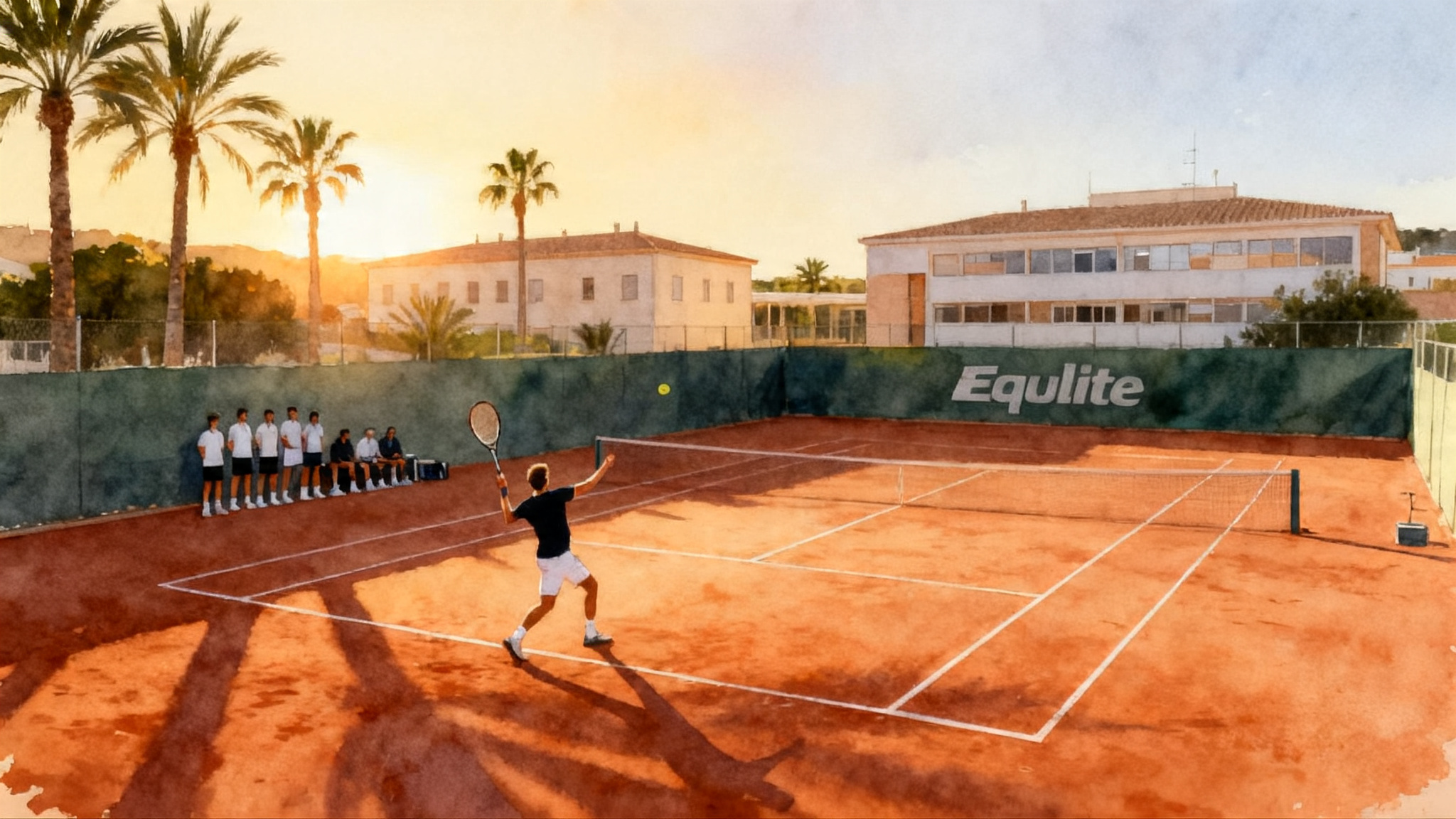
At 13, Holger Rune left Copenhagen for the Mouratoglou Academy after a Champ’Seed scholarship. Inside that high‑density environment he learned to thrive on daily match play and sports science while staying aligned with coach Lars Christensen.
 Tommy
Tommy
A leap that began at the kitchen table
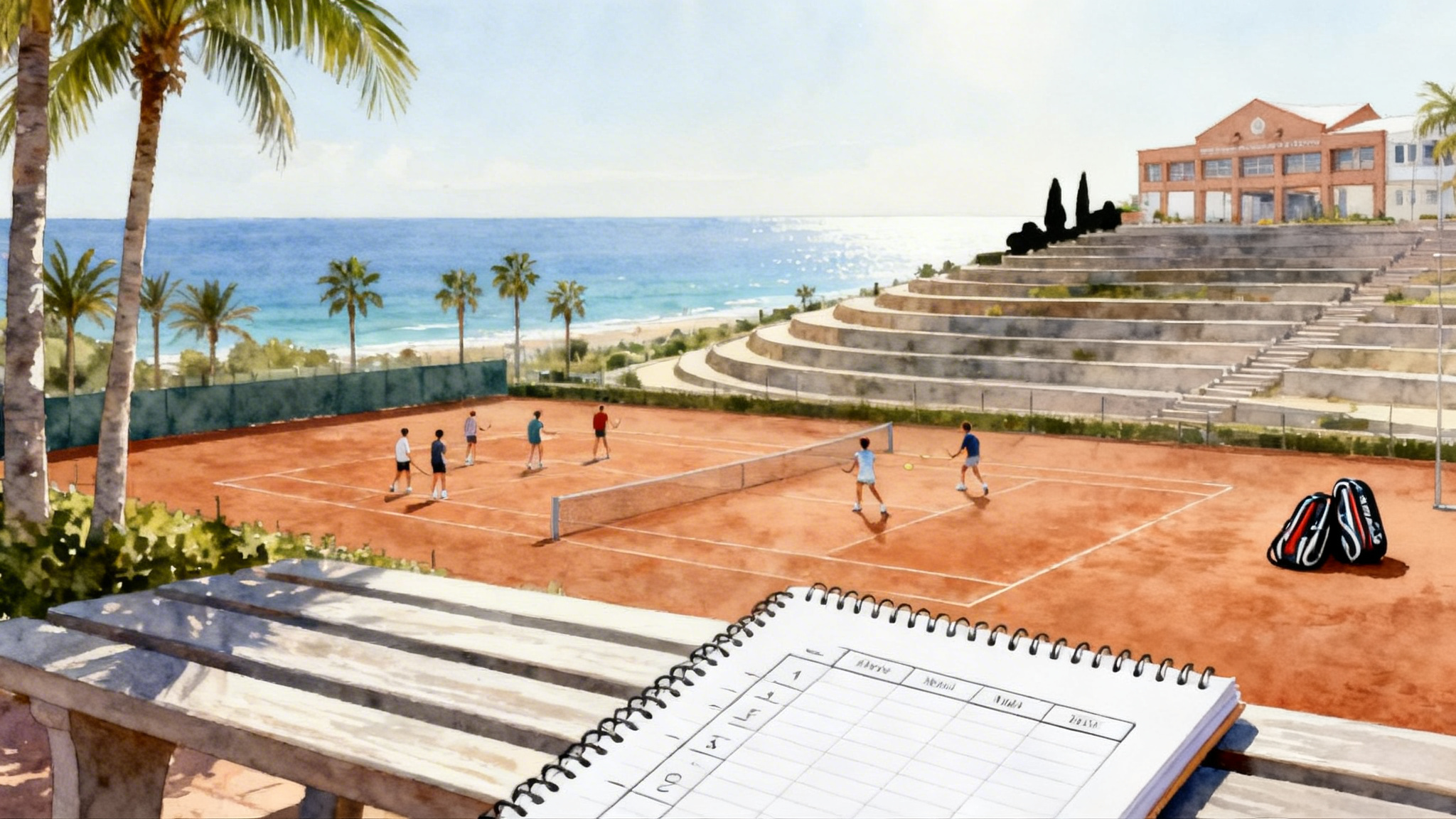
In Denmark the decision arrived not with fireworks but with family talk at the kitchen table. Holger Rune was 13, already a buoyant junior who hated leaving a court without solving a problem. His mother, Aneke, and longtime coach, Lars Christensen, could see a clear ceiling at home: too few training partners at his level, too much travel for meaningful matches, and limited access to the kind of performance services that turn good juniors into pros. The discussion kept circling back to one place on the French Riviera: the Mouratoglou Academy on the Côte d’Azur.
The move would be big. New language, new culture, new routines. What made it feasible was a Champ’Seed scholarship, a program created to support promising juniors who need resources and a runway. For the Rune family it was not about outsourcing development. It was a bet that a high-density tennis ecosystem, combined with continued guidance from Christensen, would speed up the learning curve without erasing what already worked.
Why peer density changes the math
Talent accelerates in traffic. In Copenhagen, Rune might have found one or two strong hits on a given day. At Mouratoglou the court map was crowded with national champions, top juniors, and rising professionals, all within a few meters. That density reshaped his calendar in three concrete ways:
- More quality repetitions per hour. Facing different opponents daily multiplies decision making, not just stroke production. Every ball forces a small tactical choice.
- A live ranking pressure. Informal ladders and internal match blocks create stakes. Players chase each other’s level across weeks rather than across continents.
- Style variability on tap. Lefties who drive the ball through the court, baseline grinders, first-strike servers. Rune could test patterns against many styles in a single afternoon.
We have seen similar acceleration in our case study on how Piatti Academy built Sinner. For a problem solver like Rune, this was gasoline. Habits that once evolved over months began changing inside a week because every day included problem sets that were just hard enough.
The Mouratoglou rhythm: matches as the main classroom
Look closely at how a typical day in a high-end academy creates learning pressure:
- Morning: a 90-minute live-ball block that starts with patterned point play, then escalates to sets. The aim is to collapse the distance between drilling and competing. Rune thrived because he is a competitor first; the structure rewarded that edge. For a practical template, see how to design a 90-minute practice.
- Midday: strength and movement in the gym, usually short, sharp, and technical. Hinge pattern work, acceleration, deceleration, and change of direction in tight spaces. Good programs score quality reps over volume.
- Afternoon: a second court session that emphasizes tactical themes. For Rune, that often meant front-foot patterns, taking the return early, and learning to turn defense into mid-court offense inside two balls rather than four.
- Weekly: internal match blocks that mix ages. Rune would meet older players who could rush him, then younger players who forced him to control tempo. Both sharpened his ability to dictate.
This cadence matters because it bakes performance cues into everyday training. The match is no longer a distant exam on the weekend; it is the daily classroom where feedback is immediate and often uncomfortable.
Sports science as an accelerator, not a crutch
At 13 to 16, strength and conditioning should create capacity without stealing feel. The academy’s sports-science support added a layer of measurement and recovery around Rune’s intuitive game:
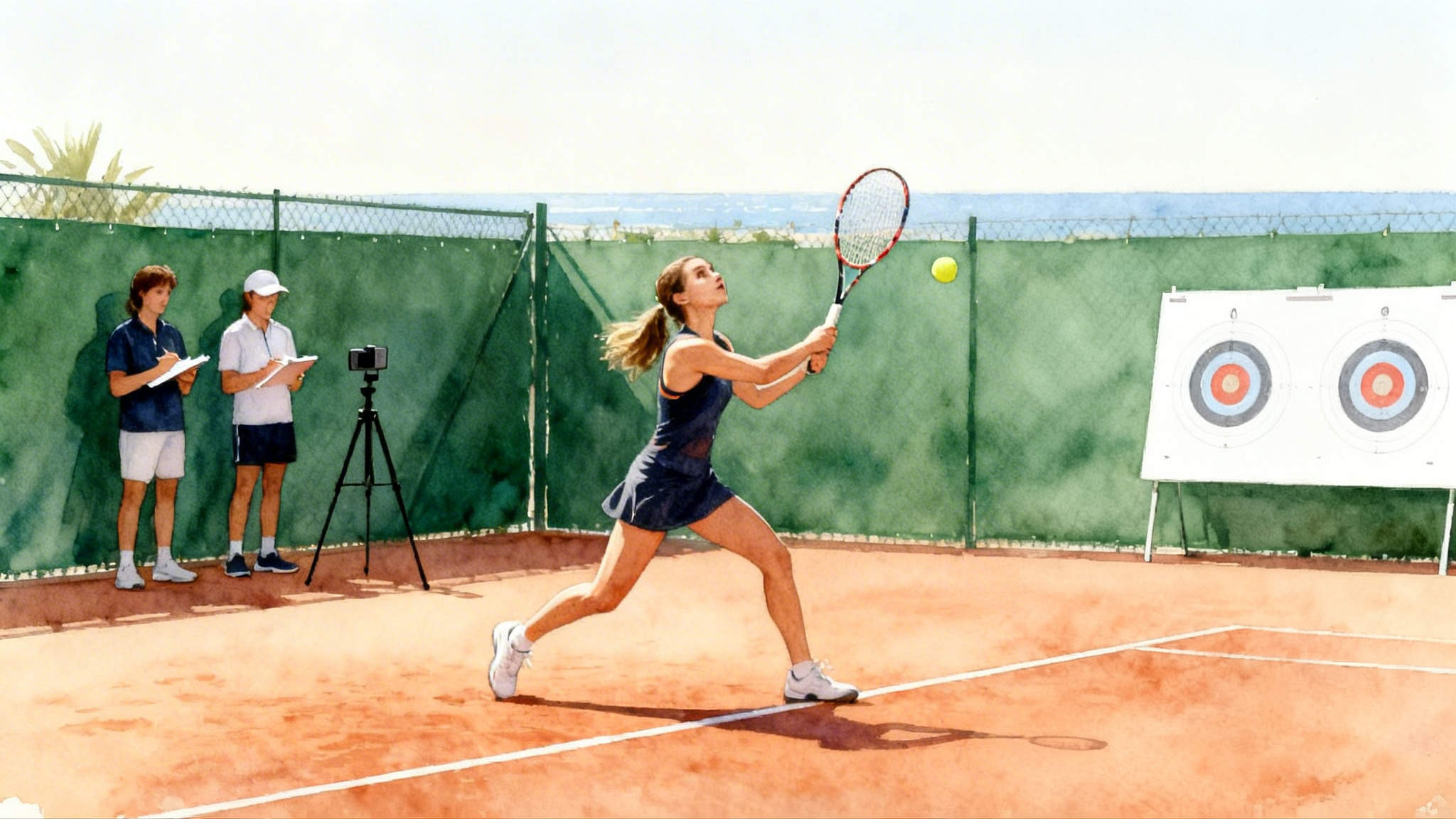
- Movement screening and speed gates translated footwork work into time, not opinion. Changes in split-step timing or first-step angles showed up as tenths of a second.
- Heart rate and session loads helped the team plan blocks. The point was not to chase fatigue. It was to arrive fresh on the right days and tired on purpose on others.
- Recovery basics became non-negotiable. Hydration checks, sleep targets, and simple nutrition rules turned long tournament weeks from survival into routine.
None of this replaced feel. It made changes visible. For a player who plays with emotion and intent, seeing progress on a screen removed doubt and sped up buy-in.
Keeping Lars Christensen at the center
The Rune camp did something many families struggle to do when they join a big academy. They kept roles explicit. Christensen remained the technical and tactical compass. Academy coaches added environment, volume, and day-to-day sparring partners. That clear split prevented a common trap: mixed messages and over-coaching.
What did that look like in practice?
- One person held the keys. Christensen defined non-negotiables: contact point discipline on the forehand, a backhand that could both absorb and redirect, and an aggressive return position on second serves.
- Academy staff translated those priorities into daily menus. If the target was earlier contact, drills and live points forced Rune to step inside the baseline. If the target was first-ball aggression, sets began with plus-one constraints.
- Short feedback loops. Video from session to session kept the entire staff honest. The point was coherence, not novelty.
Rune could tap a large staff without becoming a committee project because there was a north star. That is the difference between a resource and a distraction.
From elite junior to the moment that changed everything
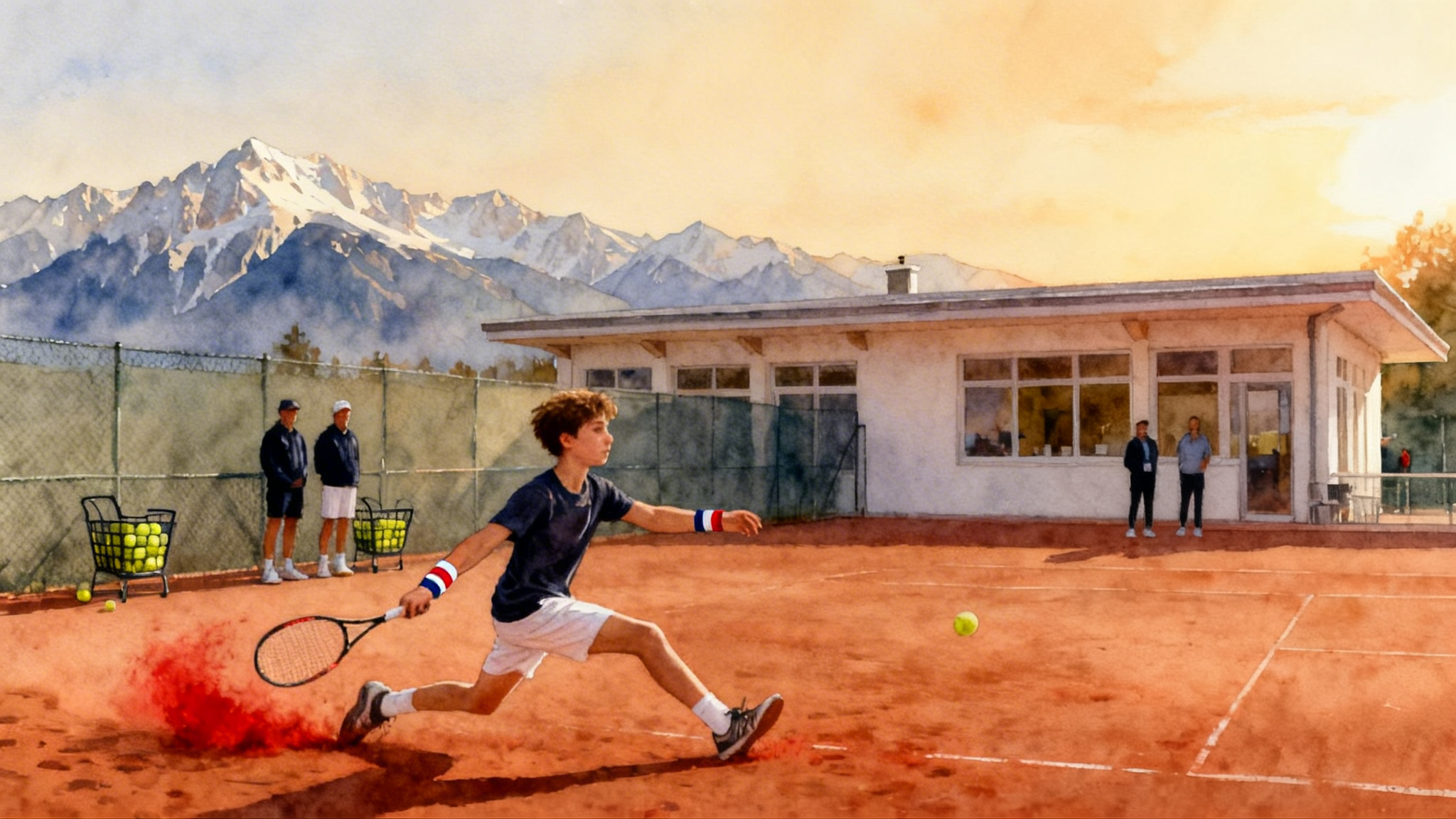
The proof was not a single result. It was the pace of adaptation. As a junior, Rune learned to handle pace on quick courts, to drag opponents off the ad side with the backhand, and to press on returns without flooding errors. Those skills travel. When he arrived on the Association of Tennis Professionals tour, he already had patterns to win free points and enough physical capacity to repeat them against grown men.
The landmark came in Paris in 2022. Rune won the indoor Masters at Bercy, beating Novak Djokovic in a final that turned on courage under pressure and belief in first-ball offense. The title did not appear out of thin air. It was a case study in compounding advantages: months of live-ball returns inside the baseline, hundreds of short-court exchanges that made the net feel closer, and a body prepared to sprint hard in late November. If you want the overview of his professional arc, the ATP profile for Holger Rune traces the rise clearly. For another lens on academy-to-pro acceleration, compare with how Equelite forged Alcaraz.
Parents often ask whether a result like Paris comes from magic. It does not. It comes from enough matches in training to build reference points for the biggest points on Sunday.
What this teaches parents who are weighing a move
Relocating a teenager for sport is a big call. Here is a practical framework built on what worked in Rune’s path.
1) When a move is worth it
Consider a relocation if all three boxes below are checked:
- You have exhausted local density. Your player regularly beats the best regional competition and needs three to five high-level match plays each week that the current environment cannot provide.
- The new academy can prove repetition quality. Ask for concrete examples of daily live-ball segments, internal ladders, and measurable progress markers. If the plan is mostly basket feeding or exhibition-style hits, keep looking.
- The move protects the player’s identity. The academy should be willing to work inside your player’s archetype, not against it. Rune did not become a grinder. He doubled down on taking time away and dictating with the backhand and return.
Cost and logistics also matter. Families should ask for a sample weekly timetable, which includes court time, fitness, study blocks, and recovery. If the schedule looks heroic on paper, it will be fragile in real life.
2) How to manage a multi-coach team without chaos
Use a three-page “one-pager.” Keep it short, but keep it living.
- Page 1: Identity and objectives. One paragraph that defines how your player wins points now, and one paragraph for the next two skills to acquire. Example: win now on early return and cross-court backhand; next upshift is better transition footwork and a heavier first serve.
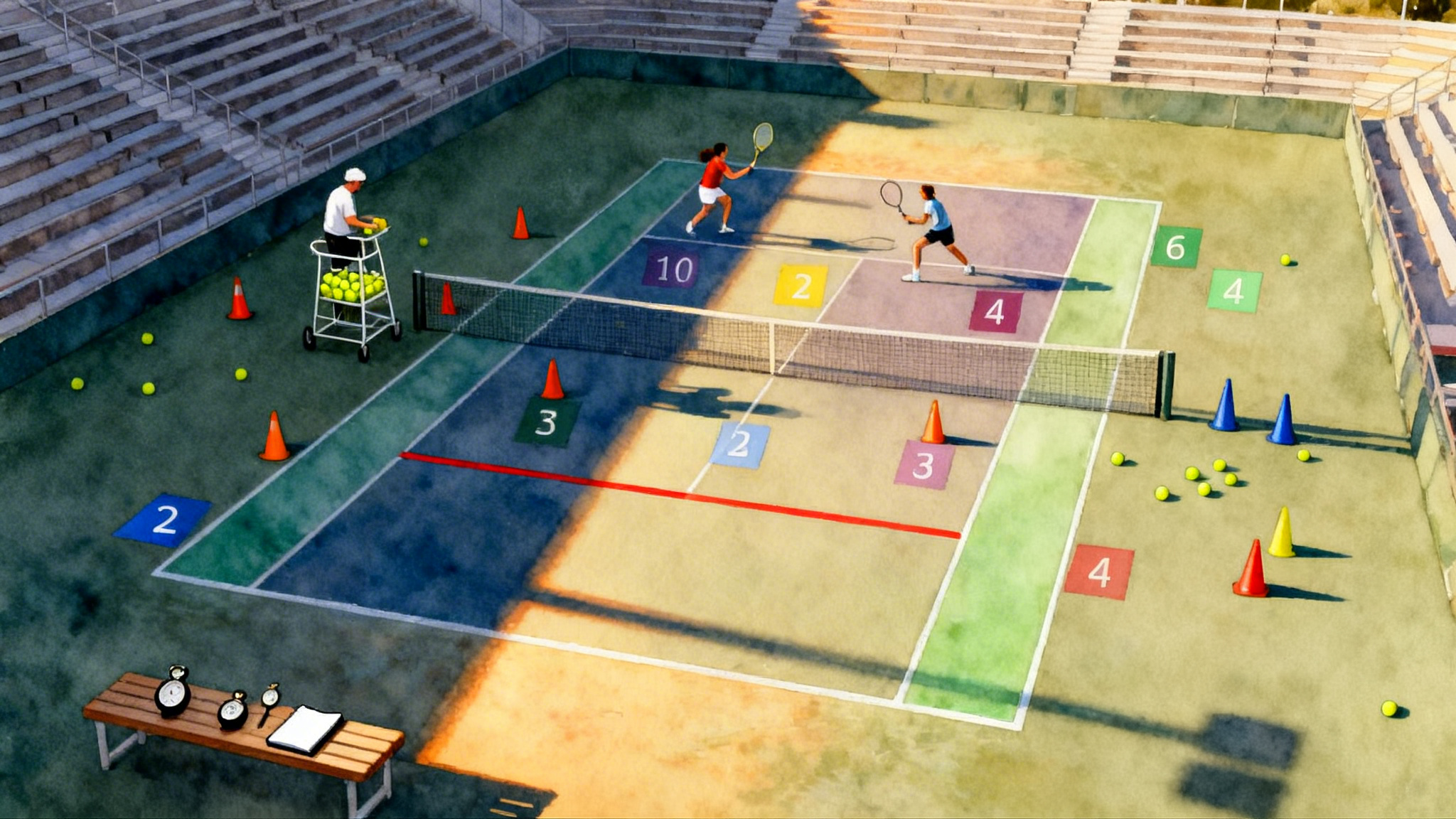
- Page 2: Drill bank and constraints. Five drills that deliver those skills, with constraints that create pressure. Keep it simple and testable, like first to five points starting with a second-serve return inside the baseline.
- Page 3: Metrics and review rhythm. Two or three numbers that tell the truth, such as first-serve percentage inside target zones, return depth past the service line, or hold-break ratio in practice sets. Review every two weeks with the lead coach present.
Appoint one lead coach. Everyone else is a specialist. Agree that disagreements are solved by testing, not by debate. If a new idea is good, it will win on the court inside a month.
3) How to use academy resources to fast-track development
Treat the academy like a laboratory. Show up with hypotheses and leave with answers.
- Set mini-blocks with themes. Two weeks on building offense from neutral, two weeks on serve plus one, two weeks on return aggression. Rotate themes to keep the game expanding without becoming chaotic.
- Demand film that tells the truth. One wide-angle practice match per week is worth more than a dozen highlight clips. Watch it with the player and ask one question: what would beat you today if you had to play yourself.
- Lift for movement, not mirrors. Prioritize acceleration, deceleration, and low-to-high transitions. In youth athletes, strength is a tool to own court positions, not an end in itself.
- Use in-house events as stress tests. Internal tournaments and ladders are the cheapest way to simulate tour pressure. Track hold-break ratios and performance on return games that start love-30 or 15-40.
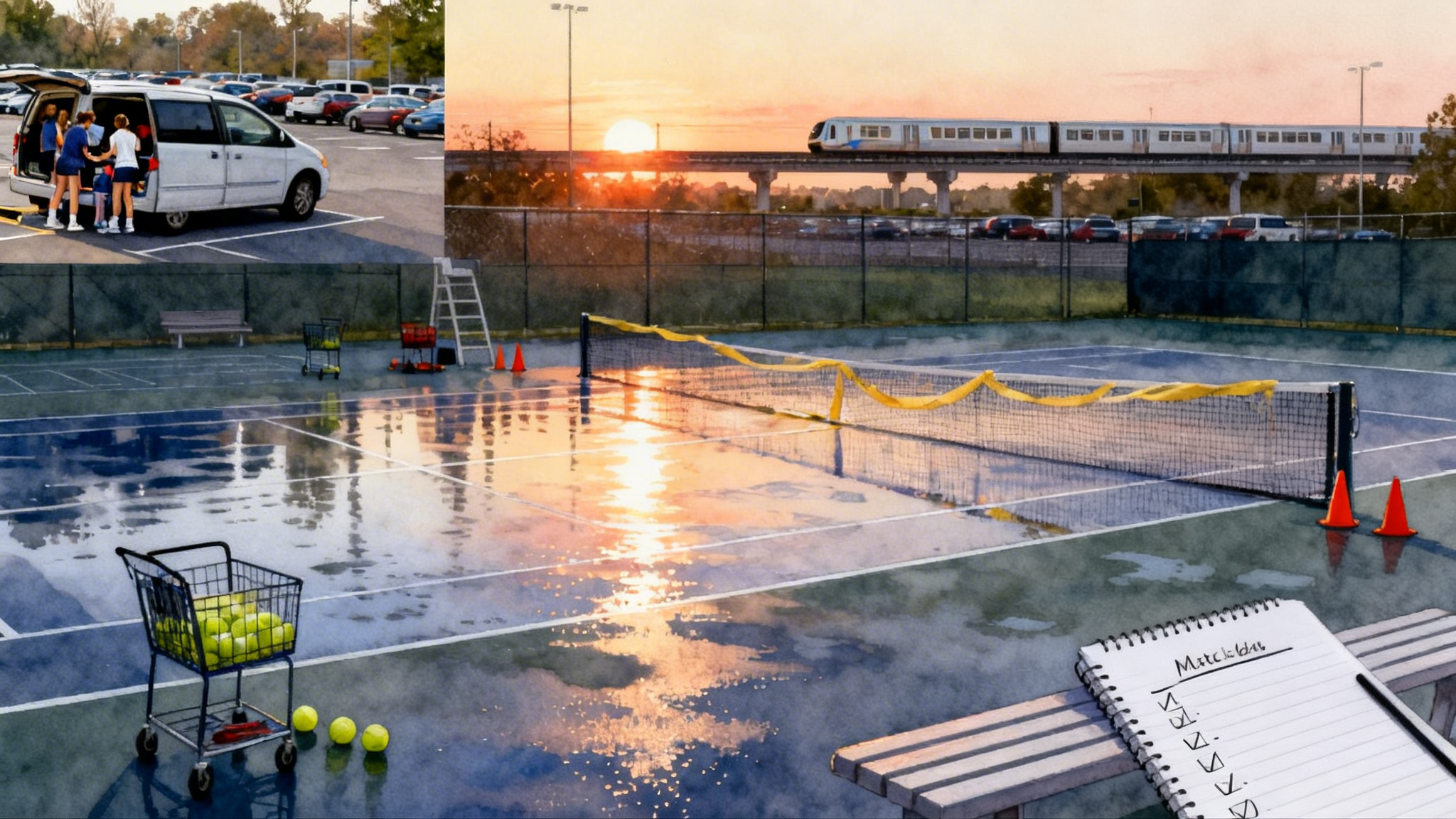
- Build travel rehearsal weeks. Before a big event, replicate match times and recovery windows. Practice at 11 a.m. if your draw often lands there. Eat and sleep on the actual schedule.
A closer look at the skill shifts
The move from elite junior to tour-level ball is rarely about a complete makeover. It is about making one or two weapons inevitable and raising the floor on bad days.
- Return position and intent. Rune learned to treat second serves as invitations. Set points began with early contact and an aggressive first step inside the court. This bent rallies toward his terms.
- Backhand elasticity. Against heavy forehands he could absorb; against shorter balls he redirected. This duality is vital indoors, where neutral balls arrive faster.
- Transition competence. Not a serve-and-volley identity, but a commitment to close when the ball begged for it. One clean step through the court saves three more swings from the baseline.
Each of these gains was reinforced by the academy environment. The point was not a new playbook. It was more chances to run his best plays against a wider range of defenders.
The human part that numbers miss
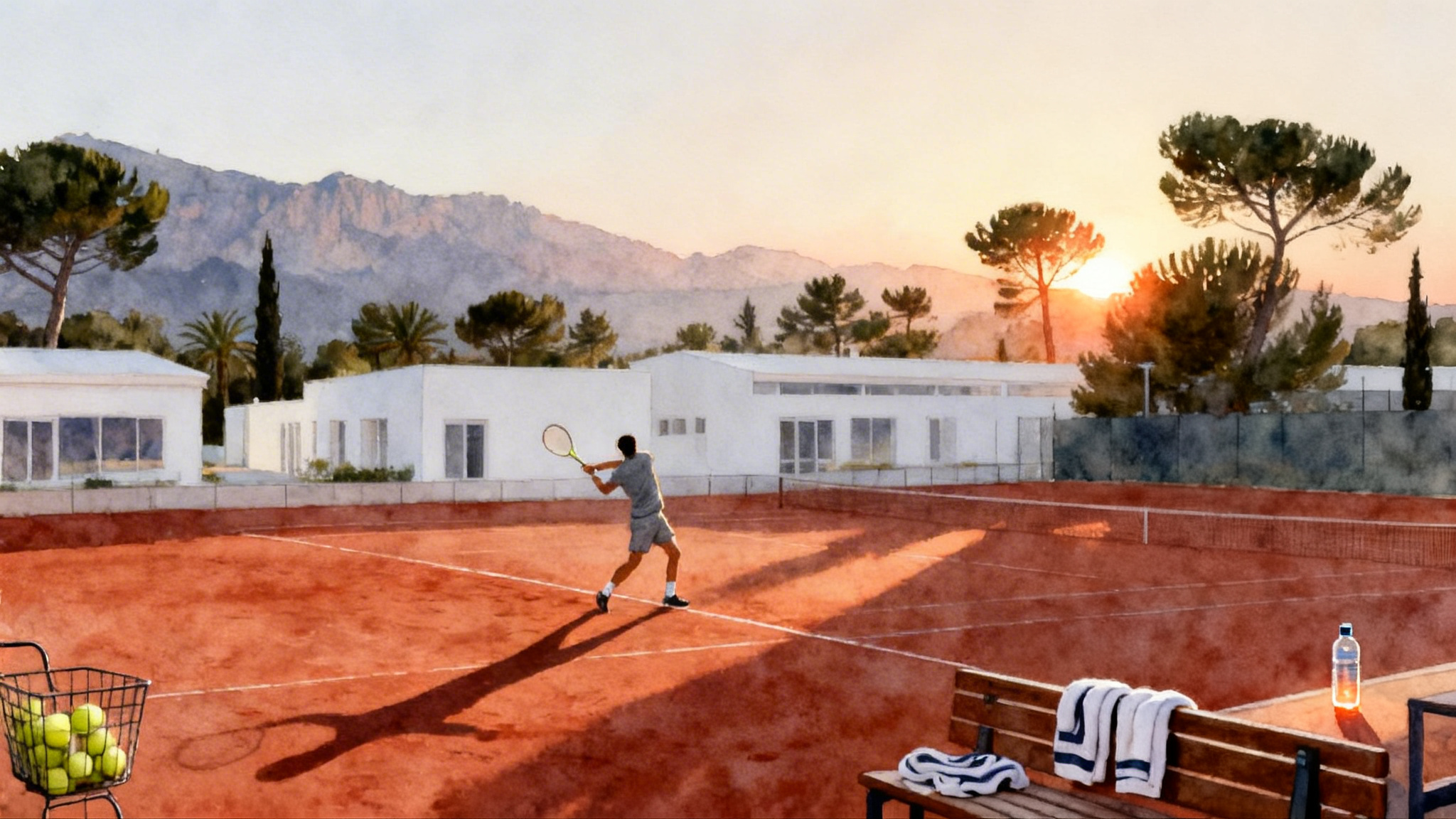
Relocation at 13 is not only a tennis issue. It is a life issue. The Mediterranean light is beautiful, but so is a Danish winter with friends. Rune’s family treated the move like a school transfer with a sport attached. That mindset kept priorities straight. Education kept its lane. Routines around meals, study, and downtime stayed deliberate. A young athlete who knows what the next hour looks like is an athlete who can spend more energy on problem solving and less on stress.
Families considering a similar leap should audit the non-tennis plan with the same intensity they apply to forehands. Who handles medical appointments. How many weekends are protected. What are the social anchors outside the academy gates. These are not extras. They are scaffolding for every on-court gain you hope to see.
What success looked like from the inside
By the time Rune lifted the trophy in Paris, he was not a surprise to people who watched him train. The intensity was familiar. The willingness to take the ball early was baked in. The fitness to play long indoor exchanges in November had been built weeks earlier. When the final asked for courage at 5-5, he had a memory bank that said he had solved that exact scoreline in practice a hundred times.
That is the invisible edge of a strong academy. It gives players not just strokes, but references. Under stress, the brain searches for something it recognizes. If training gifts you more reference points than your opponent, you often look braver when you are simply better prepared.
The bottom line for parents and coaches
- Do not chase logos. Chase density. The right academy is the one that delivers tough matches every day without sanding down your player’s identity.
- Keep one voice in charge. Specialists are useful when the lead coach holds the thread. Without that thread, variety becomes noise.
- Measure to persuade, not to decorate. Numbers should change decisions. If a metric does not affect the plan, you do not need it.
- Make recovery and school part of the plan. If you cannot describe them, you will not protect them.
Conclusion: Talent needs a runway, and a pilot
The Rune story is not a fairy tale about a magical place. It is a manual about fit. A scholarship opened a door, the academy supplied density and science, and a trusted coach kept the compass straight. When families align those three pieces, progress stops looking like a guess and starts looking like a plan. If you are weighing a move, ask whether the new environment gives your player more meaningful problems to solve each week and whether your team can agree on how to solve them. Do that, and the road from your city to your own version of the Côte d’Azur gets shorter, one smart decision at a time.