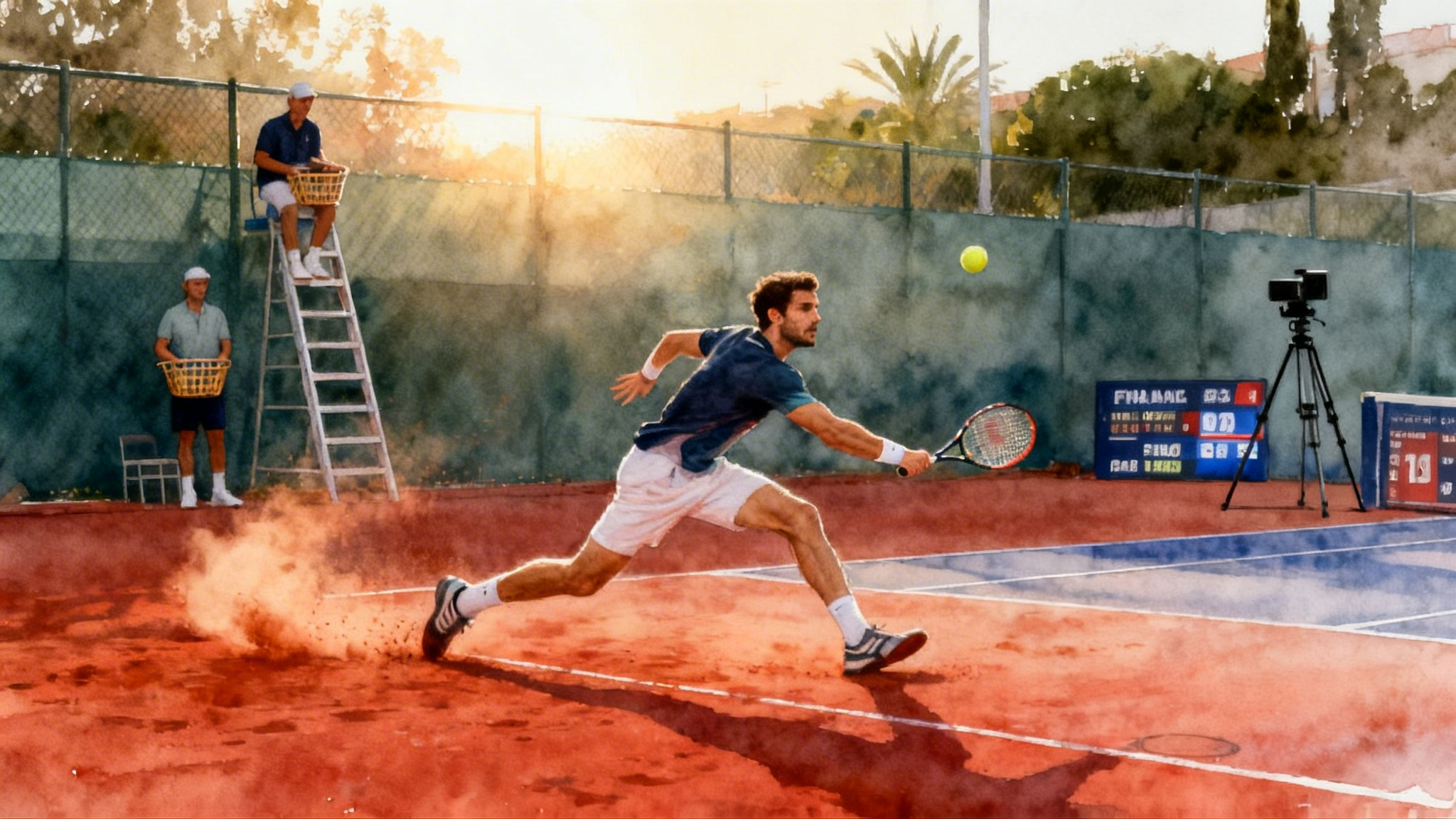
From Dolomites to Bordighera: How Piatti Academy Built Sinner
Jannik Sinner grew up racing on the Dolomites, then left home at 13 for Riccardo Piatti’s base in Bordighera. Here is how a fundamentals-first, competition-heavy academy launch, followed by a 2022 coaching reset, turned talent into a champion.
 Tommy
Tommy
The 13-year-old who traded snow for baseline chalk
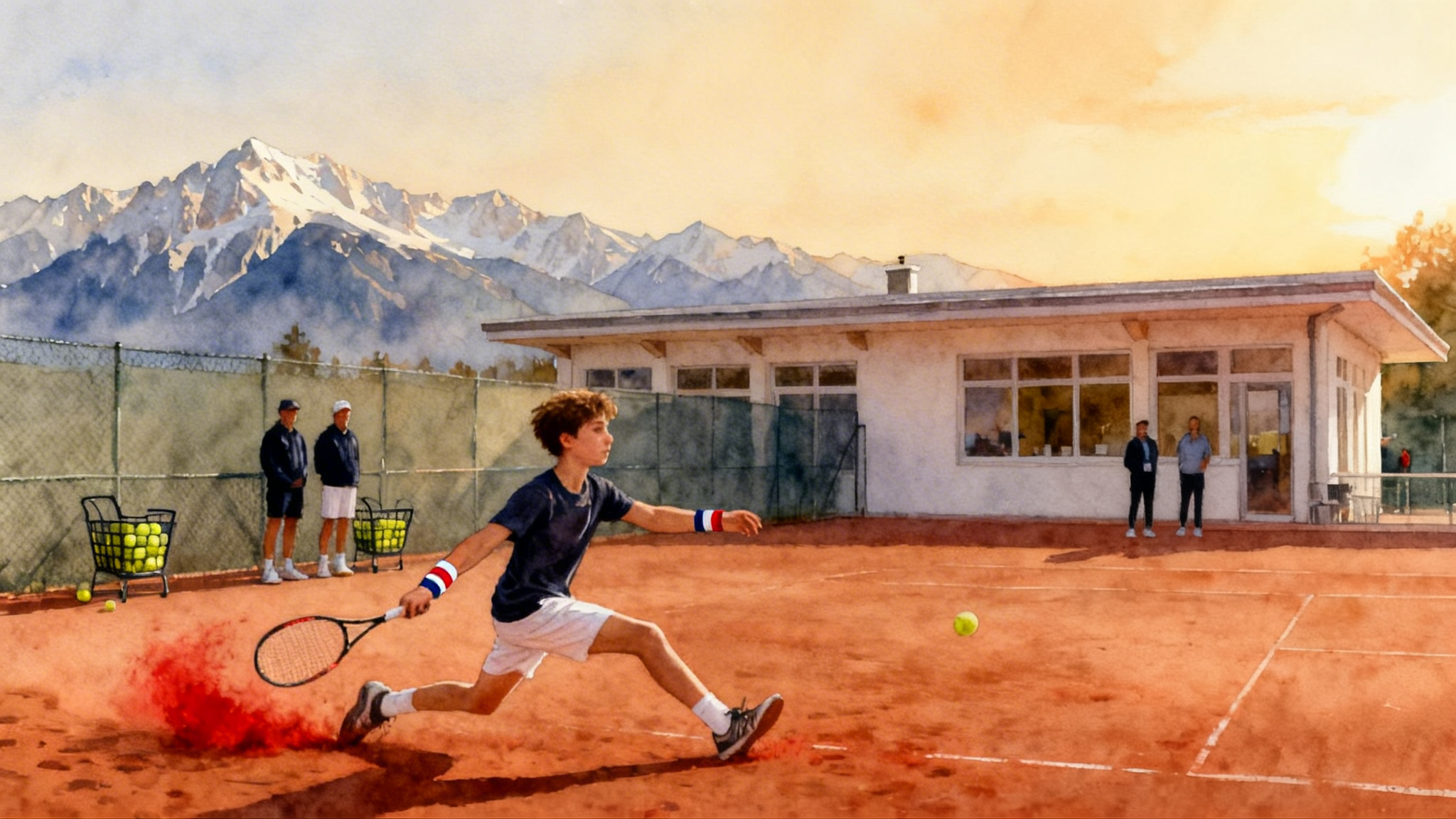
Jannik Sinner’s story starts with wind-carved snow and chairlifts, not string tension and hard courts. He grew up in the Dolomites as a gifted junior ski racer. Then, at 13, he made a decision almost no one in his village expected. He packed a racquet bag, left the mountains, and moved to the Italian Riviera to live and train year-round. As reported after his Australian Open breakthrough, he left home at 13 for Bordighera, choosing a tennis future over a life on the slopes.
For families considering late specialization, Sinner is a rare clean case. He committed to tennis relatively late compared to peers who start full-time at 8 or 9, yet he progressed faster than most who specialize early. The reasons are not mystical. His journey exposes how the right academy environment can compress time by obsessing over fundamentals and by treating competition as a weekly classroom, not a twice-a-year audition.
Why late specialization sometimes wins the race
Sinner’s twin childhoods gave him advantages that translate perfectly to high-level tennis.
- Movement and balance: ski racing hardwires edge control, weight transfer, and micro-adjustments to changing terrain. In tennis, these become strong open-stance hitting, clean recovery steps, and the ability to stabilize the torso while the lower body works independently.
- Pressure without panic: in skiing, a small mistake at speed can end a run. That exposure to consequence builds concentration habits that help on big points. The athlete learns to reset quickly rather than catastrophize.
- Power from legs first: elite skiers generate force from the ground through the hips. Sinner’s ball-striking looks violent only at contact. The motion underneath is compact, aligned, and repeatable.
These carryovers set a floor for his tennis. They did not, on their own, create a top-10 backhand or a tour-ready serve. That is where the academy made the difference.
Bordighera, the classroom: how Piatti’s model accelerates learning
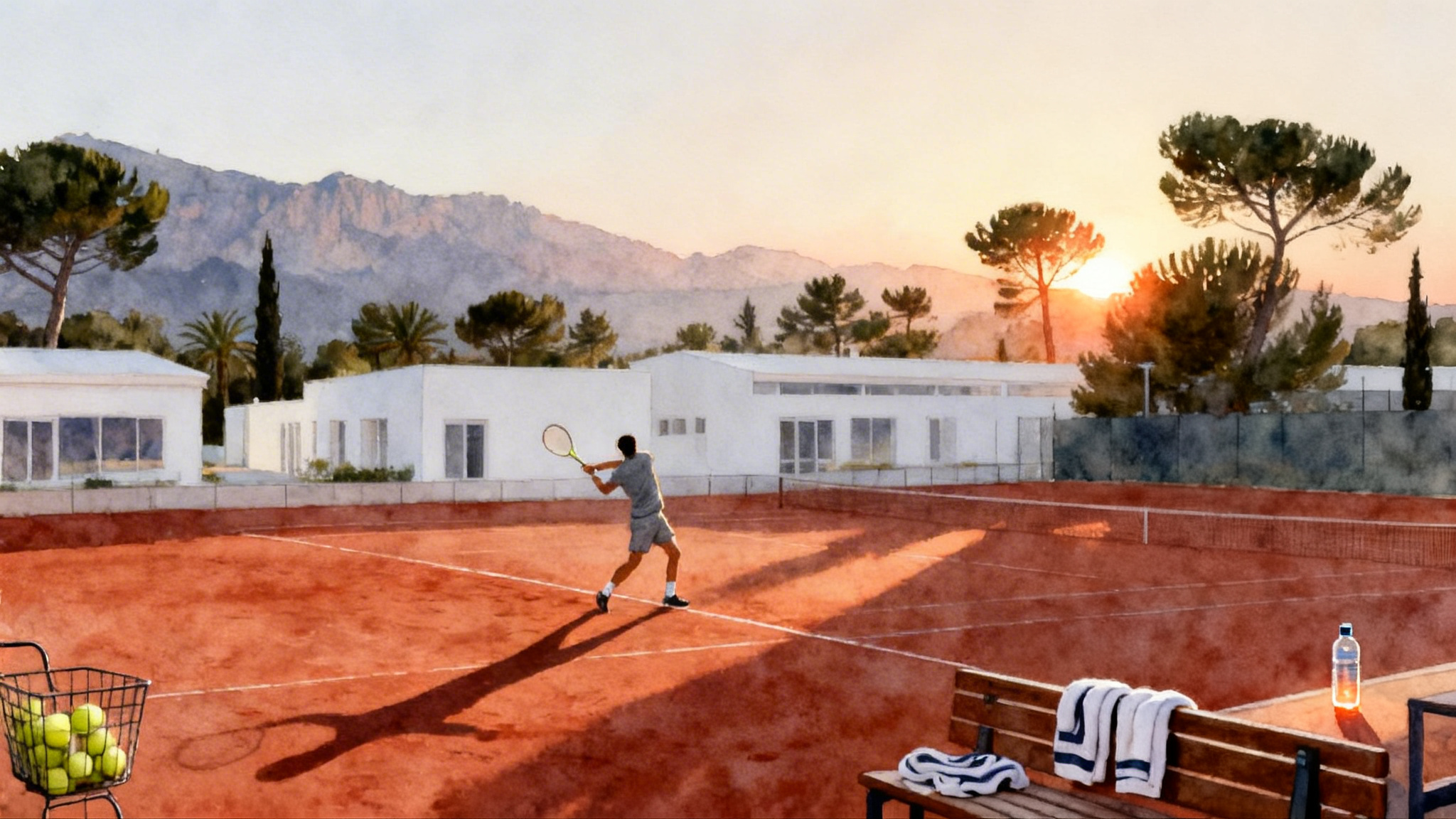
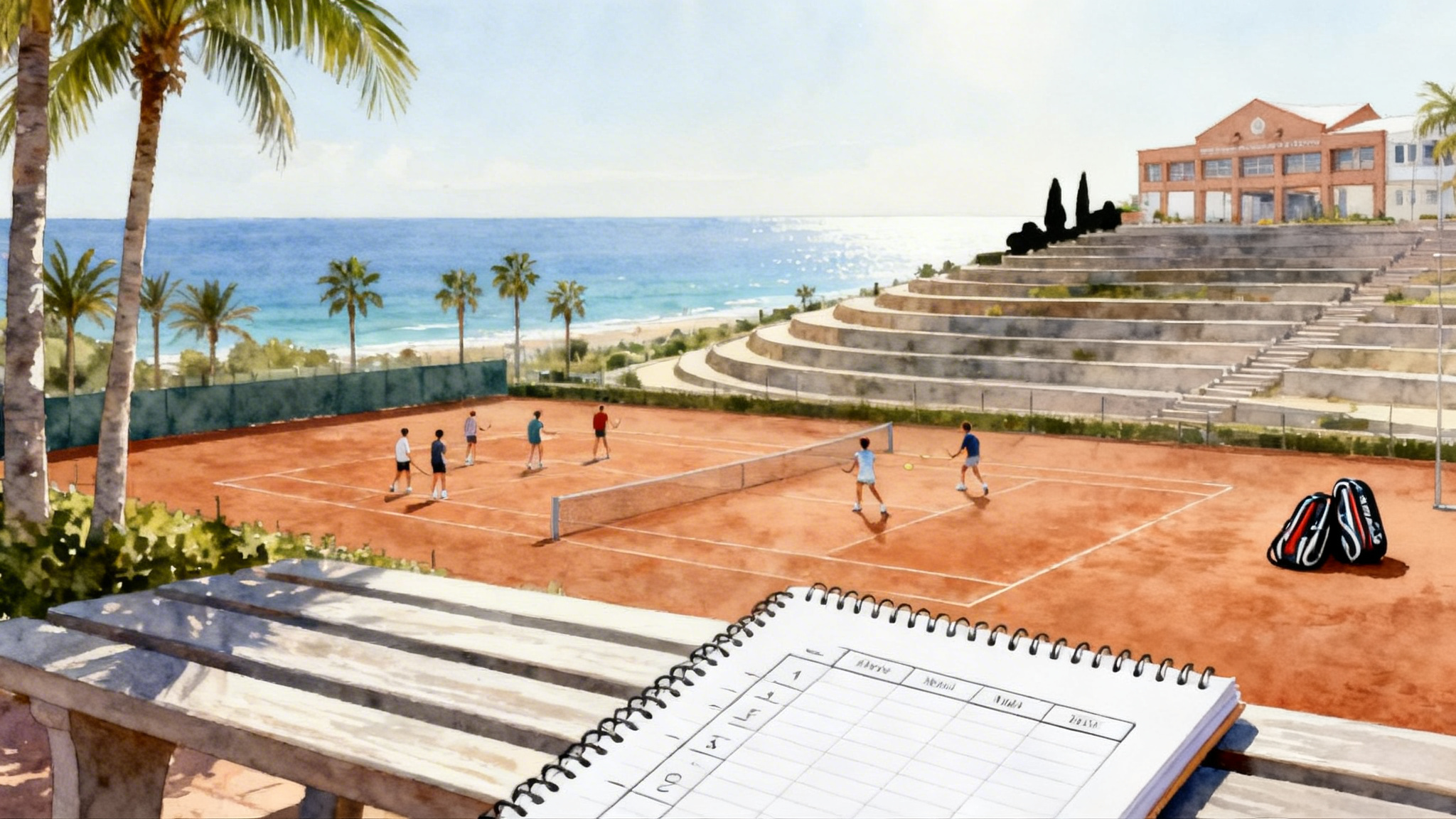
Bordighera, a quiet coastal town near the French border, is home to Riccardo Piatti’s training base. The Piatti Tennis Center in Bordighera was built around a simple, demanding idea. If a young pro prospect arrives with athletic gifts, the staff’s job is to make his technique sturdy enough to last under stress and to expose him to a volume of match situations that creates pattern recognition fast. This fundamentals-first approach echoes other European blueprints, much like the way how Niki Pilic forged Djokovic.
1) Fundamentals first, relentlessly rehearsed
Piatti’s teams have long prized clean mechanics over short-term flash. In practice that means narrowing variables, then adding them back.
- Contact-point discipline: coaches set shoulder-height targets and require a consistent contact window, especially on the two-hander. Sinner’s backhand is a billboard for this habit. The swing is inside the body line, the racquet path is simple, the follow-through is high and unhurried.
- Height and shape control: players learn to manage net clearance before they chase line-painting. Sinner’s rally ball sits on a repeatable arc. That predictability lets him change pace confidently because his base swing is under control.
- Serve fundamentals: rather than overloading with disguise, the priority is a rhythmic toss, balanced trophy pose, and clear pronation. Sinner’s serve grew later, but the motion was set up to scale. Once he added strength and rhythm, the delivery jumped in quality without a teardown.
2) Competition as a weekly classroom
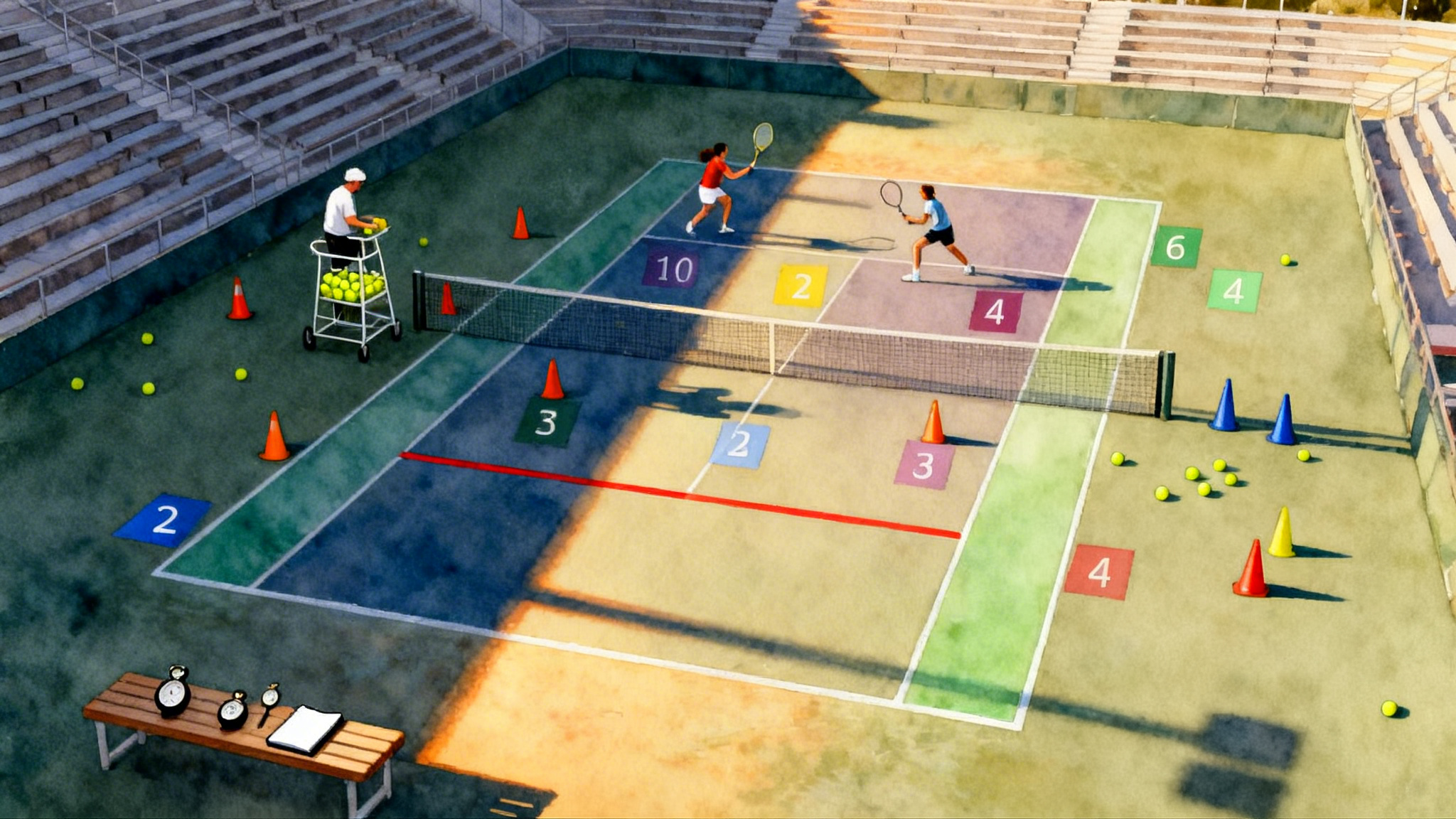
The academy treats match play like a laboratory. Players cycle through live sets, pressure games, and tournament entries, then debrief with coaches. For a late-specializing athlete, this volume matters. You cannot shortcut the pattern catalog that wins on tour, but you can accelerate how fast you fill it. The key is structured repetition. By the time Sinner was 17, he had experienced far more match situations than his limited junior resume suggested, which helped him step confidently into higher-level events.
3) Metrics that coach behavior, not just ranking
Academies often celebrate ranking jumps. Piatti’s camp, by design, watches for lagging indicators beneath the surface. Examples include first-serve percentage across match types, depth on neutral backhands, location accuracy on second serves to a right-hander’s backhand, and conversion rate on short forehands. The ranking follows when those bricks are in place.
The quickening: when foundations meet the right schedule
A recurring myth is that a player needs a dominant junior track record to become a threat as a pro. Sinner’s rise cut against that grain. Once his technique stabilized and the coaches raised his competitive volume, the gains compounded. He learned to take the ball early without overplaying, to neutralize pace with his backhand, and to find a measured gear on the forehand instead of red-lining every swing. His movement, built on ski legs, made the whole package look calm even at 4 all.
The longer the rally, the more his posture holds. The more the pace rises, the more the swing stays compact. That is not an accident. It is what a fundamentals-first ecosystem tries to produce. You can see a similar sequence-first model in how Ferrero’s Equelite shaped Alcaraz.
When to change lanes: the 2022 coaching reset
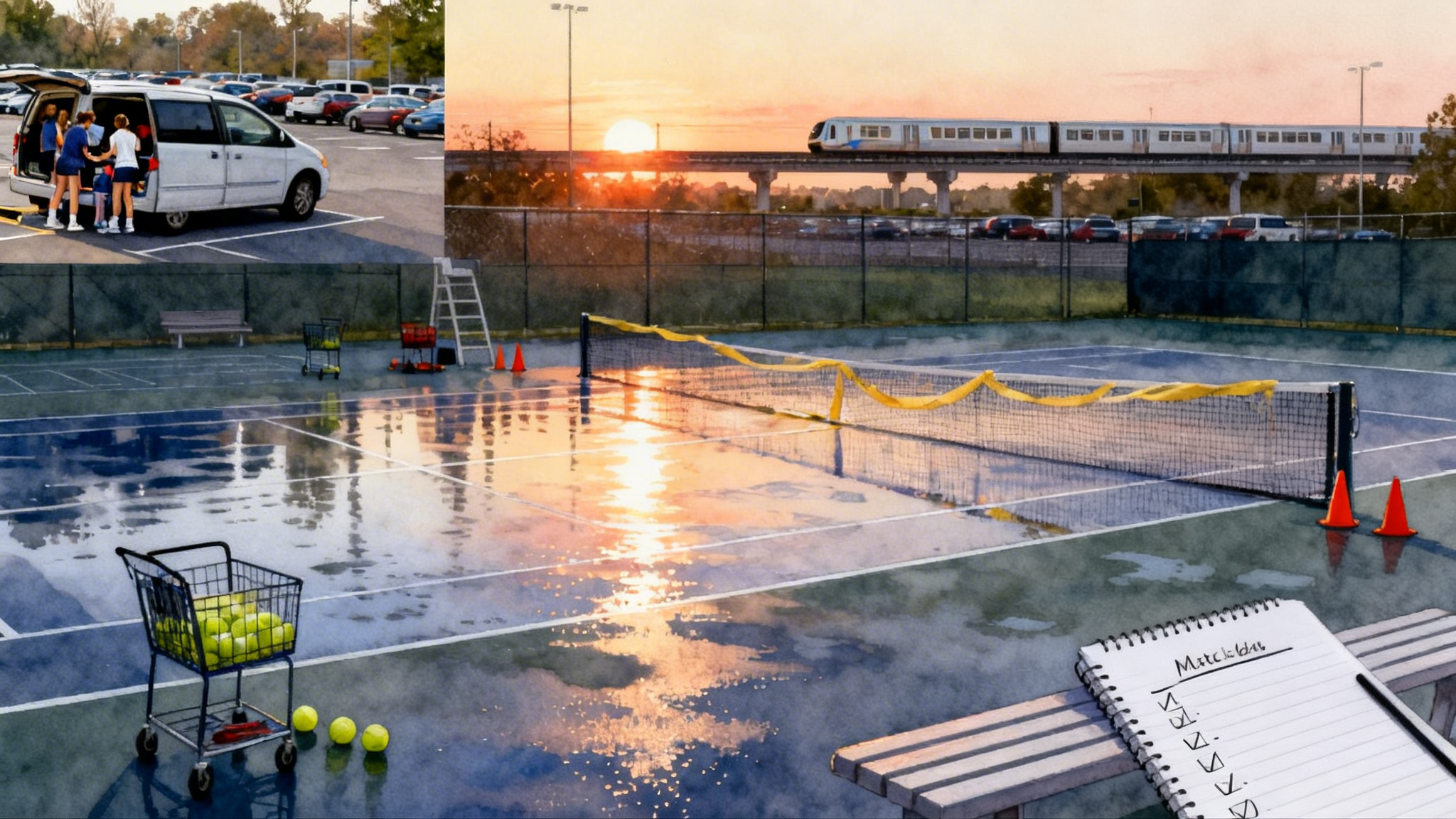
By early 2022, Sinner faced the next developmental question. He had banked technique and experience. He had added titles and climbed the rankings. The risk was stagnation. Staying in a great academy can still become a comfort zone. He chose to reset, leaving the academy and hiring Simone Vagnozzi as his day-to-day coach, then adding Darren Cahill later that season.
On paper, the move looked risky. In practice, it matched the logic of his journey. Late specializers keep making smart constraints. First he constrained technique and competition by choosing a rigorous academy. Then he constrained decision-making by building a compact pro team with defined roles.
- The Vagnozzi role: daily touch, drill design, and tactical planning for specific opponents. Vagnozzi helped streamline Sinner’s offense into clearer patterns, especially the forehand inside-out followed by backhand redirect.
- The Cahill role: experience on the biggest stages, scheduling judgment, and a voice that reinforces process during spikes of external pressure. Cahill is known for calm messaging. That is especially valuable for a player whose game can generate pace-heavy patches that tempt impatience.
The result was not a cosmetic upgrade. Sinner’s serve locations improved, his return position flexed smartly by surface, and his in-match adjustments sharpened. The trophies that followed, including his first major in Melbourne in 2024, validated the choice. The performance layer built at the academy remained. The pro team refined how to deploy it against the top five.
What families can learn from Sinner’s path
Late specialization, academy choice, and the academy-to-pro transition are household decisions as much as athletic ones. Here are concrete, practical takeaways.
1) Late specialization: how to make it work
- Keep a primary sport, not two equal ones, by age 13 or 14. Sinner skied and played tennis, then he chose. The advantages of multisport training fade if divided focus persists into the heavy technical years.
- Bank transferable capacities. Prioritize movement quality, leg strength, and balance over early stroke personality. Coaches can refine technique later if the athlete moves well and stays coordinated under fatigue.
- Watch for the resilience signal. If a child thrives in sports with consequence and time pressure, tennis often suits them. That psychological trait is a better predictor of later progress than an early ranking.
2) Choosing a high-performance academy
- Look for mechanics that scale. In trial sessions, ask coaches to describe the athlete’s contact point, swing shape, and footwork patterns. Push for detail. If the language is vague, keep looking.
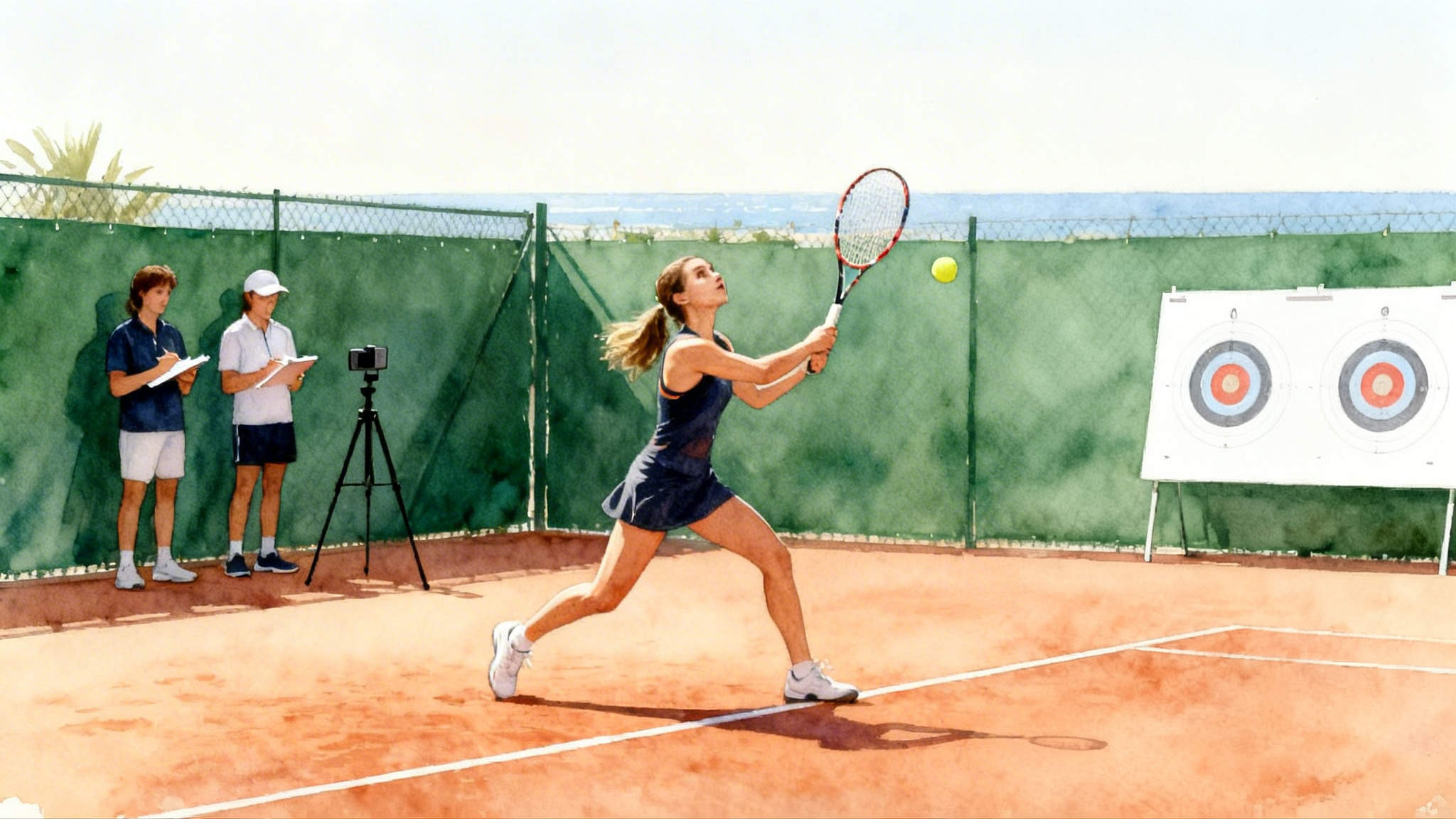
- Demand a competition plan. The academy should outline how many matches per month, which levels, and what review process follows. Ask who watches the player courtside and who leads the debrief. Without a loop, match play becomes noise.
- Check the coach-to-player ratio during live ball, not just in a brochure. Watch a session. Count how often the coach stops play to give feedback. A low ratio is meaningless if feedback is generic.
- Verify the physical integration. A strength coach should speak the same language as the tennis staff. Ask to see one week where footwork drills, gym work, and on-court themes reinforce each other.
- Assess culture by its quiet moments. Stand near the water station. Listen for how players talk between drills. Serious does not have to mean joyless, but it should mean purposeful.
3) Planning the transition from academy to a dedicated pro team
- Decide on a trigger, not a feeling. Set objective thresholds that force the conversation. Examples: a year-end ranking inside the top 120, or a six-month trend of holding serve above 75 percent on hard courts. When the line is crossed, you evaluate a pro team.
- Define roles in writing. If you add a second coach, specify who handles scouting, who leads practices on travel weeks, who makes final calls on scheduling, and how disagreements resolve. Ambiguity kills momentum.
- Build a feedback cadence. Daily 10-minute debriefs after practice, weekly tactical reviews before travel, monthly technical video audits. A little structure prevents drift.
- Protect the strengths that got you there. When you leave an academy, you risk losing the fundamentals-first discipline. Keep a small set of non-negotiable drills in the new routine. For a big hitter like Sinner, that might include 15 minutes of backhand depth work at the start of every hit and a serve-location ladder before match day.
- Phase the support team. Add a physio or performance manager only when the schedule demands it. Overstaffing early burns budget and creates coordination friction.
A timeline that teaches sequence, not destiny
Sinner’s rise looks smooth in hindsight, but the sequence is the lesson.
- Ages 1 to 12: multisport base with skiing as the lead sport and tennis as the side project. Movement quality and balance get built without the monotony of a single-sport childhood.
- Age 13: decisive move to a development hub. He leaves home for a place where court time, coaching, and competition become predictable and structured.
- Ages 14 to 16: fundamentals hardening. Technique stabilizes, patterns form, and match play accelerates learning. The point is not to win every weekend. The point is to build a catalog of solutions.
- Ages 17 to 19: first professional breakthroughs. Results arrive because the base is in place, not because of magic tweaks. The player learns which patterns survive speed and which fail under pressure.
- Early pro years: maintain the base while adding weapons. Serve quality improves, transition volleys sharpen, and return choices mature.
- 2022: switch to a tight pro team that integrates technical, tactical, and scheduling decisions. Roles are clear. Messaging is unified.
- 2023 to 2024: results compound. The athlete converts opportunities deep in draws and shows resilience in five-set scenarios. Confidence becomes earned, not borrowed.
Families can borrow this sequence even if they never see a Grand Slam trophy. The model scales. The locations will differ. The principles travel.
Inside the craft: how Piatti’s foundations show up in Sinner’s patterns
Watch three Sinner tendencies traceable to a fundamentals-first education.
- Backhand economy: his two-hander is compact and on time. Because the swing is short, he can take the ball rising without leaking errors. That is the classic signature of players raised to prize contact quality over theatrical windups.
- Forehand discipline before firepower: earlier in his career, he could rush this wing. Post-2019, the shot settled. He started hitting a neutral ball with controlled height until the court offered a green light. Then he launched. You do not get that gear change without an academy that drills shape and height windows daily.
- Serve-location growth rather than serve-velocity obsession: once the motion was stable, his team focused on patterns. Wide on deuce to open backhand, body on ad to jam the returner, then use the first groundstroke to seize the middle. This is the path most young hitters should take. Chase locations first, speed second.
Building your own version of Bordighera
Not every family can move to a coast town and enroll a child in a famous academy. You can still reproduce the core levers locally.
- Find one technician and one competitor in your coaching mix. The technician is your mechanics guardian. The competitor is the coach who loves scouting, live-ball, and set play. If a single coach is great at both, you are lucky. If not, build the combo.
- Schedule your competition block like a class. Two months per quarter with targeted events that test a specific theme. For example, a clay-court block focused on backhand crosscourt depth and return position, followed by video debriefs that grade those two items only.
- Keep a personal fundamentals sheet. Three bullet points for each stroke, a favorite drill, and a red-flag mistake. Revisit it before tournaments. The point is not novelty. The point is memory. To structure these blocks, you can design a 90-minute practice that reinforces a single theme each session.
The last handoff: from academy product to tour professional
The most delicate moment is the handoff from academy to tour team. Do two things right and the odds tilt.
- Preserve a single voice on match days. Even with two coaches, appoint a lead for on-site decisions. Conflicting real-time advice is poison.
- Keep the academy in the loop for quarterly check-ins. If an academy built your base, there is value in a continuity call each quarter. Send match video and a short technical report. Ask for one neutral critique. You maintain the DNA while your new team executes day to day.
What this means for the next Jannik
Sinner’s path shows that late specialization is viable when the environment is strong, that a fundamentals-first academy can create speed without hurrying, and that a bold coaching reset can lift a ceiling rather than break momentum. He is not a unicorn. He is a model of sequencing. Build the body and balance first. Choose an academy that treats mechanics like a craft and competition like a curriculum. When the time comes, step into a compact pro team with defined roles and a clear feedback loop. Do these in order and you give talent the best chance to become a career.
The journey from the Dolomites to Bordighera was not a straight line. It was a series of good constraints and well-timed choices. That is how a skier became a champion. It is also how any family can chart a tennis life built to last.