From College Park to Arthur Ashe: JTCC and Frances Tiafoe’s Rise
How the Junior Tennis Champions Center turned proximity, year-round reps, heavy USTA and ITF match play, and travel squads into a launchpad for Frances Tiafoe. Then, a clear blueprint families can copy at any budget.
 Tommy
Tommy
The College Park advantage that set the tone
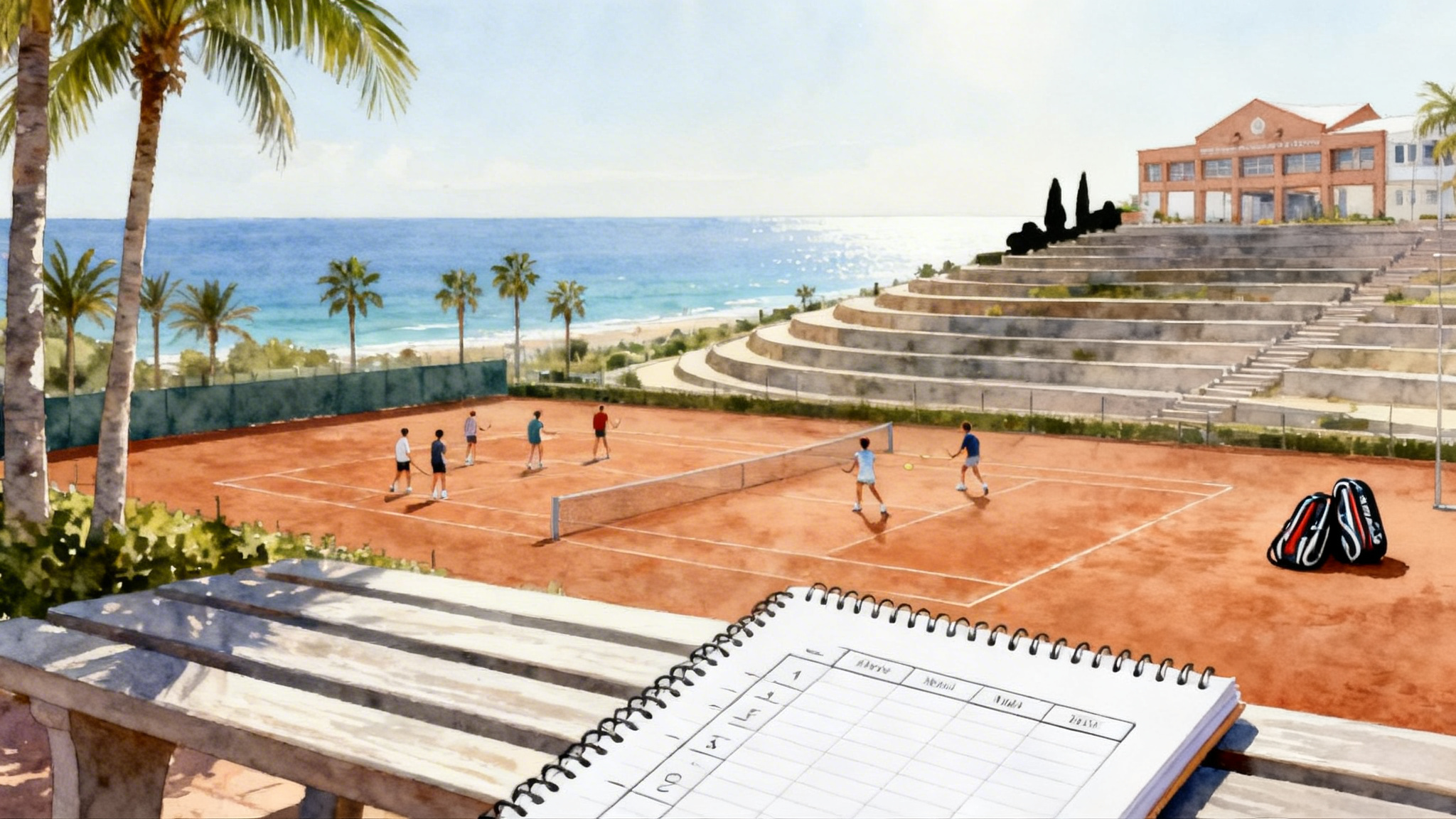
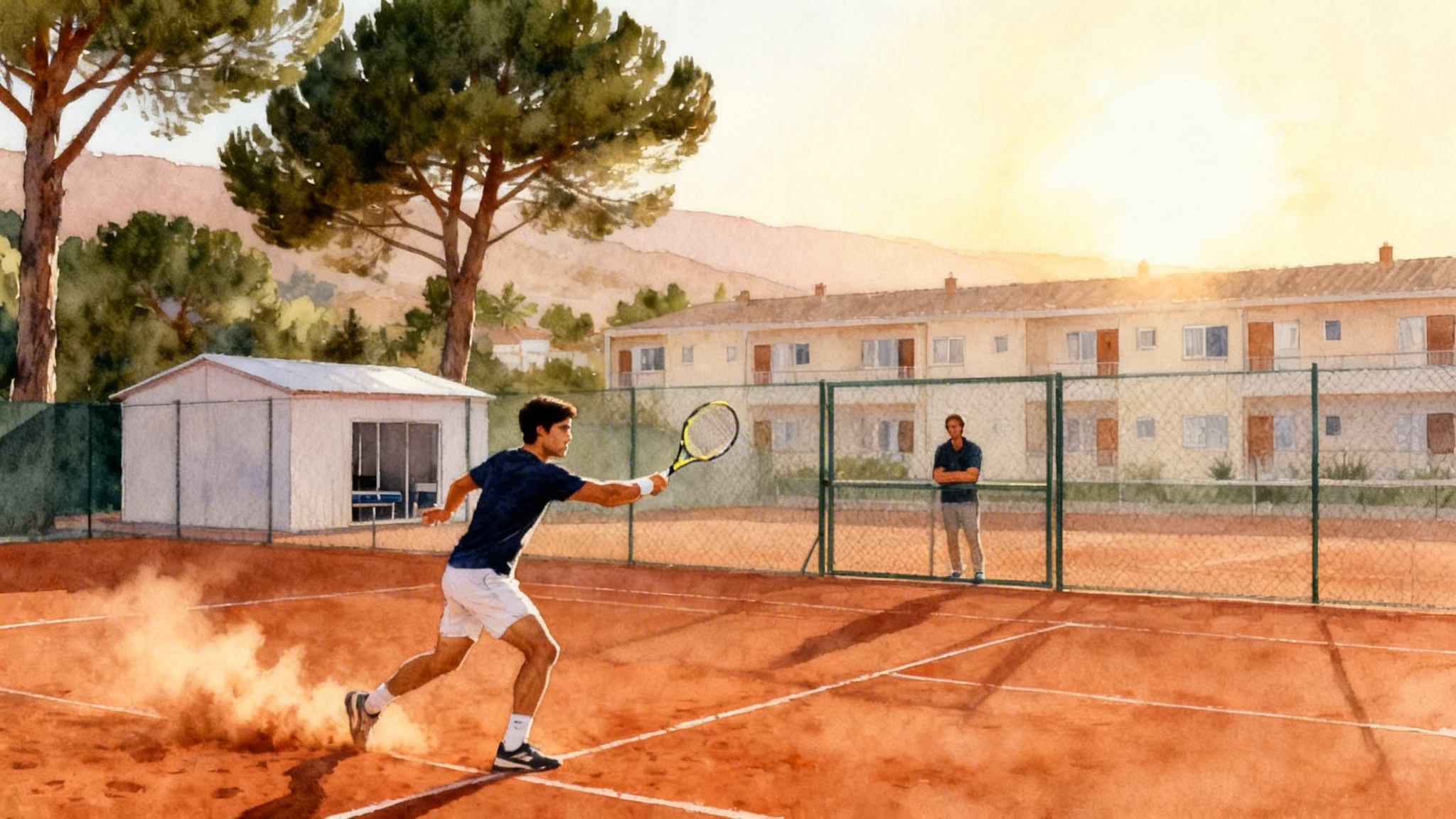
Frances Tiafoe did not grow up driving across town for a precious hour on court. He grew up inside an ecosystem. The Junior Tennis Champions Center in College Park, Maryland gave him something most juniors never get until college or the pros: daily proximity to high quality courts, coaching, and competition. JTCC is a nonprofit training campus with a mission that combines tennis and education, and it sits just off Route 1 near the University of Maryland. That co-location matters. When a child can walk from study hall to a court in a few minutes, volume becomes routine instead of a logistical battle. You can see that structure described on the JTCC training center in College Park.
The difference shows up in how a day feels. At many clubs a young player squeezes in a late lesson, warms up in the car, and fights for court time among adults. In College Park a player like Tiafoe could knock out homework in the morning block, drill through lunch, get match play in the afternoon, then stay for evening sets. Tennis becomes the gravitational center of the day, not a satellite.
Year-round reps beat talent alone
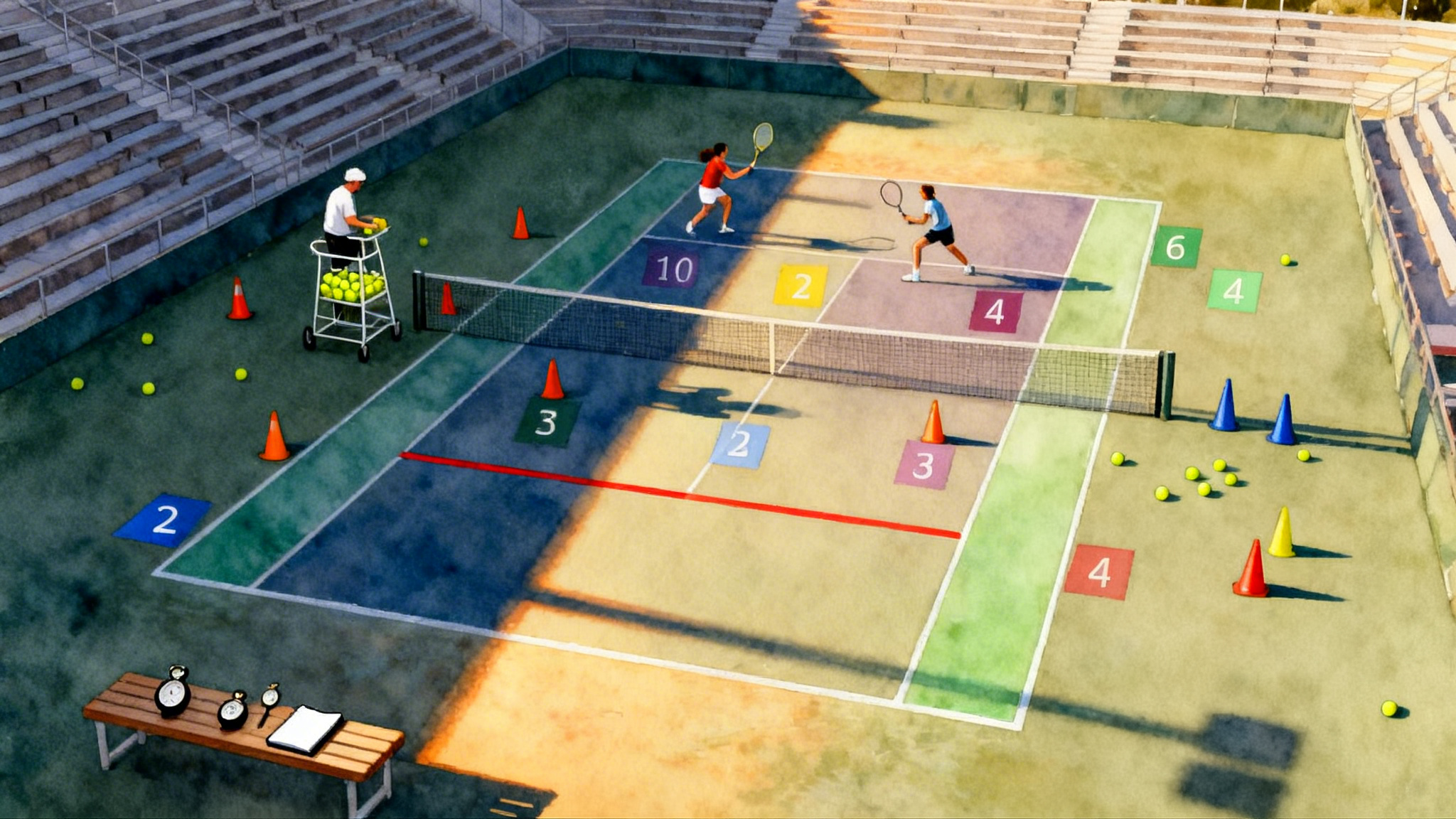
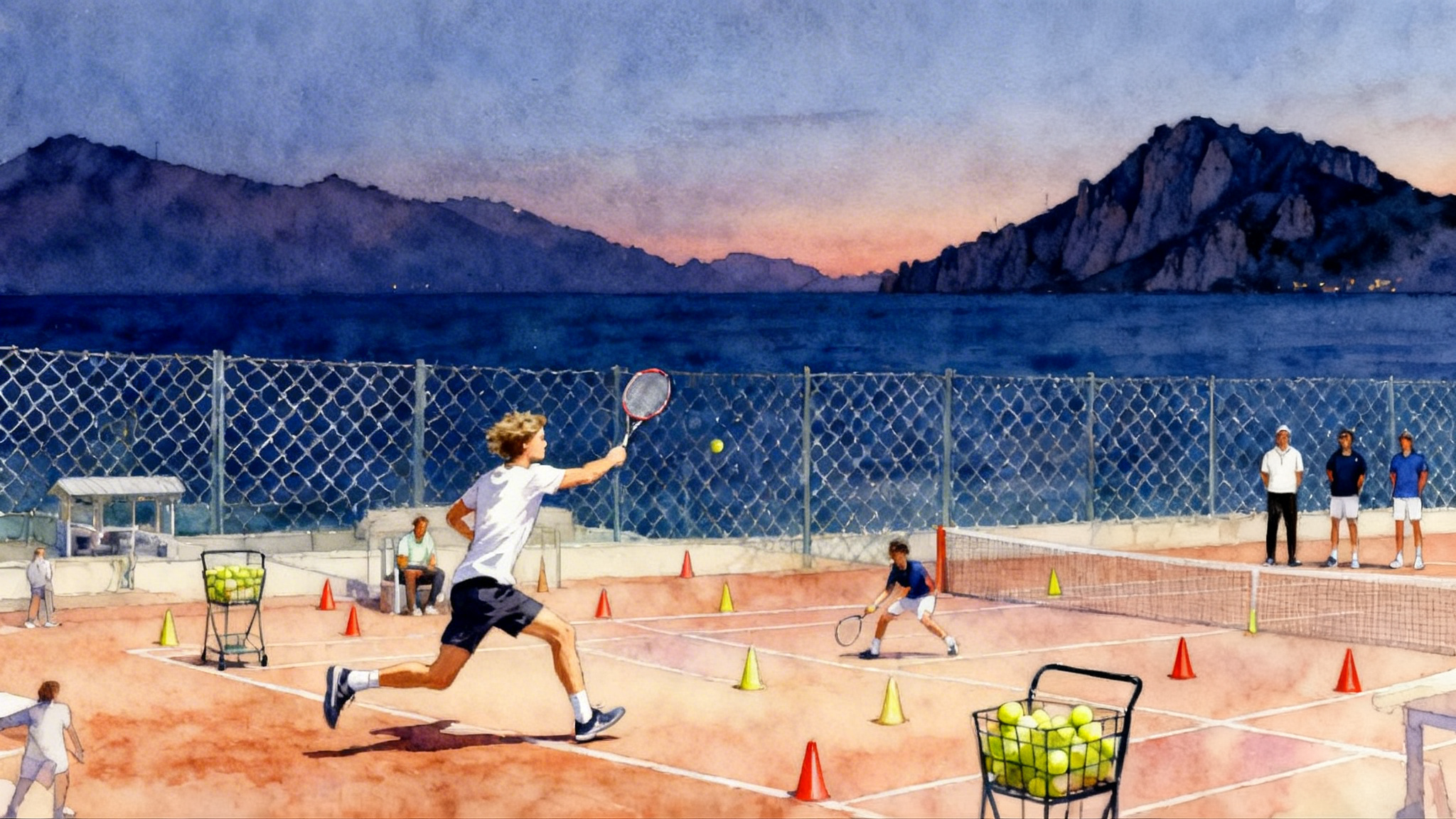
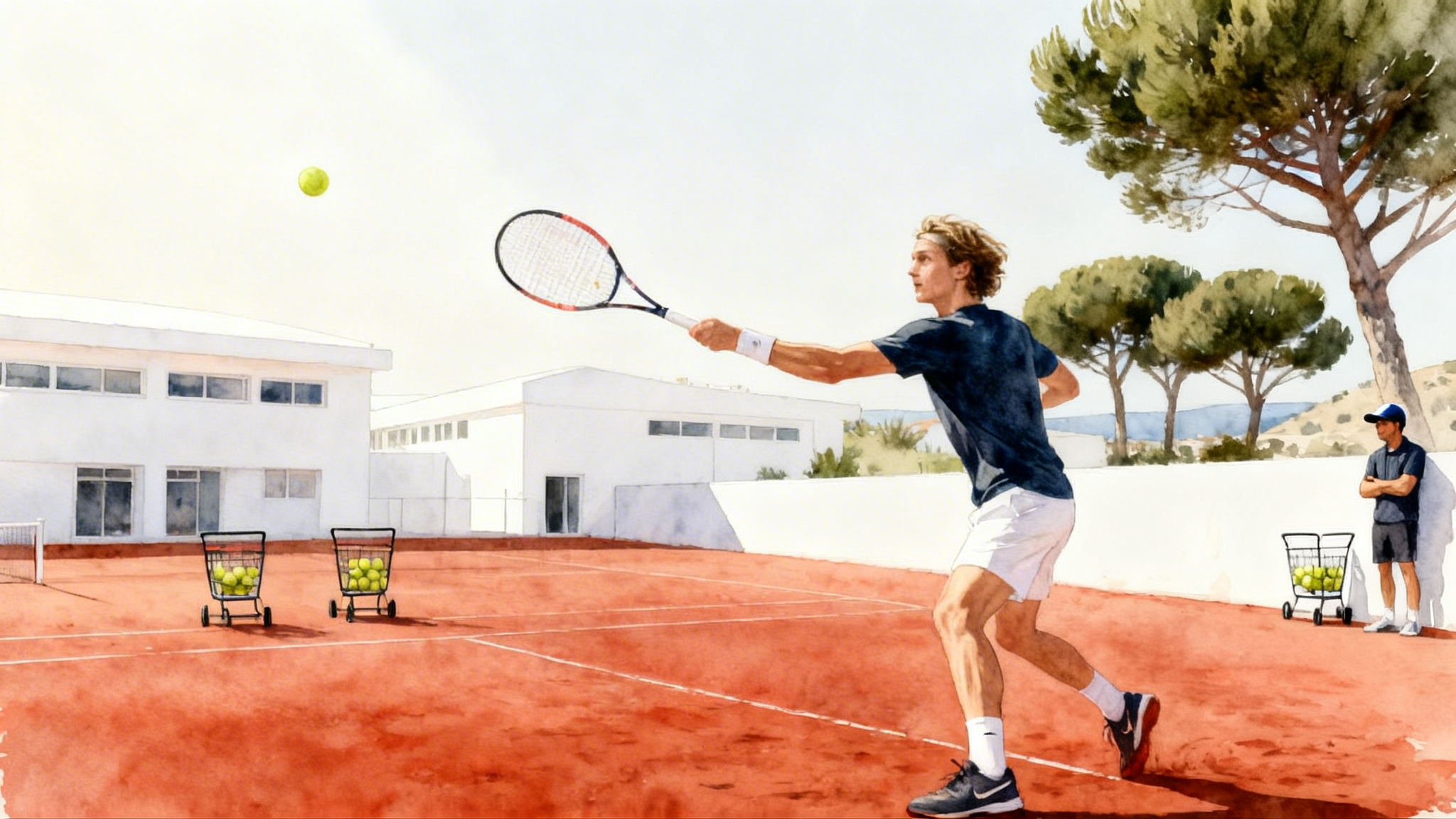
There is a reason elite academies obsess over repetition. Shot tolerance is not a gift. It is a number, and the only way to raise it is to make more quality contacts per week than your peers. JTCC loaded Tiafoe’s calendar with long hitters’ blocks, mixed drills, and competitive sets. The cadence looked less like a weekly lesson plan and more like a production line for decision making under fatigue. For families building their own plan, this 90-minute tennis practice design pairs well with the approach.
- Ball machine pyramids to harden contact points
- Crosscourt to down-the-line transition ladders
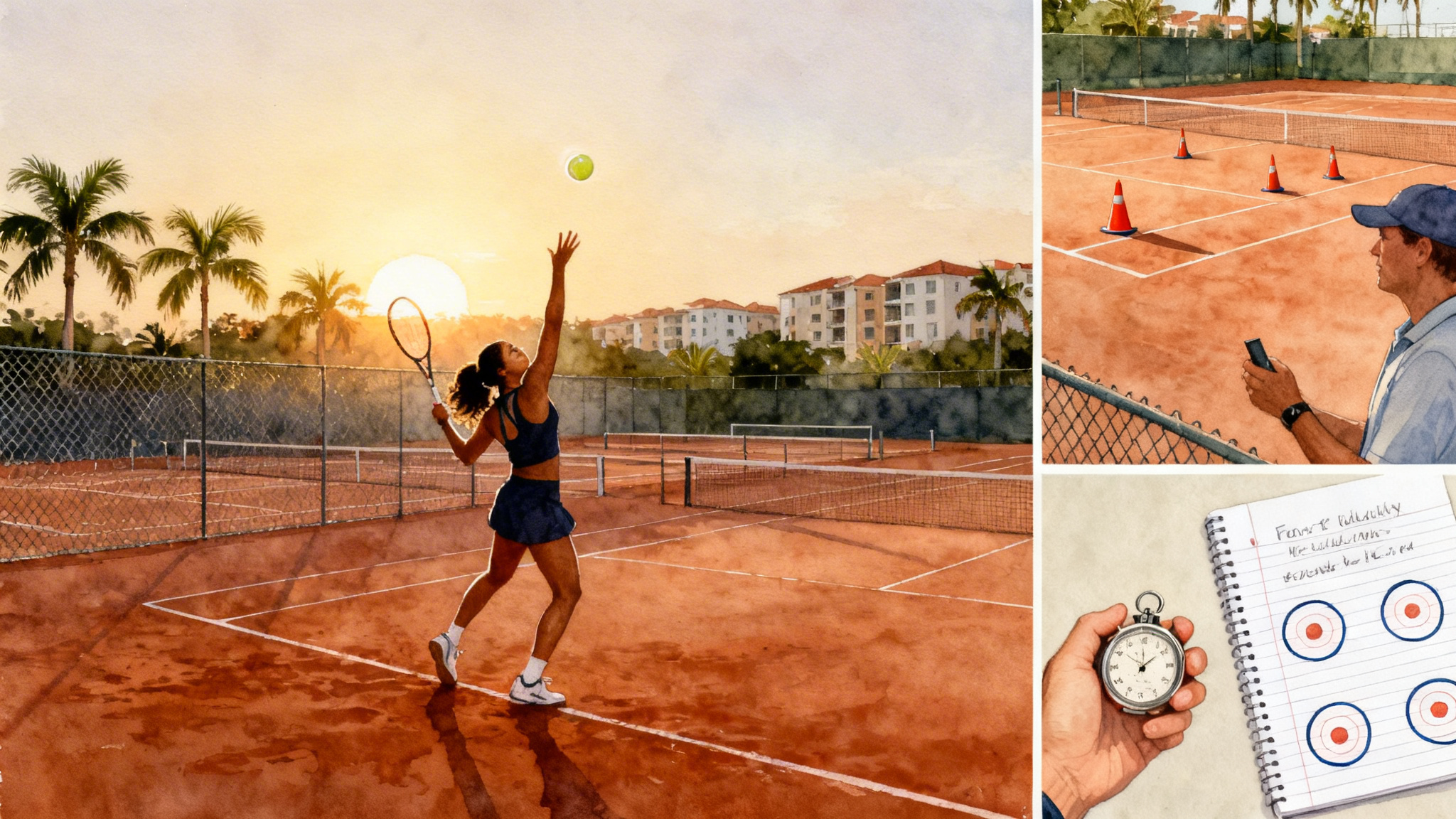
- Serve plus one combinations tracked by zone, not just by make
- Points starting at disadvantage to prioritize neutralizing and countering
The math matters. If you average two extra sets a week for five years, that is more than 500 additional sets before age 18. Add structured serving blocks and you gain thousands of additional second serves under pressure. That is the currency that buys confidence when a match tilts.
Competition as curriculum: USTA, ITF, and travel squads
JTCC treats competition as part of training, not a separate world. From early on, Tiafoe logged heavy play in United States Tennis Association events and later International Tennis Federation juniors, not as trophy hunts but as a testing schedule. The goal was to encounter styles early and often. Pushers who moonball under the lights. Lefties who carve serves at the body. Big hitters who take time away. Every style becomes familiar long before the stakes are high.
Travel squads amplify the effect. Rather than sending one kid with an anxious parent, JTCC often stacks players of similar levels, assigns a coach, and makes the tournament itself a moving classroom. Warmups are standardized. Post-match debriefs are immediate and specific. Travel time turns into scouting time. The peer pressure is positive, too. When your teammate wins a long three setter, you feel duty bound to empty the tank in your own match.
This is especially powerful at back-to-back events. A player can fix one problem on Monday and test it again on Thursday. That density of competition is what many gifted juniors are missing when they hover locally. JTCC made sure Tiafoe saw a national and international ball before his body finished growing.
Three inflection points on the way to Arthur Ashe
Every pro path looks linear in hindsight. From the inside it is a set of decisions taken under uncertainty. Tiafoe’s rise features three moments that families can study and replicate in spirit.
1) Early entry into Futures to normalize the pro level
Tiafoe did not wait to be perfect before testing himself in lower tier professional events. Futures tournaments are the entry rung of the men’s circuit, where prize money is small and draws are rugged. By entering early, he normalized the speed and weight of a pro ball while he still had the runway to adapt. The goals were modest and measurable. Win a round. Push a seed past 4 all. Hold serve under scoreboard heat. Then return home to drill those exact patterns.
Families can copy this by introducing progressively harder competitive contexts earlier than feels comfortable. That might be a tough regional event two age groups up, or a Futures qualifying draw when results are unpredictable. The rule is simple. Do not confuse ranking with readiness. Use competition to trigger the next block of work.
2) Embracing creativity and athleticism as a superpower
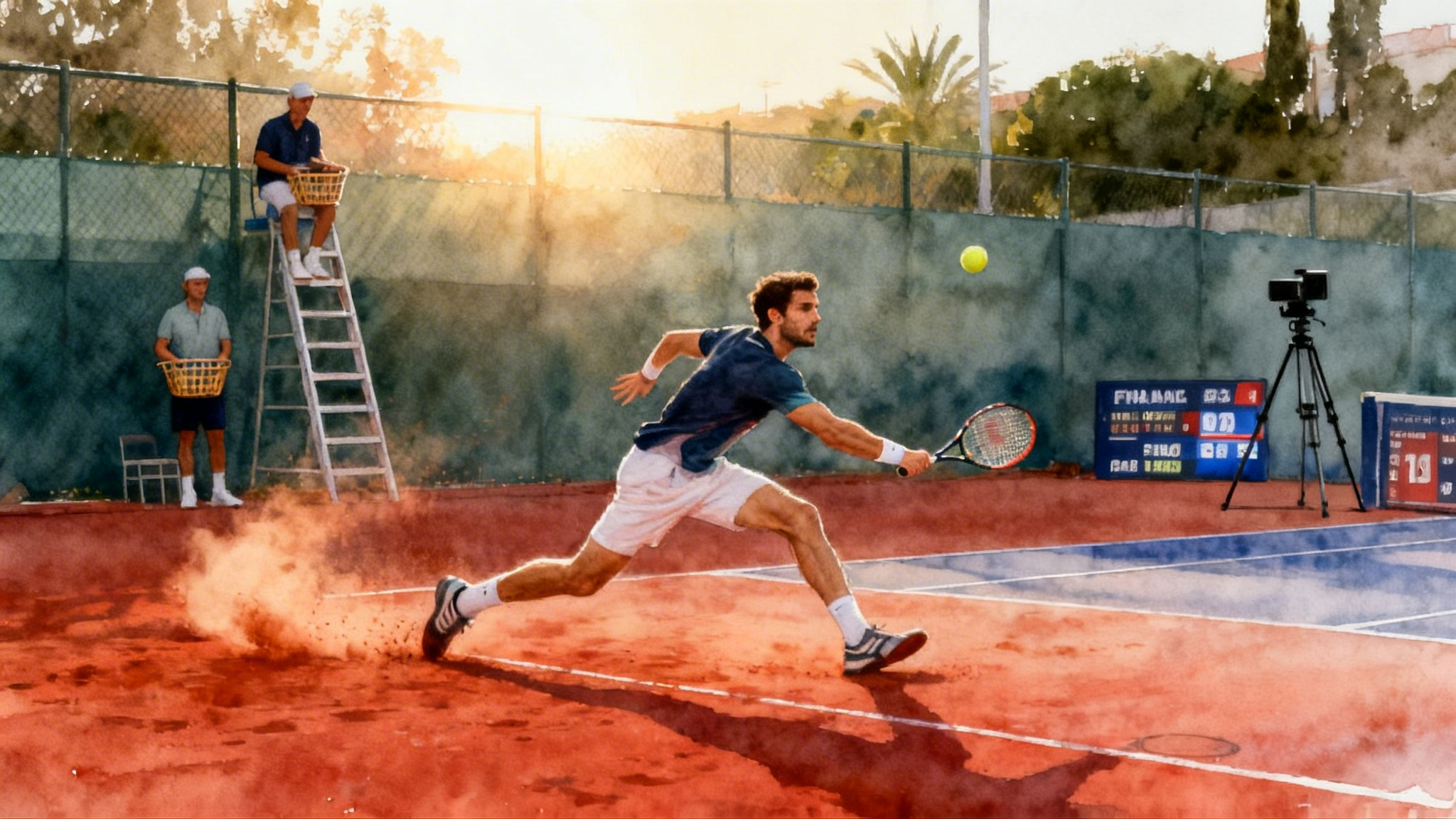
Tiafoe’s game speaks with its legs and hands. He changes direction late without leaking balance. He shows the ball, then pulls it away. He turns defense into showtime. JTCC coaches did not sand that down to fit a textbook. They built structure around it. Defensive sprints were timed. On the run crosscourt forehands were not errors to avoid but tools to sharpen. Volley exchanges started at the service line, then collapsed to the net to emphasize quick hands and short preparation.
Creativity is not a refusal of discipline. It is a different target. If your athlete’s gift is first step speed, train neutral ball patterns that invite the opponent to overplay. If the gift is feel, add finishing drills that measure depth and angle, not just clean contact. The point is to weaponize what the body already wants to do.
3) Converting Challenger momentum into staying power
The Challenger Tour is where momentum must harden into identity. After experience in juniors and Futures, Tiafoe learned to string results at this level, then to carry those patterns onto the main Association of Tennis Professionals Tour. That jump is where many promising players stall. The successful ones treat every winning week as a blueprint to be bottled. Which patterns won free points. Which return positions blunted big servers. Which between match routines maintained legs through Saturday.
Families can rehearse the same conversion at their scale. After a good local run, write down the patterns that held up. Which serves created short replies. Which neutral balls you attacked without fear. Which between match rituals kept energy up. Then test the list at the next event. Momentum is not magic. It is a checklist you can reuse. For a clear snapshot of the milestones that followed, study the Frances Tiafoe player profile.
A repeatable blueprint families can copy
You do not need a national training center to borrow the best of JTCC. You need a plan that turns access, reps, and competition into a single, repeatable loop. For a parallel case study that echoes these levers, read Coco Gauff’s academy playbook.
1) Proximity to courts
Access beats almost everything. A skilled coach cannot help if you cannot get to the court often. Solve proximity first.
- Target a home within 15 minutes of public or club courts. If cost of living is an issue, consider moving closer to older park courts with lights. Even cracked courts can host footwork, serves, and wall sessions.
- Map a weekly always on window. Examples: 6:30 to 7:45 a.m. Monday through Friday for serves and wall work. 7:00 to 8:30 p.m. Tuesday and Thursday for sets. If the time is fixed, the habit survives busy weeks.
- Build a home micro gym. A jump rope, medicine ball, mini bands, and a short ladder handle most junior needs. Proximity also means being able to train on days you cannot travel.
2) Scholarship pathways
JTCC’s scholarship model signals a broader truth. Tennis talent is everywhere. Funding is not. Families should treat scholarships and need based aid as part of the plan, not a lucky break. Programs like the Milwaukee Tennis & Education Foundation show what accessible, community rooted pathways can look like.
- Inventory nearby academies and community programs. Ask three questions: Do you offer need based assistance. What is the pathway for a hardworking junior. What results earn expanded access to squads and travel support.
- Document your child’s commitment. Keep a weekly log of drills, sets, and match outcomes. Share it during scholarship reviews. Programs invest in work habits as much as in backhands.
- Add service. Volunteering at clinics or helping with red ball sessions signals buy in. Many programs stretch dollars for families who help sustain the community.
3) Integrated academics
JTCC’s school partnership solves a barrier that derails many juniors. When academics bend around training, not the other way around, the athlete can chase density without burning out.
- Seek flexible schooling. Public magnet programs with block schedules, online charter schools, or private schools that allow early dismissals can create breathing room.
- Create a daily rhythm. Morning academics, midday training, afternoon recovery and homework. Protect sleep with a digital lights out.
- View travel as a class. Assign reading or language practice that fits in hotel windows. Debrief tournaments like lab reports. What went right. What needs retesting.
4) A competition first calendar
Results are feedback loops. Plan the year so that matches teach you what to practice next.
- Build in blocks. Four to six weeks of training followed by two to three weeks heavy on tournaments. That cadence mimics how pros sharpen for swings.
- Mix levels on purpose. One event you should win matches. One event at your level. One event that scares you. Rotate this pattern each cycle to keep the learning curve steep.
- Track the right numbers. First serve percentage by zone. Returns deep and middle. Unforced errors by intention. A count of neutral balls before you counter. These numbers travel from juniors to pros.
What the day to day might look like
Here is a sample week that mirrors the College Park energy, scaled to a typical family.
- Monday: Morning school. 90 minute hitters with crosscourt to down the line ladders. Serve plus one targets by cone. Evening: five short sets to four games with no ads.
- Tuesday: Sprint mechanics, medicine ball throws, then 60 minutes of return games that start with second serves. Evening: wall work and 20 minutes of visualization.
- Wednesday: Study hall early. Midday practice sets with one racket restriction to force footwork. Post session, write three adjustments to test Thursday.
- Thursday: Travel squad day. Coordinate with two families to meet at a club 40 minutes away for a different ball. Coach or senior player runs warmup and debriefs.
- Friday: Speed ladder, then point patterns that start in defense. Finish with tiebreakers and a checklist of between point routines.
- Saturday: Tournament play. One match minimum, two if possible. Track first serve by zone and record two key return positions that worked.
- Sunday: Recovery, hike or easy bike ride, then video review for 30 minutes.
Cost, logistics, and realistic timelines
Budgets differ, but the levers remain the same. You can adjust almost everything by intensity, not just by dollars spent.
- Coaching: If weekly privates are not feasible, schedule a monthly technical audit with a strong coach and spend the rest of the time in structured peer sets.
- Court fees: Use early morning or late evening public court windows. Bring your own cones and balls. Many communities allow low cost permits for frequent users.
- Travel: Rotate hosting travel squads among families. One minivan, one cooler, one shared scouting file on a phone. Split gas and entry fees when appropriate.
- Timeline: Think in three phases. Years 8 to 12 for skill density and movement quality. Years 13 to 16 for competition intensity and style identity. Years 16 to 19 for exposure to adult pace through Futures and strong adult leagues.
Common pitfalls and course corrections
- Chasing points too early: If every weekend becomes a tournament, you may stop improving. Keep the block rhythm. Training builds weapons. Tournaments validate them.
- Over coaching creativity: If a player’s joy is improvisation, do not cage it. Give constraints that sharpen it. Example: finish at net on every short ball for one set.
- Ignoring recovery: JTCC runs like a school because rest and food are scheduled. Copy that. Pack protein and fruit. Hydrate. Set a cutoff for screens at night.
- Treating losses as verdicts: Losses are unit tests. After every loss, extract one technical theme, one tactical theme, and one mental routine to apply next week.
What parents can do this month
- Find or create a travel squad of three to five players within a 45 minute radius. Assign one parent to logistics, one to warmups, one to scouting notes.
- Write a two month block with two local events and one stretch event. Commit the dates to a family calendar now.
- Build a daily serve habit. Fifteen minutes before or after dinner with a target towel and a simple three zone chart. Track makes weekly.
- Start an athlete log. One page per session, two metrics, and a single sentence about mood or focus. At the end of the month, circle trends in a different color.
Why this approach travels well to other sports and settings
The principles that launched Tiafoe are not tennis specific. Proximity, reps, and competitive density will move an athlete in soccer, swimming, or music. The key is to stop treating the schedule as a list of events and start treating it as a system. JTCC created that system for Tiafoe. Families can create a scaled version at home.
Bringing it back to Arthur Ashe
If you watch Tiafoe under the lights in Arthur Ashe Stadium, you see the same themes from College Park. Comfortable chaos. Confidence to try the creative shot because the building blocks were drilled for years. Recovery between points that looks like a metronome because it was rehearsed on back courts when no one was watching. The steps from a local park to the largest court in the country look impossibly long from the outside. Inside a well built system, they compress.
Conclusion: Build the ecosystem first
Families often ask for the drill that will change everything. The better question is how to assemble an ecosystem that makes improvement likely every week. College Park offered Tiafoe that ecosystem. Proximity created daily volume. Year round reps produced shot tolerance that held under stress. A competition first calendar hardened skills into decision making. Travel squads turned tournaments into classrooms. Then the three inflection points accelerated the climb: test the pro level early, weaponize creativity and athleticism, and convert Challenger surges into stable patterns.
Do that in your zip code at your scale. If you can walk to a court, you already own the most important asset. If not, build time windows that function like walking distance. Recruit two families and one coach into a small, focused community. Give academics a slot that releases mental bandwidth. Then race the calendar by learning faster than the kids around you. The result will not be identical to Tiafoe’s. It will be yours, built on the same durable levers that carried a kid from College Park all the way to Arthur Ashe.