From Hilton Head to Center Court: Pegula’s Smith Stearns Blueprint
 Tommy
Tommy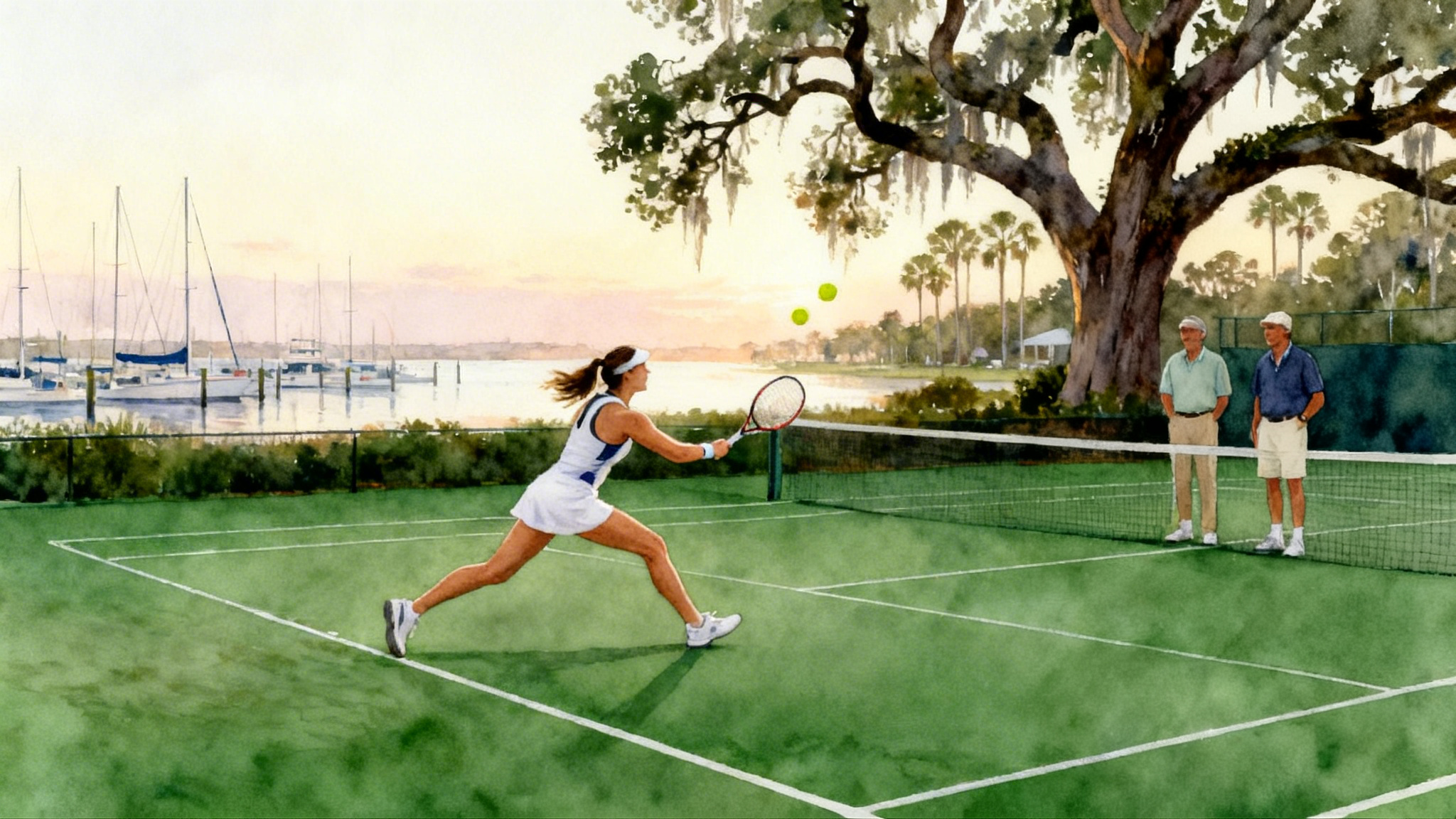
The choice that set the course
When a talented teenager decides where to grow up in tennis, the setting can shape the player as much as the drills. Jessica Pegula chose Hilton Head Island and a boutique training home in Smith Stearns Tennis Academy. It was not the biggest campus. It was not the flashiest brochure. It was an environment where Stan Smith’s clarity and Billy Stearns’s daily presence could do their quiet work. Pegula committed to five key junior years at Smith Stearns, a decision that would echo a decade later in the rhythmic calm of her return and the leverage of her backhand. That stretch has been publicly noted, including a Tennis.com profile that captured her reunion with Smith and documented her five years with Smith Stearns.
Families often assume that scale guarantees quality. Pegula’s path suggests the inverse can also be true. Small gave her clarity. Small gave her contact time. Small gave her patience. In an age of quick highlights, her real advantage was built in long repetitions. We have seen the same long-view pay off in other case studies like JTCC forged Tiafoe.
What a boutique academy actually changes
A small academy changes more than headcount. It changes the texture of each day. At Smith Stearns, groups are intentionally tight, which affects everything from how often a coach can step in mid‑rally to how precisely a week can be shaped around an upcoming tournament. When a coach watches you every afternoon and then sees you again the next morning, feedback loops compress. That is how tiny footwork errors get smoothed out before they calcify and how a return pattern gets tuned from idea to instinct.
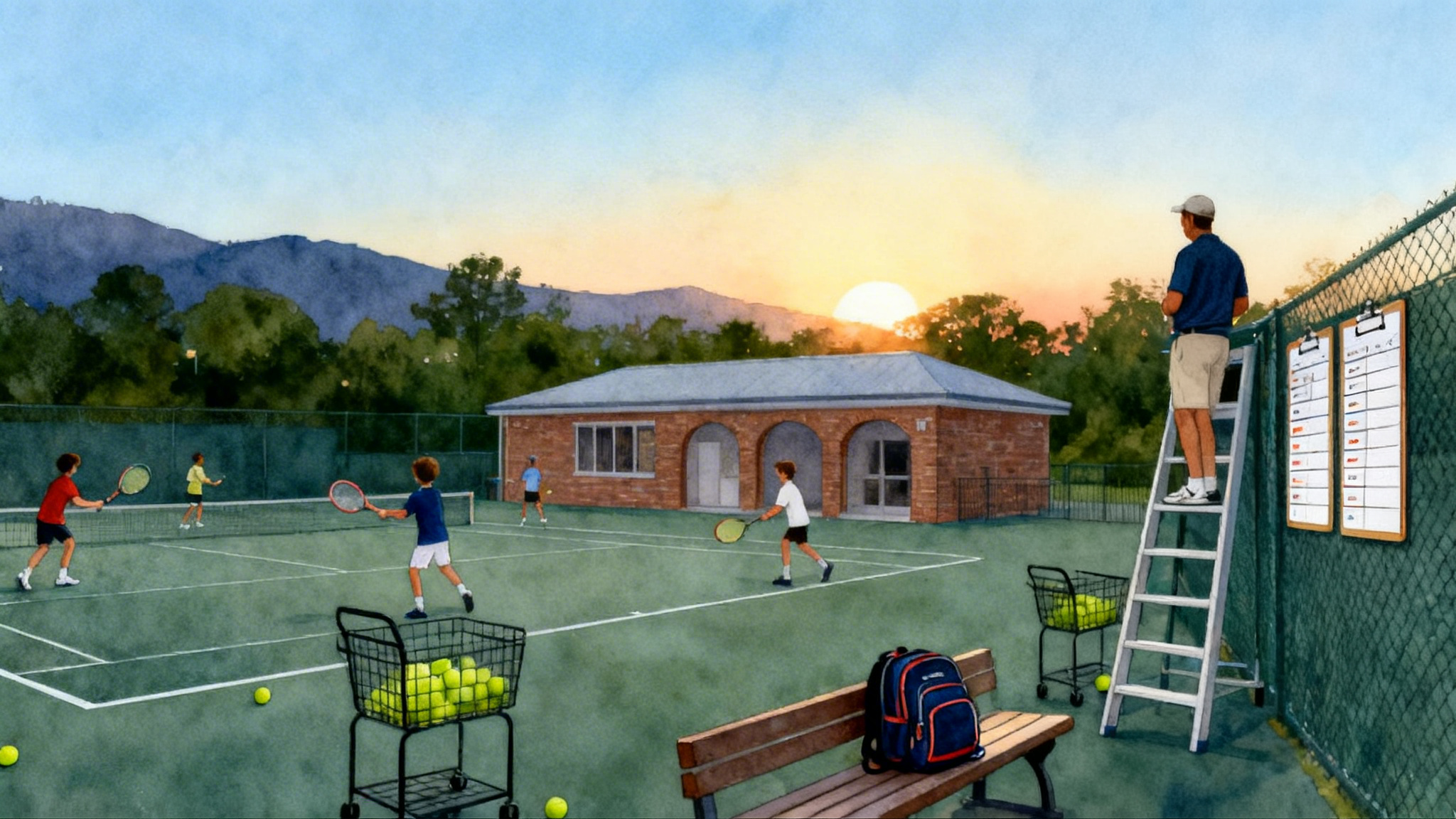
In that setting, you do not float. You are placed. Mornings might prioritize technical build on clay. Afternoons might flip to first‑strike decisions on hard court. Film sessions are short and specific. Fitness lives inside the plan rather than outside it. The ratio matters because it multiplies touches. It is the difference between a generic clinic and a conversation where the coach remembers exactly how your backhand grip slipped under stress yesterday.
Clay first, habits for life
Hilton Head’s Sea Pines environment tilts toward clay, and Smith Stearns leans into that reality. Clay is a teacher. It lengthens points, slows contact, and forces you to source pace from your legs and core rather than arm flashes. For a junior, it means you cannot fake structure. You learn to slide into balance instead of lunging. You learn height control, margin, and when to change direction. Those are not abstract concepts. They are decisions made hundreds of times a week. You see similar clay‑first development in Piatti forged Jannik Sinner.
A typical clay block at Smith Stearns might look like this:
- Patterned crosscourt exchanges that demand 10 clean, heavy balls before you are allowed to change down the line.
- Depth ladders where targets inch toward the baseline while posture and spacing are checked on every swing.
- Short‑ball recognition drills that start neutral, earn advantage with height and spin, and only then allow approach.
Clay’s reward is patience attached to a plan. Pegula’s rallies as a pro show that DNA. She builds shape first, then pressure, then the takeoff ball. Clay nurtures that sequence and protects the body while you add volume.
The return and the backhand as a north star
Pegula’s professional identity has often been summarized in two parts: a first‑class return and a backhand that holds under pressure and changes direction on command. That is not accidental. In a boutique setting with daily contact from Smith and Stearns, the return can be treated as its own craft rather than a formality tacked onto baseline drills.
Here is what that looks like in practice:
- Return posture is standardized. Split step on the toss. Quiet hands. Early unit turn. The first job is to remove noise.
- Location beats power. On second serves, the target is often the server’s weaker pattern, usually deep middle or heavy cross to pin the opponent. On first serves, the goal is a neutralizing block that lands deep enough to deny plus‑one forehands.
- Volume is front‑loaded. Players might hit 150 returns in structured sets, alternating between block and drive, then simulate scoring pressure with tiebreak‑style sequences that start every point with a return.
On the backhand, the academy’s emphasis is clean spacing and shoulder alignment. Crosscourt repetition builds a wall. The change down the line is earned, not guessed. Pegula’s favorite shot has been listed as the backhand down the line, and her career timeline shows how that anchor held through injuries and into the top of the rankings, as summarized in the WTA bio and match notes.
Why make the return and backhand your north star? Because both scale to the Women’s Tennis Association level. A return that lands deep with regularity robs elite servers of free points. A backhand that stays neutral for six balls and then flips direction to the sideline forces short replies or errors without overexposure.
How schooling and injuries were managed like a pro in waiting
Pegula’s climb was not linear. She missed a long stretch from 2013 to 2015 with a right knee injury, then stepped away again after hip surgery in 2017. Those are not footnotes. They are chapters. The question for families considering a boutique academy is how a smaller staff supports a player who is temporarily off court. Pegula’s overall path points to a principle: treat rehab as a development phase, not a timeout.
In practice, that means:
- Early weeks focused on stationary or limited‑movement hitting that privileges feel and clean contact. The player works on return blocks from a compact stance, shadow swings, and controlled crosscourts that map posture and balance.
- Performance blocks in the gym that rebuild first‑step speed and rotational strength before live points. Think medicine ball series, resisted lateral steps, and controlled eccentric loading.
- Film and scouting during reduced court time so the player stays tactically sharp. Watching a future opponent is not optional. It is a task.
Schooling choices fit the same mold. Players who attend local brick‑and‑mortar schools need the academy to orchestrate afternoon training and weekend matchplay. Online students need a plan that prevents drift and protects long practice blocks. The boutique benefit is logistics. Coaches know the test calendar. House parents know when to push bedtime. That soft structure protects the hard work.
Why the breakthrough came late, and why that is a feature
Pegula reached a career high of world No. 3 in 2022 and stacked deep runs at majors and 1000‑level events, then added more titles in 2023. The surface explanation says she bloomed late. The development explanation says she was building a game that would endure at the top once it arrived. A return‑and‑backhand framework matures with experience. It ages well. It also survives travel, different balls, and different bounces because it is based on location, timing, and posture more than raw speed.
Late breakthroughs are often the sum of many compounded choices. Pick clay first when you are twelve. Invest in return blocks when everyone else is chasing forehand winners. Choose a small program where a coach notices when your contact point drifts by two inches. Say no to short‑term noise that does not survive big matches. That is a blueprint, not a mystery.
What families can copy right now
You cannot import someone else’s story whole. You can borrow the parts that travel well. Here are concrete ways to apply the Pegula and Smith Stearns model to a junior pathway.
- Choose size with intent
- Ask for the real group size on court during your player’s time slot. Do not accept catalog numbers. Watch a session.
- Ask how often your player will have the same lead coach across weeks. Continuity matters more than slogans.
- If college tennis is a goal, ask to see recent placement lists and the role coaches played in outreach and visits.
- Anchor development on surfaces that teach
- If you have access to clay, build two or three clay‑heavy blocks each year that run four to six weeks. Use them for patterning, height control, and defense‑to‑offense transitions.
- If you do not have clay, simulate with constraint drills. For example, require a height window above the net tape for the first four balls of every rally and do not allow down‑the‑line changes until a crosscourt depth target is hit twice.
- Make the return a priority skill, not an afterthought
- Track return depth in practice. A simple rule: on second serves, 70 percent of returns should land beyond the service line in live sets. If not, adjust spacing or swing length.
- Train locations on a weekly rhythm: day one is deep middle to deny angles, day two is heavy cross to the weaker wing, day three layers in body returns against bigger servers.
- Build pressure sets that begin every point with a return. First to seven with alternating server types, no free points.
- Build the backhand to scale
- Standardize spacing. Mark a line with flat discs where contact should occur and reset every rep when spacing drifts.
- Use a three‑ball rule for direction changes: two crosscourts to stabilize, third ball down the line with clear shape. If the line ball misses width, drop back to crosscourt.
- Add approach and volley pairs off the backhand change to force complete points, not isolated winners.
- Structure training blocks that protect momentum
Here is a simple eight‑week template you can adapt, especially useful before a summer national swing or a fall showcase:
- Weeks 1 to 2: Clay block. Footwork efficiency, height windows, and 60 percent of volume focused on return posture and depth. Gym focus on eccentric strength and ankle mobility.
- Weeks 3 to 4: Mixed surfaces. Serve plus one on hard court in the morning, return plus two on clay in the afternoon. Introduce film on pattern selection.
- Week 5: Matchplay heavy. Two match days, two drilling days, one recovery day. Gym shifts to power, med ball throws, and short sprints.
- Week 6: Tournament. Coach travels for debrief loops. Off days include 30‑minute feel hits and mobility.
- Week 7: Reset. Three light days, then rebuild volume with crosscourt walls and short‑ball recognition.
- Week 8: Second tournament or college showcase. Keep return targets simple and backhand changes disciplined.
- Manage school and health with a plan
- For traditional school, build a recurring weekly map that includes a hard stop for homework and a realistic bedtime. Protect at least two 90‑minute on‑court blocks and two strength sessions each week in season.
- For online school, set non‑negotiable academic windows and place them after the day’s heaviest training so mental energy is sequenced, not split.
- For injuries, use a three‑phase return: stationary or limited‑movement hitting, short‑court point play with constraints, then full live sets with targeted themes. Maintain scouting and film throughout so the brain stays in match mode.
How to test fit at Smith Stearns
If the Pegula pathway resonates, test the environment that shaped it. A practical way to start is a one‑week evaluation at Smith Stearns. During that week:
- Track how many coach touches your player receives per hour. Write them down.
- Sit in on or request a summary of a film session. Look for specific themes, not generic pep talks.
- Ask how return work is scheduled. Do they run it as a stand‑alone block multiple times per week or only as a warmup?
- Watch a clay session for spacing and posture habits. Players should be taught to arrive balanced and leave balanced.
- Ask about tournament travel and post‑match debrief processes.
For another boutique model in the United States, compare the cadence and staffing in the Gomez Tennis Academy program.
The takeaway for families deciding now
Pegula’s rise is not a lesson in shortcuts. It is a case study in choosing an environment that makes the right habits inevitable. Hilton Head’s clay courts taught her patience and balance. A tight coach‑to‑player ratio turned feedback into daily improvement. Return patterns and a disciplined backhand gave her a game that holds up when the rallies get loud. The injuries and school logistics were not detours. They were managed phases inside a plan.
If you are a family weighing options, start with three questions. Does the academy’s scale guarantee daily contact from a coach who will know your player’s patterns by memory. Do the surfaces teach patience as much as pace. Does the plan elevate the return and the backhand from supporting characters to leads. If the answers are yes, you are building something that can travel from local courts to the biggest stages.
Pegula shows that a small, precise choice made as a teenager can ripple forward into late‑career composure. From Hilton Head to center court, the line is straighter than it looks. It starts with clay underfoot, a coach at your shoulder, and a return that lands deep enough to tilt the day in your favor.