From El Palmar to Villena: How Equelite Forged Alcaraz’s Game
At 15, Carlos Alcaraz left El Palmar for JC Ferrero Equelite in Villena. Inside a small-squad, coach-led routine and with on-site Challenger reps, he learned to attack on any surface. See how that structure held through the 2025 handover to Samuel López.
 Tommy
Tommy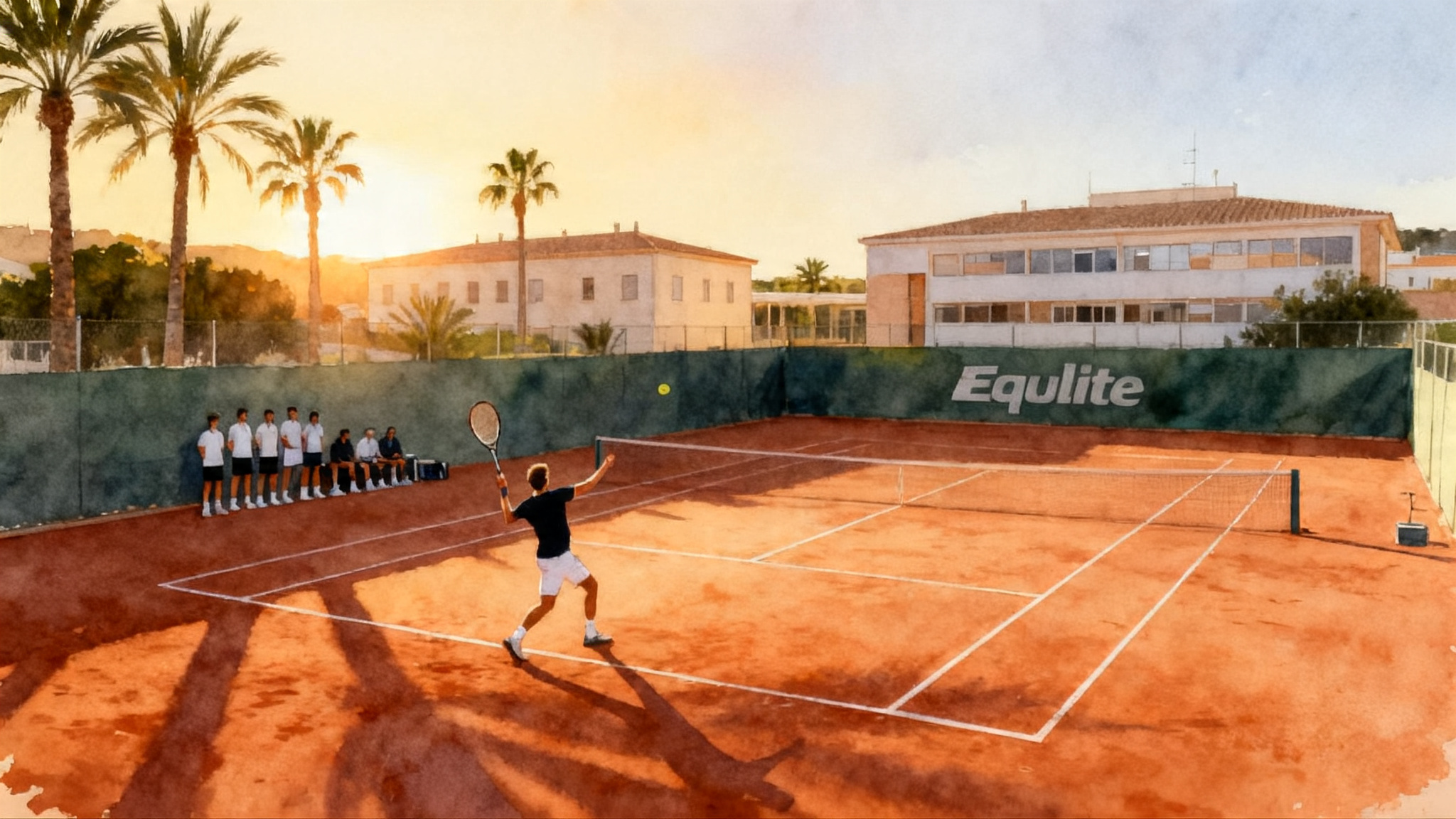
The road from El Palmar to Villena
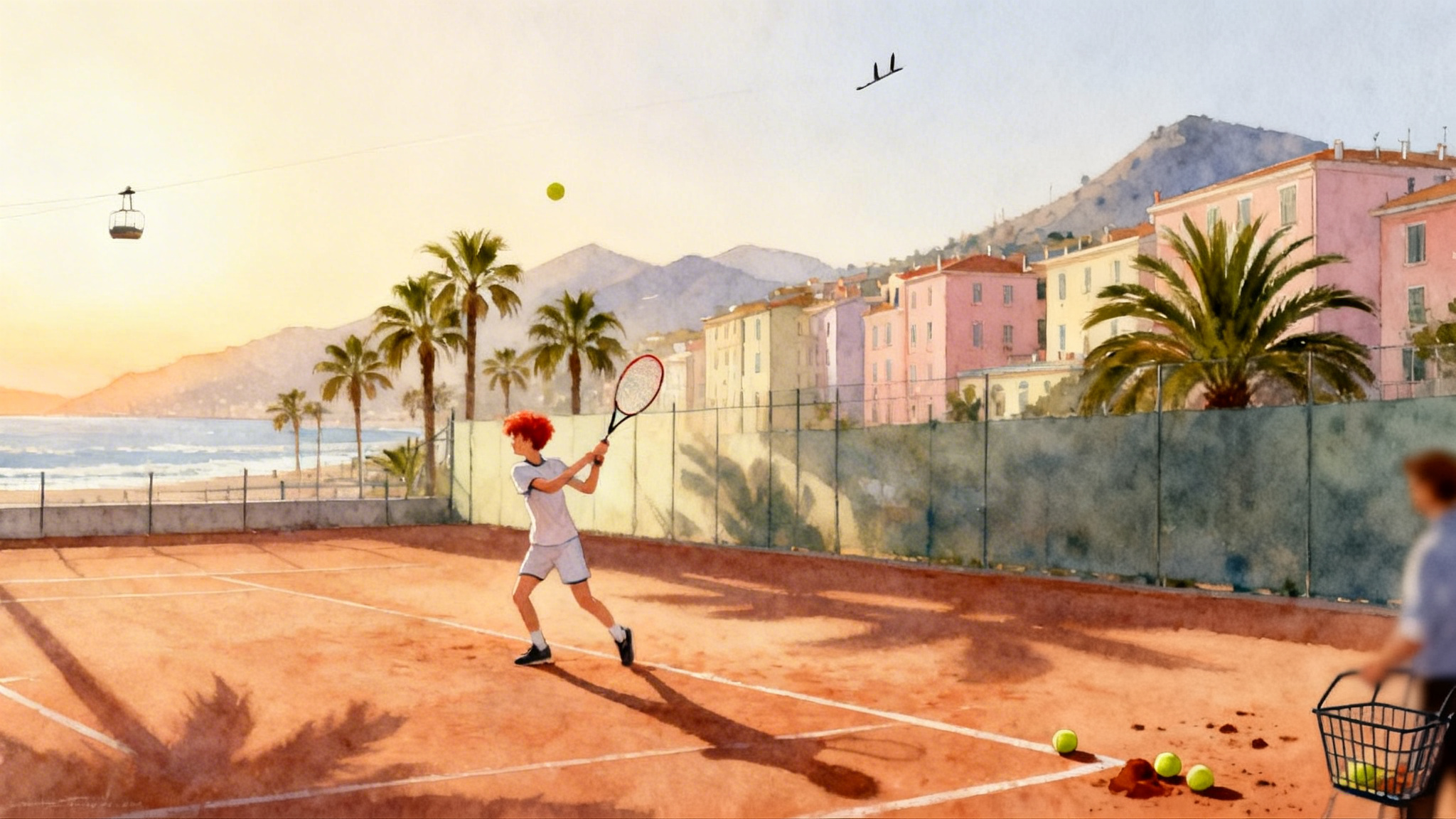
When a 15-year-old Carlos Alcaraz arrived in Villena in 2018, he was not searching for a shiny campus or endless courts. He needed a daily environment that would harden his habits, expose him to pro tennis without delay, and keep his circle tight as his results scaled. The JC Ferrero Equelite Academy, run by Juan Carlos Ferrero and a compact staff, was built for exactly that.
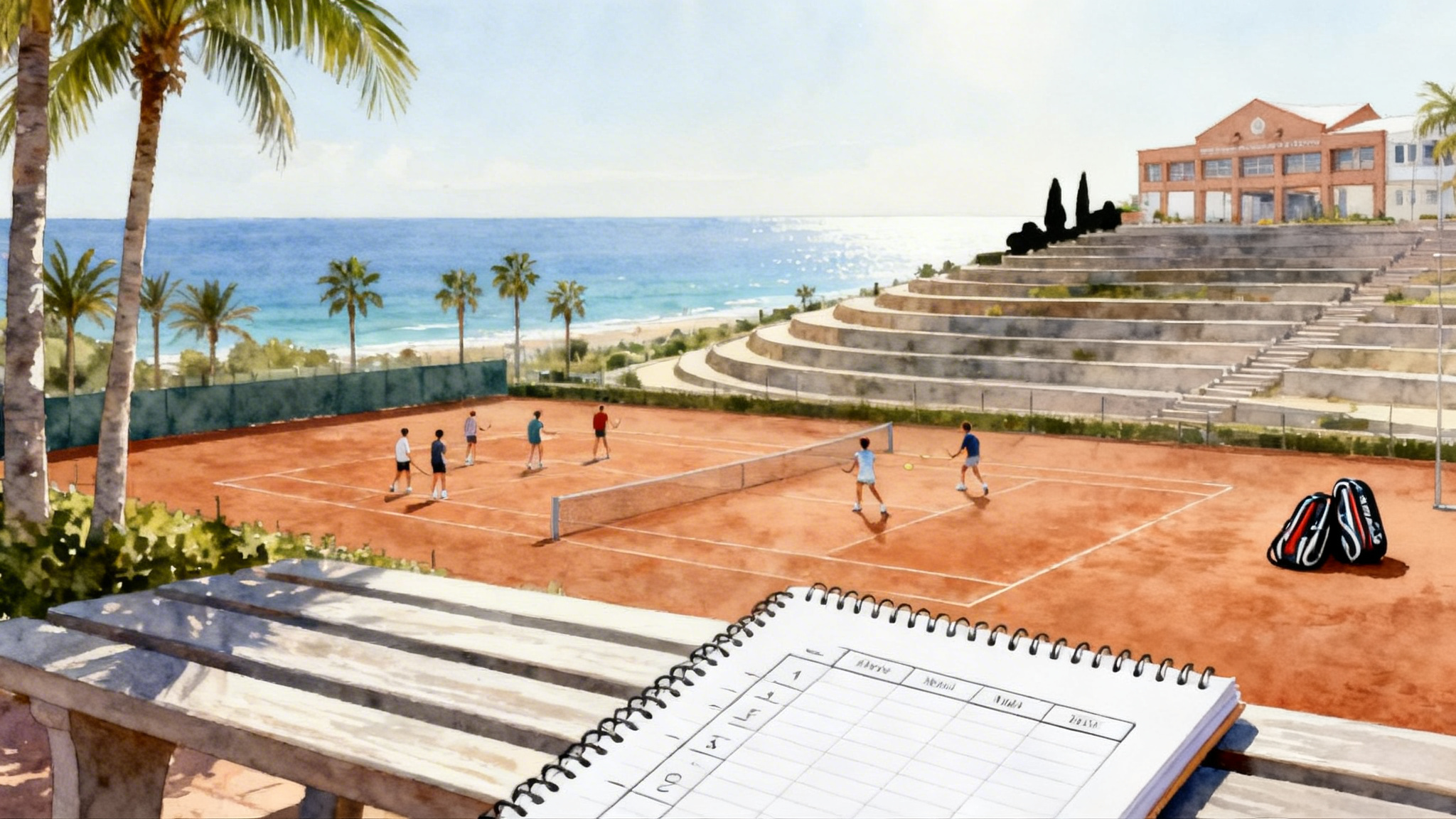
Alcaraz moved from El Palmar to a place where the head coach still ran sessions on court, where a player could walk from breakfast to training and then to an office for match review without leaving the facility. Most important, Villena held a lever that few academies can pull. The campus itself hosts an ATP Challenger, the JC Ferrero Challenger Open, which began in 2018 on Equelite’s clay. That event gave a teenager the chance to test himself against touring pros on his own training courts, with familiar winds and sightlines, and with his coaching team sitting steps from their usual practice bench. The first edition presented in Villena formalized a direct pipeline from academy reps to real ranking points. This mirrors the on-site summer Challenger model that accelerates development at Tenis Kozerki.
Small squad, big accountability
Equelite’s competitive advantage is not mystery. It is headcount. Alcaraz did not disappear into a group of 30. He slotted into a small squad where Ferrero could steer the tennis, and where roles around him were defined. The daily staff list was short, and therefore visible. You see everyone, they see you, and that transparency becomes a training tool. It is a proven small-team fast-track approach seen at other top setups.
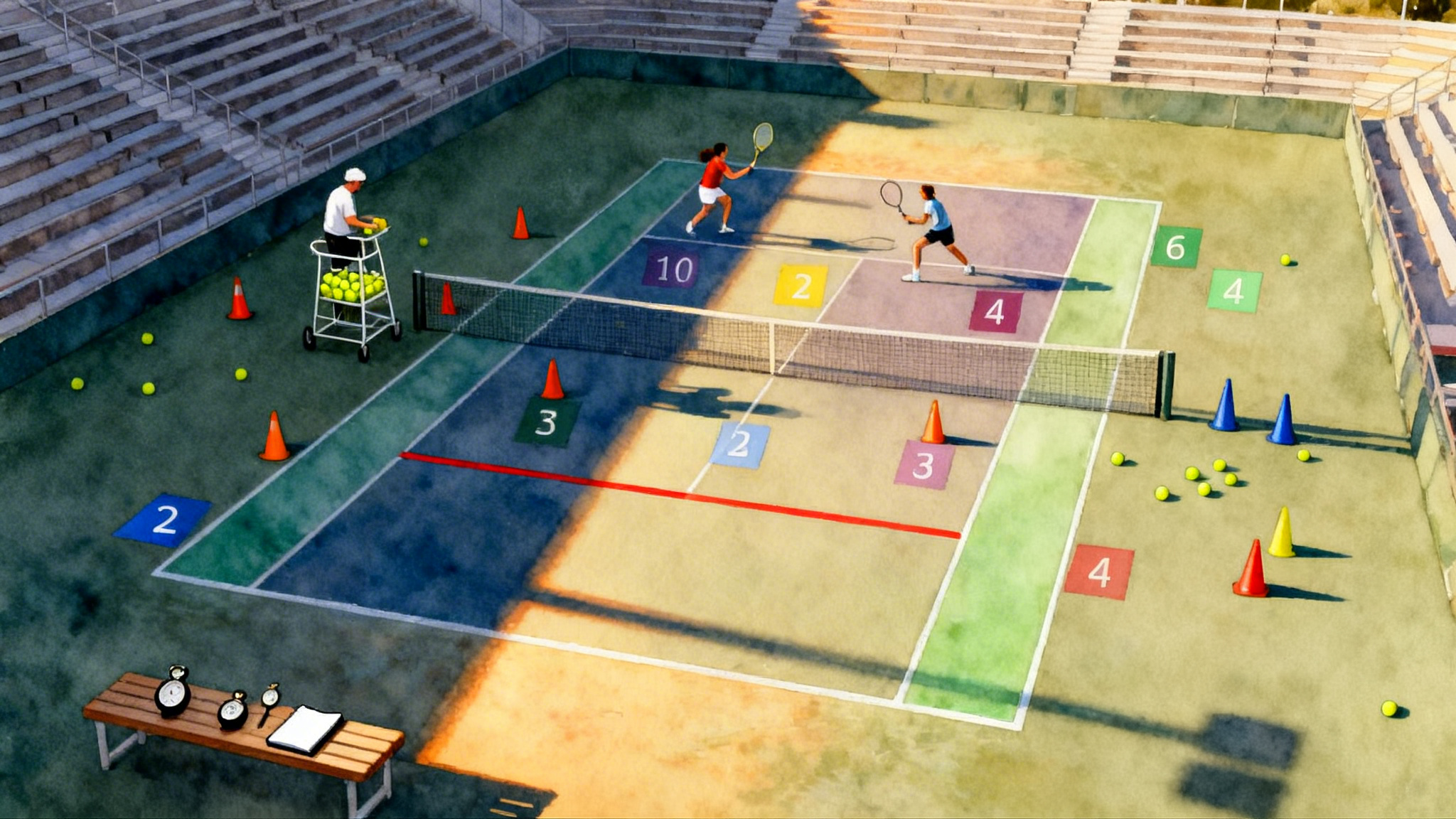
In practical terms, small means measurable. A four-to-six player group can rotate through one court with one basket and one ball cart, which makes every rep traceable. In a large academy you might clock 300 forehands without knowing why. In Villena each 20-ball block had a label. One sequence might be neutral rally depth to the backhand corner, then a green-light forehand to the open court, then a closing volley. The coach says the score out loud. Miss the volley, you hear it. Close the point, you hear that too. The simplicity is disarming, and it travels to matches because the language never changes.
A first taste of pro speed, without leaving home base
The on-site Challenger did not just shorten travel. It collapsed the psychological distance to the tour. In April 2019, Alcaraz earned his first ATP Challenger match win in Villena, and he did it as a local who had been sparring on those same courts all week. The difference between practice intensity and match intensity narrowed, which is the hidden value of playing pro events on your training campus.
Consider the sleep factor. A two-hour bus ride to a venue can erase weeks of precision work. By contrast, competing where you train removes friction. Your warm-up is on the same wall you use every Wednesday. Your coach does not need to scout the cafeteria. That familiarity turns attention back to performance variables that matter, such as length through the middle in a headwind or return depth on second serves. For a teenager who is learning how to manage energy across a tournament week, that is priceless.
The building blocks of an all-court game
Alcaraz did not become an all-surface threat because he learned ten new strokes. He learned to stack a few core skills under stress and to apply them on different footholds. Equelite’s drills made the connections clear.
- First strike, not first swing: The goal was not to hit hard. The goal was to land the first heavy ball that put the rally under your control. On clay, that often meant a deep forehand to the backhand body, then a forehand inside-in to take time. On grass, the same principle translated into a flatter return and an early backhand block that opened the court. The cue stayed the same. The shape changed.
- Offense from defense in two shots: Many sessions rehearsed the two-ball escape. Ball one is a high, heavy neutral that buys time. Ball two is a line change that flips the rally. That habit is why a 30-15 point on clay, grass, or a North American hard court still looked like the same player solving the same puzzle.
- Front-court finishing: Ferrero’s squads always folded in net work. Drop shots and drive volleys were not add-ons, they were the finish of the pattern. The team treated net closes like a serve or a return, not like an optional extra. That framing mattered when Alcaraz began to win on faster courts, because his forecourt mechanics were already part of the base pattern rather than a late-stage addition.
Integrated physical and mental work
The academy runs the physical and mental work inside the same playbook as the tennis. That means nothing is free-standing. The sprint pattern after a live ball is the one you will need to chase a drop shot at 5-all. The breathing cue you use when you are on the bike is the one you use before a second serve at 30-40.
A typical week for a player on Alcaraz’s track used two anchor ideas.
- Bookend load: Mornings dial up neuromuscular speed. Afternoons load pattern tolerance. On Monday morning you get 30 meters of acceleration and deceleration ladders tied to split-step timing on court. Monday afternoon you stack longer rally patterns with serve-plus-one targets and a scoreboard running. The books close together.
- One message per week: The mental theme is the same across gym, court, and video. If the message is posture under pressure, then every session asks for it. A physio cue becomes a tactical cue, which becomes a video tag. It is easier to remember one message than five, and it builds confidence because the athlete feels one brick go to the same wall every day.
The tight loop only works if the staff speaks one language. Equelite’s advantage was not just expertise, it was alignment. On a Wednesday, the strength coach and the lead coach used the same words to describe the same behavior. That is how an identity survives a long season.
Periodization with a map, not a wish
The calendar in Villena looked like a map rather than a wish list. Blocks were visible. Training weeks were real. Competitive blocks were scheduled near the base when possible, then the radius extended only when the level asked for it.
- Clay foundation block: Spring in Spain built the engine. The academy scheduled training blocks that crescendoed into tournaments on Iberian clay. That might include a Futures swing, then a Challenger like the one in Villena, then a quick reset and a targeted jump to a higher tier only when the metrics said go.
- Summer hard court transition: The team did not abandon clay habits, they translated them. A two-ball escape on clay becomes a two-ball escape at Cincinnati with a lower net clearance and a tighter target. Footwork circuits swapped deep slides for staccato split-recovery steps, but the drill names stayed consistent so the brain did not have to learn a new language while it learned a new hop. For session structure that supports this, see our 90-minute practice design.
- Autumn consolidation: After the travel spikes, the calendar snapped back to a local training base for consolidation weeks. That is when you see the benefit of a coach-led academy. You can shorten the loop from match feedback to practice adjustments to the next match without reinventing your entire plan.
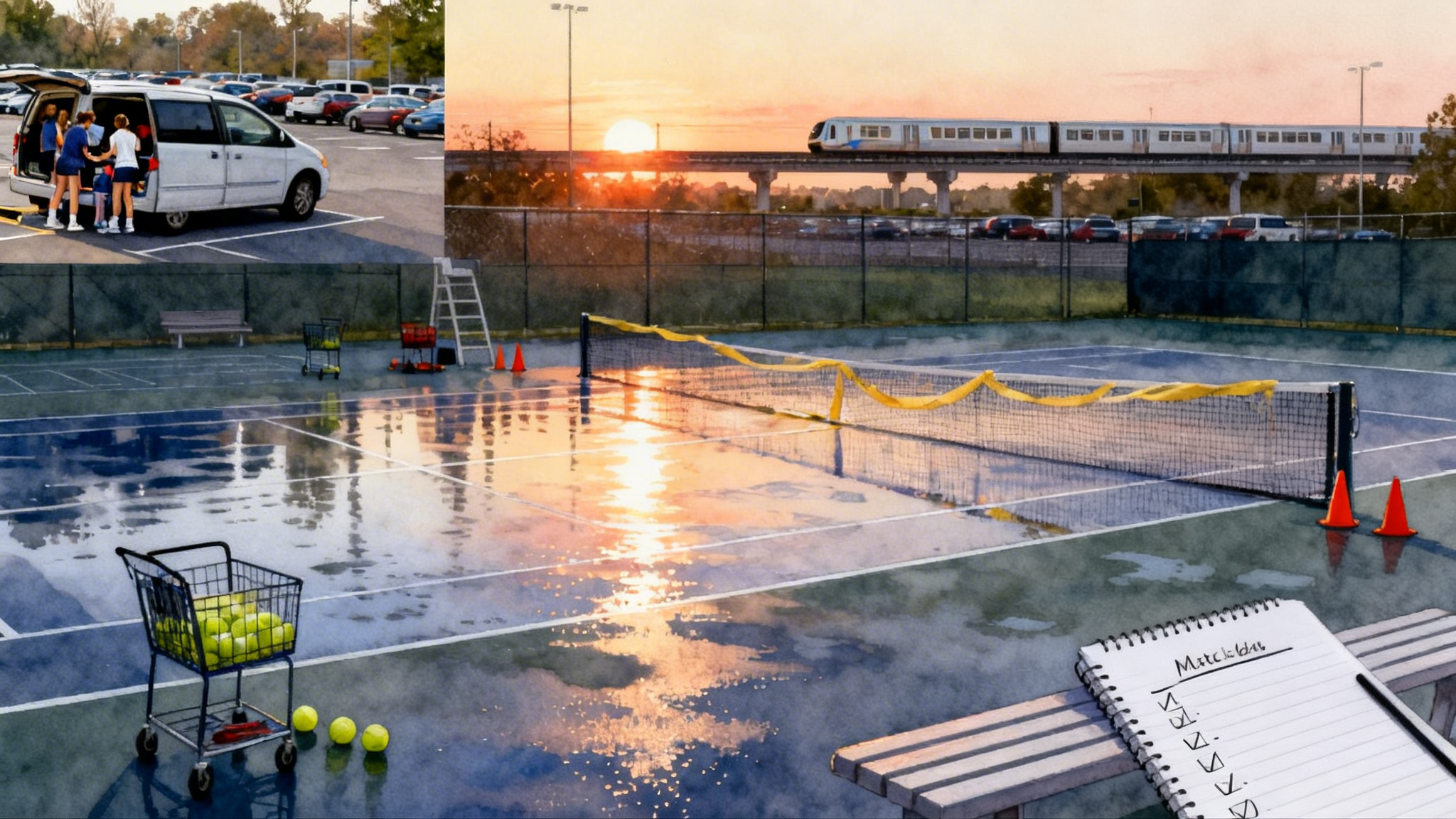
Parents and junior coaches can copy this without needing a pro facility. Build four 10-to-12 week blocks across your year. Inside each block, define two or three target skills and schedule two tournament clusters close to home. Use the travel savings to add one extra video session per tournament and one recovery day per cluster. Less romance, more repetitions.
Early exposure to risk, managed inside the academy
Giving a 15-year-old a wildcard into a Challenger is not valuable if he or she gets crushed and learns that pro tennis is a wall. The trick is calibrated risk. Equelite buffered that risk by keeping the same coaching crew at practice and the match, and by editing the scouting report to a few stable anchors. Serve to the body on break points. First forehand to the backhand corner. If you are down 0-30, you must hit one ball deep through the middle before you try a line change.
When those cues live on your practice court, a young player does not feel like they are facing a new sport every week. They are just leveling up the same patterns against a faster opponent. That mindset speeds development because the player’s identity remains intact while the competition improves.
The handover in 2025, and why continuity mattered
By late 2025, the coaching picture changed. Ferrero stepped away from the day-to-day role, and Equelite mainstay Samuel López took the lead. The timing made headlines, but the structure absorbed it because the system had always been bigger than one voice. The tournament calendar still followed blocks. Video sessions still cut patterns into the same tags. The support team around Alcaraz stayed small, with clear roles that were already familiar. Spanish outlet El País outlined the shift and the compact team that remained around the player, noting the arrival of new head coach Samuel López while the larger structure held.
Why did the identity survive the handover? Because identity was not a speech or a slogan. It was the sum of specific weekly habits, shared vocabulary, and a schedule that reinforced those habits. Replace a lead voice inside that framework and the player still hears the same music.
What parents and coaches can copy
You do not need Equelite’s footprint to borrow its best ideas. Take these three moves and make them local.
- Choose a coach-led environment with clear periodization
- What to do: Pick a program where a lead coach runs the court most days and can name the next 12 weeks of work. Ask for the map. If the answer is a list of tournaments without training blocks, keep looking.
- Why it works: One voice reduces noise. Periodization prevents the calendar from being a random walk that burns energy without building skill.
- How to apply: Draft a calendar in four blocks. In each block define two performance indicators. Examples: first serve points won above 68 percent, or rally ball depth past the service line on 60 percent of neutral balls. Post the two indicators on the court fence and measure them every Friday match play.
- Target competition blocks near your training base
- What to do: Cluster two to three events inside a two-hour radius of your base, twice per block. It is not glorious, but it saves travel load and lets you edit training between events without a full reset.
- Why it works: Familiarity increases attention to the ball and the plan, not to logistics. The brain has a finite budget. Spend it on decisions that change matches.
- How to apply: Schedule a two-week swing that ends on a familiar court. Use the same warm-up sequence and the same three tactical cues at every event in the cluster. After the swing, take two days off, then run a three-day adjustment block that addresses only the patterns that failed. Repeat.
- Keep a tight support team as the player scales
- What to do: Cap the day-to-day team at five roles. Lead coach, secondary coach or hitting partner, strength and conditioning, physio, and one manager who handles entries and travel. Specialists can plug in for projects, not for daily noise.
- Why it works: Role clarity speeds feedback and reduces mixed messages. It also lets the player associate specific professionals with specific outcomes. That mental filing system reduces stress during long seasons.
- How to apply: Write role cards. Each person lists their two weekly deliverables. Example for a secondary coach: two hours of serve return patterns recorded on video, and one opponent scout report that fits onto one page. If a role cannot name deliverables, the role is not real.
Practical snapshots from Villena that travel anywhere
- Pattern ladders, not buckets: Turn a 200-ball basket into ten 20-ball ladders with a specific target. Track success rate over weeks. Ladders organize pressure and reveal which step breaks first.
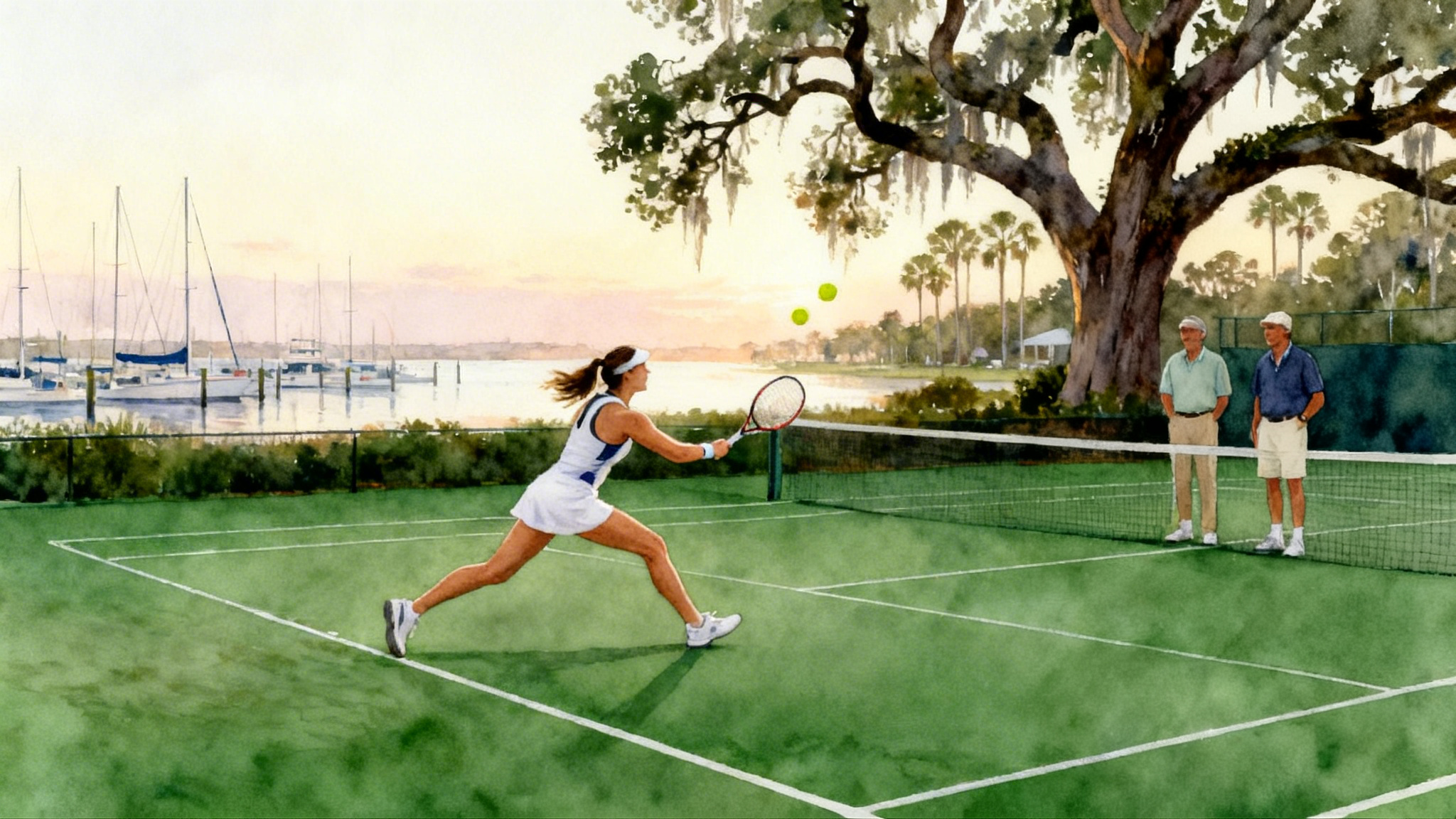
- One surface, many shapes: Practice the same point pattern with three ball shapes. High-heavy, flat-through, low skid. Players who can change shape without changing identity move between surfaces without drama.
- Scoring that punishes drift: Play practice sets where every unforced error in the first four balls costs two points. Aggressive does not equal wild. The all-court identity depends on intent with control.
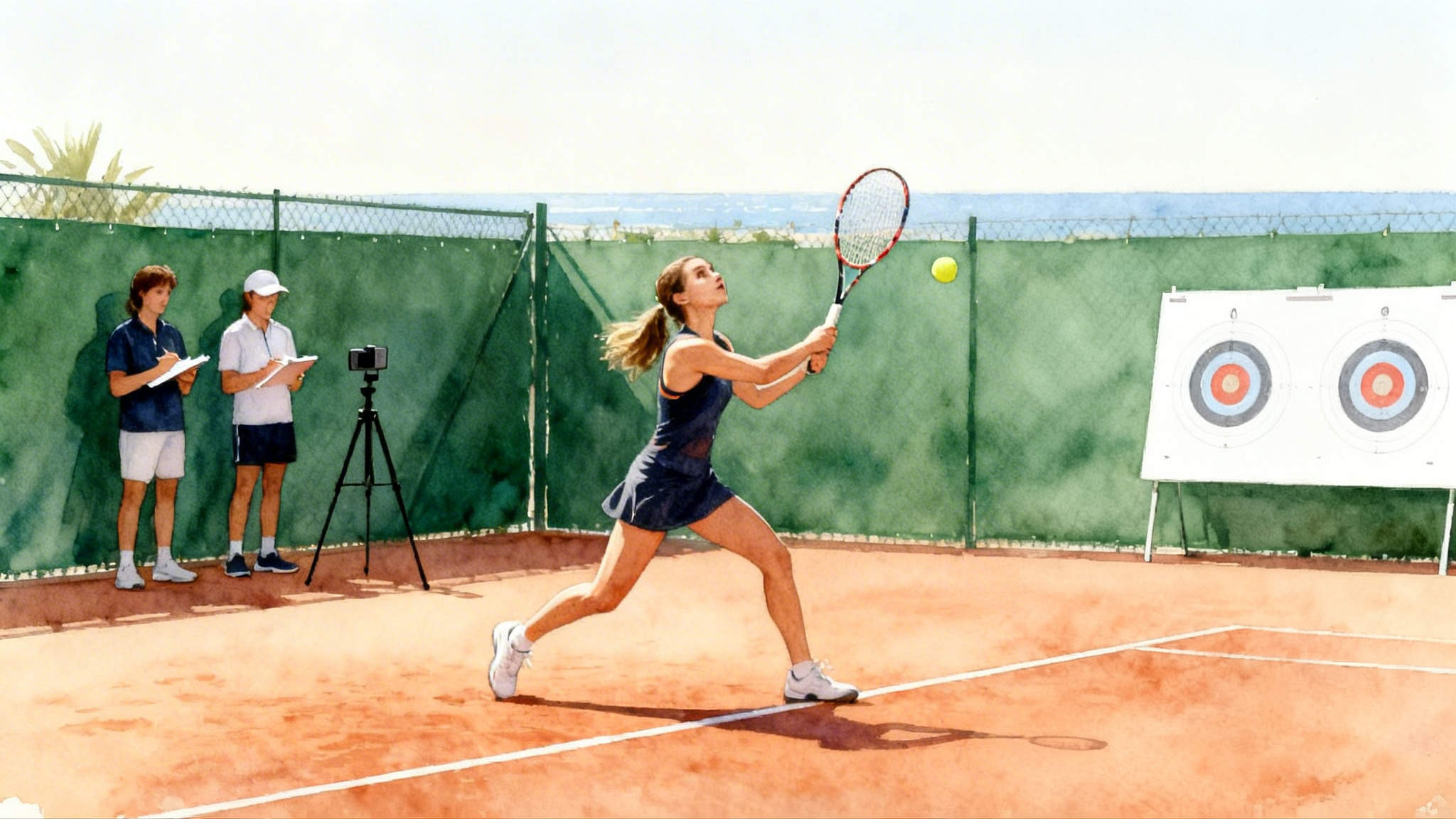
- Video that answers a question: Do not watch matches for everything. Watch for one behavior. For instance, every return at 15-30. Count targets. Count depths. Make one adjustment.
The deeper lesson
From El Palmar to Villena, the throughline was not talent finding the right roof. It was a system that matched a personality. Alcaraz wanted to play forward. Equelite supplied a routine that rewarded forward choices without turning them into chaos. The academy’s on-site Challenger gave him an early look at the speed of the tour inside a setting where his cues already lived. The training map kept his tools aligned across clay, grass, and hard courts. The small team made communication short and honest. When the coaching handover came in 2025, the foundation was steady because the identity did not live in a single voice.
That is the template any family can copy. Choose substance over scale. Put a map on the wall. Compete where you train until you outgrow it. Keep your team tight, your language simple, and your habits measurable. The rest is miles and matches.