From Delray to Slams: How Florida Academies Built Naomi Osaka
Naomi Osaka’s family left the junior grind for a pro-first path through two Florida academies. Here is how ProWorld in Delray Beach and Harold Solomon’s program in Fort Lauderdale shaped her serve, first‑strike game, and competitive calm.
 Tommy
Tommy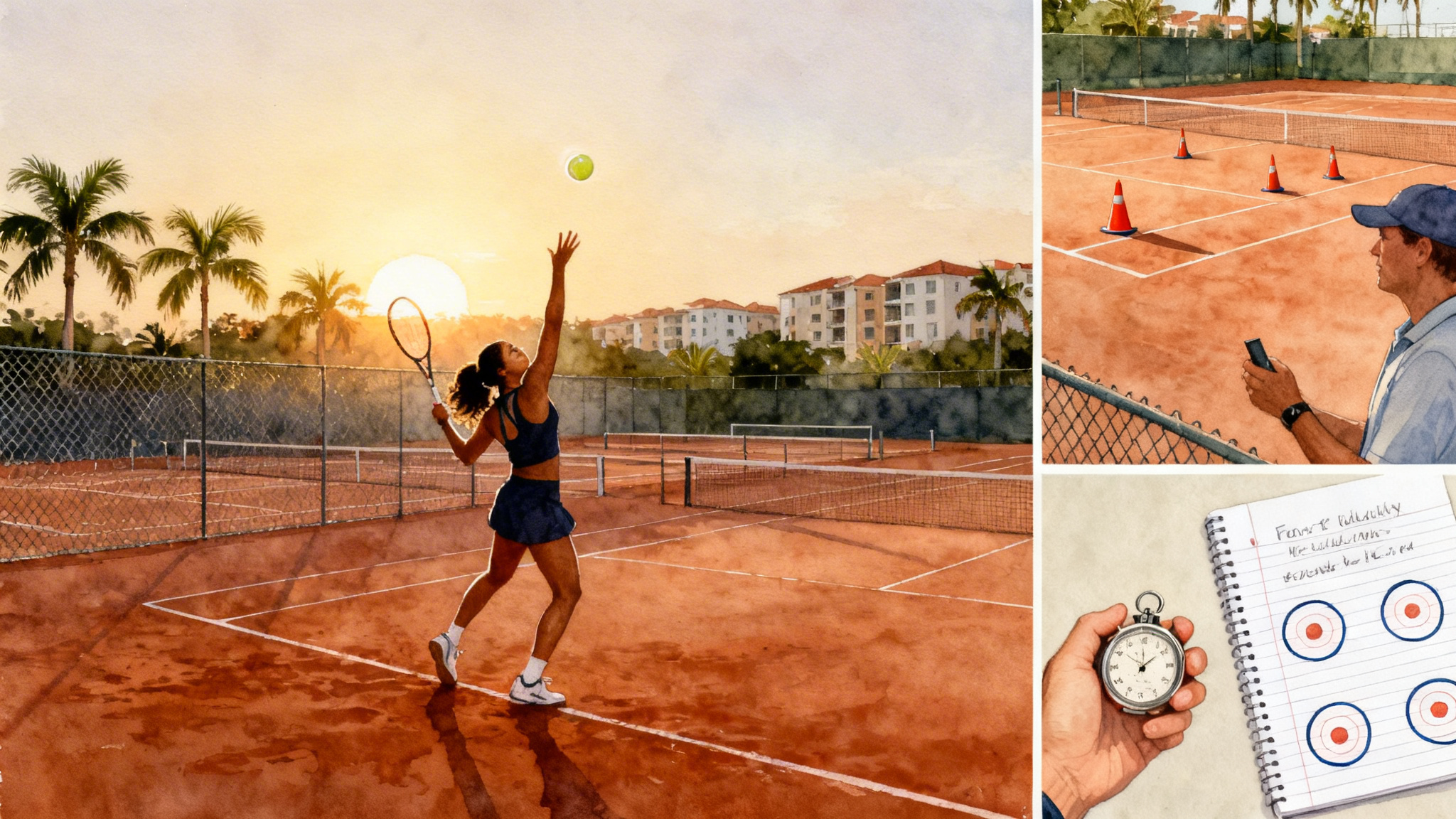
The Florida bet that rewired the timeline
Most players climb the mountain through national rankings and junior Grand Slams. Naomi Osaka’s family chose a different trail. As a young teen they moved their tennis base to South Florida and skipped the usual junior showcase schedule. Osaka and her sister trained at independent academies, hunted for professional matches, and learned to compete against grown women early. She skipped the junior circuit and started on the International Tennis Federation women’s events as soon as the rules allowed. That single decision shaped everything that followed: her serve-first identity, her pattern discipline, and her comfort in pressure sets against experienced opponents.
Florida mattered. The state concentrates courts, coaches, and weekly tournaments within a few hours of each other. Court time is cheap, the playing pool is deep, and the weather allows two sessions a day most of the year. For a family trying to gather hundreds of live points and test skills quickly, Florida is a practical lab. For another Delray-rooted case study, see Coco Gauff’s Grand Slam Path.
ProWorld, Delray Beach: the early building blocks
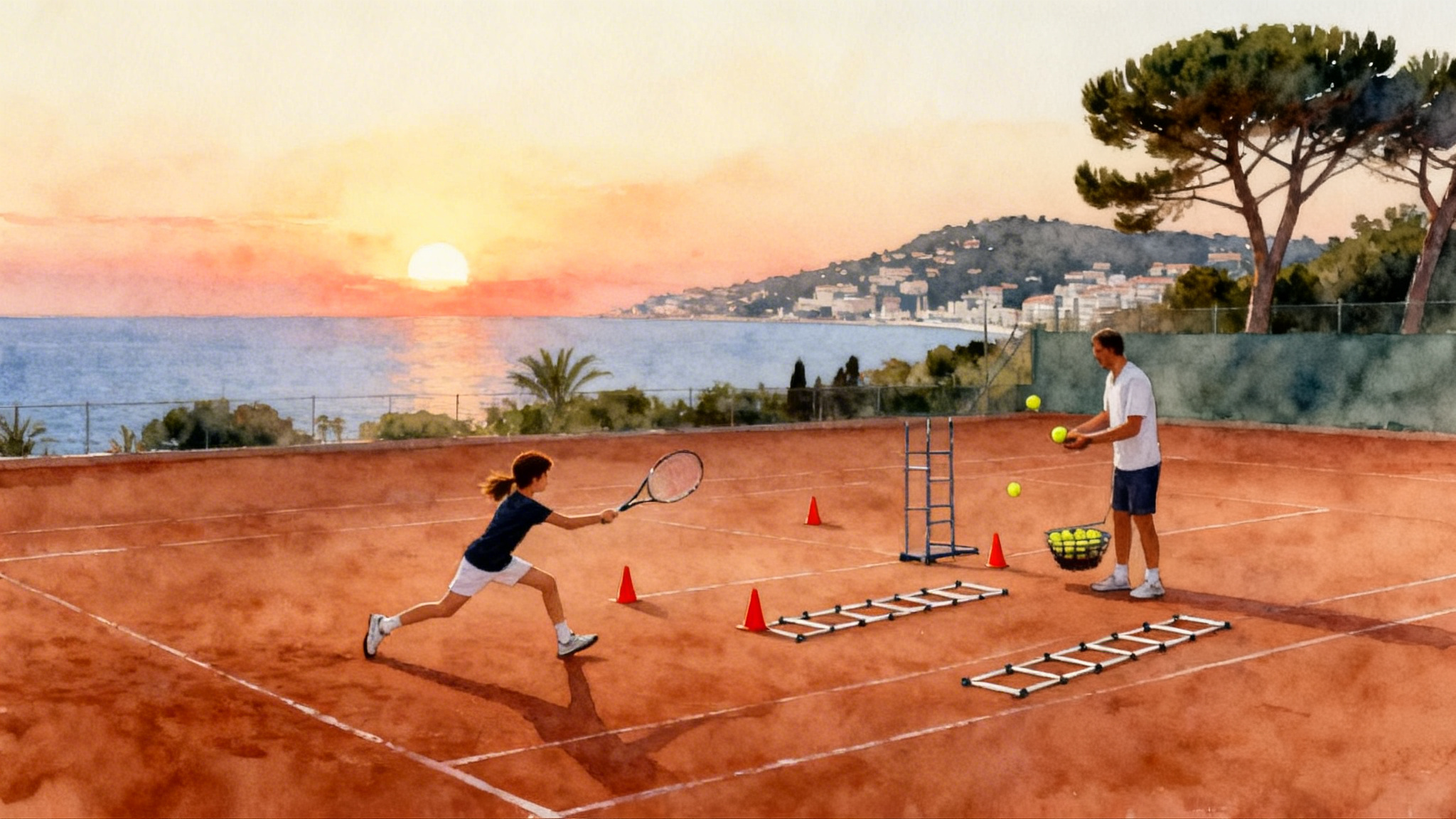
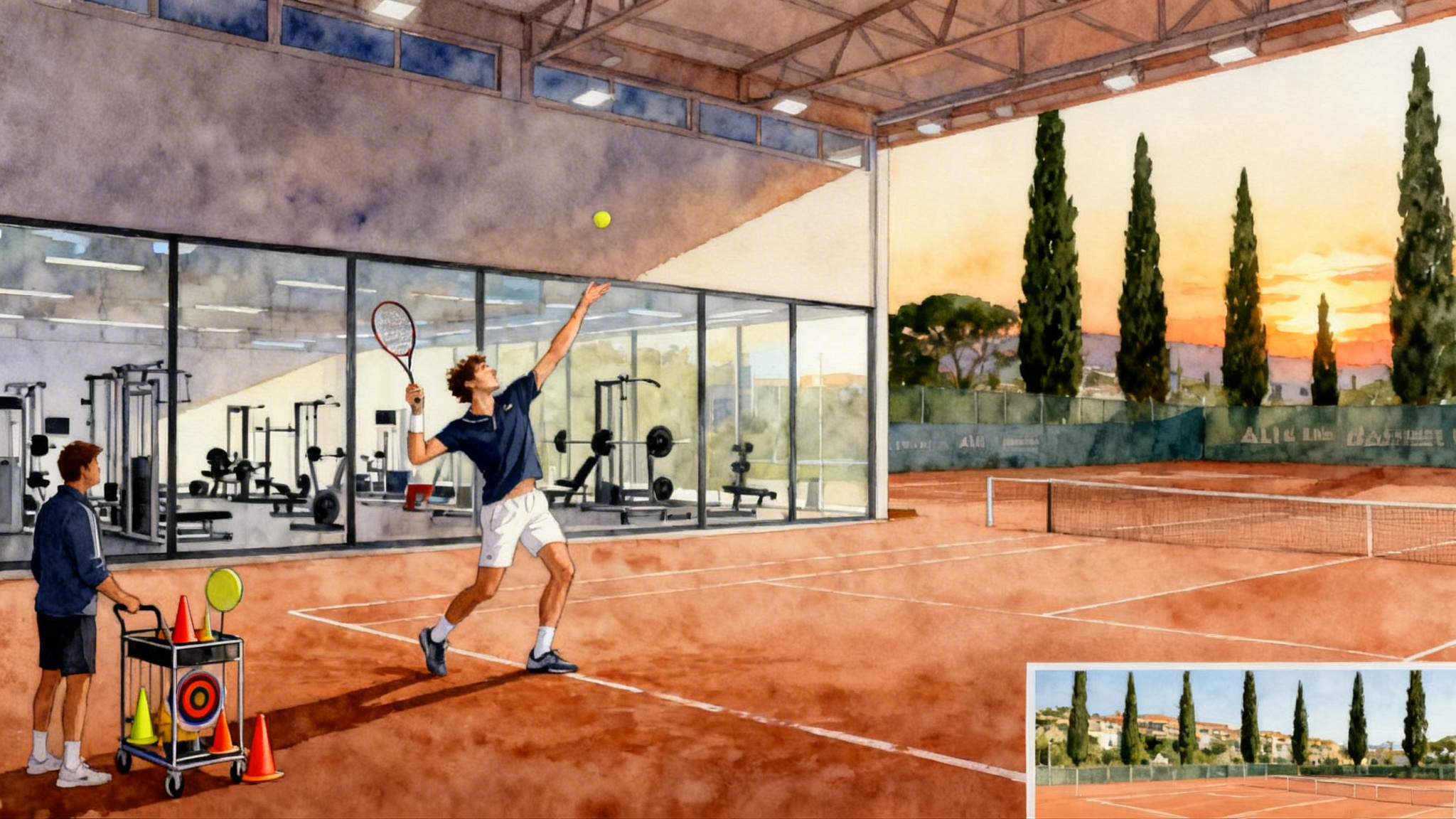
Delray Beach became the first long stop. ProWorld’s courts sit inside a lively public complex with a constant flow of hitters and coaches. That mix helped Osaka develop a workmanlike approach to volume and pace. Sessions tilted toward repetition and live-ball patterns more than chalk talk. The environment rewarded bold serves and the first strike, which aligned naturally with Osaka’s strengths.
A typical ProWorld morning for a power baseliner looks like this:
- Serve clusters in threes, then immediate plus-one forehands into the deuce corner. Reset. Repeat. Track landing zones.
- Crosscourt backhand depth ladders that climb from red to yellow to green targets, then a surprise line change on command.
- Live sets where the server must finish the point within three shots or surrender the point. It sounds harsh, but it teaches hitters that the first ball decides the rally.
Osaka’s contact point and footwork synced with this style. Her toss height steadied, her left hip cleared sooner, and her first step after the serve got shorter and cleaner. Volumes of serve-plus-one reps taught her to recognize where the returner leaned and to pick the higher percentage exit.
ProWorld also acts as a marketplace. On a Tuesday afternoon you can find college players on break, touring pros between events, and heavy-hitting juniors. That variety gave Osaka a wide sampling of ball qualities. She learned how a flat, early-taking return feels different from a heavy, looping reply. It is easier to make those adjustments when the next court over holds a completely different hitter. Families considering South Florida can explore options like Gomez Tennis Academy in Naples and Revolution Tennis Academy in Orlando to see how programs structure live-ball volume and match play.
Harold Solomon in Fort Lauderdale: scholarship and structure
The next phase added structure and constraint. Former top five singles player Harold Solomon’s academy in Fort Lauderdale is known for footwork discipline, depth control, and point construction. According to reporting at the time, Solomon’s team put the Osaka sisters on scholarship in 2014, a crucial break that increased court time and coaching attention when the family needed it most. That decision is documented in a feature where Osaka’s early coaches reflected on her path, including Solomon’s role and the scholarship arrangement beginning in 2014 (early coaches reflected on her path).
Solomon’s methods would have met Osaka’s power with constraints that sharpened it. Think of:
- Pattern gates: a point starts only when both balls in a rally land past the service line. If either player drops short, the rally restarts. This raises Osaka’s default depth and punishes lazy entries.
- Direction rules: two crosscourts before any line change unless the opponent shortens a ball. This forces patience and structure.
- Break-point rehearsals: play four straight points starting at 30-40 on your serve, then rotate. Learn to handle downside first.
Those dull but strict rules are the glue for a first-strike player. They reduce cheap errors, protect leads, and make the serve a platform rather than a guess.
Why the pro-first path can work for certain players
Playing professional events early is not a magic door. It is a trade. You give up trophies and attention in junior finals to take on women with no patience for your potential. The payoff is reps in real forehands and backhands, returns that land deep consistently, and a scoreboard that punishes bad choices. Osaka’s family chose that scoreboard.
Three mechanisms explain the acceleration:
- Exposure to adult pace and stability. Points arrive with depth and fewer unforced errors, which teaches proper spacing and ball tolerance.
- Pattern honesty. Against a veteran, vague offense dies. You either build a pattern and execute it or you chase.
- Composure through frequent stress. Tiebreaks and deciding sets happen weekly on the lower pro circuit. Osaka learned to keep the body quiet while the score screamed.
How Florida amplified Osaka’s serve
Osaka’s serve became the lever that lifted everything else. In South Florida’s wind and heat, players must create shape and margin while still sending the ball through the court. The training focus was simple physics and reliable rituals.
- Ball toss discipline: three checkpoints, all visible on video. Elbow above shoulder before release, wrist quiet near eye level, ball reaching peak slightly inside the baseline.
- Hip and shoulder sequence: load on the back hip, delay shoulder opening until the racket reaches the trophy position, then unload through the ball with a tall left side. Coaches here cue it in short phrases, not paragraphs.
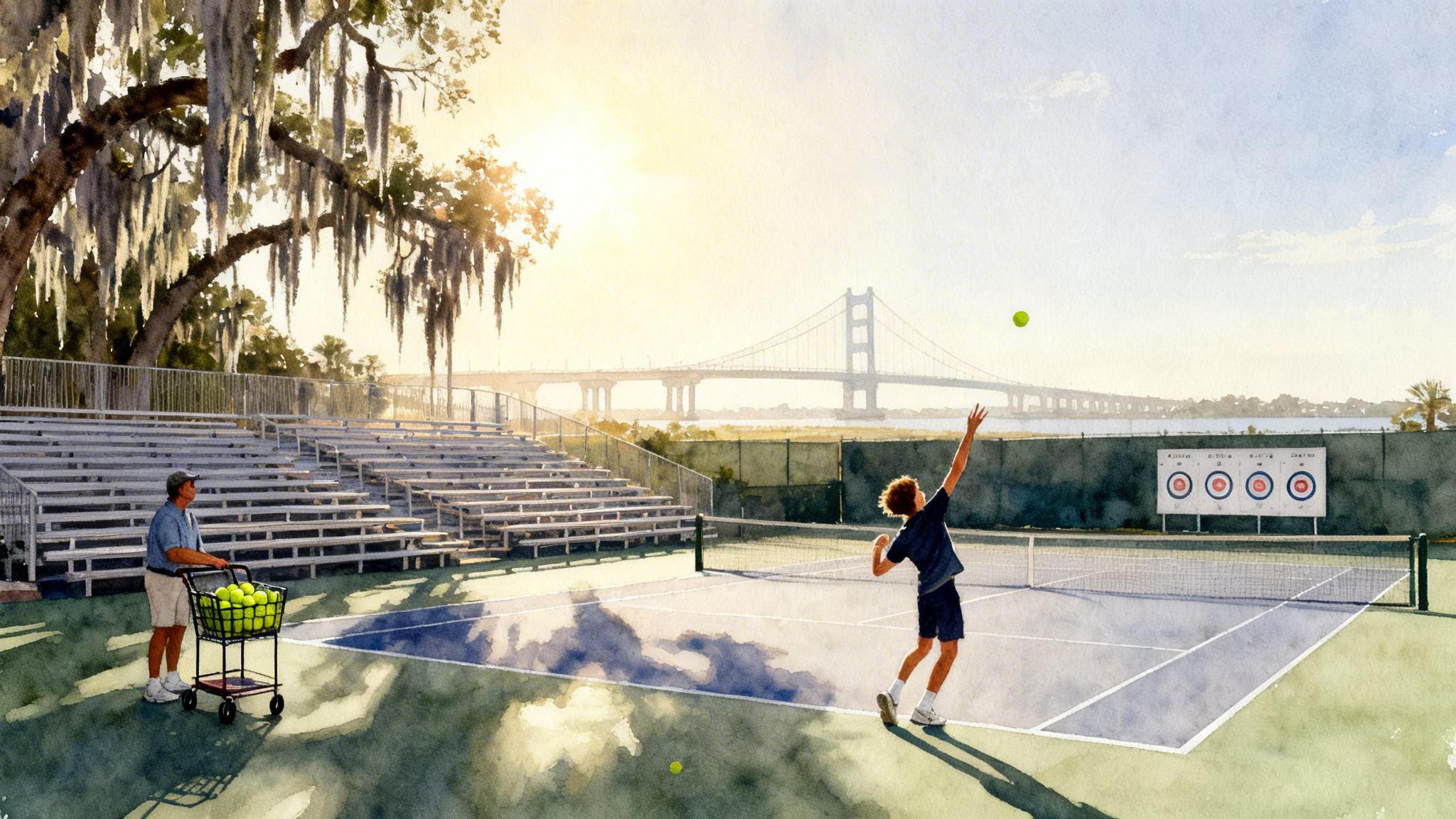
- Target ladders: five targets per box, with daily constraints like three out of four in the outer deuce target before moving on. This builds corner confidence.
Serve quality shows up first in easy holds. For a young Osaka, that meant two quick points per game off first serves plus a backup plan on the second ball that avoided double faults. Once the serve settled, her return games could be greedy. She no longer had to play hero ball in every rally.
First-strike patterns that stuck
Osaka’s point patterns look simple on television because the best ones usually do. They were drilled until they felt like a checklist:
- Deuce side: slice serve out wide, recover two steps, lift the first forehand heavy crosscourt, then flatten the next ball line if the opponent floats short. If the return stays deep, repeat the crosscourt and move forward behind a short angle.
- Ad side: body serve to jam, open up the backhand corner, take the plus-one backhand deep crosscourt, and only redirect line when feet are loaded or the ball arrives short.
- Neutral starts: backhand crosscourt, backhand crosscourt, forehand line change if balance allows. If not, reload the crosscourt rally.
These patterns are timeless and travel well. On faster courts they end quickly. On slower days they still produce court position and time to think. The key is the rule behind them: change direction when you can, not simply when you want to.
Competitive composure in real matches
Composure cannot be lectured into a teenager. It needs a scoreboard. Florida delivered plenty of those chances. Practice blocks set the mood, but weekly matches finished the lesson.
- Tiebreak culture: run to seven with a two-point margin, then repeat at least twice. Track only two numbers, first-serve percentage and unforced errors within the first three shots. Composure shows up when those two stabilize.
- Heat management: many South Florida players internalize how to breathe between points and simplify rituals. Osaka’s slower walk back to the fence after misses and her steady breath at the line were skills as much as habits.
- Older hitters: hitting with college seniors and touring pros teaches a young player to accept frustration. When your best ball comes back one more time, you either panic or you build again.
What this path did not do
It did not gift wrap quick stardom. Results on the lower pro circuit can be uneven. You may drive hours for a first-round loss to a thirty-year-old who never misses a return. The point is not to avoid losses. The point is to create a cycle of feedback where training changes show up on Friday afternoon, not next season.
A parent’s playbook for pro-minded teens
Every family has a different appetite for risk and a different budget. The goal is to remove guesswork. Use these steps to decide if, when, and how to tilt toward a pro-first plan.
When to consider skipping most juniors
- Your player dominates regional juniors in two ways, scorelines and ball quality. If they win routinely yet still need to clean up depth or first-serve percentage, stay in juniors longer. If ball quality already holds up against older college players in practice sets, consider testing pro events.
- Your player thrives on adult pace. In practice sets against current college or mid-level professional hitters, they can hold serve more than half the time and avoid spirals after breaks of serve. That shows the game style and temperament will scale.
- You can create match volume without burning out. Skipping juniors only works if you can source frequent matches. South Florida works for this. Other regions may not.
Action: Pilot three to four professional events at the lowest tier within a six-month window while maintaining a training base. Start with a simple goal such as breaking even on return points won and reducing double faults by half compared to the first event. If the player regresses mentally or physically, dial back and rebuild.
How to blend academy time and independent coaching
Think of a two-by-three grid. Two roles, three blocks.
- Roles: academy as the volume engine, private coach as the mechanic. The academy supplies live ball and competitive sets. The private coach tunes grips, spacing, and serves.
- Blocks: technical, tactical, competitive.
- Technical: private sessions for serves, returns, and movement patterns. Limit to two hours per day to avoid frying focus.
- Tactical: academy squads for patterns and pressure work. Two to three hours of live points.
- Competitive: matches every week or two. Use video for two or three key points per set, not every rally.
Action: Write a one-page period plan. On Sunday night define three measurable targets for the week, for example first-serve percentage, depth of rally balls past the service line, and return contact points inside the baseline against second serves. Share the plan between academy and private coach. Review on Friday.
How to evaluate academies for pro-minded teens
Use a scoreboard, not a brochure. Ask for specifics.
- Who are the primary coaches, and what will they do with my player each day. Names and session plans, not just job titles.
- Player-to-coach ratio on court. Fewer than five-to-one for targeted sessions, or a clear reason when it is higher.
- Live-ball hours per day. At least two, with structured point play rather than endless feeding.
- Pattern language. Ask for the three most common patterns the program teaches and how they measure success.
- Serve work. Do they run target ladders, track first-serve percentage, and record double faults. If not, find a place that does.
- Integrated fitness. What is done on footwork and resilience. Look for sessions that teach recovery between points, not only sprints.
- Competition plan. Does the academy help enter events and staff tournament days. If the answer is vague, expect to shoulder that load yourself.
- Hitting pool. Who are the best two hitters your player could face this month at that site. Strong academies can answer quickly.
- Video and data. Do they record, tag, and review two or three key points per set. Over-analysis kills momentum; under-analysis wastes money.
- Communication cadence. Expect a short weekly summary with what improved, what needs work, and what is next.
Action: Trial for one week before committing. Bring your own metrics. If the academy cannot or will not measure what matters to you, it is not a fit.
Budgeting and logistics for a pro-first plan
- Travel smart. Cluster tournaments within a two to three hour drive when possible. South Florida makes this easier than most regions.
- Scholarships and work-trade. Some programs have formal aid; others offer informal discounts for strong prospects. Ask directly and early. Osaka’s family benefited from this in Fort Lauderdale through a scholarship arrangement that increased access to training.
- Build a local support loop. Find a stringer you trust, an on-call physical therapist, and a doctor who understands endurance athletes. Small fixes prevent big layoffs.
What Osaka’s path teaches without copying it
You cannot paste a champion’s childhood onto another kid. You can, however, study the mechanism.
- Environment shapes identity. Delray’s volume and variety pushed Osaka toward bold serving and plus-one conviction. Fort Lauderdale’s structure tightened her point-building and deepened her patience.
- Real matches create real calm. Composure is not a personality trait. It is a practiced response, built by running toward pressure points every week.
- Decisions should follow feedback. The family’s choice to keep chasing professional reps was not ideology. It was a reaction to what worked in training and in matches.
A clear next step for parents and coaches
If your player is dreaming beyond juniors, start with an audit rather than a leap. Spend two weeks documenting actual serve targets hit, first-strike execution, and behavior after lost points. Then test a small run of adult matches and compare the numbers. Let the data steer you toward more juniors, a blended schedule, or a heavier professional tilt.
That was the quiet trick in Osaka’s Florida years. The family matched a bold schedule with the right environments. ProWorld gave her confidence to hit first and often. Harold Solomon’s team taught her when to wait and how to breathe under stress. Together those places turned a big game into a winning identity. If you build the right lab and listen to what it tells you, your path does not need to look traditional to be right.