How Elite Tennis Center and All In boosted Mirra Andreeva
Mirra Andreeva’s rise traces a precise route along the French Riviera. In 2022 she settled at Jean‑René Lisnard’s Elite Tennis Center in Cannes, then in 2024 she moved to All In Academy with coach Conchita Martínez. Here is how each stop built specific gains.
 Tommy
Tommy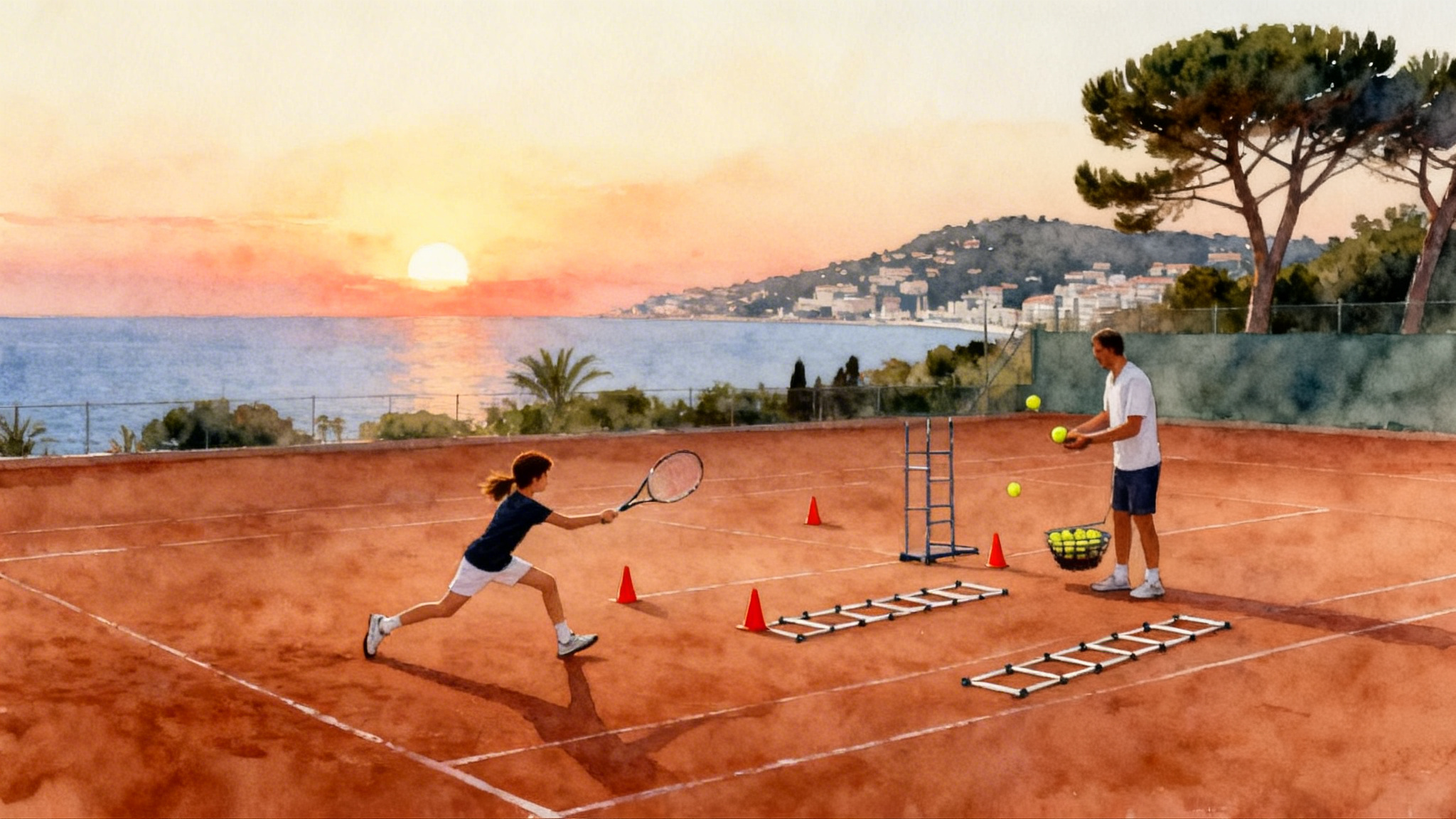
The Riviera route that shortened the runway
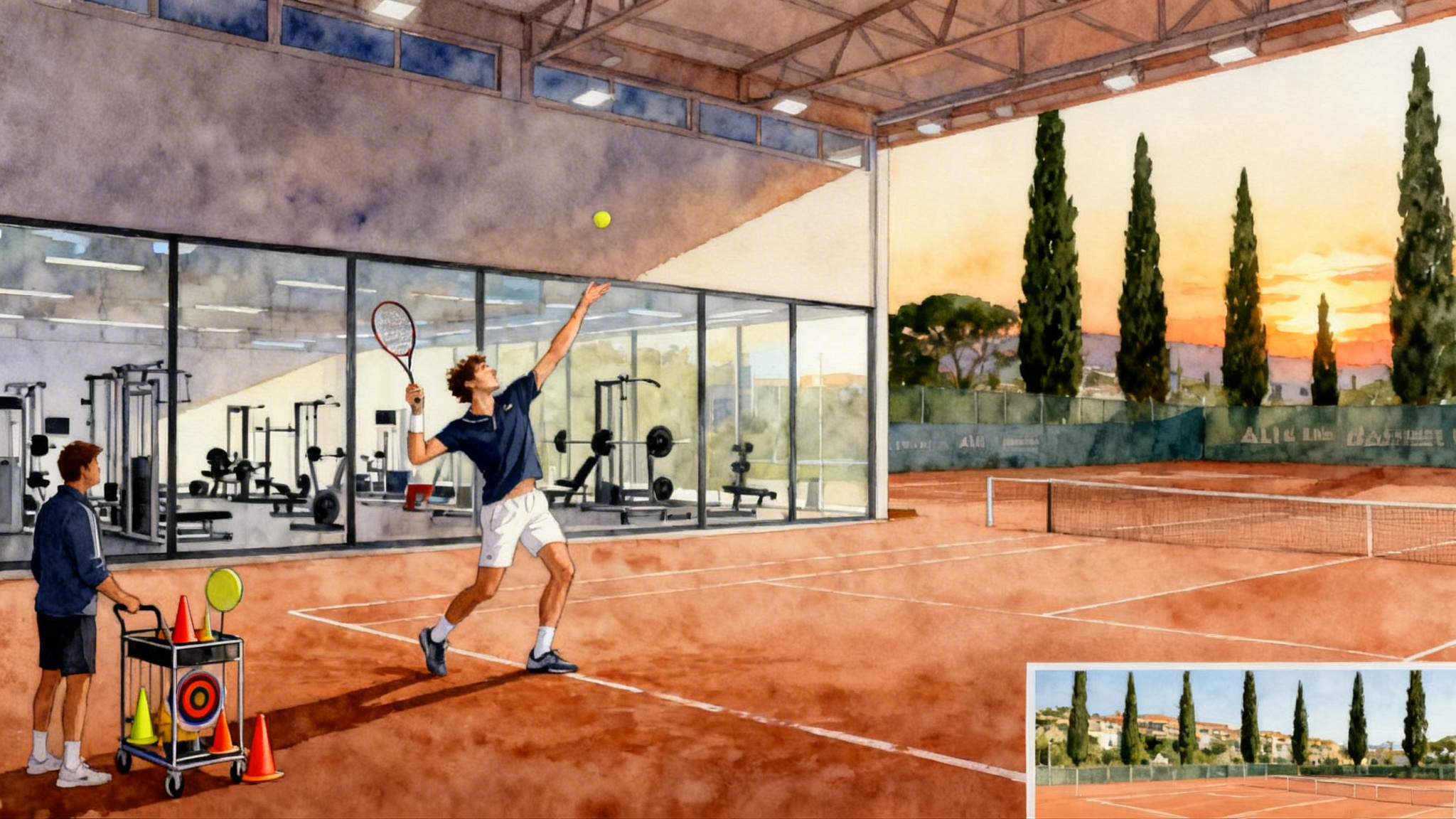
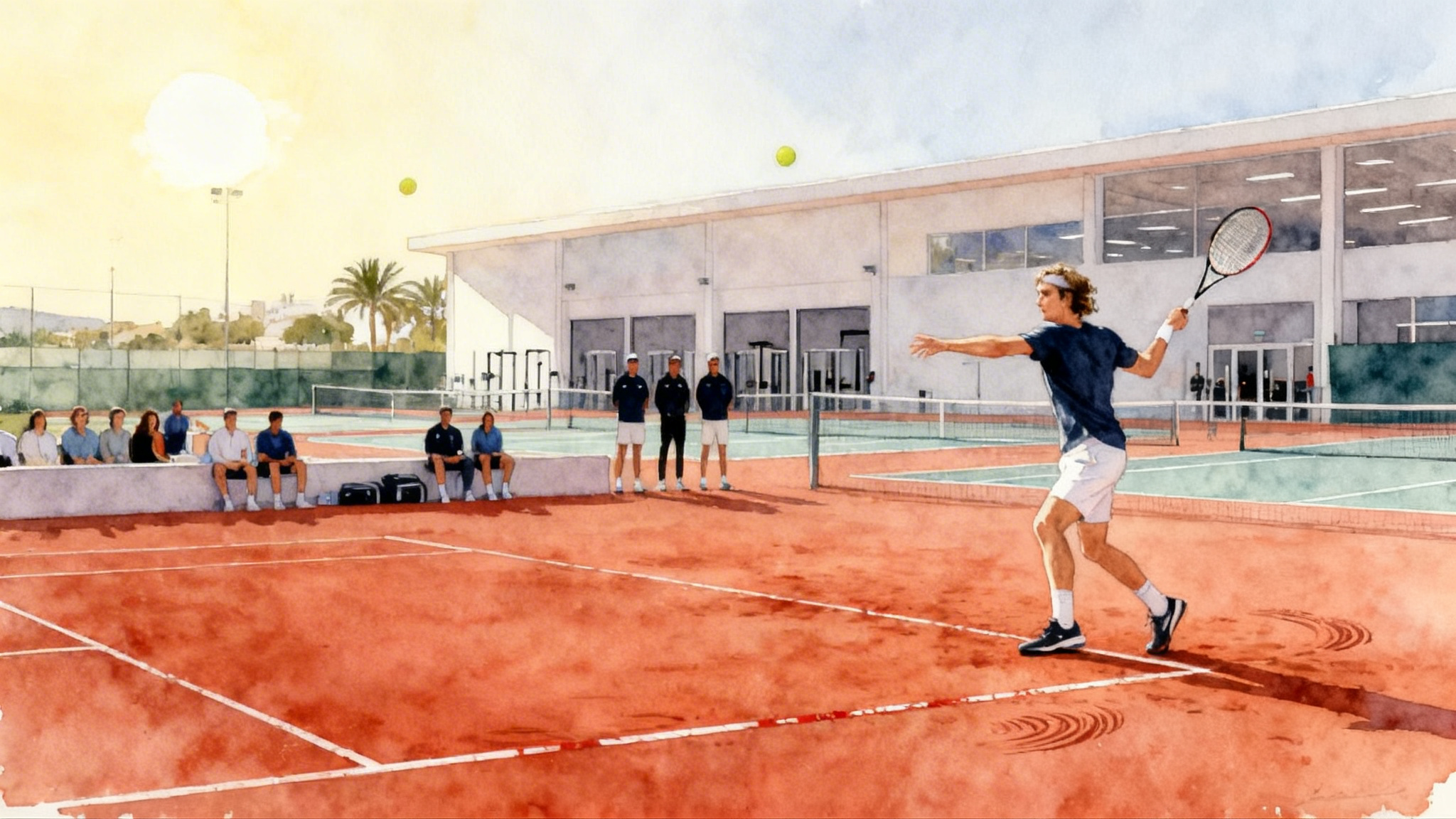
Mirra Andreeva’s springboard to the top did not come from a single breakthrough week. It was a chain of well‑timed decisions set along one coastline. In early 2022, she and her sister Erika left Sochi for Jean‑René Lisnard’s Elite Tennis Center in Cannes, a base known for clay‑court craft and uncompromising practice habits. Two seasons later, in 2024, Andreeva made a move to All In Academy, partnering with former Wimbledon champion Conchita Martínez. Results followed in sequence: a statement upset at the Australian Open 2024 and a semifinal run at Roland Garros 2024, then deeper runs into 2025 as patterns turned into efficient match play. For a closer look at the facility and setup, see our All In Academy campus.
Why did this particular route work so quickly? Because each stop solved a different problem at the right moment. Cannes gave her the language of point construction and the legs to speak it at full speed. Villeneuve‑Loubet added a coach who refined that language into efficient, repeatable match play, and a structure that let her schedule like a seasoned pro while still finishing school.
What follows is the map, with practical checkpoints families can adapt for their own players.
What Cannes built first: foundations at Elite Tennis Center
Elite Tennis Center in Cannes is a shop floor for detail. The daily rhythm is predictable on purpose. The coaches, led by Jean‑René Lisnard and a staff that prizes volume with precision, design high‑repetition drills that make patterns automatic. For a teenager stepping into the women’s game, that reliability is gold.
Three capabilities were built there that travel anywhere.
1) Point construction as a language
Think of point construction like storytelling. The first shot sets the scene, the second develops the plot, the third delivers a twist that breaks the opponent’s balance. In Cannes, Andreeva learned to tell three‑shot stories with clarity:
- First ball: heavy crosscourt to the backhand corner to earn short depth. The goal is not the winner. It is a predictable reply.
- Second ball: a change of shape, either a higher net clearance to push the opponent deeper or a shorter angle that pulls her off the sideline.
- Third ball: accelerate into space, often inside‑in with the forehand or a simple approach behind the line you just opened.
Those sequences showed up early in big matches. At the Australian Open 2024, she did not need exotic trickery to shock a top seed. She kept building points with the same patient geometry until the court finally said yes.
2) Movement crafted on clay
Movement is not how fast you can run in a straight line, it is how early you can stop. Clay teaches that better than any surface. In Cannes, Andreeva’s daily bread was footwork, with circuits that forced decisions at the end of every step. She trained:
- Two‑step split patterns to read direction sooner.
- Open‑stance recoveries with controlled slides, so the last step is a brake, not a skid.
- Head‑still contact on the stretch, then a fast hip unwind to get neutral again in two steps rather than four.
The test of good movement is rally tolerance at uncomfortable speeds. By mid‑2023, her neutral ball was heavier and her defense returned the ball to awkward places. By 2024, that base carried her through long exchanges on clay without rushing.
3) Early scheduling discipline
Cannes also helped the family optimize a calendar around the Age Eligibility Rule, which limits how many professional events a player can enter before turning eighteen. The rule can feel like a leash, but it protects the same asset every pro tries to guard later in a career: fresh legs.
The staff built around those limits rather than pushing against them. They used windows of competition, then practice blocks to consolidate new skills. They targeted entry points where ranking progress was most efficient, balancing International Tennis Federation events, WTA 125s and select WTA main draws. That discipline paid off in early 2024 when Andreeva transitioned smoothly into bigger stages with a body and game that could sustain a full week.
The 2024 pivot: All In Academy and a coach‑shaped jump
By 2024, the question shifted from how to build a game to how to win with it on demand. That is where All In Academy and Conchita Martínez entered. For more on All In’s philosophy with pros, see the All In blueprint for Humbert.
Martínez brings a champion’s practicality. Her fingerprints tend to show up in three places: margin management, court position and finishing.
- Margin management: Under pressure, Andreeva began choosing rally heights that bought time without surrendering initiative. The loopier forehand above net level on defense was not retreat, it was a reset that let the next ball be assertive again.
- Court position: Her average contact point on the backhand inching forward by even half a shoe length matters. It steals time and turns defense into neutral one shot earlier.
- Finishing: She started approaching on clearer terms, often behind deeper inside‑out forehands, then closing with a high‑percentage cross volley rather than a line‑painting risk.
The bond was visible in 2024 and sharpened into 2025, as the pair’s Andreeva and Martínez duo settled on patterns chosen for the score and the opponent’s tendencies.
Movement 2.0: Efficient, not just explosive
All In’s staff layered efficiency on top of the raw footwork from Cannes. The sessions emphasized first steps and late‑ball skills, the situations where a player is half wrong on the read but still needs to get neutral. The result by mid‑2024 was more balance on the stretch and cleaner transitions from defense to offense. When a rally turned scrappy, Andreeva no longer needed two extra balls to regain control. Often it took one.
Serve and return that fit the plan
Rather than chasing ace counts, Martínez focused on serve patterns that open the exact third ball they wanted. Think wide slider in the deuce court to drag a right‑handed returner off the court, then a forehand into the opposite open space. On the return, subtle changes mattered most: a half step forward against second serves, earlier racquet prep, and a bias to send the first strike deep middle to reduce angles. Those practical tweaks added free points without changing her identity.
Smarter scheduling with an adult calendar
Turning eighteen in April 2025 unlocked the calendar fully, but the smarter scheduling had already started. All In Academy’s Côte d’Azur base let Andreeva build training weeks between heavy tournaments without constant cross‑continental trips. The structure also made academics realistic. With study support on site, she could finish assignments during practice blocks and travel with a clear plan. That reduced decision fatigue and preserved energy for matches.
The breakthroughs that validate the model
The proof showed up quickly once the right elements were in the right order.
- Australian Open 2024: a signature upset on a hard court, achieved through steady point construction rather than red‑line risk.
- Roland Garros 2024: semifinal at age seventeen, built on clay movement and rally tolerance from Cannes, combined with Martínez’s guidance on margins and score management.
- Through 2025: deeper runs at WTA 1000 level and a continued ranking climb as serve‑return patterns and decision discipline matured.
None of those jumps were magic. They were the result of sharpening what already worked and pruning what did not.
What families can copy: a decision framework
You may not have the Riviera outside your door. You can still borrow the logic. For a different case study in sequencing environments, see the Ferrero model for Alcaraz.
When to switch bases
Use this three‑part test before changing academies:
- Constraint test: Is the current base unable to solve your player’s top two performance constraints in the next twelve months? Constraints might be neutral‑ball weight, errors under pressure, or movement inefficiency on one surface. If the answer is yes, explore options.
- Coaching bandwidth: Does your current coach have the time and specialized support staff for the next phase? If your player needs a dedicated fitness coach or a lefty sparring partner and that does not exist where you are, a move can be justified.
- Learning curve data: Across the past six months, has the player’s performance curve flattened despite healthy training volume and appropriate competition? If key metrics are flat or down, fresh input is likely required.
How to run the switch:
- Start with a 2 to 4 week trial at the new base during an off‑competition window. Ask for a written plan that names two constraints and the drills to address them. Evaluate daily feedback quality more than compliments.
- Involve your current coach with respect. Share the trial objectives and ask for data that shows progress or gaps. The goal is continuity, not a messy break.
- Keep a 90‑day runway after the switch where results are not the scoreboard. Measure training consistency, perceived effort, and execution in practice sets first.
How to align with the right coach
Think of coach selection as fitting a lens to a camera. The wrong lens does not make the camera bad. It just blurs the target.
- Game model match: Ask the coach to describe, in thirty seconds, how your player wins points on hard and clay. If the answer is vague or does not match the player’s strengths, keep looking.
- Constraint clarity: A good coach can state the single most important change the player needs next and the drill that will drive it. Get the drill on video during the trial.
- Communication bandwidth: Watch how the coach talks between points in practice. Count words. If explanations are long and theoretical, execution will be slow. Look for short cues linked to actions, like height first or recover two steps.
- Competitive habits: Request match‑charting once per week for a month. If the staff can show you first‑strike percentage, rally‑neutralization success, and error types, you have a system, not opinions.
Balancing school and travel without losing either
There are three workable models for families of rising players:
- Campus‑first blocks: During school terms, train locally with strength and movement emphasis. Use long weekends for regional events. Reserve big travel for two defined windows in the year. This keeps grades steady and builds the body.
- Academy hybrid: Spend one to three months at a destination academy with integrated academics. Use that time to learn new patterns, then return home to reinforce them.
- Tournament clusters: Travel in regional clusters of two or three events separated by drivable distances. Between events, schedule practice days at a trusted local club instead of flying home. This cuts fatigue and saves money.
Tactical tips that make all three models work:
- Pre‑load schoolwork for travel weeks. Agree on non‑negotiable study blocks on rest days and the day after a loss.
- Protect sleep with the same rigor as practice. Set a lights‑out time and respect it, win or lose.
- After each tournament, run a twenty‑minute review with the coach and the player. Identify one thing to keep, one to cut, one to add. Roll those into the next two‑week practice plan.
A simple template you can edit
Use this skeleton and fill it with your player’s needs.
- Quarter 1 focus: Set the technical priority and the physical priority. Example: higher rally height on defense, and ankle strength for better sliding.
- Two event blocks, two practice blocks: Choose tournaments that punish the exact habits you are trying to change. If the technical focus is patience, enter one clay event where long rallies are normal. Use practice blocks to rehearse patterns to numbers, not feelings.
- Weekly rhythm during practice blocks: three high‑intensity court days, one light skills day, two strength and mobility days, one full rest day. Insert one match‑play set after strength, when the legs are a little heavy, to simulate later rounds.
- Review cadence: every Friday, chart one set by video. Track first‑strike success, depth on neutral balls, and unforced error types. Keep the same three metrics for eight weeks so you can see a trend.
Why this pathway worked for Andreeva
Cannes taught Mirra Andreeva to build points like an engineer, step by step, on a base of legs and repeatable patterns. All In Academy gave her a coach who pruned the excess, sharpened decisions under pressure, and laid out a grown‑up calendar with school and recovery accounted for. Put those in sequence and the timeline makes sense: a jump in match poise in 2024, then steadier results and ranking momentum in 2025.
Families do not need the exact same stops. They need the same logic. Choose a base that fixes today’s constraints. When those are solved, move to a base and a coach who convert solutions into wins against better players. Travel and study in a way that protects the only two resources no junior can replace, energy and attention. Do that with patience, and your own Riviera can be any court where the plan is clear and the work is honest.