Spartak to WTA Elite: Rybakina’s Mechanics and Bold Switch
 Tommy
Tommy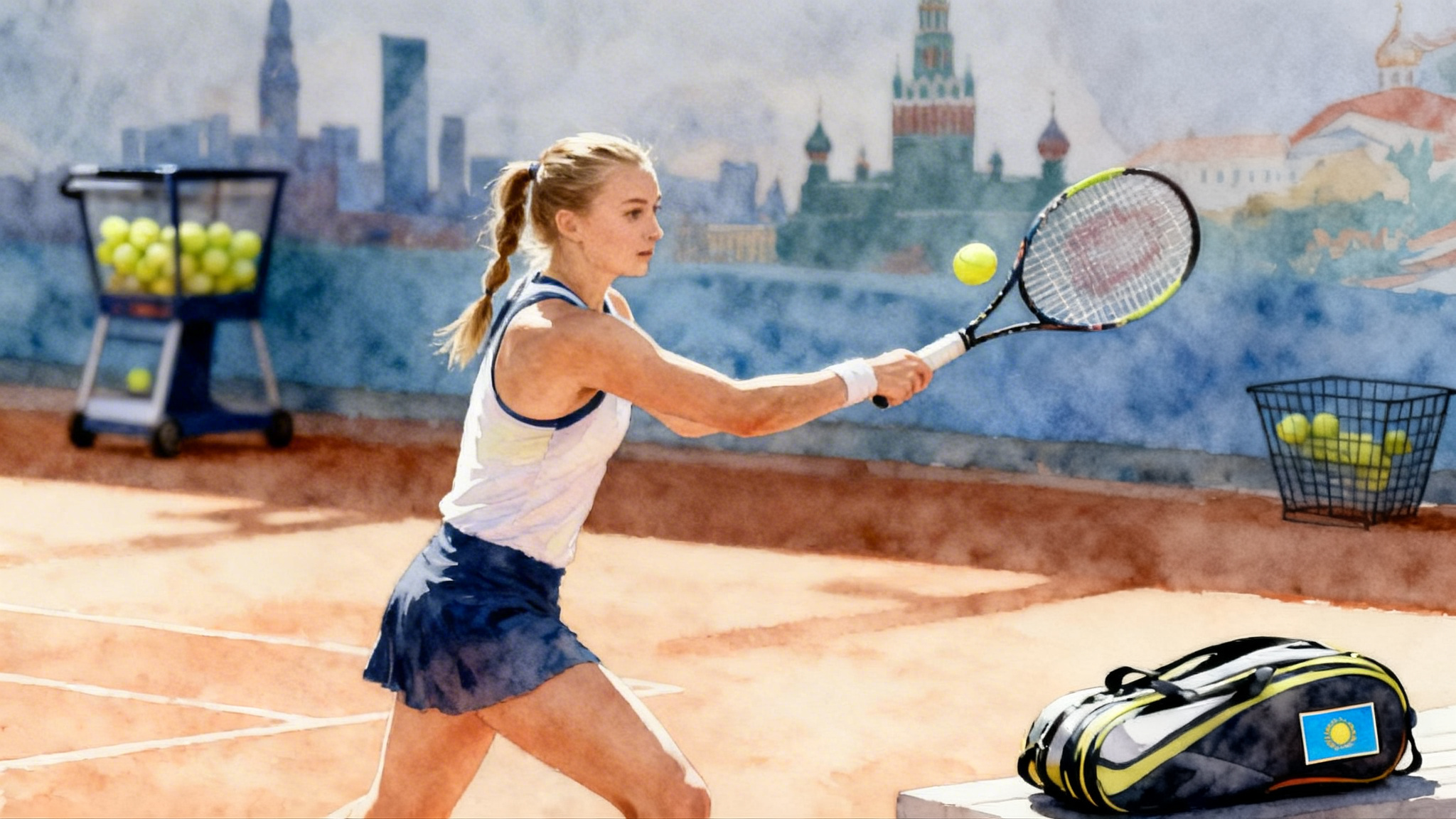
The blueprint behind a quiet powerhouse
If you only watch the highlight reels, Elena Rybakina looks like a natural. Serves that jump off the strings. Groundstrokes that stay so clean they barely graze the net tape. But her climb from a Moscow academy court to the WTA’s top tier did not come from talent alone. It came from system and timing. First, Spartak Tennis Club’s technique-first culture built a foundation of efficient power. Then in 2018, a strategic move to represent Kazakhstan provided the resources that turned stable mechanics into sustainable results. That combination is the real story families should study. For another system-first pathway, see how Piatti forged Jannik Sinner.
In this guide we trace how Spartak’s multi-ball repetition and footwork framework shaped Rybakina’s stroke economy, then show how Kazakhstan’s backing unlocked travel, staffing, and a smarter calendar. We end with specific actions parents and players can use to build mechanics early, time the jump to resource-rich programs, and align coaching with a clear tournament pathway. This calendar-first thinking also shaped how Florida academies built Naomi Osaka.
What Spartak teaches before the first ranking point
Spartak is famous for fundamentals. The courts are not about flash. They are about foot placement, racquet path, and a patient build of repeatable shapes. Coaches there start by making sure the body learns to deliver the same ball again and again. Variety comes later, once the engine is reliable.
Three pillars define the Spartak approach that shows through in Rybakina’s game:
- Multi-ball repetition at true match tempo
- Footwork disciplines that conserve energy
- A bias toward clean kinetic chains over muscle
Pillar 1: Multi-ball repetition at match tempo
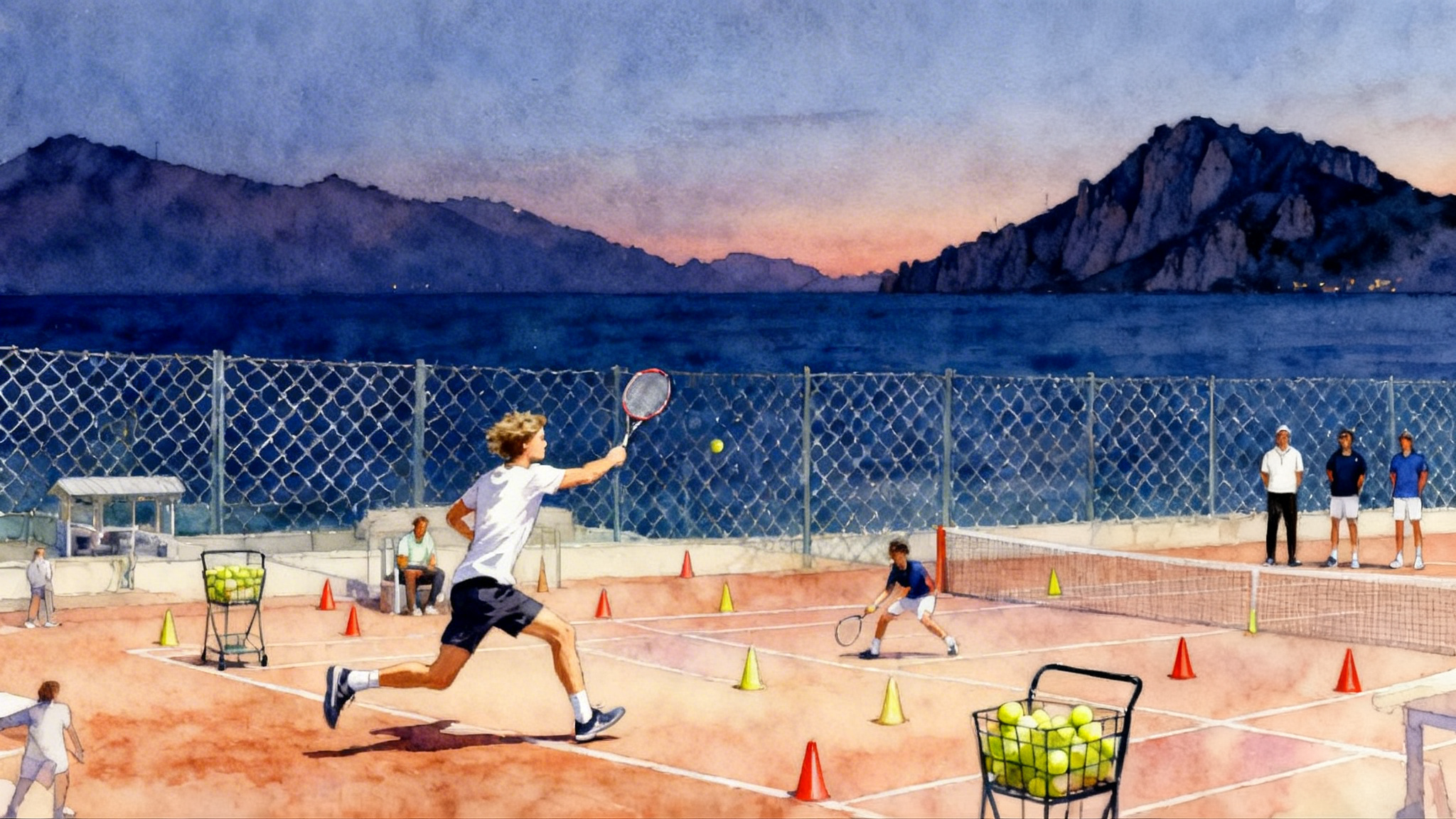
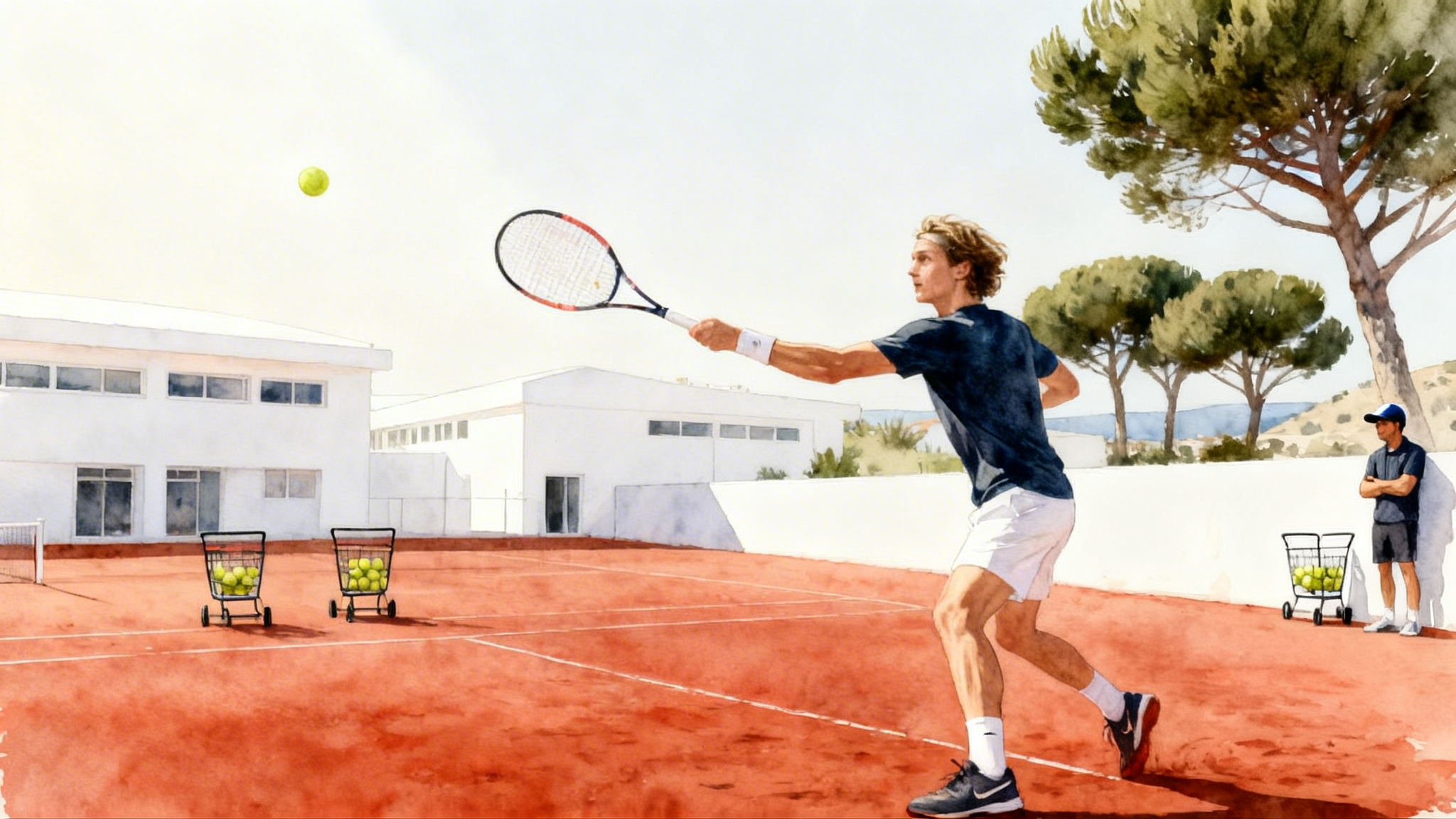
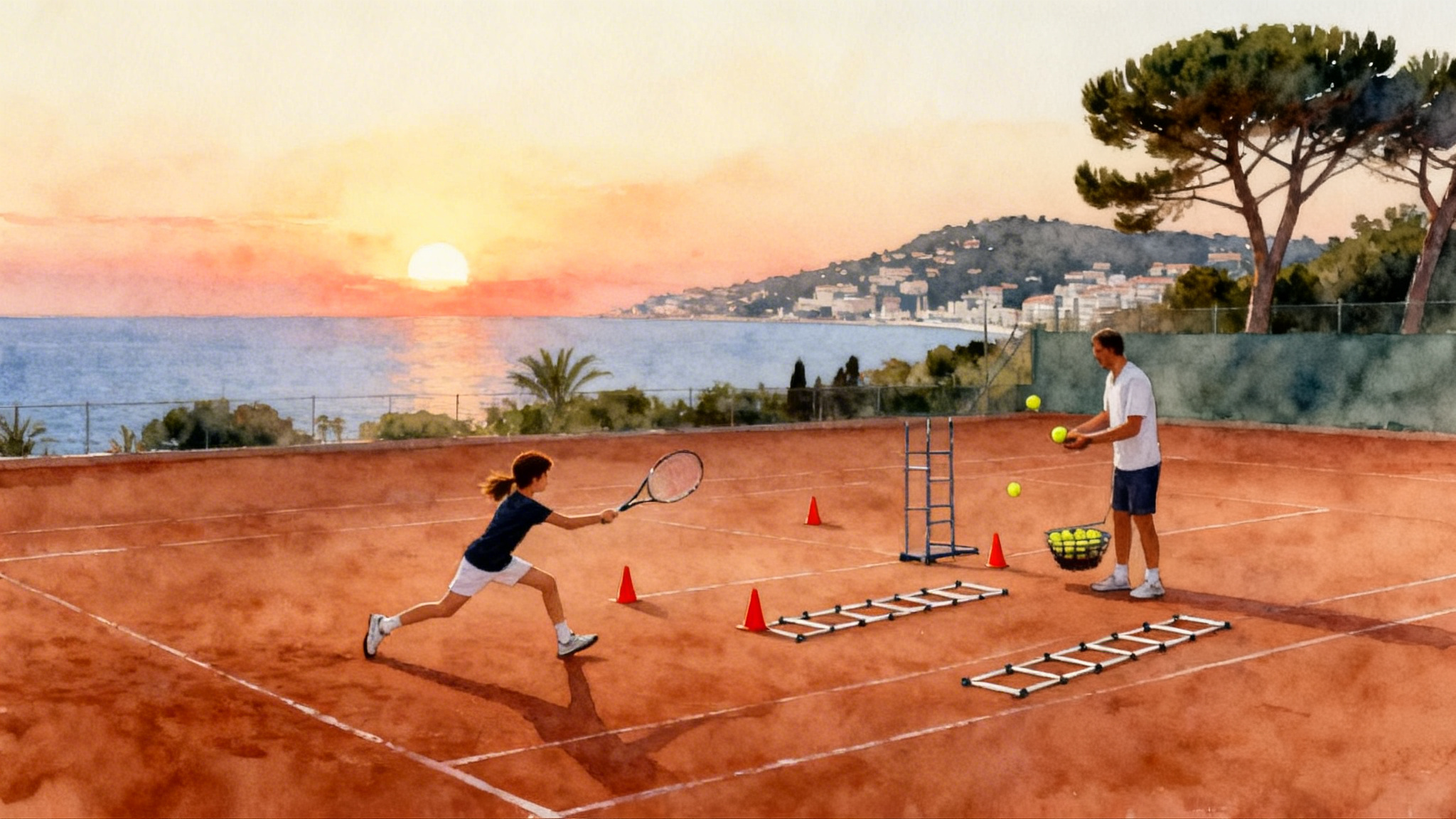
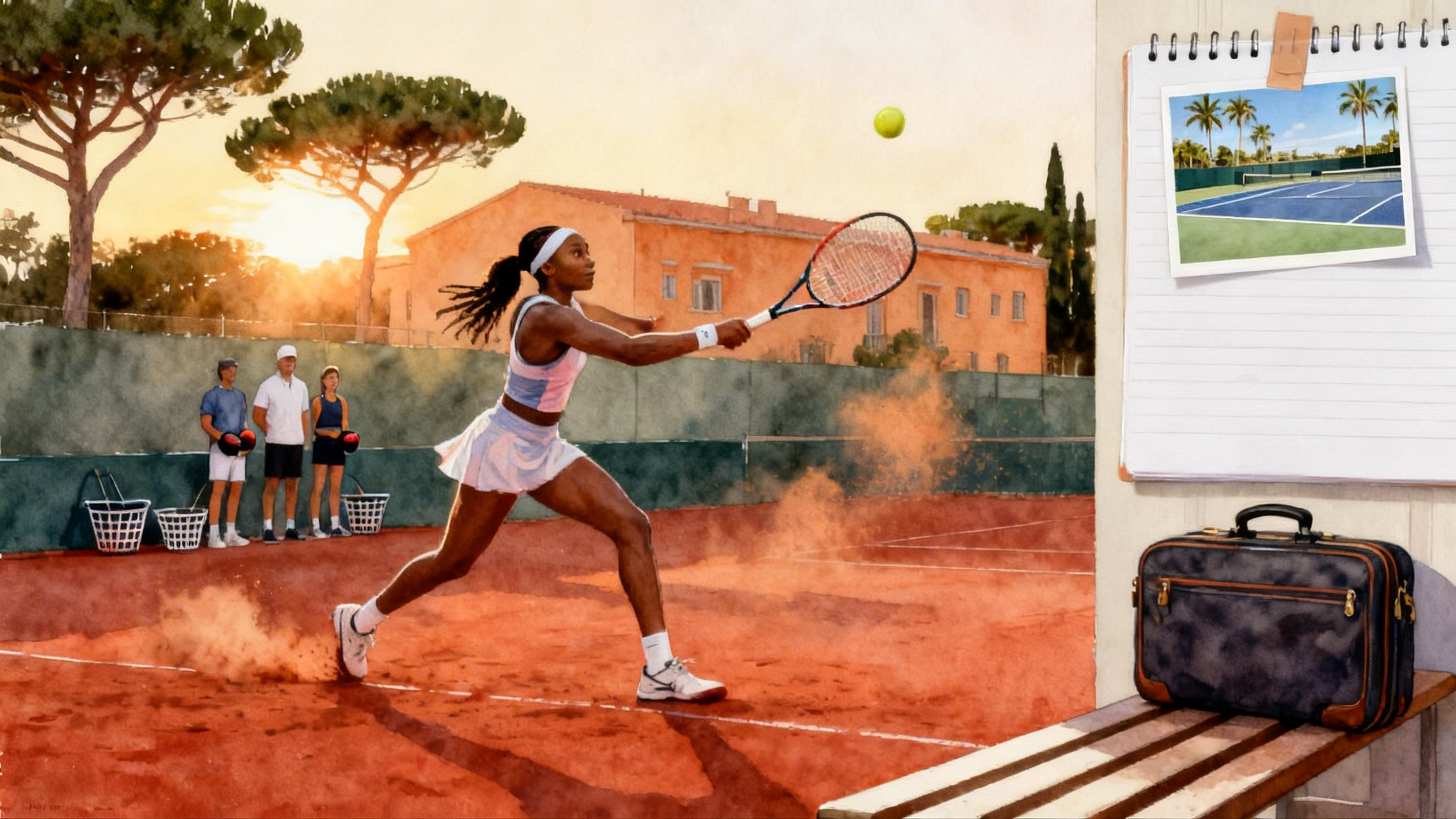
Multi-ball at Spartak is not just ball feeding. The feed cadence mimics live pace and angles. A typical set might be 10 balls driven deep crosscourt, 5 sudden shorter feeds that force a step in, then 5 high feeds that demand a retreat and reset. The goal is to keep the swing shape identical through changing contact heights and court positions.
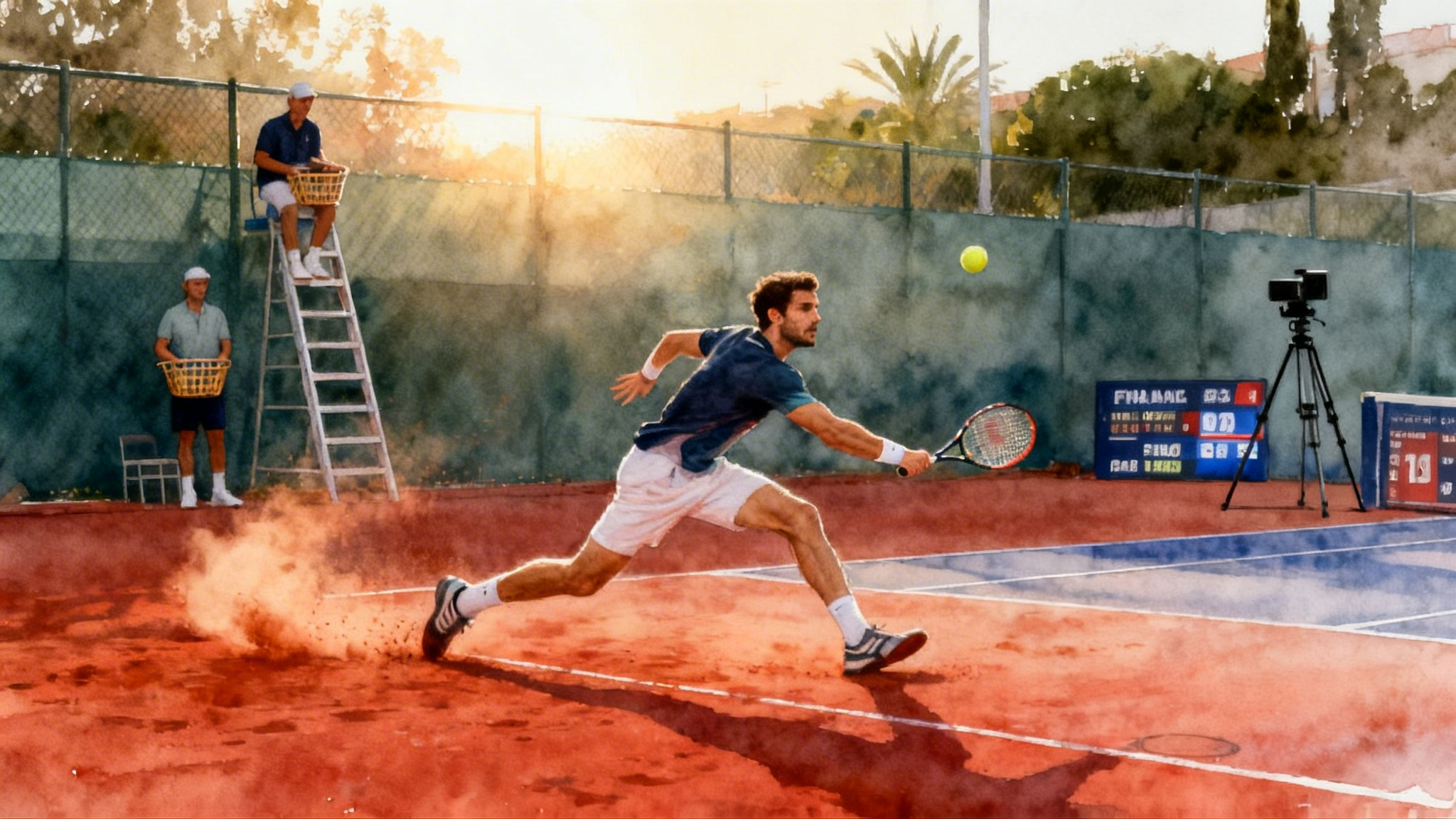
You can see the product in Rybakina’s neutral forehand. It does not look rushed even on fast balls. The racquet travels on one predictable arc. Contact is slightly in front, with a quiet off hand that guides alignment. When a short ball comes, she does not change the swing. She changes the legs.
Try-at-home progression for juniors:
- Ten-ball metronome: Coach feeds ten balls to the same deep crosscourt target. Player aims at a three-by-three foot zone. If a ball misses the zone, reset the count. Stop when ten land clean in a row. Repeat to the other side.
- Height ladder: Five feeds hip high, five shoulder high, five down by the knees. The player holds the same swing tempo. The feet adjust, not the hands.
- Short-ball walk-in: Five short diagonal feeds. Player must arrive balanced, hit to the deep zone, and recover behind the baseline before the next feed.
The repetition is boring by design. It trains an economy that travels anywhere.
Pillar 2: Footwork that saves energy
Heavy hitters often look powerful when they are fresh and then fade in long matches. Rybakina’s power looks similar in games 5 and 55. That is a footwork story. Spartak emphasizes the first step and the last two steps more than the middle. The first step decides if you are on time. The last two decide if you can deliver the same swing.
Key patterns that show up in Rybakina’s movement:
- Split-step on the opponent’s contact, not during the toss or bounce
- Crossover out of the split to win the first two meters quickly
- Hop-set on wide balls so the hips arrive before the shoulders
- Inside-foot brake when recovering, which keeps the torso quiet for the next shot
Family drill toolkit:
- Metronome split-step: Use a phone metronome set near your coach’s average hitting tempo. Time your split to the sound of their contact for 2 minutes. Then hit for 2 minutes. Repeat for 10 minutes.
- Cone lanes: Place two cones five meters apart on the baseline. From a split, crossover to one cone, shadow-swing, recover with three quick steps, repeat to the other cone. Aim for 10 clean reps without your shoulders twisting early.
Pillar 3: Clean power from the ground up
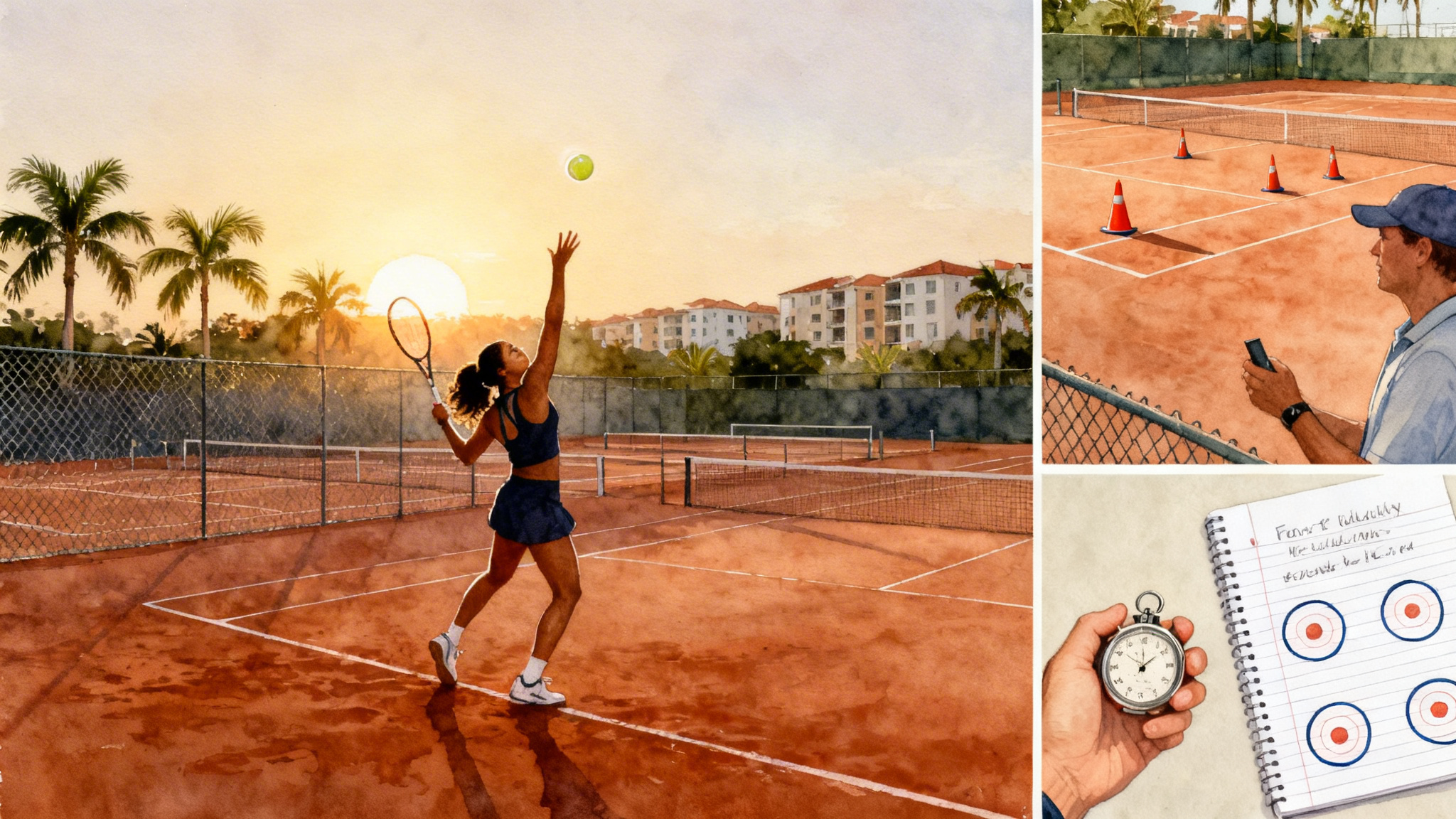
Spartak-trained swings look smooth because they rely on sequence rather than strain. Rybakina’s serve is a model. The legs load first, the torso coils, the arm stays loose, and the racquet drops behind the back only after the legs begin to drive. There is no wasted pause. The result is pace without visible effort and reliability under pressure.
One-image cue: Imagine a spring under the back hip. When you begin the toss, the spring compresses. As you initiate the knee drive, the spring releases and the shoulder lifts the arm. The hand is a passenger until contact.
Serve micro-drills:
- Knee-drive shadowing: Five sets of 8 shadow serves, feeling the legs start the lift.
- 50 percent pace target: Enter 20 balls at half speed to the deuce T, 20 to the ad T. All on rhythm. If three in a row miss long or wide, return to shadowing.
The 2018 switch that unlocked a pro engine
By 2018 Rybakina had the bones of a professional game, but the next step required resources. Travel, a coach who could stay on the road, strength and conditioning support, and a schedule that built ranking points in smart blocks are expensive. That year she accepted an offer to represent Kazakhstan, a move widely reported at the time and central to her rise, as noted in the 2018 federation switch and career arc. What changed after the switch was not her technique. It was the system around it. The Kazakhstan Tennis Federation invested in the essentials that most families struggle to piece together. That kind of coordinated support resembles the best All In Academy campuses.
Three areas mattered most:
- Travel and entry planning: Funding to chase points where her game matched conditions. She could choose events for fit, not just for proximity or cost.
- Staffing: A consistent primary coach and access to fitness and rehab support, so mechanics did not drift across long trips.
- Calendar flow: The ability to build blocks of events on similar surfaces, which compounds confidence and ranking.
Without that infrastructure, even great mechanics stall. With it, players like Rybakina can let a reliable A ball show up week after week.
Inflection points that shaped the climb
Rybakina’s path includes several precise decisions families can learn from. These are not abstract values. They are switches you can plan.
Junior to pro transition: from broad reps to targeted points
The junior objective is skill breadth on a reliable base. The pro objective is point-accumulation under travel fatigue. After the switch, her team treated mechanics as fixed assets and pursued ranking with a company-like plan.
- Build blocks around strengths: Early on, choose hard courts at moderate altitude and medium-fast grass where a heavy serve and early contact pay off. The goal is not variety. The goal is compounding.
- Stagger intensity: Three-week tournament blocks followed by a structured work week. Young pros often chase back-to-back-to-back entries and run on fumes. Planned rest protects mechanics from breaking down.
- Target draws, not only prestige: WTA 250s and strong International Tennis Federation events offer winnable matches that feed ranking climbs. Funnel early seasons into those rather than chasing a few big-stage appearances.
Hiring veteran voices who protect the base
A smart hire in a pro team is a coach who will not rewire a proven base. Rybakina’s on-court manner is calm, and her strikes are efficient. Coaches who keep progress incremental fit that profile best. That means two things operationally:
- One language for cues: Decide on a single set of words for key moves, like shoulder-tilt on serve or outside-leg brake on wide balls. Every staff member must use the same cues. Mixed language slows learning.
- Film over feel: Adopt a fixed video angle and weekly check-ins. Ten minutes of review catches drift early and prevents overcorrections on the road.
Calendar choices that compound points
Ranking rises fastest when you stack deep runs on the same surface in a short window. Think like a portfolio manager, not a tourist. Similar scheduling discipline helped how Florida academies built Naomi Osaka.
- Surface clusters: Two to three events on a single surface, with a rest week before a surface change. This keeps timing identical and reduces injury risk.
- Altitude and speed: If the serve is a weapon, target venues where first serves earn free points and second serves do not sit up. Exposure to the same ball-flight helps the forehand groove.
- Wildcard arithmetic: Take a wildcard only if it is part of a block or offers a genuine shot at two wins. One-off wildcards to a single big event without rhythm often produce a flat week and zero learning.
What Rybakina’s strokes teach about efficient power
Parents often ask how to build power safely. The Rybakina model offers clean lessons:
- Shorter backswings, longer through-lines: Her forehand takeback is compact. The racquet head does not run wild behind her. Yet she accelerates through contact and extends naturally. That balance keeps errors low on fast courts.
- Early contact, quiet head: Power happens in front of the body. Rybakina’s contact points are forward, with minimal head movement. Quiet eyes allow the hand to work like a hammer meeting a nail.
- Serve sequence more than speed: Her fastest serves are not the point. The key is that second serves mirror the first in shape and toss, which hides intent and reduces double faults.
Useful at-home checkpoints:
- Phone line test: Film from the side. Draw a vertical line at your front foot. On forehands, freeze the frame at contact. Is the ball in front of that line by one ball-width or more? If not, adjust spacing drills.
- One-toss serving: Hit a bucket where the toss target never changes. First and second serves differ by swing speed and spin, not by toss height or direction.
Three takeaways for families, with actions
This story is not a fairy tale about talent. It is a user manual. Here are the key moves and exactly how to apply them.
1) Build rock-solid mechanics early
Why it matters: When the body learns energy-efficient sequences at 10 to 14, the game can survive the stress of 20 to 24. Mechanical debt paid early becomes competitive interest later.
How to do it:
- Prioritize the base year: Dedicate 9 to 12 months where the goal is stroke reliability and movement literacy, not tournament wins. Use multi-ball sets at match tempo and weekly video.
- Copy the cadence: Add two multi-ball blocks per week, 12 to 15 minutes each, at the end of practice when legs are tired. If mechanics hold under fatigue, they will hold in tiebreaks.
- Make footwork a subject: Treat split-step timing, crossover starts, and braking steps as named skills. Test them. Keep a simple scorecard.
What to watch for: Contact creeping behind the front hip, late splits, or big backswings that only work on slow courts.
2) Time the move to resource-rich programs
Why it matters: The jump to pro tennis turns logistics into performance. Without travel funding, a stable coach, and basic sports science, good players play good matches and go home early.
How to do it:
- Build a support map: List what you truly need for a 10-week block. Coach travel days, stringing, meals, physio stops, and rest sites. Price it.
- Shop for partnerships: Regional federations, universities with pro-track programs, or private sponsors are options. Pitch with a clear ask and a calendar that shows where points can accrue.
- Delay the leap until ready: Make the switch after you can hold serve and protect neutral rallies against women with similar pace. Do not rely on fresh mechanics to carry you while learning to live on the road.
What to watch for: Offers that add logo value but no on-the-ground support. Funding without a calendar is just a patch.
3) Align coaching with a clear tournament pathway
Why it matters: If your coach does not know your next six tournaments, they cannot design the right work weeks. Mechanics should serve the schedule.
How to do it:
- Publish the plan: Stick a monthly calendar on the wall at home. Include surfaces, travel days, practice priorities, and rest days.
- Use ranking math: Choose events where two wins are realistic and valuable. Build confidence and points in clusters.
- Commit to one language: Agree on simple, repeatable cues for serve, forehand, backhand, and movement. Film once a week to confirm the cues are still producing the same shapes.
What to watch for: Emotional scheduling. Chasing big events without recent match volume on the same surface.
A sample 10-week block inspired by this path
Below is a model block for an emerging pro with a Rybakina-like profile. Adapt the details to your region and ranking status.
- Week 1: Training week. Serve rhythm, first-step acceleration, and crosscourt depth to a marked zone. Two video sessions.
- Weeks 2 to 4: Three-event cluster on medium-fast hard courts. Enter where main draw is attainable. Goal is seven to nine matches across the cluster.
- Week 5: Rest and rebuild. Low lifting, footwork cones, 50 percent pace serving to targets.
- Weeks 6 to 8: Two grass or low-bounce events that reward first-strike tennis. Rehearse return depth and body-serve patterns.
- Week 9: Travel recovery. Two days off. Two days light hitting. One day of match play.
- Week 10: Higher-tier event only if form and health are stable. Otherwise, begin the next hard-court cluster instead of forcing a jump.
This rhythm honors what made Rybakina’s game work. Mechanics are protected. Confidence builds through successive events on similar courts. Rest is planned, not accidental.
The deeper lesson of a quiet champion
Rybakina’s biggest results, including her Wimbledon title and subsequent Masters wins, made headlines. The engine behind them was built before anyone noticed. Technique-first repetition created a game that does not wobble when courts speed up or legs tire. The 2018 move to Kazakhstan then underwrote a professional life where that stable game could show up every week. None of this was magic. It was sequencing.
For families, the message is practical. Invest early in the boring parts that make power efficient. Do not switch programs for the badge. Switch when support can convert your existing game into points on the schedule. And once you commit, make coaching and calendar speak the same language. That is how a quiet ball-striker from Spartak becomes a fixture at the sharp end of the draw.
If you want to operationalize these ideas, take one step this week. Mark three small target zones on your courts. Time your split-step to a metronome for 10 minutes before every hit. Sketch the next eight weeks of tournaments, travel, and rest. Small, well-sequenced steps beat rushed leaps. That is the blueprint Rybakina followed, and it is one you can follow too.