From Sánchez-Casal to Mouratoglou: Grigor Dimitrov’s Late Peak
 Tommy
Tommy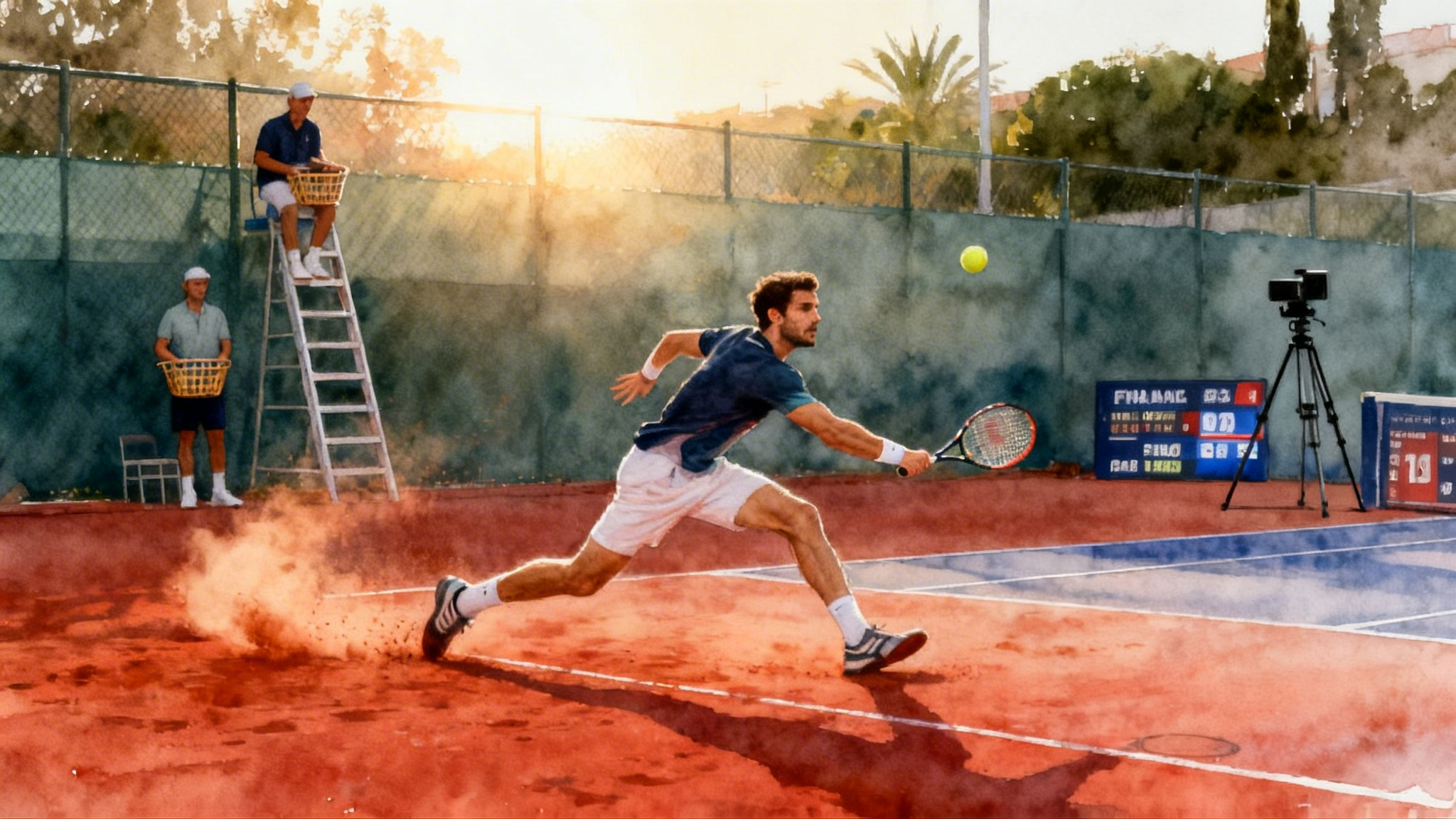
Two academies, one arc, and a player who kept learning
Grigor Dimitrov’s story reads like a smart long game. At 16, in 2007, he left Haskovo for Barcelona and the Sánchez-Casal academy run by Emilio Sánchez and veteran coach Pato Álvarez. That move placed him on slow clay courts every day and into a training culture that prizes balance, footwork, and point construction. Two years later he settled into Patrick Mouratoglou’s academy in France, where structure, video feedback, and relentless match play shaped the teenage talent into a full tour professional. Fast forward to 2023 through early 2026, and the same ingredients show up in his results and his feel for big points.
If you only know the headlines, you likely remember the first burst in 2017 and then the slow burn back. The return to top-tier contention in 2023 and 2024, including a season-opening title in Brisbane in January 2024 and a spring run that pushed him deep in Miami, tracked with a simpler, tighter version of his all-court game, documented across the Association of Tennis Professionals Tour’s player pages and match reports on his ATP Tour player profile. Look closer and you can see the fingerprints of Barcelona and Paris on nearly every pattern he plays. For a parallel on sequencing, see how Ferrero shaped Alcaraz.
This is not nostalgia. It is a blueprint. Families weighing a move to a training base can learn from how Dimitrov sequenced his development: first the surface that slows the game down and forces clean movement, then the system that speeds the decision-making back up and builds competitive repetition.
Barcelona 2007 to 2008: clay taught him to float and to choose
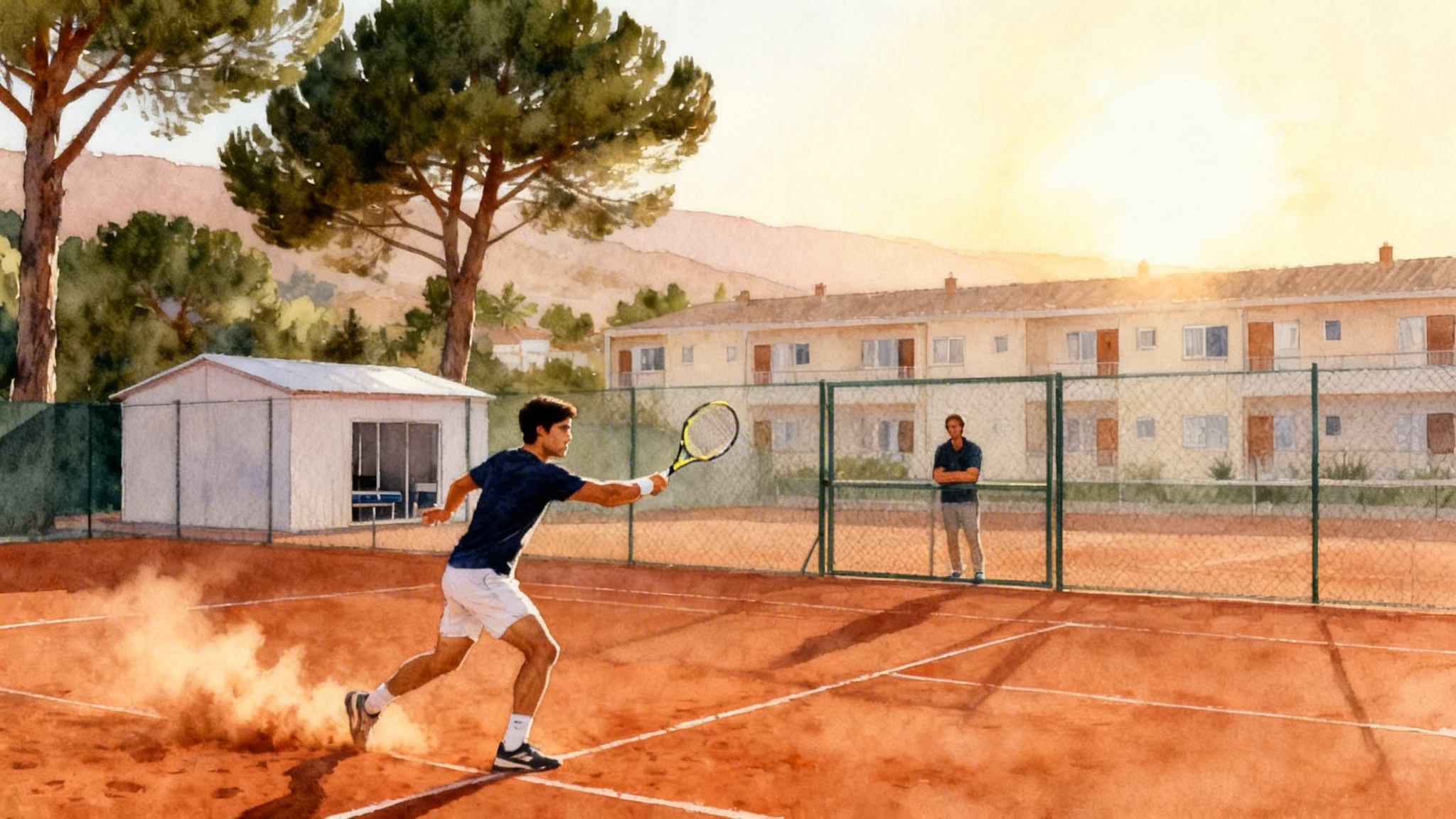
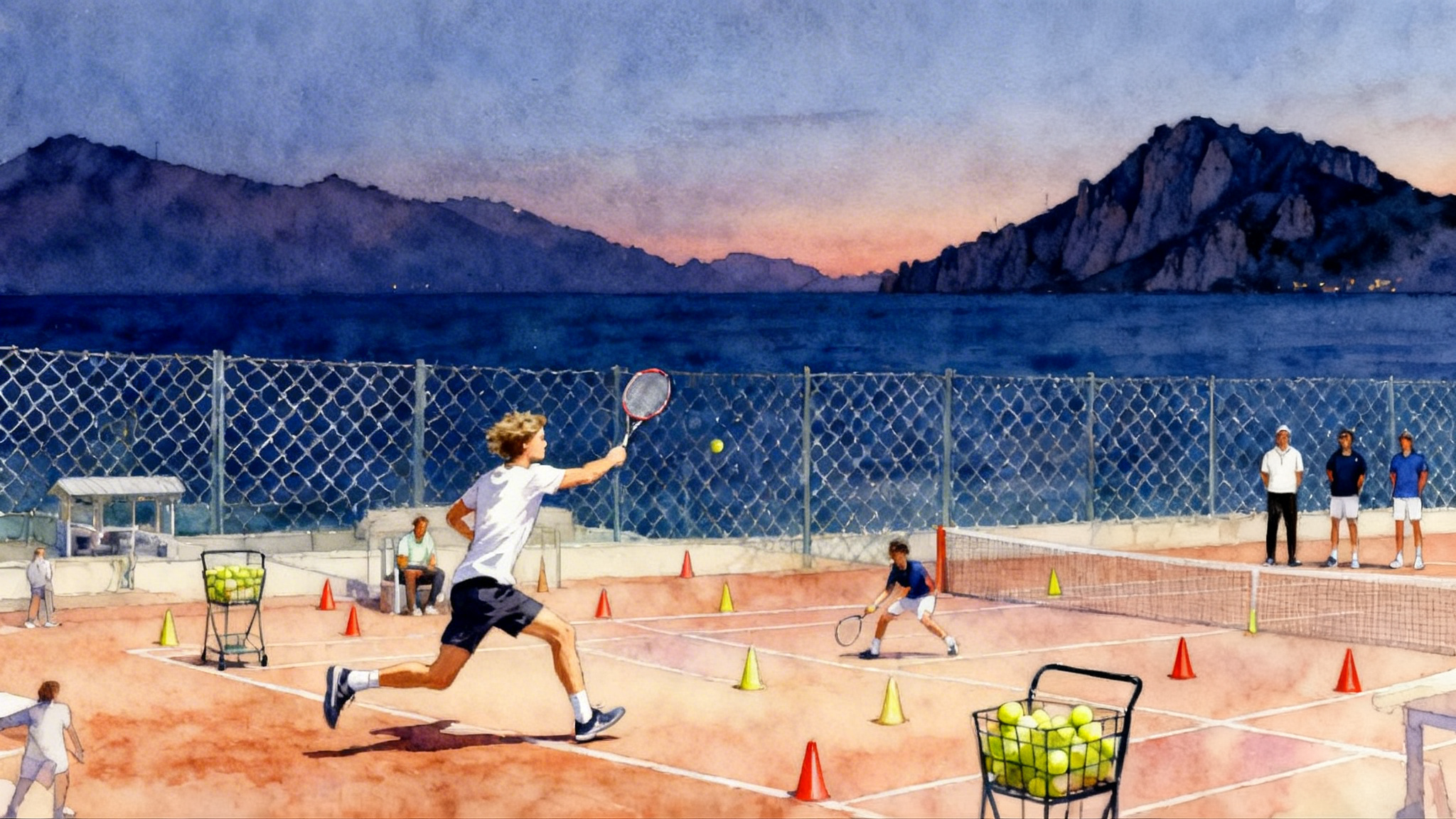
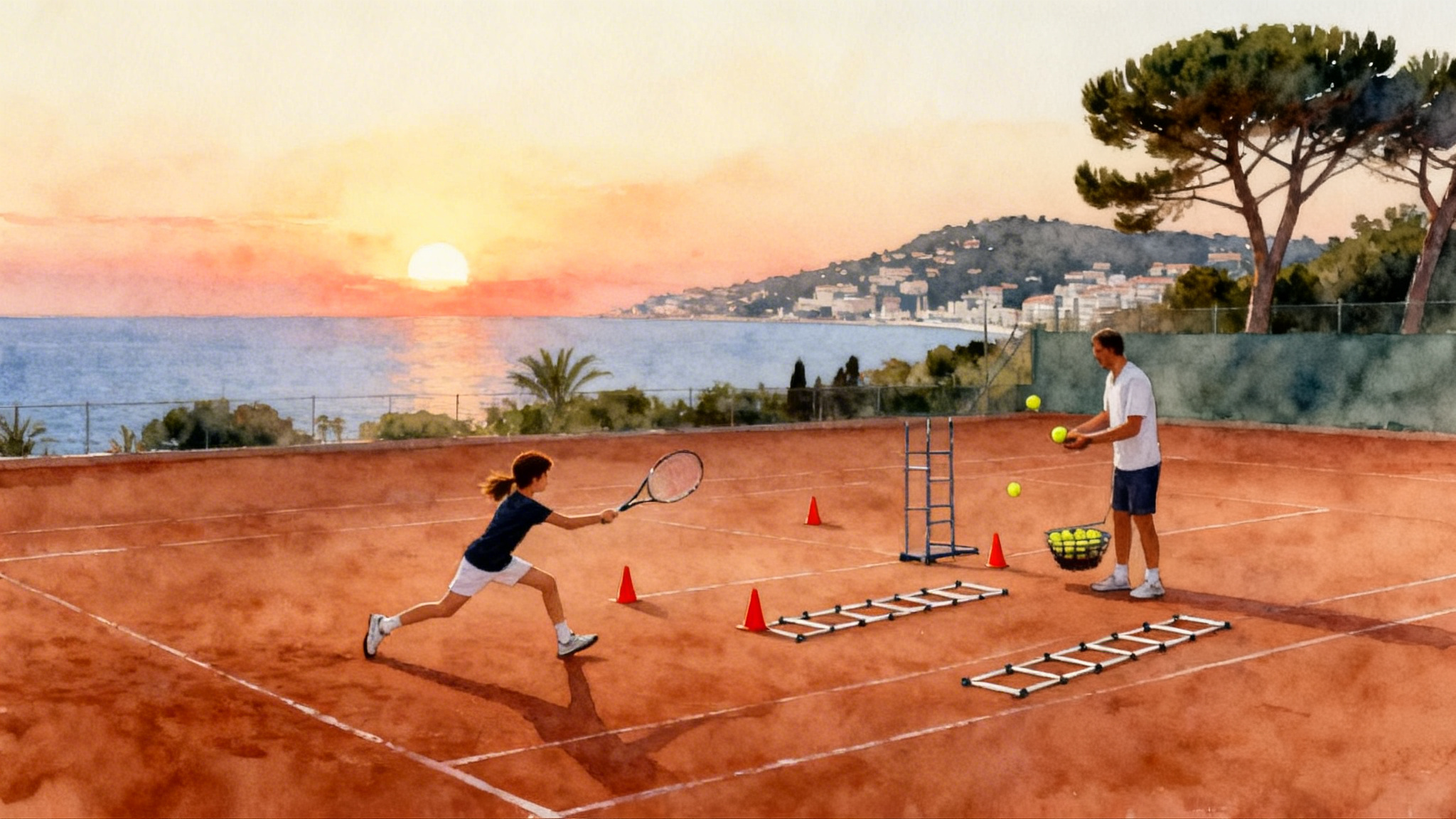
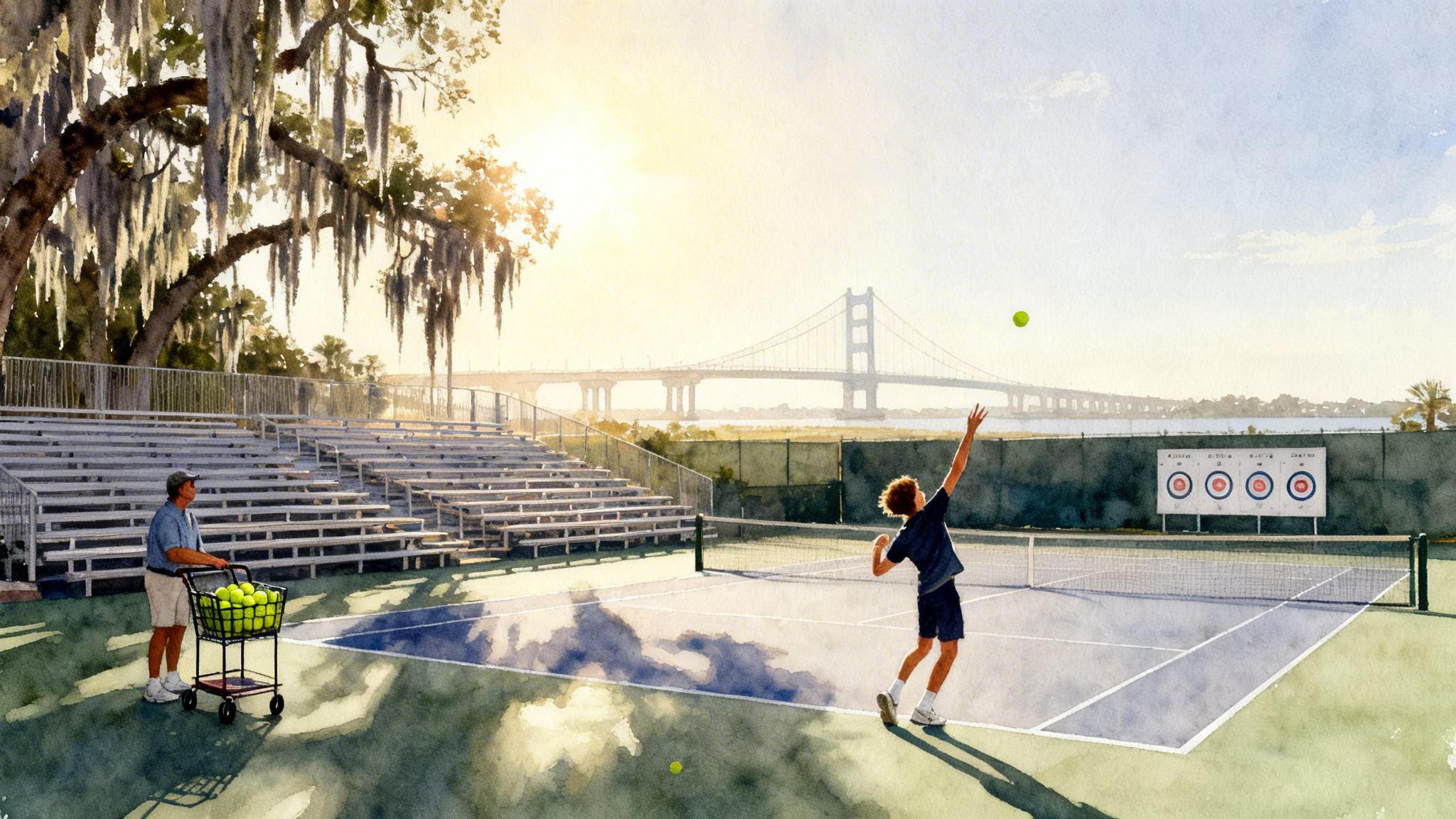
Walk through a typical morning at Sánchez-Casal in that period and you would have seen stations. Footwork ladders beside the baseline, balance holds on single legs, and then a ball basket on a clay rectangle that dared you to slide late or lean early. Pato Álvarez sessions had a reputation for volume and detail. The format was clear: earn stance, set the hip line, hit the heavy crosscourt into a safe window, then choose the change when the court position is right. On clay, that change can be late, so the lesson is patience and shape. Dimitrov’s forehand developed a loopy, heavy option that sits high and then kicks forward; his backhand slice learned to stay below the tape and skid across slow dirt.
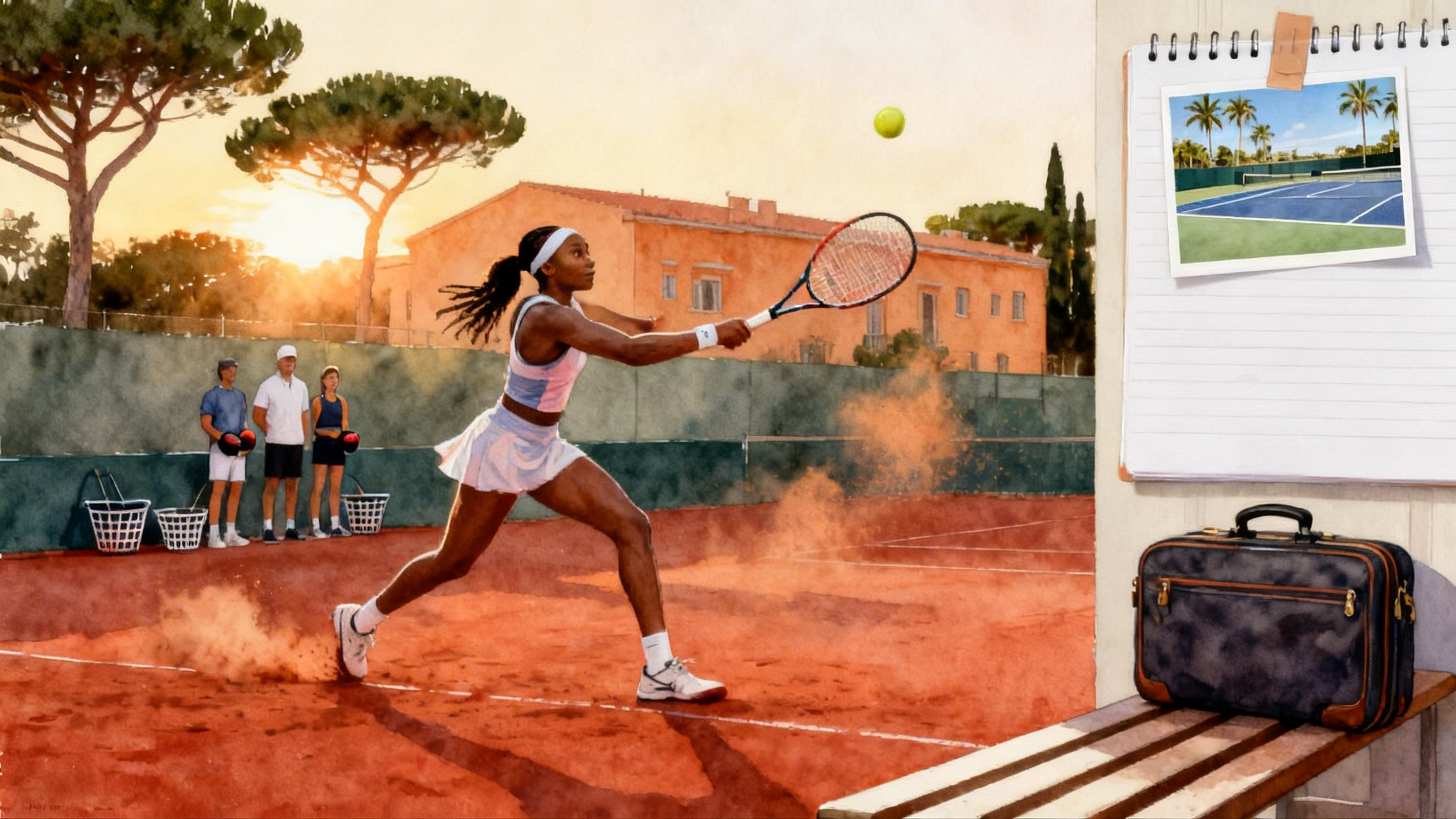
Why does that matter 15 years later? Because big points punish bad steps, not just bad swings. The 2023 and 2024 Dimitrov did not bounce around for show, he economized. The first step out of the split became quieter. The recovery shuffle after a wide forehand was measured, not panicked. Those are clay habits. Once a player owns that economy, the game plan opens: trade crosscourt to move the opponent, hold the inside line, and only then roll the down-the-line change.
On clay you also hear the ball differently. The thud tells you contact was deep in the strings and the bounce will jump; the thinner pop warns you the reply will sit up. That acoustic feedback loops into footwork. Dimitrov learned to read it early, which explains why his neutral ball tolerance on slower hard courts improved with age. A neutral rally stops being a stall; it becomes a search for the ball that finally lets you step in.
Paris 2009 to 2012: structure, film, and the pressure of points that count
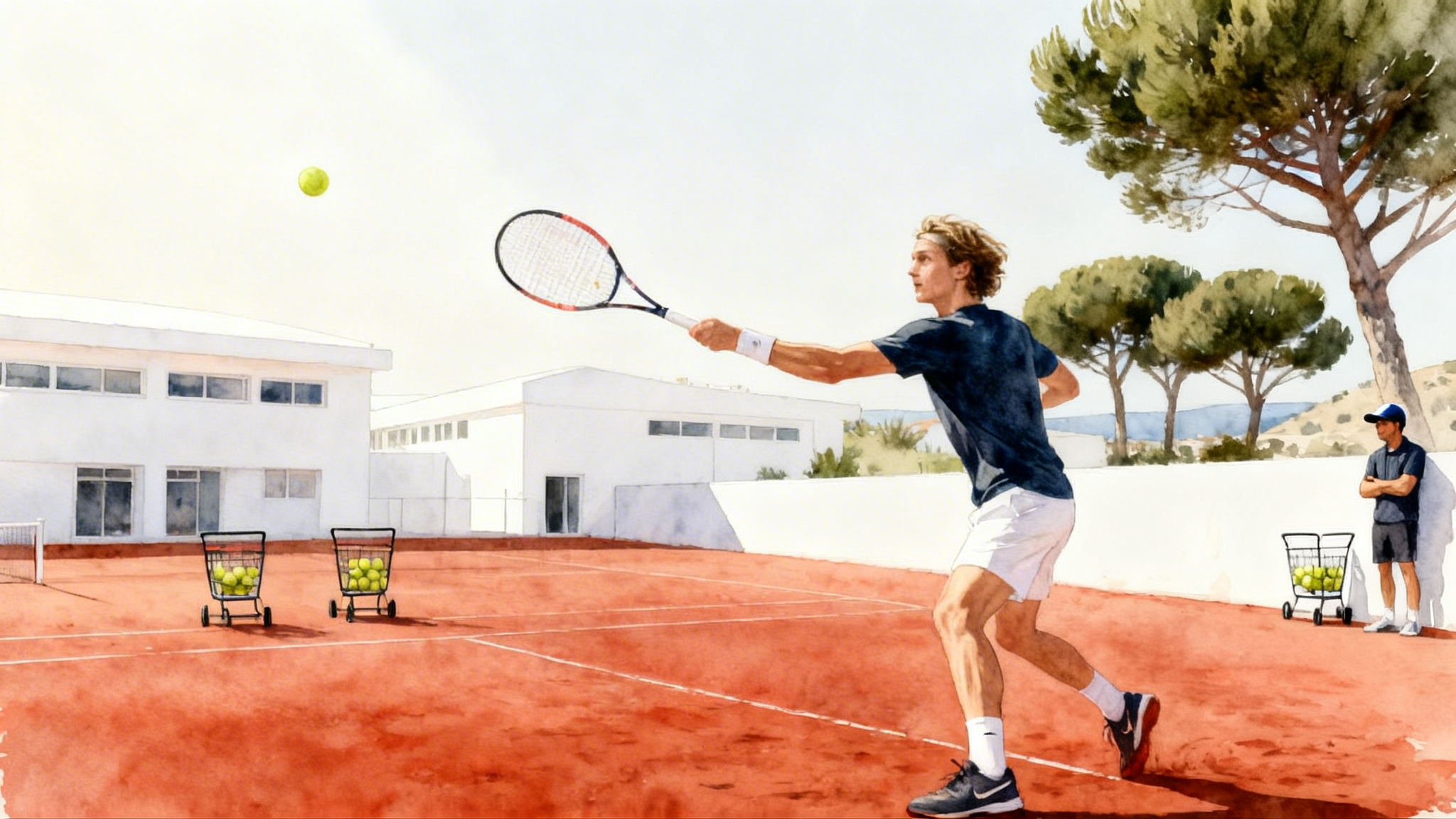
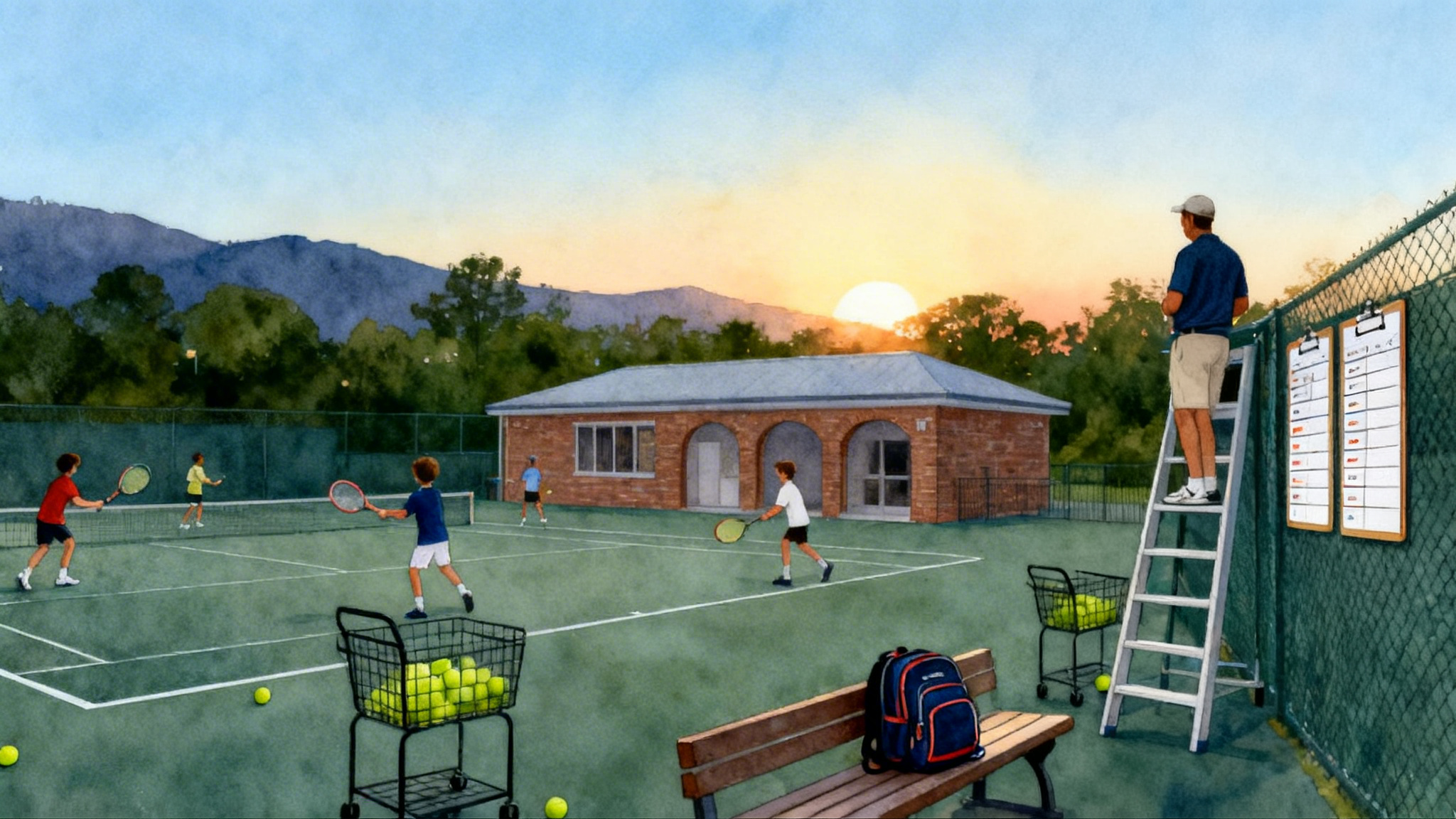
At the Mouratoglou base the cadence shifted. The courts were different, the speed a touch quicker, and the sessions slid toward competition. Drills began with a plan written on the board. Video found trunk tilt at contact and the timing of the left hand on the two-hander. Set-play patterns appeared, for example the serve out wide from the deuce side, a deep backhand return corralled crosscourt, then the inside-out forehand to push the defender past the doubles alley. Fitness blocks pressed acceleration and deceleration, not just mileage. Match play sessions used scoreboarding tricks, like starting at 30 all or returning only second serves for a set, to force conviction. For a modern French comparison, explore All In Academy campuses.
If Barcelona taught him to float, Paris taught him to close. You can see the blend in late-stage points of his recent seasons. The footwork is still clay clean, but the choice is faster, and the intent to take the ball early is clearer. The net is not a bailout. It is a planned exit, often after a low, central approach that denies sharp passing lanes. That short central approach shows up often in his resurgent years, because it buys one more look at a volley without giving angles away.
The academy also injected travel rhythm. Tournament simulation blocks, three matches in two days with recovery routines in between, produced a repeatable week: heavy on Monday, tactical Tuesday, matches Wednesday through Friday, flush run and mobility on Saturday, travel or reset Sunday. That rhythm matters when a player attempts a multi-year push, because the real grind is not a single event, it is the ability to replicate emotional and physical intensity 25 weeks a year.
The five threads that connect 2007 to 2012 and 2023 to 2026
-
Clay footwork without the clay. The resurgent Dimitrov takes small, evenly spaced adjustment steps, so he rarely has to lunge. That keeps the upper body calm and lets him disguise the last-second change from roll to drive. When the court is quick, that disguise is gold.
-
All-court patterns with a north star. The plan is not to show variety for variety’s sake. The plan is to keep the rally safe to a big window, then use height and depth to pull the opponent off the baseline, then move forward behind the next ball. If the crosscourt rally produces a short reply, the down-the-line change lands not on the sideline but two feet inside it. Margin turns into repeatable offense.
-
Match-play intensity without panic. Those old scoreboard drills train the brain to accept that 30 all is normal. Watch his body language after a mid-rally miss in 2023 or 2024. There is less complaint to the box, more head nodding, and an almost metronomic reset. That is match stress inoculation.
-
Surface management rather than surface loyalty. Dimitrov still plays beautiful points on clay, but the late-career climb came from hard courts where his first strike, return depth, and transition game carry more reward. Clay footwork served the hard-court mission. That is the lesson: train on one surface to fix movement, compete on another surface to cash the movement in.
-
A blended coaching model. The academies offered infrastructure, scouting, and practice partners. Personal coaches that understood him best helped choose when to add variety and when to keep the playbook short. Late-career results followed only when both pieces worked in tandem and the calendar respected his body.
What families can copy, and exactly how to do it
You do not need a future top ten player to apply this. You need sequencing, clear roles, and a realistic budget. For another look at how a similar system lifts players, see Mouratoglou blocks for Gauff.
When to move
- Use a readiness test, not a birthday. Move when your player can execute a clean technical session for 75 minutes without reminders about effort, can do 20 minutes of footwork without the ball, and can keep a rally crosscourt for 25 balls on both wings with safe margin. For many, that happens between 14 and 16. Dimitrov moved at 16 and benefited from the maturity to absorb adult volume.
- Run a six-week residency before a permanent move. Treat it like a lab. Keep a diary of sleep, soreness, and mood. If motivation drops below baseline for three of the six weeks, the system may be too big too soon.
Blending an academy with a personal coach
- Assign lanes. The academy owns volume, sparring, logistics, and access to surfaces. The personal coach owns technical priorities, seasonal goals, and performance review.
- Set a cadence. Every Friday the personal coach calls the academy lead for 20 minutes. The call covers two things only, what changed in the last seven days and what is the one focus for the next seven. If the focus needs more than one sentence, it is not a focus.
- Protect a weekly one-on-one. Even in a rich academy environment, guarantee one private technical hour per week with a single clear goal. That hour is where old motor patterns are replaced.
Managing surfaces with purpose
- Choose a home court that teaches your weakness. If your player is fast but wild, pick clay for training blocks so footwork and patience are built. If your player reads the ball well but lacks weight of shot, spend time on slow hard courts to learn to drive through the ball.
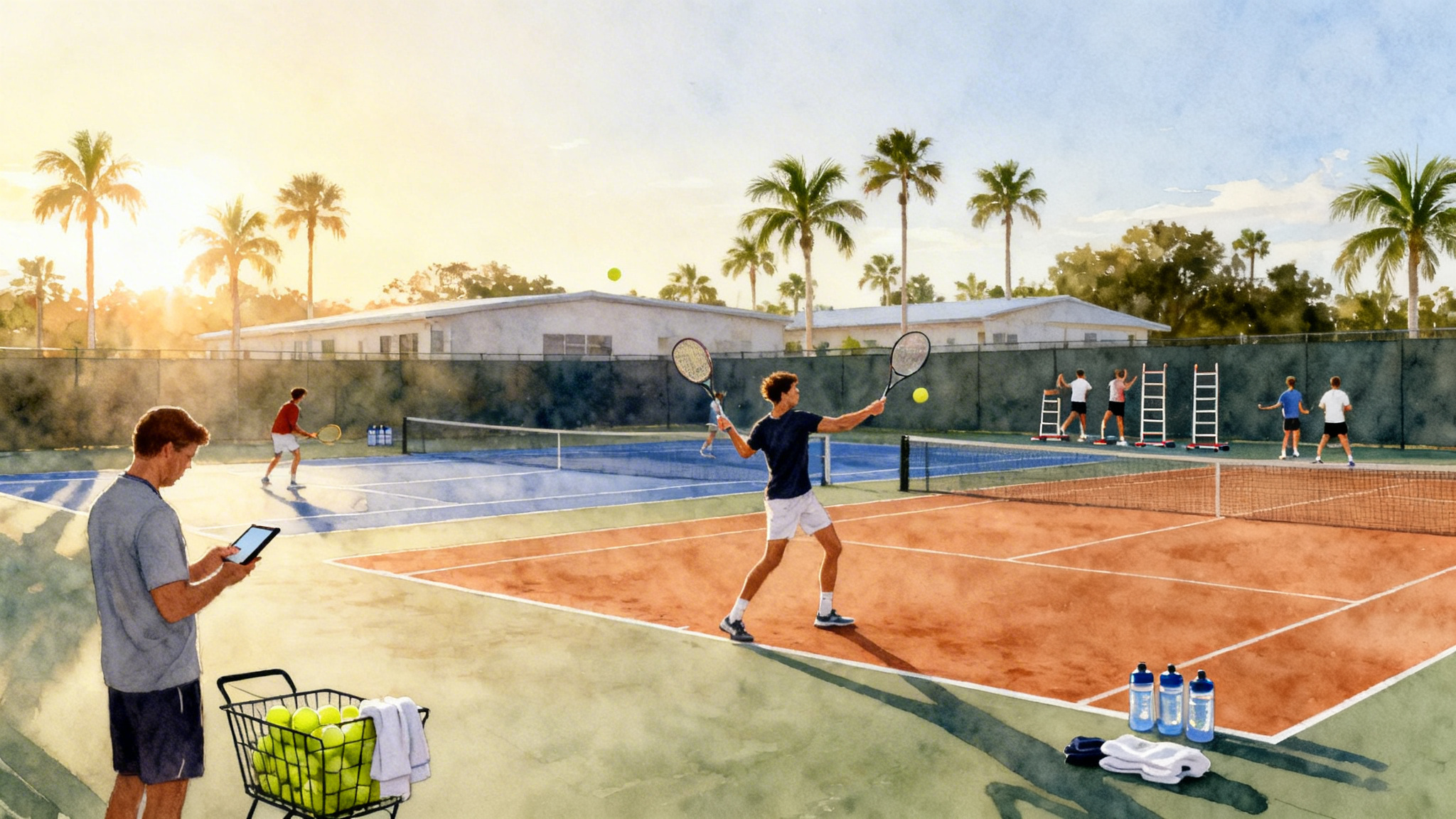
- Use surface blocks. Three-week clay block for footwork, then a two-week indoor hard block for timing and lower bounce, then outdoors for a week to translate the timing to sun and wind. The rhythm, not the one-off lesson, unlocks change.
Schooling that supports rather than survives
- Pick one schooling model in full alignment with the tennis calendar. Standard classroom with flexible teachers, accredited online schooling with morning tennis and afternoon academics, or hybrid international programs with exam windows around travel. The key is a single decision that everyone repeats when travel stress hits. Fragmented schooling produces hidden fatigue.
- Protect one day a week for pure academics. Sunday afternoon works for many. No tennis, just schoolwork and family time. Brains that switch fully tend to retain better and feel less guilt about missing classes for events.
Costs without fog
Here is a realistic worksheet you can adjust by region and level:
- Academy tuition and boarding for a European base: 35,000 to 60,000 euros per year, which often includes group training, limited private hours, fitness, and room and board.
- Additional private coaching: 5,000 to 20,000 euros per year, depending on how many extra technical hours you buy and whether you want a coach on the road for designated weeks.
- Fitness and physiotherapy: 3,000 to 10,000 euros per year, budgeting for screenings, strength plans, and periodic treatment blocks.
- Tournament travel: 800 to 1,500 euros per week when traveling within a region, more for intercontinental flights. A 20-week competitive calendar can add 20,000 to 30,000 euros.
- Equipment and services: 2,000 to 5,000 euros per year for stringing, shoes, grips, and wear and tear.
That produces an all-in range of roughly 65,000 to 125,000 euros per year for a serious pathway. The wise move is to phase it. Begin with a semester at the academy and a lighter travel calendar. Add private hours only after the group environment produces clear progress you can describe in a sentence, for example, better balance on wide backhands or fewer short balls after deep crosscourt forehands.
Translating academy habits into late-career gains
Dimitrov’s resurgence since 2023 was not about inventing a new identity. It was about subtracting noise. He started points with a higher first-serve percentage, not more aces but more returns that landed short. From there he leaned on old clay habits, roll heavy crosscourt, then knife the slice to defend, then step forward on the next ball. The forehand was no longer chasing lines. The backhand, always pretty, became more direct. The net exchanges were shorter because the approach was central and lower, which reduces the pass angles. Opponents had to thread a needle, and under pressure most cannot.
Notably, his travel rhythm matched his age. He placed mini training camps into the schedule rather than chasing every appearance fee. He cycled between physical loading weeks and lighter tactical weeks to stay fresh for the events that suit him. Those are adult choices. They rely on the discipline and structure that academies drill into teenagers, the same structure he absorbed in Spain and France.
A practical, 90-day blueprint for your player
You can replicate the essence without the budget of a superstar. Here is a 12-week plan that borrows the Barcelona and Paris lessons.
Weeks 1 to 4, clay or slow hard focus. Three on-court sessions that begin with 15 minutes of silent footwork ladders and shadow swings, then 45 minutes of crosscourt trading with height goals, then 30 minutes of approach and volley sequences starting with a low central approach. Two fitness sessions emphasizing deceleration, controlled lunges, and lateral bounds. One match-play session that starts every game at 30 all.
Weeks 5 to 8, structure and speed. Move to indoor or medium hard courts. Begin each practice with a written plan. Use a phone for two 10-minute video segments per week, one backhand, one serve. Play two matches per week with constraints, for example returning only second serves for a set or forcing a first-ball forehand inside out on every return game. Keep the net exit central and low.
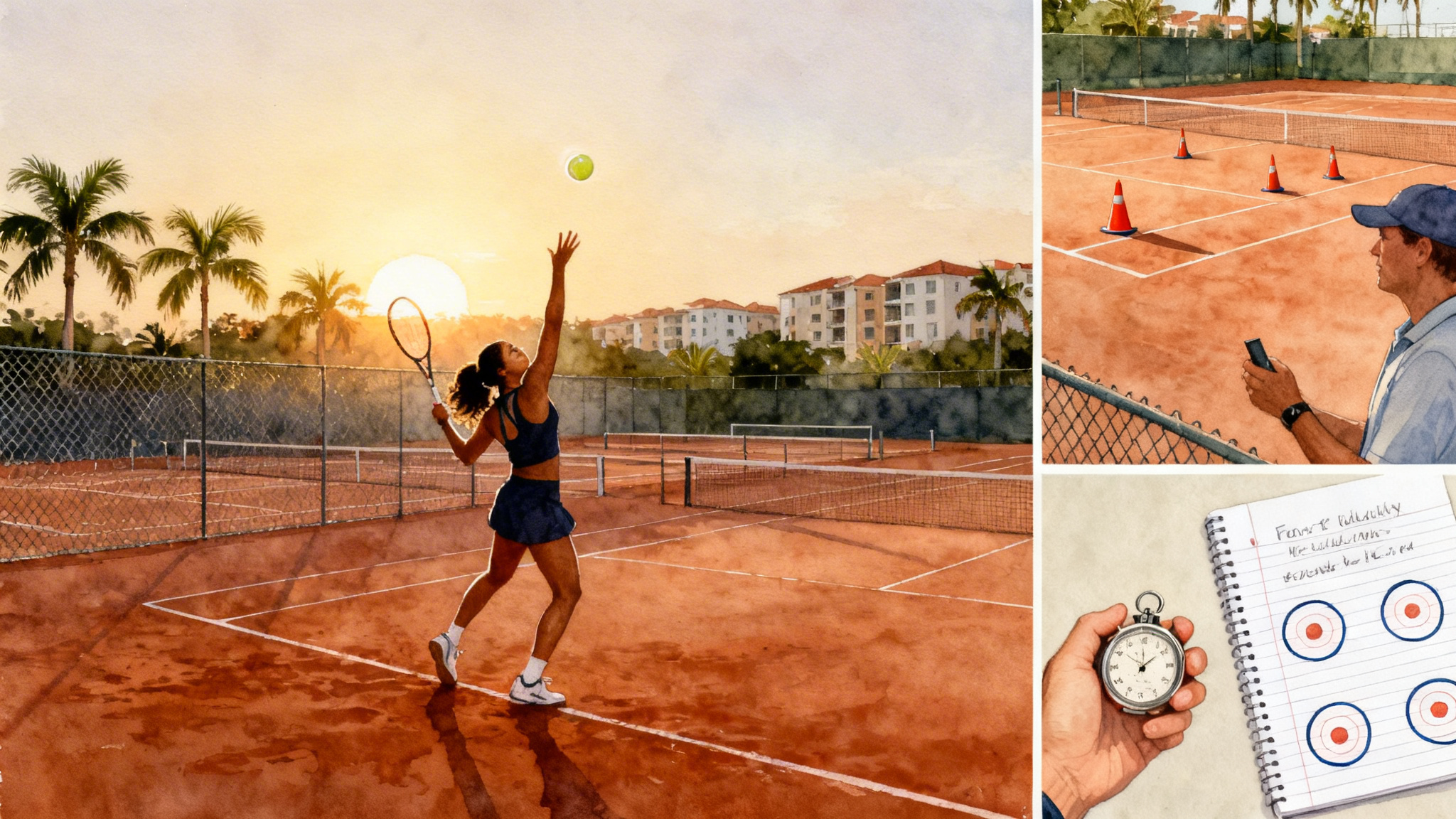
Weeks 9 to 12, travel rhythm. Simulate a tournament week. Monday heavy drilling, Tuesday tactics and serves, Wednesday to Friday matches, Saturday flush and mobility, Sunday family and school. Keep a one-sentence focus each week. If you cannot say it in one sentence, you will not feel it at 5 all in the tiebreak.
If an academy is in the plan, visit once in each block. Use the academy for variety of sparring partners and different court speeds. Keep the personal coach as the custodian of the one-sentence focus.
Why Dimitrov’s path still matters
Every academy offers courts and coaches. The difference is the way a player uses them and the order of the steps. Barcelona gave Dimitrov footwork that ages well. Paris wrapped that movement in structure, film, and the nerves of scored points. The result years later is a player who can make heavy decisions quickly without looking rushed. That is the beating heart of his late peak.
For families, the template is clear. Choose a base that fixes movement first, then add a system that accelerates decisions under stress. Blend academy infrastructure with a personal coach who edits the plan, not one who fights it. Teach the body on one surface and spend your ranking on another. Align school with the calendar to protect energy. Budget in phases and buy private hours only after the group environment moves the needle.
The last open question is where to start. If your player is ready to taste a larger system, browse the Mouratoglou Academy official site for program structures and sample schedules, then ask any academy for a two-week trial and a transparent written plan. The best programs will welcome both requests. The point is not to mimic Dimitrov’s choices line for line. The point is to understand why he made them, and to sequence your own path with the same logic.
Conclusion: borrow the sequence, not the style
Grigor Dimitrov’s journey from Sánchez-Casal to Mouratoglou to a late-career surge is a reminder that development is not a sprint and not a mystery. It is a sequence. First the feet, then the patterns, then the pressure, then the calendar. If you copy that order, and if you measure progress with one clear sentence each week, the style can be entirely your own. The result you want, a player who looks calm when it matters, becomes much less about talent and much more about decisions you can make today.