From Oslo to Manacor: How Rafa Nadal Academy Forged Casper Ruud
 Tommy
Tommy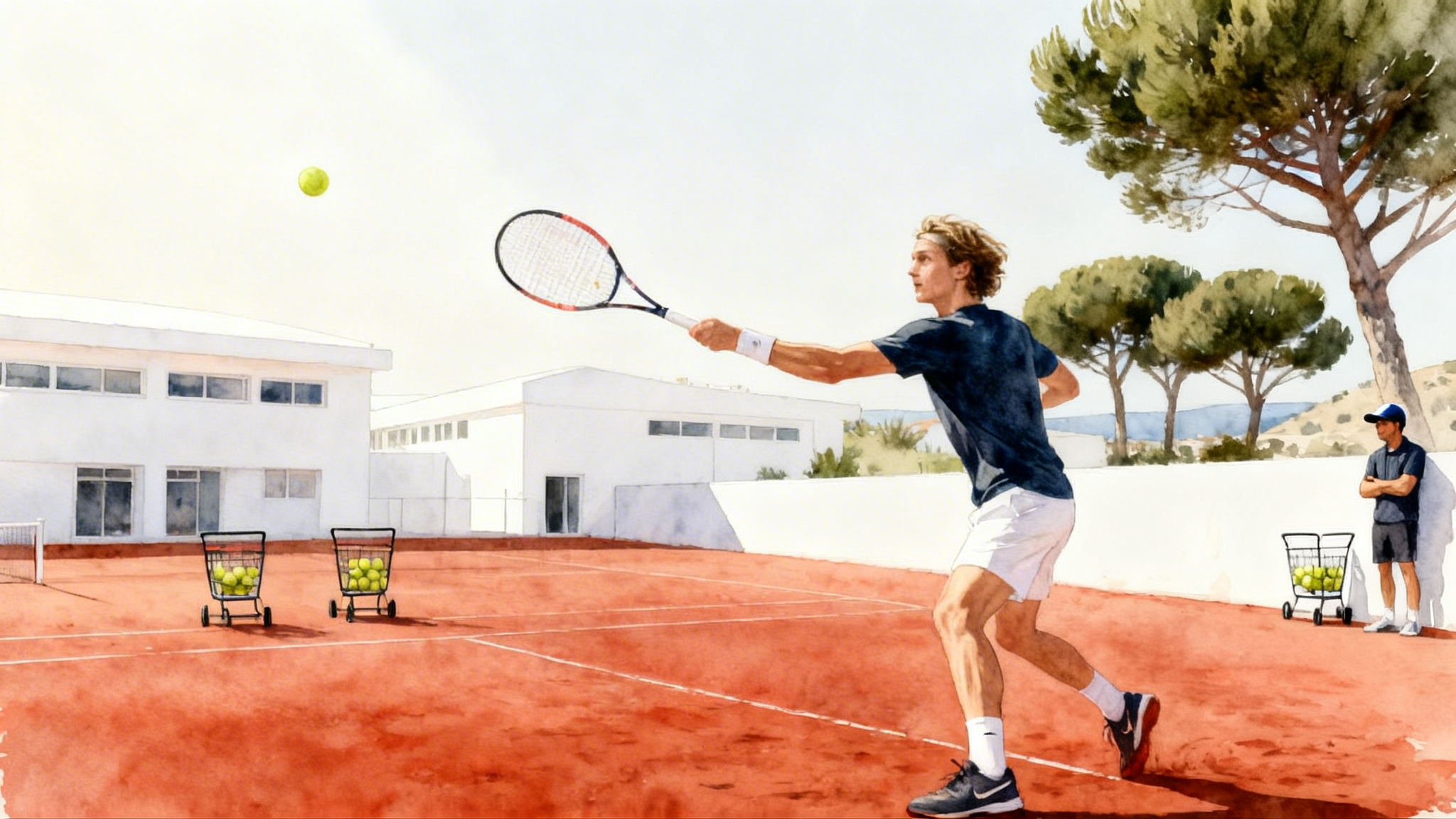
The decision that changed a career
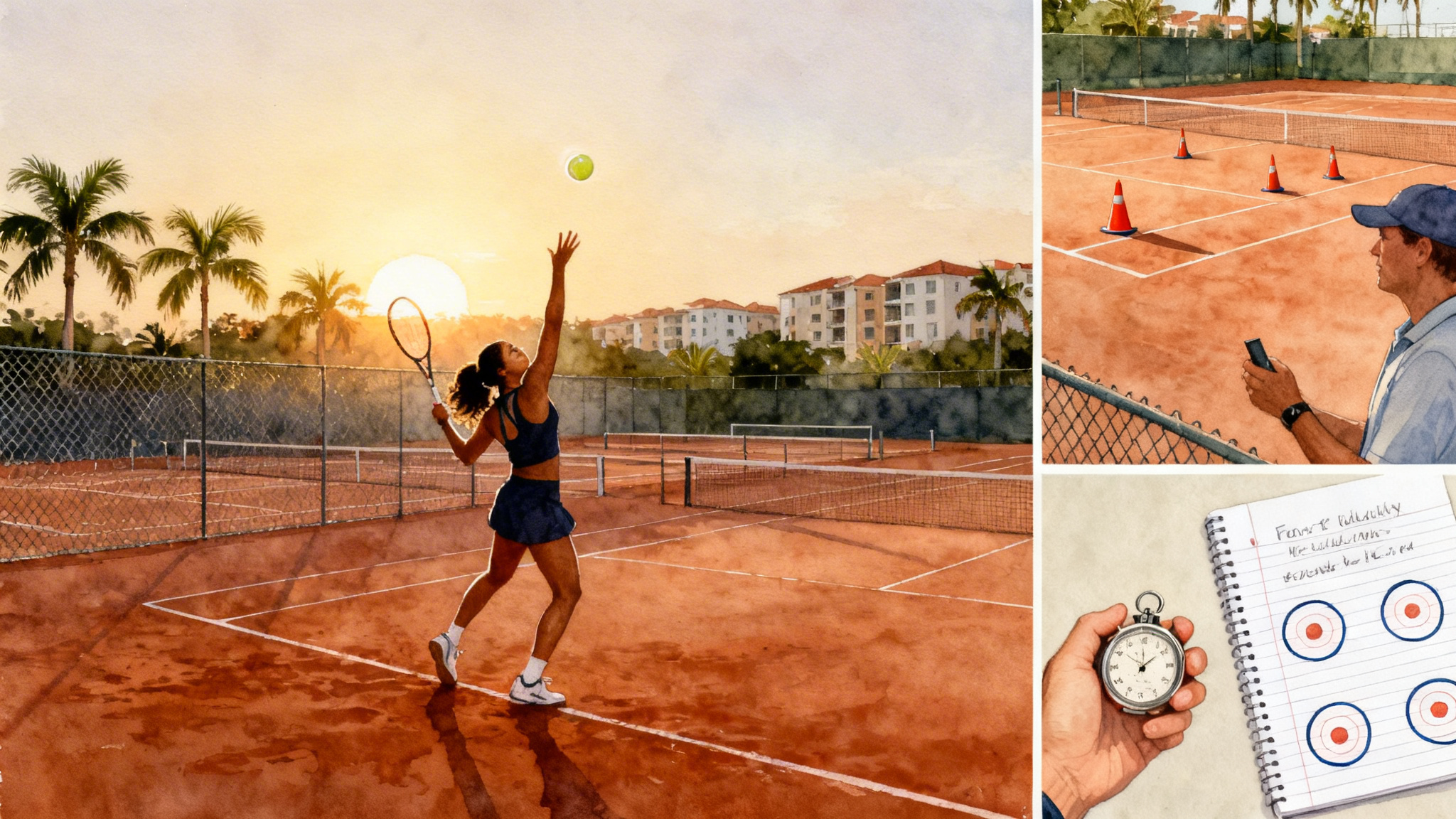
In the summer of 2018, a 19-year-old Casper Ruud and his father-coach, Christian, made a choice that would define the next phase of his career. They moved their training base from Norway to Manacor, Mallorca, to join the Rafa Nadal Academy. Four years later Ruud stood in the finals of Roland-Garros and the US Open, and he finished 2022 as the year-end world No. 3. Look at the arc of his results and you see a steady build: deeper runs on clay, then breakthroughs on hard courts, then repeated major finals. You do not get that kind of consistency by luck. You get it by stacking good decisions, day after day, in a place designed to make them unavoidable. For the stat line and milestones, see Casper Ruud’s ATP profile.
What follows is not a fan postcard from Mallorca. It is a breakdown of what the move unlocked: Spanish-style drilling that hardened his forehand-first patterns, match-play blocks that turned practice into pressure, and tour-level mentorship that aligned with the Ruud family’s coaching values. If you are a junior family mapping the next few seasons, you will find concrete steps you can copy. For a parallel Spanish pathway, compare how the Ferrero Academy shaped Alcaraz.
Why Manacor worked for Team Ruud
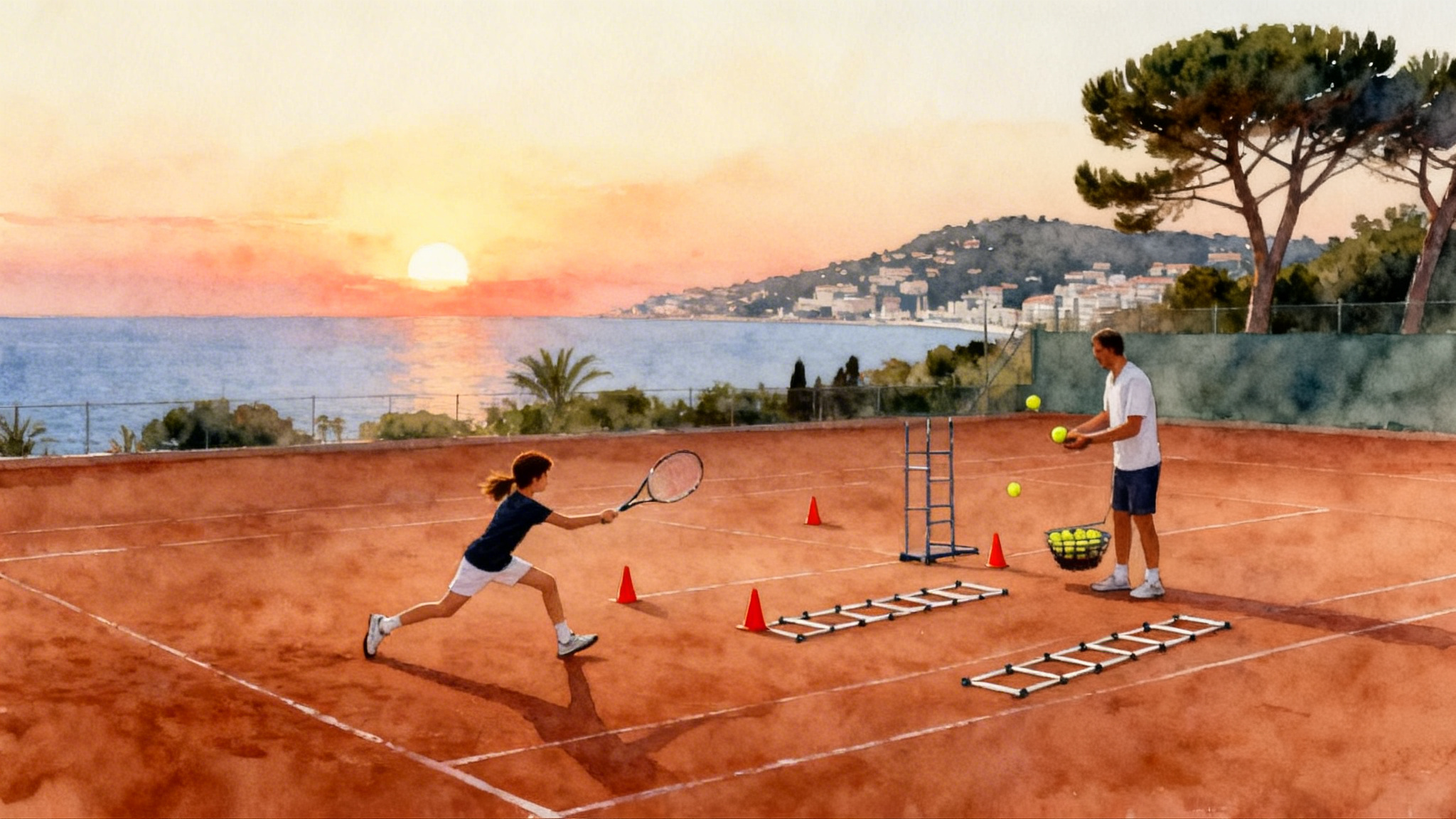
Casper did not swap out his foundation. He doubled down on it. His father remained the head coach, setting standards and deciding the long view. The academy added scale. It provided a predictable menu of training partners, coaches who knew exactly how to progress a Spanish forehand, and a facility where every corridor leads back to the court. Think of it like moving from a garage workshop to a full factory. The design of the place makes repetition frictionless, and repetition is how you change patterns under stress.
Manacor also solved Norway’s seasonal problem. If you want to win in Paris, you must stack thousands of quality reps on red clay before the tour reaches Europe in April. That is hard to do in a Scandinavian winter. It is simple in Mallorca, where you can live on clay from January if needed. The academy converted sunny days and spare courts into real edges. Families looking for similar year-round weather can explore Tenerife Tennis Academy programs.
The Spanish approach, in three daily choices
Spanish training is not a slogan. It is a list of repeatable habits that show up in the session plan.
-
Ball height and shape before speed. The coach’s first instruction is often “height,” not “hit harder.” The forehand must travel heavy and high over the net, clear the tape with margin, and break down the opponent’s contact point. The effect is cumulative. On a monitor, that looks like average net clearance of 70 to 90 centimeters, not 40. On the scoreboard, it looks like opponents who cannot take the ball early for long.
-
Crosscourt first, then inside-out. The foundation pattern is deep, heavy crosscourt forehands that pin the opponent to the backhand corner. Only when the ball sits short does the drill switch to inside-out to the ad side, then inside-in behind it. The idea is not a trick play. It is probability. Make your safest shot build the point. Then choose the next safest way to finish it.
-
Full-court fitness inside the rally. The work is not just in the gym. It is inside 20-ball rallies where the coach calls a direction after ball 12, or surprises the player with a short ball after ball 15. Recovery steps and spacing are policed. Miss your spacing and you repeat the rep. That is how the legs become automatic late in sets.
Casper’s forehand already kicked when he arrived. In Manacor it became a scheduling tool. When your forehand remains heavy in the fourth set, you can choose the weeks when you suffer on purpose and the weeks you play fresh. That control shows up in final weekends at Roland-Garros and in New York. For another pattern-first build, see how the Piatti Academy forged Sinner.
Year-round match-play blocks
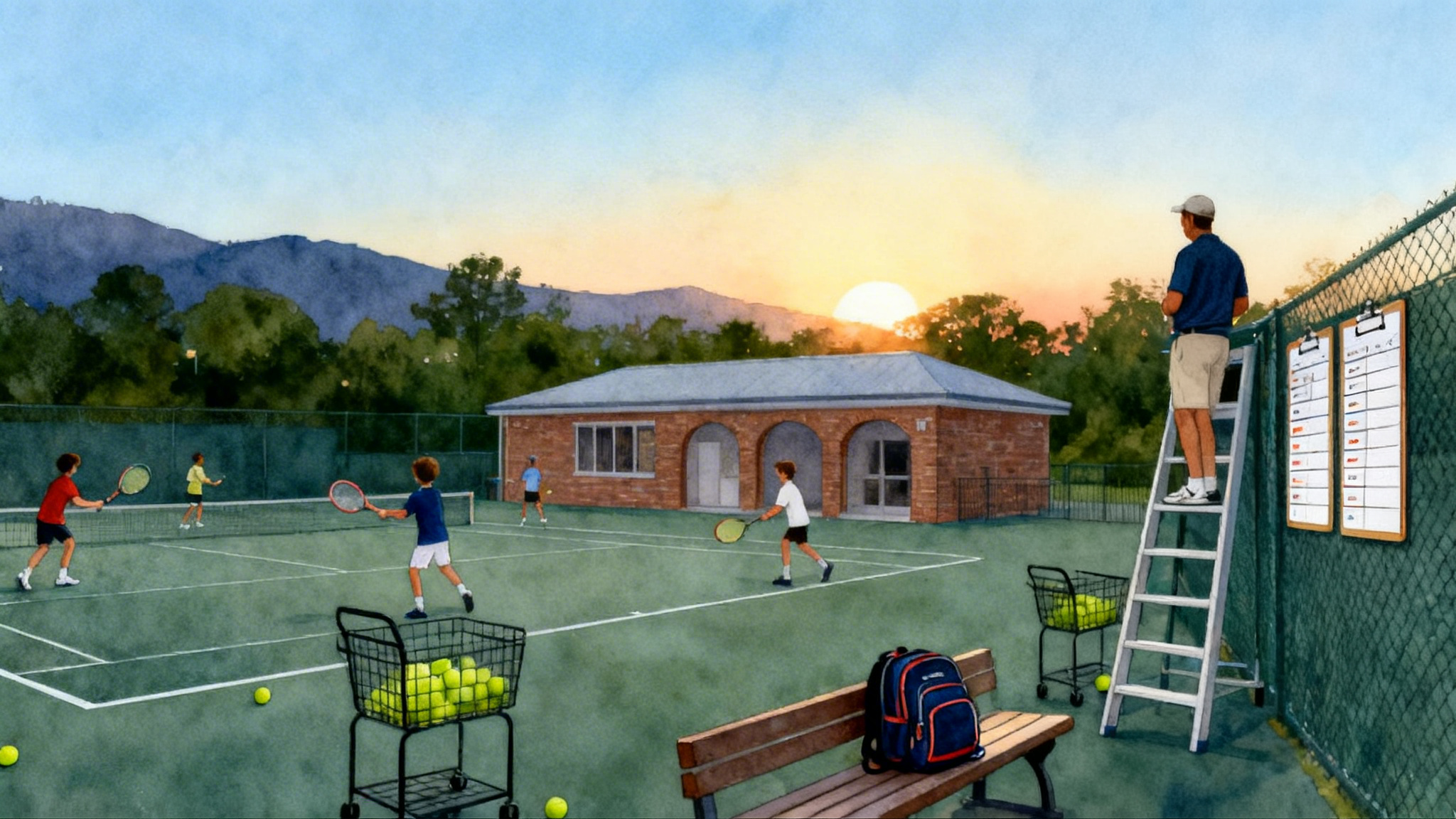
Drills shape patterns. Matches test them. The academy’s best advantage was simple volume. There is always a game on. Former pros, top juniors visiting from across Europe, and a churn of touring players passing through for preseason or recovery weeks keep the practice board full.
A typical Ruud block would group two or three weeks of match play around a theme. On clay in February it might be second-serve points and forehand depth. On hard courts in August it might be first-strike returns and plus-one forehands to the open court. The key was keeping score. If a theme was second-serve points, they played first-to-15 on second-serves only. If the theme was short-return depth, they measured how many returns landed beyond the service line in the middle third. Drills later in the day reflected what the morning matches exposed.
Families can copy this even without a giant academy. Pick two training partners for a fortnight. Choose one theme. Set a target and track it three times a week. The quality is in the constraint, not the address.
Mentorship that matched the message
Many academies have star names on the wall. Few have a champion on site who also happens to be the player your game resembles in broad strokes. Ruud did not become Nadal. He did follow a similar hierarchy: topspin forehand patterns first, court position earned rather than assumed, returns that begin the rally rather than chase winners. During his time in Manacor he also got to practice with Nadal and built a working familiarity with the tempo the greats sustain. It is different to watch that pace on television than to feel it on your strings. For a snapshot of how that mentorship cycle came full circle, revisit when Ruud faced Nadal on Chatrier.
The other mentor is less famous and just as essential: Toni Nadal, who helped set the academy’s standards and still repeats a simple demand, win the next point with what you have. That meshes with Christian Ruud’s approach. There was no conflict over style. There was reinforcement of a shared idea that better footwork and better decisions win more points than better feeling.
Forehand-first patterns, codified
It is one thing to say forehand-first and another to write it into a plan. Below are three patterns Ruud used so often they became muscle memory.
-
The squeeze: Heavy crosscourt forehand to the opponent’s backhand, recover a half step toward the ad sideline, repeat until the reply sits up. Then change to inside-out and look for a shorter ball to the open court. The purpose is to make the backhand leak. The measure is how many replies you receive on the service line or shorter by ball eight.
-
The chase and cage: Serve to the backhand body, look for a forehand from the middle, then hit behind the opponent when they sprint to cover the ad corner. This is not a winner hunt. It is a time-steal. The measure is how often the third ball lands within a meter of the sideline.
-
The shoulder stack: On short backhands, run around early and hit an inside-in forehand high through the deuce corner, not flat. The ball height forces a shorter reply that can be finished with a forehand into the open ad court. The measure is the percentage of short balls you convert without needing a fourth strike.
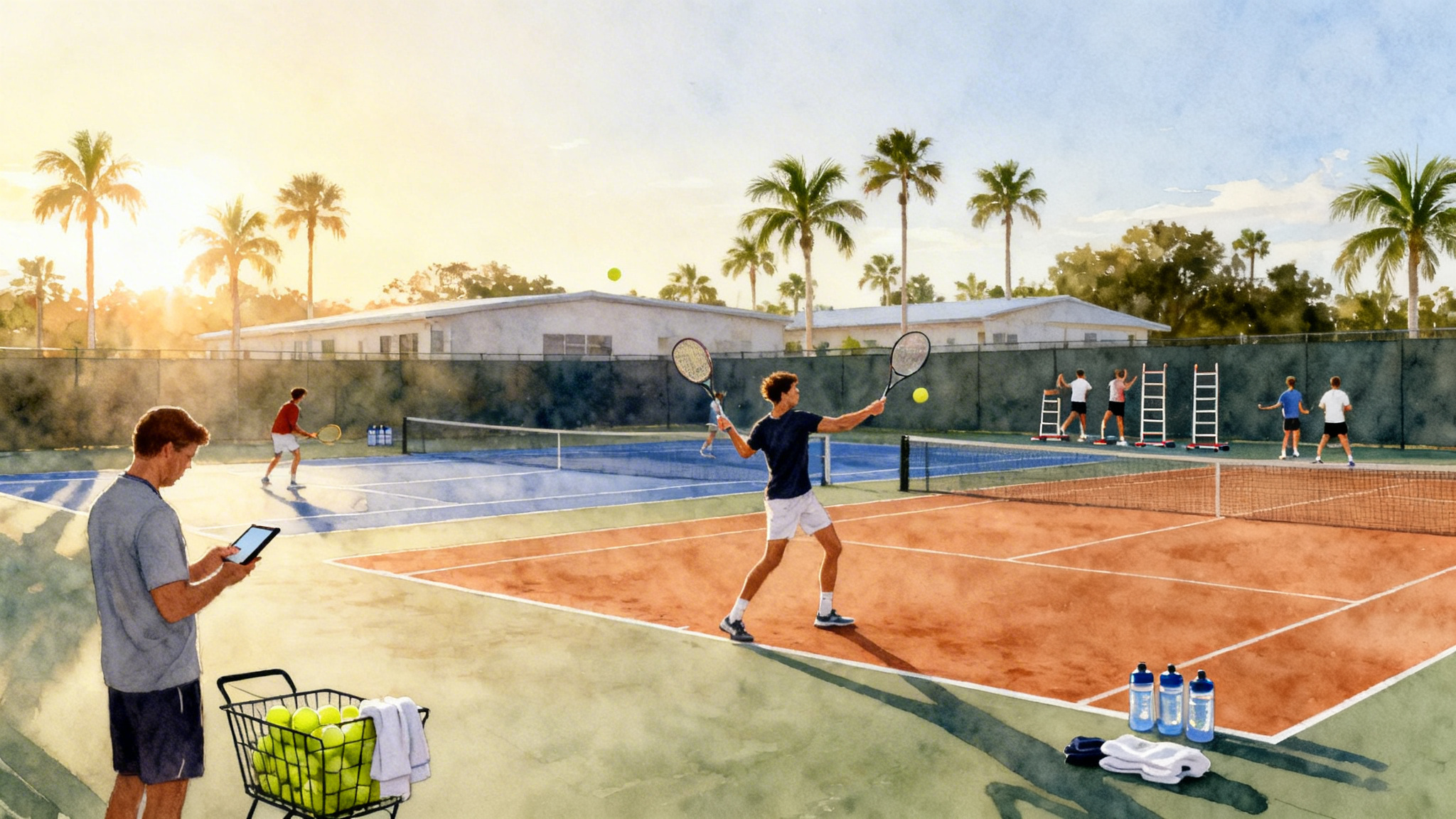
Each pattern has a measurable that can be charted in practice. You can count them with a coach, with a friend and a clipboard, or with a phone on a tripod and a simple tally app.
The fitness that carries to week two
The Spanish school treats fitness like the floor under the furniture. If you want the furniture to sit level under pressure, you raise the floor. For Ruud that meant thick aerobic sessions on court and off. Think long sets of 15 to 20-ball rallies at 70 to 80 percent pace, mixed with short sprints to simulate change of direction, and finishers where you must hit a precise spot while gassed.
In the gym the plan focused on ankles, hips, and trunk stability, not just big lifts. The idea is simple cause and effect. If the ankle loads and rolls well, your recovery from a wide forehand is cleaner, which keeps the next ball deep, which prevents the opponent from taking the ball early, which buys you time to breathe. The fitness is not separate from the tactic. It is the enabler.
Families can measure this too. Pick two benchmarks and repeat them once a month. For example, a 10 meter shuttle repeated 12 times with 25 seconds rest, and a forehand depth test where you must land 30 of 40 forehands past the service line. Record both. If the shuttle times fall while the depth score rises, your stamina is becoming useful, not just bigger.
Scheduling that builds toward majors
The academy influence shows up in how Ruud’s season is blocked. The blocks look like a coach’s spreadsheet, not a fan’s calendar.
-
Clay prep block in Mallorca or South America before Europe. The goal is thousands of forehands on clay and match reps where you force depth through height. Results are secondary. Validation arrives in April and May.
-
Grass as a skills checkpoint. The asks are different on grass, so the block is about serves and returns. You accept that grass will not be the biggest points earner and you mine it for first-strike confidence that you carry into North America.
-
North American hard as a peak window. The academy’s heavy-forehand plus fitness model travels to heat and medium-bouncing hard courts. Pattern discipline holds up in tiebreaks and late sets. This is where the scheduling picks value events and sets ceilings for match counts so that New York arrives with heavy legs only in training, not on day eight.
You do not need a tour budget to copy the logic. Choose a home base that offers the surface you need for the next goal. Then block your calendar. For a junior that could be six weeks on clay with two local tournaments, then three weeks on hard with one higher-level event. Do not chase every shiny draw. Build your draw odds by arriving prepared for the conditions.
What families can copy this season
If you coach or parent a junior with big goals, here is a practical template inspired by Manacor’s habits and the Ruud family’s alignment.
- Choose a base with the right surface first
- Action: Decide the next six months’ key surface. If the key target is regional clay championships, pick a base within 30 minutes of reliable clay courts, not just the nicest clubhouse.
- Why: Reps on the right surface compound skills. Wrong-surface training leaks confidence.
- How: Audit the facility for court availability before school, after school, and on weekends. Ask how many total weekly hours you can spend on that surface from February to May.
- Build seasonal surface blocks
- Action: Map three blocks of four to eight weeks, each with one technical priority. For clay, choose forehand height and depth. For hard, choose first-strike serve and return.
- Why: Clarity converts training hours into predictable match behaviors.
- How: Write one primary drill and one match-play format that you will repeat three times a week during the block. Treat them like school tests.
- Create measurable routines
- Action: Attach numbers to your patterns. For example, in a 15-ball forehand crosscourt drill, aim for 12 balls past the service line with at least 60 centimeters of net clearance. In return practice, aim for 7 of 10 returns landing deep middle third.
- Why: What you can measure, you can manage.
- How: Record scores on paper or a shared note. Review on Sundays and set the next week’s targets by adding two percent.
- Run year-round match-play mini blocks
- Action: Every six weeks, schedule a two-week period with three match days per week and one theme, like second-serve points or backhand depth.
- Why: The brain learns point construction under score pressure.
- How: Keep score only in the theme. If it is second-serve points, replay the point if the server hits a first serve. First to 15 points wins the day.
- Align mentors with your message
- Action: Bring in a guest coach or older sparring partner one day a week whose style supports your plan. Avoid glamor for its own sake.
- Why: Consistency of message changes behavior faster than star power.
- How: Before the session, give the guest your theme and measurables. Ask for one adjustment you can repeat on your own.
- Fit the fitness to the tactic
- Action: For every on-court pattern, design an off-court support. If the pattern is heavy crosscourt forehands, the support is lateral shuttles and ankle stability. If the pattern is first-strike returns, the support is reaction starts and split-step timing.
- Why: The body moves how you train it between points.
- How: Two short sessions per week beat one heroic day. Keep them under 35 minutes and end them with a technical skill while tired.
- Schedule with a goal, not a hope
- Action: Pick fewer events and prepare for the surface and weather. For a summer hard-court run, schedule one lighter event two weeks before the target event, then a rest week, then the target.
- Why: Preparation turns seeding into a smaller factor.
- How: Use last year’s results to choose entry levels where you can win two rounds on a normal day. Let confidence stack.
What the results say about process
Ruud’s finals in Paris and New York did not announce a brand new player. They revealed a player whose patterns, fitness, and calendar had been carved to handle long days on clay and big-point tension on hard courts. The match-play blocks taught him to survive second serves when the arm is tight. The drilling taught him to default to height and margin when the score wobbles. The mentorship made the work feel normal.
That normal is the point. When big stadiums feel familiar, the body does what it does on Tuesday mornings in Manacor. Heavy forehands land deep. Feet move first. A tough service game turns with one inside-out forehand that buys time for a reposition. The wins that looked like breakthroughs are often the sum of a hundred small Tuesdays.