South Tyrol to Australian Open: How Piatti Forged Jannik Sinner
Jannik Sinner left South Tyrol at 13 for Riccardo Piatti’s academy in Bordighera, then climbed from Challengers to the 2019 Next Gen crown and the 2024 Australian Open title. Here is the training model and scheduling that made it possible, and clear takeaways for parents.
 Tommy
Tommy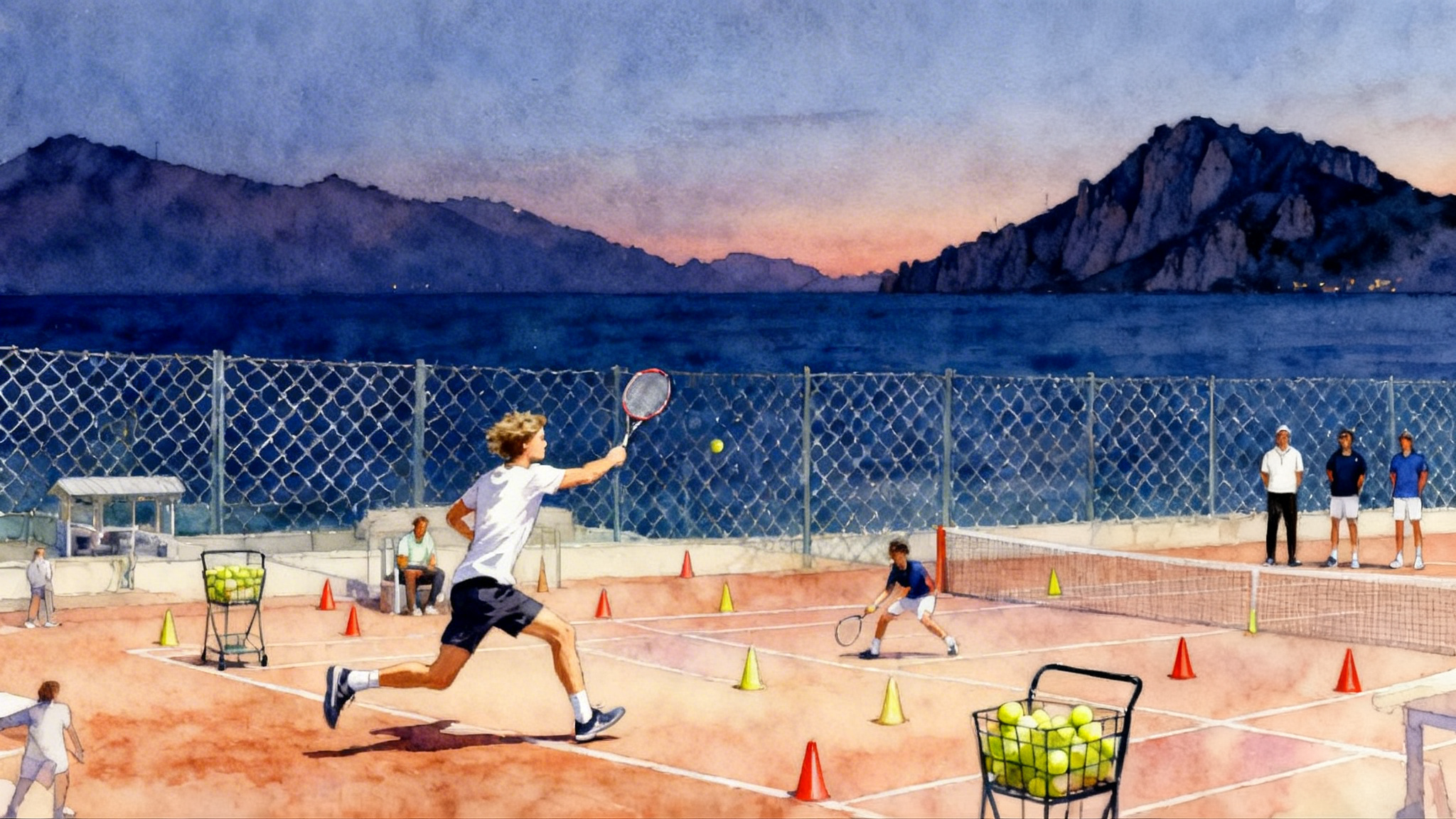
From the Alps to the Ligurian coast, then to Melbourne
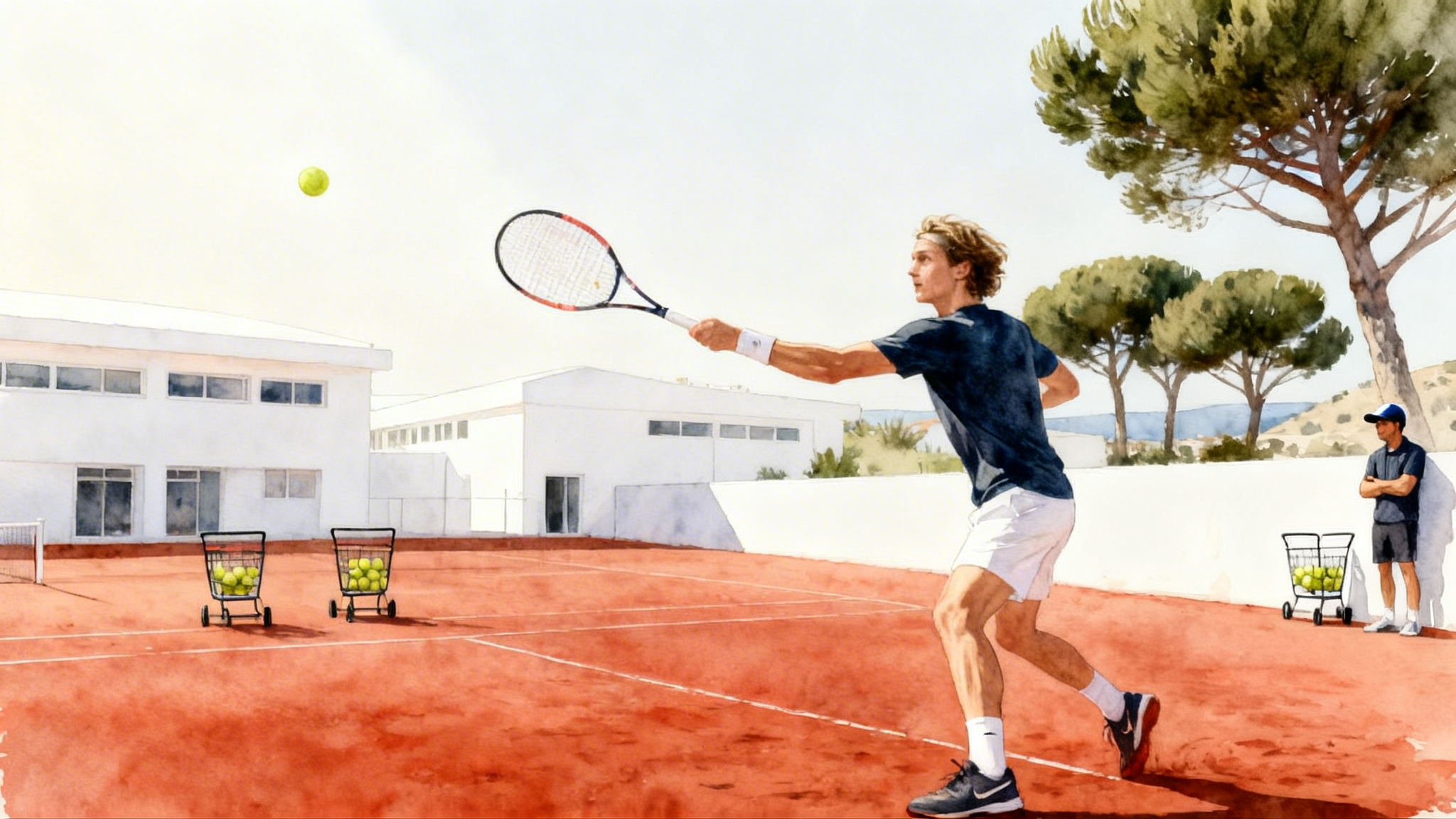
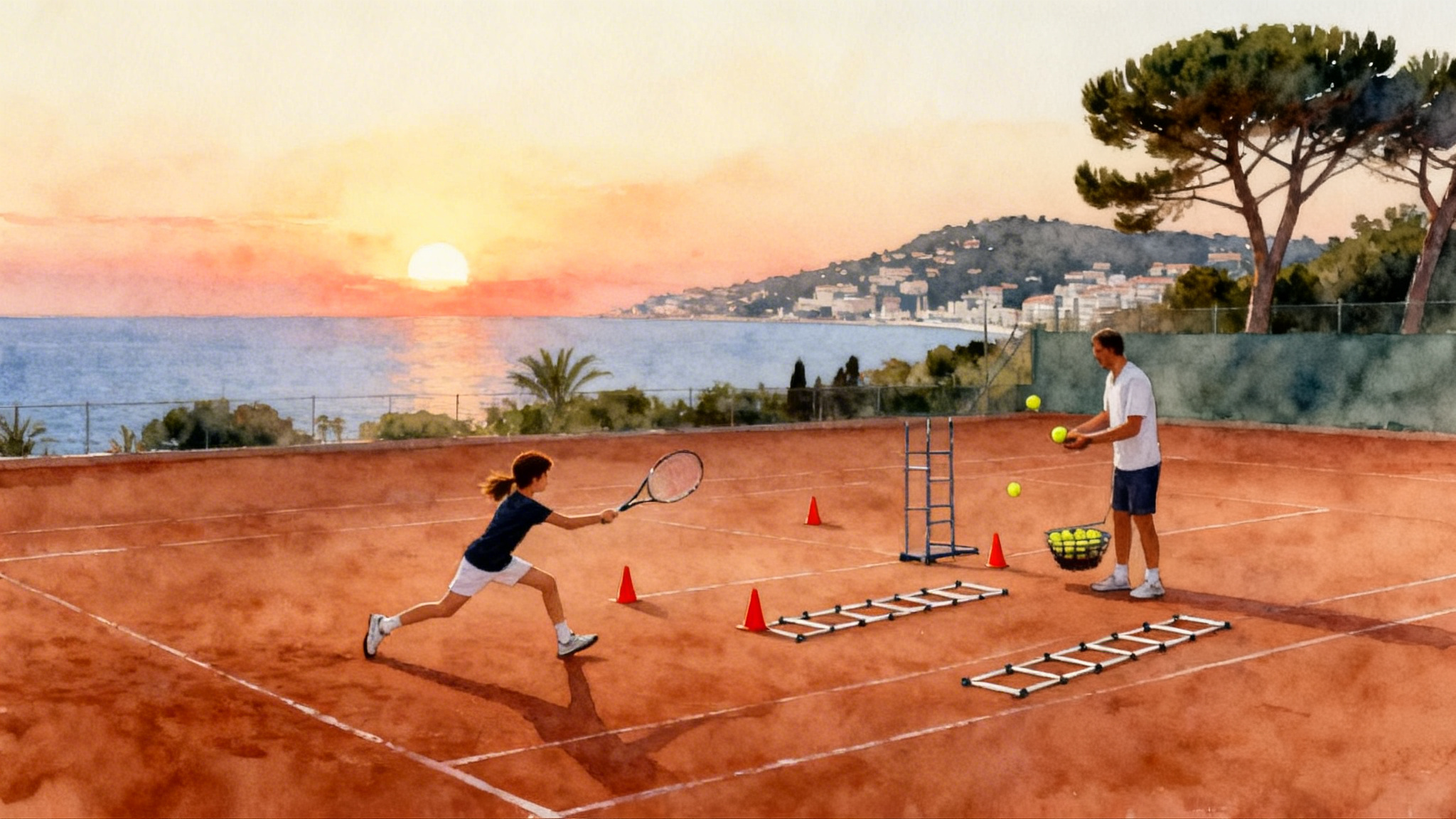
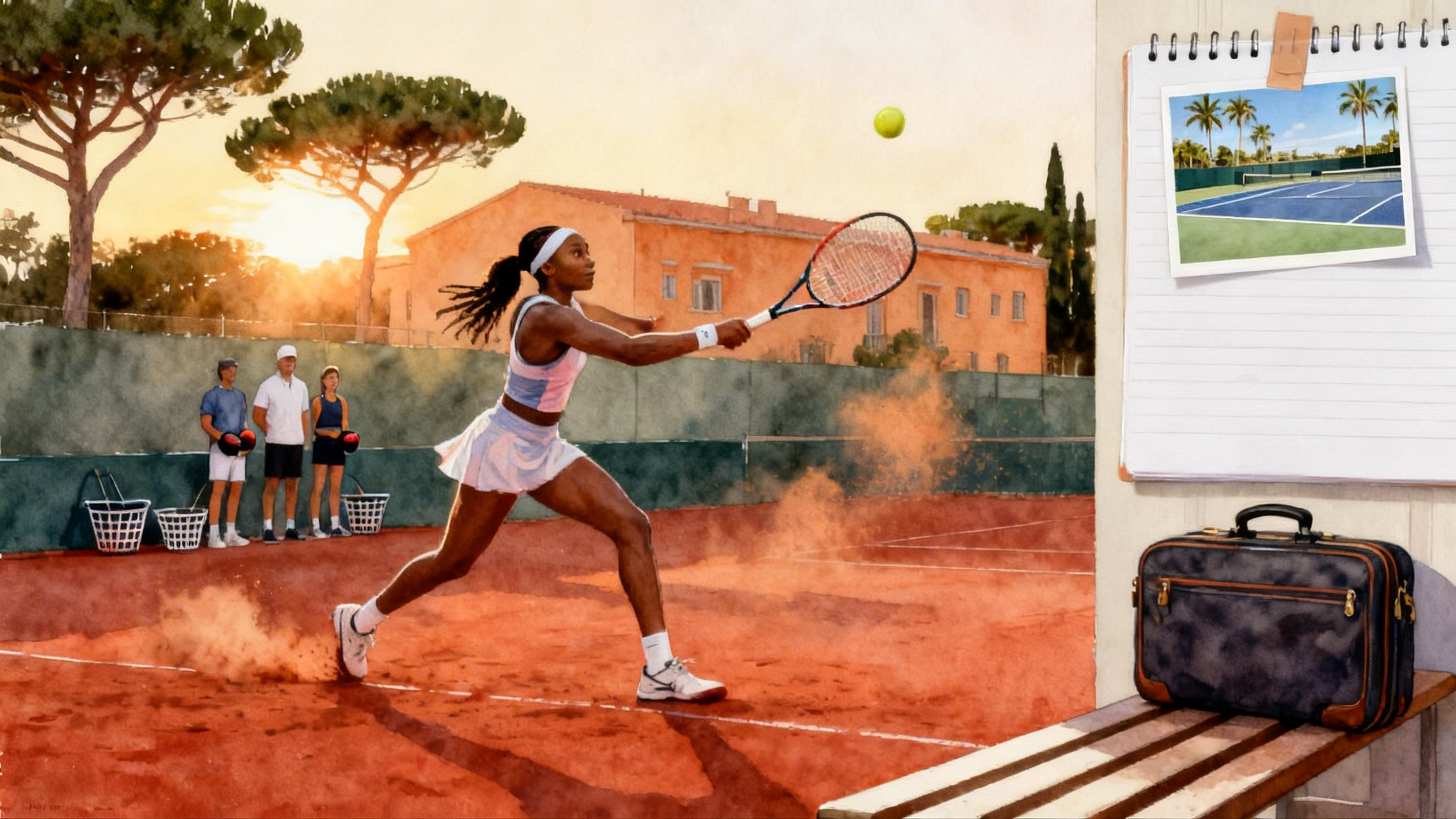
Jannik Sinner’s story reads like a map folded along three edges: the Dolomites where he grew up, the Ligurian coast where he learned to train like a professional, and the hard courts of Melbourne where he won a major. Born in San Candido and raised in Sesto, South Tyrol, he was a decorated junior skier who could have stayed on the snow. At 13, he made a different choice. He and his family decided he would leave home for Riccardo Piatti’s academy in Bordighera, a move that replaced ski gates with cones, footwork ladders, and video analysis. He did not dabble. He relocated and committed. That decision set the course for everything that followed.
The timeline helps: he left home at 13, he started winning on the pro tour’s lower rungs in 2019, he lifted the Next Gen ATP Finals trophy that November in Milan, and he took the Australian Open title in January 2024. For a teenager who did not spend years grinding junior events, the climb looked fast; the structure underneath it was anything but rushed. It was built on Piatti’s small groups, patterns before power, and a schedule that stretched him just enough at each step.
In case you want a single confirmation of the pivotal move, he moved to Bordighera at 13 to train with Piatti’s team. The rest is not magic. It is design.
Inside the Piatti model: small groups, many touches
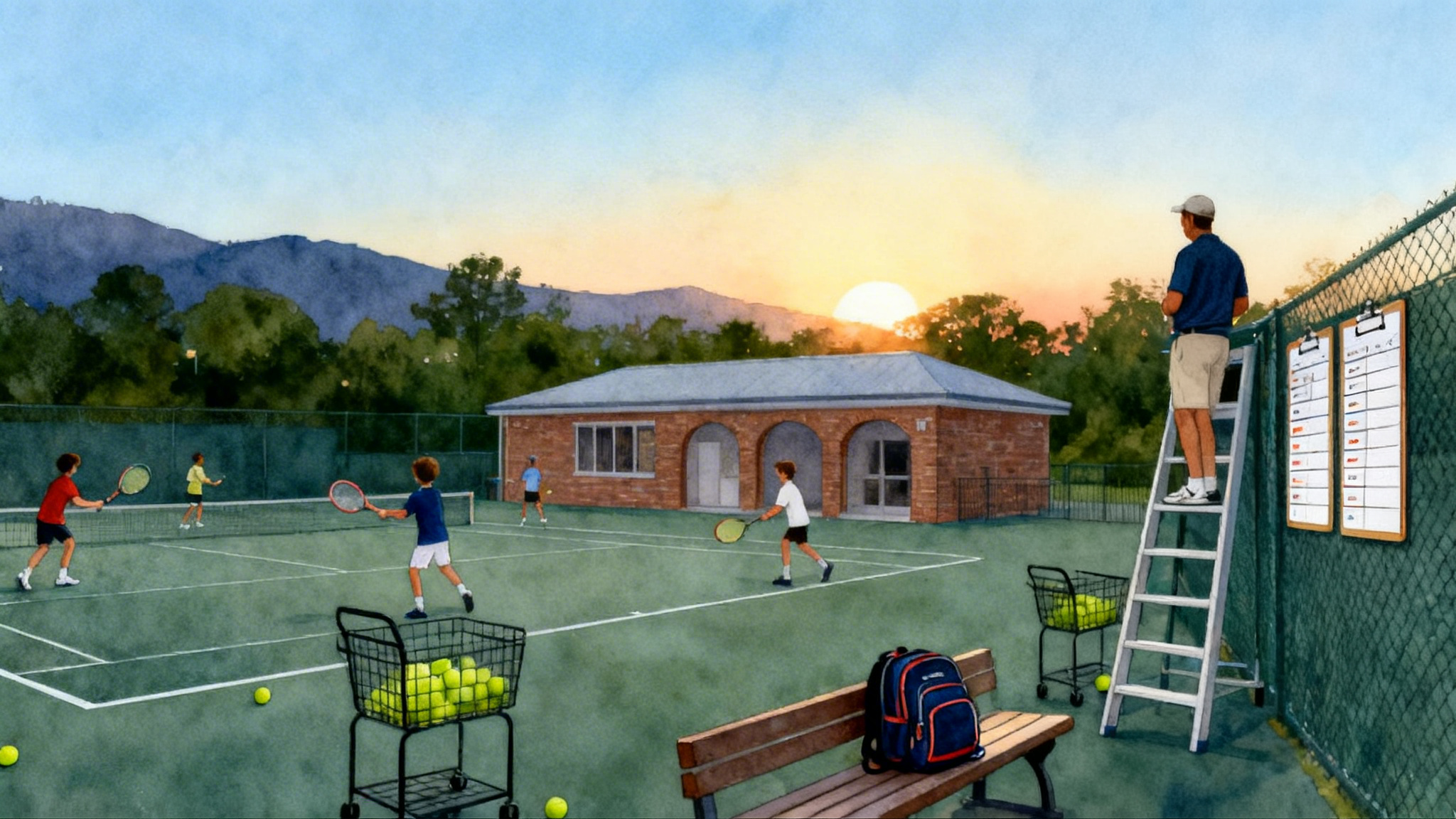
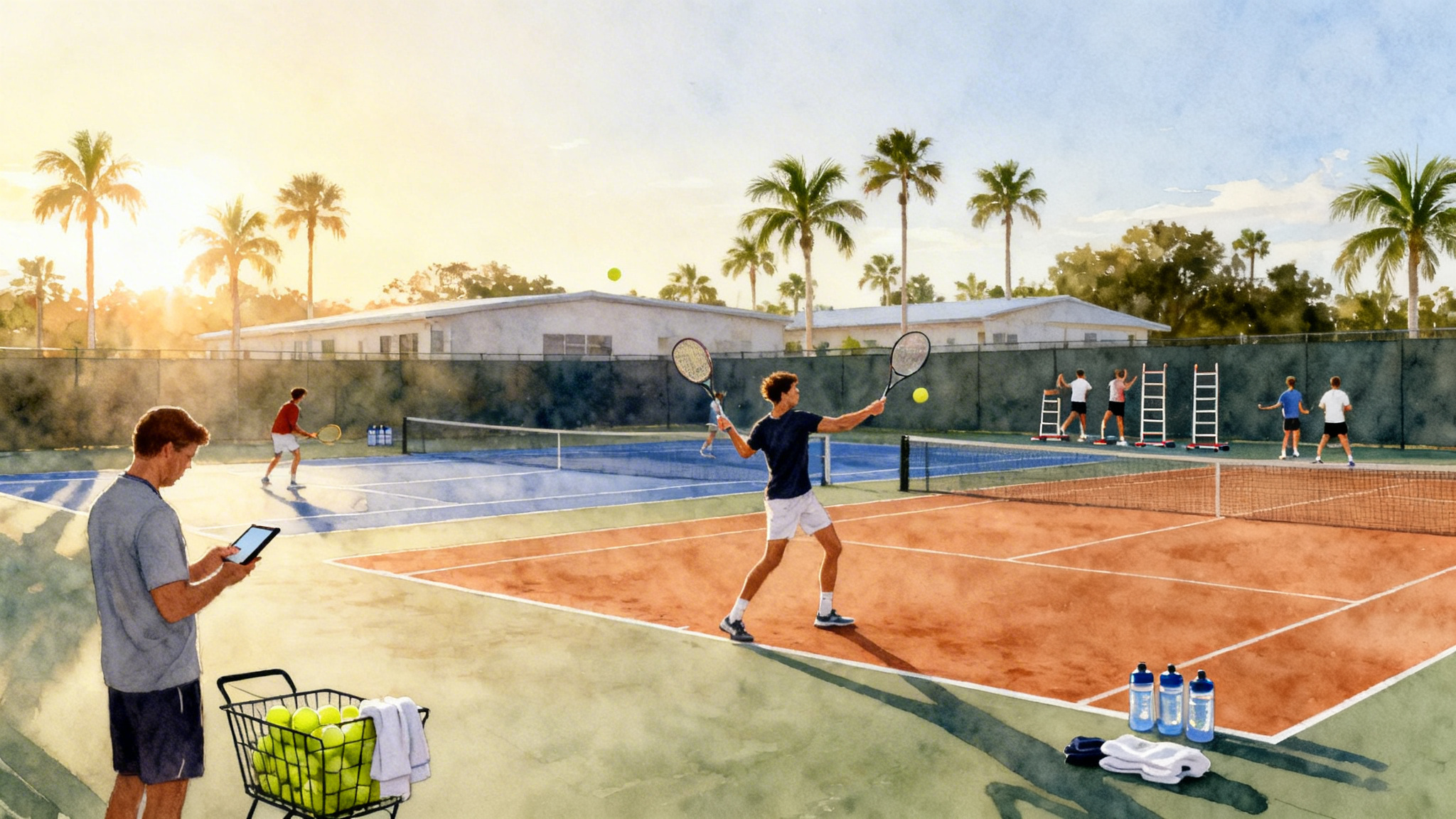
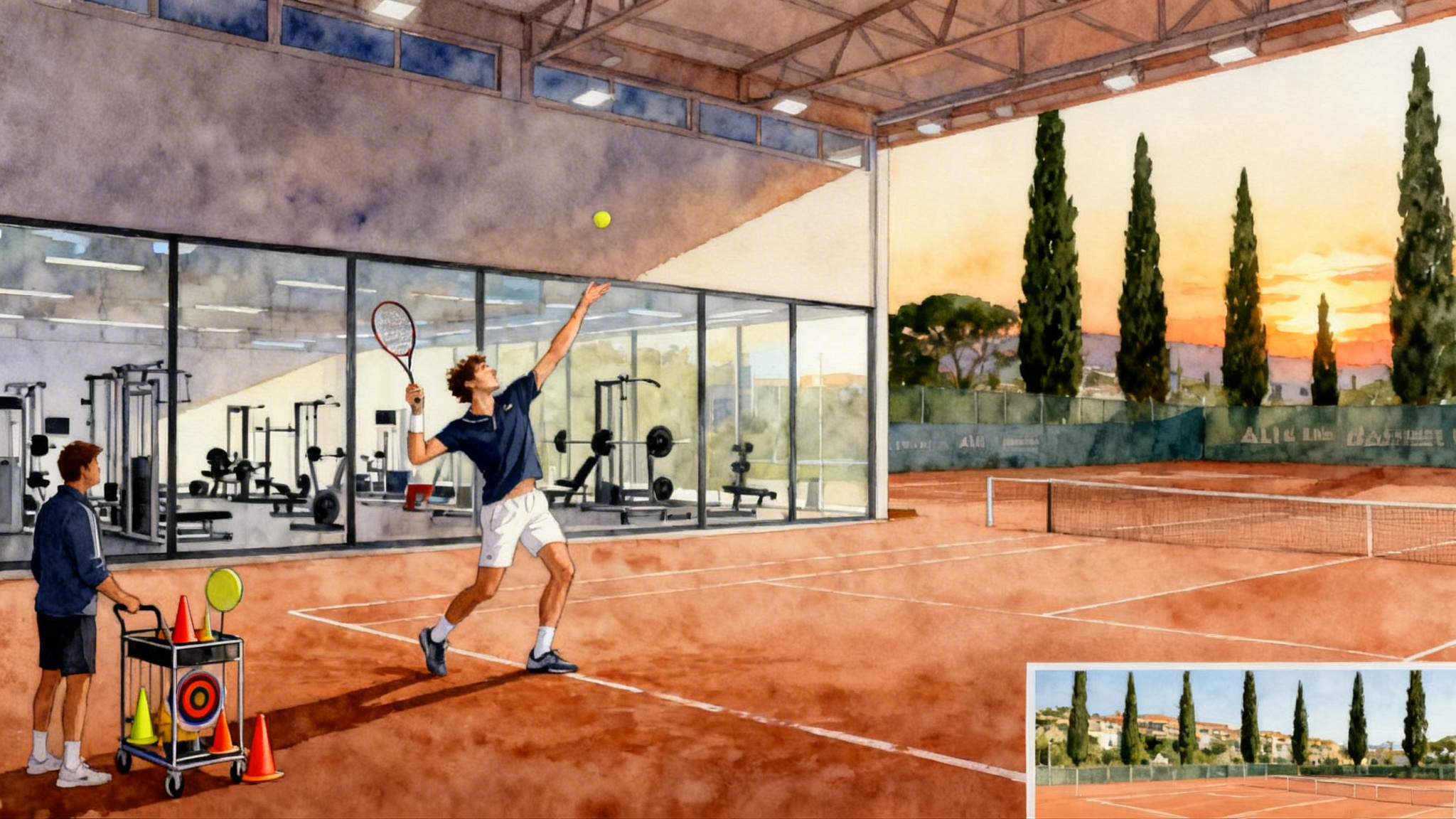
Riccardo Piatti became known for developing top professionals by putting them in small training pods and insisting on quality over volume. The aim is simple: keep the coach-to-player ratio low so each player receives constant, precise feedback. In practice, that looks like two to three players on a court with one lead coach and a hitting coach, plus a strength coach nearby. Sessions are scheduled in short, high-focus blocks that alternate between technical work and live patterns. It means 90 minutes can be enough because the density of meaningful contacts is high.
Why this matters for a 13 year old who just left home: attention compounds. If a teenager receives ten targeted corrections every rally instead of two, the skill curve bends faster. Sinner’s contact point, balance through the shot, and recovery steps were refined dozens of times per hour. Multiply that by weeks and months, and what looks like overnight success starts to resemble a very high number of guided repetitions.
Small groups also create the right kind of pressure. You stand next to a slightly older, slightly faster peer and you feel pulled forward. That pull is stronger than any pep talk. In Bordighera, Sinner was placed against players who could outlast him and outmaneuver him until the habits he needed became nonnegotiable.
Patterns first: learning where the ball should go before how hard it should go
Watch Sinner today and you will see heavy topspin off the forehand, a backhand that can redirect down the line, and court positioning that keeps him on top of the baseline. None of that happens if practice is just rallying for fitness. Piatti’s staff built Sinner’s game by rehearsing patterns he would need on the tour, then installing them like lines of code. This patterns-first approach mirrors what we saw when Ferrero Academy forged Alcaraz.
Here are examples of how that looks on a Tuesday in February:
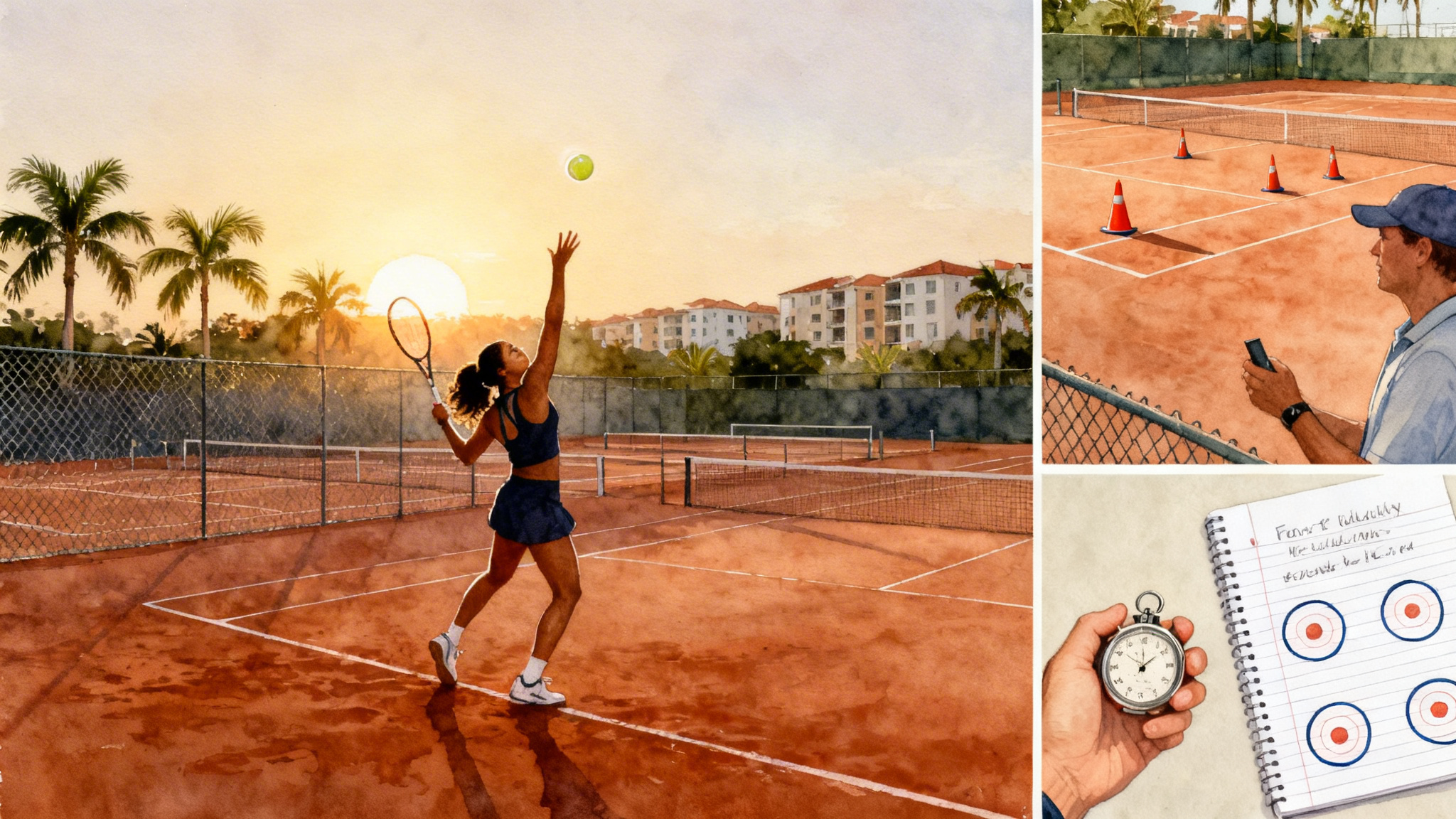
- Serve plus first ball: Deuce-court first serve aimed body or wide, then a forehand into the backhand corner, then either a step-in to the open court or a repeat to the same corner to pin the opponent. The goal is not winners. The goal is control of the rally from strike two.
- Backhand redirect: Crosscourt backhand rally that shifts to a down-the-line redirect every fourth ball. The footwork cue is early shoulder turn and a closed stance that lets the outside leg drive. Misses long are corrected by reducing racquet speed, not by flipping the wrist.
- Forehand inside-out tree: Three-ball tree where ball one goes inside-out to the backhand, ball two goes inside-in to the forehand corner, ball three goes crosscourt heavy to recover position. Feet lead, racquet follows. The aim is depth first, angle second, pace last.
The metaphors at Piatti are concrete. Cones mark apex points, not targets. The idea is to learn the rally shape, not the single shot. You learn to put the ball in a place that makes the next ball easier. Only then do you layer on speed. This is why Sinner’s power shows up as time theft more than as circus winners. He takes away your recovery time by hitting early from balanced positions.
Technique is movement plus contact
The Piatti crew teaches that technique sits on top of movement. Sinner’s clean backhand was not perfected at a mirror; it was perfected by arriving on time. Coaches drilled split-step timing, first step out of the split, and hip level through contact. A favorite drill placed a resistance band around the hips while the player hit five neutral backhands crosscourt, then one redirect down the line. The band forced the center of mass to stay low and forward during the change of direction. Another staple was two-step recovery commitments after any aggressive strike. You do not admire the ball. You take two steps back to center.
The serve got similar treatment. Preload, knee bend, and a calm tossing arm were rehearsed until the timing became boring. Later in his career, under a new team, Sinner would tweak the serve for more free points. The foundation of repeatable motion under stress, however, was a Bordighera project.
Progressive scheduling: how to grow without rushing
Piatti’s academies favor progressive scheduling that treats tournaments like exams and practice like study. The calendar is built in blocks. A typical sequence for a rising talent is three to four weeks of training, then a two to three week block of competition at a level where the player wins some and struggles in others. For Sinner, that meant very little emphasis on junior events. He was guided toward Futures and Challengers where the physicality and patterns mirrored what he would face at tour level. A calibrated calendar like this also powered Rafa Nadal Academy shaped Ruud.
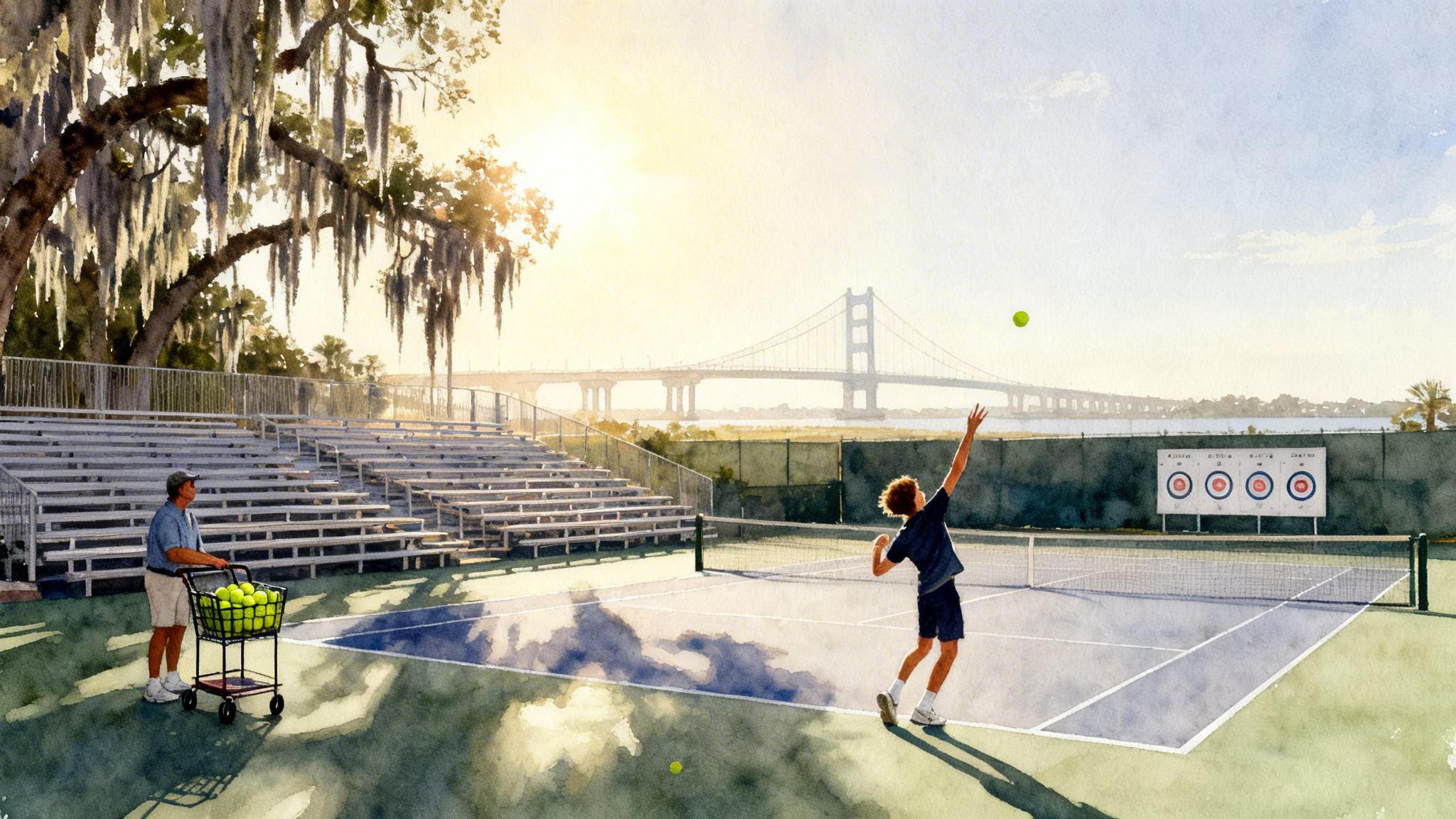
One marker in 2019 explains the method. Sinner won the Bergamo Challenger at 17, then used that confidence to compete more often against veterans who would not give him junior errors. By November 2019 he won the Next Gen ATP Finals in Milan. These were not detours from a junior career. They were the career. The aim was to stretch, recover, stretch again, never skipping rungs in the ladder but never standing on any rung for long.
Progressive scheduling also means hard decisions about rest. After a heavy stretch of indoor play, for example, the plan might skip a tempting tournament if the cost in fatigue is not worth the ranking points. The calculation is practical: a good block of training is more valuable than three weeks of low-quality matches that engrain poor decisions.
2019 Milan: proof of concept
The Next Gen ATP Finals became a showcase for Sinner’s habits. The format rewarded quick starts and aggressive patterns. He did not win that event by blasting aces. He won it by playing first-strike tennis without donating errors, using the backhand redirect to change direction safely and the inside-out forehand to control court position. The small-group reps showed up as certainty in tight games. The patterns showed up as rallies that looked the same at 15-all and at break point.
2022: a change at the top, not a change of direction
In February 2022 Sinner parted ways with Riccardo Piatti. He hired Simone Vagnozzi as head coach, then brought in Darren Cahill that summer. On paper, this looks like a reboot. On court, it looked like an addition to a base that already existed.
What changed:
- The serve: Under Vagnozzi and Cahill the motion became more efficient. The toss grew a touch more consistent, the kinetic chain smoothed out, and free points increased. This did not require a reinvention. It required layering pace and precision on a repeatable action.
- The forehand windows: Sinner learned to take the forehand even earlier without sacrificing spin. That is not a grip change. It is a spacing change. The drill here was more live ball, less basket work, and a constant challenge to hold the baseline instead of drifting.
- Decision making under pressure: The new staff emphasized choosing the simpler high percentage ball when ahead in a point. It sounds obvious. It is not in a fifth set against a top five opponent.
What did not change:
- Identity: a patterns-first baseliner who steals time by getting set early.
- Footwork and recovery: clean footwork and immediate recovery steps that trace back to Bordighera.
- Scheduling discipline: blocks and targeted peaks, not an every-week grind.
Australian Open 2024: when the foundation paid out
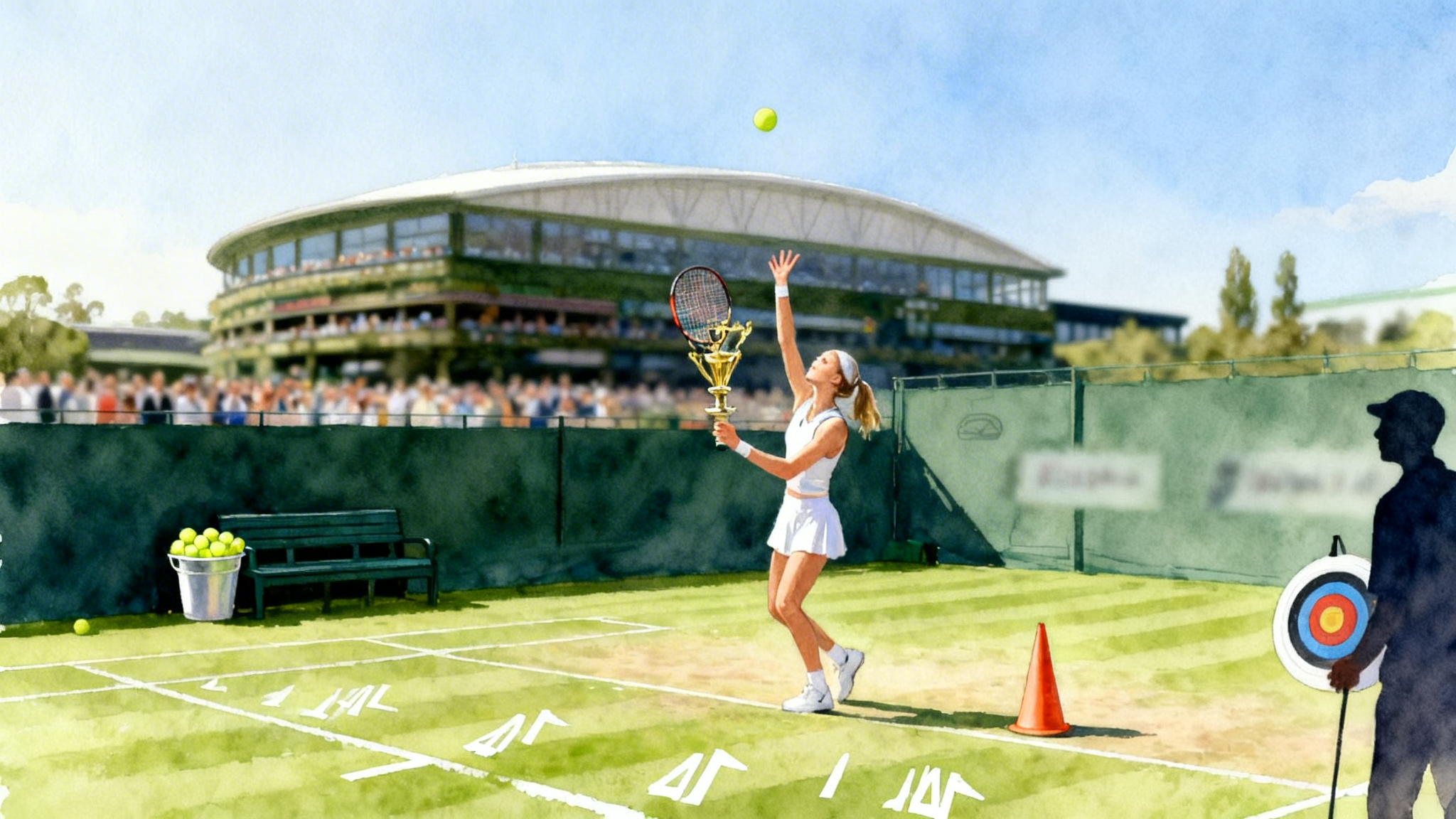
The 2024 Australian Open was the payoff: a two week run of composed aggression capped by a five set comeback over Medvedev in the final after taking out Novak Djokovic in the semifinals. The match was a microcosm of his development. He went down two sets, did not panic, and began winning the same exchanges he trains every day. Serve plus forehand to the backhand corner, backhand redirects to change direction without gambling, relentless footwork to hold the baseline. There was no new magic trick in the fifth set. There was only the ability to keep doing the right simple things at very high speed.
If you compare film from 2019 to 2024 you will see incremental changes. The forehand contact is farther in front. The serve has more shape and slightly more pop. The court position is visibly higher. None of that exists without the small-group hours where those changes could be taught, felt, and banked.
Parent takeaways: when to relocate, how to judge ratios, and how to balance school
Families often ask, when is it time to relocate for tennis, how many players per coach is acceptable, and how can we keep school on track if the child is serious about the pro path. Sinner’s journey offers practical guidance. Families weighing US pathways can also study how JTCC forged Frances Tiafoe to align coaching density with academics.
When to relocate
Move for environment, not for a brand name. Consider relocating when at least three of these are true:
- Quality opponents are scarce at home. Your child cannot find players who regularly push them to a third set in practice.
- Coaching density is low. Your child receives fewer than five technical corrections per drill or spends most sessions waiting in line.
- Logistics are unsustainable. You drive more than six hours a week just to find appropriate practice.
- Your child asks to move and demonstrates independent training habits for at least six months. The desire must be theirs, not yours.
- The new program is integrated: technical coaches, a hitting partner ladder, strength and conditioning, and access to tournament planning.
If three or more boxes are checked, relocation can be the right catalyst. If not, a seasonal training block at a destination academy can accomplish a lot without uprooting the family.
How to evaluate coach-to-player ratios
Numbers tell a story. Ask these questions on your first visit:
- How many players share one court and one lead coach in a typical technical session. Under three is ideal for teenagers who are still wiring their strokes.
- How often the lead coach returns to the same technical theme across a week. Repetition signals a plan, not a collection of drills.
- How many live-ball points per hour each player logs. You want density, not long talks and short rallies.
- How video and movement assessments are used. A phone camera and a consistent checklist beat generic pep talks.
Then observe. Count the corrections per rally during a baseline pattern drill. If you hear only encouragement without specifics, the ratio does not matter because quality feedback is missing. If you hear cues like split step, outside leg, recover two, you are in the right place.
How to balance school with a pro-track plan
The rule is simple: school must be planned as carefully as tournaments. Here is a workable model that mirrors what successful families use.
- Choose a flexible format with hard deadlines. Online or hybrid works when someone enforces a weekly deliverable schedule.
- Block school hours on the same calendar as practice. For example, 8:00 to 10:00 academics, 10:30 to 12:00 tennis, 13:00 to 14:00 school, 14:30 to 16:00 tennis, 16:30 to 17:30 strength or mobility.
- Use travel weeks to review, not to introduce new topics. Plan assignments that fit hotels and airports.
- Protect sleep. Adolescents need nine hours. Lose sleep and you lose adaptation.
- Add a teacher-coach huddle once per month. A fifteen minute call aligns exams, training blocks, and travel so no one is surprised by a biology test during a tournament week.
A simple evaluation checklist for families
Use this scorecard, 0 to 2 points for each item.
- Coaching density: Small groups with clear feedback every rally. 0 none, 1 sometimes, 2 consistent.
- Pattern training: Serve plus one, forehand inside-out, backhand redirect rehearsed weekly. 0 never, 1 some weeks, 2 weekly.
- Movement coaching: Split-step timing, first step, and recovery measured and cued. 0 not addressed, 1 occasional, 2 systematic.
- Scheduling plan: Tournament blocks with recovery weeks and training goals. 0 ad hoc, 1 partial plan, 2 full plan with dates.
- Academic plan: Calendar, deadlines, and a liaison for travel weeks. 0 absent, 1 basic, 2 robust.
Scores of 8 to 10 mean the environment is probably worth the move. Scores of 5 to 7 suggest short training blocks first. Below 5 means fix local basics before chasing an academy name.
What Sinner’s pathway really says
Sinner did not skip steps. He started late for a top professional, but he spent years in small, focused environments that compressed learning. He learned where to put the ball before he learned how hard to hit it. He played arenas that were slightly too big for him until they fit. When he changed coaches in 2022, he did not change direction. He added edges. That is how a South Tyrolean skier became a Melbourne champion.
Conclusion: talent is the spark, environment is the fuse
What carried Sinner from South Tyrol to Bordighera to a Grand Slam title was not a secret stroke or a training gimmick. It was an environment designed to deliver thousands of correct decisions under pressure. If you are a parent, build that kind of environment wherever you can. Start with small groups. Teach patterns before pace. Schedule progressively, then protect the study blocks that make the exams go well. When the foundation is set, you can invite new coaches to sharpen what already works. The result is not an overnight rise. It is a steady climb that looks, from the outside, like it happened all at once.